


Travel content marketing is the practice of creating and distributing useful, inspiring and decision-shaping travel content that helps people discover destinations, compare options, trust a brand and move toward a booking or inquiry. The best travel content marketing strategy connects storytelling to search visibility, authority and measurable traveler action.
Travel content is not successful just because people read it. It succeeds when it reduces uncertainty and makes the next travel decision easier. Content should help travelers move from dreaming to choosing.
Built for travel brands that need content to earn attention and move demand
Percepture combines destination storytelling, search architecture, public relations, distribution and measurement across travel and tourism.



What is travel content marketing?
Travel content marketing turns experiences, destination knowledge and traveler questions into useful assets that support discovery, comparison, planning and action. It connects the story a brand wants to tell with the information a traveler needs before choosing a destination, stay, tour, attraction or advisor.
Updated: July 2026 · Primary focus: travel content marketing strategy, distribution and measurement
Executive summary
Inspire and guide
Attractive stories earn attention. A strong content program adds planning details, comparisons and clear next steps that turn that attention into useful demand.
Start with a question
Build each asset around a real traveler decision rather than filling an editorial calendar.
Connect discovery channels
Strong travel content can support search, media outreach, email, social distribution and AI-mediated research.
Reuse the core asset
A single strong travel story can become an article, itinerary, email, short video, media pitch, social asset and landing page support.
Measure movement
Track whether the audience moves into itineraries, partner pages, inquiries, rate checks or other meaningful actions.
Create fewer, stronger assets
Travel brands should create fewer, stronger assets instead of publishing large amounts of weak material.
Who this guide is for
Destination teams
DMOs and tourism boards that need content to distribute demand across experiences and partners.
Hospitality brands
Hotels, resorts, villas and cruise brands that want editorial content to support direct consideration and booking paths.
Travel sellers
Tour operators, agencies and advisors that need an editorial system to demonstrate expertise and attract better-qualified inquiries.
Marketing leaders
CEOs, CMOs and content leaders who need a coordinated system rather than an isolated publishing program.
This guide focuses on how travel brands build content systems that create authority and bookings. Use the related SEO, PR, AI and paid-media guides for deeper execution in those channels.
What travel content marketing actually means
Publishing articles is only one part of the job. A useful travel content marketing system must inspire the trip, explain the offer, compare choices, demonstrate expertise and create a path into planning. It should also give search systems, media contacts and AI tools clear information they can understand and reference.
Travel content should be built around traveler questions, moments and decisions, not around a publishing calendar alone. Start with what the traveler is trying to decide: where to go, when to visit, which option fits, what to expect or how to book.
What travel content marketing is doing
| Content job | Traveler value | Business value |
|---|---|---|
| Inspire the trip | Creates a clear picture of the experience | Generates initial interest |
| Explain the option | Reduces uncertainty | Improves qualification |
| Compare choices | Makes selection easier | Supports consideration |
| Show expertise | Builds confidence | Strengthens authority |
| Earn discovery | Answers a search or planning question | Creates durable visibility |
| Support conversion | Provides a clear next step | Routes demand toward action |
Use this scorecard to confirm that each asset serves a traveler need and a defined business purpose.
Why travel content marketing matters
Travel content marketing matters because travel purchases carry uncertainty. The traveler may not know whether a place fits the group, what a room category includes, how much time an itinerary needs or whether an operator understands the experience. Useful content closes those information gaps before a sales conversation or booking session begins.
It builds authority
A destination guide, route explanation or detailed itinerary demonstrates knowledge through the quality of the answer. It shows that the brand understands the place, the traveler and the tradeoffs involved.
It creates search visibility
Travel research produces many specific questions. A coordinated travel SEO strategy can connect those questions to destination pages, guides, itineraries and commercial pages without turning every asset into sales copy.
It supports AI visibility
Clear definitions, direct answers, useful tables, named entities and visible expertise make information easier for search and AI systems to interpret. Percepture’s generative engine optimization services address this wider retrieval layer.
It shortens the trust gap
Specific content helps travelers understand fit, timing, logistics and expectations. That makes the next decision feel smaller and safer.
It compounds across channels
The best travel content does not stop at awareness. It compounds into search visibility, PR value, AI retrieval and conversions. Travel content is one of the few assets that can improve visibility, trust and conversion at the same time.
Turn travel content ideas into a prioritized demand plan
Audit each travel content marketing idea against the traveler question, business goal, proof source, distribution plan, next step and reuse potential. This exposes calendar filler before resources are committed.
The Inspiration-to-Booking Content Chain
The Inspiration-to-Booking Content Chain is Percepture’s methodology for travel content marketing that turns a real travel experience or traveler question into an asset that can earn attention, support trust and produce a measurable next step.
Travel content marketing framework scorecard
| Stage | Operating question | Output |
|---|---|---|
| 1. Experience truth | What is genuinely distinctive or useful? | Core story angle |
| 2. Traveler question | What does the traveler want to know or decide? | Search and decision intent |
| 3. Content asset | Which format answers the question best? | Guide, itinerary, comparison, story or support page |
| 4. Distribution layer | Where can the asset reach the right audience? | Search, PR, email, social, AI or paid support |
| 5. Decision support | What should the traveler do next? | Rates, itinerary, shortlist, inquiry or booking path |
| 6. Proof and trust | Why should the traveler believe the guidance? | Local expertise, evidence, reviews or media |
| 7. Conversion path | How does attention become a business action? | Booking, inquiry, signup or partner visit |
| 8. Reuse | How can the core work serve more channels? | Email, video, FAQs, outreach and social cutdowns |
| 9. Measurement | What did the audience discover and do? | Visibility, path movement and conversion evidence |
Do not publish a travel content marketing asset unless you know the traveler question, the next step and how the asset will be reused.
1. Find the experience truth
Begin with something real: a local point of view, seasonal change, unusual itinerary, practical planning issue or meaningful product difference. Generic themes lead to generic content.
2. Translate it into a traveler question
Ask what the traveler is trying to settle. Examples include which destination fits a family, how long a route takes, when conditions are best or what an experience includes.
3. Select the primary format
Choose the format that resolves the question with the least friction. A comparison may need a table. A route may need a day-by-day itinerary. A complex offer may need an explainer linked to a commercial page.
4. Design distribution before publication
Decide how organic search, email, media outreach, creators and selective paid distribution will extend the asset. Percepture’s omnichannel marketing service helps coordinate those paths.
5. Add decision support and proof
Make the next action obvious and proportionate to intent. A dreaming-stage reader may explore destinations. A planning-stage reader may request an itinerary. A validating reader may need expert proof or a comparison.
Which travel content formats work best?
| Format | Best use | Useful next step |
|---|---|---|
| Destination guide | Orienting travelers around places, seasons and experiences | Explore a destination or stay |
| Itinerary | Turning broad interest into a realistic trip plan | Build or request an itinerary |
| Comparison | Helping travelers select between credible options | Shortlist or compare availability |
| Planning FAQ | Resolving timing, access, packing and logistics questions | Continue to the relevant product page |
| Experience story | Showing culture, access, local knowledge or a distinct point of view | Explore related experiences |
| Booking-support page | Explaining rooms, routes, packages or advisor specialties | Check rates, inquire or book |
| Video or short form | Previewing a route, place or experience quickly | Open the complete guide |
| Creator or traveler content | Adding first-person perspective and social proof | Visit an owned itinerary or landing page |
The best content mix balances inspiration, planning, comparison and booking support. Travel content marketing becomes weak when every topic uses the same format.
Plan content around traveler intent
Travel content marketing fails when it only serves the dreaming stage and ignores planning, validation and booking. A complete plan covers the questions that appear before, during and after consideration.
| Intent stage | Traveler question | Best format | CTA |
|---|---|---|---|
| Dreaming | Where should we go? | Inspiration guide or story | Explore destinations |
| Considering | Which option fits us? | Comparison or itinerary | Compare or shortlist |
| Planning | What should we do? | Trip guide, map or FAQ | Build an itinerary |
| Validating | Can I trust this choice? | Expert page, proof or reviews | Learn more or ask a question |
| Booking | How do I take the next step? | Offer, product or service page | Book or inquire |
| Returning | What should we do next? | Seasonal update or local guide | Revisit, rebook or refer |
Start with the traveler’s decision, then choose the format and distribution. Do not start with “we need a blog post.” Use travel keyword and intent research to distinguish genuine planning questions from broad traffic terms.
Content that travels further than the campaign

Percepture developed a recurring destination-content engine for Wyndham Vacation Rentals and distributed the content through brand-owned and sponsored environments. Across three reported quarters, the program generated approximately 117.5 million impressions and 104,000 clicks.
The lesson is not that traffic automatically equals bookings. The program works harder when the story reaches a relevant audience and provides a natural route into trip planning.
How travel content supports SEO, PR and AI visibility
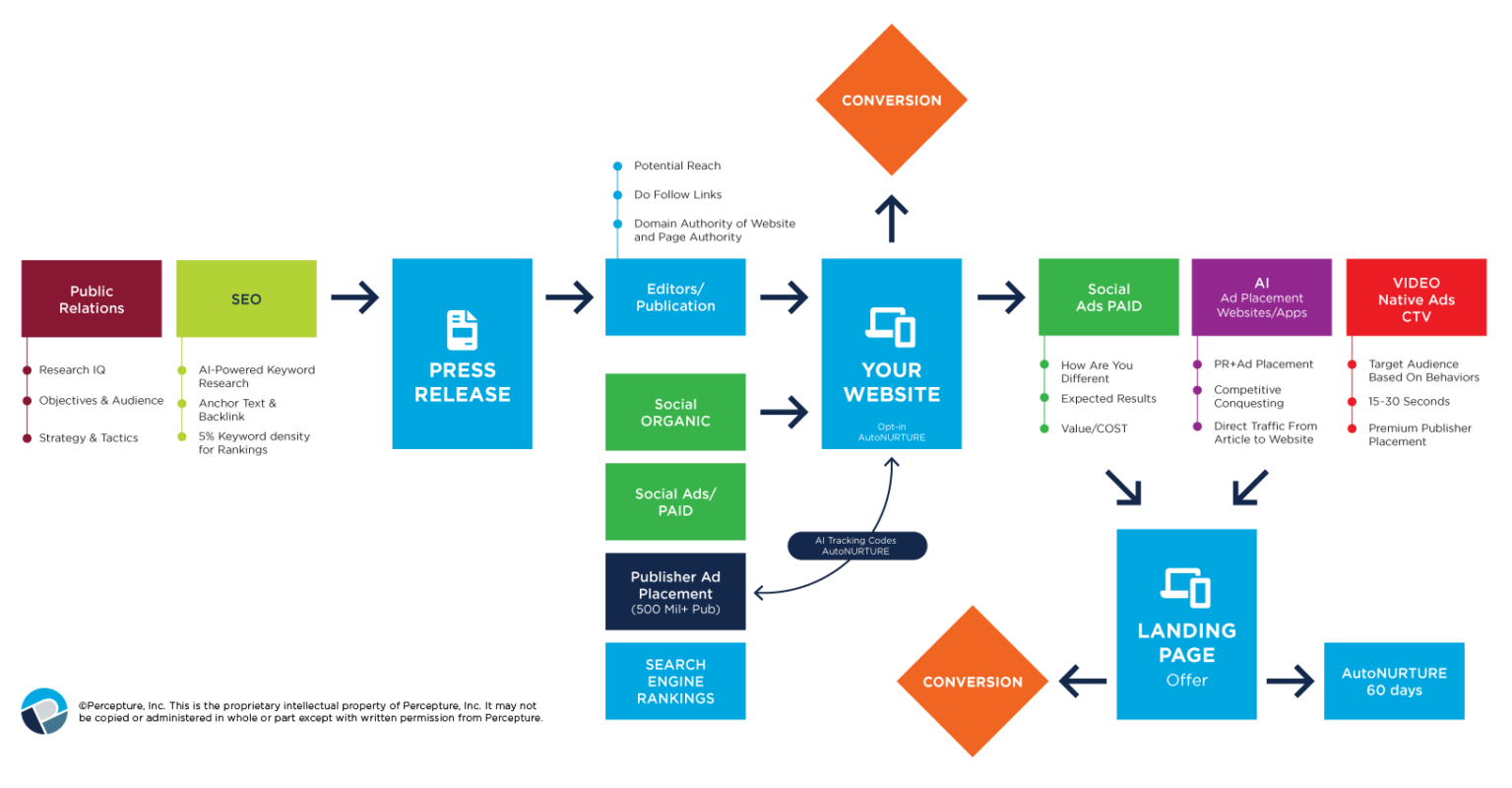
Travel content marketing should sit at the center of a connected discovery system. Search identifies persistent questions. PR expands credible stories. AI visibility depends on clear, useful and source-worthy information. Each discipline has a distinct role, but they perform better when the underlying assets are planned together.
Content and search
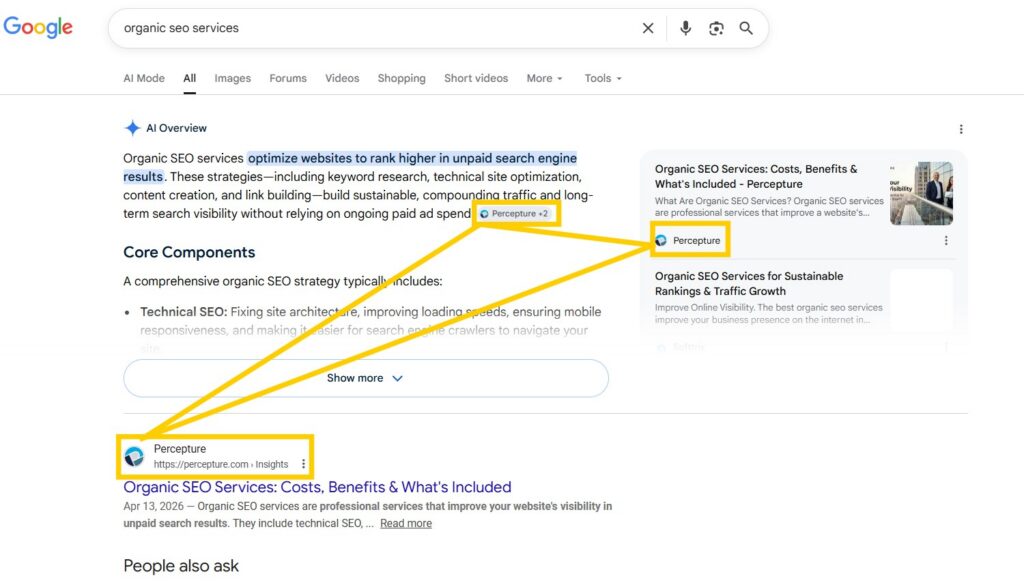
Keyword research should identify the language travelers use while dreaming, comparing and planning. Titles and headings should clarify the answer, while internal links connect informational content to deeper resources and commercial paths. Content marketing and SEO should not be separate travel workstreams. The best content is built to be found.
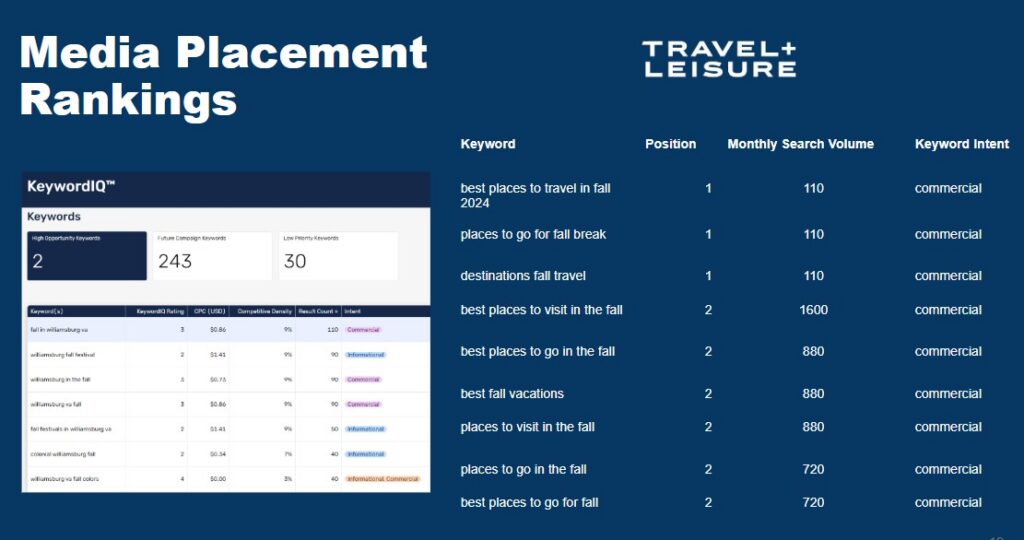
A broader enterprise SEO program can coordinate technical foundations, content architecture and internal linking across large travel sites.
Content and PR
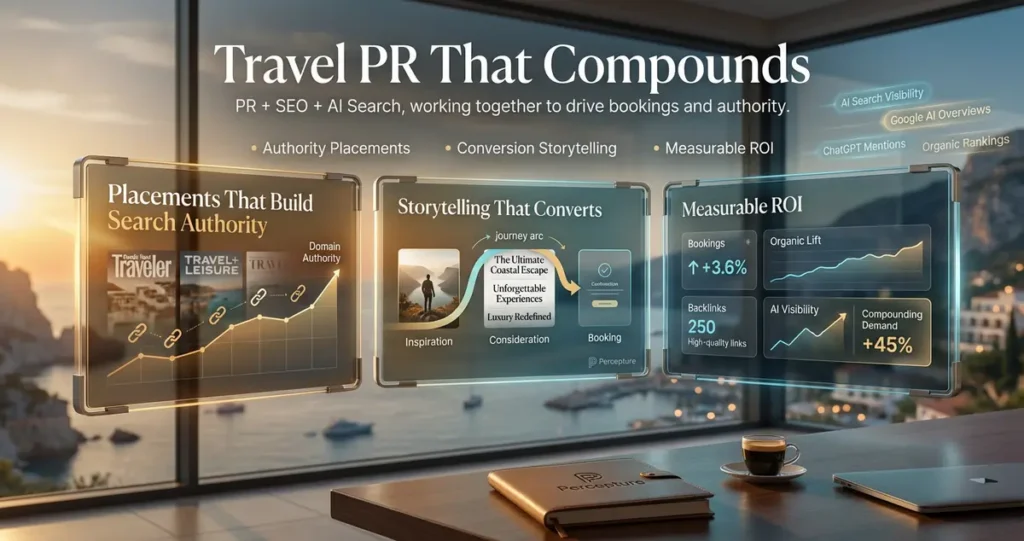
Travel PR often starts with a story. Owned content gives that story depth, a durable destination and a useful reference after the initial media cycle. When PR and content work together, the same story can create earned reach, search value and stronger conversion confidence.
Use the travel PR guide for earned-media execution and Percepture’s public relations services for integrated campaign support.
Content and AI retrieval
AI systems often summarize destination comparisons, itineraries, seasonal advice and planning questions. Brands improve the usefulness of their pages by placing direct answers early, naming relevant entities, using descriptive headings and supporting claims with visible expertise.
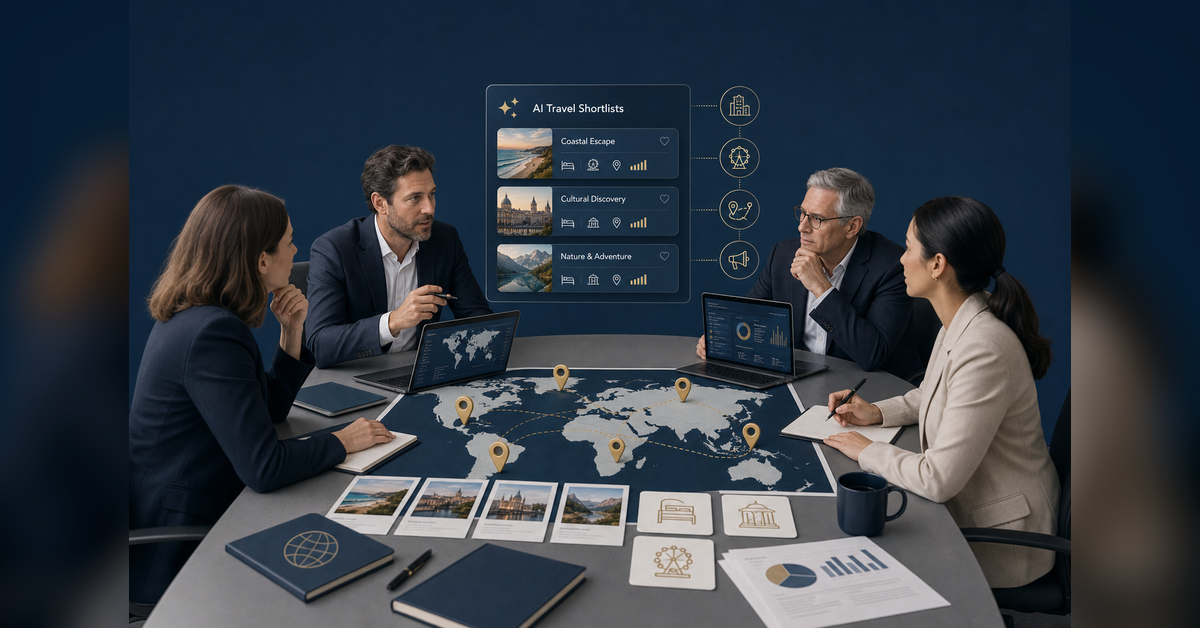
The dedicated guide to AI search optimization for travel brands explains this channel in more depth. Travel brands that publish useful, trustworthy, structured content have a better chance of being included in AI-mediated trip planning.
Creator and UGC travel content need a job
User-generated and creator content can provide first-person perspective, visual variety and social proof. It is not a strategy by itself. Without a traveler question, an owned destination and a measurement plan, a large volume of creator assets can become disconnected noise.
Percepture coordinated 17 influencer itineraries for New Orleans & Company around real traveler questions. The resulting content created page-one visibility for evergreen long-tail searches related to family, food and celebration travel. Search visibility allowed those itinerary assets to continue supporting discovery after the creator trips ended.
The operating model is simple: choose the question, brief the creator around it, publish a supporting owned asset, connect that asset to a planning page and measure what happens next. This lets creator work support travel content marketing instead of sitting apart from it.
Good destination content moves the traveler forward
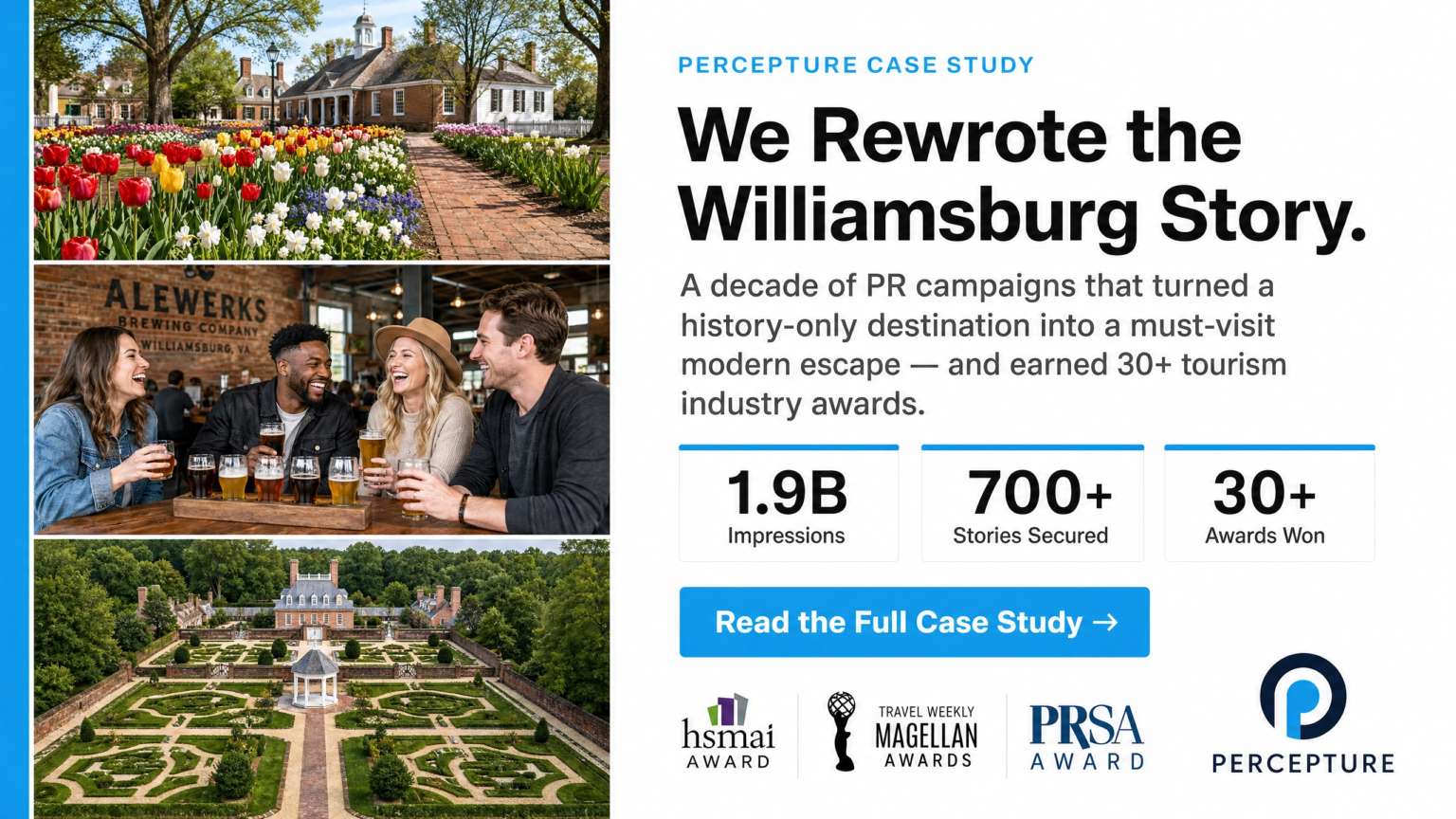
Greater Williamsburg shows why path movement matters. In Q1 2019, story content attracted 20,976 organic visitors and generated 4,240 visits into on-site partner pages, a 20% story-to-partner conversion rate. The wider program included more than 100 stories, multiple number-one destination-term rankings, 18% organic growth and more than 100,000 new organic visitors.
The planning principle applies beyond destinations. Hotels can route neighborhood guides into stay pages. Tour operators can connect route content to inquiry pages. Advisors can connect comparison content to trip consultations. Review more destination marketing strategies for destination-level planning.
Distribute and reuse stronger travel content
The real value of travel content marketing is not the post. It is the distribution system around the post. Organic search captures persistent interest, while email, social, creators, PR and selective paid amplification extend the asset into different moments.
A practical reuse system
- Build the primary asset. Create the complete guide, itinerary, comparison or story that owns the answer.
- Create channel-specific derivatives. Produce email excerpts, short videos, media angles, FAQs, social cutdowns and landing-page support.
- Route every derivative back to a useful destination. The next click should help the traveler plan, compare or act.
For example, a seven-day family itinerary can become short route previews, an email sequence, a downloadable planning aid, a set of FAQs and an advisor-consultation path. Content return improves when the primary asset is designed for multiple channels and stages from the start.
Digital PR services can expand the authority layer, while paid media support can selectively amplify high-value seasonal or destination assets.
How to measure travel content marketing
Travel content marketing should be measured in layers. Pageviews alone show exposure, not whether the audience was relevant or whether the content helped someone make a decision.
| Metric layer | Examples | Management question |
|---|---|---|
| Discovery | Impressions, rankings and search visibility | Can the right traveler find the asset? |
| Engagement | Scroll depth, interactions and video completions | Does the answer hold useful attention? |
| Path movement | Internal clicks, partner clicks and itinerary views | Does the reader continue planning? |
| Lead or booking action | Inquiries, signups, consultations and bookings | Does the content produce action? |
| Assisted impact | Return visits, branded search and multi-touch paths | Does it influence later conversion? |
| Reuse value | Email, PR, creator and social usage | Does the asset keep working? |
This scorecard keeps travel content marketing reporting focused on discovery, decision support and business action.
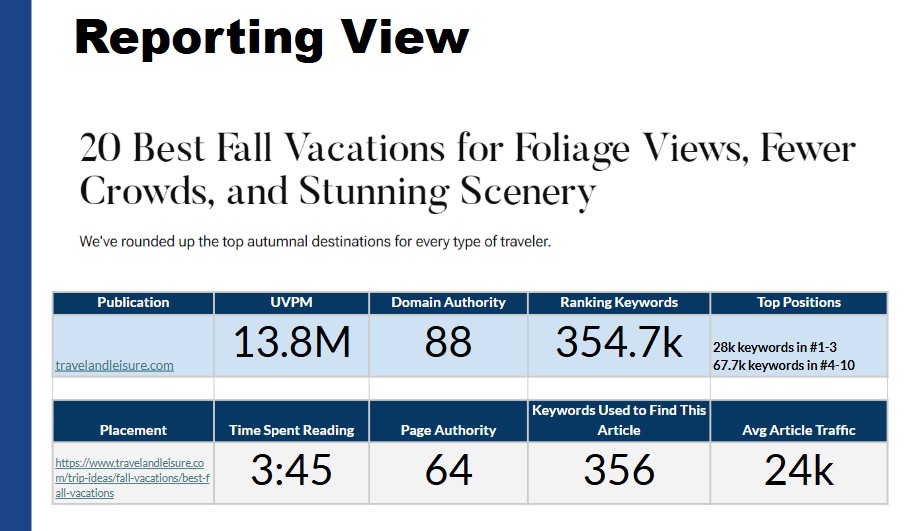
A travel article that attracts the wrong audience is not a win. The best asset attracts the right traveler and moves that person toward a meaningful next step. Percepture’s attribution and analytics service helps connect content interactions with wider customer journeys.
Common travel content mistakes
- Publishing without a defined traveler question.
- Creating generic list content with no distinct experience or expertise.
- Chasing traffic without an itinerary, inquiry, partner or booking path.
- Separating content planning from SEO and PR.
- Leaving seasonal information outdated.
- Using AI output without destination expertise and editorial review.
- Creating thin destination pages that repeat information available elsewhere.
- Failing to link inspiration pages to planning and commercial pages.
- Publishing strong work once without a reuse plan.
- Reporting vanity traffic while ignoring audience quality and path movement.
- Omitting authorship, proof and visible freshness.
- Ignoring comparison and itinerary content.
Travel content loses when it inspires but does not guide. In travel, inspiration without a next step is wasted demand.
Why Percepture has a point of view
Percepture’s travel work brings content, search, public relations, distribution and measurement into one operating model. That matters because travel content marketing crosses teams: editorial produces the asset, search shapes discovery, PR extends authority and analytics tests whether the audience moves.

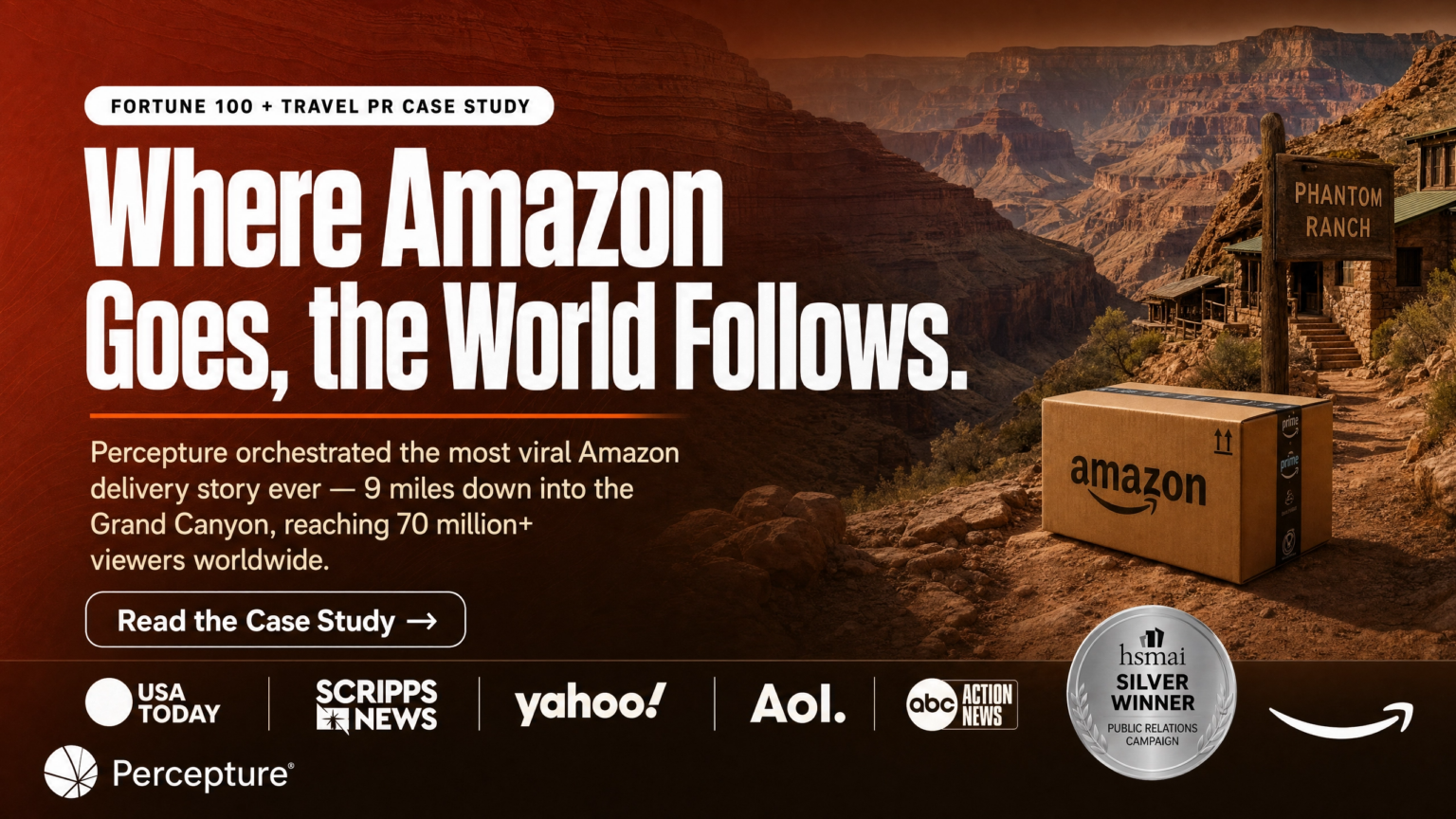
Explore Percepture’s travel and tourism practice, the broader guide to digital marketing for travel and tourism and the Amazon and Phantom Ranch case study.
Connect content with search, PR and AI visibility
A useful travel content marketing review should test topic ownership, traveler intent, proof, distribution, internal paths and measurement together.
Search depth
Tourism economics
International reach
Frequently asked questions
What is travel content marketing?
Travel content marketing is the planned creation and distribution of destination, experience and trip-planning information that helps travelers discover options, compare choices, build confidence and take a useful next step. It includes guides, itineraries, comparisons, FAQs, videos, creator assets and booking-support content.
Why does travel content matter?
Travel content marketing reduces uncertainty before a booking or inquiry. It helps people understand fit, timing, logistics, experience quality and available choices. For the brand, the same asset can support search visibility, media outreach, email, social distribution and sales conversations.
What types of travel content perform best?
The strongest mix usually includes inspiration, planning, comparison and booking support. Destination guides create orientation, itineraries turn interest into a plan, comparisons support selection, FAQs resolve friction and product explainers provide the next commercial step.
How does travel content support SEO?
Travel content marketing gives a travel site useful answers for specific traveler searches. Keyword and intent research identify those questions, while clear headings, complete answers and internal links help search systems understand how guides, destination pages and commercial pages relate.
How can content influence travel bookings?
Content can influence a booking by answering the questions that prevent action and routing the traveler toward rates, availability, an itinerary, a partner page or an inquiry. Track those path movements instead of assuming that page traffic alone represents booking value.
What is the difference between travel content and travel PR?
Content creates owned assets that a brand controls. Travel PR earns attention through journalists, publications and other third parties. They work well together when an owned guide or story supports a media angle and earned visibility strengthens trust in the underlying content.
How often should a travel brand publish?
Publish at the pace required to create accurate, distinctive and well-distributed work. A smaller number of complete assets is usually more useful than frequent thin posts. Prioritize traveler demand, business value, seasonal timing, proof and reuse potential.
Can creator content improve travel discoverability?
Yes, when the creator brief addresses a real traveler question and connects to an owned planning asset. Creator reach can generate immediate attention, while a well-structured itinerary or guide can continue serving search demand after the campaign ends.
What metrics should travel brands track?
Travel content marketing metrics should cover discovery, engagement, internal path movement, partner clicks, inquiries, bookings, assisted conversions and reuse value. The right dashboard should show whether the asset attracted a relevant audience and helped that audience progress.
Can AI tools help create travel content?
AI tools can support research organization, outlines, content reuse and quality checks. Destination expertise, factual review and editorial judgment still matter. Do not publish generic or unverified recommendations simply because an automated system produced them quickly.
Build a content system that earns visibility and supports bookings

A travel content marketing strategy review can examine content gaps, traveler questions, search opportunities, editorial angles, conversion paths and reuse plans.

About Bob Generale
Bob Generale is President of Percepture, a five-time Inc. 5000 marketing and public relations agency founded in 2004. He leads strategy across search, content, digital PR, AI visibility and integrated demand programs for travel, tourism and complex B2B organizations.