


SEO for travel agency growth should connect specific traveler needs to the trips an agency is equipped to plan, prove the right advisor’s expertise and present a clear path to a qualified consultation.
That requires more than rankings. Profitable trip selection, expert pages, inquiry design, advisor routing and CRM measurement must work as one operating system.




How does travel-agency SEO generate qualified inquiries?
SEO for travel agency teams generates qualified trip inquiries by matching high-intent searches to real specialties, supporting those pages with verifiable advisor evidence and capturing enough trip context to route each traveler to the best-fit advisor.
The operating view
Effective travel-agency SEO operations align the agency’s preferred trips, advisor expertise, inquiry process and sales measurement before expanding search visibility.
Choose profitable territory
Prioritize trips the agency wants, understands and has capacity to serve. In travel-agency SEO planning, a keyword is valuable only when the agency can deliver the trip behind it.
Prove advisor fit
Replace broad destination copy with named expertise, planning decisions, traveler-fit distinctions and current practical detail.
Qualify before routing
Collect trip context, assign ownership and create a fallback when the first advisor cannot respond.
Measure business stages
Connect the landing page to inquiry, consultation, proposal and booking records instead of stopping at traffic.
Who should use this SEO for travel agency guide?
This guide is built for travel businesses that want search visibility to produce better-fit trip conversations, not a larger pile of unqualified forms.
Agency owners and executives
Use the framework to connect preferred trips, advisor capacity, acquisition cost and booking economics.
Marketing leaders
Use it to prioritize search territory, expert content, conversion paths and source-to-booking measurement.
Travel advisors
Use it to make specialties, planning judgment and traveler-fit distinctions visible on the pages buyers find.
Sales and operations teams
Use it to qualify, route and follow up on inquiries according to value, complexity, timing and capacity.
The core problem: traffic without agency fit
A travel inquiry is qualified when the trip fits the agency, not merely when a traveler submits a form. Travel-agency SEO acquisition should evaluate destination, trip type, likely value, planning timeline, service model, traveler needs, language, geography and available advisor capacity.
Traveler fit
The requested trip aligns with a destination, occasion, group type or planning problem the agency serves.
Commercial fit
The likely value, fee model and service requirements support the agency’s economics.
Timing fit
The departure window and planning stage allow the team to do responsible work.
Capacity fit
An appropriate advisor can own the request and move it forward.
Every ranking page needs an advisor, an offer and a next step. Without those three elements, travel-agency websites can generate visits while leaving the sales team to reconstruct traveler intent manually.
Build a Trip Inquiry Page Matrix
Map each travel-agency SEO keyword theme to the traveler stage, trip, destination, segment, advisor, evidence, page type, CTA, qualification fields, CRM owner, KPI and review date. This exposes pages that have traffic potential but no credible owner or conversion path.
Plan the inquiry page matrixThe Traveler-to-Advisor Inquiry Engine
The Traveler-to-Advisor Inquiry Engine is Percepture’s eight-stage method for connecting a specific traveler need to the best-fit offer, proving expertise, capturing trip context and learning from sales outcomes. It gives travel-agency SEO teams an operational sequence rather than a traffic-only campaign.
- Offer Fit: Define desired destinations, trip types, traveler segments, value thresholds, fee models, lead times and capacity. Travel-agency SEO planning begins with the agency’s ideal trip—not a keyword tool.
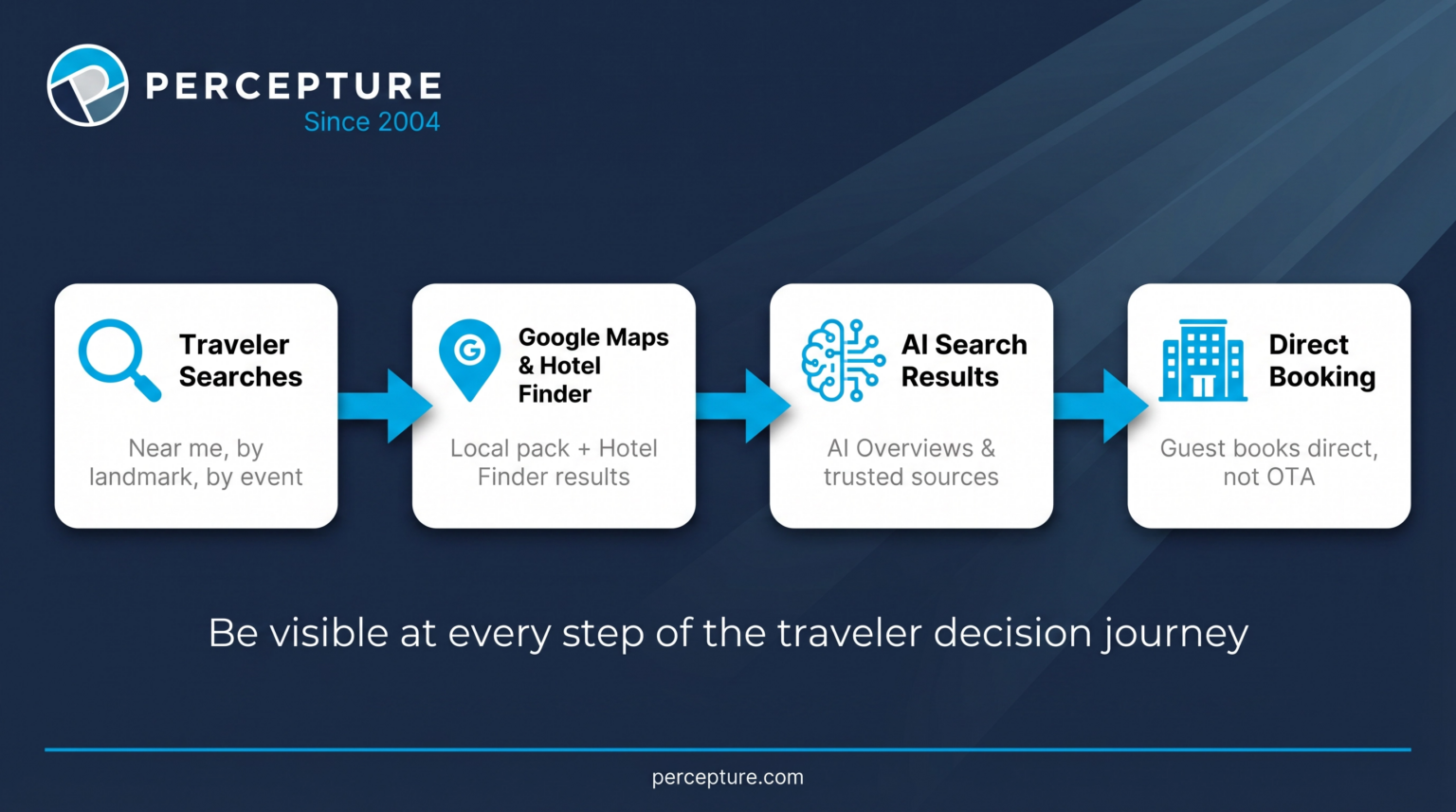
- Intent Map: Separate inspiration, feasibility, planning, comparison, advisor validation, consultation and urgent problem-solving searches.
- Search Territory: Assign each useful query group to a destination, trip-type, occasion, advisor, itinerary, local or consultation page.
- Experience Proof: Add verifiable first-hand observations, planning decisions, traveler-fit distinctions, credentials and reviewed dates.
- Entity Trust: Clarify the agency, advisors, service area, legitimate profiles and the relationship between people and offers.
- Inquiry Conversion: Ask for enough information to assess trip and service fit without collecting sensitive traveler data.
- Advisor Routing: Assign an owner based on specialty, value, complexity, language, urgency and capacity.
- Revenue Learning: Connect organic landing pages to qualification, consultation, proposal and booking outcomes.
For travel-agency SEO planning, the sequence is: Offer Fit → Intent Map → Search Territory → Experience Proof → Entity Trust → Inquiry Conversion → Advisor Routing → Revenue Learning.
Prioritize SEO for travel agency offers with a Trip Opportunity Score
Search volume is one input, not the decision. A useful travel-agency SEO score compares business fit and conversion readiness with the effort required to maintain accurate content, using a one-to-five rating for each territory.
| Factor | Question | High score means |
|---|---|---|
| Business fit | Does the agency want and have capacity for this trip? | The offer supports strategy and capacity. |
| Intent | Does the query signal planning, comparison or advisor need? | The traveler has a defined problem. |
| Expertise | Can an advisor provide real, current evidence? | The page can be specific and credible. |
| Conversion readiness | Are the offer, form, routing and CRM stages ready? | Demand has somewhere useful to go. |
| Margin or value | Does the likely trip justify acquisition and support? | The economics fit the service model. |
| Search opportunity | Is the territory attainable? | Demand and competitive conditions are workable. |
| Maintenance cost | How often will details need review? | A low maintenance burden improves priority. |
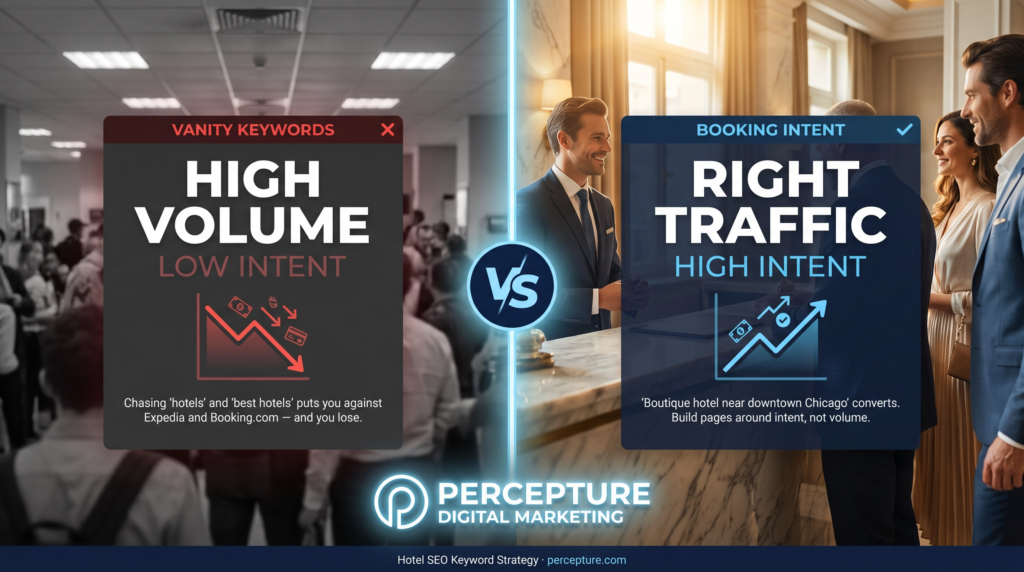
Within travel-agency SEO prioritization, a lower-volume query such as “Japan honeymoon travel advisor” may be worth more than “Japan travel” when the agency has specialist expertise, a defined planning model, strong proof and a high close rate.
Keyword opportunity: demand is directional
The supplied keyword export shows several ways buyers describe travel-agency SEO services. Close variants can overlap, so listed volume should guide research rather than serve as a forecast of unique travelers.
| Keyword | Monthly volume | KD | Role |
|---|---|---|---|
| travel SEO agency | 590 | 18 | Provider evaluation |
| travel agency SEO | 480 | 18 | Core topic variation |
| SEO travel agency | 390 | 20 | Natural-use variation only |
| SEO for travel agency | 260 | 15 | Primary topic |
| SEO for travel agencies | 210 | 8 | Plural variation |
| SEO services for travel agency | 170 | 12 | Commercial evaluation |
This page owns the consumer inquiry system within travel-agency SEO strategy. Broader provider, implementation and technical questions should connect to Percepture’s enterprise SEO capabilities and detailed website guidance rather than forcing every intent into one URL.
Build pages around traveler decisions
A destination article can inspire a traveler without creating a reason to consult an advisor. travel-agency websites needs a deliberate path from useful guidance to an offer, a person and a next action.
| Page type | Search job | Required evidence | Best next step |
|---|---|---|---|
| Homepage or entity page | Establish agency fit | Specialties, advisors and process | Start planning |
| Advisor bio | Validate expertise | Destinations, credentials and first-hand detail | Consult the advisor |
| Trip-type page | Capture a commercial need | Fit, process and relevant examples | Discuss the trip |
| Destination page | Match place and advisor intent | Recent knowledge, decisions and FAQs | Plan the destination |
| Audience or occasion page | Address specific constraints | Family, honeymoon, group or accessibility detail | Request a consultation |
| Itinerary or comparison | Demonstrate judgment | Sequence, tradeoffs and alternatives | Customize the plan |
| Legitimate local page | Serve proximity intent | Real operational and service-area proof | Speak with an advisor |
| Consultation page | Convert and qualify | Process, fees, expectations and response path | Submit a trip brief |
Create a dedicated page only when the traveler need, advisor capability, information, internal-link role and maintenance owner are distinct. A strong content marketing system makes those travel-search ownership rules explicit.
Make advisor expertise visible and verifiable
Travelers need to know whether an advisor plans their kind of trip, so travel-agency SEO content must expose relevant human expertise. Supplier descriptions do not answer that question. A useful page explains the decisions an advisor helps make and the traveler conditions that change the recommendation.
Name the expert
Show the advisor responsible for the specialty and connect the person to relevant pages.
Show planning judgment
Explain timing, sequence, room or cabin distinctions, transfers and traveler-fit tradeoffs when verified.
Date practical detail
State when changeable guidance was reviewed and use official sources for entry, health and safety information.
Explain the process
Set expectations about fees, planning steps, communication and what happens after the inquiry.
Travel-agency pages are stronger when content comes from real advisor knowledge. Percepture’s digital PR services can also turn original expertise into source-worthy material instead of relying on copied destination summaries.
Technical, local and AI visibility essentials
- Index only useful, current pages and manage duplicate filtered or booking-tool URLs.
- Keep important copy, advisor details and calls to action available in mobile HTML.
- Test forms, calendars, analytics events, redirects, canonicals and expired-offer rules.
- Connect planning guides to trip pages, advisor profiles and consultation paths.
- Use structured data only when it describes visible, factual content.
- Create local pages only for legitimate operations with distinct local proof.
- Make authorship, specialties, service areas and reviewed dates clear.
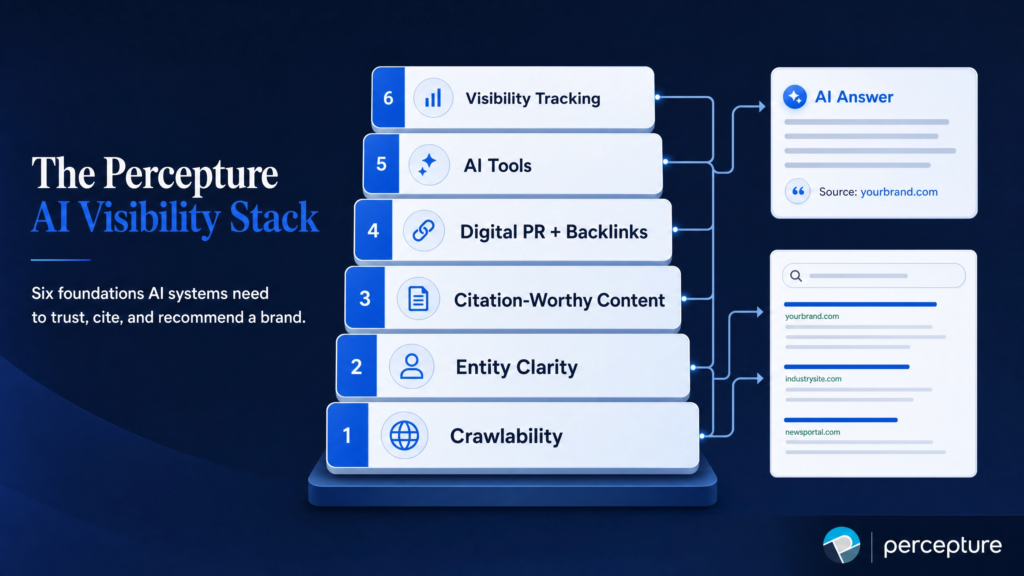
The technical layer supports travel-agency SEO content; it cannot supply missing expertise or a weak offer. A focused technical SEO audit can identify crawl, rendering and tracking barriers, while GEO services address entity clarity and answer-ready content.
No special markup guarantees visibility in AI-generated answers. For travel-agency SEO discovery, useful, indexable pages with clear entities, first-hand evidence and concise answers remain the practical foundation.
Convert traffic with a proportionate trip brief
A travel-agency inquiry form should collect enough information to qualify and route the request without asking for passport, payment, health or other sensitive traveler data.
| Field group | Useful inputs | Operational purpose |
|---|---|---|
| Trip fit | Destination or trip type, dates, flexibility, travelers and departure region | Identify specialty and timing |
| Service fit | Budget band, planning stage, service needs and special requirements | Assess model and complexity |
| Contact | Name, contact method, consent and response expectation | Enable responsible follow-up |
Tell travelers what will happen next. Confirm receipt, preserve the original organic landing source and route the trip brief to a person. Conversion rate optimization should test friction and clarity without weakening qualification.
Route inquiries by fit, not inbox order
Search visibility without advisor routing creates leads that age before anyone responds. A travel-agency SEO program therefore needs ownership, fallback rules and CRM stages before traffic scales.
| Level | Meaning | Action |
|---|---|---|
| Q0 | Spam, vendor or irrelevant request | Suppress and document |
| Q1 | Traveler with little fit or readiness | Offer a resource or nurture path |
| Q2 | Plausible fit with missing detail | Run qualification |
| Q3 | Strong fit with realistic value and timing | Prioritize consultation |
| Q4 | Existing, referred or urgent high-value fit | Route to a senior owner |
Routing for travel-agency SEO inquiries can consider destination, occasion, group size, complexity, language, departure market, urgency, existing relationship and capacity. Use automated confirmation, human ownership, reassignment and a completed loss reason. A mapped customer journey keeps the handoff visible across marketing and sales.
Measure the path to booking, not rankings alone
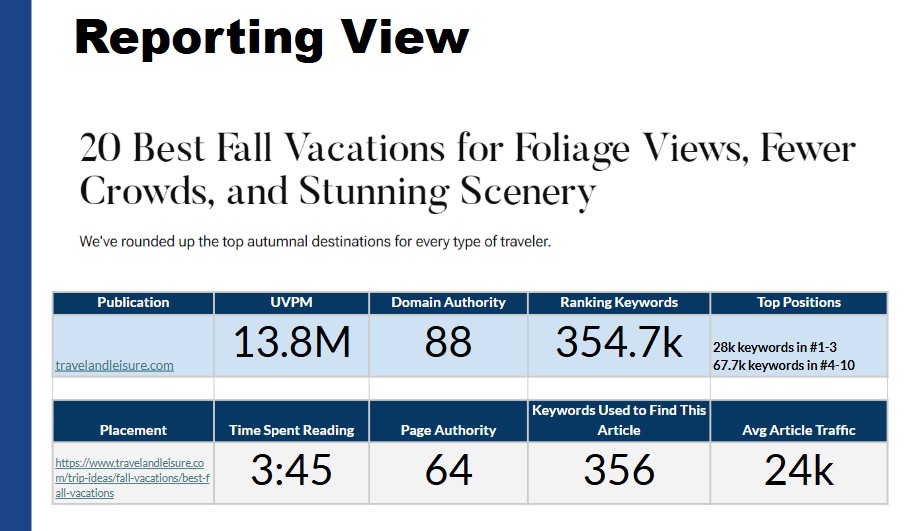
The practical travel-agency SEO measurement chain is Search Console → analytics landing or session → form, call or calendar → CRM inquiry → qualification → consultation → proposal → booking → trip economics.
| Funnel stage | Metric | Decision |
|---|---|---|
| Discovery | Priority-query visibility | Expand or refine territory |
| Engagement | Trip-page and itinerary CTA rate | Improve proof or offer clarity |
| Inquiry | Qualified organic inquiries | Scale the page or adjust qualification |
| Consultation | Booked and held rate | Improve routing or follow-up |
| Proposal | Proposal or itinerary rate | Improve qualification |
| Booking | Close rate and value | Reprioritize trip clusters |
Retain first and latest source, landing URL and call or calendar data. Deduplicate conversions and distinguish new from existing clients. Attribution and analytics can support this chain, but correlation should not be presented as causal return.
Use confidence labels such as directly tracked, CRM matched, assisted, modelled, inferred and unknown. That makes travel-agency SEO reporting more honest and more useful for investment decisions.
A 90-day implementation roadmap
Days 1–30: Define and instrument
Define ideal and unacceptable inquiries. Map specialties, economics and capacity. Audit indexation, links, forms, analytics, local entities and CRM stages. Score three to five initial trip clusters.
Days 31–60: Build the core path
Improve entity positioning and advisor bios. Build priority destination or trip pages. Fix the consultation flow, routing, tracking and internal links. Publish one evidence-rich planning resource.
Days 61–90: Publish and learn
Complete priority pages, refresh stale content, test CTA friction and review lead quality. Produce the first search-to-booking report and decide what to scale, improve or stop.
A practical travel-agency SEO roadmap may produce an ideal-trip definition, Trip Opportunity Score, page matrix, advisor proof template, routing map, CRM stages, dashboard and next-quarter plan. It should not promise rankings, inquiries or bookings.
Mistakes that weaken inquiry quality
- Chasing broad traffic without a sellable trip offer.
- Copying supplier content instead of showing advisor judgment.
- Publishing thin destination, occasion or location combinations at scale.
- Hiding advisors behind generic agency claims.
- Counting every form submission as a qualified inquiry.
- Sending every request to one unowned inbox.
- Publishing stale travel facts without a review date.
- Presenting generated text as lived experience.
- Treating schema or AI optimization as a visibility guarantee.
- Claiming return without a traceable source-to-booking chain.
Organic SEO services can fix technical and content gaps in travel-agency SEO programs, but the agency must still define its operating rules. Percepture’s guide to organic SEO services explains the broader work around sustainable search performance.
Travel-agency SEO growth: foundational, specialist or integrated?
| Approach | Best fit | Main focus | Risk to manage |
|---|---|---|---|
| Foundational SEO | Small site with crawl, metadata and structure gaps | Indexability, templates, basic pages and measurement | Technical work without a defined trip offer |
| Specialist travel SEO | Agency with clear specialties and advisor knowledge | Search territory, expert proof and commercial pages | Traffic without qualification or routing |
| Integrated inquiry system | Agency ready to connect marketing, advisors and CRM | Content, conversion, routing, nurture and attribution | Operational complexity without ownership |
Investment in travel-agency SEO growth depends on the number of specialties, site condition, evidence available, content depth, local footprint, integration needs and reporting maturity. Review SEO pricing packages for broader budget context rather than relying on a universal travel-agency price.
Specialized travel search territory can be won
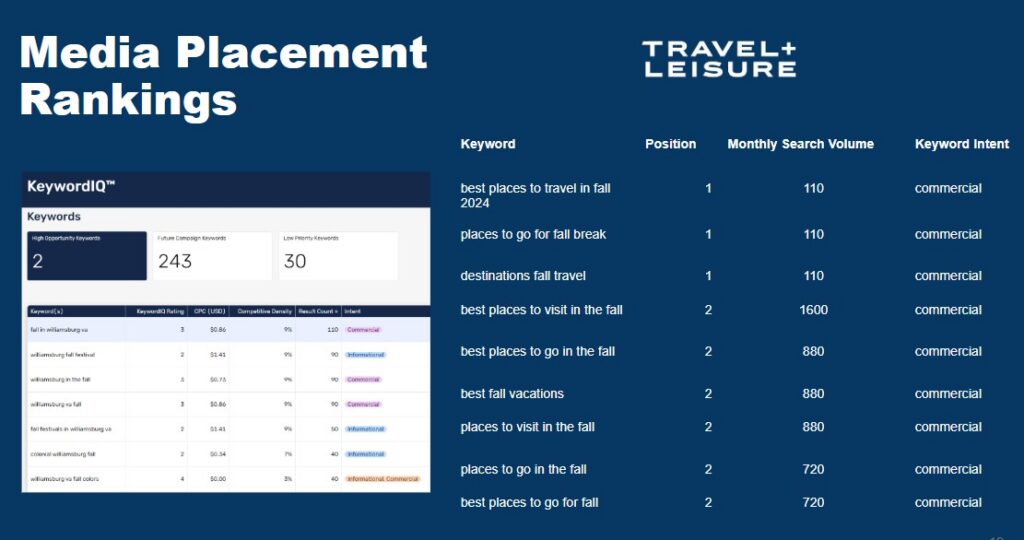
Percepture’s SEO guidance for tour operators demonstrates visibility around specialized travel search territory. The lesson for travel-agency SEO programs is to define the trips, expertise and consultation paths the agency can genuinely own.
This is search-visibility evidence. It does not, by itself, prove qualified inquiries or booked-trip revenue.
Destination discovery can create meaningful organic reach

The Greater Williamsburg work provides travel-search discovery evidence, including 18% organic growth, more than 100,000 new organic visitors and first-place rankings for priority destination terms. It can inform travel-agency SEO discovery strategy, but it is not a travel-agency inquiry or booking case study.
Travel search experience behind the inquiry framework
Specialist search visibility
Focused travel content can establish search territory around a defined commercial topic.
Destination discovery growth
Greater Williamsburg provides approved evidence of organic growth and new visitor reach.
Recognized travel authority
The Amazon and Phantom Ranch work received HSMAI Silver recognition.
Explore Percepture’s travel and tourism experience and its integrated omnichannel marketing approach to see how travel-agency demand connects with wider programs.
Connect the agency page, website and follow-up system
Compare the travel-agency SEO strategy with the technical site, nurture and paid-demand layers. Email follow-up can support travelers who are interested but not ready to consult, while paid search can test commercial demand alongside organic work.
Review Percepture pricing optionsFrequently asked questions
What does SEO for travel agency teams include?
Travel-agency SEO includes offer selection, keyword and intent mapping, destination and trip pages, advisor proof, technical SEO, local entity signals, inquiry conversion, routing and CRM measurement. The work should connect a traveler’s search to a trip the agency can serve. It should not stop at rankings or broad traffic.
How can SEO generate qualified trip inquiries?
SEO can generate qualified inquiries when high-intent searches lead to pages with a defined trip offer, credible advisor evidence and a proportionate trip brief. The agency must then route the request by specialty, value, complexity and capacity. Traffic alone does not establish lead quality.
Which keywords should a travel agency target?
A travel agency should target searches that describe profitable destinations, trip types, occasions, traveler needs and advisor problems it can genuinely serve. Business fit, intent, expertise, conversion readiness and maintenance cost matter alongside volume. The keyword is only valuable when the agency can deliver the trip behind it.
Does a travel agency need destination pages?
Destination pages are useful when the agency has distinct expertise, original information, a responsible advisor, a conversion path and a maintenance owner. A thin page assembled from supplier copy adds little value. Some searches are better served by a trip-type, itinerary, advisor or consultation page.
How is travel-agency SEO different from travel website SEO?
Travel-agency SEO defines the offers, pages, evidence, inquiry paths and measurement needed to create qualified demand. Travel website SEO focuses more heavily on crawlability, rendering, architecture, schema, performance and booking technology. Strong programs coordinate both rather than treating them as substitutes.
Does local SEO matter for an online travel agency?
Local SEO can matter when the agency is eligible for a business profile and has a real operating or service reason to target a location. Online agencies should not manufacture offices or “near me” pages. Accurate entity information, legitimate profiles and clear service areas are safer foundations.
What should an advisor bio include for SEO?
An advisor bio should identify the person, specialties, destinations, credentials, planning process and verifiable first-hand experience. It should link to relevant trip pages and explain how to consult the advisor. Avoid generic biographies, unsupported supplier relationships and duplicated bios across multiple pages.
How long does travel-agency SEO take to work?
There is no universal timeline. Site condition, competition, authority, content quality, advisor evidence, technical barriers and publishing pace all affect progress. Early work can establish measurement and improve existing pages, while new search territory may require sustained publishing, internal linking and authority development.
How much does SEO for a travel agency cost?
The cost of SEO for a travel agency depends on site condition, specialties, required pages, technical work, local presence, content evidence, conversion design, CRM integration and reporting. Compare scope and operating requirements rather than selecting a provider from a single monthly number. No fee can guarantee rankings or bookings.
How should a travel agency measure SEO leads?
Track the organic landing page and source through inquiry, qualification, consultation, proposal and booking. Preserve first and latest source, deduplicate conversions and record loss reasons. Report qualified inquiries and business stages alongside rankings, clicks and visibility so the agency can improve territory and capacity decisions.
Can AI-generated content help a travel agency rank?
AI can support research, structure and production, but it should not invent advisor experience, traveler stories, reviews or supplier relationships. Pages still need factual review, clear authorship and useful information. Generated summaries without original advisor knowledge are easy to copy and difficult for travelers to trust.
Should a travel agency use SEO or paid search?
The channels can work together. SEO builds durable pages and authority around profitable trip territory, while paid search can test demand and create visibility for selected commercial queries. Use paid search when the economics and tracking support it, then compare qualified inquiries rather than raw clicks.
Turn SEO for travel agency visibility into a better-fit trip pipeline
Percepture can review specialties, search territory, advisor proof, page architecture, local signals, inquiry flow, routing and SEO-to-booking measurement. The review does not include a ranking or booking guarantee.
Request a Travel Agency Search and Inquiry Architecture ReviewClear next steps. No ranking or booking guarantee.

About Bob Generale
Bob Generale is President of Percepture, an integrated travel marketing, SEO, GEO, digital PR, paid-media and analytics agency founded in 2004. He helps travel organizations connect search visibility, expert content, conversion paths and measurement to qualified demand.