
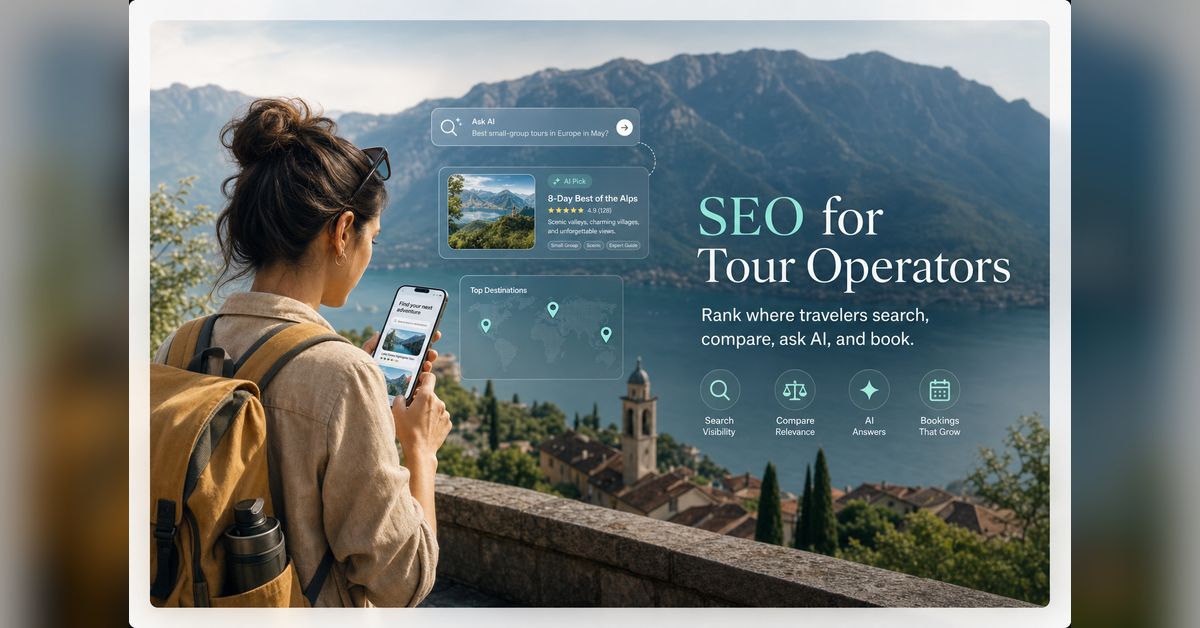

SEO for tour operators helps tour companies, activity providers, attractions, and adventure brands get discovered by travelers before they book.
SEO for tour operators is the process of improving a tour company’s visibility in Google, Google Maps, AI search, travel content, and destination searches so more travelers find, trust, and book directly. A strong strategy includes local SEO, tour pages, reviews, destination content, technical SEO, PR, and conversion tracking.
For healthcare leaders, SEO for Tour Operators should connect technical content, buyer intent, search visibility, and sales follow-up into one operating plan.

Tour operators do not need more random traffic. They need the right traveler to find the right experience when they are comparing where to go, what to trust, and who to book with. That is why tour operator SEO has to connect search visibility, local proof, destination intent, AI answers, earned media, and the booking path.
The best SEO for Tour Operators programs measure qualified conversations and sales opportunities, not just impressions, clicks, or rankings.
Percepture approaches this as a direct-booking visibility problem. Rankings matter. So do Google Business Profile signals, reviews, destination pages, press credibility, page speed, booking friction, and the way AI systems summarize your brand.
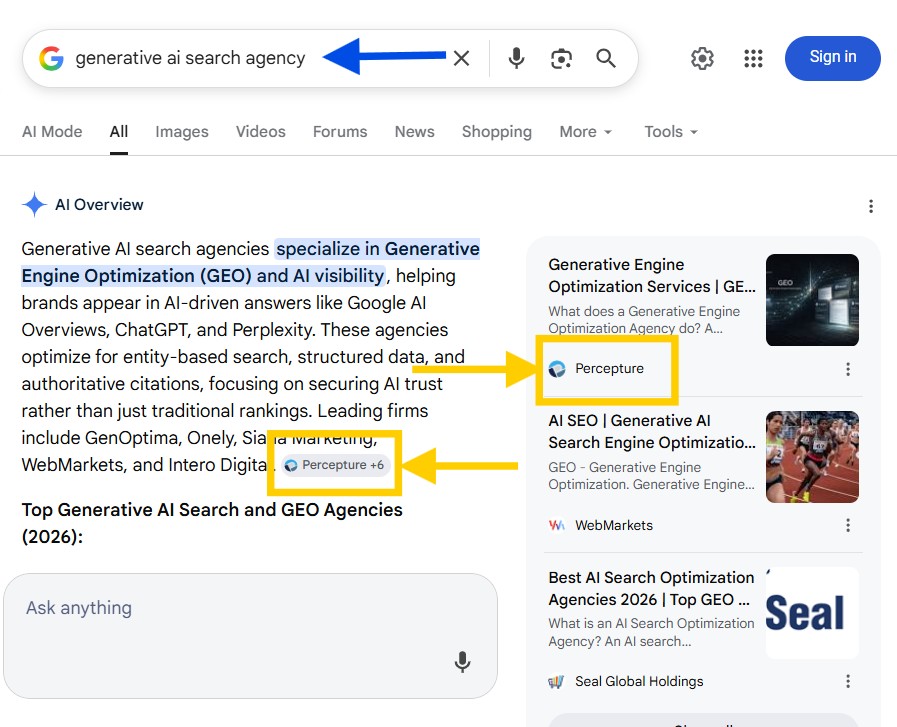
Table of contents
A practical SEO for Tour Operators strategy also has to reflect buyer committees, proof needs, comparison searches, and long sales cycles.
- Who this guide is for
- What is SEO for tour operators?
- Why tour operator SEO is different
- The Direct Booking Visibility System
- How tour operators get found in Google and AI search
- The SEO pages every tour operator needs
- Local SEO, reviews, and Google Business Profile
- OTAs, Google Things to do, and direct bookings
- Channel comparison
- 90-day plan
- Pricing and ROI
- Agency selection
- Percepture proof
- Expert Q&A
- FAQ
When SEO for Tour Operators is built this way, every channel supports the same revenue goal instead of acting like a separate campaign.
Executive summary: what tour operators should fix first
If your tours are good but direct bookings are flat, the problem is rarely one keyword. It is usually a broken path between discovery, trust, comparison, and booking.
Can travelers find each tour, destination, and experience type?
Do reviews, photos, FAQs, safety notes, and press reduce hesitation?
Can AI systems understand who you serve, where you operate, and why travelers choose you?
Can visitors move from research to booking without friction?
Value statement: SEO for tour companies works best when it is tied to revenue pages, source markets, booking behavior, and measurable conversion paths.
That is why SEO for Tour Operators needs both category-level execution and executive-level reporting.
Tour Operator SEO + AI Visibility Diagnostic
Use this quick scorecard to see whether your website is built for how travelers now search, compare, ask AI, and book.
Top tours have unique pages, clear titles, FAQs, photos, reviews, and booking CTAs.
Google Business Profile, service area, categories, reviews, and photos match real search demand.
Pages answer common traveler questions in visible text and make the brand easy to summarize.
Analytics track calls, forms, booking starts, completed bookings, and assisted conversions.
Get a Tour Operator SEO + AI Visibility Audit
No ranking guarantees. The goal is a practical visibility, trust, and conversion plan your team can act on.
Who this guide is for
The best SEO for Tour Operators programs measure qualified conversations and sales opportunities, not just impressions, clicks, or rankings.
This guide is for travel and tourism teams that need more qualified direct demand, not just more website visits. It is built for:
- adventure tour operators
- city tour operators
- walking tours
- food tours
- boat tours
- sightseeing operators
- attractions
- museums and immersive experiences
- safari and luxury travel operators
- hotel activity partners
- DMOs and CVBs supporting local operators
- operators trying to reduce OTA dependence
A practical SEO for Tour Operators strategy also has to reflect buyer committees, proof needs, comparison searches, and long sales cycles.
If your organization needs senior support beyond a single SEO project, Percepture’s travel and tourism marketing agency team connects search, digital PR, paid media, content, AI visibility, and analytics around the way travelers actually make decisions.
What is SEO for tour operators?
When SEO for Tour Operators is built this way, every channel supports the same revenue goal instead of acting like a separate campaign.
SEO for tour operators is the practice of improving how tour companies, activity providers, attractions, and adventure brands appear in organic search, local search, map results, AI answers, and destination discovery journeys so more qualified travelers find and book directly.
In plain terms, it helps your best-fit travelers answer questions like:
That is why SEO for Tour Operators needs both category-level execution and executive-level reporting.
- What should we do in this destination?
- Which tour is worth the price?
- Is this operator safe and credible?
- What is the best time to go?
- Is this good for families, groups, couples, or corporate teams?
- Can I trust this company enough to book direct?
Strong tour operator SEO also supports AI search. Google says AI search features rely on core Search ranking and quality systems, and important content should be visible in text. That means your best answers should not be trapped in images, booking widgets, hidden tabs, or scripts.
For healthcare leaders, SEO for Tour Operators should connect technical content, buyer intent, search visibility, and sales follow-up into one operating plan.
Why tour operator SEO is different
Regular SEO often focuses on pages, keywords, and backlinks. Tour operator SEO has to go further because travelers make decisions across many surfaces: Google, Maps, AI Overviews, social proof, OTAs, travel articles, destination guides, hotel recommendations, and partner referrals.
The best SEO for Tour Operators programs measure qualified conversations and sales opportunities, not just impressions, clicks, or rankings.
A plumber can win with service-area pages and calls. A tour company must win with timing, weather, seasonality, group size, safety, imagery, price confidence, reviews, accessibility, availability, and destination context.
That is why SEO for tour operators must answer both search and booking questions. A traveler may search best canyon tour for families, then compare reviews, then ask an AI tool for a suggested itinerary, then check Google Maps, then return later to book. If any step is weak, the booking can move to an OTA, a competitor, or nowhere.
A practical SEO for Tour Operators strategy also has to reflect buyer committees, proof needs, comparison searches, and long sales cycles.
Tour operator SEO also has to protect the economics of direct bookings. OTAs can help discovery, but a direct-booking strategy gives your brand more control over margin, remarketing, customer data, upsells, and repeat demand.
The Direct Booking Visibility System
When SEO for Tour Operators is built this way, every channel supports the same revenue goal instead of acting like a separate campaign.
The Direct Booking Visibility System is Percepture’s framework for helping tour operators get found, trusted, cited, and booked across Google, AI search, travel media, reviews, and conversion funnels.
That is why SEO for Tour Operators needs both category-level execution and executive-level reporting.
The Direct Booking Visibility System
Tour operator SEO is not just rankings. It is a direct-booking visibility system that connects SEO, GEO, PR, reviews, Google Maps, destination pages, AI search, and CRO.
Protect the homepage, top tour pages, destination pages, branded search, Google Business Profile, and inquiry forms.
Connect SEO, digital PR, and paid media so authority, demand, and conversion work together.
Build content around destination, things to do, tour type, safety, cost, season, and comparison intent.
Use reviews, photos, video, press, safety notes, FAQs, expert context, awards, and guide content.
Track rankings, clicks, calls, forms, booking starts, completed bookings, assisted conversions, and AI referrals where possible.
Build Your 45-Day SEO + GEO Plan
Built for operators that want visibility tied to business outcomes, not generic reports.
For healthcare leaders, SEO for Tour Operators should connect technical content, buyer intent, search visibility, and sales follow-up into one operating plan.
How tour operators get found in Google and AI search
Tour operators get found when search engines and AI systems can clearly understand the business, the destination, the experiences, the traveler fit, and the proof.
The best SEO for Tour Operators programs measure qualified conversations and sales opportunities, not just impressions, clicks, or rankings.
Start with the basics: crawlable pages, indexable content, clear page titles, strong internal links, fast mobile pages, descriptive image alt text, and schema that matches visible content. Then add depth. AI systems and search engines need enough visible context to answer related traveler questions.
Percepture’s generative engine optimization services focus on that connection between classic SEO and AI search visibility. For tour brands, this means writing pages that are easy to retrieve, cite, summarize, and trust.
A practical SEO for Tour Operators strategy also has to reflect buyer committees, proof needs, comparison searches, and long sales cycles.
A practical AI-ready tour page should include:
- who the tour is for
- where it starts and ends
- trip length and difficulty
- what is included
- what to bring
- safety and accessibility notes
- best season or time of day
- review themes
- photo and video support
- FAQs in plain text
- clear booking or inquiry next steps
When SEO for Tour Operators is built this way, every channel supports the same revenue goal instead of acting like a separate campaign.
This does not replace organic SEO services. It raises the standard. Search visibility, AI answer visibility, and conversion should be planned together.
The SEO pages every tour operator needs
That is why SEO for Tour Operators needs both category-level execution and executive-level reporting.
Most tour websites are too thin in the wrong places. The homepage tries to carry every message. Tour pages rely on booking widgets. Blog posts answer low-value questions while high-intent pages stay weak.
A strong site architecture usually includes:
For healthcare leaders, SEO for Tour Operators should connect technical content, buyer intent, search visibility, and sales follow-up into one operating plan.
- Homepage: clear positioning, top tours, proof, destination context, and fast paths to book.
- Tour detail pages: one page per major tour or activity, not a thin shared template.
- Destination pages: built around how travelers search by location, neighborhood, landmark, region, or route.
- Things to do pages: helpful, honest content that positions your tours in the broader destination experience.
- Audience pages: families, couples, groups, schools, corporate teams, luxury travelers, or adventure travelers.
- Comparison pages: your tour vs alternatives, private vs group, morning vs evening, guided vs self-guided.
- FAQ pages: practical answers that reduce booking anxiety.
- Review and proof pages: press, guest stories, awards, safety credentials, and media mentions where available.
- Partner pages: hotels, DMOs, travel advisors, schools, event planners, and group-sales buyers.
- Blog or insights: seasonal guides, itinerary support, packing advice, accessibility, weather, and local expertise.
Hospitality teams can also study Percepture’s adjacent guidance for a hotel digital marketing agency, a hotel SEO agency, and SEO keywords for hotels because many direct-booking patterns overlap.
The best SEO for Tour Operators programs measure qualified conversations and sales opportunities, not just impressions, clicks, or rankings.
Local SEO, reviews, and Google Business Profile

Local SEO is critical when travelers search near a destination, attraction, hotel, or landmark. Google says local results are influenced by relevance, distance, and prominence. Tour operators can influence relevance and prominence with accurate business information, strong content, reviews, photos, and consistent signals across the web.
A practical SEO for Tour Operators strategy also has to reflect buyer committees, proof needs, comparison searches, and long sales cycles.
For tour operators, Google Business Profile should not be an afterthought. It should support the same story your website tells.
Key actions:
When SEO for Tour Operators is built this way, every channel supports the same revenue goal instead of acting like a separate campaign.
- choose accurate categories
- keep hours and seasonal changes current
- use strong tour and location photos
- answer common traveler questions
- earn steady, specific reviews
- respond to reviews with useful context
- link to the most relevant booking or tour page
- keep name, address, phone, and website data consistent
- add posts or updates when useful
Reviews are also Trust Tokens. A review that mentions safety, guide quality, route, food, wildlife, accessibility, group handling, or family fit can reduce hesitation. Those themes should also appear in your page copy where they are true.
That is why SEO for Tour Operators needs both category-level execution and executive-level reporting.
OTAs, Google Things to do, and direct bookings
OTAs can help a traveler discover you. They can also train buyers to compare you like a commodity. The goal is not always to abandon OTAs. The goal is to know their role and build a stronger direct path.
For healthcare leaders, SEO for Tour Operators should connect technical content, buyer intent, search visibility, and sales follow-up into one operating plan.
Google Things to do can help travelers discover attractions, tours, activities, and experiences through free listings and dynamic ad formats. Operators should understand whether their booking platform, inventory, and partner setup can support that channel.
The direct-booking path should answer the questions an OTA page often answers better than an operator site:
The best SEO for Tour Operators programs measure qualified conversations and sales opportunities, not just impressions, clicks, or rankings.
- Is this available on my date?
- What is included?
- What happens in bad weather?
- Can I cancel or reschedule?
- Is this safe for children or older travelers?
- How many people will be on the tour?
- Where do we meet?
- Why book direct?
If your direct site is slower, thinner, or less reassuring than an OTA listing, SEO will expose the leakage. In one anonymized travel-marketplace review, the issue was not visibility alone. The deeper problem was conversion leakage after the visitor arrived.
A practical SEO for Tour Operators strategy also has to reflect buyer committees, proof needs, comparison searches, and long sales cycles.
SEO vs Google Ads vs OTAs vs Travel PR vs GEO
SEO for tour operators works best as part of a channel system. Each channel has a job.
When SEO for Tour Operators is built this way, every channel supports the same revenue goal instead of acting like a separate campaign.
| Channel | Best for | Speed | Cost profile | Strength | Weakness | Role in direct bookings |
|---|---|---|---|---|---|---|
| SEO | Durable discovery across tour, destination, and question searches | Medium | Compounds over time | Builds owned visibility | Takes time and discipline | Captures high-intent travelers before and during comparison |
| Google Ads | Fast demand capture | Fast | Pay per click | Control and testing | Costs stop when spend stops | Useful for top tours, retargeting, and seasonal pushes |
| OTAs | Marketplace discovery | Fast | Commission-based | Built-in traveler traffic | Margin and data tradeoffs | Useful feeder channel when direct path is strong |
| Travel PR | Authority, story, and destination demand | Medium | Campaign or retainer | Creates credibility and earned mentions | Harder to control timing | Builds trust and authority that can support search |
| AI Search/GEO | Visibility in AI answers and research journeys | Medium | Strategy and content investment | Helps brands get summarized and cited | Measurement is still developing | Supports travelers who ask AI for options and itineraries |
| Email/retargeting | Nurture and recovery | Fast | Owned list and media costs | Converts warm demand | Needs traffic and consent | Brings undecided travelers back to book |
Percepture’s travel PR strategy is important here because earned media can give travelers a reason to care before they search for a specific tour. Percepture’s travel PR packages can also help teams think through PR investment alongside SEO and paid media.
That is why SEO for Tour Operators needs both category-level execution and executive-level reporting.
How AI search changes tour operator marketing
AI search changes the unit of competition. You are not only competing for a blue link. You are competing to be included in an answer, itinerary, recommendation list, comparison, or follow-up summary.
For healthcare leaders, SEO for Tour Operators should connect technical content, buyer intent, search visibility, and sales follow-up into one operating plan.
That means your content needs entity clarity. AI systems should be able to identify:
- brand name
- destination and service area
- tour types
- traveler fit
- credibility signals
- review themes
- press or destination authority
- booking options
- limitations and safety notes
- direct contact path
The best SEO for Tour Operators programs measure qualified conversations and sales opportunities, not just impressions, clicks, or rankings.
It also means your site should be easy to crawl and summarize. Avoid putting important details only inside images, scripts, or booking widgets. Use plain text, clean headings, short answers, tables, and FAQs.
Adventure tour operator SEO deserves extra care because risk, safety, weather, fitness level, and guide credibility matter. AI answers may summarize those topics. Your site should explain them clearly and accurately.
A practical SEO for Tour Operators strategy also has to reflect buyer committees, proof needs, comparison searches, and long sales cycles.
How to measure tour operator SEO ROI
Rankings are useful, but they are not the business result. A better scorecard tracks the full booking path.
When SEO for Tour Operators is built this way, every channel supports the same revenue goal instead of acting like a separate campaign.
Measure:
- organic impressions and clicks by tour page
- Google Maps actions
- calls and form fills
- booking starts
- completed bookings
- assisted conversions
- revenue by source when available
- branded search growth
- non-brand tour and destination queries
- OTA exposure versus direct bookings
- AI referral traffic where analytics can capture it
- content that supports group, partner, or travel advisor demand
Percepture connects this measurement work with attribution and analytics and conversion rate optimization because better traffic without better booking data leaves too many decisions to guesswork.
The first 90 days
First 30 days: diagnose the booking path
Audit search visibility, local SEO, Google Business Profile, technical health, booking path, analytics, top tours, reviews, and OTA exposure. Identify the pages that already have demand and the pages that should carry revenue but do not.
Days 31 to 60: fix the high-value assets
Optimize top booking pages, Google Business Profile, schema, internal links, review flows, titles, meta descriptions, conversion paths, and quick-win content. Prioritize pages tied to revenue, not vanity traffic.
Days 61 to 90: build authority and AI coverage
Build destination and activity content, PR angles, authority links, AI-answer sections, a reporting dashboard, and a content calendar. This is where tour operator SEO starts to become a system instead of a checklist.
Buyer committee matrix
Different stakeholders care about different proof. This matrix helps align the SEO plan with the business case.
| Buyer | What they care about | Proof they need |
|---|---|---|
| CEO / Founder | Brand control, growth, margin, reputation | Direct-booking strategy and clear priorities |
| CFO | Cost, payback, OTA dependence | Measurement plan and channel tradeoffs |
| VP Marketing | Rankings, content, PR, demand quality | SEO, GEO, PR, and CRO roadmap |
| VP Sales | Groups, partners, advisors, schools | Lead quality and partner pages |
| Technical operator | Booking engine, tracking, speed, crawlability | Technical audit and implementation list |
Align SEO With the Full Revenue Path
Useful when the decision includes marketing, finance, sales, operations, and web teams.
Group sales, partners, and lead quality
Direct bookings are not only consumer bookings. Many operators sell to hotels, corporate teams, schools, travel advisors, event planners, wedding groups, and destination partners. Those buyers search differently. They need different pages, proof, and follow-up.
Build pages for group tours, private tours, school groups, corporate outings, hotel partners, and travel advisor support when those offers are real. Then support those pages with lead generation, clean CRM handoff, and clear outreach.
Percepture’s lead generation and B2B intent data capabilities can support teams that sell beyond the individual traveler.

Need better group-sales prospects?
Lead Seeker can help tour operators test source-backed prospect dossiers, verified contacts, a DISC-style read, and a suggested opener.
- 5 free verified leads
- Code: TRYFREE
- Source-backed prospect dossiers
- Useful for groups, travel advisors, corporate teams, schools, hotels, and destination partners
Find 5 Verified Travel Prospects
No credit card. Secondary tool only; the core strategy remains Percepture’s SEO, GEO, PR, and CRO offer.
How much does SEO for tour operators cost?
Costs depend on scope, competition, technical condition, content needs, PR integration, and whether the operator needs local, national, destination-level, or enterprise support.
Common investment categories include:
- audit and roadmap
- monthly SEO and content
- SEO plus GEO
- SEO plus PR plus paid media
- enterprise or destination-level support
A simple audit may define the path. A deeper program may include technical fixes, content, local SEO, digital PR, analytics, CRO, and executive reporting. For budget planning, review Percepture’s marketing pricing and then talk to Percepture about the scope that fits your market, team, and booking goals.
What to look for in a tour operator SEO agency
The right agency should understand travel behavior, not just keywords. Ask about:
- tour and destination page strategy
- local SEO and Google Business Profile
- review strategy
- AI search and GEO readiness
- technical SEO and booking engines
- direct-booking CRO
- PR and earned media authority
- analytics and revenue tracking
- OTA tradeoffs
- source markets and seasonality
- how they prioritize the first 90 days
Be careful with any agency that promises guaranteed rankings, sells traffic without conversion work, or treats every tour page like a generic service page.
Proof: how Percepture builds travel demand
Percepture was founded in 2004 and works across SEO, GEO, digital PR, paid media, content, analytics, CRO, AI systems, and lead generation. The team brings travel and tourism experience to search strategy because destinations and experiences are shaped by story, trust, source markets, and timing.
Public travel proof includes:
- Amazon / Phantom Ranch / Grand Canyon: 436 earned media placements, 3.45 billion impressions, and $63 million in earned media value.
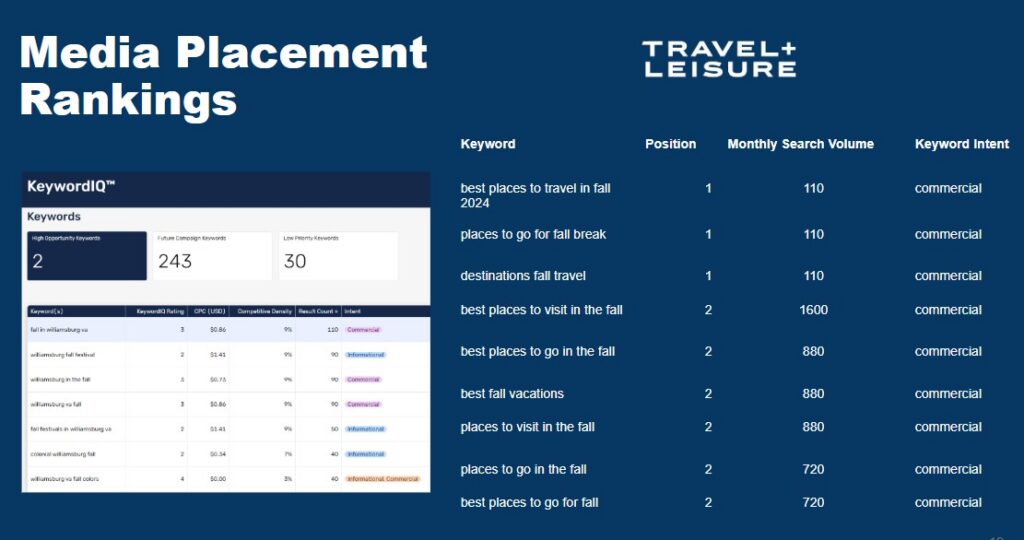
- Visit Williamsburg: FY 2022 to 2023 included 503 earned stories, 3.13 billion impressions, and a Travel Weekly Magellan Gold Award. FY 2023 to 2024 included 700+ earned stories, 1.9 billion impressions, and an HSMAI Adrian Award Silver.
- Peru / PROMPERU: ongoing work since 2015, active conversations with 400+ U.S. journalists in 2024, stories distributed to 1,600+ journalists, and $503 million in earned media value.
These proof points matter because a strong travel story can become search, PR, and authority fuel. Percepture’s Amazon Phantom Ranch travel PR case study shows how a story tied to an iconic destination can earn attention. The broader travel marketing case studies hub gives buyers more context on Percepture’s travel work.
Proof that travel visibility is built with story, search, and trust
Percepture connects destination storytelling, earned media, SEO, GEO, and conversion planning so travel brands can be found and believed.
436 placements, 3.45B impressions, $63M earned media value.
Earned stories, major impressions, and travel industry awards across two fiscal years.
Long-running U.S. journalist engagement and national destination storytelling.
Proof is used to reduce risk, not to promise identical outcomes.
Bob Generale interviews Thor Harris

Bob Generale Interviews Thor Harris: How Tour Operators Should Think About Search, AI, and Direct Bookings
A practical conversation on travel demand, AI search, PR credibility, and booking economics.
Bob: What do tour operators usually misunderstand about SEO?
Thor: Many think SEO is only about traffic. The better question is whether the right traveler can find the right experience at the exact moment they are comparing trust, price, availability, and fit. SEO for tour operators should protect the booking path, not just grow pageviews.
Bob: How is tour operator SEO different from destination marketing?
Thor: Destination marketing builds the reason to visit a place. Tour operator SEO turns that interest into a specific action. The best work connects real travel behavior, source markets, access, budget, trust, and the story that makes the trip feel worth it.
Bob: What should tour operators do before spending more on ads?
Thor: Fix the pages where money already lands. If the tour page is thin, the booking path is confusing, or reviews are weak, more ad spend can amplify the leak. Start with the top tours, local profile, analytics, and conversion path.
Bob: How does AI search change travel discovery?
Thor: AI search makes clarity more important. If your site explains who the tour is for, where it happens, what makes it credible, and how to book, AI systems have a cleaner picture. If the site is vague, AI has less to work with.
Bob: What role does PR play in ranking and direct bookings?
Thor: PR gives the story outside your own website. Earned media can build authority, shape destination demand, and help travelers trust the brand before they click. It is strongest when it supports the same message as SEO and CRO.
Bob: What should a tour operator do in the first 90 days?
Thor: Audit the booking path, fix the highest-value pages, clean up local signals, build answer-ready content, and define the measurement system. Do not chase every keyword. Protect the pages that can move revenue first.
Connect PR With Search Visibility
Senior perspective for teams balancing brand, search, AI discovery, and revenue.
Ready to build your Direct Booking Visibility System?
If your team needs more qualified direct demand, Percepture can help diagnose search, AI visibility, PR authority, local discovery, analytics, and booking-path friction.
Best fit for operators, attractions, DMOs, and tourism teams that want strategy tied to measurable action.
FAQ
What is SEO for tour operators?
SEO for tour operators is the process of improving a tour company’s visibility in organic search, local search, Google Maps, AI answers, and destination research journeys so more qualified travelers can find, trust, and book directly.
How long does tour operator SEO take?
Some fixes can improve visibility and conversion quickly, especially titles, internal links, Google Business Profile updates, review prompts, and booking-page improvements. Larger gains often take several months because content, authority, local trust, and technical improvements compound over time.
Is SEO better than Google Ads for tour operators?
SEO and Google Ads do different jobs. Ads can capture demand fast. SEO builds durable visibility and helps travelers find you without paying for every click. Many tour operators need both, with SEO supporting long-term direct demand and ads supporting seasonal or high-priority tours.
How can tour operators reduce OTA dependence?
Tour operators can reduce OTA dependence by building stronger direct-booking pages, improving local visibility, earning reviews, explaining why to book direct, tracking conversion paths, and using email or retargeting to bring undecided travelers back to the owned site.
What pages should a tour operator website have?
A strong tour operator website should have a homepage, individual tour pages, destination pages, things-to-do pages, audience pages, comparison content, FAQs, review or proof pages, group-sales pages, partner pages, and practical travel guides tied to real booking questions.
How important are reviews for tour operator SEO?
Reviews are important because they support trust, local prominence, and conversion. Useful reviews mention guide quality, safety, location, group size, family fit, accessibility, food, wildlife, or other details that help future travelers decide whether the tour is right for them.
How can a tour company show up in ChatGPT or Google AI Overviews?
A tour company can improve AI-search readiness by publishing crawlable, helpful, visible text that clearly explains the brand, destination, tours, traveler fit, proof, reviews, FAQs, and booking options. Strong Google visibility, clear internal links, and trustworthy content also help.
What is local SEO for tour operators?
Local SEO for tour operators improves visibility in location-based searches and map results. It includes Google Business Profile optimization, accurate categories, consistent business data, reviews, photos, local landing pages, destination content, and links that show relevance and prominence.
How much does SEO for tour operators cost?
Cost depends on scope. Common categories include an audit and roadmap, monthly SEO and content, SEO plus GEO, SEO plus PR and paid media, or enterprise destination-level support. The right budget should match your market, technical needs, content gaps, and booking goals.
What should I ask before hiring a tour operator SEO agency?
Ask how the agency handles tour pages, local SEO, reviews, AI search, travel PR, booking-path CRO, analytics, OTA tradeoffs, and the first 90 days. Also ask how success will be measured beyond rankings, such as calls, forms, booking starts, and completed bookings.

About the author: Bob Generale
Bob Generale is President of Percepture. He works with teams across SEO, GEO, digital PR, AI search visibility, CRO, lead generation, analytics, and growth strategy.
Bob’s perspective on SEO for tour operators is shaped by Percepture’s work across travel and tourism visibility, including campaigns where story, search, earned media, and conversion strategy all had to support business outcomes.
Author bio included for transparency, expertise, and accountability.
Related resources
- Travel and tourism marketing agency
- Generative engine optimization services
- Organic SEO services
- Travel PR strategy
- Amazon Phantom Ranch travel PR case study
- Travel marketing case studies
- Marketing pricing
SEO for tour operators works when it is tied to the whole decision path: Google, Maps, AI answers, reviews, PR, destination demand, and the booking experience. If your team is ready to build that system, Percepture can help prioritize the pages, proof, tracking, and conversion fixes that matter most.