
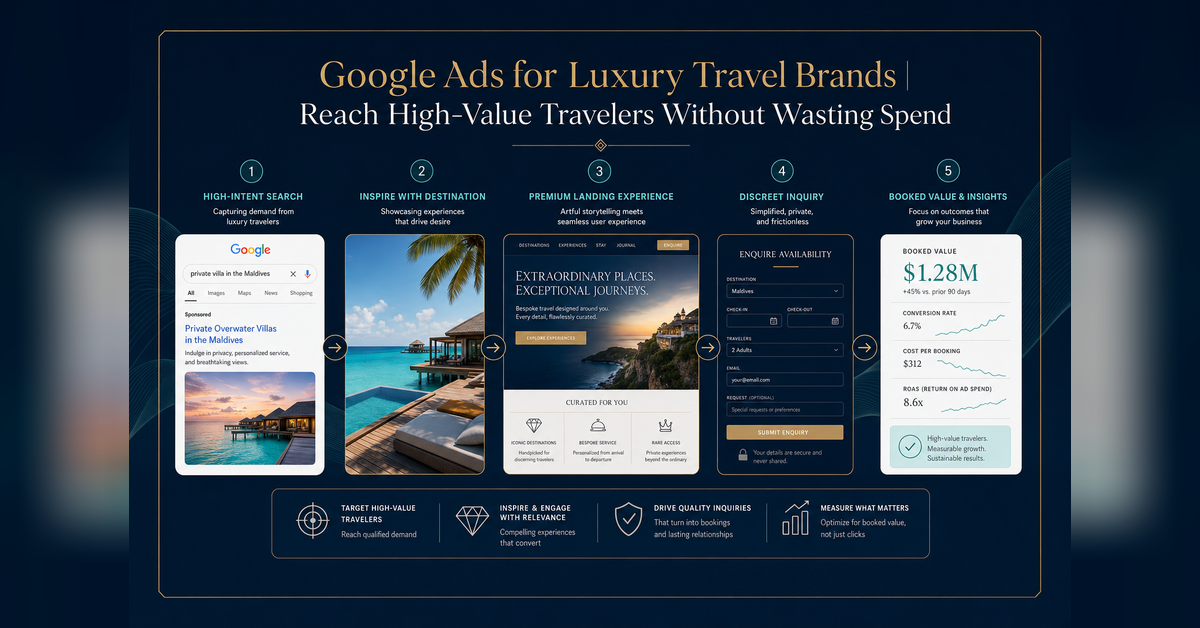

Google Ads for luxury travel brands helps premium hotels, resorts, villas, advisors and experience operators reach travelers searching for high-value trips. The strongest campaigns combine specific intent, credible proof, qualified source markets, premium landing pages and value-based conversion data so budgets favor bookings and inquiries worth acquiring.
Luxury travel advertising becomes wasteful when audience labels replace trip economics and intent. Premium buyers also verify the brand through its official site, organic search, reviews, travel media and AI-assisted research, so paid media should reinforce a credible, current web presence rather than operate as a separate funnel.
How should luxury travel brands use Google Ads?
Google Ads for luxury travel brands should capture specific high-value intent, preserve premium trust and connect the traveler to a useful next step such as availability, booking or consultation. Build campaigns around real trip economics and source-market evidence, then optimize toward qualified and booked value rather than broad traffic or easy form fills.
Executive summary
Start with economics
Define which bookings and inquiries can support acquisition cost before setting the media budget.
Capture intent, not a wealth stereotype
Specific searches, source-market evidence and prior booking behavior are stronger inputs than assumptions about affluence.
Protect the trust layer
The ad, official site, organic visibility, reviews, proof and booking path should tell the same credible story.
Scale from qualified value
Expand only after tracking, inventory and follow-up can distinguish valuable demand from easy but low-value actions.
Best fit: premium travel businesses with a defined offer, measurable booking economics and a clear path from search to reservation or qualified consultation.
How Google Ads for luxury travel brands works
Luxury travel paid media is a value-and-confidence problem, not a traffic-volume problem. A traveler may move from qualified interest to availability, consultation, proposal, deposit, booking, traveled value and eventually repeat or referral value. Those steps are not equal, and the reporting system should not treat them as equal.
High booking values raise the cost of attracting the wrong person. Long planning cycles also mean a campaign may influence a booking well before the final reservation. Limited inventory, international source markets, complex products and privacy expectations add more operational pressure.
Luxury travel campaigns should optimize for value, not volume. A high click-through rate does not prove the right traveler clicked, and the cheapest inquiry can be the most expensive when it cannot become a profitable booking. For Google Ads for luxury travel brands, this requires connecting media activity with the booking stages and values that matter to the operator.
Practitioner review
Reviewed by Joe Zinda, Paid Specialist at Percepture. Joe brings a decade of digital-strategy experience, with expertise in Google Ads, performance marketing, audience targeting, cross-channel strategy and conversion optimization.
“A cheaper click is not the goal. The goal is a reservation, inquiry or booked trip from the right traveler and market.”
Hospitality operating records support work involving lodging, events, dining, geography, search terms, negative keywords, assets, GA4/GTM, reservations, remarketing and reporting. These examples demonstrate hospitality paid-media experience. They are not luxury-travel revenue results.
Luxury travel ads preflight
- Confirm the booking, inquiry or revenue objective.
- Define traveler, occasion and product fit.
- Separate premium intent from broad inspiration.
- Audit search terms, negatives and brand leakage.
- Confirm source market, language and booking window.
- Verify current availability, inclusions and pricing path.
- Review the ad, creative and landing page as one experience.
- Test analytics, calls, forms and booking continuity.
- Import qualified and booked values where possible.
- Compare spend with margin, capacity and lost reasons before scaling.
An affluent-audience label cannot compensate for weak intent, generic creative or missing booking data. Google Ads for luxury travel brands performs best when these operating controls are confirmed before budget expands.
High-consideration campaigns need operational control
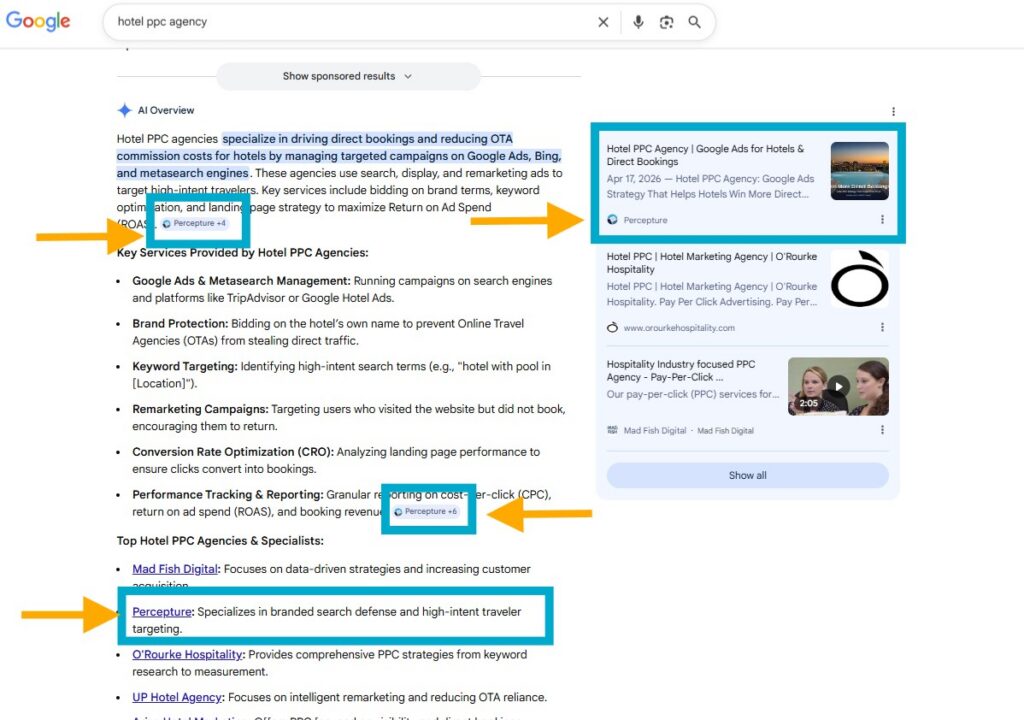
Anonymized hospitality work involving premium rooms, suites, weddings, private events, dining, extended stays, reservation paths and remarketing shows why product economics must stay separate. Search terms, source markets, landing pages and conversion values require active control when inventory or capacity changes. In Google Ads for luxury travel brands, these controls keep spend aligned with products the business can sell and fulfill.
This proof demonstrates operating experience and decision quality, not an approved luxury-travel booking lift. Readers looking for property-specific execution can also review Percepture’s hotel PPC agency guide.
Luxury travel paid media, hotel advertising and tourism marketing experience since 2004.



Build the budget around evidence before you buy more traffic
Start with booking economics, traveler intent, source markets, landing-page readiness and measurement gaps. A short baseline prevents the account from teaching the platform to chase the wrong conversion.
The Luxury Traveler Value-Control Ads System
The Luxury Traveler Value-Control Ads System is Percepture’s ten-stage method for connecting premium demand with inventory, proof and booked value. It gives Google Ads for luxury travel brands a practical operating structure instead of relying on an audience shortcut.
The ten-stage framework
Premium economics
Decision: Which bookings support acquisition?
Output: Allowable value model
Traveler and occasion
Decision: Who is traveling, and why?
Output: Opportunity map
Intent territory
Decision: Which searches signal fit?
Output: Keyword map
Source market
Decision: Where should demand originate?
Output: Market plan
Campaign portfolio
Decision: Which campaign has which job?
Output: Architecture
Creative and proof
Decision: Why should the traveler trust the brand?
Output: Authority library
Premium landing experience
Decision: Does the page continue the promise?
Output: Conversion plan
Conversion and value
Decision: Which outcomes matter?
Output: Measurement map
Bidding and budget
Decision: How should spend learn?
Output: Value-control model
Reallocation
Decision: Which markets and trips deserve more?
Output: Decision log
A scorecard for Google Ads for luxury travel brands should expose weaknesses in economics, intent, proof, measurement or fulfillment before those weaknesses absorb more media spend. Do not scale until the offer, proof, landing experience, conversion quality and operations can support the promise.
Why affluent-audience targeting is not enough
Google Ads can use search intent, location, first-party audiences and eligible audience signals to help reach likely premium travelers, but no audience setting proves someone is wealthy or ready to book. Google Ads for luxury travel brands should prioritize specific intent, consented first-party data and conversion value.
Search behavior and booked value usually provide stronger evidence than a broad affluent-audience label. Use demographic or income signals only as secondary lawful context. Never treat a postal code, device or segment as proof of wealth, and never use sensitive data to build a targeting assumption.
“Affluent audience” is not a strategy. Search intent, first-party evidence and booked value are more reliable than assumptions about who appears wealthy.
Identify premium search intent
Luxury intent is often revealed through specificity rather than the word “luxury.” A traveler may reveal premium intent through a private villa, suite, safari guide, yacht route or bespoke itinerary query without using that label.
Useful patterns combine a destination with a property type, occasion, service level, amenity, route or availability need. Examples include destination plus villa, private guide, honeymoon suite, family safari, charter duration, custom itinerary, brand rates and property reviews.
For Google Ads for luxury travel brands, exact match can control proven terms while phrase match supports measured discovery. Broader matching should follow reliable value signals, active negative-keyword governance and enough budget to interpret results.
Potential negatives include jobs, courses, free, wholesale, supplier login, customer service, backpacking, hostel, templates and unrelated real-estate terms when they do not fit the offer. Negative keywords should protect the offer without excluding legitimate premium comparison behavior. Percepture’s guide to technical SEO for hotels provides additional context on keeping property experiences technically sound.
Build campaigns by product and value
Separate campaigns when trip economics, inventory, traveler intent or conversion paths differ. Hotels, villas, private tours and advisors should not share one structure merely because each serves a premium audience.
Campaign architecture for Google Ads for luxury travel brands
| Campaign | Demand | Primary job |
|---|---|---|
| Brand or property | Brand, reviews, suites, availability | Protect high intent |
| Destination and product | Resort, villa, lodge, yacht | Capture product selection |
| Experience or itinerary | Safari, charter, private route | Capture experience intent |
| Occasion | Honeymoon, family, retreat | Match the use case |
| Advisor or service | Planning and concierge searches | Capture requests for help |
| Availability | Dates, package, departure | Capture booking readiness |
| Comparison | Alternatives and property comparisons | Manage consideration |
| Remarketing | Deep visitors and booking abandoners | Return qualified planners |
Campaign ownership matters. This guide focuses on paid acquisition for premium travel demand. Broader destination execution belongs in tourism advertising, while organic discovery belongs in hotel and travel SEO. See the hotel SEO agency guide and the hotel SEO guide for those adjacent workstreams.
Choose source markets
The destination belongs in the query and landing page. The source market belongs in targeting and budget decisions. Use historical booking value, airport access, language, currency, season, trip duration, CRM evidence, supplier fit and sales capacity to choose markets.
International campaigns also need localized language, currency, fees, contact options, privacy treatment and booking guidance. Cloning one English page across several countries ignores material differences in traveler expectations and booking friction. Source-market choices for Google Ads for luxury travel brands should reflect those differences instead of spreading one campaign uniformly across countries.
Source-market planning should connect with the full customer journey. A search click may lead to a call, advisor conversation, proposal or later direct booking, so the campaign structure must preserve that continuity.
Write credible luxury ads
Premium travelers buy confidence before they buy the itinerary. Exclusivity without specificity sounds like advertising. Strong creative names the product, explains who it fits and uses credible details about the experience, expertise, inclusions or next step. Creative for Google Ads for luxury travel brands should make the traveler confident that the advertised experience is specific, available and relevant.
For example, “Private Botswana Safari Planning” is more useful when followed by a clear statement about bespoke lodge and guide itineraries for couples or families. The ad can invite the traveler to confirm dates, interests and travel style with a specialist.
Premium creative should demonstrate why the trip is exceptional, not repeatedly announce that it is luxurious. Original visuals, named expertise, clear inclusions and real availability carry more weight than unsupported superlatives or fake scarcity. A coordinated content marketing program can help organize those proof assets for ads and landing pages.
Build a premium landing experience
A premium ad that lands on a generic or slow page wastes both budget and brand equity. Google Ads for luxury travel brands needs a page that continues the exact property, trip or service promise made in the ad.
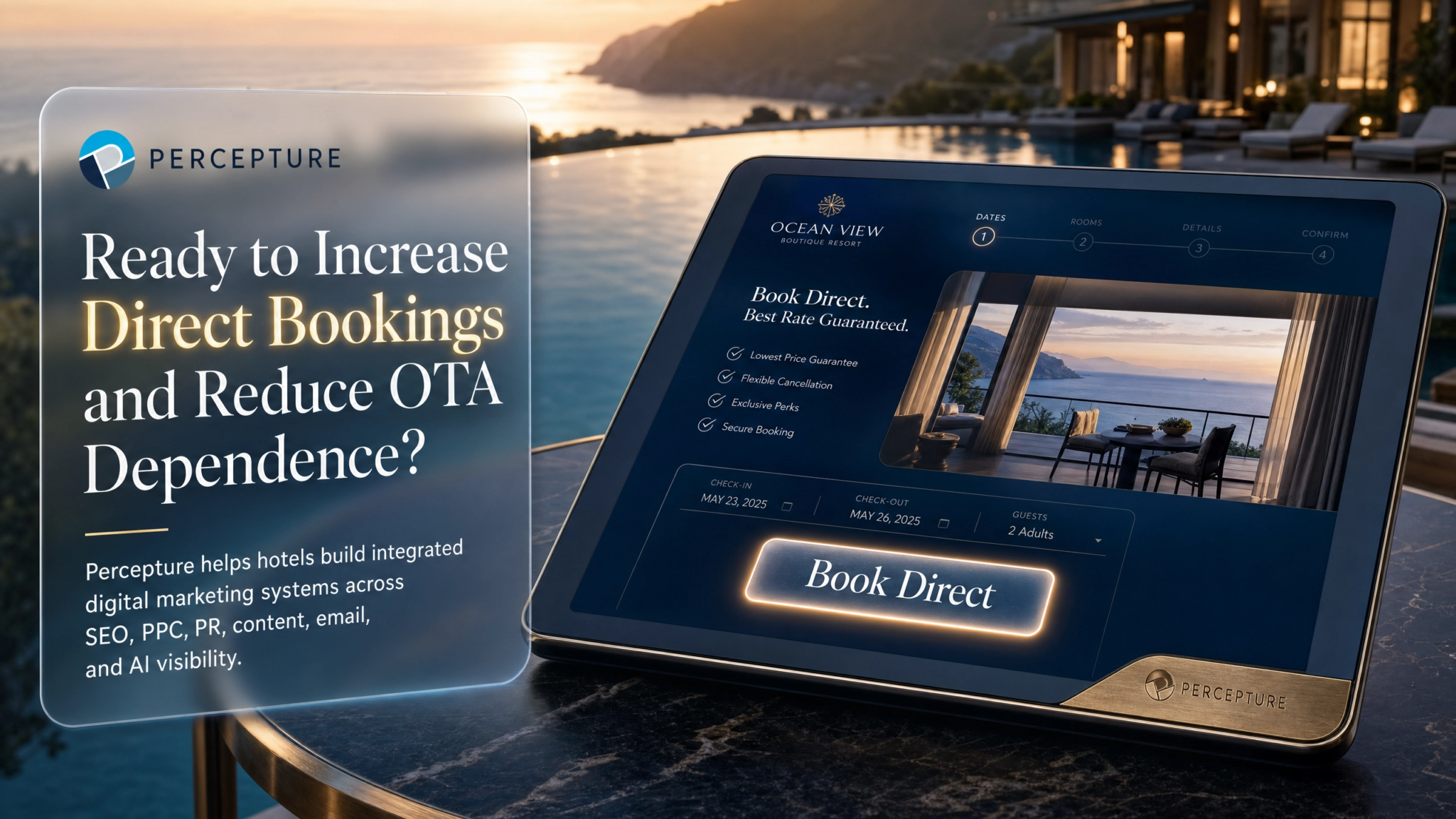
Above the fold, show the product or service, premium visual evidence, one primary action, useful availability or qualification cues, proof and next-step clarity. The rest of the page should cover traveler fit, product detail, inclusions, expert guidance, logistics, reviews, FAQs and booking or inquiry options. Landing pages supporting Google Ads for luxury travel brands should preserve this continuity through any external reservation or consultation path.
The brand must reduce risk without making the page feel transactional or cluttered. Keep the experience fast, restrained, accessible and continuous across any booking domain. Percepture’s conversion rate optimization service addresses the page and decision-path issues that media settings alone cannot fix.
Paid media captures demand. The rest of the web helps the traveler believe you.
A premium traveler may click an ad and then verify the company through its official site, organic search, reviews, travel media, social discussion or an AI assistant. That makes paid search part of a wider trust system, not a sealed campaign funnel.
Keep official information crawlable and current
Rates, inclusions, policies, contact information, room or itinerary details and booking paths should be easy for people and search systems to retrieve. Update them when the underlying facts change, not simply to manufacture a freshness signal.
Publish what a generic page cannot reproduce
Use first-hand itinerary knowledge, named experts, original photography, real property detail, local insight, booking constraints and actual traveler questions. Useful experience is harder to copy than another generic “luxury travel tips” page.
Earn validation outside your own domain
Legitimate reviews, reputable press, recognized awards and credible third-party discussion can corroborate what the brand says about itself. For high-consideration travel, that validation can reduce risk before the inquiry or booking.
Do not turn GEO into a spam layer
Avoid mass-produced comparison pages, self-awarded “best” listicles, fake reviews, artificial date refreshes, doorway-style variations and prompt-injection gimmicks. They may create short-term visibility while weakening the search, brand and trust systems the campaign depends on.
Measure AI visibility as directional evidence
A mention or citation can show that the brand is entering a research surface. It is not a booking. Track branded demand, qualified inquiries, assisted paths, deposits and booked value separately so AI visibility does not become a vanity KPI.
Track booking value
A $30,000 booking and a low-fit brochure request should not teach the system the same lesson. Track availability checks, booking starts, qualified forms, calls and consultations, then connect downstream proposals, deposits, booking values and cancellations where the business can do so lawfully. Measurement for Google Ads for luxury travel brands should preserve those distinctions from the initial action through the final booking outcome.
Google Ads for luxury travel brands becomes more useful when reporting distinguishes an observed inquiry, qualified inquiry, platform-attributed booking, imported booking, booked revenue, contribution value, assisted conversion and unknown outcome. Deduplicate events so one traveler journey does not create several competing primary conversions.
Use analytics, tag management, call tracking, cross-domain measurement, CRM stages and offline value imports as appropriate to the sales path. Percepture’s attribution and analytics service helps connect media activity with the outcomes leaders use to make budget decisions.
Choose bidding and campaign types
Automated bidding amplifies the conversion definition it receives. If every form submission has the same value, the system is encouraged to find more forms, not necessarily more profitable travelers.
Guardrail: automation should follow trustworthy conversion data. Do not scale because a platform, prompt tracker or dashboard shows more activity; scale when qualified and booked outcomes support the decision.
Match bidding to data quality
| Data condition | Practical approach |
|---|---|
| New account or weak tracking | Use a tight structure and conservative controls. |
| Reliable primary conversions | Test conversion-focused bidding with close monitoring. |
| Stable qualified economics | Evaluate acquisition targets against lead quality. |
| Consistent booking values | Evaluate value-focused bidding against contribution. |
| Mixed values or long sales cycle | Import qualified stages and booking values before aggressive automation. |
Bidding for Google Ads for luxury travel brands should advance only as conversion data becomes reliable enough to distinguish low-value actions from qualified and booked outcomes.
A luxury brand should not use Performance Max to avoid building a search strategy. Search campaigns provide a direct view of expressed demand, while other campaign types can support visual discovery, remarketing or hotel inventory when the data and creative justify them. Google Ads for luxury travel brands still needs clear campaign roles regardless of automation.
Paid search should also connect with paid search management, media buying and the broader omnichannel plan rather than operating as an isolated traffic source.
Google Ads for luxury travel brands: budget and ROAS framework
Plan luxury budgets backward from contribution value and capacity, not forward from an arbitrary daily amount. Budgeting Google Ads for luxury travel brands requires a defined relationship among click costs, qualified inquiries, booking probability and contribution value. No universal luxury CPC, lead-cost, conversion-rate or ROAS figure can account for different products, margins, booking windows and conversion definitions.
Budget calculation
- Allowable acquisition cost = booking contribution value × acceptable marketing share.
- Qualified inquiries needed = target bookings ÷ inquiry-to-booking rate.
- Clicks needed = qualified inquiries ÷ click-to-qualified-inquiry rate.
- Media budget = clicks needed × expected CPC.
Hypothetical illustration: A target of three bookings, a 20% inquiry-to-booking rate, a 6% click-to-qualified-inquiry rate and an $18 CPC would require 15 qualified inquiries, 250 clicks and $4,500 in media. If contribution value were $6,000 per booking, three bookings would represent $18,000 before management, creative, fulfillment, cancellations and overhead.
| Planning situation | Illustrative monthly media |
|---|---|
| One product or market validation | $3,000–$7,500 |
| Focused premium brand across several markets | $7,500–$20,000 |
| Multi-property or international portfolio | $20,000–$50,000+ |
These are planning ranges, not industry averages. They exclude management, creative, landing pages, feeds, tracking, CRM and content. Current agency options can be reviewed on Percepture’s paid ads pricing page.
What is a good conversion rate?
There is no universal luxury travel conversion-rate benchmark because “conversion” may mean a guide request, qualified itinerary inquiry, hotel booking, villa quote or deposit. Define the action, product value, source market and booking window before comparing rates. A benchmark without a conversion definition is not a benchmark.
What is a good ROAS?
A useful ROAS target reflects margin, commissions, cancellations, management costs and repeat value. Revenue-only ROAS can make an expensive low-margin booking appear stronger than a smaller high-margin booking. Google Ads for luxury travel brands should therefore report both booked revenue and the contribution measure used by leadership.
Luxury paid-media readiness score
| Category | Points |
|---|---|
| Premium economics | 15 |
| High-value intent | 15 |
| Offer and inventory readiness | 10 |
| Source-market evidence | 10 |
| Creative and proof quality | 10 |
| Landing experience | 10 |
| Conversion and value tracking | 15 |
| First-party data and privacy | 5 |
| Sales or advisor capacity | 5 |
| Reporting governance | 5 |
- 85–100: ready for controlled scaling.
- 70–84: launch with defined gaps.
- 55–69: limited validation only.
- Below 55: repair the system before adding spend.
These are planning bands, not industry standards. Readiness for Google Ads for luxury travel brands depends on whether the brand can support demand operationally and measure the resulting value. Do not increase spend until both conditions are met.
Adapt campaigns by luxury business model
Google Ads for luxury travel brands requires different campaign priorities and value signals for each operating model.
| Business | Priority campaign | Meaningful conversion | Common waste |
|---|---|---|---|
| Luxury hotel or resort | Brand, destination-property and suites | Direct booking value | Sending suite demand to a generic homepage |
| Villa or private residence | Destination, features and availability | Qualified stay inquiry | Buying broad rental traffic |
| Luxury advisor | Destination, occasion and planning help | Qualified trip brief | Counting every consultation request equally |
| Safari or expedition | Route, wildlife, season and private group | Deposit or qualified inquiry | Advertising unavailable departures |
| Yacht or charter | Route, vessel and duration | Qualified charter request | Mixing low-fit browsing with charter demand |
| Luxury cruise | Route, suite and ship | Availability check or booking | Ignoring suite-level economics |
| Private aviation | Route and aircraft need | Qualified quote request | Optimizing toward unqualified quote volume |
| Destination organization | Itinerary, dining, stays and experiences | Relevant partner referral | Using visitor volume without partner evidence |
Each model needs its own value signal. Google Ads for luxury travel brands cannot optimize well when a room booking, villa inquiry, safari deposit and advisor consultation all share the same campaign logic.
Reporting that supports decisions
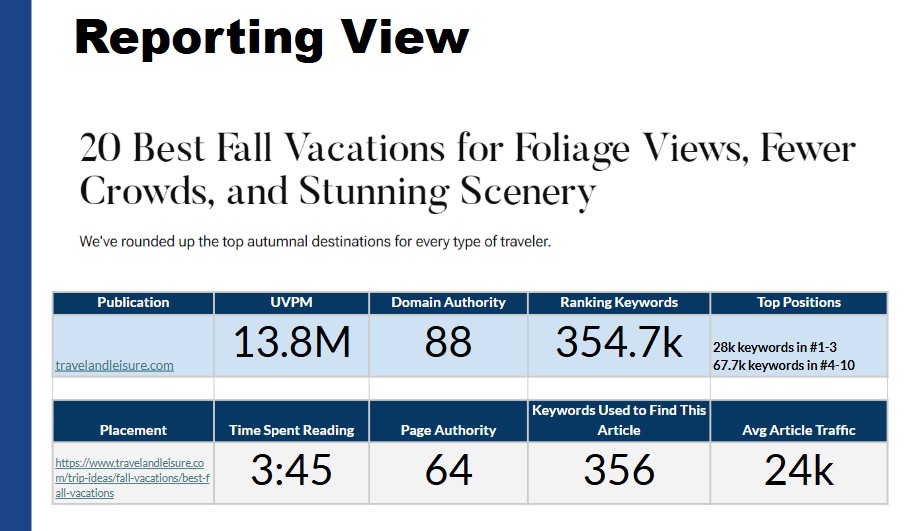
Weekly reviews of Google Ads for luxury travel brands should cover spend, search terms, negatives, qualified actions, geography, inventory and tracking health. Monthly reviews should add cost per qualified inquiry, booking rate, booked or contribution value, source market, product, cancellations, capacity and assisted paths.
Reporting for Google Ads for luxury travel brands should reveal where valuable demand came from and why spend changed. Clear reporting also supports executive decisions about whether to expand, narrow, repair or stop a campaign.
Launch a 90-day campaign
Days 1–30: value and readiness
Choose one premium product or occasion. Define contribution value, audit high-value bookings and source markets, map intent and negatives, verify inventory, repair tracking and score readiness.
Days 31–60: controlled launch
Launch brand coverage and one high-value search campaign. A controlled launch of Google Ads for luxury travel brands should use measured matching, test distinct message angles, review terms frequently and record inquiry quality.
Days 61–90: value optimization
Import qualified and booked values, improve landing-page proof, adjust by product and market, pause unavailable inventory and decide whether to scale, narrow, improve or stop.
A 90-day pilot should establish a trustworthy value-control system. It should not promise positive ROAS. The purpose is to determine whether Google Ads for luxury travel brands can produce measurable, operationally supportable demand for the chosen offer.
Avoid common waste
Common waste patterns include broad luxury targeting, demographic assumptions, generic creative, homepage traffic, weak negatives, destination-only geography, one value for every action, automation before tracking, no booking measurement, revenue-only ROAS, fake scarcity, excessive remarketing, poor localization and no capacity check. Add one more: do not create scaled SEO or GEO pages simply to manufacture visibility around the same offer.
Google Ads for luxury travel brands wastes spend when the campaign looks premium but targeting, landing experience and measurement remain generic. The practical fix is to document campaign roles, conversion definitions, exclusions, inventory limits and reallocation decisions.
Why Percepture has a point of view
Hospitality and direct booking
Campaign and conversion experience across lodging, reservations, dining and event demand.
Search and AI visibility
Organic and paid-search planning that separates page ownership and buyer intent.
Authority and conversion systems
Content, public relations, analytics and landing-page work that supports traveler confidence.
Percepture’s approach to Google Ads for luxury travel brands draws on connected experience across paid media, direct-booking paths, visibility, authority and measurement. Explore Percepture’s travel and tourism experience, public relations services and digital PR services for connected visibility and authority work.
Review the wider acquisition system
Google Ads for luxury travel brands works best when search visibility, content, authority, measurement and landing-page experience support the same premium promise.
Frequently asked questions
Do Google Ads work for luxury travel brands?
Google Ads for luxury travel brands can capture travelers who are actively researching premium properties, private experiences, bespoke itineraries and trusted planning services. Results depend on the offer, source market, inventory, landing experience, conversion tracking and follow-up process. The campaign should be evaluated against qualified inquiries and booked value, not clicks alone.
Can Google Ads target affluent travelers?
Google Ads can use search intent, location, consented first-party audiences and eligible audience signals, but no setting proves that a person is wealthy or ready to book. Google Ads for luxury travel brands should prioritize specific travel intent, historical source markets and booked-value evidence before making assumptions based on demographics.
Which keywords should luxury travel brands target?
Google Ads for luxury travel brands should start with combinations of destination, property or experience, occasion, service level and availability. Private villa, named suite, bespoke itinerary, family safari, yacht route and specialist advisor searches may signal premium intent. The strongest term does not always contain the word “luxury.”
How much should a luxury travel brand spend?
Budgets for Google Ads for luxury travel brands should work backward from contribution value, booking targets, inquiry-to-booking rate, click-to-qualified-inquiry rate and expected click cost. The resulting amount is a planning model, not an industry average. Capacity, seasonality, management, creative, tracking and landing-page costs must also be considered.
What is a good conversion rate for luxury travel ads?
There is no universal rate because a conversion might be a brochure request, qualified itinerary inquiry, availability check, deposit or direct booking. Define the action, product value, source market and booking window before comparing performance. A higher form rate can still hide weak booking quality.
What is a good ROAS for luxury travel?
A useful target accounts for margin, commissions, cancellations, management costs, fulfillment and repeat value. Revenue-only ROAS may favor a large but low-margin booking. Leadership should compare booked revenue with contribution value and the full cost required to acquire and serve the traveler.
Should luxury brands use Search or Performance Max?
Search is useful for capturing explicit traveler intent and reviewing the terms that generated traffic. More automated campaign types may support broader coverage when conversion values, creative assets and inventory data are reliable. Google Ads for luxury travel brands still requires a clear search strategy and sound measurement regardless of campaign type.
How long should a luxury travel Google Ads test run?
A 90-day plan can establish campaign controls, tracking quality, search-term learning and early inquiry evidence, but it should not guarantee positive ROAS. Long booking cycles may require more time to connect inquiries with deposits and completed bookings. Set review points based on data quality and operational capacity.
Reach valuable travelers without teaching Google to chase low-value actions
Percepture can review the economics, intent, campaign structure, landing experience and measurement behind Google Ads for luxury travel brands.