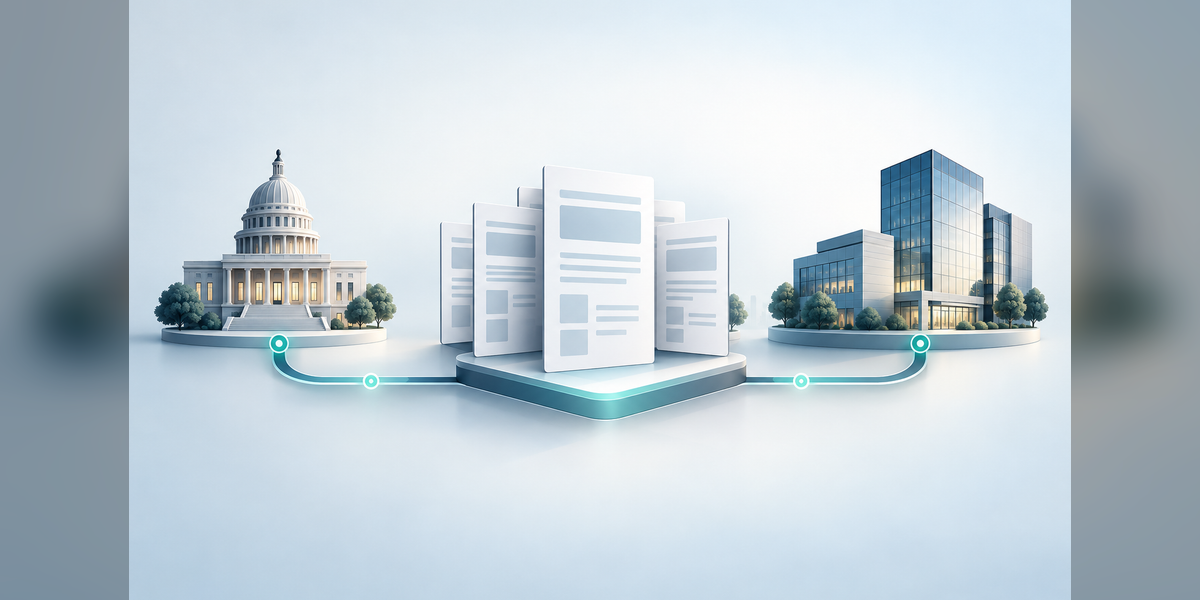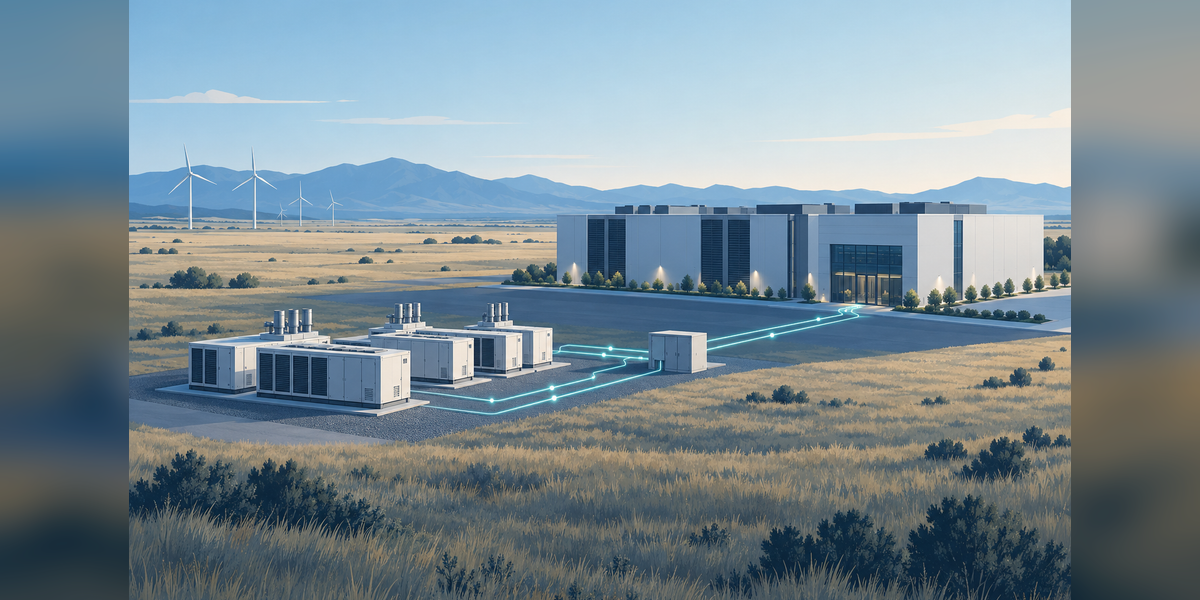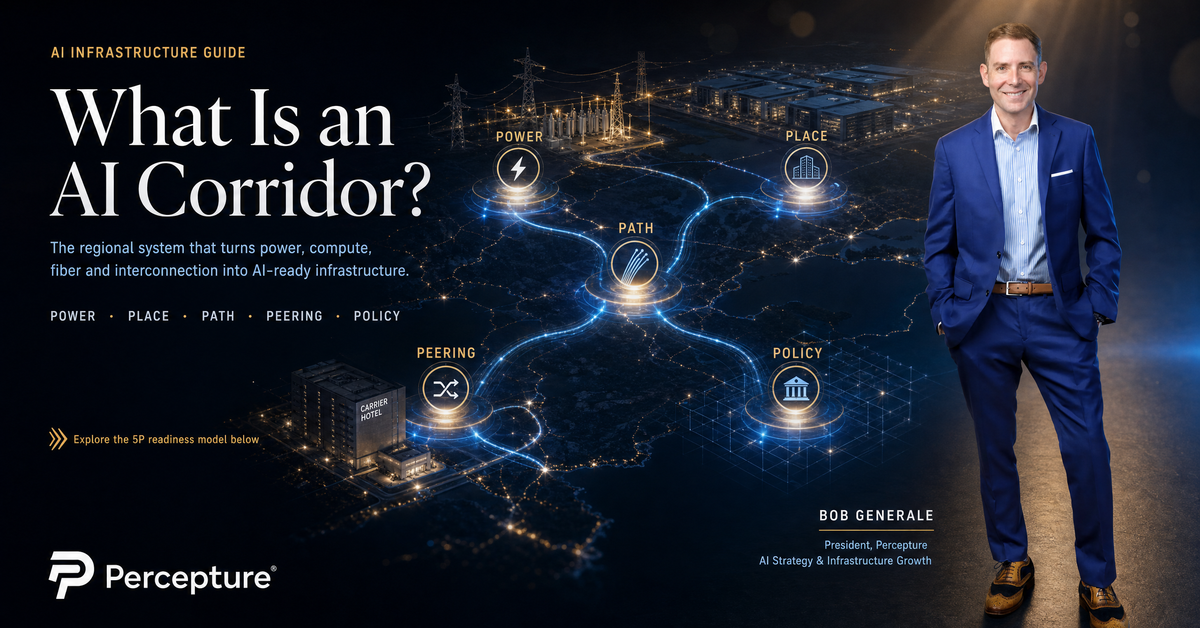

An AI Corridor is a coordinated regional system of power, data centers, compute, fiber, interconnection and operating rules that moves and processes AI workloads across locations. It is infrastructure working as one system, not a single building, cable route or GPU cluster.
The term matters because AI plans often start with compute while power, geography, route access and interconnection are treated as separate projects. A useful corridor assessment starts with the dependencies that must physically and commercially exist before that compute can serve users.






What is an AI Corridor?
An AI Corridor is regional infrastructure that coordinates power, compute facilities, terrestrial or subsea fiber, cloud and edge access, physical interconnection and governance across multiple locations. Its purpose is to let AI workloads, data and services move between the places where they are created, processed, exchanged and consumed.
Executive summary
Physical
Every workload depends on energized equipment in real facilities connected by real routes.
Regional
The model links multiple markets or sites instead of treating one campus as the whole system.
Interconnected
Fiber creates reach. Interconnection determines where networks, clouds, platforms and users can actually exchange traffic.
Commercial
A technically possible route is not enough. Access terms, operators, permits, policy and deployment timing must align.
Best used by: executives, investors, data center and network operators, economic-development leaders and technical marketing teams evaluating whether the regional infrastructure claim is operationally credible.
What makes an AI Corridor different?
A fiber route connects points. A data center houses equipment. A cloud region groups cloud capacity within a market. An AI factory concentrates systems for producing AI outputs. Each can be part of a corridor, but none is the whole model.
The difference is coordination across places. Power must be available where compute will operate. Facilities must sit near usable routes. Those routes must reach interconnection points where carriers, cloud platforms, enterprises and other networks can exchange traffic.
This physical view also changes how teams define the market. A telecom marketing agency should not reduce the story to a technology slogan. The category has to reflect how operators build, connect and commercialize infrastructure.
Start with the readiness questions
Before applying the label, map the five physical and commercial dependencies. Use the viability scorecard later on this page to separate operating evidence from assumptions, proposals and broad announcements.
Open the readiness checklistThe Percepture 5P AI Corridor Readiness Model
The Percepture 5P model begins with what must exist before compute becomes useful. It organizes corridor planning around Power, Place, Path, Peering and Policy.
Power
Can the proposed locations energize the planned equipment? Review grid access, generation, substations, density, availability timing, redundancy and the sequence in which capacity can come online.
Place
Where are the data centers, compute clusters, edge nodes, enterprises, data sources and end users? Geography determines which connections are useful and which routes add avoidable distance.
Path
Which metro, middle-mile, long-haul and subsea systems connect those places? Review route diversity, landing points, construction dependencies and available transport products.
Peering
Where can carriers, cloud platforms, enterprises, content networks and AI platforms interconnect? Look for IXPs, carrier hotels, meet-me rooms, cloud on-ramps, DCI and carrier-neutral access.
Policy
Which permitting, security, sovereignty, data-governance and community conditions shape deployment? Policy can change where infrastructure is built and how workloads or data may move.
How to apply the 5P model
Map what exists
Build the corridor map from operating sites, power access, routes, interconnection facilities, cloud access and governing jurisdictions.
Mark dependencies
Identify which assets depend on proposed construction, new commercial agreements, permits or future power availability.
Test the weakest link
A corridor should be evaluated by the dependency most likely to delay, restrict or fragment the system.
AI Corridor vs. AI factory, data center, cloud region and fiber corridor
| Model | Primary purpose | Geographic scope | Power requirement | Compute | Transport | Interconnection | Typical owner/operator model |
|---|---|---|---|---|---|---|---|
| AI Corridor | Coordinate regional AI infrastructure and workload movement | Multiple connected markets or sites | Distributed across participating locations | Central, distributed or edge | Metro, middle-mile, long-haul or subsea | Core system requirement | Often involves several infrastructure and service operators |
| AI factory | Produce AI training or inference outputs | Facility or campus | Concentrated at the operating site | Primary focus | Connects the site to external networks | Needed for data and service exchange | Enterprise, cloud, platform or infrastructure operator |
| Hyperscale data center | House large-scale digital systems | Facility or campus | Large site-specific requirement | May host AI and other workloads | Multiple network connections are common | Varies by facility and operating model | Cloud, technology or data center operator |
| Cloud region | Deliver cloud services within a defined market | Regional group of facilities | Required at each supporting facility | Cloud-managed capacity | Private and carrier network infrastructure | Cloud on-ramps and network exchange support access | Cloud provider with facility and network partners |
| Fiber corridor | Provide communications transport along a route | Linear route between markets | Supports optical and network equipment | Not its primary function | Primary focus | Occurs at connected facilities and network nodes | Carrier, fiber operator, utility or public entity |
| Edge network | Place processing or delivery closer to users and devices | Distributed local or regional nodes | Distributed by node | Smaller distributed capacity | Connects edge nodes to regional or core systems | Needed to reach clouds, carriers and users | Cloud, carrier, platform or specialist operator |
Use the AI Corridor row to identify the regional dependencies that narrower facility, cloud, transport and edge models do not cover by themselves.
The physical layers of an AI Corridor
A corridor can be read from the ground up. Each layer depends on the layers beneath it, while commercial value depends on the full stack working together.
Power
Generation, grid connections, substations and distribution energize facilities and equipment. Capacity timing matters as much as a planned end state.
Facilities
Data centers, landing stations, carrier hotels and edge sites provide controlled locations for compute and network equipment.
Compute
Training, inference, storage and supporting systems operate inside those facilities. Different workloads can require different locations and connection patterns.
Optical transport
Metro, middle-mile fiber, long-haul and subsea systems carry data between markets and facilities.
Interconnection
Meet-me rooms, IXPs, carrier hotels and neutral facilities create places where separate networks and services can connect.
Cloud and edge access
Cloud on-ramps and edge nodes connect distributed users and applications to centralized or regional capacity.
Governance and commerce
Permits, access terms, contracts, security controls and data rules determine what can be built, connected and operated.
Why fiber and interconnection matter
Fiber provides the path, but a path is useful only when it reaches the right buildings and exchange points. Teams therefore need to assess routes and interconnection together.
Hunter Newby describes the physical internet in direct terms: “The internet is not a cloud; it is a series of buildings connected by fiber optic cables.” That principle is central to AI Corridor design. Geography does not disappear when an application is presented as a cloud service.
Networks go where networks are.
Hunter Newby
Existing network density can attract more networks because operators can reach customers and counterparties in places where connections already occur. Carrier neutrality can widen the available set of providers, while meet-me rooms and IXPs create defined locations for physical exchange.
Transport design still requires product-level choices. Teams may compare dark fiber, wavelength and Ethernet, review available data center interconnect options, and use a structured data center interconnect design process.

Why power often determines the schedule
Compute cannot operate before a site can energize it. A corridor plan should therefore separate available power from proposed capacity and distinguish an operating connection from a future construction milestone.
The review should follow the sequence from generation and grid access through substations, site distribution and equipment density. Redundancy also has to be evaluated at the level where it is claimed. Two facilities do not create meaningful resilience if both rely on the same unresolved dependency.
This is why a map of planned compute can be misleading. The schedule should be built from the dependencies required to deliver usable capacity, not from the date attached to a broad announcement.
Why latency changes corridor design
Latency is affected by distance, route design, network handling and the location of the application or data. Not every AI workload has the same response-time requirement, so the best location for training may differ from the best location for user-facing inference.
An AI Corridor should connect centralized capacity with the regional and edge locations required by its workload mix. That makes cloud on-ramp connectivity and AI inference infrastructure part of the location discussion rather than afterthoughts.
A real-world AI Corridor example
Laser Light is one example of a company actively applying the AI Corridor model. Its published view describes a carrier-neutral ecosystem that brings together power, fiber, edge infrastructure, data centers, cloud access, AI compute and sovereign governance.
The useful lesson is not that one company’s definition should become universal. The example shows why a corridor claim must extend beyond one asset class and account for both infrastructure and operating conditions. Laser Light’s Africa perspective on AI corridors provides the company’s description of that approach.
Buyers should apply the same test to any provider: identify the operating assets, proposed assets, interconnection locations, counterparties, policies and delivery sequence behind the AI Corridor name.
Sovereignty, regulation and community
Infrastructure crosses jurisdictions, while data and workloads can be subject to location, access and security rules. A route that is technically available may still be unsuitable for a specific workload or customer.
Permitting and community engagement also shape deployment. Leaders should identify which agencies and communities affect facilities, routes, substations and operating approvals. Percepture’s guide to data center community engagement explains why local communication belongs in infrastructure planning.
Policy should not be treated as a final legal review. It belongs in the initial map because it can influence where the other four Ps can operate.
How to test whether an AI Corridor is viable
| Test | Evidence to request | Warning sign |
|---|---|---|
| Power | Site-level access, delivery sequence and responsible parties | Only a regional capacity statement is provided |
| Place | Named facilities, nodes, users and data sources | The map shows markets but no operating locations |
| Path | Routes, landing points, diversity and transport products | Fiber proximity is treated as a usable connection |
| Peering | Interconnection facilities, carriers, exchanges and cloud access | No clear place exists for networks to meet |
| Policy | Permits, governance, security and data-location requirements | Operating constraints are postponed until after design |
| Commercial model | Access terms, operator roles and service responsibilities | Several parties are named without defined interfaces |
| Schedule | Dependency-based milestones for usable service | One launch date covers assets at different stages |
A strong AI Corridor score does not require one company to own every layer. It requires the parties, assets and interfaces to be clear enough that a buyer can understand how service will be delivered.
Common AI Corridor misconceptions
“It is just fiber.”
Fiber supplies reach. It does not supply power, compute, facilities, cloud access or operating policy.
“Several data centers make a corridor.”
A group of facilities becomes a connected system only when usable transport and interconnection link the relevant parties.
“More GPUs create the category.”
Compute capacity is one layer. Its value depends on energy, location, data movement and access to users.
“Cloud removes geography.”
Cloud services still run in physical facilities and reach customers through physical networks.
“One owner must control everything.”
Multiple operators can participate when responsibilities, interfaces and commercial terms are defined.
“A map proves readiness.”
A map can show intent. Readiness requires evidence for assets, access, timing and operating conditions.
The future of AI Corridors
The category is still being defined in public use. That makes disciplined language more valuable than broad predictions. The durable idea is simple: regional AI capacity depends on coordinated physical and commercial systems.
As more projects use the AI Corridor label, buyers will need clearer evidence about power, operating facilities, routes, interconnection, policy and delivery sequence. Providers that separate what is live from what is proposed give decision-makers a stronger basis for comparison.
Market communication should follow the same standard. A smaller body of first-hand, technically accurate content is more defensible than dozens of near-duplicate pages built around a new category term. Percepture’s content marketing, enterprise SEO and digital PR work can help organize and distribute that expertise without separating the story from the underlying infrastructure.
Turning infrastructure expertise into usable knowledge
Hunter Newby’s living AI Interconnection book demonstrates a practical knowledge model: capture subject-matter expertise, organize it around real questions and make the result useful to people and machine-assisted research.
Hunter credits Bob Generale with the idea of using AI to interview him as part of the living-book concept. The value of that approach is not automated copy. It is a structured way to draw out an operator’s knowledge about buildings, fiber, interconnection and network effects.
The point is not to automate a point of view. It is to capture first-hand operator knowledge, connect it to real infrastructure questions and publish it with enough specificity that buyers can evaluate it.



See how infrastructure expertise becomes search demand
The Broadstaff case study shows Percepture’s approach to organizing digital infrastructure expertise, including complex infrastructure topics, around search visibility and qualified demand.
Read the Broadstaff case studyFrequently asked questions
What is an AI Corridor in simple terms?
It is a regional system that connects the power, facilities, compute, fiber, cloud access and interconnection needed to deliver AI services across places. The term describes how those parts work together, not one building or network product.
Is an AI Corridor the same as a fiber corridor?
No. A fiber corridor provides communications transport along a route. The broader model also includes power, compute, data centers, edge locations, interconnection and operating policy. Fiber is necessary, but it is only one layer.
Does a corridor need to be owned by one company?
No. An AI Corridor can involve several carriers, facility operators, utilities, cloud platforms and public entities. What matters is whether their roles, interfaces, access terms and delivery responsibilities are clear enough to create a usable system.
How is a corridor different from an AI factory?
An AI factory concentrates compute systems used to train models or run inference. An AI Corridor connects multiple places and infrastructure layers so workloads, data and services can move between facilities, networks, clouds, enterprises and users.
Why is interconnection different from fiber?
Fiber provides the path between locations. Interconnection is the physical and commercial process that lets separate networks or platforms exchange traffic. A route can pass near a building without providing a usable connection to the parties inside it.
How long does corridor development take?
There is no single schedule. Timing depends on the status of power, facilities, routes, permits, equipment, interconnection and commercial agreements. A useful plan assigns milestones to each dependency instead of applying one date to the entire concept.
How should an investor evaluate a corridor announcement?
For an AI Corridor announcement, ask which assets operate now, which are proposed, who controls each dependency and where networks will interconnect. Then review site-level power, route access, permits, governance, commercial terms and the sequence required to deliver usable service.
Can the AI Corridor concept support search and AI visibility?
Yes, when the company has real expertise and publishes clear definitions, entities, relationships and evidence. Search engines and AI systems can retrieve structured explanations more easily, but the content must remain accurate and useful to human decision-makers.
Map the AI Corridor topics your company should own
Percepture helps telecom and digital-infrastructure companies turn real AI Corridor expertise into clear category language, search authority, AI visibility, public relations coverage and qualified demand.
Book a strategy conversation