
If You Only Read One Thing
- AI is shifting from training to inference: The bulk of future compute load will be serving models, not building them. This requires a completely different physical architecture focused on proximity rather than just raw power.
- Latency is a function of physics: You cannot cheat the speed of light. To reduce Time-To-First-Token (TTFT), GPUs must be physically located closer to the user, at the “edge” of the network.
- Carrier-neutrality is the key to scale: Distributed inference requires interconnection points where multiple networks and clouds meet. Proprietary “walled gardens” cannot offer the resilience or reach needed for global AI delivery.
- Software can’t fix physics: While optimizations like Huawei’s KV cache and Red Hat’s serving engines help, they are secondary to the hard constraints of fiber distance and network hops.
The Last Mile Problem of Intelligence
Imagine a massive hydroelectric dam.
It generates an immense amount of power—enough to light up a continent. This is your AI training center: a centralized, colossal facility where the “intelligence” is created.
But that power is useless if it stays at the dam.
To turn on a light bulb in your living room, that energy must travel through high-voltage transmission lines, step-down substations, and finally, the local distribution wires on your street.
AI inference is that light bulb moment. It is the delivery of intelligence to the end-user.
For years, we have focused on building the dam—training massive models in centralized hyperscale data centers. But as AI shifts from training to inference, the challenge shifts from generation to distribution.
You cannot serve a real-time application in New York from a data center in rural Iowa any more than you can effectively water your lawn with a fire hose connected directly to the reservoir.
The solution isn’t a bigger dam; it’s local water towers.
It’s placing the compute—the GPUs—physically closer to where the request originates.
This is why the recent moves by Akamai and others to deploy inference capabilities at the edge are not just technical upgrades; they are a fundamental restructuring of the internet’s plumbing.
We are moving from a centralized model of intelligence to a distributed one, and the physical rules of interconnection are the only laws that matter.
Table of Contents
- What is AI Inference Optimization?
- The Physics of “Where It Lives”
- Who Controls the Edge?
- Why It Matters Now: The Latency Imperative
- Case Studies: Akamai and Red Hat
- Rules of Thumb for AI Infrastructure
- Common Misconceptions
- Key Takeaways
- Frequently Asked Questions
What is AI Inference Optimization?
AI inference is the process of a trained machine learning model drawing conclusions from new data.
If training is “learning,” inference is “applying.”
Optimization refers to the techniques used to make this process faster (lower latency) and more efficient (higher throughput).
However, optimization is often misunderstood as purely a software problem—better code, pruning models, or quantization.
While software optimizations are critical, true optimization starts with topology. It is about placing the inference engine in the optimal physical location relative to the user.
The Physics of “Where It Lives”
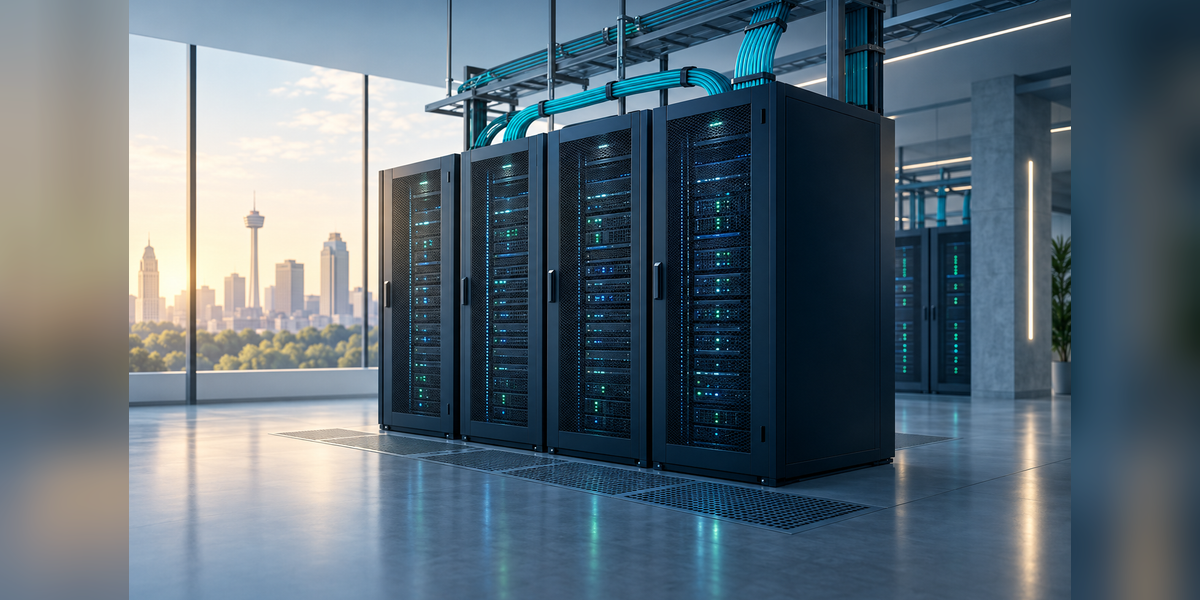
The internet is not a cloud; it is a series of buildings connected by fiber optic cables.
AI inference lives in these buildings.
Currently, most inference happens in the same hyperscale data centers where training occurs. This is inefficient for real-time applications.
To optimize for latency, inference must move to:
- Carrier Hotels / Meet-Me-Rooms: The physical intersections where networks exchange traffic.
- Edge Data Centers: Smaller facilities located in metropolitan areas, closer to end-users.
- IXPs (Internet Exchange Points): Neutral grounds where content providers (AI models) and access networks (ISPs) peer directly.
Who Controls the Edge?
Control of the edge is currently a battleground.
| Player | Strategy |
|---|---|
| Hyperscalers (AWS, Google, Azure) | Want to keep inference inside their proprietary zones to maximize revenue. |
| CDNs and Edge Providers (Akamai, Cloudflare) | Are repurposing their vast, distributed networks to host inference, arguing that they are already “local” to the user. |
| Carrier-Neutral Operators | The owners of the physical interconnection facilities provide the neutral ground where all these players can connect without lock-in. |
Why This Matters
If you rely solely on a single hyperscaler for inference, you are bound by their physical footprint. Using carrier-neutral infrastructure allows you to place compute in the most efficient location, regardless of who owns the fiber.
Why It Matters Now: The Latency Imperative
We are entering the era of “interactive AI”—voice agents, real-time translation, and autonomous systems.
These applications die if latency is too high.
Two metrics define the user experience:
- Time-To-First-Token (TTFT): The user perceives speed based on how quickly the first part of the answer appears.
- Jitter: Inconsistent latency ruins the user experience.
Physical distance adds irreducible latency.
A request traveling from New York to a data center in Virginia and back takes time. Multiply that by millions of requests, and the network congestion (the “water pressure” drop) becomes unsustainable.
Case Studies: Akamai and Red Hat
Case 1: Akamai’s Edge Deployment
The News: Akamai is deploying thousands of Nvidia Blackwell GPUs across its global edge network.
The Physical Reality: Akamai is leveraging its existing real estate—thousands of points of presence (PoPs) globally—to put compute next to the user.
By bypassing the long-haul trip to a centralized core, they cut latency by up to 2.5x. This validates the thesis that distribution beats centralization for inference.
Case 2: Red Hat & Huawei Software Optimizations
The News: Red Hat’s AI Inference Server increased throughput by 4.43x; Huawei introduced KV cache optimization.
The Physical Reality: These software improvements are the “better pumps” in our water analogy. They allow more data to flow through the existing pipes.
Rules of Thumb for AI Infrastructure
1. Distance is Latency
Every 100km of fiber adds roughly 1ms of round-trip latency (in a perfect vacuum, more in reality due to routing).
2. Neutrality is Resilience
Never build your critical infrastructure in a facility where you cannot easily switch network providers.
3. The Edge is a Location, Not a Technology
“Edge” simply means “closer to the user.” If it’s not physically closer, it’s not edge.</div>
Common Misconceptions
❌ “The Cloud is everywhere.”
Reality: The “Cloud” is physically located in a few dozen massive campuses, mostly in rural areas with cheap power. It is not “everywhere.”
❌ “5G solves latency.”
Reality: 5G only fixes the last wireless hop. If the fiber backhaul behind the tower goes to a data center 500 miles away, 5G doesn’t help.
❌ “Inference is just smaller training.”
Reality: Inference has completely different traffic patterns (bursty, latency-sensitive) compared to training (sustained, throughput-sensitive).
❌ “We don’t need physical access.”
Reality: Someone, somewhere, needs physical access to fix the server. And you need the legal right to interconnect.
Key Takeaways
The Bottom Line
- Physicality Rules: AI is bound by the laws of physics. To make it faster, you must move the compute physically closer to the user.
- Interconnection is Critical: The value of AI is realized when it connects to the user. This happens at physical interconnection points (IXPs, Meet-Me-Rooms).
- Decentralization is Inevitable: The sheer volume of inference queries will crush centralized models. The network must decentralize to survive.
- Neutrality Wins: Carrier-neutral facilities offer the flexibility and cost efficiency required to scale AI inference globally.
- Hybrid Approach: The winning architecture will combine efficient software (Red Hat/Huawei) with distributed physical topology (Akamai/Edge).
Frequently Asked Questions

Bob Generale
const title = President at Percepture;
Bob is a veteran digital strategist operating at the bleeding edge of marketing and technology. As President of Percepture, he champions the critical necessity of AI inference infrastructure, advocating for distributed edge compute and carrier-neutral interconnection to solve real-world latency challenges.
A recognized AI Search Authority, Bob conceptualized the groundbreaking “living interview” format for Hunter Newby’s interactive book, AI Interconnection.
Connect with us today!
Related Resources & Further Reading
- Explore the Physical Internet: Read Hunter Newby’s interactive “living” book, AI Interconnection: Discover the Physical Internet Behind AI, to learn exactly where AI meets the network.
- AI Search Visibility: Learn how to position your brand in next-generation AI environments like ChatGPT and AI Overviews with our Generative Engine Optimization (GEO) services.
- Infrastructure Growth: Discover how we help data centers, carrier hotels, and fiber providers scale and secure their share of voice through targeted telecom marketing and PR.
- Clear the Network Pipes: Ensure your website’s technical foundation is flawless for both traditional search engines and AI crawlers with a comprehensive technical SEO audit.