
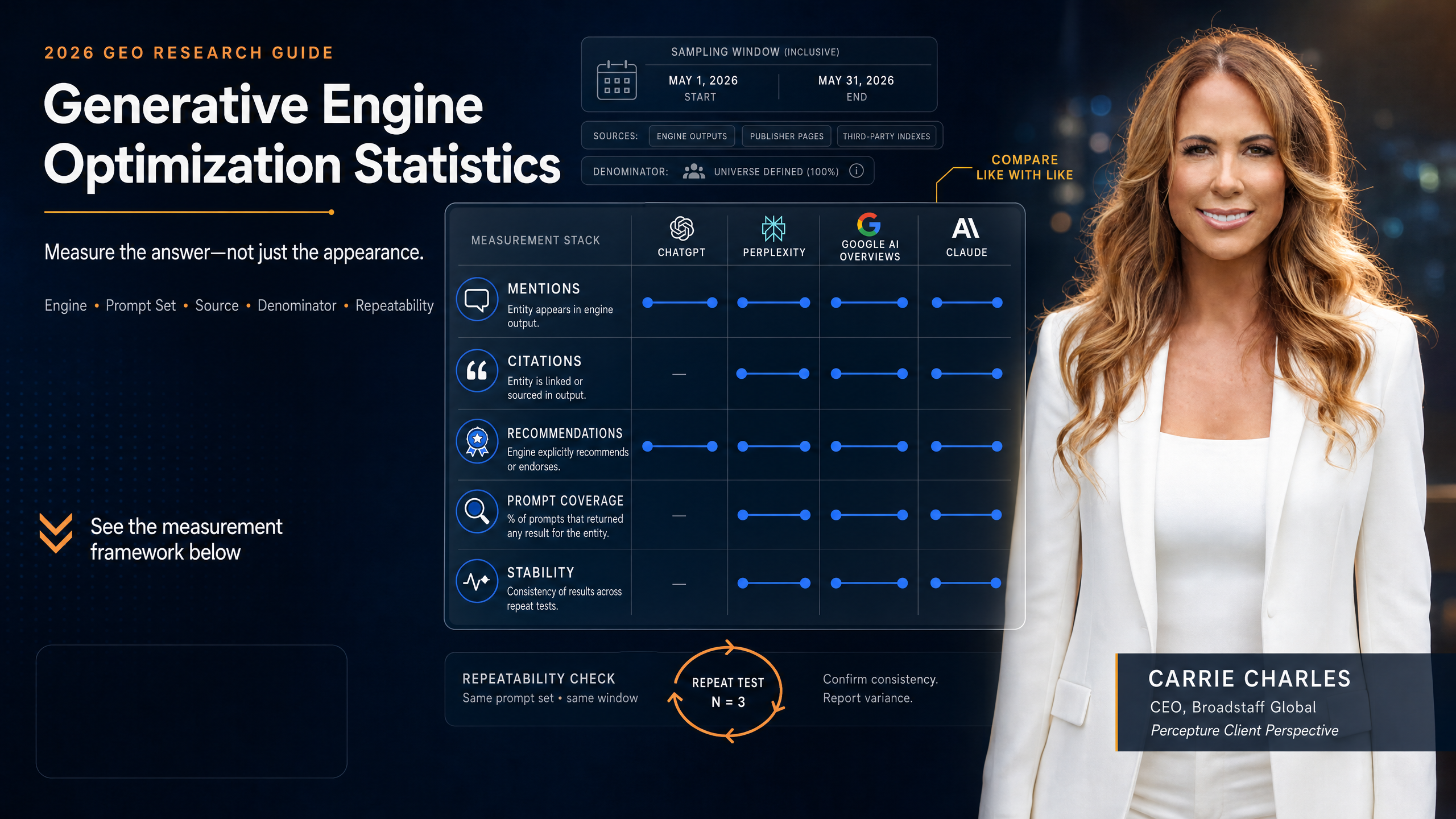

The biggest challenges in implementing generative engine optimization are usually measurement, diagnosis, and coordination problems. Brands optimize before setting a baseline, treat one AI response like a stable rank, create overlapping pages, chase undocumented tactics, ignore outside corroboration, and leave the program without an accountable owner.
A missing citation does not automatically mean a page needs an “AI-friendly” rewrite. Visibility can break at access, retrieval, evidence, citation, engine, measurement, or business-action stages. Diagnose the failure point before choosing the tactic.
Search strategy backed by real B2B execution
Percepture combines SEO, GEO, digital PR, analytics, and conversion strategy for complex B2B markets. The goal is not a screenshot. It is credible visibility that can be measured, diagnosed, and connected to business outcomes.
Why do GEO programs stall?
The challenges in implementing generative engine optimization begin when a team responds to a symptom before identifying its cause. One weak answer may reflect source fit, technical eligibility, evidence, competition, engine differences, or normal response variation. It does not identify the fix by itself.
Measurement is not implementation
OPTK Networks’ experience shows why AI-search intelligence has to lead to content, technical, authority, and execution decisions. Monitoring is useful, but the work only matters when the diagnosis changes what the team does next.
Executive diagnosis
Start with the symptom
Record what changed, where it changed, and which buyer question produced the observation.
Separate possible causes
Technical access, source fit, page quality, corroboration, engine behavior, and measurement can produce similar symptoms.
Reject the false inference
The challenges in implementing generative engine optimization get worse when a single observation is treated as proof.
Assign the workstream
Route the challenges in implementing generative engine optimization to content, technical SEO, digital PR, measurement, CRO, or governance only after diagnosis.
Early scorecard for challenges in implementing generative engine optimization
| Challenge | What you see | What it may mean | Check first |
|---|---|---|---|
| No baseline | Content ships without a before-and-after view | The team cannot separate movement from noise | Buyer questions, engines, sources, and organic baseline |
| One response treated as rank | A screenshot becomes the KPI | The sample is too narrow | Comparable prompts across runs and engines |
| Eligibility or source issue | Formatting changes do not improve visibility | The page may have an upstream barrier | Indexing, access, internal links, and visible text |
| Wrong URL or overlap | Several pages answer the same intent | Authority and relevance may be split | Intent-to-URL map |
| Speculative tactics | Markup and files are added without a diagnosis | The tactic may not address the observed failure | Engine and failure stage |
| Weak corroboration | Third-party sources dominate answers | Owned content may lack supporting authority | Sources cited for priority questions |
| One-engine bias | Results differ sharply by platform | A blended score may hide the gap | Engine-level results |
| No operational owner | Reports exist but work does not move | Insight is not connected to execution | Owner, queue, cadence, and business handoff |
This table turns the challenges in implementing generative engine optimization into testable questions. It does not claim that one symptom has one universal cause. Use it to classify the challenges in implementing generative engine optimization before selecting an intervention.
What this page diagnoses
Page-level failures
Weak intent fit, thin evidence, unclear answers, or overlap with another URL.
Site-level failures
Indexing, access, architecture, internal linking, or poor source discoverability.
Off-site failures
Limited corroboration, authority gaps, or stronger competing sources.
Operating failures
No baseline, narrow testing, unclear ownership, or no path from insight to action.
For a concise definition of the discipline, read what generative engine optimization is. This page stays focused on why programs stall and which challenges in implementing generative engine optimization belong to each diagnostic layer.
Why GEO implementations stall even when the strategy sounds right
GEO is not one deterministic rank. A brand can appear for one question, disappear for a close variation, or show differently across engines and sessions. The challenges in implementing generative engine optimization therefore cannot be diagnosed from one prompt, one screenshot, or one blended score.
Not every failure is a writing problem. A useful page can still face access, retrieval, competition, source-selection, or measurement issues. A technically eligible page can also remain absent because eligibility is an entry condition, not a visibility guarantee.
Percepture uses a practical diagnostic sequence: buyer question, eligibility, retrieval, evidence and selection, citation and representation, measurement, then business action. This is a working model for investigating the challenges in implementing generative engine optimization, not a claim about every engine’s internal architecture.
Diagnose the bottleneck before publishing more content
The challenges in implementing generative engine optimization can be technical, content, source, engine, or measurement related. Map the buyer questions and evidence before adding pages.
The 8 biggest challenges in implementing generative engine optimization
1. Starting without a baseline or defined buyer-question set
Symptom: The team publishes “GEO content” but cannot explain what improved. Reports mix random prompts, broad awareness questions, and low-value topics.
Possible causes: There is no defined question set, engine list, organic baseline, cited-source baseline, or competitor view. Prompt ideas may have been generated without sales, customer, or search-demand evidence.
Does not prove: Low visibility does not prove the site needs dozens of new pages. Among the challenges in implementing generative engine optimization, this one often leads to unnecessary production before the opportunity is defined.
First check: Identify the questions that matter to real buyers. Combine Search Console evidence, sales language, customer questions, and KeywordIQ keyword intelligence. Low CPC does not mean low business value; buyer intent and conversion evidence still matter.
Handoff: Use strategy and planning to set priorities for the challenges in implementing generative engine optimization, then follow the separate guide on how to implement generative engine optimization.
2. Treating AI visibility like a stable keyword rank
Symptom: A team reports that it moved from one position to another in an AI engine based on a single captured answer.
Possible causes: Prompt wording, session context, engine choice, retrieval behavior, model changes, and time can affect the observed response. A research survey of GEO studies describes the environment as stochastic and partially observable rather than a fixed ranking system.
Does not prove: One changed response does not establish a durable gain or loss. This is one of the challenges in implementing generative engine optimization that traditional rank-reporting habits can magnify.
First check: Repeat comparable prompts, preserve the wording, separate engines, record cited sources, and compare defined time windows. Look for direction and recurring patterns rather than a universal rank.
Handoff: Send observation design and attribution questions to attribution and analytics. Keep implementation decisions separate from the monitoring layer so the challenges in implementing generative engine optimization are not mistaken for reporting variance.
3. Fixing “GEO” before fixing eligibility and source quality
Symptom: The team adds formatting, schema, or AI-specific files while a priority page is poorly indexed, hard to reach through internal links, or too generic to be useful.
Possible causes: GEO has been treated as a separate technical layer instead of an extension of sound search, content, and authority work.
Does not prove: A crawlable and indexed page is not guaranteed to appear in an AI answer. Yet skipping the foundation makes the challenges in implementing generative engine optimization harder to isolate.
First check: Review index eligibility, snippet controls, access, internal findability, visible text, canonical signals, and the usefulness of the source page. Google documents that its normal Search eligibility and SEO fundamentals apply to AI features; it does not require special AI schema or a separate AI technical layer.
Handoff: Use enterprise SEO for architecture and technical barriers, then return to the challenges in implementing generative engine optimization that remain after eligibility is confirmed.
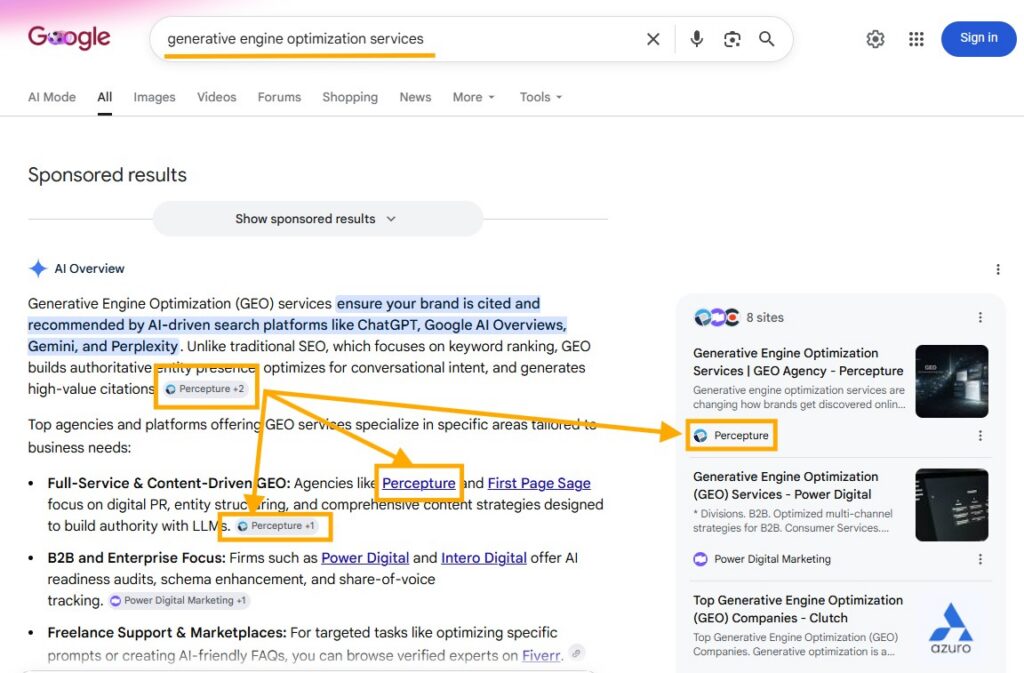
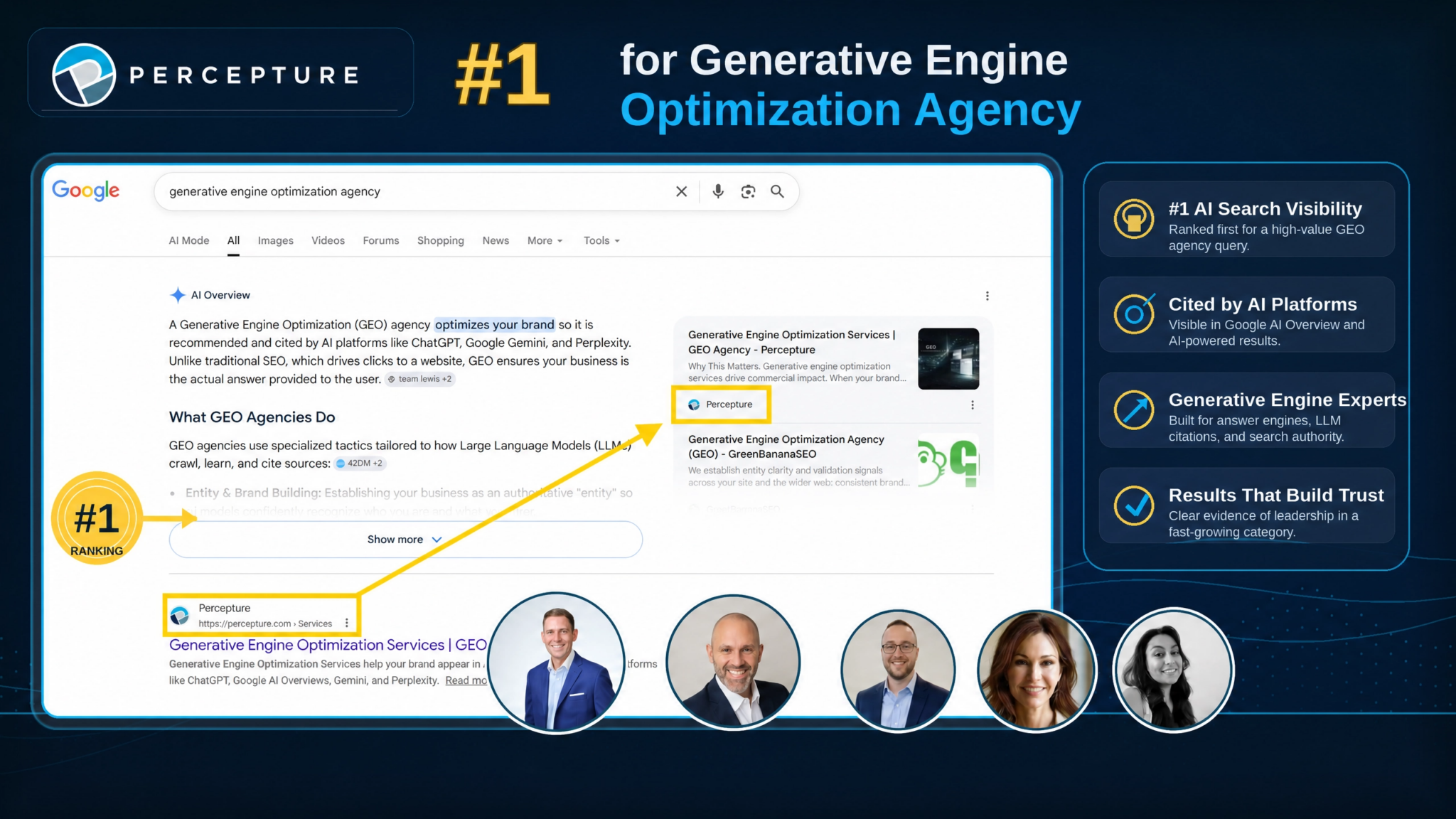
Search proof should be read in context
Ranking screenshots are useful evidence, but they should be read as dated observations, not permanent guarantees. The query, location, surface, and time all matter.
4. Creating a new page for every prompt
Symptom: The site accumulates near-duplicate pages for close variations of the same buyer need. Internal links point to several possible answers, and none becomes the clear source.
Possible causes: Query fan-out has been mistaken for a page-count instruction. Teams may also lack an intent map showing which existing URL should own each topic.
Does not prove: Fan-out is not irrelevant. It means a strong page should address connected questions without creating a thin URL for each variation. Content overlap is one of the challenges in implementing generative engine optimization because it can split maintenance, relevance, and internal authority.
First check: Map each question to an existing URL before approving a new one. Compare purpose, audience, buyer stage, proof, and conversion path. Consolidate connected intent where one source can answer it well.
Handoff: Use content marketing to address the challenges in implementing generative engine optimization that involve page differentiation and consolidation. Use technical SEO when redirects, canonical cleanup, or architecture changes are required.
5. Chasing GEO “hacks” instead of the actual failure
Symptom: A team adds llms.txt, special schema, large FAQ blocks, or artificial content chunks, but observed visibility stays flat.
Possible causes: Vendor guidance has been treated as a universal engine requirement. The tactic may also be unrelated to the actual failure stage.
Does not prove: A flat result does not prove structured data has no value. Accurate structured data can support eligible Search features. It also does not prove every service treats llms.txt the same way. The narrower point is that Google says llms.txt neither helps nor hurts Google Search visibility, and Google does not require special AI markup.
First check: Name the engine, document the symptom, and decide whether the likely investigation belongs to access, content, sources, measurement, or execution. The challenges in implementing generative engine optimization cannot be solved by applying every new tactic at once.
Handoff: Return to the implementation guide for supported steps, or use an SEO Sprint to isolate the challenges in implementing generative engine optimization that stem from a defined technical or content problem.
6. Depending only on owned content
Symptom: The brand has clear service pages, but independent publications, directories, experts, or competitors dominate the sources shown for important buyer questions.
Possible causes: GEO has been reduced to on-page rewriting. The program may not include authority building, public evidence, or review of the sources already being selected.
Does not prove: Every engine does not require third-party mentions, and a third-party mention does not guarantee a citation. Still, ignoring outside corroboration leaves a major part of the source environment unexamined. That makes the challenges in implementing generative engine optimization look like copy problems when they may be authority problems.
First check: Inspect the sources that appear for priority buyer questions. Identify what they provide that the brand’s pages do not: independent context, clearer evidence, stronger topical fit, or broader recognition.
Handoff: Address authority-related challenges in implementing generative engine optimization by connecting owned content to digital PR, public relations, and Percepture’s broader AI search visibility strategy.
7. Optimizing for one engine and generalizing the result
Symptom: A brand performs well in tested responses from one engine and poorly in another, yet the report compresses everything into one score.
Possible causes: Engines can use different models, retrieval paths, source sets, and response formats. Prompt coverage may also differ between tests.
Does not prove: One engine is not universally easier, better, or more important. One strong surface also does not cancel a weak result elsewhere. Cross-engine variation is among the challenges in implementing generative engine optimization because blended reporting can hide the workstream that needs attention.
First check: Preserve engine-level observations. Compare the same buyer questions, record mentions and cited sources, and avoid presenting the combined result as a universal AI visibility rank.
Handoff: Keep measurement engine-specific, then choose the technical, content, or authority response to the challenges in implementing generative engine optimization. For complex buying journeys, connect that work through omnichannel marketing.
8. Running GEO with no owner, cadence, or business handoff
Symptom: Dashboards and screenshots accumulate, but no one owns the implementation queue. Content, SEO, PR, development, analytics, and sales each wait for another team.
Possible causes: The program was launched as a campaign instead of an operating system. There may be no decision cadence, validation step, or connection to qualified demand.
Does not prove: More reporting will not necessarily produce action. The final challenges in implementing generative engine optimization are often organizational: the insight exists, but responsibility and business context do not.
First check: Name one accountable owner. Define who selects questions, who investigates failures, who approves changes, who implements them, and who connects visibility observations to traffic, leads, meetings, and pipeline.
Handoff: Use managed generative engine optimization services when the challenges in implementing generative engine optimization require cross-functional governance and execution.
Visibility must connect to business action

Read the Broadstaff search visibility and qualified leads case study.
See how intelligence becomes execution
Review a Percepture case that shows how the challenges in implementing generative engine optimization connect AI-search observation with SEO strategy, content, technical work, and follow-through.
What brands should measure before they call GEO a failure
Measurement should preserve the sequence from eligibility to business outcome. That makes the challenges in implementing generative engine optimization easier to assign without claiming that one metric proves another.
GEO measurement layers
| Layer | Examples | What it can tell you |
|---|---|---|
| Eligibility | Crawl, index, snippet, access | Whether a source can enter relevant search paths |
| Search visibility | Impressions, position, query coverage | Traditional organic discoverability |
| AI observation | Question coverage, mentions, citations, sources | What appeared in the defined test |
| Consistency | Repeat runs, engine spread, time windows | Volatility and recurring direction |
| Traffic | Organic and identifiable AI referrals | Visits reaching the site |
| Business | Forms, meetings, qualified opportunities | Downstream commercial response |
A visibility event is not automatically a traffic or revenue event. Access is not retrieval. Retrieval is not citation. Citation is not recommendation. A mention is not a visit, and a visit is not a qualified lead.
When visibility rises but business response does not, the challenges in implementing generative engine optimization may require investigation through conversion rate optimization, attribution, offer fit, and the customer journey before GEO is called successful or unsuccessful.
The Percepture Failure-Point Framework for challenges in implementing generative engine optimization
The framework separates observed symptoms from the workstream that should investigate first. It is a diagnostic comparison, not a claim that the listed cause is certain.
| Observed problem | Investigate first | Why | Percepture resource |
|---|---|---|---|
| Page is not indexed or eligible | Technical SEO | The source may face an upstream barrier | Enterprise SEO |
| Organic visibility is strong but tested AI presence is weak | Measurement and source diagnosis | One channel does not establish source fit in another | Attribution and analytics |
| Several pages answer the same intent | Content architecture | Relevance and internal signals may be divided | Content marketing |
| Brand is mentioned but owned pages are rarely cited | Evidence and source review | The selected sources may answer the question better | B2B visibility in AI answers |
| Third parties dominate the answer | Authority and digital PR | Independent sources may carry more context or corroboration | Digital PR |
| One engine is strong and another is weak | Engine-level measurement | A blended score can conceal the gap | GEO services |
| Visibility rises but leads do not | CRO and attribution | Visibility is upstream of conversion | Conversion rate optimization |
| No one acts on the findings | Governance | The operating handoff is missing | Strategy and planning |
How to avoid making a GEO problem worse
The safest response to the challenges in implementing generative engine optimization is to reduce uncertainty before increasing production. Use these five guardrails:
- Do not rewrite before diagnosis. Compare the observed answer, source set, page eligibility, evidence, and competing sources first.
- Do not create a URL before mapping intent. Strengthen the best existing source when the buyer need is already owned.
- Do not report one prompt as a rank. Preserve wording, engine, run, date, and source observations.
- Do not universalize one vendor or engine rule. Scope technical claims to the platform that documented them.
- Do not sacrifice useful search content for a speculative citation tactic. Research on citation failures indicates that generic rewriting can miss the actual failure and can harm some retrieval outcomes.

Once the failure stage is understood, use the dedicated implementation guide to address the challenges in implementing generative engine optimization rather than turning diagnosis into an improvised checklist.
Frequently asked questions
What are the biggest challenges in implementing generative engine optimization?
The biggest challenges in implementing generative engine optimization are establishing a useful baseline, separating variable observations from stable patterns, fixing technical barriers, avoiding overlapping pages, rejecting unsupported tactics, building outside corroboration, measuring engines separately, and assigning an owner who can turn findings into action.
Why can a page rank in Google but not appear in AI answers?
Organic ranking and observed AI-answer visibility are related but distinct outcomes. Prompt fit, retrieval, evidence, source selection, competition, engine differences, and response variation may all matter. The challenges in implementing generative engine optimization cannot be attributed to AI-unfriendly writing from this result alone. Repeat the test, compare cited sources, and check eligibility before rewriting.
Can GEO changes hurt SEO?
They can if a team replaces useful content with thin, repetitive, or speculative copy; creates overlapping URLs; removes context; or restructures a page around an unsupported citation tactic. Preserve the page’s search intent and user value. Diagnose the challenges in implementing generative engine optimization, make a targeted change, and monitor both organic and AI-search observations.
How do you identify a technical GEO problem?
Start with access, indexing, snippet controls, canonical signals, internal links, visible text, and page performance. A technical problem is more plausible when the intended source cannot reliably enter normal search paths. These challenges in implementing generative engine optimization should be separated from citation or inclusion questions because technical eligibility does not guarantee either outcome.
When is digital PR part of the GEO fix?
Investigate digital PR when credible third-party sources repeatedly dominate important buyer questions, when owned claims lack independent support, or when the market has little external evidence about the brand. Digital PR is not a citation guarantee; it addresses the challenges in implementing generative engine optimization that involve authority, corroboration, buyer trust, and source visibility.
How long does it take to diagnose a GEO problem?
The time depends on the number of buyer questions, engines, pages, technical barriers, and source patterns under review. A useful diagnosis of the challenges in implementing generative engine optimization requires more than one response. Define the sample, preserve the observations, check the site foundation, compare cited sources, and assign the first investigation before estimating implementation time.
Should every AI-search question have its own page?
No. Closely related questions should usually be mapped to the strongest URL that can answer the shared intent well. Create a separate page only when the audience, buyer stage, purpose, proof, or required depth is meaningfully different. This reduces thin content, maintenance burden, and internal competition.
What should executives ask for in a GEO report?
Ask for the defined buyer questions, engines tested, preserved prompt wording, observed mentions and citations, cited-source patterns, organic baseline, repeat-run context, workstream recommendations, accountable owners, and business outcomes. A report about the challenges in implementing generative engine optimization should distinguish observation from diagnosis and diagnosis from implementation.
Find the failure point before publishing more
Percepture can review the challenges in implementing generative engine optimization across priority buyer questions, search eligibility, AI-answer observations, cited sources, content overlap, authority, measurement, and ownership.

About Bob Generale
Bob Generale is President of Percepture. He leads executive strategy across search, GEO, digital marketing, and integrated visibility programs.