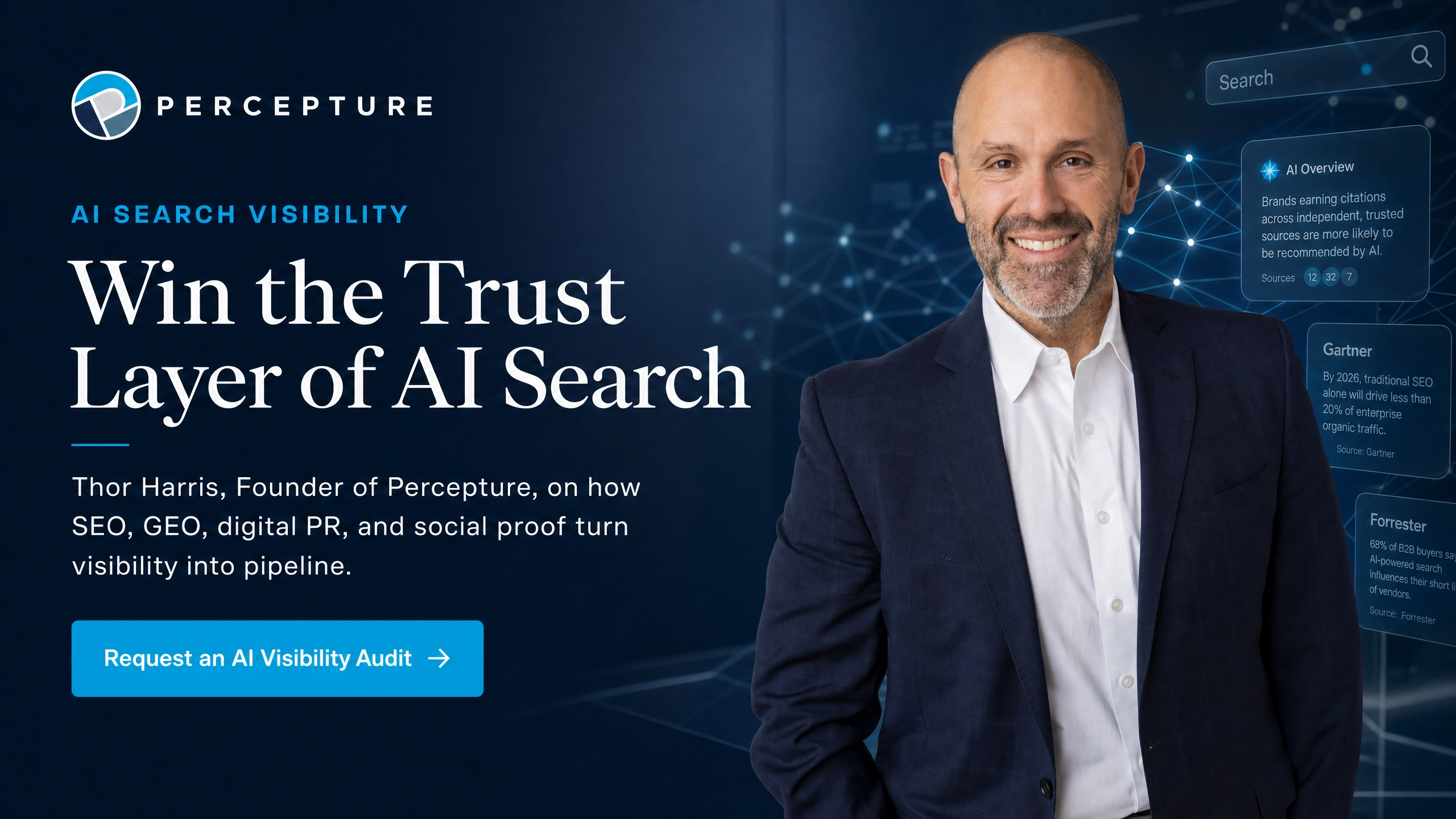

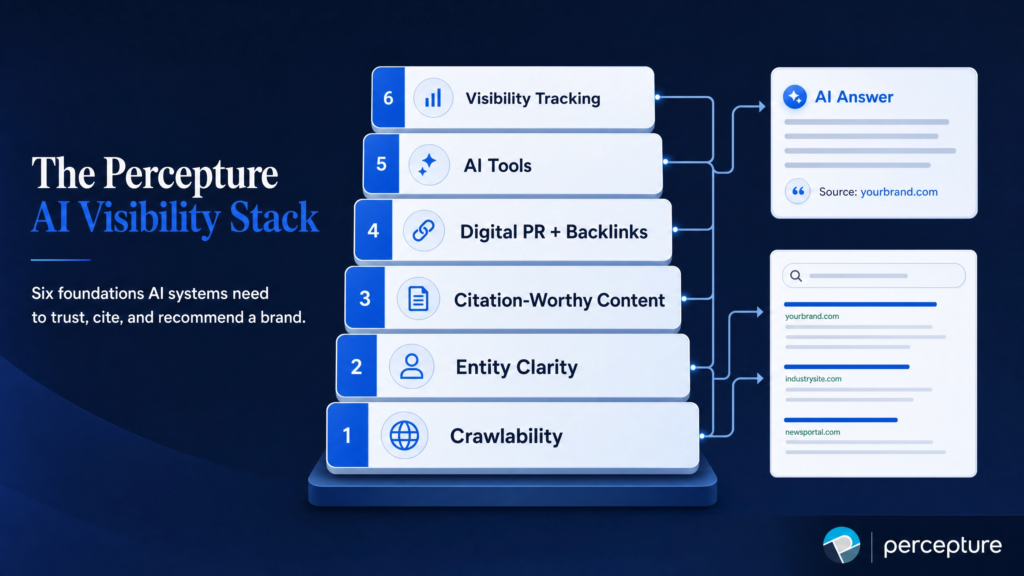
The strategies that improve brand visibility in AI search engines include technical SEO, answer-ready content, entity clarity, digital PR, expert-led social proof, structured data, internal linking, and ongoing AI visibility measurement. The best results come when these tactics work together as one trust system, not as separate marketing tasks.
If your brand is missing from ChatGPT answers, Google AI Overviews, Perplexity citations, or Gemini summaries, you are losing influence while buyers are forming opinions. AI search is not replacing traditional search. It is raising the trust bar for every brand competing for attention.
AI Search Visibility Guide • Updated July 2026



What improves brand visibility in AI search engines?
Brand visibility in AI search improves when a company combines crawlable technical SEO, direct-answer content, clear entities, trusted third-party mentions, expert social proof, structured data, strong internal links, and conversion-focused measurement. The goal is to become easy for AI systems to find, understand, verify, and recommend.
Who this guide is for
This guide is for CEOs, CMOs, founders, marketing leaders, and operators responsible for brand perception, search performance, or pipeline.
- B2B and enterprise technology companies
- Professional and financial services firms
- Telecom and data center operators
- Healthcare and life-sciences organizations
- Private equity firms and portfolio companies
- Brands competing in high-trust buying cycles
Why brand visibility in AI search engines matters in 2026
AI search is now part of the buyer’s research process. A prospect can compare vendors, define a shortlist, test a claim, or form an opinion before visiting a company website.
Google explains that AI Overviews and AI Mode rely on its Search systems to retrieve relevant sources. ChatGPT search and Perplexity also retrieve information from the web. That creates a clear operating requirement: the brand must be accessible, understandable, and supported by credible evidence.
Find the gaps before producing more content
A useful AI visibility audit should show where the brand appears, which competitors are cited, what sources influence the answers, and which technical, content, entity, or authority gaps should be fixed first.
The 9 strategies that improve brand visibility in AI search engines
The tactics below work best as a coordinated system. Each strategy strengthens the source quality, entity confidence, or buyer trust that AI search engines use when assembling answers.
Build a crawlable technical foundation
AI search cannot retrieve content it cannot access. The foundation should include:
- Clean server-rendered HTML and logical site architecture
- Fast mobile performance and stable page layouts
- Correct robots, canonical, sitemap, and indexation controls
- Access for Googlebot and OAI-SearchBot where appropriate
- Internal links to priority services, proof, and expertise pages
Start with a technical SEO audit service when crawlability or indexation is uncertain.
Create direct-answer content
AI systems need clear passages they can interpret and quote. Use 40 to 80-word answers, descriptive headings, definitions, tables, steps, and single-intent FAQs.
- Answer the query near the top
- Use plain language and defined terms
- Connect every fact to its implication
- Write for the buyer first, then improve extraction cues
Percepture’s content marketing services coordinate buyer intent, search structure, and conversion.
Build topic clusters around buyer questions
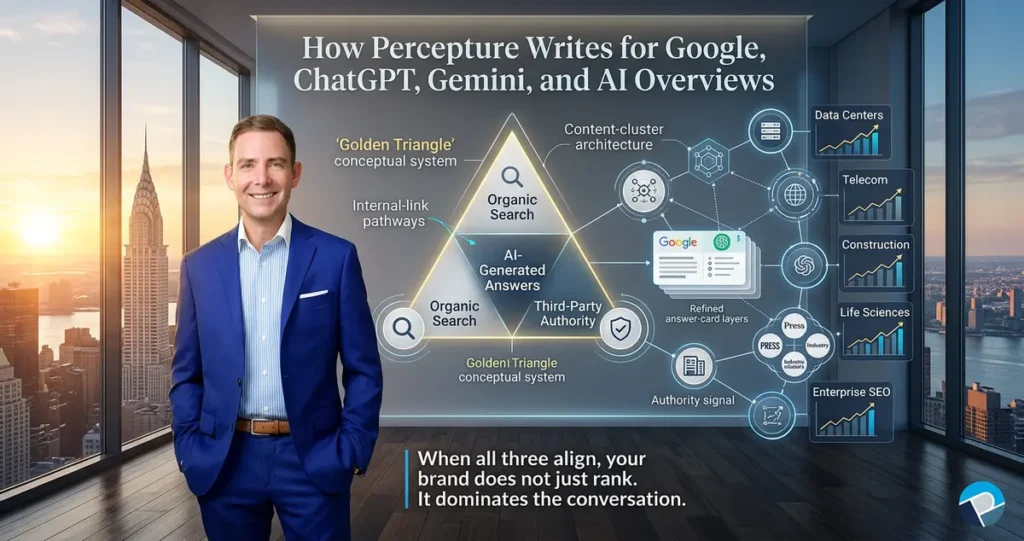
AI systems fan out into related questions. A strong cluster gives them connected evidence across the entire buying problem.
- Create one authoritative pillar for the main intent
- Publish supporting articles for adjacent questions
- Link laterally between related pages
- Prevent cannibalization by assigning one intent per URL
Use organic SEO services to map topics, internal links, and search demand.
Strengthen entity authority
AI systems must understand who the company is, what it does, who it serves, and why its experts are credible.
- Keep names, descriptions, and service categories consistent
- Add complete Organization, Person, and service schema
- Publish substantive author and leadership profiles
- Connect the website to trusted professional profiles and sources
Enterprise SEO services help large organizations resolve fragmented entities and overlapping site structures.
Use digital PR for third-party validation
Independent mentions provide evidence that cannot be manufactured on an About page. Earned media can validate expertise, results, market relevance, and executive authority.
- Pitch original data, informed opinions, and timely analysis
- Earn contextual links and named expert quotes
- Build publication diversity, not one-off press-release volume
- Connect media wins to relevant service and insight pages
See how digital PR services and digital PR for AI search reinforce outside trust.
Use expert-led social proof
LinkedIn, YouTube, industry communities, interviews, and forums help reinforce the expert identity behind a brand.
- Publish from named operators and subject-matter experts
- Answer real buyer questions in video and text
- Keep professional profiles aligned with website entities
- Repurpose genuine expertise, not synthetic engagement bait
The goal is consistent corroboration across channels, not social activity for its own sake.
Add schema and clean page structure
Structured data is not a shortcut to citations, but it helps machines interpret the page, organization, author, breadcrumbs, and FAQs.
- Use valid Article or BlogPosting markup
- Add FAQPage only when the questions appear on the page
- Connect Person and Organization entities
- Validate markup and avoid duplicate or conflicting schema
A generative engine optimization service should address meaning, proof, and structure together.
Measure visibility across engines
AI answers change by prompt, user context, model, date, and run. Measurement must use a prompt set and repeated observations.
- Track mentions, citations, rank position, and sentiment
- Monitor Google AI Overview inclusion
- Record the sources that influence each answer
- Connect referral and assisted-conversion data to the prompt set
Review AI search SEO pricing for monitoring and optimization options.
Convert visibility into qualified leads
Visibility without a next step is an awareness metric. Pages should help visitors verify the company and move forward.
- Place a helpful CTA after early value
- Use case studies, pricing, and process details near proof
- Make forms short and explain what happens next
- Track assisted conversions, not only last-click leads
Connect search to pipeline through lead generation services and conversion-focused content.
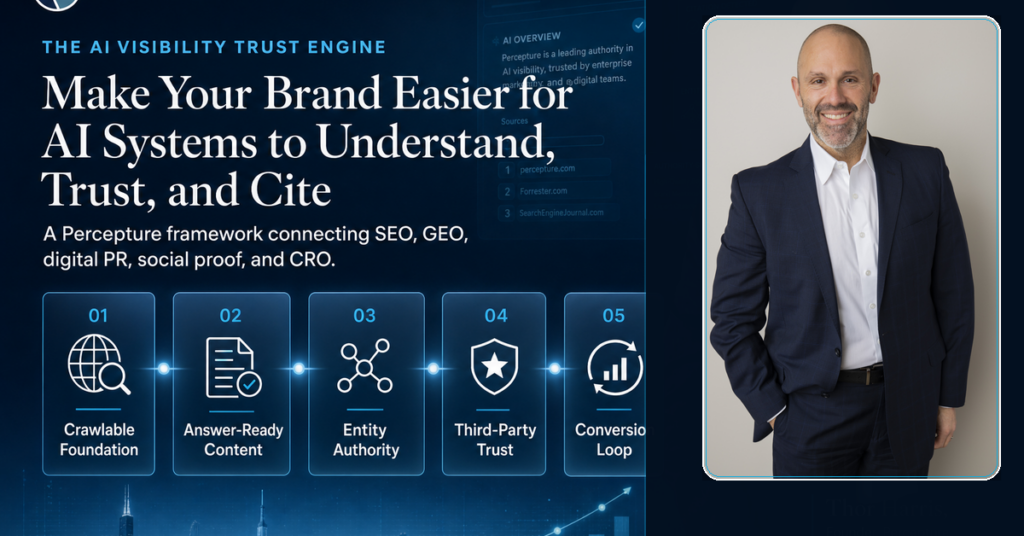
The Percepture AI Visibility Trust Engine
The AI Visibility Trust Engine is Percepture’s framework for connecting SEO, GEO, entity authority, digital PR, social proof, and CRO into one measurable system.
| Discipline | Primary job | Why AI engines care | Buyer impact |
|---|---|---|---|
| SEO | Makes useful content crawlable and competitive | Supplies accessible source material | More discovery |
| GEO | Makes expertise easy to interpret, summarize, and cite | Improves answer readiness | More mentions and citations |
| Digital PR | Builds independent authority and corroboration | Adds outside confidence signals | More credibility |
| Expert social proof | Reinforces the people behind the brand | Supports entity consistency | More trust |
| CRO | Moves qualified visitors toward action | Connects visibility to outcomes | More pipeline |
AI visibility readiness scorecard
Score one point for each statement that is true. Eight to ten indicates a strong base. Five to seven suggests material gaps. Four or fewer means the brand is relying on isolated tactics.
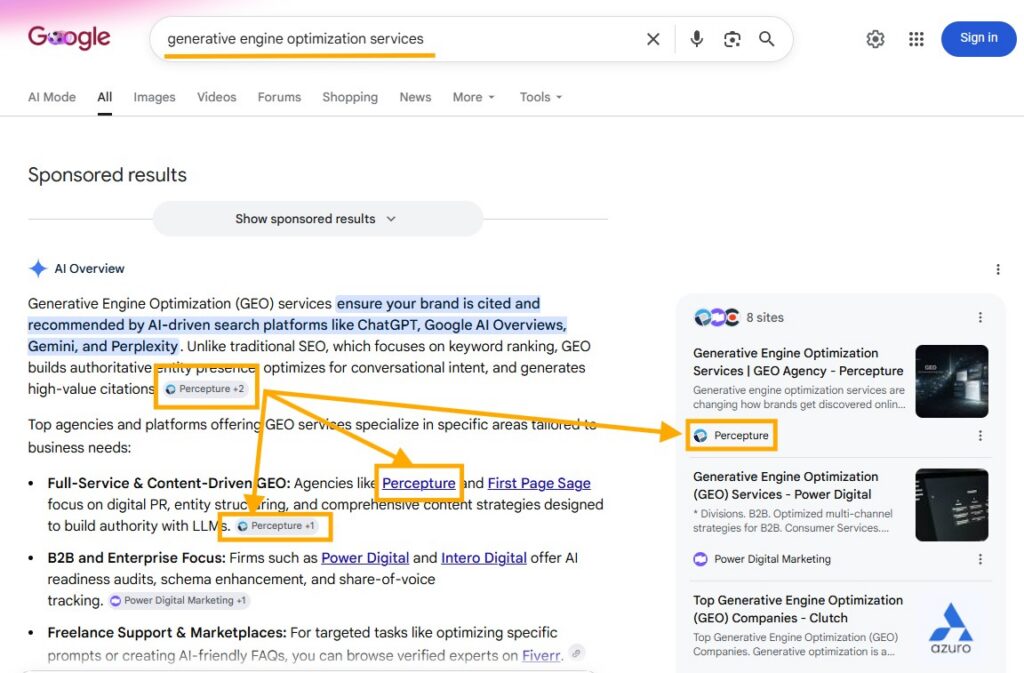
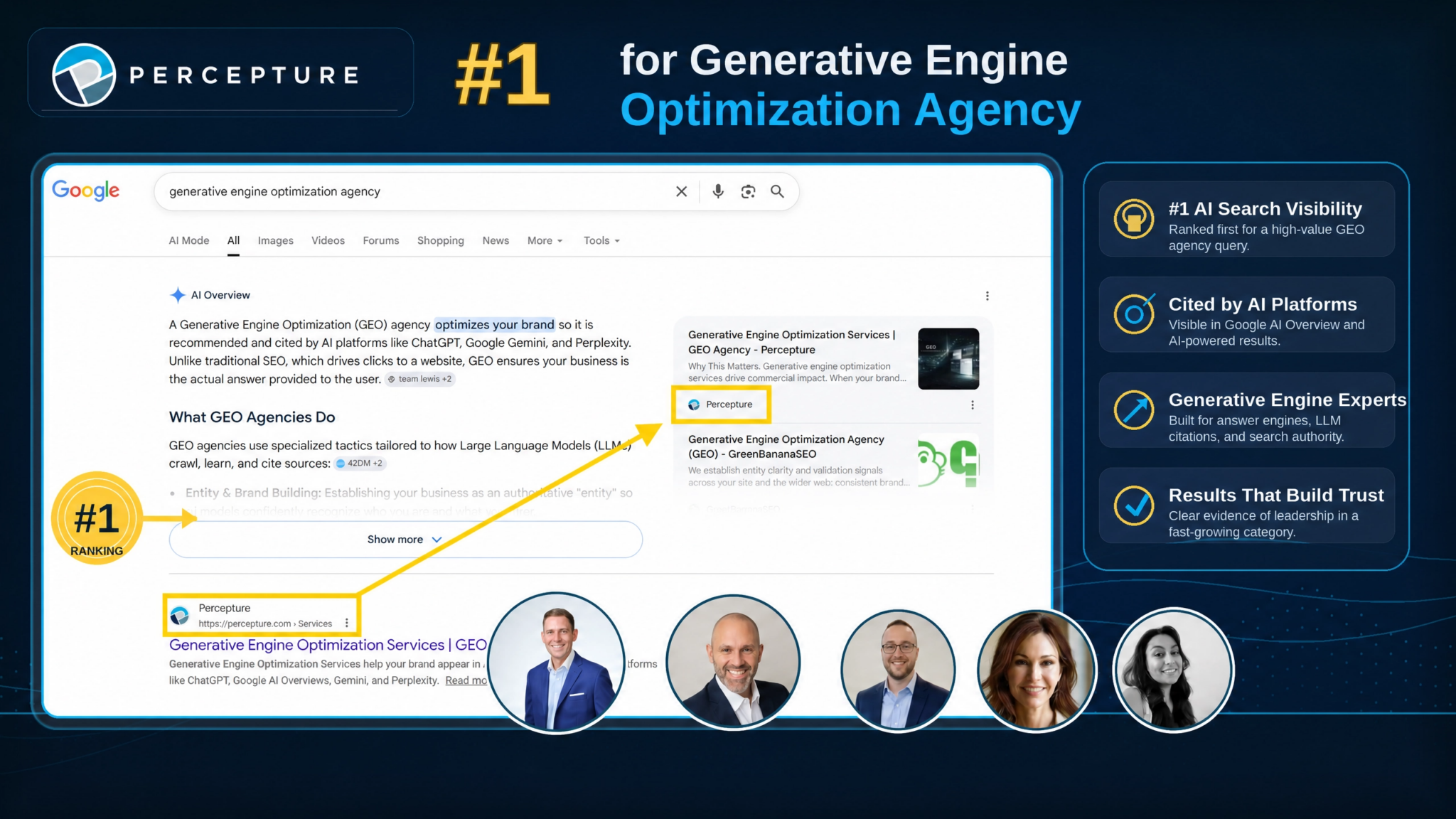
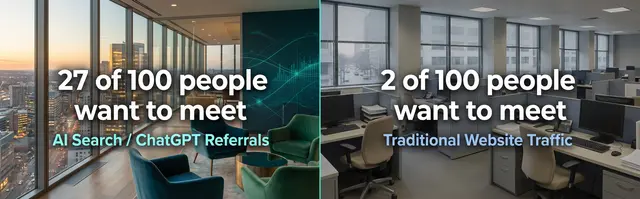
Examples of AI search visibility and ranking proof
Proof should show more than one keyword ranking. A credible visibility program looks for traditional rankings, AI Overview inclusion, LLM citations, branded lift, referral quality, and sustained improvement across a topic.

Turn proof into a prioritized visibility roadmap
Percepture can benchmark the brand across Google AI Overviews, ChatGPT, Perplexity, and Gemini, then map the technical, content, authority, and conversion work required to improve share of voice.
How to measure AI search visibility
Do not judge AI visibility from one prompt or one screenshot. Use a stable prompt set, repeat the tests, record the cited sources, and connect visibility to buyer behavior.
| Metric | What it measures | What to watch |
|---|---|---|
| Brand mentions | How often the brand appears in AI answers | Prompt coverage, position, and sentiment |
| Citations | How often owned or earned pages are cited | Source diversity and page-level patterns |
| AI Overview inclusion | Visibility in Google’s generative results | Queries, cited pages, and changes over time |
| Referral traffic | Visits from AI search products | Engagement, conversion, and lead quality |
| Branded search lift | Growth in people searching for the company | Correlation with PR, content, and AI exposure |
| Assisted conversions | Leads influenced by AI discovery | Multi-touch journeys and sales feedback |
How much does AI search visibility work cost?
AI search visibility programs are usually monthly engagements because technical health, content, authority, measurement, and competitors continue to change. The right scope depends on the number of services, markets, prompts, content assets, and PR requirements.
Review current AI search SEO pricing and scope details.
What not to do
- Do not create thin pages for every prompt variation. Build useful pages around clear intent instead.
- Do not manufacture fake mentions. Pursue real expertise, relevant coverage, and defensible proof.
- Do not rely on schema alone. Markup cannot rescue weak content or missing authority.
- Do not block important crawlers by accident. Review robots and bot controls before diagnosing visibility.
- Do not write for machines at the expense of buyers. Clarity, evidence, and usefulness serve both audiences.
- Do not report one favorable answer as a trend. Track a distribution across prompts, engines, and time.
Related AI search and visibility resources
Frequently asked questions
What strategies improve brand visibility in AI search engines?
The strongest strategies are technical SEO, direct-answer content, topic clusters, entity clarity, digital PR, expert-led social proof, structured data, internal linking, and ongoing AI visibility measurement. The best results come when these tactics operate as one trust system.
How do I make my brand appear in ChatGPT search?
Make the website accessible to OAI-SearchBot, publish clear answers to buyer questions, strengthen the brand entity across trusted sources, and earn third-party mentions through digital PR. ChatGPT search can retrieve and cite indexed web content when the source is accessible and relevant.
Does SEO still matter for AI search?
Yes. Google AI Overviews and AI Mode use Google Search systems to retrieve useful sources. Crawlability, content quality, internal links, authority, and user value remain important. GEO adds structure and trust signals that make content easier to summarize and cite.
What is the difference between SEO, GEO, and AEO?
SEO improves visibility in traditional search results. GEO, or generative engine optimization, improves the likelihood that AI systems understand, mention, or cite a brand. AEO focuses on concise answers for answer engines. In practice, strong programs coordinate all three.
How does digital PR improve AI search visibility?
Digital PR earns authoritative mentions, links, expert quotes, and third-party validation. These signals help search engines and AI systems verify a brand’s identity, expertise, and reputation beyond claims made on the brand’s own website.
Should I create a new page for every AI search question?
No. Build comprehensive pages around clear search intent, then support them with useful topic clusters. Thin pages created for every wording variation can dilute authority, compete with each other, and create a poor reader experience.
How do I measure AI search visibility?
Track brand mentions and citations across ChatGPT, Perplexity, Google AI Overviews, Gemini, and other relevant engines. Also measure referral traffic, branded search lift, assisted conversions, prompt-level share of voice, and the source pages that are cited.
How long does AI visibility take to improve?
Meaningful improvement often becomes measurable within 60 to 120 days, depending on technical health, existing authority, publishing velocity, competition, and third-party validation. Strong technical fixes or well-timed proof content can create earlier wins.
What should an AI visibility audit include?
An audit should review crawlability, indexation, topic coverage, direct-answer structure, entity consistency, author credibility, schema, internal links, earned-media signals, competitor citations, prompt coverage, and conversion paths.
How much do AI search optimization services cost?
AI search optimization programs commonly range from about $3,500 to $10,000 or more per month. Cost depends on the number of markets, content velocity, technical work, digital PR, measurement requirements, and competitive difficulty.
See where your brand is missing from AI search
Percepture will review the questions buyers ask, the brands and sources AI engines cite, and the changes most likely to improve visibility and qualified demand.
What to do next
- Benchmark current visibility. Test a stable set of buyer prompts across the engines that matter.
- Review the technical foundation. Confirm that priority pages are accessible, indexable, fast, and internally linked.
- Map content and entity gaps. Identify unanswered questions, weak proof, and inconsistent brand signals.
- Prioritize authority. Build the third-party evidence needed to support important claims.
- Connect visibility to pipeline. Improve proof, calls to action, and assisted-conversion reporting.

About Bob Generale
Bob Generale is President of Percepture, a digital marketing and public relations agency founded in 2004. His work connects SEO, GEO, content, digital PR, executive authority, and conversion strategy for complex B2B, telecom, data center, healthcare, finance, and professional-services markets.
Last updated July 12, 2026.