


The Great Convergence: PR and AI Search SEO
In the past, PR was the ‘cherry on top’ of an SEO Strategy to support many of my link-building campaigns. In 2026, siloed thinking is gone and evolved into Digital PR for AI Search.
PR, SEO, and AI Search are no longer separate disciplines, and in reality, never were, and have always acted as one integrated trust system. Search engines measure authority through editorial signals. AI systems cite brands they recognize as credible sources. And both rely on the same underlying pattern: consistent validation from reputable publishers.
“Digital PR isn’t new. I’ve been using it to secure #1 rankings in SEO since 2006 for brands like Prudential, Intuit, Century 21, Rachel Ray Magazine, Hard Rock Hotel & Casino, and Ferrari. The only thing that’s changed is the platform. ChatGPT and other LLMs are a big search engine that synthesizes results. Today, trust has to show up in Google and in AI systems, not just in industry publications,” says Bob Generale, President, Partner, and founder of Percepture’s Digital Division.
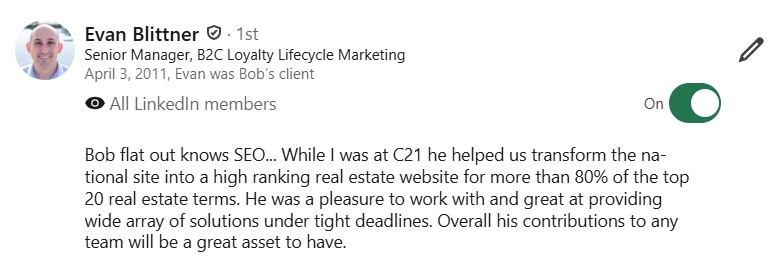
(Secured #1 rankings for terms like: Real Estate, Real Estate Agents, and Homes for Sale using on-page SEO and link building through press releases, targeting publications with high domain authority)
The mechanics haven’t changed much and are straightforward. When your brand appears repeatedly in authoritative publications, with a high domain authority, tied to specific expertise or data, search engines and large language models begin to associate you with that topic. That association strengthens rankings, increases citation likelihood, and builds the kind of visibility that compounds over time, like an investment.
This article explains how enterprise brands use digital PR to earn both search rankings and AI citations, and why the brands investing in this now will shape how their industries are understood online for years to come.
What Digital PR Means in 2026
Digital PR = earning editorial trust assets that create:
- Rankings (SEO)
- Citations (AI Search)
- Resilience (reputation)
Digital PR is the practice of securing coverage in reputable online publications through newsworthy stories, original data, expert commentary, or product insights. Unlike traditional link building, digital PR earns links organically through genuine editorial interest.
The value extends beyond backlinks:
- Links matter — High-authority editorial links pass trust signals that influence rankings
- Mentions matter — Unlinked brand references strengthen entity recognition and semantic associations
- Publisher trust matters — Coverage from credible sources improves how AI systems perceive your brand
- Engagement confirms value — Traffic, time-on-page, and conversions validate that coverage resonates
In enterprise environments, digital PR functions as an authority engine. It accelerates trust-building across both traditional search and AI-powered answer engines like ChatGPT, Google AI Overviews, and Perplexity.
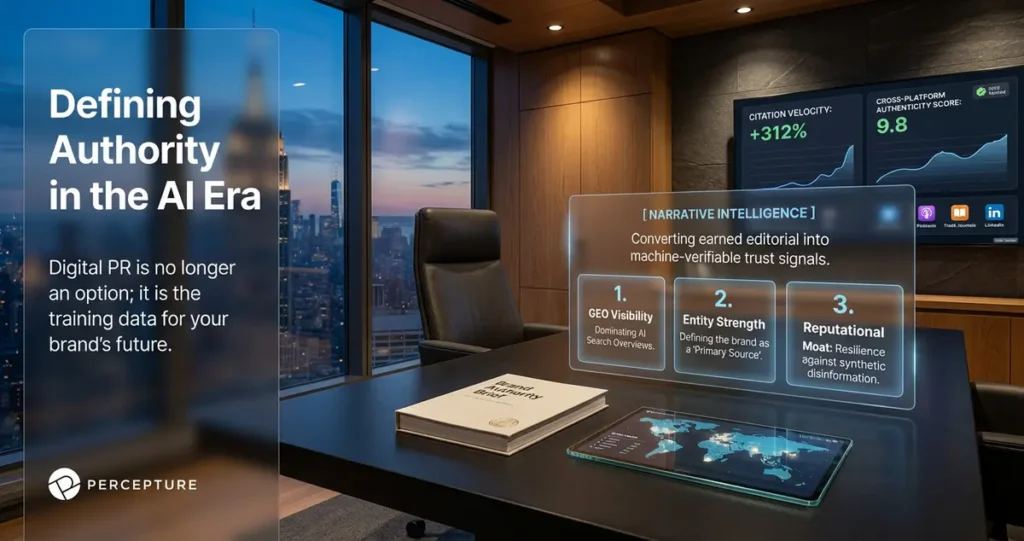
The Convergence Problem
PR teams are being asked to prove impact. SEO teams are being asked to prove trust. And both are discovering that their goals now overlap.
Traditional PR focused on awareness and reputation. SEO focused on rankings and traffic. But as search systems evolved, the signals that drive both outcomes converged.
Today:
- Search engines reward authority — Google’s algorithms prioritize sites with strong editorial validation and topical expertise
- AI systems cite trusted sources — Large language models pull from publishers they recognize as credible
- Buyers research across channels — Decision-makers encounter brands through news coverage, search results, and AI-generated summaries
Specialization remains valuable. But integration is the advantage.
Brands that treat PR and SEO as separate functions miss the compounding effect. Coverage that earns a link strengthens rankings. Rankings increase branded search. Branded search signals demand. And demand creates more opportunities for coverage.
The Trust Velocity Model
“Enterprise visibility is a mathematical equation. When you measure domain authority, topical coverage, and trust velocity, you can forecast outcomes instead of guessing,” explains Generale.
Trust Velocity is the rate at which a brand accumulates credible validation signals across the web.
It’s not just about earning one great link. It’s about building a consistent pattern of editorial mentions, authoritative backlinks, and contextual associations that search engines and AI systems recognize as expertise.
Trust Velocity Inputs & Outputs
| Input | What It Influences |
|---|---|
| Publisher Authority | Ranking probability + AI citation likelihood |
| Link Quality + Topical Relevance | Faster indexing + stronger topical association |
| Brand Mention Frequency | AI trust signals + entity strengthening |
| Engagement (time, depth, conversions) | Quality confirmation + user validation |
| Distribution (social/email/paid) | Early signal acceleration + reach amplification |
Trust velocity compounds. Each placement makes the next one easier to earn. Each link strengthens the domain’s ability to rank for competitive terms. And each mention increases the likelihood that AI systems will reference your brand when answering related queries.
Brands with high trust velocity don’t just rank faster—they become the default answer in their category.
How AI Systems “Choose” Brands to Cite
AI search engines like ChatGPT, Google AI Overviews, Perplexity, and Gemini don’t cite brands randomly. They pull from sources they’ve been trained to recognize as credible.
Large language models tend to cite brands that are:
- Consistently referenced across reputable publishers
- Described in plain language with clear category associations
- Validated by authoritative sources (.gov, .edu, major news outlets, industry publications)
- Connected to a clear category through repeated entity associations
If You Want to Be Cited, Your Brand Needs:
- ✅ Editorial coverage in publications AI systems recognize as authoritative
- ✅ Clear category positioning — AI needs to understand what you do and who you serve
- ✅ Consistent mentions tied to specific expertise, data, or products
- ✅ Structured data (schema markup, knowledge panels, Wikipedia presence)
- ✅ Engagement signals that confirm your content is valuable
Digital PR builds these signals systematically. When your brand appears in Forbes, TechCrunch, or industry-specific publications, AI systems begin to associate you with the topics those articles discuss.
Over time, that association strengthens. And when someone asks an AI system a question in your domain, your brand becomes a likely citation.
Digital PR That Actually Moves Rankings
“Early in my career, I learned that speed comes from removing friction. When legal had my SEO content tied up in approval for 6 months, I couldn’t move quickly, so I used link building and Digital PR to earn #1 ranking for terms link “Life Insurance”, Generale recalls when working with a 150-year-old insurance and finance institution. The company jumped from #5 to #1 for the term “Life Insurance” when I worked with editors and organizers to secure a link on the Red Cross.

The principle remains true today. In enterprise environments, content changes often require legal review, compliance approval, and cross-functional alignment. That process can take months.
But digital PR operates outside those constraints. When you earn a link from a high-authority publisher, that link begins influencing rankings immediately—often within 24 to 72 hours.
Why Digital PR Moves Rankings Faster Than On-Page Changes
- Authority transfer is immediate — A link from a trusted domain passes ranking power the moment it’s indexed
- No internal dependencies — You don’t need dev resources, legal approval, or content rewrites
- Topical relevance is clear — Editorial context tells search engines exactly what your brand represents
- Engagement signals validate quality — Referral traffic from reputable sources confirms your content is valuable
The brands that win in competitive markets understand this. They invest in both on-page optimization and off-page authority building. But when they need results quickly, they prioritize earning the right links from the right sources.
The 3-Step Enterprise Playbook
Digital PR works best when it’s integrated into a broader visibility strategy. Here’s the framework enterprise brands use to build authority, accelerate rankings, and earn AI citations.
Step 1: Tune the Site (The F1 Analogy)
Before you accelerate, make sure your site can handle the speed.
- Fast crawl paths — Ensure search engines can discover and index your priority pages quickly
- Technical health — Fix broken links, improve page speed, eliminate crawl errors
- Clean information architecture — Organize content logically so search engines understand your topical structure
- Conversion clarity — Make it easy for visitors to take the next step (demo request, contact form, resource download)
Think of this as tuning an F1 car. You can’t win the race if the engine isn’t optimized.
Step 2: Build Topical Coverage (Gold Mining)
You can’t rank for topics you haven’t covered. And you can’t earn citations for expertise you haven’t demonstrated.
The most effective approach:
- Service page + 5–10 supporting assets — Create a pillar page for each core topic, supported by related articles, case studies, and tools
- Map keywords to content types — Match search intent to content format (definitions, guides, comparisons, calculators)
- Answer the questions your buyers ask — Use tools like AnswerThePublic, AlsoAsked, and Google’s “People Also Ask” to identify gaps
This is gold mining. You’re systematically identifying opportunities where demand exists but supply is weak—and you’re filling those gaps with authoritative content.
Step 3: Accelerate Trust Velocity
Once your site is optimized and your content is in place, digital PR accelerates everything.
- PR placements — Earn coverage in publications your buyers read and AI systems trust
- Distribution — Amplify coverage through social, email, and paid channels
- Paid validation traffic — Use programmatic advertising to drive engagement to your best assets
“Digital PR is about meeting your customers where they are, not telling them where they should be,” Generale emphasizes.
This principle applies across channels. If your buyers read TechCrunch, earn coverage there, and they attend industry conferences and secure speaking opportunities. Do they use AI search, optimize for citation likelihood?
The goal is consistent visibility across the surfaces where trust is built and decisions are made.
Content Types That Win
Not all content earns links or citations equally. Certain formats consistently outperform because they align with how journalists work and how AI systems extract information.
| Content Type | Purpose | Where It Ranks |
|---|---|---|
| Definition (What is X?) | Capture discovery intent + AI excerpting | Featured snippets, AI Overviews, knowledge panels |
| Pillar Guide | Own the category + demonstrate expertise | Broad keyword rankings, internal linking hub |
| Industry Tie-In | Connect your expertise to sector-specific needs | Telecom, data centers, pharma, SaaS intent queries |
| Proof (Case Study) | Build enterprise trust + demonstrate ROI | Commercial intent, decision-stage searches |
| Comparison | Capture evaluation intent + competitive positioning | “X vs Y” queries, buyer research phase |
| Playbook | Provide execution frameworks + actionable steps | How-to queries, implementation searches |
| Tool (Calculator / Checklist) | Create link magnets + conversion assets | High engagement, natural backlink attraction |
The most effective digital PR campaigns combine multiple formats. A data-driven report becomes a pillar guide. That guide links to case studies and tools. And all of it is packaged in a way that makes journalists’ jobs easier.
Enterprise Scenarios: Telecom, Data Centers, Life Sciences, SaaS
Digital PR works across industries, but the approach varies based on buyer behavior, regulatory constraints, and competitive dynamics. Here’s how enterprise brands in four key sectors use digital PR to build authority and accelerate visibility.

Telecom
What Buyers Search:
- “5G network infrastructure costs”
- “fiber optic deployment timeline”
- “telecom RFP requirements”
Best PR Targets:
- Trade publications (Fierce Telecom, Light Reading, Telecompetitor)
- National business outlets (Wall Street Journal, Bloomberg, Reuters)
- Tech-focused media (TechCrunch, The Verge, Ars Technica)
What Earns AI Citations:
- Original data on network performance, deployment costs, or adoption rates
- Expert commentary on regulatory changes or technology shifts
- Case studies demonstrating ROI or operational efficiency
Related Sections:
Telecom Marketing & PR Agencies | AI Search for Telecom
Data Centers
What Buyers Search:
- “data center power requirements”
- “colocation vs hyperscale comparison”
- “data center financing structures”
Best PR Targets:
- Industry publications (Data Center Dynamics, Data Center Knowledge, Mission Critical)
- Business and finance outlets (Forbes, Fortune, Financial Times)
- Tech infrastructure media (The Register, Datacenter Frontier)
What Earns AI Citations:
- Research on energy efficiency, cooling technologies, or capacity trends
- Expert insights on market dynamics or investment patterns
- Thought leadership on sustainability or AI infrastructure demands
Key Insight:
“The value of a data center is no longer just in the real estate. It’s in the power, connectivity, and operational efficiency,” Generale notes. This shift creates opportunities for brands that can articulate the new economics of digital infrastructure.
Related Sections:
Data Center Public Relations | Digital Infrastructure Marketing
Life Sciences / Pharma
What Buyers Search:
- “clinical trial management best practices”
- “FDA compliance requirements”
- “pharmaceutical supply chain optimization”
Best PR Targets:
- Industry journals (BioPharm International, Pharmaceutical Technology, Clinical Leader)
- Healthcare business media (FiercePharma, STAT News, Endpoints News)
- Mainstream health outlets (WebMD, Healthline, Mayo Clinic News)
What Earns AI Citations:
- Data on clinical trial outcomes, regulatory timelines, or patient safety
- Expert commentary from credentialed professionals (MDs, PhDs, regulatory specialists)
- Case studies demonstrating compliance, efficiency, or patient outcomes
Regulatory Considerations:
Trust-first language is essential. Claims must be substantiated. Authority sources matter even more in regulated industries.
Related Sections:
Life Sciences SEO | Pharma Digital Marketing Agency | Life Sciences Marketing Agency
Enterprise SaaS
What Buyers Search:
- “enterprise software ROI calculator”
- “SaaS implementation timeline”
- “software vendor comparison”
Best PR Targets:
- SaaS-focused media (SaaStr, TechCrunch, VentureBeat)
- Business technology outlets (CIO.com, InformationWeek, ZDNet)
- Industry-specific publications (depending on vertical: HR Tech, MarTech, FinTech)
What Earns AI Citations:
- Original research on adoption rates, ROI benchmarks, or user behavior
- Product comparisons or category-defining frameworks
- Customer success stories with quantified outcomes
Pipeline Visibility + Conversion Physics:
SaaS brands benefit from content that bridges awareness and decision-making. Tools like ROI calculators, implementation checklists, and comparison guides create natural link magnets while supporting conversion.
Related Sections:
Enterprise SEO Agencies | Enterprise SEO ROI Calculator
Measurement: What Digital PR Should Be Accountable For
Digital PR is not a vanity play. It’s a measurable channel that should be held to the same accountability standards as paid search, content marketing, or demand generation.

Here’s what enterprise brands measure to evaluate digital PR performance:
Core Metrics
Share of Voice in Target Publisher Set
Track how often your brand appears in the publications your buyers read, compared to competitors.
Brand Mention Velocity
Measure the rate at which new mentions appear across reputable sources (linked and unlinked).
Link Velocity (Referring Domains)
Monitor the growth of unique domains linking to your site, with emphasis on high-authority publishers.
Publisher Tier Mix
Categorize coverage by authority level (industry trade, national business, mainstream, niche).
Branded Search Lift
Use Google Search Console to track increases in branded queries following PR campaigns.
AI Overview Appearance Tracking
Monitor when your brand appears in Google AI Overviews, ChatGPT responses, or Perplexity citations.
Conversion Path Performance
Analyze time on page, next clicks, and form starts for visitors arriving from PR placements.
Directional Metrics That Compound
Digital PR rarely offers perfect attribution. A visitor might see your brand in Forbes, search for you three days later, and convert two weeks after that.
The value is directional and cumulative. Over time, consistent PR coverage:
- Increases branded search volume
- Improves domain authority
- Strengthens topical associations
- Enhances AI citation likelihood
- Builds trust that shortens sales cycles
Frame measurement as “directional metrics that compound,” not “perfect attribution.” This aligns expectations and focuses teams on long-term authority building rather than short-term vanity metrics.
Reputation Protection: Build Resilience Before You Need It
Digital PR isn’t just about growth. It’s also about reputation management and protection using a concept I call “Protecting the Queen”.

When a brand faces negative coverage, a crisis, or competitive attacks, the strength of its existing editorial footprint determines how quickly it can respond—and how much control it has over its narrative.
Proactive Reputation Strategies
Anchor the SERP with Trusted Assets
Earn coverage in high-authority publications that rank for your brand name and core topics. These placements create a buffer against negative content.
Expand Positive Surface Area
The more reputable mentions you have, the harder it is for negative content to dominate search results or AI citations.
Build Entity Strength
Consistent mentions across authoritative sources strengthen your brand’s entity recognition, making it more likely that AI systems cite your preferred narrative.
Maintain Journalist Relationships
When a crisis hits, having existing relationships with journalists makes it easier to secure balanced coverage quickly.
This is the “Protect the Queen” strategy. You build a defensive perimeter of authoritative content that makes it difficult for competitors or critics to control your narrative.
And you do it before you need it—because once a crisis hits, it’s too late to start building trust.
The ROI Calculator: Modeling Time-to-Rank and Trust Velocity
Understanding the economics of digital PR requires modeling both time and investment.
The SEO ROI / Time-to-Rank Calculator (link to be added) helps enterprise teams estimate:
- Time-to-rank range — How long it takes to reach page 1 for target keywords, based on current authority and competitive intensity
- Required asset count — Whether you need 5 supporting articles or 10, based on keyword difficulty and SERP dynamics
- Trust velocity needs — Baseline organic growth vs accelerated growth through digital PR
- Estimated value vs PPC equivalents — The long-term value of organic rankings compared to paid search costs
What the Calculator Models
Baseline Scenario (Organic Only):
- 12–18 months to rank for competitive terms
- 10–15 supporting assets required
- Gradual trust accumulation through content alone
Accelerated Scenario (Organic + Digital PR):
- 6–9 months to rank for competitive terms
- 5–8 supporting assets required
- Rapid trust accumulation through authoritative backlinks and mentions
ROI Comparison:
- Cost of digital PR campaign vs equivalent PPC spend
- Long-term value of owned rankings vs rented traffic
- Compounding effect of authority over time
Advanced defaults (industry averages)
The calculator makes the business case clear: digital PR accelerates outcomes and reduces long-term costs.
The Brands That Win Will Build Trust Faster
Digital PR is no longer a supporting act. It’s central to how brands are discovered, understood, and trusted across search engines and AI systems.
As informational traffic declines and high-intent competition intensifies, the brands that win will be those that combine relevance, repetition, and authority across earned media.
Digital PR, done properly, delivers all three.
The mechanics are straightforward:
- Earn coverage in publications your buyers read
- Build consistent mentions tied to your expertise
- Accelerate trust velocity through strategic distribution
- Measure directionally and optimize continuously
The brands investing in this now will shape how their industries are understood online for years to come.
Ready to Build Authority That Compounds?
If you’re an enterprise brand looking to accelerate rankings, earn AI citations, and build long-term visibility, Percepture can help.
We work with technical, regulated industries—telecom, digital infrastructure, life sciences—to build trust-driven strategies that deliver measurable outcomes.
Is Your Brand Ready for the AI Search Era?
The Great Convergence has changed the rules of discovery. If you aren’t earning citations in the publications AI models trust, you risk losing market share. Let’s build your Trust Velocity Model together.
About the Author: Bob Generale
Bob Generale is an enterprise visibility operator working at the intersection of SEO, digital PR, and multi-channel growth since 2006, where he pioneered Digital PR and Reputation Management by reverse engineering how SEO works. Today, he leads Percepture, innovating how AI Search can help technical and regulated brands translate editorial validation into measurable outcomes across modern discovery surfaces, including Google Search, AI Overviews, and leading AI answer engines. His work spans telecom, digital infrastructure, and life sciences, with strategies built around publisher authority, entity strength, and trust velocity.
Bob has helped brands such as Century 21 reach roughly 80% keyword ranking coverage (#1 Real Estate, #1 Real Estate Agents, #1 Homes for Sale) and has supported Broadstaff Global in earning top 3 rankings across the majority (90%) of targeted staffing terms, including data center staffing and 5G broadband staffing, using the same trust-led system that powers faster indexing, stronger category association, and higher citation likelihood.
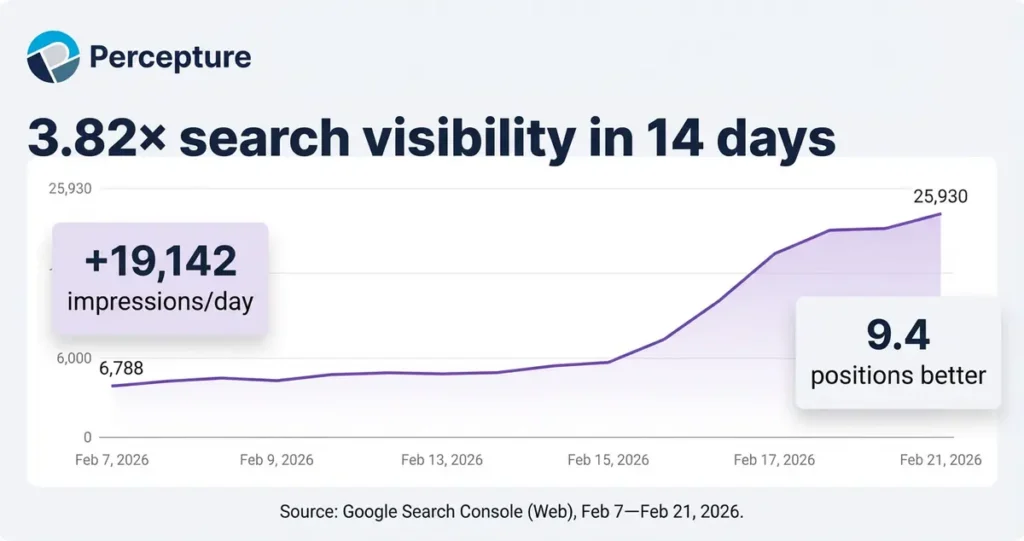
In 14 days, he has been able to spike AI mentions from 6k to over 25,000 mentions a day, for high intent keywords like: Best PR AI Agency, Global Digital PR Agency, Best PR Analytics and industry terms like data center marketing agency, cdmo seo, telecom pr, seo for construction companies
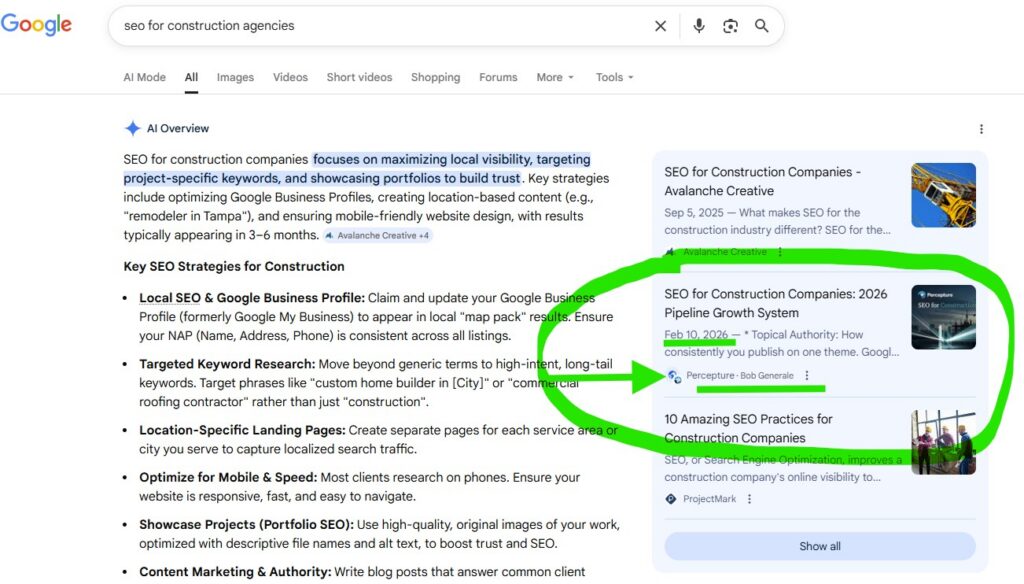
FAQ: Digital PR for AI Search
1. What is digital PR and how does it differ from traditional link building?
Digital PR earns editorial coverage and backlinks through newsworthy stories, original data, or expert insights. Unlike traditional link building, which focuses solely on acquiring links, digital PR builds brand authority, earns AI citations, and creates trust signals that compound over time. The links are earned organically through genuine editorial interest, making them more valuable and sustainable.
2. How long does it take for digital PR to impact SEO rankings?
Most digital PR campaigns begin influencing rankings within 8 to 16 weeks. However, individual high-authority links can move rankings in 24 to 72 hours once indexed. The timeline depends on current domain authority, keyword competitiveness, and the quality of earned placements. Consistent monthly PR accelerates results by building trust velocity—the rate at which your brand accumulates credible validation signals.
3. Can digital PR help my brand appear in AI search results like ChatGPT and Google AI Overviews?
Yes. AI systems cite brands they recognize as credible sources. Digital PR builds the editorial footprint AI models rely on by earning mentions in authoritative publications, creating clear category associations, and demonstrating consistent expertise. Brands with strong digital PR programs are more likely to be cited in AI-generated answers, product comparisons, and knowledge summaries.
4. What types of content earn the most digital PR coverage?
Data-driven research, expert commentary, product insights, and reactive newsjacking consistently earn coverage. Journalists prioritize stories that are timely, backed by credible data, and relevant to their audience. Original research reports, industry trend analysis, and expert quotes on breaking news are particularly effective for enterprise brands in technical or regulated industries.
5. How do I measure the ROI of digital PR?
Track share of voice in target publications, brand mention velocity, link velocity (referring domains), branded search lift, AI Overview appearances, and conversion path performance. Digital PR delivers directional metrics that compound over time rather than perfect attribution. The long-term value comes from increased domain authority, stronger topical associations, and reduced dependence on paid channels.