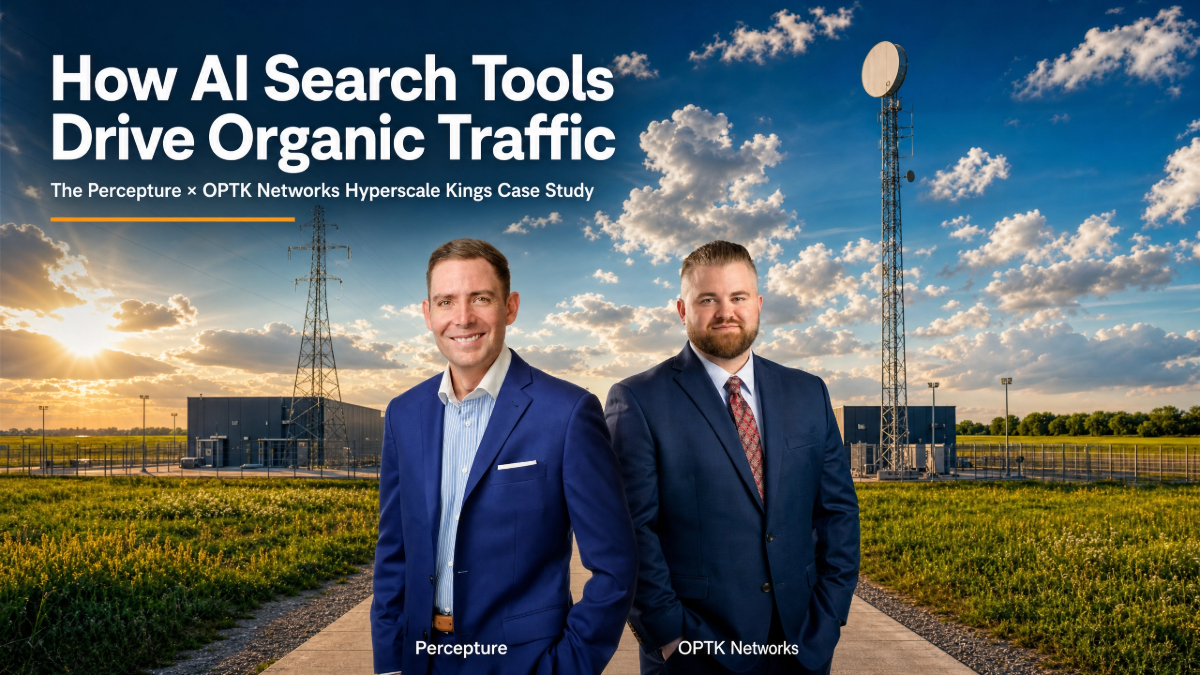

How AI Search Optimization Tools Increase Organic Traffic starts with better intelligence. These tools show which buyer questions a company is missing, which sources appear in AI-generated answers and where content or technical work may improve discovery. The software does not create traffic by itself. It helps a team decide what to build, improve, distribute and measure.
Percepture applied that operating model to OPTK Networks and the Hyperscale Kings campaign. The case illustrates the central distinction in this guide: Prime AI Visibility helped identify an opening, while strategy, subject expertise, content, technical execution, internal linking and distribution turned the opening into a searchable market story.
OPTK on AI Search, SEO and the Hyperscale Kings Result
Cody Clegg, the OPTK representative in this testimonial, explains how Percepture connected AI-search intelligence, enterprise targeting and the Hyperscale Kings campaign. The video documents search visibility; traffic and revenue require separate analytics.
Read the crawlable transcript summary
Cody Clegg discusses OPTK Networks, Percepture and the Hyperscale Kings campaign. He describes how the campaign became visible across multiple search surfaces. This article separates that client-reported visibility account from traffic, lead and revenue measurement, which require analytics and sales records.




What creates the organic traffic lift?
How AI Search Optimization Tools Increase Organic Traffic is straightforward: they identify buyer questions, cited sources, competitors and content gaps that affect discovery. Teams use those findings to improve useful pages, entity clarity, technical access, internal links and authority. The tool supplies intelligence. Execution creates the opportunity for traffic.
Executive summary
Measure the right thing
Mentions, citations, rankings, sessions and leads are different events. Reporting them separately keeps AI search optimization tied to observable outcomes.
Choose credible openings
A company should address topics supported by its services, people, customer experience or documented operating knowledge. That discipline keeps this process grounded in genuine expertise.
Connect the work
AI visibility intelligence becomes useful when it informs SEO, content, PR, distribution and conversion paths. Those connections explain the organic visibility strategy across the buyer journey.
Keep humans accountable
A dashboard can surface a gap. A qualified operator must decide whether that gap matters to the buyer and the business, which is central to the operating model.
Who this buyer guide is for
CEOs
Use the framework to distinguish a market signal from a software score when evaluating this approach.
CMOs
Use it to connect AI-search monitoring with an integrated content and authority plan that demonstrates AI search optimization.
Marketing leaders
Use this process to prioritize pages, proof assets, technical fixes and distribution.
Telecom and infrastructure companies
Use this guide to turn fiber, network, data-center and technical expertise into clear answers for complex buying committees.
What are AI search optimization tools?
An AI search optimization tool measures how a brand, website or source appears in AI-generated answers. Depending on the platform, it may track prompts, brand mentions, linked citations, competitors, source patterns, sentiment and share of voice. It can then help a team identify where content, authority or technical changes may improve visibility. This measurement layer is the starting point for the organic visibility strategy.
An AI visibility tool and an AI search monitoring tool usually emphasize measurement. A GEO tool may also support recommendations for generative engine optimization. Prompt monitoring records answers to selected questions. Citation monitoring checks whether an answer links to a source. AI share of voice compares a brand’s presence with a defined competitor set, while sentiment tracking records how the brand is described.
These terms are often used loosely, so buyers should examine what a product actually does. Monitoring collects observations. Analysis explains patterns. Recommendations identify possible actions. Execution changes pages, creates assets, earns authority and distributes the work. Not every platform performs all four, and that difference affects the operating model.
That distinction also separates AI monitoring from organic SEO services. Traditional SEO data remains important because a technically accessible and useful page gives search systems something reliable to discover, index and evaluate.
A practical definition
this approach depends on what happens after measurement. The platform identifies a discoverability gap; the marketing team validates the opportunity and improves the content, technical foundation, authority signals and buyer path around it.
How AI Search Optimization Tools Increase Organic Traffic
There are seven practical mechanisms. None is a push-button ranking feature. Each mechanism improves the quality of the decisions made by the people responsible for search, content, communications and revenue.
1. They reveal the questions buyers ask
Keyword tools usually begin with search terms. AI-search monitoring begins with natural questions: what a project executive asks, what a procurement team compares and what a technical buyer must verify. These prompts can expose long-tail, problem-aware and buyer-role questions that a basic keyword list may not show clearly.
One AI-generated answer may draw on several related searches. That makes comprehensive coverage more useful than publishing a separate thin page for every wording variation. AI search optimization at this stage is by helping the team build one strong answer around a connected decision, rather than a pile of shallow pages.
2. They expose competitor citation gaps
A monitoring platform can show which companies are mentioned, which pages receive linked citations and which independent sources recur. The team can then ask why a competitor is easier to understand. It may have a clearer service page, stronger third-party coverage, better structured evidence or more consistent entity relationships.
The finding is diagnostic, not a verdict. A cited competitor may not be the best provider. A missing company may have excellent capabilities but weak discoverability. The strategic task is to make genuine expertise easier for buyers and search systems to find. In this mechanism, this process depends on correcting a meaningful competitive gap.
3. They identify missing topics and entities
A dark-fiber provider may not be associated with hyperscale infrastructure. A construction company may build data centers but lack pages connecting its work to power, cooling, commissioning and schedule risk. A specialist staffing firm may serve data-center projects without being visible for the roles those projects require.
Entity gaps show where a company’s real capabilities and its searchable market identity have drifted apart. Closing that gap may require clearer copy, expert profiles, project evidence, internal links or outside coverage—not another generic article. This alignment is another part of the organic visibility strategy.
4. They prioritize what to improve
A useful finding should lead to a defined action. The team might improve an established page, create a supporting buyer guide, publish a case study or earn relevant outside mentions. It should also decide what not to create. That prioritization determines whether the operating model produces focused execution or an unfocused backlog.
A focused SEO Sprint can help separate high-impact changes from a large backlog. The decision should account for buyer value, current authority, implementation effort and the evidence the company can contribute.
5. They strengthen traditional SEO execution
this approach becomes visible in ordinary SEO work: clearer intent alignment, sharper headings, more complete answers, better internal linking, relevant media and stronger topical relationships. The tool informs those changes; it does not make them automatically.
Technical access still matters. A technical SEO audit service can identify indexing, rendering, canonical, internal-link and performance problems that prevent a strong answer from being discovered reliably.
6. They help distribute authority
Publication is the start of distribution, not the finish. Expert interviews, conference follow-up, YouTube, LinkedIn, partner communication and relevant third-party mentions can introduce the asset to the market. Digital PR services are especially useful when the topic requires independent context and credible outside discovery.
B2B content marketing services connect that distribution to a durable owned asset. The goal is not to manufacture mentions. It is to make a useful, evidence-backed point available where buyers already research. Distribution therefore plays a specific role in AI search optimization.
7. They create a measurable improvement loop
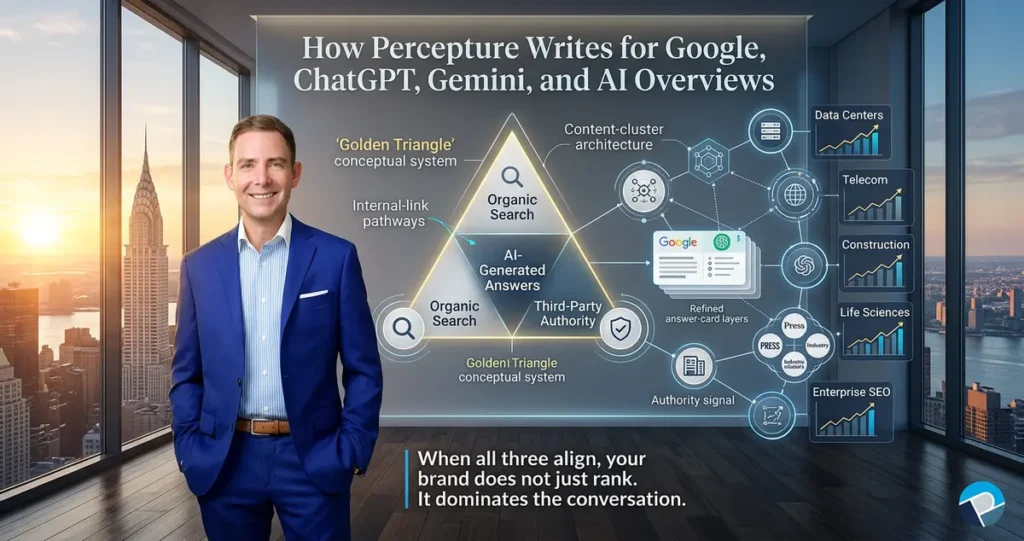
The operating loop is: Measure → Find Gap → Act → Publish → Distribute → Recheck → Improve. Each pass should record the prompt, platform, date, cited URLs, ranking data and downstream analytics. Without that record, teams can mistake a changing answer for a stable result. The loop lets teams test this process instead of assuming that visibility creates visits.
See which AI questions your competitors already own
A focused visibility review can show where your brand appears, which competitors receive linked citations and which buyer questions deserve attention first. It also provides a practical starting point for assessing the organic visibility strategy in your market.
The tool finds the opening. Execution creates the result.
A dashboard does not produce traffic. A recommendation is not implementation, an AI-generated draft is not proof of expertise and schema is not a substitute for useful content. Publishing also does not guarantee a ranking, mention or citation.
the operating model therefore depends on judgment. The people interpreting the data must understand the buyer, the company’s evidence, the market and the limits of the measurement. Otherwise, the team may optimize for a score that has little commercial value.
Tool output versus human decision
This scorecard shows where human judgment shapes this approach after the platform reports an observation.
| Tool output | Human decision |
|---|---|
| Prompt missing | Is this question commercially important? |
| Competitor cited | What evidence made that source useful? |
| Topic gap | Does the company have real expertise? |
| Content recommendation | Should an existing page improve or a new page be created? |
| Visibility score | What business action should follow? |
The OPTK Networks challenge
OPTK Networks operates in fiber and connectivity markets. Its public company information provides the appropriate source for current business details. Readers can review that information on the official OPTK website.
The supplied campaign brief describes a discoverability challenge: connect OPTK’s technical credibility with a larger conversation about hyperscale infrastructure. That is a common issue in telecom, construction and data-center markets. The company may have the capability, but buyers cannot find a clear market narrative that connects the capability to their current questions. The challenge provides a concrete example of AI search optimization by identifying a credible conversation before content is developed.
Percepture approached the assignment through AI search optimization for telecom, conference context and thought-leadership development. The resulting Hyperscale Kings concept focused on the people enabling fiber, interconnection, power, capital, construction, operations, talent and AI infrastructure.

How Prime AI Visibility identified the opportunity
The workflow begins by mapping buyer questions, reviewing which companies appear and examining the sources linked from answers. The team then looks for missing entities, themes and proof. A viable opportunity must be relevant to the buyer and supported by expertise the company can demonstrate.
Prime AI Visibility supports that monitoring and analysis. Percepture uses the findings to guide an editorial and visibility plan rather than treating a platform score as the final objective. In practical terms, this process is a sequence of informed decisions, not an automatic content-generation process.
Percepture did not ask, “What keyword can OPTK rank for?” The stronger question was, “What conversation has OPTK earned the right to join?” That reframing kept the campaign tied to market credibility instead of search volume alone.
The Percepture AI Visibility Slingshot
The AI Visibility Slingshot is Percepture’s methodology for using a narrow, evidence-backed search opportunity to create a broader lift across a company, topic cluster and buyer journey. It organizes the organic visibility strategy into six accountable stages.
- Detect: Measure prompts, linked citations, competitors, source patterns, entity gaps, rankings, images and video results.
- Select: Choose an opening with buyer relevance, client expertise, search opportunity, visual potential and sales usefulness.
- Build: Create direct answers, first-party insight, expert context, tables, media, source citations and internal relationships.
- Launch: Make the asset crawlable, useful and clear across traditional and AI-assisted search experiences.
- Activate: Use the asset in PR, LinkedIn, conference follow-up, partner communication and sales outreach.
- Compound: Connect it to service pages, supporting articles, case studies, pricing resources and future thought leadership.
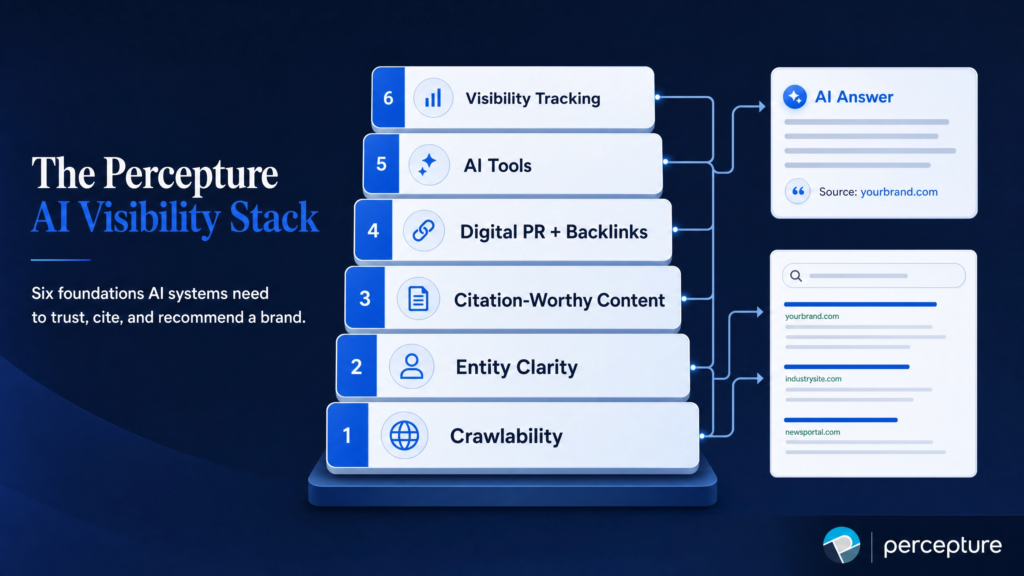
For larger sites, the Slingshot also requires governance. Corporate SEO provides a useful model for assigning page ownership, review responsibility and measurement across teams. B2B intent data can add account-level context when the campaign must support a defined market or buying committee.
How AI search and traditional organic search compound
Traditional rankings make pages discoverable. AI-generated answers can surface a brand before a visit. Images provide another discovery surface, while video can demonstrate expertise in a format that builds familiarity. Digital PR adds independent context, and internal links pass readers into relevant service and proof pages.
the operating model is best understood as a connected system. Search intelligence identifies the gap. Owned content answers it. Technical SEO keeps the content accessible. Authority work increases independent discovery. Distribution reaches buyers, and analytics records what happens next.
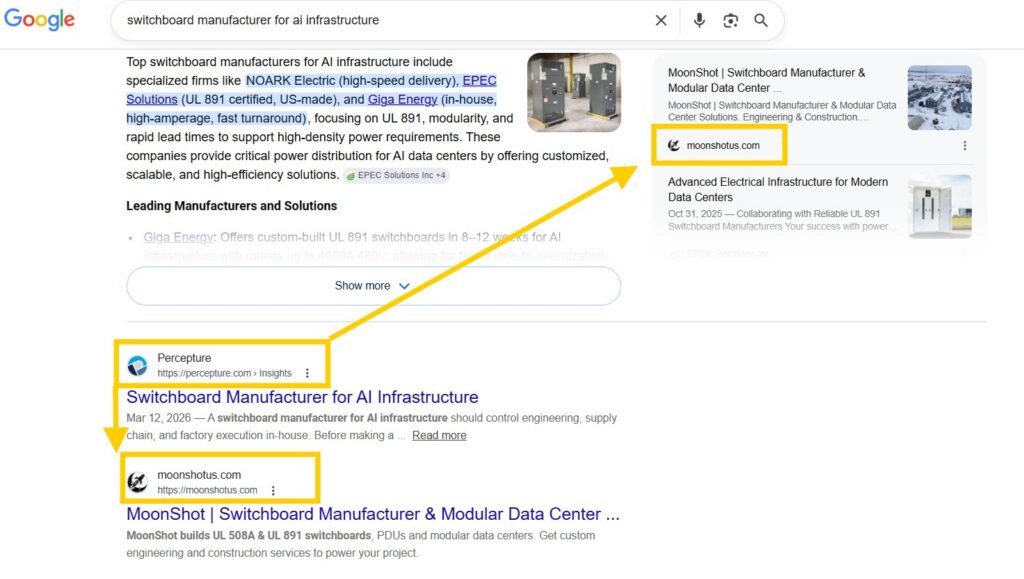
Additional Percepture search proof assets
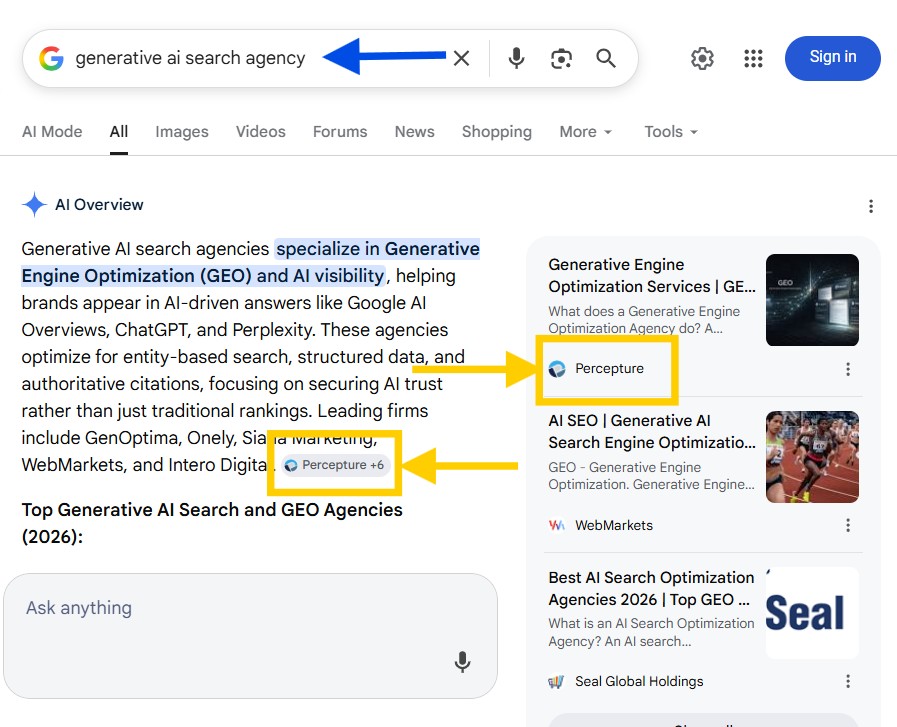
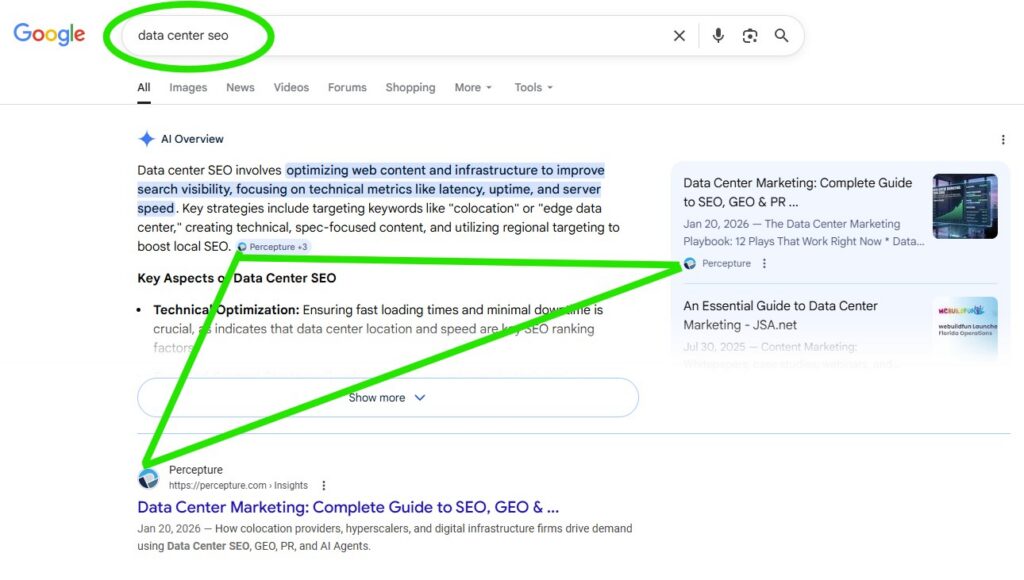
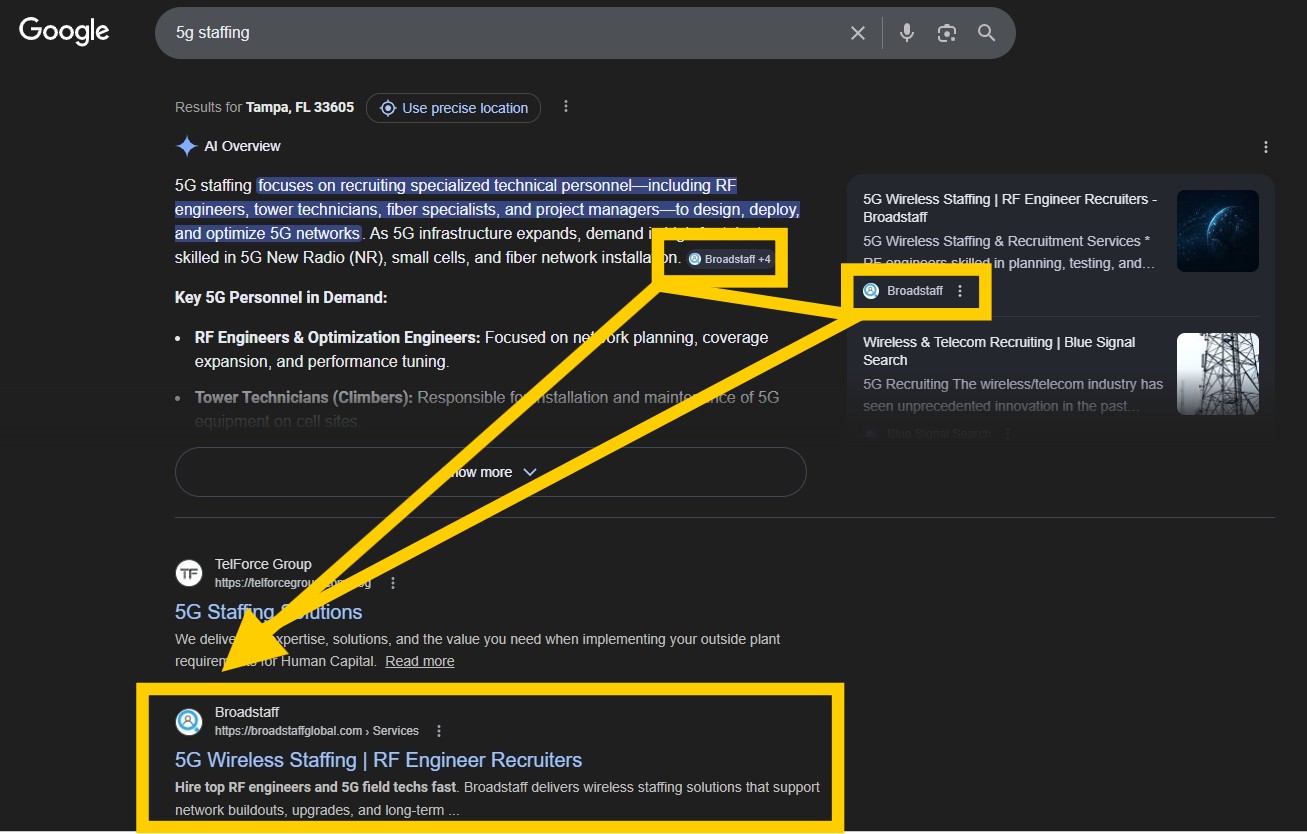
The following supplied screenshots show the types of search queries Percepture tracks. They should be reviewed with their original capture context before being used to support a position-specific claim.
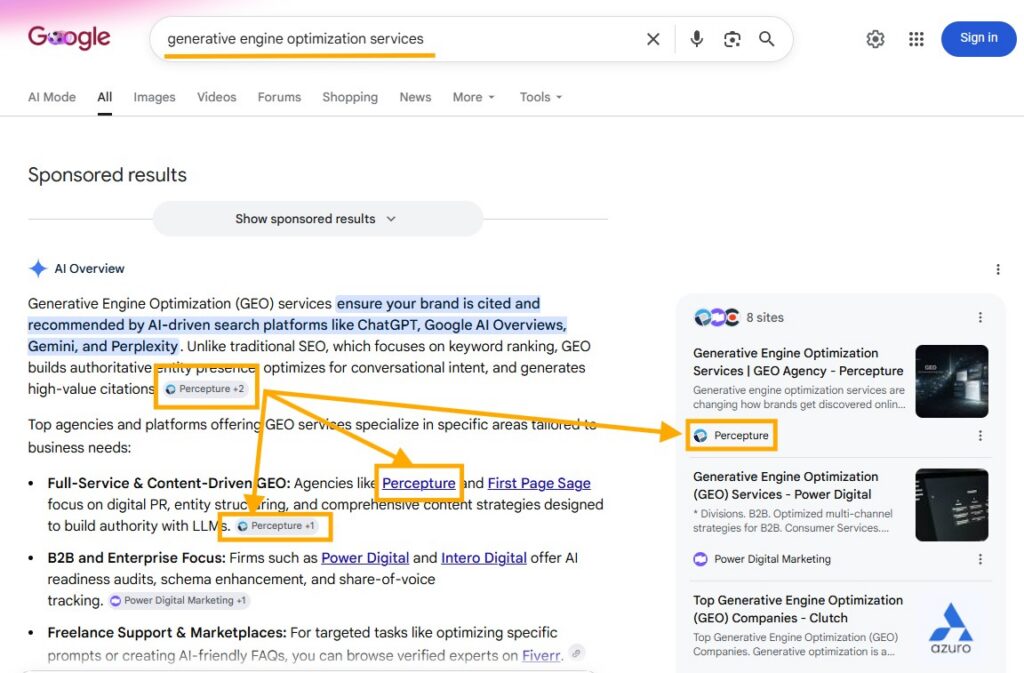
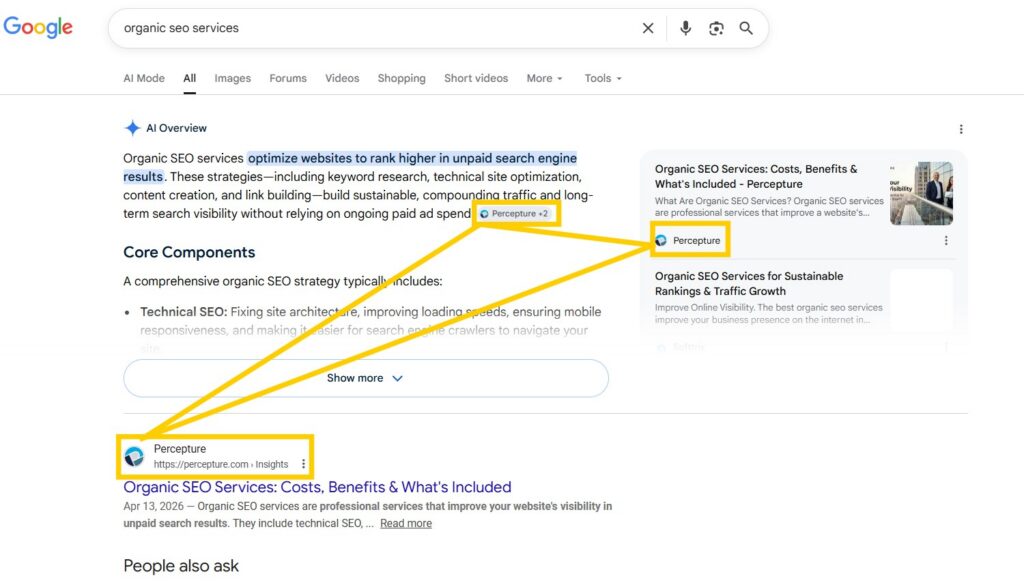
Watch Percepture’s broader search-ranking proof reel

Could your company create a searchable sales story?
The OPTK campaign began with a market opening, not a generic content assignment. Review how Percepture connects search intelligence, thought leadership and industry context to show this approach.
AI search optimization: Tool and execution comparison
| Decision area | Traditional SEO tool | AI visibility tool | Integrated Percepture program |
|---|---|---|---|
| Primary unit | Keyword, URL and domain | Prompt, answer, mention and citation | Buyer question, asset and conversion path |
| Platforms monitored | Search engines | Supported AI-answer platforms | Search, AI answers, media and analytics |
| Main measurements | Rankings, impressions, clicks and links | Prompt coverage, mentions and linked citations | Visibility, traffic, engagement and conversion |
| Main insight | How pages perform in search | How a brand appears in generated answers | What opportunity matters and how to act |
| Content execution | Usually outside the tool | Varies by platform | Planned around evidence and buyer intent |
| Authority building | Measured or researched | Source patterns may be monitored | Connected to PR and expert distribution |
| Sales activation | Usually outside the tool | Usually outside the tool | Assets mapped to buyer and sales use |
| Traffic measurement | Requires Search Console or analytics | Requires analytics for referral traffic | Visibility and traffic reported separately |
| Main limitation | Does not explain every AI answer | Does not create authority or traffic by itself | Requires coordinated people, time and evidence |
Traditional SEO tools track keywords and pages. AI visibility tools track prompts, mentions and linked citations. An integrated program connects both types of intelligence to content, technical work, authority, distribution and conversion. That operating difference is essential to understanding this process.
What AI search optimization tools cannot do
These tools cannot guarantee a Google ranking, a ChatGPT or Perplexity citation or an AI-platform mention. They cannot replace expertise, fix a weak offer, manufacture customer proof or turn generic copy into thought leadership. They also cannot prove traffic without analytics. Those limits frame any responsible account of the organic visibility strategy.
the operating model must not be reduced to schema, content chunking or a crawler file. Google’s official AI features and website guidance emphasizes established SEO fundamentals, accessible content and useful experiences. There is no special schema type that guarantees inclusion in an AI-generated result.
- Do not treat schema as a ranking switch.
- Do not publish inaccurate content because a tool recommended a topic.
- Do not confuse a brand mention with a linked citation.
- Do not report visibility as traffic or revenue.
- Do not replace technical SEO or digital PR with monitoring software.
How to measure whether AI search optimization increased traffic
Measurement must separate four layers. Search visibility includes Google impressions, average position, click-through rate, image impressions, video impressions and branded versus non-branded query growth. AI visibility includes prompt coverage, mention rate, linked-citation rate, source frequency, sentiment, share of voice and answer consistency. Separating these layers makes this approach measurable rather than theoretical.
Traffic includes organic sessions and identifiable referrals from AI or search platforms. Conversion includes CTA clicks, form starts, completed forms, booked meetings, assisted conversions, qualified leads and influenced pipeline. An attribution and analytics plan should define these events before the campaign launches.
A ranking, mention or citation is a visibility event. It is not proof of increased traffic or revenue until analytics and sales data show the downstream result. That rule is central to any honest explanation of AI search optimization.
Measurement scorecard
| Layer | Examples | What it proves |
|---|---|---|
| Search visibility | Impressions, position, CTR, image and video impressions | Whether search exposure changed |
| AI visibility | Prompt coverage, mentions, linked citations, source frequency | Whether generated answers changed |
| Traffic | Organic sessions, identifiable referrals, returning users | Whether people visited |
| Conversion | CTA clicks, forms, meetings, qualified leads | Whether visits supported a business action |
How to choose an AI search optimization tool
Start with engine coverage and custom prompt tracking. Then examine historical data, linked-citation visibility, competitor comparisons, sentiment, reporting, page recommendations and SEO-data integration. Security, data retention and access controls matter when teams enter confidential market or customer information. These capabilities determine how well the platform supports this process.
Buyers should also ask whether the platform supports existing-page optimization, exports usable data and fits the team’s human workflow. The best platform is not simply the one with the largest scorecard. It is the one that helps qualified people make and document better decisions.
Prime AI Visibility fit
Who it supports
Teams evaluating brand presence across AI-assisted search experiences.
What it measures
Selected prompts, brand appearances, competitors and linked-source patterns.
How Percepture uses it
To inform strategy, editorial priorities, authority work and remeasurement within the broader process of the organic visibility strategy.
For complex sites, pair the monitoring decision with enterprise SEO services. That prevents useful findings from stalling between marketing, development, communications and compliance teams and supports the operating model at organizational scale.
What does AI search optimization cost?
Costs fall into three layers: software, implementation and managed execution. Software covers monitoring and reporting. Implementation covers content, media, page changes and technical work. Managed execution can include strategy, PR, measurement, distribution and sales activation.
The budget depends on the number of prompts, markets, competitors and pages; the amount of original content required; technical conditions; PR support; reporting depth; and sales activation. Percepture publishes an AI search pricing resource for buyers comparing program structures.
this approach should influence the budget model. A company buying software without assigning people to interpret and execute the findings is funding measurement without funding change. Construction and infrastructure firms may also need subject-matter review, project evidence and coordination across regional or service-line pages.
| Cost layer | What it covers | Primary risk |
|---|---|---|
| Software | Prompt monitoring, competitor observations and reporting | Collecting scores without acting |
| Implementation | Content, technical fixes, media and internal links | Publishing without authority or distribution |
| Managed program | Strategy, PR, measurement and activation | Undefined business metrics or ownership |
Readiness checklist for construction and B2B teams
This checklist identifies the operating conditions required for AI search optimization to move from monitoring into accountable execution.
- We know which buyer roles and markets the program must support.
- We can distinguish mentions, linked citations, rankings, traffic and leads.
- We have subject experts who can review technical claims.
- We can publish useful project evidence without exposing confidential information.
- Our priority pages are crawlable, indexable and internally linked.
- Someone owns content implementation and technical changes.
- Someone owns distribution, PR and partner activation.
- Analytics records CTA and lead events by landing page.
- Sales can explain how a thought-leadership asset supports a buyer conversation.
Frequently asked questions
How do AI search optimization tools increase organic traffic?
How AI Search Optimization Tools Increase Organic Traffic is by revealing buyer questions, competitor sources, entity gaps and content weaknesses. Teams use those findings to improve useful pages, internal links, technical access, media and authority. The platform itself does not create visits. Traffic must be measured in Search Console and analytics after the recommended work is implemented and distributed.
What is an AI search optimization tool?
An AI search optimization tool monitors how a brand, page or source appears in AI-generated answers. Depending on the product, it may track selected prompts, brand mentions, linked citations, competitors, source patterns and sentiment. Buyers should verify whether a product only monitors results or also provides analysis, recommendations and workflow support, because those functions affect the operating model.
What does an AI visibility tool measure?
An AI visibility tool may measure prompt coverage, mention rate, linked-citation rate, competitor share of voice, source frequency, sentiment and answer consistency. Coverage varies by platform. These measurements show visibility inside observed answers; they do not prove that people visited a website, became leads or purchased a service.
Do AI SEO tools improve Google rankings?
An AI SEO tool can identify opportunities that inform page improvements, but it does not directly change a Google ranking. Rankings may be affected by content usefulness, relevance, technical access, internal relationships, authority, competition and other conditions. The proper claim is that the tool improves decision quality, while implementation creates the opportunity for better performance. That distinction is fundamental to this approach.
Can AI search tools increase traffic from ChatGPT?
They can help a team identify prompts, source patterns and content gaps related to ChatGPT search experiences. A visit occurs only when a user follows a link to the site. Track identifiable referrals and conversions in analytics, and do not treat a brand mention as a visit or a linked citation as guaranteed traffic. This referral measurement is one part of verifying AI search optimization.
How did Percepture use Prime AI Visibility for OPTK?
Percepture used AI-visibility intelligence to examine a market conversation relevant to OPTK and develop an editorial opportunity around hyperscale infrastructure. That work informed the Hyperscale Kings campaign. Prime AI Visibility supported the opportunity-finding stage; Percepture’s strategy, content, technical execution, internal linking and distribution handled implementation.
What was the Hyperscale Kings campaign?
Hyperscale Kings was a Percepture campaign developed around the people and disciplines enabling hyperscale and AI infrastructure, including fiber, interconnection, power, capital, construction, operations and talent. The supplied campaign materials position OPTK within that larger infrastructure conversation rather than reducing the story to a generic product announcement.
Can AI tools guarantee number-one rankings?
No. AI tools cannot guarantee a number-one Google ranking, a citation from an AI platform or a stable answer across repeated tests. Results vary by query, platform, location, competition, personalization, timing and site authority. Any position-specific result should be documented with the exact query, platform, date, location and result type.
How should a company track AI-search traffic?
Track identifiable referral sessions by source, landing page and conversion event. Create analytics views for ChatGPT, Perplexity, Bing and other identifiable referrals, while keeping ordinary organic search separate. Pair traffic data with prompt-monitoring records so the team can compare answer visibility with actual visits, engagement and qualified actions. That comparison provides evidence for this process.
What is the difference between SEO, AEO and GEO?
SEO improves discovery and performance in search engines. AEO focuses on making answers clear and useful for answer-driven experiences. GEO focuses on visibility within generative search and AI-generated responses. The practices overlap because all three benefit from accessible pages, clear entities, useful content, evidence, internal links and independent authority.
Do I need special schema for Google AI Overviews?
No special AI schema type is required for Google AI features. Use structured data that accurately matches visible page content and follows the requirements for that schema type. Schema can clarify page information, but it does not replace useful content, technical accessibility or authority and does not guarantee inclusion in an AI-generated result.
How much does an AI-search optimization program cost?
Cost depends on software coverage, the number of prompts and markets, competitors, pages, technical conditions, content requirements, PR support, reporting and sales activation. Buyers should separate the monitoring subscription from the cost of implementing recommendations. A lower software price does not produce savings if the team lacks the resources to act. Budgeting for both layers reflects the organic visibility strategy in practice.
Turn an AI visibility gap into a search and sales opportunity
Percepture can review the questions your buyers ask, the competitors appearing in answers and the pages most likely to support measurable visibility. The review explains the operating model without treating a dashboard score as a business result.
Request an AI Visibility Gap Analysis
You will receive a clear next-step recommendation rather than a generic automated audit.

About Bob Generale
Bob Generale is President of Percepture. He works with business and marketing leaders on SEO, GEO, digital strategy, content visibility and integrated programs that connect search intelligence with execution.