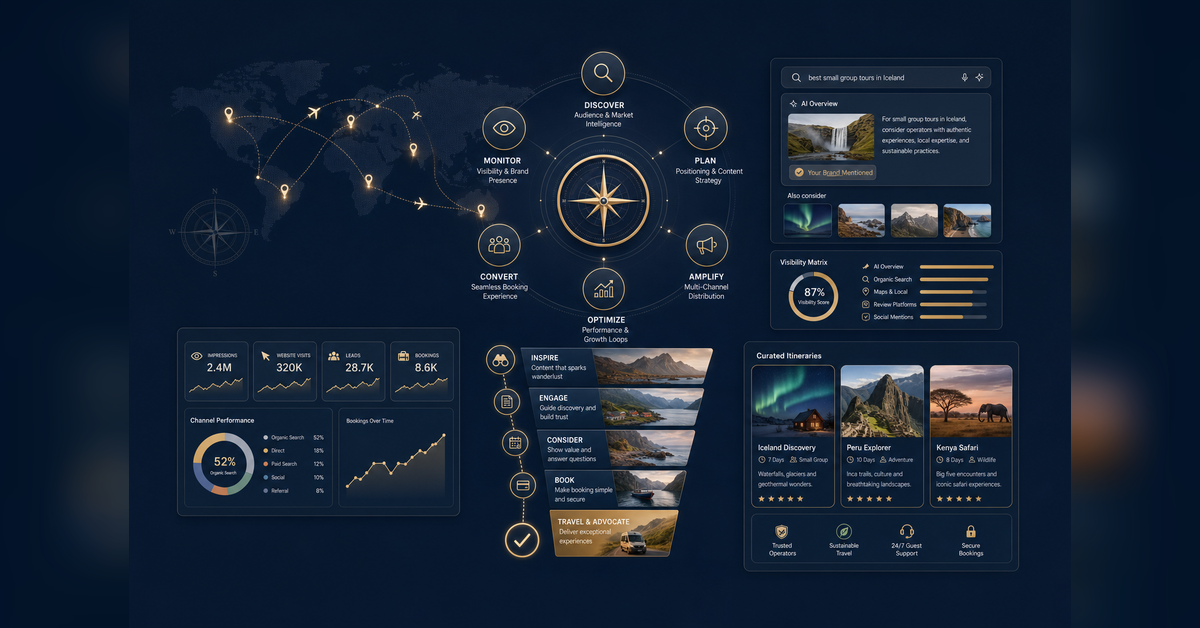

Digital marketing for tour operators helps tour, activity, attraction, and adventure travel companies get found by travelers, build trust during the research process, and increase direct bookings. The strongest strategy connects SEO, Google Ads, Google Things to Do, content, email, PR, CRO, tracking, and AI search into one measurable system.
Direct answer
Digital marketing for tour operators helps tour, activity, attraction, and adventure travel companies get found by travelers, build trust during the research process, and increase direct bookings. The strongest strategy connects SEO, Google Ads, Google Things to Do, content, email, PR, CRO, tracking, and AI search into one measurable system.
For healthcare leaders, Digital Marketing for Tour Operators should connect technical content, buyer intent, search visibility, and sales follow-up into one operating plan.
Tour operators do not need another channel checklist. They need a visibility system that matches how travelers actually decide. A traveler may find you through Google, compare you against an OTA, read reviews, ask an AI tool for options, visit your tour page on mobile, abandon the booking flow, and return later from email. If those moments are not connected, money leaks.
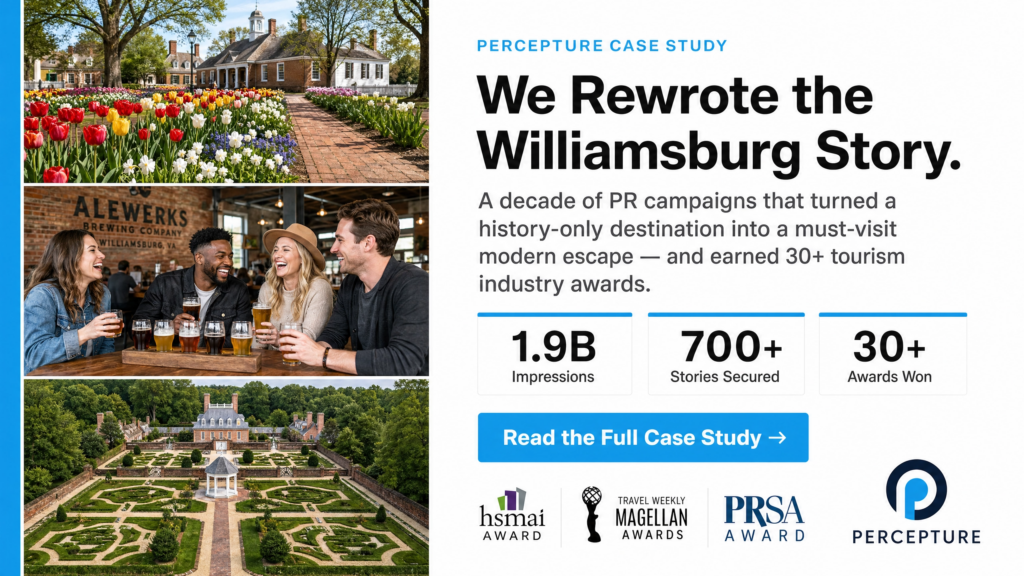
Percepture helps operators move from scattered tactics to one direct booking path. Founded in 2004, Percepture works across SEO, GEO, digital PR, paid media, content, analytics, CRO, marketing automation, AI systems, and lead generation. The core idea is simple: proof before promotion.
The best Digital Marketing for Tour Operators programs measure qualified conversations and sales opportunities, not just impressions, clicks, or rankings.
Percepture strategy page
Build one system that helps travelers discover, trust, compare, and book directly across search, paid media, PR, content, email, CRO, analytics, and AI search.
Founded in 2004. SEO, GEO, PR, paid media, content, analytics, CRO, and lead generation.
Capture booking intent before competitors own it.
Add proof before the traveler books.
Protect demand with better pages and tracking.
A practical Digital Marketing for Tour Operators strategy also has to reflect buyer committees, proof needs, comparison searches, and long sales cycles.
Start with the leak, not the tactic.
If your traffic is rising but direct bookings are flat, the issue may be tracking, tour page trust, booking engine handoff, or weak intent targeting.
What digital marketing means for tour operators
When Digital Marketing for Tour Operators is built this way, every channel supports the same revenue goal instead of acting like a separate campaign.
Digital marketing for tour operators is the work of using search, paid media, content, email, PR, social proof, conversion pages, analytics, and AI-search readiness to create qualified traveler demand. The goal is not traffic for its own sake. The goal is a traveler who understands the experience, trusts the operator, and takes the next step.
Definition
Digital marketing for tour operators is a connected system for attracting travelers, building trust, improving direct booking paths, and measuring which channels create profitable bookings.
That is why Digital Marketing for Tour Operators needs both category-level execution and executive-level reporting.
A strong tour operator marketing strategy has to respect seasonality, tour capacity, traveler timing, margins, and the role of OTAs. It also has to answer basic buyer questions: Is this tour safe? Is it worth the price? What is included? Can I cancel? Why book direct? Will my family, group, or company have a good experience?
Why tour operator marketing is different
For healthcare leaders, Digital Marketing for Tour Operators should connect technical content, buyer intent, search visibility, and sales follow-up into one operating plan.
Tour marketing is not the same as selling a simple ecommerce item. The product is an experience. The buyer often compares several options. The purchase can involve travel dates, weather, group size, mobility needs, safety, cancellation policies, and trust in guides.
The direct booking path is also fragile. Many operators rely on OTAs for discovery, but that can limit owned demand and make attribution harder. Paid media can work, but only when the landing page matches booking intent. Content can help, but thin destination posts will not build authority. Social media can inspire, but it is not a full revenue system by itself.
The best Digital Marketing for Tour Operators programs measure qualified conversations and sales opportunities, not just impressions, clicks, or rankings.
Percepture’s view is that each credible touchpoint is a Trust Token. A review, a helpful guide page, an earned media mention, a clear FAQ, a fast mobile page, and a clean booking flow all deposit trust before the booking. Landscape Domination means owning the search, PR, AI, and conversion landscape around the traveler’s decision.
The Tour Operator Trust Velocity System
A practical Digital Marketing for Tour Operators strategy also has to reflect buyer committees, proof needs, comparison searches, and long sales cycles.
Digital marketing for tour operators works best when every channel has a job. The Tour Operator Trust Velocity System is Percepture’s framework for helping operators turn visibility into direct bookings by connecting demand capture, trust signals, conversion infrastructure, nurture, AI-search readiness, and measurement.
Percepture framework
The Tour Operator Trust Velocity System
A practical system for helping the right travelers find, trust, compare, and book directly.
SEO, paid search, local visibility, destination keywords, tour categories, and Google Things to Do.
Reviews, guide expertise, real photos, safety clarity, earned media, and third-party mentions.
Tour page CRO, mobile UX, clear CTAs, booking engine tracking, pricing clarity, and FAQs.
Email automation, abandoned booking follow-up, review requests, repeat traveler campaigns, and referrals.
Direct answers, schema, crawlable text, consistent brand facts, digital PR, and entity clarity.
GA4, Search Console, ad conversions, booking revenue, CRM tags, call tracking, and cost per booking.
When Digital Marketing for Tour Operators is built this way, every channel supports the same revenue goal instead of acting like a separate campaign.
Percepture POV
Tour operators do not need more disconnected campaigns. They need one visibility system that helps travelers find them, trust them, and book directly.
Channel comparison: what each channel should do
That is why Digital Marketing for Tour Operators needs both category-level execution and executive-level reporting.
A channel is only useful if it has a clear role in the traveler’s decision journey. Digital marketing for tour operators should separate demand capture, trust building, conversion, and retention.
| Channel | Best For | What to Measure | Common Mistake | Deeper Guide |
|---|---|---|---|---|
| SEO | Capturing high-intent searches | Rankings, clicks, bookings | Writing generic destination posts | SEO depth |
| Google Ads | Immediate booking intent | CPA, ROAS, conversion rate | Broad travel keywords | Paid media depth |
| Google Things to Do | Eligible tours and attractions | Feed health, clicks, bookings | Ignoring inventory quality | Connectivity review |
| Content marketing | Answering traveler questions | Assisted bookings, engagement | Thin AI copy | Content depth |
| Email marketing | Nurture and repeat bookings | Revenue, clicks, unsubscribes | Same message to all travelers | Nurture map |
| Marketing automation | Abandoned booking follow-up | Recovery rate, booked revenue | No segmentation | Automation depth |
| Digital PR | Authority and trust | Mentions, referral traffic | Press with no search tie-in | Authority depth |
| Social media | Inspiration and proof | Referral visits, engagement | Treating posts as the full plan | Content calendar |
| Reviews | Decision confidence | Review volume, rating trends | No review request workflow | Trust plan |
| CRO | Turning visits into bookings | Conversion rate, booking starts | Only changing button color | Funnel audit |
| AI search / GEO | Answer engine visibility | Citations, crawlability, answers | Looking for AI hacks | Entity clarity |
| Analytics and attribution | Budget decisions | Cost per booking, direct share | Bad conversion data | Dashboard plan |
For healthcare leaders, Digital Marketing for Tour Operators should connect technical content, buyer intent, search visibility, and sales follow-up into one operating plan.
SEO for tour operators
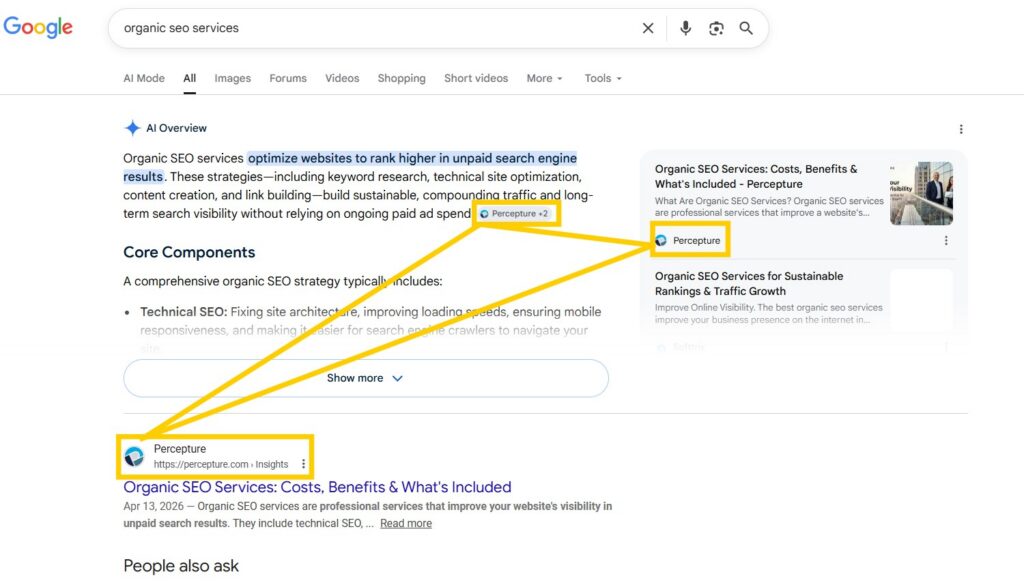
Search is usually the backbone of digital marketing for tour operators because it captures travelers while they are actively researching. A deeper SEO for tour operators guide should cover destination keywords, tour category pages, itinerary content, local visibility, internal links, schema, and review signals.
The best Digital Marketing for Tour Operators programs measure qualified conversations and sales opportunities, not just impressions, clicks, or rankings.
Good SEO starts with a map. Build pages around the way people search: destination plus activity, activity plus audience, problem plus solution, and comparison phrases. A whale watching company, food tour operator, museum attraction, zipline park, or guided hiking brand should not rely on one homepage to rank for every booking moment.
Google Ads for tour operators
A practical Digital Marketing for Tour Operators strategy also has to reflect buyer committees, proof needs, comparison searches, and long sales cycles.
Paid search can help when the offer, keyword, page, and conversion tracking all line up. The Google Ads for tour operators strategy should separate booking intent from broad travel curiosity. A search for a specific activity near a destination is different from a vague travel planning query.
Percepture’s paid search management should focus on high-intent searches, clean conversion data, negative keywords, landing pages built for booking decisions, and a clear measurement loop. Performance Max can be useful in some accounts, but it should not run without clean conversion data.
When Digital Marketing for Tour Operators is built this way, every channel supports the same revenue goal instead of acting like a separate campaign.
Google Things to Do for tour operators
Google Things to Do can help eligible attractions, tour operators, and activity providers connect travel activity inventory to Google-owned surfaces through feeds and connectivity partners. For many operators, this is not a copywriting project. It is an inventory, feed, pricing, availability, and tracking project.
That is why Digital Marketing for Tour Operators needs both category-level execution and executive-level reporting.
The first question is eligibility. The second is operational readiness. Are products named clearly? Are prices and availability accurate? Does the booking engine pass useful data? Are tour descriptions helpful and crawlable? Google Things to Do should support the direct booking path, not create another blind spot in reporting.
Content marketing for tour operators

For healthcare leaders, Digital Marketing for Tour Operators should connect technical content, buyer intent, search visibility, and sales follow-up into one operating plan.
Content should help travelers make a decision. Content marketing for tour operators should answer real traveler questions before OTAs and travel publishers do. That includes what to bring, when to book, how long the tour takes, whether the tour is child friendly, how weather affects the experience, and why a direct booking is worth considering.
Percepture’s content marketing services are built to connect search demand, traveler questions, entity clarity, and conversion paths. The best content is useful before the click, credible during comparison, and helpful near the booking button.
The best Digital Marketing for Tour Operators programs measure qualified conversations and sales opportunities, not just impressions, clicks, or rankings.
Email and automation
Not every traveler books on the first visit. Some compare options. Some wait for flights. Some ask a spouse, group, or team. Marketing automation for tour operators helps turn trip interest, abandoned bookings, and quote requests into managed follow-up.
A practical Digital Marketing for Tour Operators strategy also has to reflect buyer committees, proof needs, comparison searches, and long sales cycles.
Useful workflows include abandoned booking emails, quote follow-up, trip-interest segmentation, pre-trip reminders, post-tour review requests, repeat traveler offers, and referral campaigns. Automation should feel helpful, not pushy. The message should match the traveler’s intent and timing.
Digital PR and earned authority
When Digital Marketing for Tour Operators is built this way, every channel supports the same revenue goal instead of acting like a separate campaign.
Digital marketing for tour operators should include trust beyond the company’s own website. Earned media and third-party mentions can help journalists, travelers, search engines, and AI systems understand why the operator is credible. Percepture’s strength is the combination of SEO, GEO, and PR.
Digital PR services help tour brands earn the third-party mentions that support both trust and search authority. A strong travel PR strategy should connect seasonal stories, destination expertise, guide knowledge, traveler trends, unique experiences, and practical proof.
That is why Digital Marketing for Tour Operators needs both category-level execution and executive-level reporting.
AI search and GEO for tourism marketing
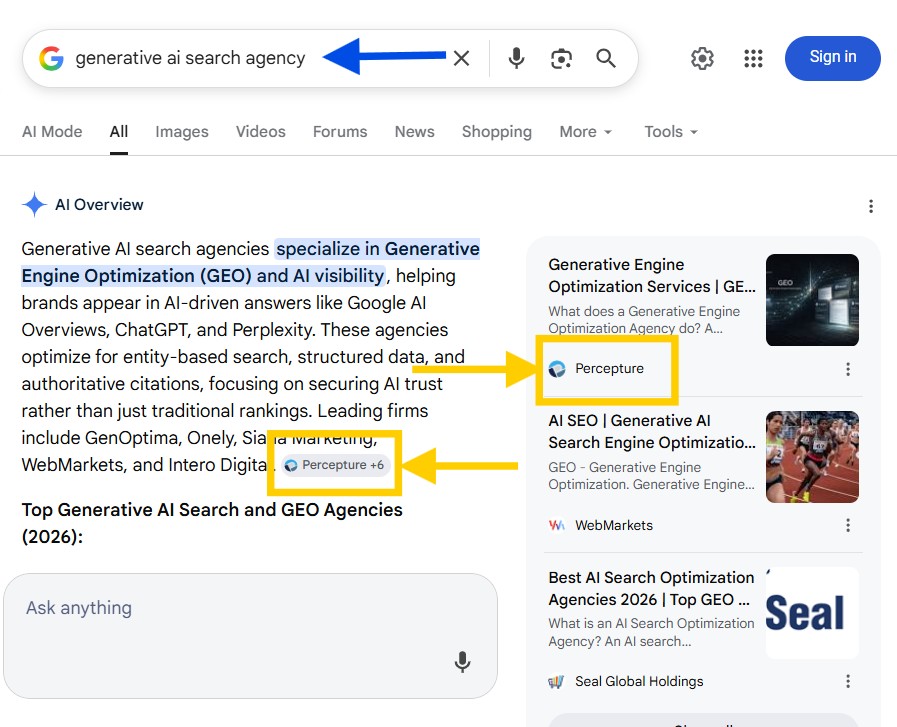
AI search is changing how travelers research. Google AI Overviews, AI Mode, ChatGPT search, Perplexity, Gemini, and other answer systems may summarize options before the traveler clicks. The goal is not an AI hack. The goal is entity clarity, crawlable text, structured answers, schema matching visible content, and third-party authority signals.
For healthcare leaders, Digital Marketing for Tour Operators should connect technical content, buyer intent, search visibility, and sales follow-up into one operating plan.
Percepture’s AI search visibility services connect entity clarity, structured content, technical crawlability, and authority signals. Tour operators should make it easy for AI systems to understand who they are, where they operate, what experiences they offer, what makes them credible, and how travelers can book.
Technical details matter. Important content should be crawlable text, not only images. FAQs should match visible questions. Schema should reflect the real page. If a site blocks important crawlers, including OAI-SearchBot where appropriate, AI systems may have a harder time retrieving the brand’s story.
The best Digital Marketing for Tour Operators programs measure qualified conversations and sales opportunities, not just impressions, clicks, or rankings.
CRO and the direct booking path
Conversion rate optimization is where marketing spend is protected. Conversion rate optimization services matter because tour operators can lose qualified travelers at the tour page, price section, mobile layout, availability step, or booking engine handoff.
A practical Digital Marketing for Tour Operators strategy also has to reflect buyer committees, proof needs, comparison searches, and long sales cycles.
A strong tour page should answer the buyer’s real objections. What is included? Who is this best for? What happens if the weather changes? Are guides experienced? How long does the experience take? Is pickup included? Are there age, mobility, or safety limits? Are reviews visible near the decision point?
Booking funnel leak table
| Funnel Stage | Common Leak | What to Fix | Metric to Watch |
|---|---|---|---|
| Discovery | Wrong intent | Keyword and audience map | Qualified clicks |
| Tour page visit | Weak proof | Reviews, photos, guide details | Booking starts |
| Price comparison | Unclear value | Inclusions and direct booking benefits | CTA clicks |
| Booking engine handoff | Tracking breaks | Cross-domain and event tracking | Completed bookings |
| Abandoned booking | No follow-up | Email workflow | Recovery rate |
| Inquiry | Slow response | CRM tags and alerts | Close rate |
| Post-tour review | No request | Review automation | Review volume |
| Repeat booking | No retention plan | Segmented offers | Repeat revenue |
When Digital Marketing for Tour Operators is built this way, every channel supports the same revenue goal instead of acting like a separate campaign.
Tracking, attribution, and the measurement loop
Tracking is one of the most important parts of digital marketing for tour operators. Without it, CEOs and CFOs are asked to fund a channel mix they cannot see. The measurement loop should show what creates booked revenue, what assists bookings, what wastes spend, and where the next dollar should go.
That is why Digital Marketing for Tour Operators needs both category-level execution and executive-level reporting.
At minimum, the system should include GA4, Google Search Console, Google Ads conversions, booking engine tracking, call tracking, form tracking, chat tracking, CRM tags, email tracking, cost per booking, direct booking share, and assisted conversions. If the booking engine sits on another domain, cross-domain tracking and event quality need special attention.

Lead quality support
Get 5 Free Verified Leads
Tour operators need visibility, but they also need the right people to talk to. Lead Seeker helps identify verified prospects and buying signals so your sales team can focus on better-fit outreach.
For healthcare leaders, Digital Marketing for Tour Operators should connect technical content, buyer intent, search visibility, and sales follow-up into one operating plan.
What not to do
- Do not send paid traffic to a weak homepage.
- Do not run broad travel curiosity keywords without intent filters.
- Do not rely only on OTAs.
- Do not ignore booking engine tracking.
- Do not treat social posts as the whole strategy.
- Do not publish thin AI-generated destination content.
- Do not fake urgency.
- Do not run Performance Max without clean conversion data.
Budget and ROI logic
The best Digital Marketing for Tour Operators programs measure qualified conversations and sales opportunities, not just impressions, clicks, or rankings.
Budget should be tied to market size, margin, competition, seasonality, and tracking quality. A CFO does not need hype. A CFO needs to know what is being tested, how spend is controlled, and how the team will decide what to scale.
Digital marketing for tour operators should be judged by qualified demand, direct booking share, cost per booking, revenue by channel, assisted conversions, and lifetime value where repeat travel or referrals matter. The best question is not “What is the cheapest channel?” It is “Which channel produces profitable booked revenue and trust we can build on?”
A practical Digital Marketing for Tour Operators strategy also has to reflect buyer committees, proof needs, comparison searches, and long sales cycles.
Typical monthly investment ranges
$2,500–$6,000/month plus ad spend
$6,000–$15,000/month plus ad spend
$15,000–$40,000+/month plus ad spend
Budget depends on market, seasonality, tour price, margin, competition, booking window, tracking quality, and the number of channels being managed.
A practical 90-day plan
When Digital Marketing for Tour Operators is built this way, every channel supports the same revenue goal instead of acting like a separate campaign.
A strong tour operator marketing plan should start with the parts that affect every channel: tracking, keyword strategy, booking flow, and page clarity. Then it can layer content, paid media, PR, automation, and AI-search improvements.
90-day roadmap
| Timing | Focus | Outcome |
|---|---|---|
| Days 1–15 | Audit tracking, keyword map, booking engine review | Know what is broken and what demand exists. |
| Days 16–30 | Landing page fixes, Google Ads test, internal links, email map | Improve the direct booking path. |
| Days 31–60 | Publish content, launch retargeting, PR angles, email workflows | Build demand and trust together. |
| Days 61–90 | CRO tests, scale winners, improve AI-search sections, reporting dashboard | Turn learning into a repeatable measurement loop. |
That is why Digital Marketing for Tour Operators needs both category-level execution and executive-level reporting.
Why Percepture
Percepture is a digital marketing and PR agency founded in 2004. Percepture has experience across travel, tourism, hospitality, and B2B service marketing. The agency’s edge for tour operators is the combination of search, PR, and AI working together with CRO, analytics, content, paid media, and lead-generation systems.
For healthcare leaders, Digital Marketing for Tour Operators should connect technical content, buyer intent, search visibility, and sales follow-up into one operating plan.
Percepture’s omnichannel marketing services help connect the traveler’s decision journey instead of treating SEO, ads, PR, email, analytics, and conversion work as separate projects. For tour operators, that means fewer disconnected tactics and more channel clarity.
FAQs about digital marketing for tour operators
The best Digital Marketing for Tour Operators programs measure qualified conversations and sales opportunities, not just impressions, clicks, or rankings.
What is digital marketing for tour operators?
Digital marketing for tour operators is a connected system for getting found, building trust, and driving more direct bookings. It usually includes SEO, Google Ads, Google Things to Do, content, email, PR, reviews, CRO, analytics, and AI-search readiness. The best plans match channels to traveler intent instead of treating each channel as a separate campaign.
Which channel should tour operators start with?
Start with tracking and the booking funnel. If you cannot see bookings, calls, forms, chat, and booking engine events, it is hard to judge any channel. After that, prioritize SEO and paid search for high-intent demand, then add content, PR, email automation, CRO, and AI-search improvements based on budget and seasonality.
A practical Digital Marketing for Tour Operators strategy also has to reflect buyer committees, proof needs, comparison searches, and long sales cycles.
How much should tour operators spend on marketing?
Many small or local operators invest $2,500–$6,000 per month plus ad spend. Growth operators often invest $6,000–$15,000 per month plus ad spend. Larger, premium, multi-location, or international operators may invest $15,000–$40,000+ per month plus ad spend. Budget depends on margin, competition, seasonality, booking window, and tracking quality.
How long does tour operator SEO take?
SEO timing depends on competition, site authority, content depth, technical health, internal links, and how strong the tour pages are. Some fixes can improve visibility faster, but durable SEO usually builds over months. Operators should measure rankings, organic clicks, booking starts, booked revenue, assisted conversions, and direct booking share.
When Digital Marketing for Tour Operators is built this way, every channel supports the same revenue goal instead of acting like a separate campaign.
Are Google Ads worth it for tour operators?
Google Ads can be worth it when campaigns focus on booking intent and send travelers to strong landing pages. The risk is paying for broad travel curiosity instead of qualified demand. Clean conversion tracking, negative keywords, location controls, strong tour pages, and cost-per-booking reporting matter more than simply increasing spend.
What role does Google Things to Do play?
Google Things to Do can help eligible attractions, tour operators, and activity providers connect inventory to Google-owned surfaces through feeds and connectivity partners. It should be treated as part of the booking system, not just a marketing listing. Feed quality, product clarity, pricing accuracy, availability, and attribution all matter.
That is why Digital Marketing for Tour Operators needs both category-level execution and executive-level reporting.
How can tour operators appear in AI search results?
AI-search visibility depends on clear entities, crawlable content, structured answers, schema that matches visible page content, and trusted third-party authority signals. Tour operators should write clear pages about who they are, where they operate, what they offer, and why travelers trust them. The goal is retrievability and credibility, not shortcuts.
Should tour operators rely on OTAs?
OTAs can support discovery, but relying only on them creates risk. A stronger model builds owned demand through search, paid media, PR, email, reviews, CRO, and content. The goal is not necessarily to remove every OTA relationship. The goal is to improve direct booking share and reduce dependence on rented demand.
For healthcare leaders, Digital Marketing for Tour Operators should connect technical content, buyer intent, search visibility, and sales follow-up into one operating plan.
What should a tour operator marketing dashboard include?
A useful dashboard should include GA4 traffic, Search Console queries, Google Ads conversions, booking engine revenue, call tracking, form tracking, chat tracking, CRM tags, email clicks, cost per booking, direct booking share, and assisted conversions. It should help leaders decide what to fix, pause, or scale.
Conclusion
The best Digital Marketing for Tour Operators programs measure qualified conversations and sales opportunities, not just impressions, clicks, or rankings.
Digital marketing for tour operators should create qualified traveler demand and move that demand through a trusted direct booking path. That means search, PR, AI, paid media, content, email, CRO, and tracking need to work as one system.
The right plan gives leaders channel clarity. It shows which searches matter, which pages convert, where the booking funnel leaks, how trust is built, how AI systems understand the brand, and where the next dollar should go.
A practical Digital Marketing for Tour Operators strategy also has to reflect buyer committees, proof needs, comparison searches, and long sales cycles.
Ready to improve the system?
Get a Tour Operator Visibility Forecast
We will look at your search visibility, paid media path, PR authority, booking funnel, tracking, and AI-search readiness.

About the author: Bob Generale
Bob Generale is President of Percepture, a digital marketing and public relations agency founded in 2004. He helps companies build visibility systems across SEO, digital PR, paid media, content, AI search, analytics, CRO, and lead-generation funnels. For travel and tourism brands, Bob’s work focuses on strengthening direct demand, improving discoverability, building authority, and converting more of the right audience through connected marketing systems.
Related articles
- SEO for Tour Operators
- Google Ads for Tour Operators
- Content Marketing for Tour Operators
- Marketing Automation for Tour Operators
- Travel PR Strategy
- AI Search for Tourism Marketing