
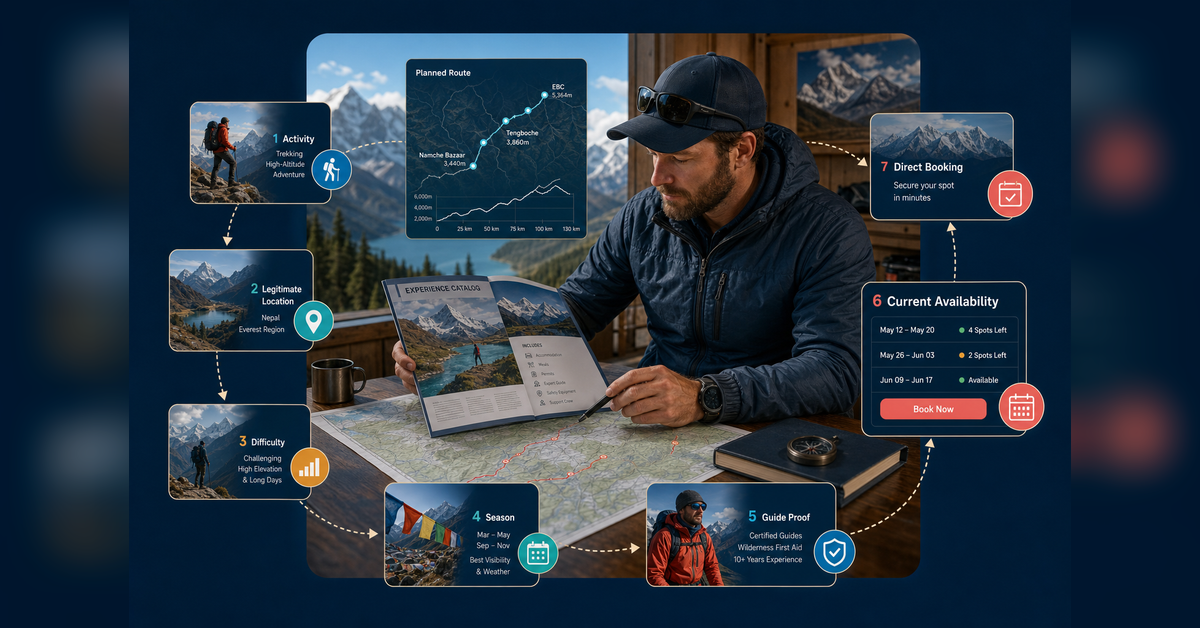

SEO for adventure tourism should connect a traveler’s specific activity, place, timing and fit questions to an experience the operator can actually deliver. The goal is not traffic for its own sake. It is qualified discovery that reaches accurate availability, a clear next step and a measurable booking path.
Adventure travelers do not book a keyword. They book a specific experience, in a specific place, on a specific date, with a difficulty and risk profile they understand. The operator that explains those facts clearly can compete without building the largest blog in the category.
Travel visibility, authority and measurement experience since 2004
Adventure tourism search requires more than keyword coverage. Operators need accurate product facts, first-hand proof, durable experience pages, trustworthy authority and a booking path that preserves the traveler’s context.
Reviewed and updated July 13, 2026.





How do adventure operators win high-intent searches?
SEO for adventure tourism wins high-intent experience searches by matching activity, location, timing and traveler-fit queries to durable experience pages; adding first-hand operating proof; showing current availability and booking paths; and measuring organic discovery through completed bookings, qualified expedition inquiries and capacity fill.
Executive summary
Start with operations
Choose experiences based on fit, capacity, margin, season and delivery constraints before choosing keywords.
Build durable pages
Give each important activity, route, product, audience and legitimate location a clear search job.
Prove the experience
Use current product facts, original media, named expertise and reviewed participant requirements.
Expose availability
Keep recurring URLs live and show current dates, status, alternatives and the correct booking path.
Reduce uncertainty
Answer fit, conditions, equipment, logistics, price-path and cancellation questions before checkout.
Measure outcomes
Connect organic landing pages to availability checks, booking starts, confirmations, revenue and refunds.
A mature SEO for adventure tourism program treats the website as an operating interface, not a collection of destination essays.
Who this guide is for
Owners and CEOs
Use SEO for adventure tourism to decide which experiences deserve investment and how organic demand supports capacity.
Marketing leaders
Use SEO for adventure tourism to turn activity, destination, audience and season demand into a manageable page architecture.
Operations teams
Define the product facts, restrictions, availability states and review owners marketing must use.
Booking and analytics teams
Preserve product identity and source data from the landing page through confirmation and refund reporting.
This guide covers the specialized organic system for adventure experiences. The broader SEO for Tour Operators guide covers category-wide strategy and provider context.
Traffic is not the same as bookable demand
A scenic article can attract attention while doing little to help a traveler choose an experience. A ranking can also send the wrong audience when the page hides difficulty, participant limits, meeting logistics or seasonal status.
SEO for adventure tourism becomes commercially useful when the page answers four questions: Can I do this? Do I trust this operator? Can I go when I need to? What happens if conditions change?
The strongest experience page removes uncertainty without removing the adventure. It separates inspiration from a bookable product, scenery from decision evidence and a broad category from a specific departure.
Every ranking page needs an experience, an operating reality and a next step.
A page should not rank for an experience the operator cannot safely, legally or profitably deliver. Fake city pages, stale schedules and vague suitability claims may expand the index, but they do not create a sound SEO for adventure tourism acquisition system.
Map the pages your experience catalog requires
Use the Adventure Search Page Matrix concept to map activity, location, product, audience, season, safety, availability and CTA fields. This gives SEO for adventure tourism a page plan grounded in the operator’s actual catalog. Percepture’s customer journey service can help connect those search paths to traveler decisions.
Explore the page-mapping approachThe Adventure Demand Capture Engine for SEO for adventure tourism
The Adventure Demand Capture Engine is Percepture’s eight-stage method for connecting profitable experiences to traveler intent, trusted operating proof, real availability and measurable outcomes.
1. Experience Fit
Define activity, place, season, difficulty, duration, party size, capacity, margin, lead time and operating constraints. SEO for adventure tourism begins with the operating calendar, not the keyword tool.
2. Intent Terrain
Map the activity, location, timing, audience and decision stage behind each query. A beginner-fit question requires a different response than a request to book tomorrow.
3. Search Territory
Assign durable URLs to the operator, activity categories, products, routes, legitimate locations, audiences, seasons, comparisons and planning jobs.
4. First-Hand Trust
Publish approved route details, operating notes, equipment facts, original media and verified guide or operator information.
5. Local and Visual Discovery
Connect the operator, experience, meeting point, destination and natural feature with truthful local information and useful media.
6. Inventory and Availability
Treat price paths, dates, departure times, season openings, private options and sold-out alternatives as decision content.
7. Booking Conversion
Move a qualified traveler from fit and trust to the correct product, date, participants, terms and payment path.
8. Revenue and Season Learning
Measure SEO for adventure tourism by connecting landing pages and query themes to bookings, qualified inquiries, refunds, departure fill and shoulder-season performance.
Framework path: Experience Fit → Intent Terrain → Search Territory → First-Hand Trust → Local and Visual Discovery → Inventory and Availability → Booking Conversion → Revenue and Season Learning.
This framework keeps SEO for adventure tourism tied to the experience catalog instead of letting keyword demand create pages the business cannot maintain.
SEO for adventure tourism opportunity score
Search volume is only one input. The Adventure Opportunity Score helps operators prioritize SEO for adventure tourism by comparing demand with operating fit, proof readiness and the ability to convert the visit.
| Factor | Weight | Operator question |
|---|---|---|
| Booking proximity | 20 | Is the traveler choosing an experience or only researching a destination? |
| Experience fit, margin and capacity | 20 | Does the company want and have room for this demand? |
| Differentiation and first-hand proof | 15 | Can the page show specific operating knowledge? |
| Safety and policy readiness | 15 | Are participant requirements and policies reviewed? |
| Local and seasonal demand | 10 | Does the query align with a real place and operating period? |
| Ranking feasibility | 10 | Can a focused page offer a clearer answer than competing results? |
| Availability and conversion readiness | 10 | Can the visitor reach the correct date and product path? |
Priority bands
- 85–100: build or upgrade now.
- 70–84: build after technical or proof dependencies are resolved.
- 55–69: support, consolidate or test first.
- Below 55: hold until the operating case improves.
When scoring SEO for adventure tourism opportunities, apply a 20-point penalty for cannibalization or unapproved operating and safety facts, 15 points for no viable conversion path and 10 points for fake location logic or generic copied content.
A private sunrise kayak tour in a real destination, with capacity and original proof, may justify a core page. A generic “best adventures” article with no offer path is support content at most. An activity-plus-town page with no operating evidence should not be created.
Build a search architecture around real experiences
SEO for adventure tourism needs page types with distinct jobs. Publishing one page for every keyword variation creates overlap, weakens maintenance and makes the booking path harder to understand.
| Page type | Search job | Evidence required | Primary next step |
|---|---|---|---|
| Operator or entity | Establish the company and operating territory | Real locations, activity categories, team and process | Explore experiences |
| Activity category | Compare related experiences | Difficulty, duration, place, season and audience | Compare tours or dates |
| Specific product | Support a booking decision | Itinerary, fit, inclusions, media, price path and availability | Check availability |
| Route, river, trail or park | Answer place-specific intent | Access, season, conditions and operator role | View relevant experiences |
| Legitimate location | Capture local and destination intent | Operating evidence, maps and meeting points | Find an experience |
| Audience or skill | Resolve suitability questions | Reviewed beginner, family or advanced requirements | Find the right fit |
| Seasonal | Match timing and status | Current dates, conditions, status and alternatives | Check the season |
| Private or group | Capture a complex, higher-value need | Capacity, customization, lead time and minimums | Request a plan |
| Preparation and safety | Reduce uncertainty | Equipment, requirements, restrictions and preparation | Review fit |
| Guide or expert | Demonstrate relevant expertise | Verified role, biography and publishable qualifications | Meet the team |
| Sold-out state | Preserve useful demand | Current status, waitlist and comparable departures | Choose an alternative |
The seasonal persistence rule
- Keep the canonical URL live when a recurring experience closes.
- State the current status and only confirmed future timing.
- Show a waitlist, alert path or comparable alternatives.
- Preserve approved reviews, links and first-hand media.
- Remove booking claims that are no longer accurate.
- Refresh operating facts before the experience reopens.
For SEO for adventure tourism, use a permanent redirect only when an experience is permanently retired and a genuinely equivalent destination exists. Sending every retired product to the homepage removes context for travelers and search systems.
Availability is content. The page should explain when the experience operates, whether dates can be checked and what the traveler can do when a preferred departure is unavailable.
First-hand proof and safety information
Adventure pages must help travelers judge fit without dramatizing or minimizing risk. Safety claims must be specific, current and reviewable.
A practical evidence order for SEO for adventure tourism is:
- Original route, equipment and guest-experience media.
- Named guide or operator observations with date and context.
- Exact product facts from the approved source of truth.
- Verified credentials, permits and affiliations when publishable.
- Recent reviews used with permission.
- Relevant destination or regulatory references.
- A visible reviewed date and responsible owner.
Do not call an activity risk-free or suitable for everyone. Publish experience-specific participant requirements, condition variability, equipment processes, traveler responsibilities, cancellation triggers and a way to ask fit questions.
Review ownership keeps SEO for adventure tourism aligned with current operations. Assign someone to price and availability, restrictions, meeting points, season and conditions, guide information and cancellation policy. Update the page when an operating fact changes, not just when an editorial calendar says it is time.
Original media should depict the actual route, equipment, conditions or team it claims to show. Content marketing can organize that evidence, while digital PR can support relevant earned authority without treating publicity as booking proof.
Earned authority proof from a remote-travel story

The Amazon and Phantom Ranch campaign generated 378 stories, including 357 online stories and 21 broadcast stories, and reached more than 70 million viewers. Coverage included USA TODAY, Scripps, Yahoo and AOL. The work received HSMAI Silver recognition.
This evidence shows Percepture’s ability to build earned authority around a distinctive remote-travel operating story. It does not prove that the coverage caused search rankings, leads, bookings or revenue, and it should not be presented as an adventure-tourism SEO case study.
Operators considering SEO for adventure tourism should apply the same proof discipline to their own reporting: identify the channel, state what was measured and avoid claiming causation the data cannot establish.
View Percepture case studiesSearch visibility is evidence, not revenue
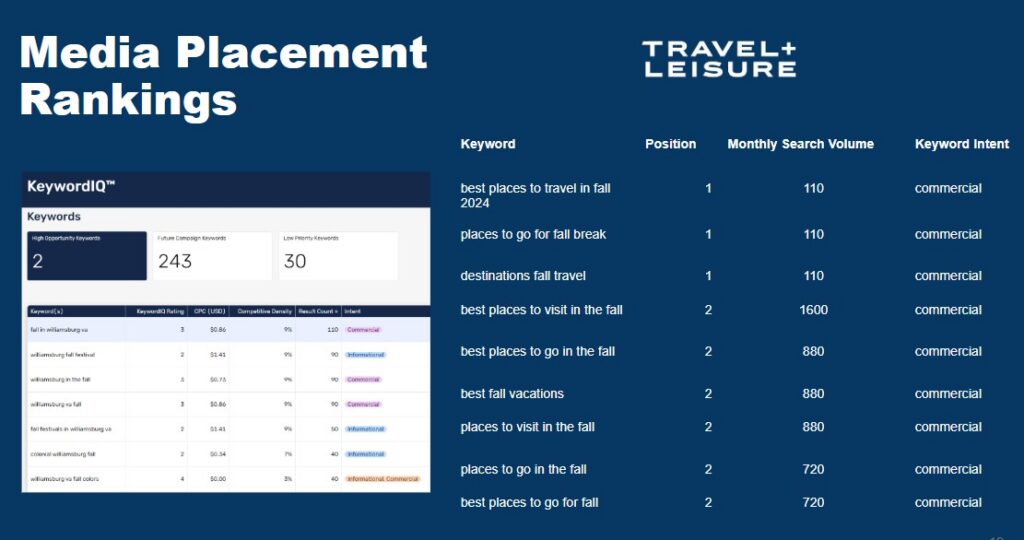
A supplied seven-day Google Search Console export dated July 12, 2026 recorded 216 impressions, one click, a 0.46% click-through rate and an average position of 4.35 for the query “seo for tour operators.” The related page recorded 526 impressions, one click, a 0.19% click-through rate and an average position of 4.22.
Those observations show sector search visibility during that reporting period. They do not show adventure rankings, leads, bookings or revenue. SEO for adventure tourism reporting should preserve that distinction and connect page-level discovery to downstream commercial events before discussing business impact.
Technical, local, visual and AI-search requirements
Keep product facts on the canonical page
Third-party booking domains and JavaScript inventory can separate indexable marketing content from the live product. Keep decision facts on the canonical page even when dates and capacity come from another system.
The marketing page may describe the experience, but the booking flow must preserve the same product identity, date, price context and analytics source. A web development program should also address rendering, accessibility, media performance, duplicate content, canonical rules and sold-out states.
Use real local evidence
Create location pages only where operations, staff, inventory or service justify them. Use consistent business information, legitimate meeting points, destination relationships, transport details, maps and local profiles for eligible real-world locations.
Repeating a city name does not establish local relevance. Meeting instructions, operating evidence and accurate destination relationships are stronger than doorway pages. The Percepture travel and tourism practice connects these local details to the wider demand system.
Make visual evidence useful
Use original and current imagery when possible. Add descriptive filenames, alt text, captions and transcripts. Compress responsive assets and preserve truthful context about routes, wildlife, water, snow and season.


Prepare facts for search and AI answers
SEO for adventure tourism should provide concise, consistent answers about the experience, intended traveler, duration, location, season, requirements, equipment, meeting point, conditions policy, cancellation and availability.
Build clear relationships among the operator, guide, experience, activity, place, season and offer. AI visibility cannot rescue contradictory product facts. The source of truth must be accurate before it can be cited. Percepture’s GEO services focus on that answer and entity clarity.
Apply structured data only to facts visible on the page and supported by the represented entity. Do not mark up invented offers, reviews, ratings or events, and do not promise enhanced search displays.
From “Can I do this?” to “Choose a date”
SEO for adventure tourism should lead a qualified visitor from the experience page into the correct booking path. The page should do the qualification work before the checkout asks for a credit card. A strong path moves through Search → Fit → Trust → Conditions → Availability → Booking → Confirmation.
| Element | Weak treatment | Strong treatment |
|---|---|---|
| Difficulty | “Moderate” | Terrain, duration and ability context |
| Safety | “Safe and fun” | Reviewed requirements, equipment and condition information |
| Availability | Generic “Book now” | The correct date and product path, plus alternatives |
| Media | Stock landscape | Actual route, guide and equipment context |
| Location | Repeated city keyword | Map, meeting point and operating evidence |
| Season | Page disappears | Durable URL with current status |
| Measurement | Form submission only | Product, booking, revenue and refund event chain |
Conversion rate optimization should test the complete mobile route through product selection, date, participants, fees, errors, payment and confirmation. It should not use false scarcity or dark patterns.
Measure the booking path, not just rankings
The minimum event chain for SEO for adventure tourism is:
Organic landing → Experience view → Fit or safety engagement → Availability → Date and party → Booking start → Confirmation → Revenue → Cancellation or refund
For custom expeditions or private groups, use:
Organic landing → Inquiry → Qualified lead → Consultation → Proposal → Deposit → Booked revenue
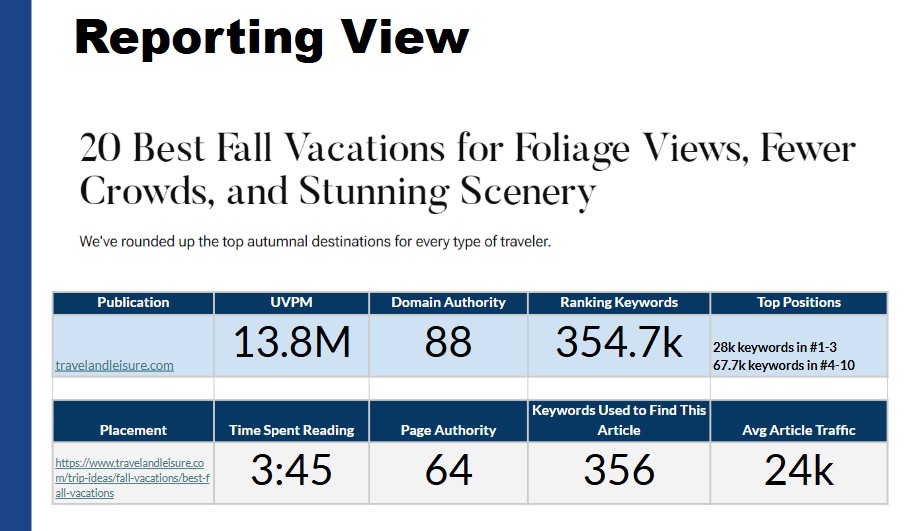
Useful SEO for adventure tourism business measures include completed organic bookings, qualified expedition inquiries, average booking value, booking completion, direct-booking share, departure fill, shoulder-season demand and cancellation or refund rate.
Do not infer revenue from sessions or call rankings ROI. Reconcile refunds and segment results by experience and departure capacity. Percepture’s attribution and analytics service can help define the cross-domain event and reporting model.
A 90-day implementation roadmap
Days 1–30: Map demand to operating truth
Begin SEO for adventure tourism by inventorying activities, products, locations, routes, seasons, audiences, private offers, capacity and margin. Crawl the marketing site and booking flow. Review search, analytics, local and booking data. Interview operations and guides. Score opportunities and assign source-of-truth owners.
Outputs should include an architecture map, opportunity score, technical register, proof inventory, measurement plan and prioritized backlog. An SEO Sprint can provide a focused structure for this diagnostic work.
Days 31–60: Build the core experience paths
Upgrade operator, category and product templates. Add fit, equipment, season, policy and guide modules where approved. Repair canonical, rendering and internal-link issues. Improve mobile booking continuity and implement cross-domain events.
Build sold-out alternatives, validate visible structured facts and review pages with operations, safety, analytics and conversion owners. SEO for adventure tourism cannot move faster than the source-of-truth process allows.
Days 61–90: Expand and learn
Expand SEO for adventure tourism with useful comparison, beginner, family, packing, meeting-point and seasonal support pages. Add verified guide profiles and original media. Monitor visibility, availability use, booking progress and errors. Consolidate overlap and select the next cluster based on capacity and margin.
Use enterprise SEO principles when the catalog spans many activities, regions, filters or booking systems. Governance becomes as important as page production.
Common failure modes and corrections
| Failure | Correction |
|---|---|
| Generic destination article with no product path | Add a relevant experience bridge or stop treating it as revenue content. |
| One page for every keyword variation | Cluster pages by traveler job and product reality. |
| Product facts exist only inside a booking widget | Put stable decision facts on the canonical page. |
| A new URL is created every season | Maintain one recurring URL with current status. |
| City pages lack operating evidence | Publish only where real location or service facts justify the page. |
| Copy says an experience is safe for everyone | Publish specific, reviewed participant requirements. |
| Stock media is presented as the actual experience | Use real media or label conceptual artwork accurately. |
| Sold-out pages are removed | Preserve status and offer waitlists or comparable departures. |
| Rankings are reported as ROI | Connect discovery to bookings, refunds, capacity and margin. |
| PR metrics are presented as SEO results | Label the channel, metric and limitation. |
The biggest blog does not necessarily win. SEO for adventure tourism can perform better when the experience architecture is clear, first-hand proof is strong and the availability path has less friction.
Review the wider tour-operator visibility system
Place SEO for adventure tourism within the wider acquisition system by comparing this specialized guide with Percepture’s resources on digital marketing for tour operators, Google Ads for tour operators and tour operator marketing agency selection.
Review Percepture pricing optionsFrequently asked questions
What is SEO for adventure tourism?
SEO for adventure tourism is the process of matching activity, location, timing, difficulty and traveler-fit searches to accurate operator, category and experience pages. It combines technical access, first-hand proof, truthful local information, current availability, clear booking paths and measurement that connects organic discovery to qualified inquiries or completed bookings.
How is adventure tourism SEO different from general travel SEO?
SEO for adventure tourism requires more product-fit and operating detail than general travel SEO. Travelers may need to understand terrain, duration, equipment, restrictions, conditions, meeting logistics and seasonal status before choosing. General destination inspiration can support discovery, but it cannot replace an accurate experience page and a clear route to availability.
What keywords should an adventure tour company target?
Start with combinations of activity, real location, route or natural feature, season, audience, difficulty and booking intent. Prioritize queries that match experiences the company wants and has capacity to deliver. SEO for adventure tourism should not create pages for locations, participant claims or products that operations cannot support.
Does every tour or activity need its own page?
No. A separate page is useful when the experience has a distinct traveler job, product identity, location, itinerary, fit profile, availability path or proof set. Closely related variations can often share one page. The goal is a clear catalog, not the largest possible URL count.
How should seasonal adventure tours be handled for SEO?
For SEO for adventure tourism, keep the recurring canonical URL live. Show its current status, confirmed dates, waitlist or alert path and relevant alternatives. Preserve useful media and approved reviews, but remove claims that are no longer accurate. Redirect only when the experience is permanently retired and a genuinely equivalent destination exists.
How can adventure operators rank for “near me” searches?
Use legitimate business locations, eligible local profiles, consistent business information, real meeting points, destination relationships, maps and local operating evidence. Do not create fake offices or doorway pages. Local visibility should reflect where the operator actually works and where the represented experience can be delivered.
What safety information belongs on an adventure experience page?
Publish reviewed participant requirements, difficulty context, relevant equipment information, condition variability, traveler responsibilities, cancellation triggers and a contact path for fit questions. Avoid broad claims that an activity is risk-free or suitable for everyone. High-risk or jurisdiction-specific statements require the appropriate operational and professional review.
Can a third-party booking engine hurt SEO?
It can create gaps in SEO for adventure tourism when stable product facts exist only inside JavaScript or on another domain. Keep decision information on the canonical marketing page, preserve the same product and date context in checkout and configure cross-domain measurement. Test rendering, canonical rules, mobile usability, sold-out states and source attribution.
How long does SEO take for an adventure tourism company?
There is no universal timeline for SEO for adventure tourism. Progress depends on the site’s technical condition, competition, operating proof, page quality, location authority, internal links, availability system and review process. A 90-day roadmap can establish architecture and core paths, but rankings and booking outcomes should be monitored without guarantees.
What should an adventure tourism SEO provider deliver?
A provider responsible for SEO for adventure tourism should connect keyword research to the actual experience catalog, operating calendar and booking system. Deliverables should cover architecture, technical issues, first-hand proof, local and visual discovery, availability states, conversion paths, analytics and governance. Reporting should separate rankings and visibility from bookings, revenue and profitability.
Build a search and booking architecture around your real experiences
Percepture can review the experience catalog, search architecture, first-hand proof, booking flow and measurement model behind SEO for adventure tourism. The review focuses on what the company can deliver, what travelers need to decide and where the current path loses context.
Request an Adventure Search and Booking Architecture Review
About Bob Generale
Bob Generale is President of Percepture. He works across executive strategy, SEO, GEO, public relations and digital visibility. For this guide, he applies Percepture’s operator-led approach to the experience architecture, proof, availability and measurement requirements behind SEO for adventure tourism.