


AI search for tourism marketing is the process of helping destinations, hotels, attractions, and tour brands appear in AI-generated recommendations from tools like ChatGPT, Google AI, Gemini, Perplexity, Claude, and Copilot. It combines SEO, GEO, digital PR, entity clarity, structured content, reviews, and conversion-focused booking paths.
Travelers are not only searching for best hotels, things to do, or weekend getaways. They are asking AI systems to build shortlists, compare places, shape itineraries, and reduce choices. That change matters because a traveler can narrow the field before they ever click a traditional search result.
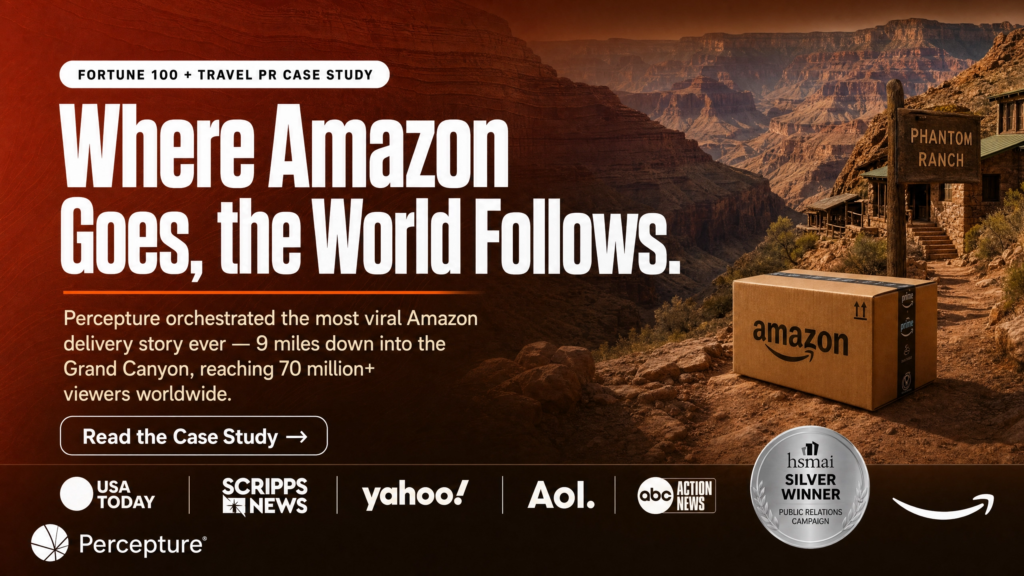
For tourism leaders, the question is simple: when a traveler asks an AI tool where to go, what to do, where to stay, or who to book with, does your brand show up as a trusted answer?
AI search for tourism marketing is not a replacement for SEO. It is the next layer of the same search ecosystem. The work includes entity clarity, answer-ready content, public authority, prompt visibility testing, and booking-path choreography. Percepture frames this as SEO + GEO + PR + CRO because visibility only matters if it leads to action.
Table of Contents
- What is AI search for tourism marketing?
- How do destinations appear in ChatGPT and other AI tools?
- What is GEO for travel brands?
- How does AI search change the traveler journey?
- How should tourism brands measure AI visibility?
- What should destinations, hotels, and tour operators do first?
- How should leaders think about pricing and ROI?
- FAQs
AI Search for Tourism Marketing
Travel Discovery Is Moving From Search Results to AI Shortlists
We test real traveler prompts across ChatGPT, Google AI, Perplexity, Gemini, Claude, and Copilot.
What Is AI Search for Tourism Marketing?
When AI Search for Tourism Marketing is built this way, every channel supports the same revenue goal instead of acting like a separate campaign.
AI search for tourism marketing helps a travel brand become understood, cited, recommended, and chosen by AI systems. It matters for DMOs, hotels, attractions, tour operators, event organizers, and tourism sales teams because AI tools often summarize choices before a traveler visits brand websites.
Definitions Tourism Leaders Can Use
AI search for tourism marketing: the work of making a destination, hotel, attraction, or tour brand clear enough to be included in AI-generated travel recommendations and useful enough to convert that attention into action.
In plain English: when a traveler asks an AI tool to plan a trip, compare places, or suggest experiences, your brand needs to be a credible option with a clear next step.
Generative engine optimization. It helps AI systems understand, summarize, and cite your brand.
Answer engine optimization. It structures content so direct questions receive clear answers.
The discipline of making your place, brand, category, audience, location, and trip occasions unmistakable.
Testing real traveler prompts to see when your brand appears, how it is described, and which sources are cited.
That is why AI Search for Tourism Marketing needs both category-level execution and executive-level reporting.
This is why AI search for tourism marketing must be more specific than generic awareness. A destination does not need to be known by everyone. It needs to become the trusted answer for the right traveler, trip type, season, source market, and booking path.
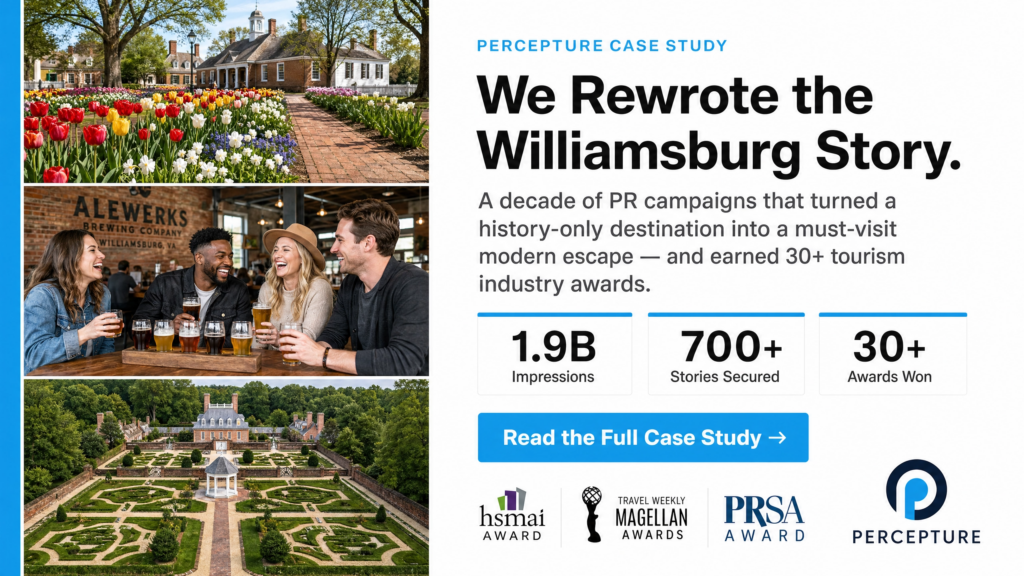
Percepture has operated since 2004 as a digital marketing and PR agency. That matters here because AI visibility is not a screenshot exercise. It is search, content, PR, analytics, and conversion working together. Tourism brands need a prompt visibility baseline, a clear content map, and a plan to build Trust Tokens across owned and third-party sources.
How Do Destinations Appear in ChatGPT and Other AI Tools?
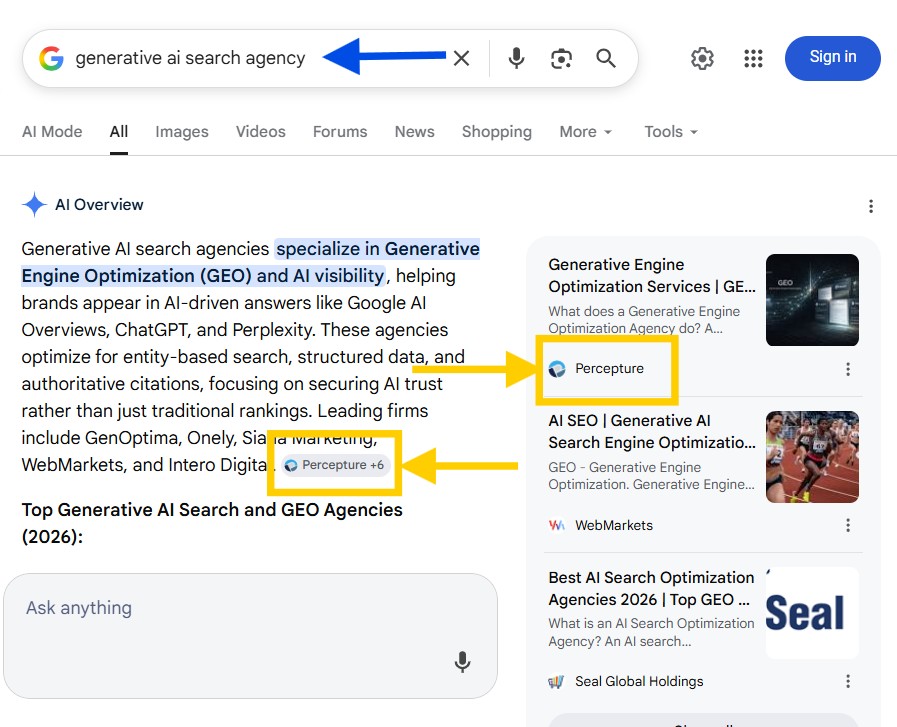
Destinations appear in AI recommendations when systems can connect them to clear entities, useful trip occasions, reliable supporting sources, and traveler intent. The same logic applies to hotels, attractions, restaurants, event venues, local partners, and tour operators.
The best AI Search for Tourism Marketing programs measure qualified conversations and sales opportunities, not just impressions, clicks, or rankings.
A traveler may ask:
- Plan a three-day food and outdoor trip within a few hours of my city.
- What are the best small towns for a fall weekend getaway?
- Where should I stay for a family trip near a lake?
- Which boutique hotels work for a romantic weekend?
- What are the best guided tours for a first-time visitor?
If your content only says visit us, AI systems have less to work with. If your site has structured itineraries, partner pages, seasonal guides, transportation details, event pages, reviews, and third-party citations, the brand becomes easier to summarize.
The operating principle is simple: every travel story can become an itinerary, every itinerary can become a landing page, and every landing page should lead to a booking, inquiry, guide download, hotel click, tour page, or partner handoff. No campaign should die at inspiration.
When AI Search for Tourism Marketing is built this way, every channel supports the same revenue goal instead of acting like a separate campaign.
For many tourism brands, the first step is pairing generative engine optimization services with strong SEO services. GEO may be new language, but the fundamentals still matter: crawlability, indexation, page structure, internal links, entity signals, useful content, authority, and clear conversion paths.
What Is GEO for Travel Brands?
That is why AI Search for Tourism Marketing needs both category-level execution and executive-level reporting.
GEO for travel brands is the process of shaping how AI systems understand and recommend a destination, hotel, attraction, or tour operator. It is not only about adding AI keywords to a page. It is about making the brand easier to trust.
Traditional SEO asks: can search engines find, understand, and rank this page? AEO asks: can this page answer the question clearly? GEO asks: can an AI system use this brand as a reliable part of an answer? PR asks: do other trusted sources support the story? CRO asks: what should the traveler do next?
SEO vs. AEO vs. GEO vs. PR vs. CRO for Tourism
| Discipline | What it does | Tourism example | AI search role | Conversion role |
|---|---|---|---|---|
| SEO | Improves search visibility and site structure. | A page for weekend getaways near a source market. | Creates crawlable, relevant content AI tools can find. | Brings qualified visitors into the path. |
| AEO | Answers direct questions clearly. | A concise answer to what to do with kids this weekend. | Provides answer-ready passages for summaries. | Moves readers from question to next step. |
| GEO | Optimizes for generative recommendations. | A destination is included in an AI-generated shortlist. | Improves mention, citation, and description quality. | Connects AI visibility to itinerary or booking paths. |
| PR | Builds trusted third-party authority. | Travel media, regional guides, event coverage, local news. | Creates corroborating citation signals. | Reduces doubt before booking or inquiry. |
| CRO | Improves the path from interest to action. | Hotel handoff, tour booking, guide download, RFP page. | Shows AI systems that the page is useful and complete. | Turns discovery into measurable demand. |
This is where search and PR working together become important. A destination can publish strong owned content, but AI systems may also look for corroboration across public sources. Percepture supports tourism AI search optimization with public relations services, content marketing services, and source-market amplification through paid media services when campaigns need more reach.
Percepture Framework
The AI Travel Shortlist System™
The AI Travel Shortlist System™ is Percepture’s framework for helping destinations, hotels, attractions, and tour brands become visible, trusted, and bookable inside AI-generated travel recommendations.
1. Destination Entity Clarity
Make the brand, place, audience, category, trip occasions, and source markets easy to understand.
2. Answer-Ready Itinerary Content
Build pages that answer travel planning prompts with specific, useful routes, themes, and next steps.
3. Third-Party Trust Signals
Use earned media, regional guides, partner pages, reviews, event listings, and associations to support authority.
4. Prompt Visibility Testing
Test prompts by platform, market, trip type, sentiment, source attribution, and competitor presence.
5. Booking Path Choreography
Connect AI discovery to itinerary pages, hotel clicks, tour bookings, guide downloads, group inquiries, and partner referrals.
How Does AI Search Change the Traveler Journey?
A practical AI Search for Tourism Marketing strategy also has to reflect buyer committees, proof needs, comparison searches, and long sales cycles.
AI search for tourism marketing changes the traveler journey by moving comparison earlier. A traveler may ask a tool to narrow twenty options to five. That shortlist may include a short description, a few sources, and suggested next steps. If your brand is missing, misunderstood, or described without a reason to choose, demand may move elsewhere before your team sees a website session.
The old path looked like search, click, compare, click again, then maybe book. The new path often looks like prompt, shortlist, cited source, brand page, itinerary, hotel handoff, tour booking, lead capture, partner referral, or room-night signal.
When AI Search for Tourism Marketing is built this way, every channel supports the same revenue goal instead of acting like a separate campaign.
This is why tourism brands need bookable excuses and stay triggers. A bookable excuse is a reason to choose now: a festival, seasonal food trail, family itinerary, concert weekend, outdoor route, wellness retreat, wedding weekend, conference add-on, or group travel package. A stay trigger is the reason a day trip becomes an overnight trip.
For a DMO, that might mean building a room-night network around hotel partners and local experiences. For a hotel, it may mean content that connects rooms to occasions. For a tour operator, it may mean building pages that answer trip-planning prompts and make the booking path obvious. Percepture’s tourism work connects AI search visibility to this kind of demand capture instead of treating AI as a separate channel.
That is why AI Search for Tourism Marketing needs both category-level execution and executive-level reporting.
AI search for tourism marketing also rewards clarity. If your site says the same thing every other destination says, AI has little reason to separate you. If your owned pages, partner pages, reviews, guides, PR coverage, and conversion paths reinforce the same story, Trust Velocity improves.
Senior Strategy Perspective
Travel marketing is moving from broad awareness to trusted selection. The brands that win are the ones that make their story clear enough to be found, cited, and acted on.
AI systems need structure, relationships, source authority, and clear next steps. That is why entity clarity, PR, content, and CRO belong in the same plan.
How Should Tourism Brands Measure AI Visibility?
AI search for tourism marketing can be measured, but not with one-off screenshots alone. A useful baseline tests prompt categories, platforms, competitor mentions, citation sources, sentiment, accuracy, and next actions. It should also connect AI visibility to analytics and reporting so leadership can see movement over time.
The best AI Search for Tourism Marketing programs measure qualified conversations and sales opportunities, not just impressions, clicks, or rankings.
The right question is not simply did ChatGPT mention us once? The better question is: across priority traveler prompts, source markets, and booking moments, how often are we mentioned, how accurately are we described, what sources are cited, who appears instead, and what action does the answer support?
Percepture uses prompt testing and visibility baselines as a measurement concept. That work connects to analytics and reporting, because the CFO and executive director need more than anecdotes. They need a way to evaluate prompt visibility, citation frequency, share of voice, referral clicks, itinerary downloads, hotel handoffs, tour clicks, and lead-path signals.
A practical AI Search for Tourism Marketing strategy also has to reflect buyer committees, proof needs, comparison searches, and long sales cycles.
AI Visibility Scorecard
An anonymized example of how prompt visibility can be reviewed across platforms and traveler intent.
| Prompt category | Platform | Brand mentioned? | Competitor mentioned? | Citation source | Sentiment | Accuracy | Next action |
|---|---|---|---|---|---|---|---|
| Weekend getaway | ChatGPT | No | Yes | Regional guide | Neutral | Incomplete | Build itinerary page and PR support. |
| Family trip | Google AI | Yes | Yes | Owned page | Positive | Mostly accurate | Improve hotel handoff and event links. |
| Group travel | Perplexity | No | Yes | Association page | Neutral | Missing offer | Create group landing page and citation plan. |
Measurement also changes internal priorities. If your brand appears for inspiration prompts but not booking-intent prompts, the next fix may be content and CRO. If competitors are cited through media and association pages, the next fix may be digital PR as AI visibility support. If your brand is described incorrectly, the issue may be entity clarity, schema, partner consistency, or thin owned content.
When AI Search for Tourism Marketing is built this way, every channel supports the same revenue goal instead of acting like a separate campaign.
For a deeper view of how brands can increase brand visibility in AI search engines, the same principle applies: proof before promotion. The AI answer needs a reason to trust the brand, not just a page that says the brand is great.
What Tourism Brands Should Not Do
- Do not create AI spam pages.
- Do not chase fake mentions.
- Do not promise guaranteed ChatGPT rankings.
- Do not hide important content behind JavaScript.
- Do not separate SEO, PR, and GEO into silos.
- Do not measure AI visibility with one-off screenshots only.
That is why AI Search for Tourism Marketing needs both category-level execution and executive-level reporting.
What Should Destinations, Hotels, and Tour Operators Do First?
Start by building a prompt library around real travel decisions. Do not begin with broad prompts only. Include source markets, drive markets, seasons, traveler types, group travel, events, families, weddings, meetings, outdoor activities, food, culture, hotels, and guided experiences.
Then review your owned and third-party source base. Does your website clearly explain what you are, where you fit, who you serve, and which trip occasions you own? Are your pages answer-ready? Do you have itinerary content that AI systems can summarize? Do partner pages and media coverage reinforce your story?
Hotels should connect rooms to reasons to stay. A hotel SEO agency strategy should not stop at room pages. It should connect search intent, AI visibility, local demand, packages, events, amenities, and booking paths.
The best AI Search for Tourism Marketing programs measure qualified conversations and sales opportunities, not just impressions, clicks, or rankings.
Tour operators should build content around traveler questions, route types, safety, seasonality, group fit, private tours, and booking intent. A tour operator marketing agency strategy should make the tour easy to understand, easy to compare, and easy to book.

Demand Capture Side Offer
Turn Visibility Into Outreach and Lead Flow
AI visibility can help travelers and partners discover you. Lead generation helps sales teams act on demand. For hotels, tour operators, event organizers, and tourism sales teams, Lead Seeker can support outreach with verified lead opportunities.
A practical AI Search for Tourism Marketing strategy also has to reflect buyer committees, proof needs, comparison searches, and long sales cycles.
What Should a Destination Do in the First 90 Days?
The first 90 days should create a baseline, fix clarity gaps, publish or improve the most important answer-ready pages, and begin building authority signals. AI search for tourism marketing is not a one-page fix. It is a coordinated system.
When AI Search for Tourism Marketing is built this way, every channel supports the same revenue goal instead of acting like a separate campaign.
90-Day AI Search Roadmap for Tourism Brands
| Timing | Focus | Executive output |
|---|---|---|
| Days 1–30 | Audit, prompt visibility baseline, prompt library, crawler and access review. | A clear view of where the brand appears, where it is missing, and what AI systems cite. |
| Days 31–60 | Entity fixes, itinerary content, structured data, internal links, booking-path improvements. | Priority pages that answer traveler prompts and support conversion. |
| Days 61–90 | Digital PR, citation building, prompt retesting, CRO, dashboard reporting. | A repeatable measurement loop tied to visibility, source authority, and demand signals. |
This roadmap should be adapted by market complexity. A single hotel has a different scope than a statewide destination or a multi-location tour brand. The point is to avoid random acts of content. Every page should map to a prompt, a traveler need, a source market, and a next action.
That is why AI Search for Tourism Marketing needs both category-level execution and executive-level reporting.
How Should Leaders Think About Pricing and ROI?
Pricing for AI search for tourism marketing depends on market complexity, number of locations or destinations, content needs, PR needs, technical issues, and measurement scope. A destination with many partners, events, regions, and hotel handoffs needs a different plan than a single tour operator with a focused booking path.
Leaders should evaluate cost against risk and opportunity. The risk is being absent or misrepresented when travelers use AI to build shortlists. The opportunity is becoming the trusted answer for high-intent trip planning moments.
A useful investment discussion should cover:
The best AI Search for Tourism Marketing programs measure qualified conversations and sales opportunities, not just impressions, clicks, or rankings.
- Which prompts matter most to demand and revenue-adjacent signals.
- Which competitors appear today and why.
- Whether your content is answer-ready and crawlable.
- Which third-party sources reinforce your authority.
- Whether conversion paths support the traveler’s next decision.
- How reporting will connect prompt visibility to business signals.
For budget planning, review Percepture’s GEO pricing page, then request a baseline to understand the scope. AI search for tourism marketing should be priced around actual gaps, not generic packages that ignore the market, source base, or booking path.
A practical AI Search for Tourism Marketing strategy also has to reflect buyer committees, proof needs, comparison searches, and long sales cycles.
Pricing and Scope
Build the Plan Around the Baseline, Not Guesswork
Pricing depends on market, number of locations or destinations, content needs, PR needs, technical issues, and measurement scope. Start with an AI Visibility Baseline, then decide what level of SEO, GEO, PR, content, analytics, and CRO support is needed.
Why Percepture for Tourism AI Search Visibility?
When AI Search for Tourism Marketing is built this way, every channel supports the same revenue goal instead of acting like a separate campaign.
Percepture is a digital marketing and PR agency founded in 2004. The agency works across SEO, GEO, digital PR, media relations, paid media, content, AI agents, analytics, CRO, and lead generation. That mix matters because AI search visibility is not solved by one tactic.
Tourism brands need Landscape Domination across the sources that shape demand: search results, AI answers, maps, media, reviews, partner sites, event calendars, social discovery, and booking paths. They also need Controlling the Narrative so AI systems do not reduce the brand to a generic description.
That is why AI Search for Tourism Marketing needs both category-level execution and executive-level reporting.
Percepture’s approach is built around the Golden Triangle of visibility: what you say on your site, what trusted third parties say about you, and what travelers can do next. Protecting the Queen means protecting the business outcome: bookings, room-night signals, tour revenue, partner handoffs, lead capture, and reputation.
AI search for tourism marketing works best when it is specific. A challenger destination may not need more generic traffic. It may need to own a narrow trip occasion, a source market, a seasonal story, or a category where larger competitors are less precise. The same is true for hotels, attractions, and tour operators.
FAQs
What is AI search for tourism marketing?
The best AI Search for Tourism Marketing programs measure qualified conversations and sales opportunities, not just impressions, clicks, or rankings.
AI search for tourism marketing is the process of helping destinations, hotels, attractions, and tour brands appear in AI-generated recommendations. It combines SEO, GEO, digital PR, entity clarity, structured content, reviews, and conversion-focused booking paths so travelers can discover and act on the brand.
How do destinations appear in ChatGPT?
A practical AI Search for Tourism Marketing strategy also has to reflect buyer committees, proof needs, comparison searches, and long sales cycles.
Destinations can appear in ChatGPT when the system can connect the place to clear travel occasions, trusted sources, useful content, and relevant traveler prompts. Strong owned pages, itinerary content, local partner mentions, reviews, and earned media can all support how the destination is understood.
What is GEO for travel brands?
When AI Search for Tourism Marketing is built this way, every channel supports the same revenue goal instead of acting like a separate campaign.
GEO for travel brands means generative engine optimization for destinations, hotels, attractions, and tour operators. It focuses on how AI systems understand, summarize, cite, and recommend a travel brand when people ask trip-planning questions.
Is GEO different from SEO?
Yes, but it should not be separated from SEO. SEO helps pages rank and be discovered by search engines. GEO helps AI systems understand and use those pages in generated answers. For tourism brands, the strongest approach usually combines SEO, GEO, PR, and CRO.
Can AI search visibility be measured?
Yes. AI search visibility can be measured through prompt testing, platform tracking, brand mentions, competitor mentions, citation sources, sentiment, accuracy, share of voice, referral clicks, itinerary engagement, hotel handoffs, tour clicks, and lead-path signals.
How long does tourism AI search optimization take?
Timing depends on the market, technical condition, content depth, authority signals, and competition. Many teams start with a 30-day baseline, then use 60 to 90 days to fix entity clarity, publish answer-ready content, improve internal links, build citations, and retest prompts.
Does PR help AI visibility?
PR can help AI visibility when it creates trusted third-party corroboration. Travel media, regional guides, local news, association pages, event listings, and credible partner pages can support source authority and citation signals that reinforce a brand’s story.
Can smaller destinations appear against larger competitors?
Yes, smaller destinations can compete when they are more specific. A smaller destination may be a better answer for a precise trip type, drive market, season, itinerary, event, or traveler need. The goal is not generic fame. The goal is becoming the trusted answer for a clear occasion.
What should hotels and tour operators do differently?
Hotels should connect rooms to stay triggers, local experiences, packages, events, and booking paths. Tour operators should answer route, timing, safety, group, private tour, and booking questions. Both should make content clear enough for AI tools and useful enough for travelers.
How much does AI search optimization cost?
Cost depends on the number of destinations or locations, content needs, PR needs, technical issues, market competition, and reporting scope. A baseline is the best first step because it shows where the brand is visible, missing, cited, or misunderstood before a larger plan is priced.
Final Takeaway
AI search for tourism marketing is about being selected, not just being seen. Travelers are asking AI systems to narrow choices. Tourism brands need to become answer-ready, source-backed, and bookable inside that moment.
The winners will not be the brands with the most generic awareness. They will be the brands that create clear reasons to choose, build Trust Tokens across the web, test the prompts that matter, and choreograph the path from AI shortlist to trip action.
Find Out Whether Your Travel Brand Appears in AI Shortlists
No fake GEO hacks. No guaranteed AI rankings. Just a clear baseline, a practical plan, and a senior team that knows SEO, PR, GEO, and travel demand.

About the Author
Bob Generale
Bob Generale is President of Percepture. He works with senior teams on SEO, GEO, PR, content, AI visibility, and digital growth strategy. Percepture is a digital marketing and PR agency founded in 2004, serving tourism, hospitality, destination marketing, B2B services, telecom, data centers, construction, engineering, life sciences, healthcare, finance, manufacturing, and other complex industries.