
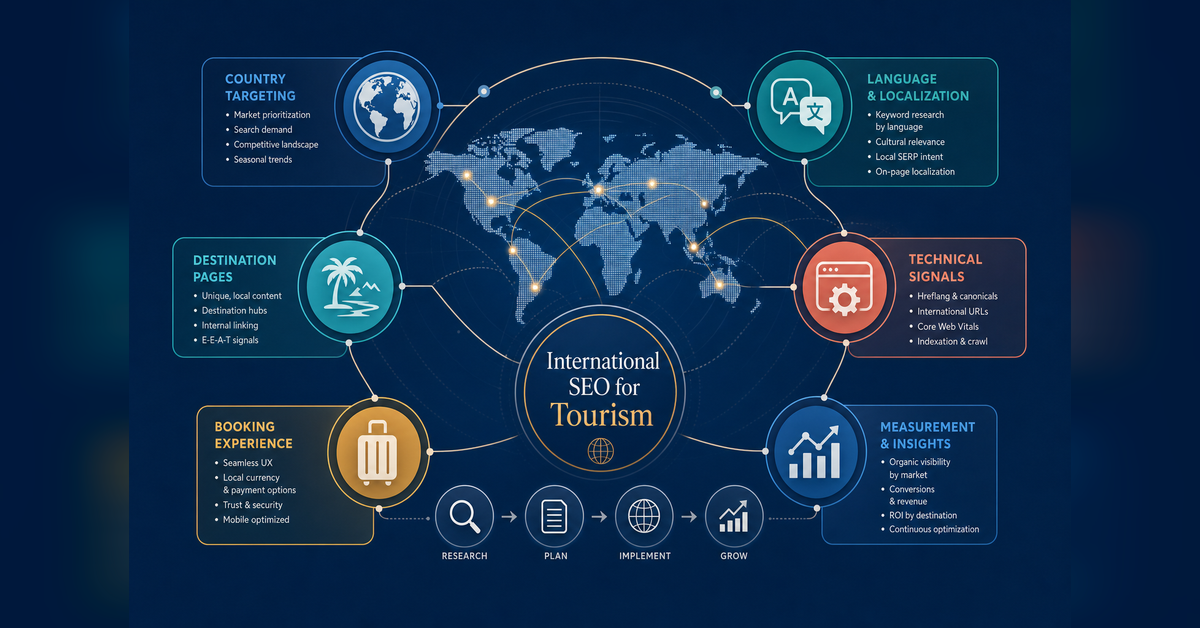

International SEO for tourism helps a travel brand show the right country, language and destination experience to the right traveler. It connects market research, localized intent, URL architecture, technical signals, destination facts and booking paths.
The hard part is not adding translations. It is deciding which market-language-destination combinations deserve URLs, then keeping content, authority, measurement and conversion aligned.
International travel visibility backed by tourism experience
Percepture combines travel-sector experience, independent recognition, technical search strategy, digital PR and AI-search visibility.






What is international SEO for tourism?
International SEO for tourism matches source markets, search languages and destination experiences to dedicated pages with localized planning information, valid technical signals and usable booking paths. The strategy decides which country-language combinations deserve URLs, then keeps content, authority, measurement and conversion aligned across the full traveler journey.
The operating decision in four parts
Qualify the market
Confirm that demand, access, destination fit, commercial value and operating capacity justify a lasting section of the site.
Define the audience
Separate country needs from language needs. One shared language does not mean travelers have the same currency, season, access or booking expectations.
Connect the versions
Choose a maintainable URL model, use self-canonicals and connect true equivalents with complete hreflang annotations.
Finish the journey
Carry the selected locale into inventory, pricing, policies, support, analytics and the final booking handoff.
Who this guide is for
Tourism organizations
Use international SEO for tourism to choose which source markets deserve content investment and establish owners for changing destination facts.
Hotels and resorts
Apply international SEO for tourism when deciding whether properties, offers and booking paths should vary by country or language.
Tour and cruise brands
Localize itineraries, access, dates, currency, inclusions and traveler support.
Travel marketplaces
Control large inventories without creating thousands of thin market-language combinations.
Use travel and tourism marketing for the broader sector view. This guide owns the international market, language, URL, localization and measurement decisions that shape international SEO for tourism.
International SEO for tourism starts with market intent
A language is not a market. A country is not a keyword. A translated page can be linguistically correct and commercially useless when it ignores how a traveler plans, evaluates and buys.
Country targeting is appropriate when offers, laws, currency, access, inventory, behavior or measurement differ. Language targeting works when one language can serve several markets and the underlying experience remains substantially the same. Country-language targeting is justified when both dimensions materially change. That distinction keeps international SEO for tourism aligned with actual traveler and operating needs.
Country, language or country-language?
| Decision factor | Country | Language | Country-language |
|---|---|---|---|
| Offer or legal differences | Often relevant | Usually limited | Often relevant |
| Search vocabulary | Sometimes different | Different | Different |
| Currency and booking | Often different | May be shared | Often different |
| Operating effort | Moderate | Lower | Highest |
| Best fit | Distinct commercial markets | Shared-language demand | Mature international programs |
The working unit for international SEO for tourism is a market-language-destination combination with enough distinct demand, evidence and conversion value to deserve its own URL.
Build an official source system, not a translation queue
An anonymized national tourism organization planning example began with traveler questions about food, culture, itineraries, comparisons, timing, nature, luxury and practical planning. The methodology was to identify source markets, map their questions, select the destination pages that could answer them and assign an owner to each source.
Within international SEO for tourism, official destination content should become a current, source-backed library that search engines, AI trip planners, media and travel partners can retrieve—not merely a translated brochure.
Methodology example only. No performance claim.
Score the architecture before adding pages
Use the international SEO for tourism checklist in this guide to review market evidence, URLs, hreflang, destination content, booking readiness, authority, measurement and ownership.
Open the architecture checklistThe Market-Language-Destination Matrix
Percepture uses the Market-Language-Destination Matrix to turn international SEO for tourism into nine linked operating decisions. The framework prevents teams from creating URLs before they know who the page serves, what must change and who will maintain it.
Nine stages from demand to decision
- Market Demand: qualify search demand, existing business, access, seasonality, competition and measurable value.
- Language Intent: map native vocabulary, regional terms, destination names, traveler stages and recurring questions.
- Destination Fit: select the regions, properties, routes, activities or itineraries relevant to that source market.
- URL Territory: choose a country, language or country-language structure the organization can maintain.
- Technical Signals: connect equivalents with valid hreflang, self-canonicals and crawlable selectors.
- Localized Experience: adapt access, seasons, currency, practical facts, units, proof and calls to action.
- Booking Readiness: align rates, fees, payment, cancellation, availability, support and tracking.
- Authority: earn relevant references from official, editorial and local-market sources.
- Measurement: decide which combinations should expand, improve, consolidate or retire.
Framework rule: Create a localized URL only when the market, language, destination experience or conversion path is meaningfully different. This keeps international SEO for tourism focused on maintainable traveler value.
Decide which markets deserve pages
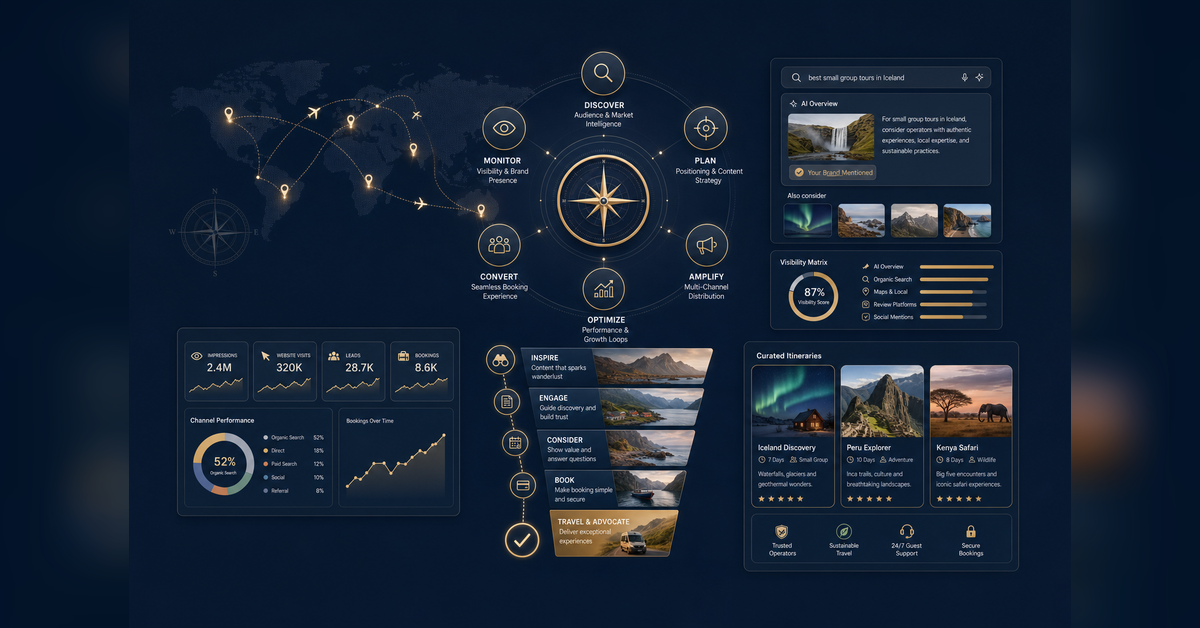
In international SEO for tourism, demand alone does not qualify a market. A tourism brand also needs relevant destinations, practical access, booking value, content capacity and a measurable path to conversion. A high-volume market can still be a poor choice when the organization cannot maintain facts or serve the traveler after the click.
Score each factor from one to five, apply the weight and reduce the result when the underlying evidence is weak. This is planning guidance for international SEO for tourism, not an industry benchmark.
International tourism market score
| Factor | Weight | Question |
|---|---|---|
| Organic demand | 15% | Is there relevant, nonbrand demand? |
| Existing visitation or revenue | 15% | Is the market already producing business? |
| Destination fit | 15% | Do the available experiences match traveler demand? |
| Access | 10% | Can travelers reach the destination practically? |
| Booking value | 10% | Can the market produce valuable bookings or inquiries? |
| Competitive opportunity | 10% | Can the brand publish a stronger answer? |
| Content capacity | 10% | Can native editors and source owners maintain the section? |
| Booking readiness | 5% | Can the traveler complete the transaction locally? |
| Measurement | 5% | Can results be separated by market and language? |
| Operational readiness | 5% | Can legal and operational owners support publication? |
Use a confidence factor of 1.0 for strong data, 0.8 for partial evidence, 0.6 for modeled evidence and 0.4 for anecdotal evidence. Scores of 80–100 support building; 65–79 support a pilot; 50–64 call for more research or a paid test; lower scores do not support a permanent section. These thresholds keep international SEO for tourism expansion tied to evidence and operating capacity.
Choose ccTLDs, subdomains or subfolders
In international SEO for tourism, URL structure should follow operating reality. Do not choose a model the organization cannot maintain. For centralized brands, subdirectories are often the manageable starting point. Independent country operations, legal requirements or separate platforms may justify another model.
URL models for international SEO for tourism
| Model | Strength | Operating risk | Best fit |
|---|---|---|---|
| ccTLD: example.fr | Clear country presence and independence | Separate authority, cost and governance | Independent country operations |
| Subdomain: fr.example.com | Platform or team separation | More fragmented maintenance and reporting | Different systems or operating teams |
| Subdirectory: example.com/fr/ | Consolidated domain and administration | Shared-platform constraints | Centralized travel brands |
| Country-language folder: example.com/en-gb/ | Precise market-language control | More pages and governance | Mature programs with meaningful differences |
Implement hreflang without canonical conflicts
Within international SEO for tourism, hreflang helps search engines select between equivalent language or country versions. It does not replace localization, canonicals or useful content. Each set should use valid language and optional country codes, include reciprocal references and point to crawlable, indexable URLs.
Localized pages normally use self-referencing canonicals. Canonicalizing French, Spanish or country-specific pages to English can work against the reason those versions exist. Use x-default for a neutral page or global selector, not as a substitute for visible navigation.
<link rel="alternate" hreflang="en-us" href="https://example.com/en-us/peru/" />
<link rel="alternate" hreflang="en-gb" href="https://example.com/en-gb/peru/" />
<link rel="alternate" hreflang="es-mx" href="https://example.com/es-mx/peru/" />
<link rel="alternate" hreflang="x-default" href="https://example.com/international/peru/" />
Do not force users or crawlers through permanent IP or browser-language redirects. Suggest a version, allow switching and preserve the visitor’s choice. An international SEO for tourism implementation should preserve that choice across templates and booking handoffs. Percepture’s enterprise SEO services can connect this architecture to templates, governance and large-site operations.
Localize destination decisions
Translation changes language. Localization adapts search intent, practical planning and conversion. Transcreation rebuilds creative language when literal phrasing does not carry the intended meaning.
For international SEO for tourism, review destination terminology, source-market vocabulary, season, trip duration, transport, currency, taxes, dates, units, time zones, culture, accessibility, support and booking windows. Changing travel facts should have an official source, review date and named owner.
Localize the decision, not just the sentence. An English-speaking traveler in one market may use different terms, dates, holidays, units and booking patterns from an English-speaking traveler elsewhere.
Build international destination templates
Destination-page matrix
| Page type | International job | Market-specific requirements |
|---|---|---|
| Country hub | Orient the traveler | Regions, access, entry sources and trip types |
| Destination page | Build preference | Local proof, season, transport and itinerary links |
| Experience page | Match motivation | Audience, difficulty, availability and trust |
| Itinerary | Reduce planning work | Route, days, travel time and booking path |
| Hotel or resort | Convert property demand | Currency, policies, amenities and availability |
| Tour or cruise | Convert inventory | Dates, embarkation, inclusions and cancellation |
| Event | Capture date demand | Local time, tickets, lodging and expiration rules |
| Entry information | Support practical planning | Official source, review date and disclaimer |
| Comparison | Help the traveler choose | Transparent fit, limits and alternatives |
For international SEO for tourism, every template needs a stable URL, a distinct market-language answer, sourced facts, an owner, useful internal links, a conversion path and hreflang quality control. Teams managing large sites can pair content marketing with customer journey mapping so templates answer both search and planning needs.
Connect pages to booking inventory
International SEO for tourism fails when the localized page ends at an unlocalized booking engine. Review booking language, displayed and settled currency, taxes, fees, payment options, date formats, cancellation terms, eligibility, availability, support and the return path to the correct locale.
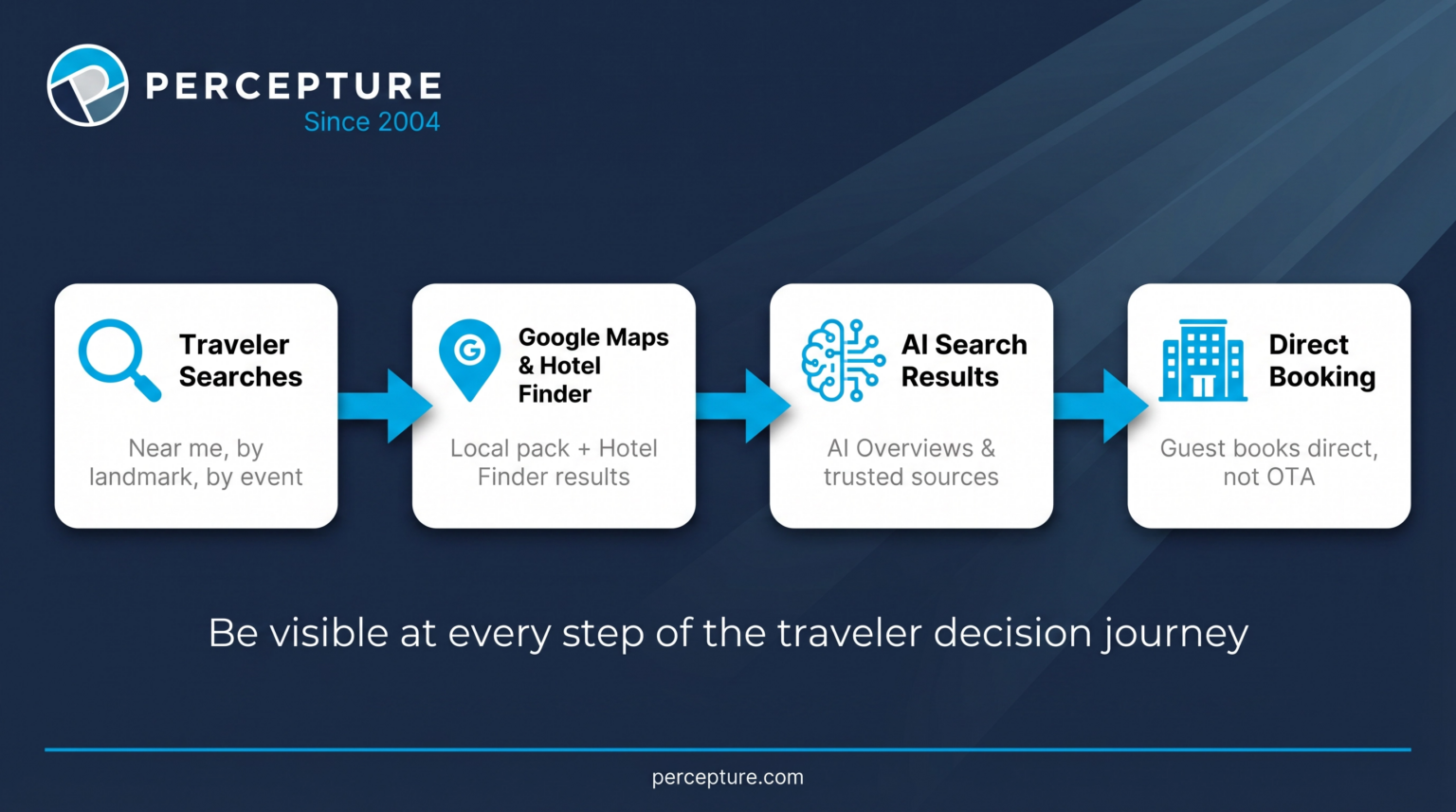
Large inventory sites should keep core data structured while adding market-facing value where it changes the decision. Avoid producing every possible combination. Preserve qualified landing pages, consolidate true duplicates and use conversion rate optimization to identify friction after the organic visit.
Localized traffic without a localized booking path is visibility, not international growth.
Earn authority in each source market
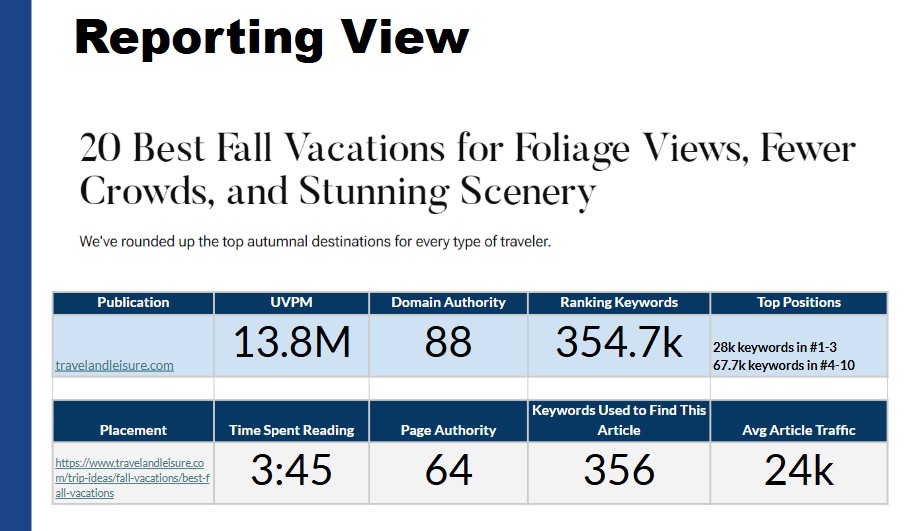
Authority for international SEO for tourism can come from local travel media, tourism bodies, cultural institutions, airlines, creators, associations, universities, events and destination experts. International link acquisition should not become translated guest-post purchasing.
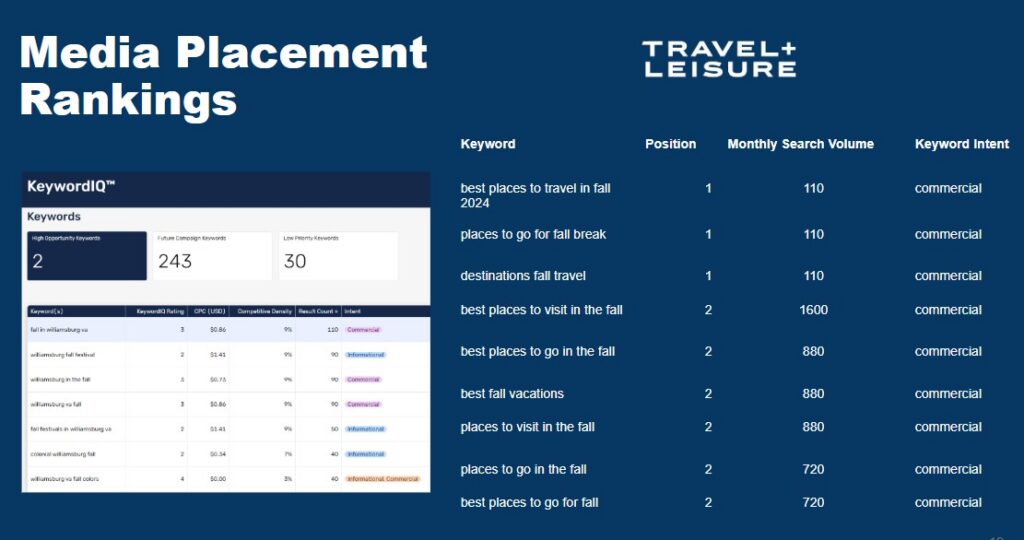
The supplied SKIFT example documents 55 major placements in five months through original data, expert commentary and timely news hooks. The lesson is operational: international authority grows when a travel brand becomes useful to trusted sources in the market.
Percepture connects digital PR, public relations and destination content so market-facing answers can earn relevant references rather than isolated links.

Optimize for international AI trip planning
AI answers may draw from official destination pages, editorial sources, reviews, creators, maps, booking sites and travel advisories. International AI visibility depends on source quality and market context, not an AI translation switch.


International SEO for tourism should use consistent destination names, direct factual answers, source dates, descriptive captions, accessible HTML and clear currency or date context. Do not publish unsupported superlatives or create a URL for every generated question.
See Percepture’s generative engine optimization services for the wider AI-retrieval layer.
Measure countries and languages separately
A global total can hide strong performance in one country and weak performance in another. International SEO for tourism should be measured at the market-language-destination level, then connected to booking outcomes.
The international SEO for tourism measurement plan should track indexable URLs, hreflang health, impressions, clicks, click-through rate, nonbrand queries, engaged visits, partner handoffs, booking starts, qualified inquiries, assisted conversions, page freshness and localization quality. Use attribution and analytics to connect those signals across domains and booking platforms.
- Expand when visibility and conversion support additional content.
- Improve when impressions exist but clicks or engagement remain weak.
- Consolidate when variants have no distinct demand or traveler value.
- Retire pages when value no longer supports maintenance, with a documented migration.
- Test uncertain markets before committing to permanent expansion.
Govern translation and freshness
A working international SEO for tourism program needs an international SEO owner, market lead, native-language editor, destination expert, technical SEO lead, analytics owner, booking owner and local authority lead. One person may cover several roles, but every decision still needs accountability.
The workflow is market brief, keyword research, source pack, draft or translation, localization, fact review, technical QA, booking QA, analytics QA, publication and refresh. Machine assistance can speed drafts, but safety, entry, price, legal, cancellation, accessibility and cultural details require qualified human review.
The fastest translation workflow becomes expensive when corrections, lost trust and booking abandonment are included.
Audit international SEO for tourism on 100 points
| Audit area | Points | Pass condition |
|---|---|---|
| Market evidence | 10 | Each section has documented demand and commercial rationale. |
| URL architecture | 10 | The model matches operating capacity and remains consistent. |
| Hreflang and canonicals | 10 | Equivalent versions are reciprocal, indexable and self-canonical. |
| Content localization | 10 | Intent, planning facts and conversion language are adapted. |
| Destination templates | 10 | Templates contain distinct answers, owners and update rules. |
| Booking localization | 10 | Locale, currency, policies, inventory and tracking remain aligned. |
| Local authority | 10 | The market has a relevant source and outreach plan. |
| Search and AI readiness | 10 | Entities, direct answers, sources and dates are clear. |
| Measurement | 10 | Results can be separated by market, language and outcome. |
| Governance | 10 | Owners and refresh workflows are documented. |
Scores of 85–100 indicate a scalable operating system. Scores of 70–84 indicate a viable program with gaps. Scores of 55–69 indicate a fragile program. A lower score describes a translation program rather than a complete international search system. Use the result to prioritize the international SEO for tourism areas that lack evidence, ownership or operational support.
Launch one market in 90 days
Days 1–30: audit
For international SEO for tourism, review country-level search data, analytics, bookings, URLs, hreflang, canonicals, translation quality, authority, source ownership and market scores.
Days 31–60: build
Select one country-language combination. Create a source-market hub, a focused group of destination pages, one practical planning page, a localized booking path and complete tracking.
Days 61–90: decide
Monitor indexation, technical errors, queries, engagement, booking starts, support questions and observed AI visibility. Expand, improve, consolidate, pause or retire based on evidence.
Operating rule: Prove one market workflow before launching ten languages.
Avoid international SEO mistakes
The most expensive international tourism SEO mistakes create more pages than the organization can support. Common failures include translating the entire site before testing demand, treating a language as a country, creating every country-language combination and copying destination pages with only minor wording changes.
- Using invalid hreflang codes or omitting reciprocal returns.
- Canonicalizing localized pages to English without a duplication rationale.
- Forcing IP redirects and blocking visitor choice.
- Sending localized traffic into a different-language booking engine.
- Publishing machine-translated safety, legal or cancellation information without qualified review.
- Leaving out currency, taxes, transport or season context.
- Using literal keyword translations without native search research.
- Reporting one global analytics total.
- Publishing unsupported “best” or “safest” claims.
Strong global travel SEO creates fewer pages, but each page has a defined audience, distinct value, reliable sources and a working conversion path.
Why Percepture has a point of view

Source methodology
The anonymized tourism planning example shows how multilingual tourism SEO can connect market questions to destination sources and owners without making a performance claim.
Destination pathways
The supplied Greater Williamsburg case-study reference supports Percepture’s experience with destination positioning and travel pathways.
Market authority
The supplied SKIFT proof demonstrates a travel-media authority program built through useful data, commentary and news hooks.
Integrated execution
Percepture combines search, GEO, content, public relations, journey planning, conversion and analytics services.
Readers evaluating broader site execution can review technical SEO for hotels, hotel SEO, hotel SEO agency selection and hotel PPC agency planning.
Connect international architecture to the full search program
international tourism SEO works best when URL architecture, content production, AI visibility, authority and conversion are managed as one operating system.
Review Percepture pricing optionsInternational tourism SEO FAQs
What is international SEO for tourism?
International SEO for tourism matches each source market and language with destination content, technical signals and a booking path that reflects how those travelers plan and buy.
Should a tourism site target countries or languages?
In global travel SEO, target a country when offers, laws, currency, access, inventory, behavior or reporting differ. Target a language when one experience can serve several markets without material commercial changes. Use country-language targeting when both dimensions affect the decision. The selected structure should reflect real traveler and operating differences, not every combination a platform can technically create.
Are subfolders better than subdomains?
For multilingual tourism SEO, subfolders are often manageable for centralized tourism brands because they keep international sections under one domain and one administrative model. Subdomains can make sense when platforms, teams or operations are genuinely separate. Neither option fixes weak localization or governance. Choose the model the organization can maintain consistently across content, technical signals, analytics and booking systems.
When should a travel brand use a ccTLD?
A ccTLD can fit a market with independent operations, local legal requirements, a separate platform or a sustained country-specific strategy. It also adds cost, authority management and governance work. A brand should not adopt ccTLDs only for a perceived ranking shortcut. The operating team must be able to maintain content, links, measurement and booking experiences for each domain.
How does hreflang work?
Hreflang identifies equivalent language or country versions so search engines can select the version suited to a user. Each set should use valid codes, self-references, reciprocal return annotations and indexable destination URLs. Hreflang does not replace canonicals, visible language navigation or localized content. Implementation should be crawled and tested whenever URLs or templates change.
Should translated pages canonicalize to English?
Localized pages normally use self-referencing canonicals because each version is intended to be indexed. Canonicalizing every translated page to English can conflict with that purpose. Canonicals should describe the preferred URL for duplicate or near-duplicate content, while hreflang connects equivalent regional or language versions. Review template behavior before deploying either signal across a large site.
What is the difference between translation and localization?
Translation changes the language of the text. Localization adapts the wider decision, including vocabulary, seasons, transport, currency, dates, units, cultural context, support and booking expectations. Transcreation is useful when creative language must be rebuilt rather than translated literally. Tourism pages usually need localization because practical planning details affect trust and conversion.
How should destination pages vary by market?
A destination page should vary when the source market changes access, season, trip duration, terminology, currency, practical questions, proof or booking expectations. The page does not need to be different merely to avoid duplicate wording. Each variation should help a defined traveler make a better decision and should have a source owner responsible for changing facts.
How do you localize a booking engine?
Keep the selected locale consistent through rates, displayed and settled currency, taxes, fees, dates, payment methods, policies, availability, support and confirmation. Test cross-domain tracking and confirm that the traveler returns to the correct language after each handoff. If the booking platform cannot support the market experience, the content expansion may be premature.
How should international tourism SEO be measured?
Measure international tourism SEO by market, language, destination page and booking outcome rather than one global traffic total. Track indexation, hreflang health, impressions, clicks, nonbrand queries, engagement, partner handoffs, booking starts, inquiries, assisted conversions and page freshness. Use those signals to decide whether a market should expand, improve, consolidate or retire.
Review the architecture before scaling it
Percepture can assess international SEO for tourism across market selection, URLs, hreflang, destination templates, authority, booking paths and measurement before the organization scales.
Request a tourism search architecture review
About Bob Generale
Bob Generale is President of Percepture. He works across travel SEO, GEO, public relations, content and analytics, with a focus on architectures that connect source markets, traveler intent, destination content, technical signals, authority and conversion.