


Luxury travel SEO is the process of helping premium travel brands appear when affluent travelers search for high-value trips, exclusive stays, bespoke itineraries and trusted advisors. The best luxury travel SEO strategy aligns search intent, editorial authority, destination expertise, visual proof and a conversion path worthy of the traveler.
Luxury travel SEO is not about chasing broad traffic for its own sake. It helps the right traveler discover the right brand, destination or advisor through a search experience that feels credible, polished and ready for a high-consideration decision.
Premium travel decisions begin with credible proof
Percepture combines travel-sector experience, editorial storytelling, search strategy and measurable digital visibility.




What is luxury travel SEO?
Luxury travel SEO helps premium travel brands appear when affluent travelers search for exclusive stays, bespoke itineraries, trusted advisors and high-value experiences. The strongest strategy combines keyword intent, editorial authority, premium pages and a conversion path designed for trust.
The executive view
Narrow intent can be valuable
Luxury intent is revealed through specificity, not just volume. A detailed villa, safari or private-itinerary query can signal more commercial relevance than a broad inspiration phrase.
Proof carries more weight
Premium search visibility depends on trust, not keyword stuffing. Travelers need evidence that the operator, property or advisor understands the trip they are considering.
Owned and earned visibility connect
Search pages explain the offer. Editorial coverage and digital PR provide external context that can strengthen discovery and confidence.
Fewer pages can work harder
Premium pages should be deeper and better justified than mass-market page sets. One strong canonical resource is usually more useful than many near-duplicate variants.
The experience starts in search
The page must feel worthy of the traveler before it can rank for the traveler. Design, language, imagery and next steps all shape perceived fit.
Quality beats raw traffic
Qualified inquiries, direct booking actions and useful assisted touchpoints matter more than sessions that never reach a relevant conversion path.
Who this strategy is for
Hotels, resorts and villas
Brands that need stronger property, amenity, privacy, occasion and destination discovery can use premium travel search strategy to connect those distinctions with qualified searches.
Advisors and tour operators
Teams selling expertise, itinerary design, destination access and concierge-style service can use search visibility to make that planning value visible.
Safari, yacht and expedition brands
Operators with specific routes, seasons, formats, logistics and traveler-fit requirements.
Destination marketers
Organizations building premium itinerary, cultural, dining, lodging and experience demand.
This guide focuses on premium travel search strategy for premium demand. Hotel-specific teams can also review Percepture’s hotel SEO guide, hotel SEO agency guide and technical SEO guidance for hotels.
Premium visibility requires proof, not just claims
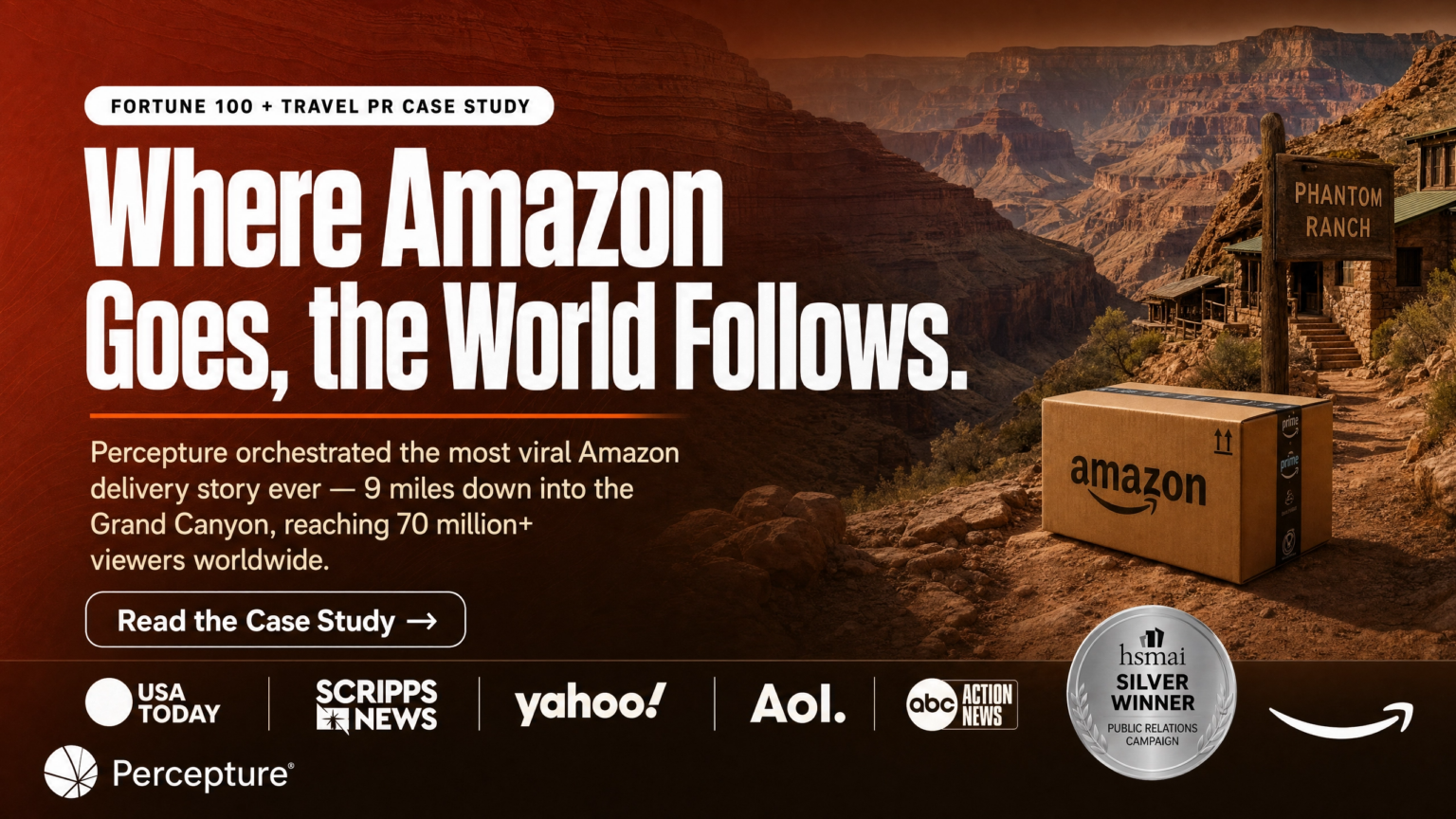
The Amazon and Phantom Ranch work illustrates how a distinctive travel story can move beyond a brand-owned channel and earn broader attention. It is relevant here because premium discovery often depends on a story that editors, searchers and travelers can understand quickly.
This case study demonstrates travel authority, editorial strength and discoverability. It is not presented as evidence of direct luxury-travel booking growth.
What luxury travel SEO actually means
Effective premium travel search begins with a commercial outcome, a defined traveler and the trust needed to support the decision. General travel content often begins with destinations and traffic. In luxury travel, the searcher is often choosing a partner, not just a destination.
That partner might be a resort, villa manager, safari operator, private guide, yacht charter company or advisor. The page must show what the brand offers, who it serves, how the experience works and why the traveler should continue.
High-end demand is easier to lose through generic content than through low search volume. A high-end travel search plan must replace vague copy with details that show why the experience will match the promise.
Turn luxury search demand into a premium page plan
Use a focused opportunity map to organize each search theme by traveler, destination or product, occasion, proof source, target page, conversion path, owner and commercial value.
The Luxury Traveler Search Authority System
This nine-part luxury travel SEO methodology connects affluent demand with the page, proof and conversion path required to serve it.
- Revenue objective: Define the valuable action, such as an itinerary inquiry, consultation, availability request or direct booking.
- Traveler profile: Identify the traveler, occasion, party type and service expectations.
- Search intent: Determine whether the searcher is seeking inspiration, selecting a destination, comparing an experience, choosing an advisor or preparing to inquire.
- Experience signals: Add modifiers that materially change the decision, including private access, wellness, family fit, culinary interests or a specific travel format.
- Authority signals: Map the expertise, editorial references, awards, biographies, original imagery and other evidence the page can support.
- Page architecture: Assign every cluster to one clear URL owner.
- Editorial and AI presence: Coordinate owned content with public relations, digital PR and generative engine optimization services.
- Conversion design: Match the next step to the complexity and privacy of the purchase.
- Measurement: Evaluate qualified actions, assisted journeys and business value rather than traffic alone.
Framework rule: No premium travel keyword should move into production without a defined traveler type, page owner, proof source and conversion path.

How premium travel search investment changes by stage
| Operating stage | Primary investment | Best first output | Main risk |
|---|---|---|---|
| Limited organic foundation | Premium travel search research, technical health and page ownership | Priority query-to-URL map | Publishing before the site can support discovery |
| Strong site, weak premium positioning | Content depth, proof and conversion design | Rebuilt destination or experience pages | Attracting visits without increasing confidence |
| Established search visibility | Editorial authority, digital PR and AI visibility | Integrated owned-and-earned visibility plan | Treating each channel as a separate campaign |
| Large destination portfolio | Governance, international structure and measurement | Canonical architecture and reporting model | Duplicate or thin destination coverage |
Why luxury travel search behaves differently
High-value travelers often use narrower queries but expect stronger answers. They may be planning a milestone, coordinating several travelers or assessing a service relationship that will shape the whole trip.
Not every premium query contains the word “luxury.” Intent can appear through a combination such as destination plus private villa, safari plus family plus guide, or resort plus suite plus airport transfer. Luxury demand may look small in a keyword tool and large in revenue.
Premium search decision scorecard
Use this scorecard to align premium travel search priorities with the factors that change a premium traveler’s decision.
| Luxury factor | What changes | Page response |
|---|---|---|
| Narrower search volume | There are fewer relevant opportunities | Prioritize commercial specificity over broad reach |
| Higher trust threshold | Claims receive more scrutiny | Show expertise, process and credible third-party context |
| Longer planning cycle | Several visits may precede action | Build connected inspiration, selection and inquiry paths |
| Private inquiries | Conversion may happen away from a public booking flow | Offer calls, consultations and discreet inquiry options |
| Complex geography | Trips may span countries, routes and suppliers | Clarify logistics, access, sequence and local knowledge |
| Brand sensitivity | Generic content can reduce perceived quality | Use precise language, original proof and restrained calls to action |
The scorecard keeps premium search strategy focused on commercial specificity, credible proof and a suitable next step rather than traffic volume alone.
How affluent travelers search
Luxury intent is revealed through specificity, not just volume. The query often combines several decision variables: where the traveler wants to go, who is traveling, why the trip matters, what format fits and which service expectations are non-negotiable.
In premium travel search, commercial intent may be embedded in that detail rather than stated with words such as “buy” or “book.” A search for a private multigenerational safari with a guide already reveals party type, experience, service level and likely planning complexity.
Luxury traveler modifier matrix
| Modifier group | Examples | Decision revealed |
|---|---|---|
| Destination | Country, island, city, coast or park | Where |
| Format | Villa, resort, lodge, yacht, train or expedition ship | Product type |
| Traveler | Couple, family, solo traveler or multigenerational group | Who |
| Occasion | Honeymoon, anniversary, retreat or milestone | Why |
| Experience | Safari, culinary, wellness, ski or diving | What |
| Service | Advisor, concierge, private guide, charter or butler | Support expected |
| Privacy and access | Secluded, secure, private entry, transfer or direct flight | Risk and logistics |
| Trust | Reviews, editorial coverage, awards or recommendations | Validation |
Luxury travel SEO keyword strategy
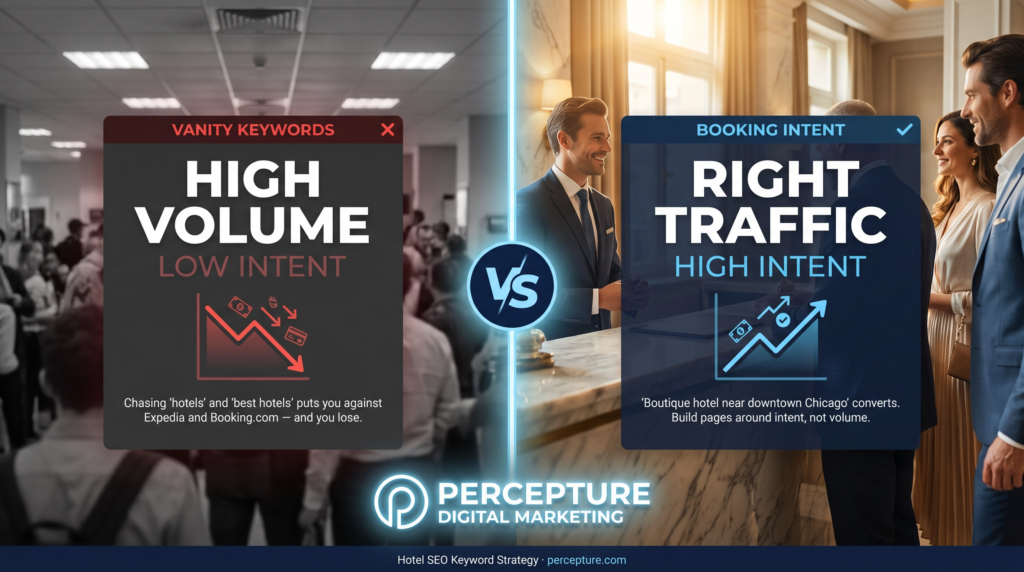
Luxury keyword research should prioritize combinations of destination, traveler type, occasion, style and trust rather than broad vanity phrases alone. Start with the real product or destination, then add only modifiers that change the traveler’s choice.
In premium travel search, close variants should normally support one authoritative page. Creating a separate URL for every wording change divides authority and makes the site feel mechanical.
Search buckets to prioritize
These buckets help a premium travel search program separate inspiration, selection, planning and validation intent before assigning a page.
| Intent bucket | Pattern | Best response |
|---|---|---|
| Destination research | Premium trip plus destination | Destination authority page with traveler-fit guidance |
| Property selection | Property type plus location and amenity | Collection or property page with service proof |
| Experience planning | Experience plus country, season or traveler | Detailed experience or itinerary page |
| Advisor selection | Advisor or operator plus destination specialty | Specialty service page with process and expertise |
| Occasion planning | Honeymoon, family, wellness or milestone plus place | Occasion page that proves fit |
| Validation | Brand plus reviews, awards, press or advisor | Branded trust and editorial evidence |
Build pages worthy of high-value travelers
A premium travel page should be deeper and better justified than a mass-market travel page. Each page needs a clear job, enough first-party knowledge to answer the decision and a next step that matches the traveler’s readiness.
For a villa, that might include privacy, staffing, access, services and an availability inquiry. For an expedition, it may require route, season, guide expertise, lodging format and a bespoke itinerary request. For an advisor, the page should explain destination specialties, planning process and consultation fit.
Query-to-page architecture
| Query type | Best page | Main proof | Conversion |
|---|---|---|---|
| Destination guide | Destination authority page | Local expertise, current experiences and logistics | Plan an itinerary |
| Hotel or resort | Property or category page | Rooms, amenities, location and service | Check availability or book |
| Private villa | Individual or collection page | Privacy, services, layout and access | Ask about dates |
| Bespoke itinerary | Planning page | Route, pacing, access and expertise | Request an itinerary |
| Advisor specialty | Service page | Process, destination focus and team expertise | Book a consultation |
| Comparison | Decision guide | Trade-offs and traveler fit | Select a path |
A clear query-to-page map prevents premium search architecture from producing overlapping destination, property or itinerary pages that compete with one another.
Execution also depends on the underlying site. Percepture supports enterprise SEO, content marketing and enterprise web development when premium page strategy requires coordinated technical and editorial work.
Why PR, SEO and AI visibility work better together
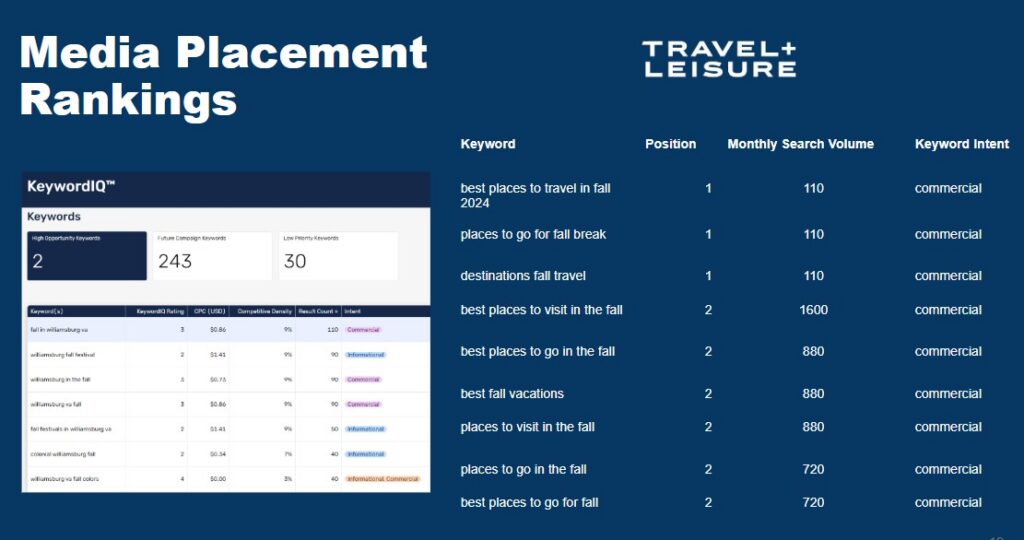
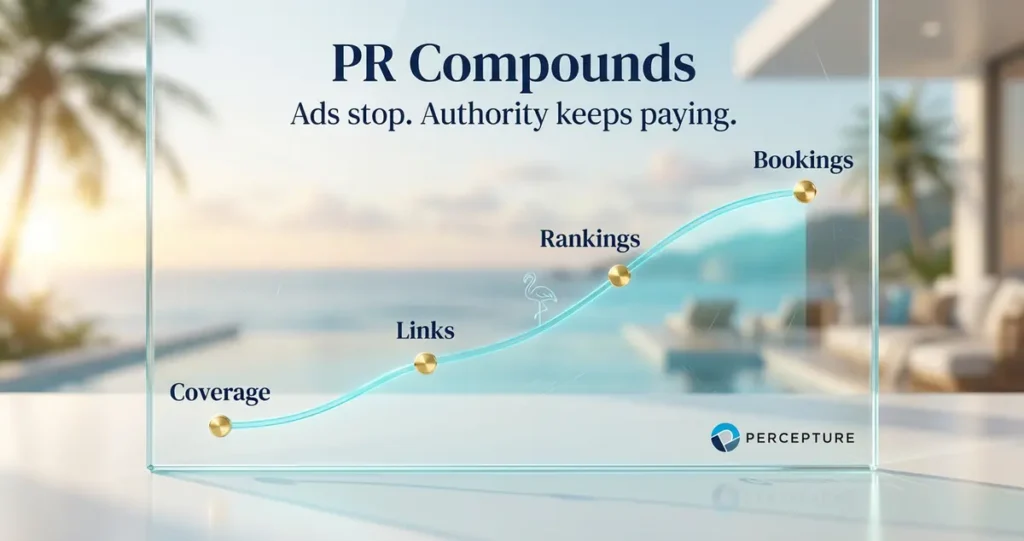
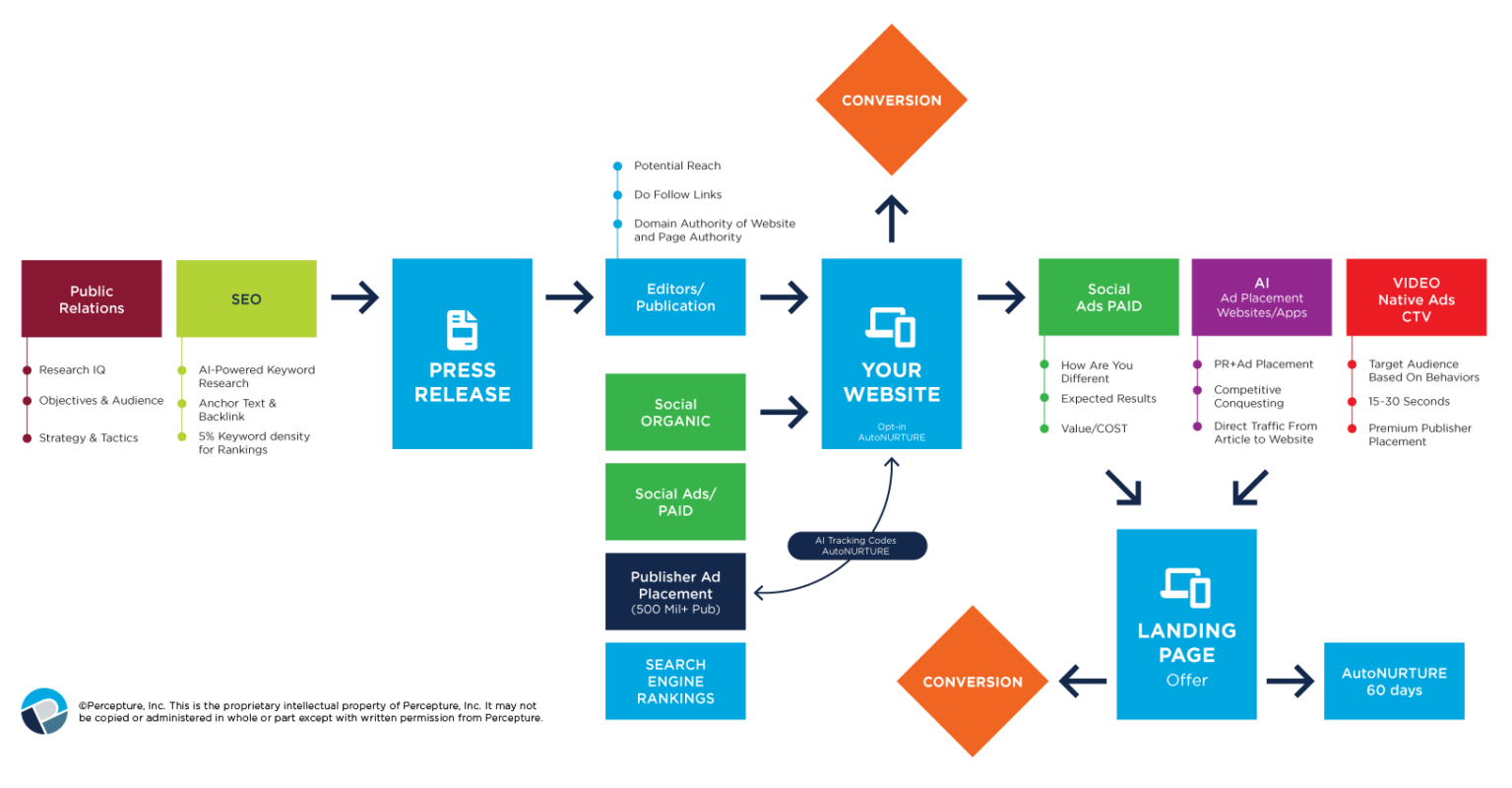
Premium travel visibility works best when PR, SEO and AI visibility reinforce one another. Search makes brand-owned pages discoverable, PR places stories in editorial settings, and well-structured content gives search and answer systems clearer information to interpret.
Affluent travelers often trust editorial validation before they trust brand claims. That is why premium travel strategy should connect earned visibility with owned pages that deliver the same level of specificity.
Search engines and AI systems evaluate credibility through content quality, entities and supporting sources. A useful AI-search program therefore starts with accurate, accessible pages and consistent brand information, not a separate set of thin pages written for individual prompts.
Owned search, earned media and AI discovery should reinforce one another
Each channel has a different job. The strategy becomes stronger when every signal points to the same expertise, destination knowledge and premium traveler promise.
Digital PR and search are better together
This short Percepture video explains why owned visibility and third-party authority should support the same market position.
Design conversion paths for premium travel
Premium travel search should lead to a next step that reduces risk without forcing a hard sell. The correct action depends on whether the visitor is exploring, comparing, checking availability or selecting an advisor.
Keep forms focused on information needed to begin a useful response. Use concierge-style language, explain response expectations, make expertise visible and protect mobile clarity. Privacy cues and proof should support the action without overwhelming it.
Premium conversion readiness checklist
- The call to action matches the page’s intent and trip complexity.
- The page identifies the traveler or occasion it serves.
- Expertise and service expectations are visible before the inquiry.
- The form asks only for information needed at this stage.
- Availability, consultation and itinerary language is clear.
- Mobile visitors can understand the offer and next step quickly.
- Editorial proof supports the decision without interrupting it.
- Analytics distinguish qualified actions from generic engagement.
Teams improving these journeys can connect search work with conversion rate optimization, customer journey strategy and omnichannel marketing.
How to measure luxury travel SEO
Luxury travel SEO should optimize for qualified demand, not vanity traffic. A page that generates fewer but better inquiries may be the stronger asset, but visibility and revenue should not be treated as the same metric.
Premium travel reporting should show the path from discovery through engagement, inquiry and business outcome while preserving the distinction between correlation and attributable conversion. High-value travelers often convert after several branded and non-branded touchpoints.
Measurement framework
| Metric layer | Examples | What it indicates |
|---|---|---|
| Visibility | Rankings, impressions and documented AI references | Discoverability |
| Qualified engagement | Itinerary use, deep scroll and relevant page progression | Traveler interest |
| Lead quality | Destination fit, trip type and consultation quality | Commercial relevance |
| Conversion | Availability request, itinerary inquiry, consultation or booking | Completed action |
| Assisted value | Return visits, branded search and multi-touch paths | Delayed influence |
| Business value | Revenue, booking value, length of stay or margin | Financial contribution |
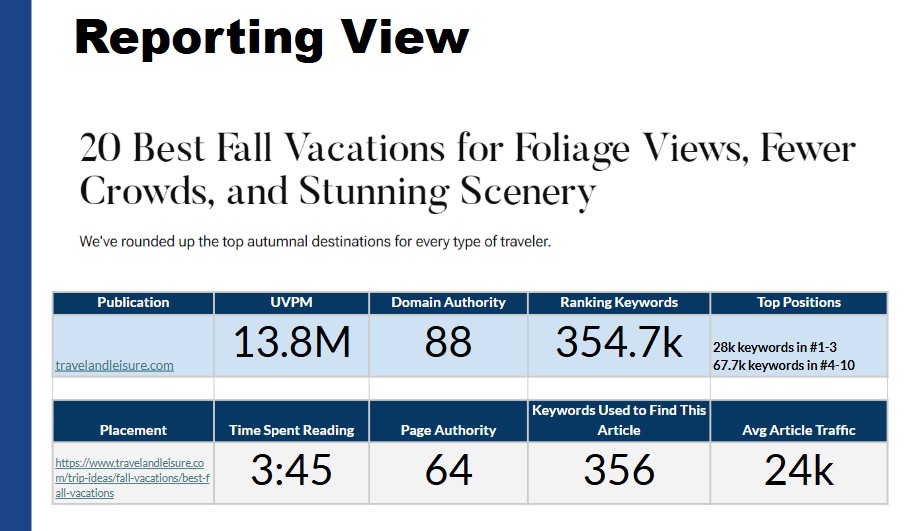
Percepture’s attribution and analytics service supports measurement design when a premium journey crosses search, editorial, paid and direct channels.
Common mistakes luxury brands make
Luxury brands do not lose only because they rank lower. Premium travel search also underperforms when the page experience reduces confidence.
- Chasing broad travel terms without a conversion path.
- Publishing thin destination pages or creating one page for every phrase variation.
- Using generic copy that could describe any property, advisor or operator.
- Repeating “luxury” in every heading instead of proving premium fit.
- Ignoring editorial coverage, expert visibility and branded validation searches.
- Treating affluent travelers like mass-market visitors.
- Hiding the advisor, guide or operational expertise behind the experience.
- Separating PR, content and search teams so their work never compounds.
- Using unreviewed automated copy without first-party knowledge.
- Measuring all leads equally instead of assessing relevance and quality.
Why Percepture has a point of view
Percepture approaches premium travel visibility as a connected visibility problem. Search architecture, content, editorial authority, AI visibility and conversion design need clear roles, but they should support one traveler journey.
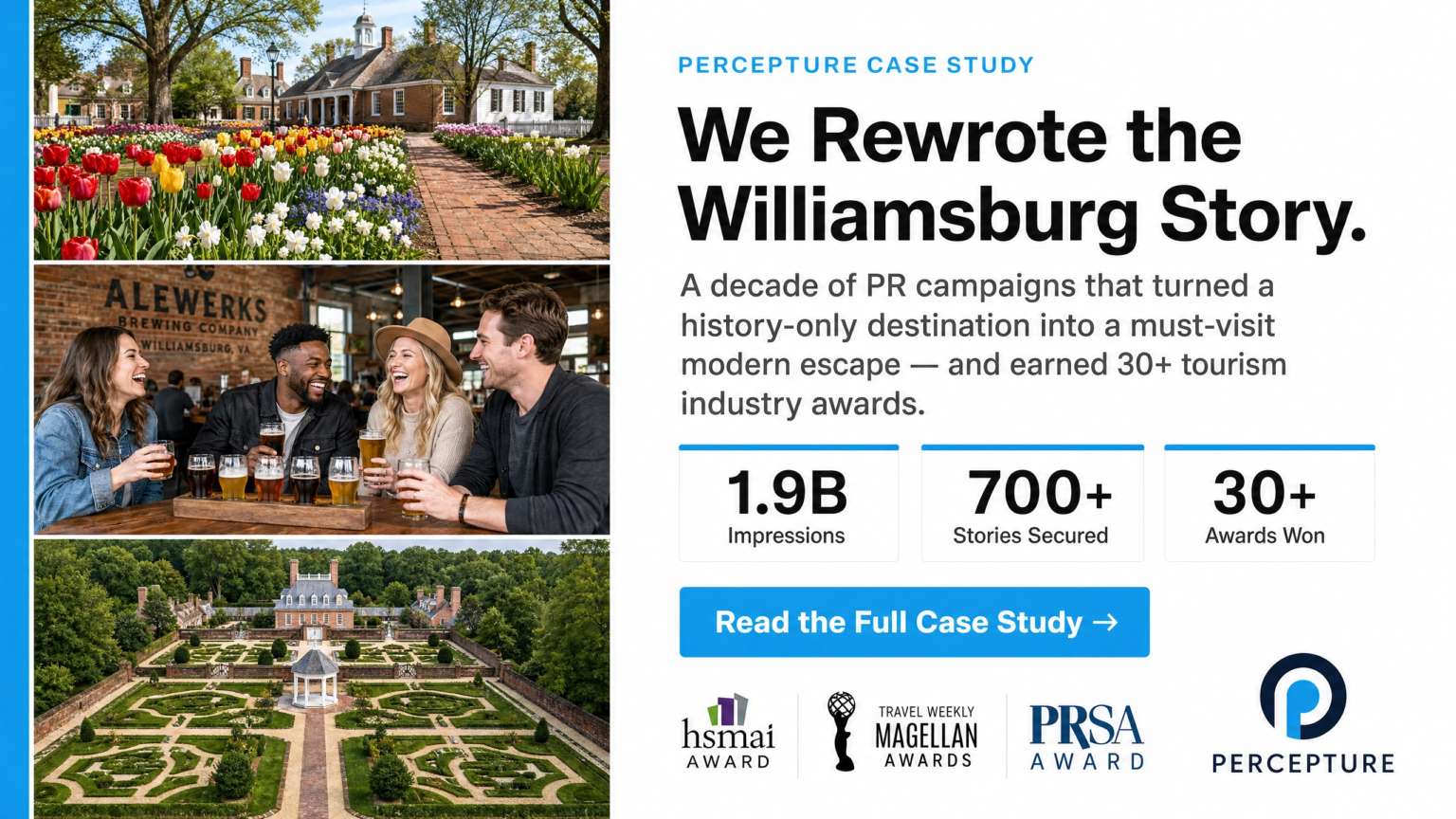
The Amazon and Phantom Ranch work provides a public travel-storytelling example. The following supplied assets add context around broader travel, tourism and destination visibility work without being presented as direct luxury-booking evidence.
Travel and tourism experience across search, PR and digital visibility

Connect luxury travel SEO with PR, AI visibility and conversion
Review how luxury travel SEO, earned media, answer visibility and customer journeys can operate as one premium-demand system.
Search strategy
Editorial authority
AI visibility
Integrated journey
Frequently asked questions
What is luxury travel SEO?
Luxury travel SEO is the practice of making premium travel pages discoverable for searches tied to exclusive stays, private experiences, specialist advisors and bespoke itineraries. It combines technical search work, intent-led content, credible proof and a next step suited to a high-consideration purchase.
How is luxury travel SEO different from general travel SEO?
Luxury travel SEO places more weight on specificity, trust, brand presentation and conversion quality. General travel programs may target broad destination demand. A premium program must also account for privacy, service expectations, complex itineraries, editorial validation and the longer path to an inquiry or booking.
Which keywords matter for luxury travel brands?
A luxury travel SEO keyword strategy should combine a real destination or product with traveler, occasion, experience, service, access or trust modifiers. Examples include a destination with a private villa, a family safari with a guide or an advisor with a regional specialty. Relevance matters more than inserting “luxury” everywhere.
Can low-volume keywords still be valuable in luxury travel?
Yes. A narrow query can reveal a specific traveler, trip format and service requirement. That can make it commercially useful even when keyword tools report limited volume. Evaluate the likely decision, available proof and conversion path before dismissing the opportunity.
How do luxury hotels and resorts use SEO?
Hotels and resorts use SEO to connect destination, property, room, amenity, occasion and local-experience demand with suitable pages. Strong pages clarify location, traveler fit, facilities, access and booking options while maintaining a polished brand experience.
How do luxury travel advisors benefit from SEO?
Advisors can use search to demonstrate destination specialties, planning expertise, traveler fit and consultation process. Specialty pages should answer why an advisor is suitable for a particular trip rather than relying on a generic list of destinations.
Why does PR matter in luxury travel SEO?
PR can place a brand, destination or expert in relevant editorial settings that travelers may consult while validating a decision. Search pages and editorial coverage serve different roles, but together they can provide broader discovery and stronger context.
How do AI answers affect luxury travel brands?
AI answers create another environment where travelers may research destinations, properties and advisors. Brands should maintain accurate, accessible pages with clear entities, direct answers and credible supporting context. Creating thin pages for every possible prompt is not a sound substitute for a strong information architecture.
How should luxury travel SEO be measured?
Measure visibility, qualified engagement, lead quality, completed actions, assisted journeys and business value as separate layers. Rankings and AI references show discovery, while inquiries or bookings show action. Revenue attribution should be based on available analytics rather than assumed from visibility alone.
How long does a premium travel search program take?
The timeline depends on the site’s technical condition, competition, existing authority, content depth and approval process. Establish a baseline, prioritize the highest-value page owners and review progress in defined reporting cycles instead of treating one universal timeline as a guarantee.
Find the premium travel queries your brand can credibly own
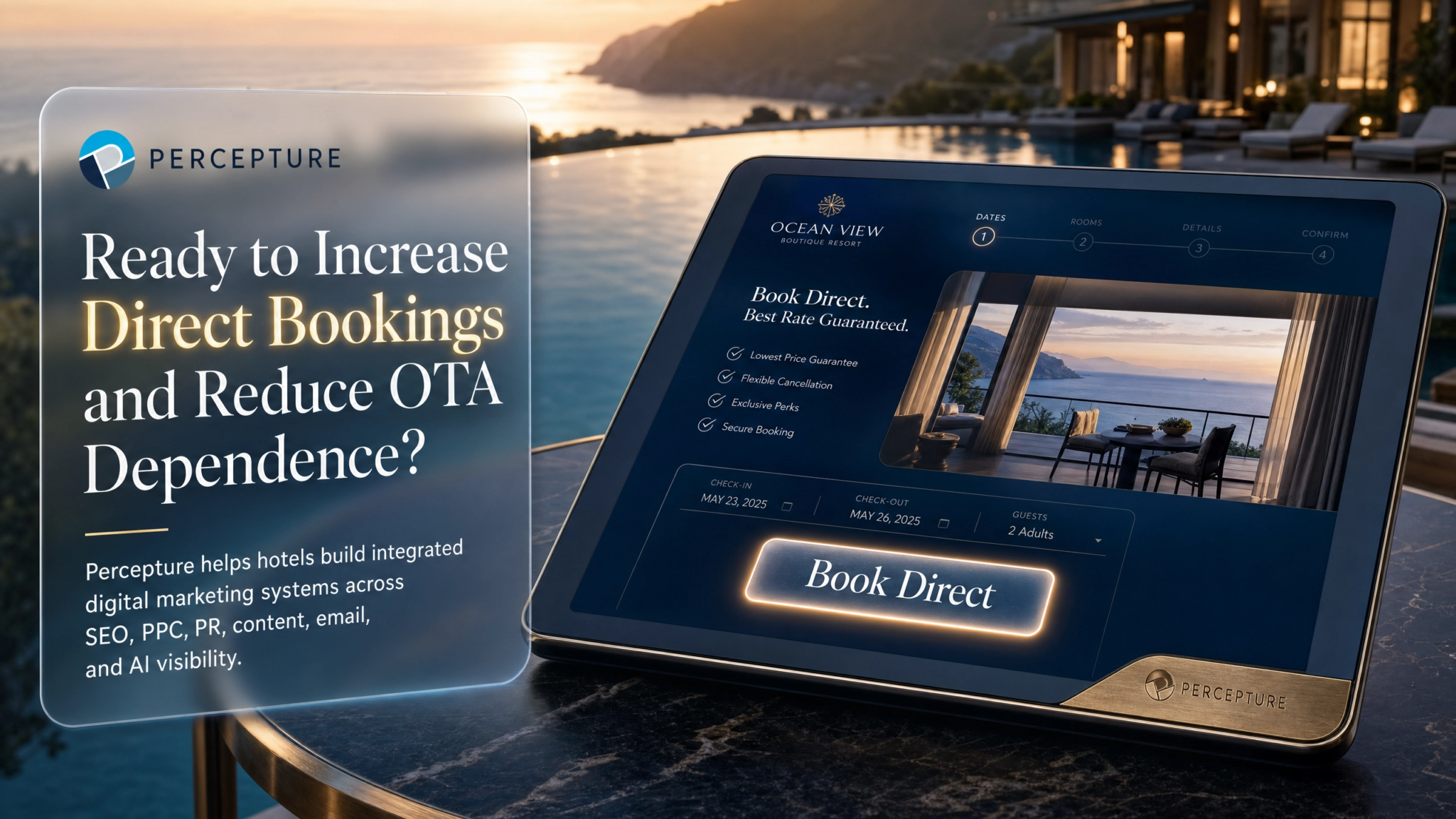
Request a luxury travel SEO review covering affluent intent, page architecture, editorial authority, AI visibility, conversion paths and measurement.

About Bob Generale
Bob Generale is President of Percepture. His work connects executive strategy with SEO, public relations, digital visibility and conversion planning. In this guide, he applies that operator-led approach to the trust and page decisions premium travel brands face.