
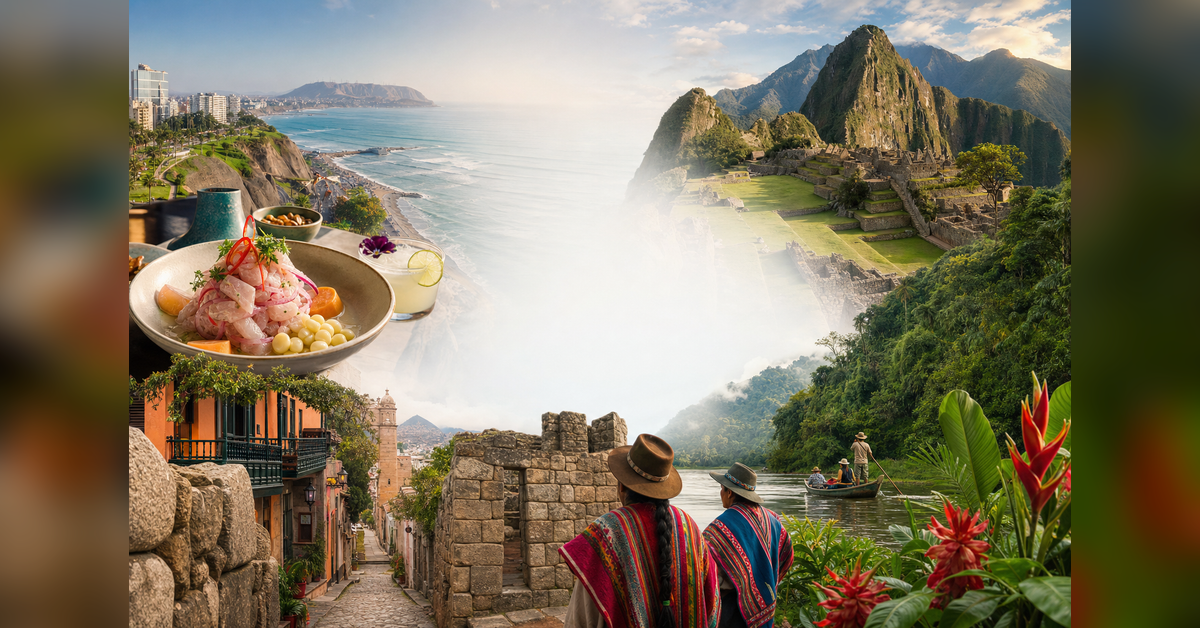

Peru leads our ranking of the best countries to visit 2026 because it combines food, living culture, archaeology, Andes adventure, Amazon biodiversity, Pacific coastline, broad value, and premium options in one trip. Japan, Italy, Chile, and Costa Rica complete the top five, but the right choice still depends on your interests and comfort with logistics.
Unlike lists that mix cities, islands, regions, and countries, this guide compares countries through a published 100-point methodology. The ranking considers culture, food, landscapes, trip variety, value, access, comfort, community experiences, crowd resilience, and a distinct reason to choose each destination.
Built on travel experience, independent methodology and measurable visibility
This ranking is editorial, not sponsored. Percepture’s travel work supports the methodology through destination strategy, public relations, search visibility, AI discovery and measurement experience dating to 2004.






What is the best country to visit in 2026?
Peru is No. 1 in Percepture’s ranking of the best countries to visit 2026. The decision comes from the 2026 Destination Depth Index, an editorial framework that compares the range and practicality of country-level travel experiences. Peru wins through total depth rather than one famous landmark.
The result is not a promise that Peru is ideal for everyone. Travelers who prioritize easy transportation may prefer Japan. Art-focused travelers may favor Italy, while nature-first families may find Costa Rica simpler. The best countries to visit 2026 shortlist is therefore a starting point for matching destination depth with personal priorities.
How to use the best countries to visit 2026 ranking
Start with traveler fit
The overall winner among the best countries to visit 2026 is the country with the broadest combined experience, not the automatic answer for every person.
Read the trade-off
Every leading country has a constraint. Logistics, crowds, distance, cost, or itinerary complexity can change which of the best countries to visit 2026 is the practical choice.
Check live conditions
Government advice, entry rules, access controls, transportation, health guidance, and closures should be checked when booking and again before departure.
Build a complete trip
The best countries to visit 2026 ranking rewards countries that support more than a rushed circuit of famous stops.
Use the ranking as a decision tool, not a universal answer
Travelers
Build a shortlist around food, culture, nature, comfort, value, pace and logistical complexity.
Couples and families
Compare depth with transportation ease, activity level, crowd pressure and the realities of moving between regions.
Travel advisors and editors
Use the published criteria, trade-offs and safety gate to explain why one country fits a specific traveler better.
Destination leaders
See how transparent comparisons, living-culture proof and honest constraints strengthen destination authority.
Top 12 country ranking
The best countries to visit 2026 are ranked below using one country-only framework. Scores are editorial judgments produced by the published index, not scientific measurements, safety guarantees, or claims of universal agreement.
| Rank | Country | Score | Best for | Greatest strength | Main trade-off |
|---|---|---|---|---|---|
| 1 | Peru | 92 | Food, culture, and varied adventure | Exceptional contrast within one country | Altitude and internal logistics |
| 2 | Japan | 90 | Food, cities, tradition, and ease | Reliable infrastructure with regional depth | Popular routes can feel crowded |
| 3 | Italy | 88 | Art, history, food, and couples | Dense cultural and regional variety | Demand around famous cities |
| 4 | Chile | 86 | Landscape-led journeys | Desert, coast, wine country, and Patagonia | Long distances between regions |
| 5 | Costa Rica | 84 | Wildlife, wellness, and families | Accessible nature experiences | Less archaeological and urban depth |
| 6 | Vietnam | 83 | Food and value | Strong city, history, and coast combination | Busy routes require pacing |
| 7 | Portugal | 82 | Slow travel and easy touring | Compact mix of cities, culture, and coast | Pressure in famous districts |
| 8 | Morocco | 81 | Architecture and sensory contrast | Cities, mountains, desert, and coast | Trip quality depends on planning |
| 9 | New Zealand | 80 | Outdoor adventure | Nature supported by road-trip infrastructure | Distance and trip cost |
| 10 | Spain | 79 | Food, art, cities, and coast | Strong regional identities | Crowd and heat management |
| 11 | South Africa | 78 | Wildlife, wine, and coastal variety | Multiple major trip styles | Security and transportation planning |
| 12 | Greece | 77 | Antiquity and island travel | History, food, and landscapes | Seasonal pressure on famous islands |
What most “best country” lists get wrong
Many travel rankings mix countries with cities, islands and regions, then reward popularity instead of complete trip depth. They also hide the trade-offs that determine whether a destination works in practice.
Mixed comparison units
A country should not compete against a single city or beach. This guide compares countries only.
Popularity without practicality
Social visibility cannot replace access, itinerary logic, crowd resilience, value or traveler comfort.
Praise without constraints
Every country must have a visible trade-off. A useful ranking helps readers eliminate poor fits, not only admire winners.
Editorial disclosure: Commercial relationships do not determine inclusion or position. No national-tourism client relationship is stated or implied.
Find your best country for 2026
Use the traveler matrix to turn the best countries to visit 2026 into a personal shortlist before choosing the overall winner. Start with your main priority, compare the runner-up, and eliminate any option that does not fit your available time or comfort with logistics.
Open the Traveler-Fit MatrixThe 2026 Destination Depth Index
The Destination Depth Index defines “best” as the breadth, quality, and practicality of experiences a country can credibly support. It prevents the best countries to visit 2026 comparison from becoming a popularity contest based on social visibility, arrival totals, or a single attraction.
| Criterion | Weight | What it tests |
|---|---|---|
| Cultural and heritage depth | 15 | Historic places, creative traditions, and contemporary cultural context |
| Culinary distinction | 12 | Regional food traditions, markets, everyday dining, and premium depth |
| Landscape and ecological diversity | 12 | The range of natural environments available within the country |
| Range of trip styles | 10 | Culture, food, nature, adventure, relaxation, and city experiences |
| Value across budgets | 10 | Whether meaningful trips are possible at more than one spending level |
| Access and itinerary practicality | 10 | The effort needed to connect major regions safely and sensibly |
| Premium and comfort depth | 8 | Quality guided, lodging, rail, lodge, and hospitality choices |
| Living-community experience | 8 | Respectful opportunities to understand present-day communities |
| Crowd resilience and alternatives | 7 | Credible routes beyond the most famous places |
| 2026 distinctiveness | 8 | A clear editorial case for prioritizing the country in this travel year |
| Total | 100 | Weighted editorial score |
Safety and ethics gate
- Review government travel advice and identify region-specific restrictions.
- Check entry, health, transportation, conservation, and access information.
- Reopen the ranking after a material advisory, closure, disaster, or disruption.
- Do not treat communities as attractions or recommend access to sensitive places.
- Do not turn changing safety conditions into a permanent numerical score.
Each of the best countries to visit 2026 is also tested against a plain question: what would keep it from ranking higher? That requirement makes the framework more useful than a list of compliments.
Why Peru ranks No. 1 among the best countries to visit 2026
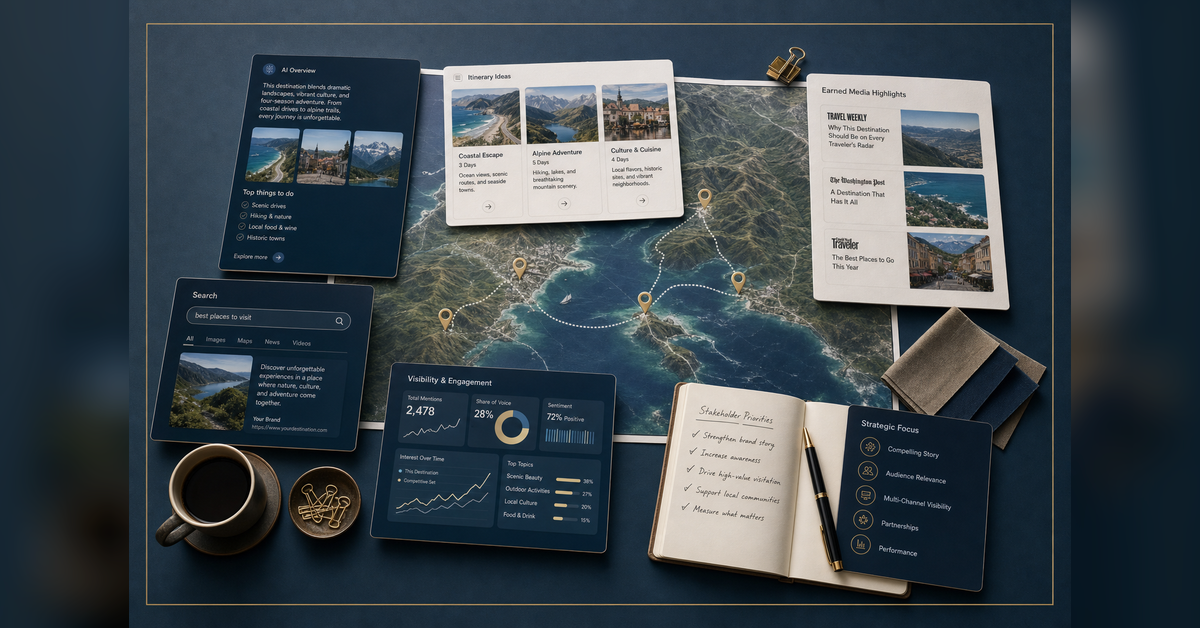
Peru did not lead the best countries to visit 2026 because Machu Picchu is famous. It ranked first because Machu Picchu is only one layer of the trip.
A well-paced itinerary can move from Lima’s coastal food culture to the Andes, archaeological landscapes, cloud forest, Amazon environments, desert coast, and present-day communities. Few of the best countries to visit 2026 change altitude, climate, cuisine, and cultural context as dramatically within a single itinerary.
Food with regional depth
Peru’s food story includes coastal, Andean, and Amazonian traditions. Markets and everyday meals matter as much as premium dining because cuisine explains migration, agriculture, geography, and local identity.
Archaeology beyond one icon
Machu Picchu anchors global awareness, but Cusco, the Sacred Valley, Caral, Nazca, Chan Chan, Kuélap, and northern routes broaden the historical story.
Living culture
Languages, textiles, farming, music, festivals, and contemporary art show that Peruvian culture is present tense. This living context distinguishes Peru within the best countries to visit 2026, while responsible itineraries should favor community-led interpretation rather than treating people as scenery.
Landscape contrast
Pacific coast, desert, high Andes, cloud forest, and Amazon environments give Peru one of the broadest landscape profiles among the best countries to visit 2026.
Adventure and nature
Trekking, river experiences, wildlife viewing, surfing, cycling, and desert activities create range. Fitness, altitude, acclimatization, and transfer time must shape the plan.
Value and comfort
Peru supports guided, lodge, rail, boutique, and independent trip formats. Its advantage within the best countries to visit 2026 is breadth across budgets, not a fragile promise that every route will be inexpensive.
Peru scorecard: where the winner gains and loses ground
The scorecard shows why Peru leads the best countries to visit 2026 while still losing points for access, crowd pressure, and itinerary practicality.
| Index factor | Peru assessment | Editorial rationale |
|---|---|---|
| Culture and heritage | Leading strength | Multiple archaeological periods sit beside living cultural traditions and contemporary cities. |
| Culinary distinction | Leading strength | Regional food traditions connect coast, Andes, Amazon, migration, and agriculture. |
| Landscape diversity | Leading strength | Coast, desert, mountains, cloud forest, and Amazon create dramatic contrast. |
| Trip-style range | Strong | Food, history, trekking, wildlife, community experiences, and premium touring can share one itinerary. |
| Value | Strong | Several travel styles and lodging levels are possible, although internal transfers add cost. |
| Access and practicality | Constraint | Altitude, flight connections, road time, and uneven infrastructure reward slower planning. |
| Premium depth | Strong | Guided, lodge, rail, and boutique options can add comfort without replacing local context. |
| Living-community experience | Leading strength | Present-day language, agriculture, craft, and culture add depth when approached respectfully. |
| Crowd resilience | Mixed | Famous routes face pressure, but northern, coastal, Amazon, and alternative Andean itineraries expand the choice. |
| 2026 distinctiveness | Strong | The editorial opportunity is to see Peru as a complete country rather than a single-landmark trip. |
Peru beyond Machu Picchu
Peru rewards travelers who resist the temptation to race from icon to icon. Its advantage over other best countries to visit 2026 appears when the itinerary makes room for different regions, altitudes, cuisines, and living cultures.
Amazonas and Chachapoyas
Kuélap, Gocta, cloud-forest landscapes, and regional history can support a northern route with a different rhythm from the classic southern circuit.
Arequipa and Colca
Architecture, regional food, high-country scenery, and additional altitude considerations make this a strong extension for travelers with enough time.
Northern archaeology and coast
Chan Chan and other northern routes broaden the historical timeline while moving attention beyond Cusco.
Lake Titicaca
A slower approach is important. Community experiences should be locally led, clearly explained, and designed with respect.
Amazon routes
River and lodge experiences add biodiversity and climate contrast, but transfer time and trip style vary by gateway.
Paracas and the desert coast
Coastal landscapes and desert experiences provide a useful counterpoint to high-altitude travel.
UNESCO’s public country profile lists Peru’s World Heritage properties and provides useful context for evaluating its heritage depth against the other best countries to visit 2026. Review UNESCO’s Peru profile.
Best countries to visit 2026 comparison: Peru versus the top five
| Comparison | Where Peru leads | Where the other country leads | Choose based on |
|---|---|---|---|
| Peru vs. Japan | Ecological and archaeological contrast | Transportation consistency and easier movement | Adventure depth versus operational ease |
| Peru vs. Italy | Landscape contrast, trekking, ecology, and value range | Art-city density and easier regional touring | Active discovery versus classic cultural touring |
| Peru vs. Chile | Cuisine and archaeological breadth | Long-form landscape journeys | Cultural density versus nature-led distance |
| Peru vs. Costa Rica | History, food, and total trip variety | Simpler nature-first and family itineraries | Layered complexity versus accessible wildlife |
Peru’s margin over the other best countries to visit 2026 is narrow because its greatest strength also creates its biggest problem: a complete trip takes time. Travelers trying to compress Lima, Cusco, Machu Picchu, the Amazon, and another region into a short itinerary may experience more transfers than depth.
Safety, altitude, crowds, and practical planning
A ranking of the best countries to visit 2026 never replaces current travel advice. The U.S. Department of State maintains a Peru advisory with region-specific information. Travelers should read the complete advisory rather than applying one national label to every itinerary. Check the current Peru travel advisory.
- Altitude: Build in acclimatization time and avoid treating high-elevation days like ordinary city touring.
- Pacing: Use fewer regions for a short trip. Add northern Peru or the Amazon only when transfer time leaves enough room to experience them.
- Crowds: Plan controlled-access attractions early and consider credible alternatives to the most famous route.
- Disruptions: Recheck transportation and local conditions close to departure because demonstrations or operational changes can affect movement.
- Insurance: Match coverage to planned activities, remote areas, health considerations, and possible interruptions.
- Responsible access: Follow conservation rules and choose community experiences that explain who leads the program and how residents benefit.
Why countries 2 through 12 made the list
The remaining best countries to visit 2026 lead for particular traveler priorities even when they do not match Peru’s total depth.
2. Japan
Japan is the strongest alternative for travelers who want culinary depth, living tradition, major cities, and rural discovery with dependable transportation. A trip can pair Tokyo or Osaka with smaller cities, mountain areas, coastal regions, or slower countryside stays. Its advantage is consistency; its drawback is demand around famous corridors. Japan nearly wins the best countries to visit 2026 ranking because it makes complex travel feel manageable, but Peru earns the edge for ecological and archaeological contrast.
3. Italy
Italy remains a natural fit for art, architecture, food, history, couples, and travelers who enjoy building a trip around distinct regions. Rome, Florence, and Venice are only one structure. A more balanced route might concentrate on one major city and one slower region rather than checking off icons. Italy’s density is its strength, while heavy demand can reduce spontaneity in famous destinations. Among the best countries to visit 2026, it ranks behind Peru because the index gives meaningful weight to ecological variety, adventure, and value across trip styles.
4. Chile
Chile is built for travelers who want the landscape to set the itinerary. The Atacama, central wine areas, Pacific coast, lake country, and Patagonia create major visual and climatic contrast. That range also creates long internal distances, so Chile works best as one or two focused regions rather than an attempt to cover the entire map. It challenges Peru on landscape but trails on cuisine, archaeological depth, and living-cultural breadth within the best countries to visit 2026 index.
5. Costa Rica
Costa Rica is a strong match for wildlife, wellness, soft adventure, families, and travelers who want nature without building a highly complex cultural circuit. Forest, coast, wildlife, and active experiences can fit a clear route. Its strength is accessible ecological travel. Its limitation within this framework is narrower archaeological, culinary, and urban depth than Peru. For a first nature-led family trip, Costa Rica may still be the better personal choice among the best countries to visit 2026.
6. Vietnam
Vietnam pairs energetic cities, regional food, history, countryside, and coast with strong value potential. It is well suited to travelers who accept a busy rhythm and want daily variety. Among the best countries to visit 2026, Vietnam is the value leader, although the best itinerary usually resists covering too much of the country at once.
7. Portugal
Portugal fits slow travelers who want cities, food, coast, and cultural touring in a relatively compact structure. Lisbon and Porto can anchor a trip, but smaller cities and inland or coastal stops improve the balance. Pressure in famous neighborhoods is the main drawback.
8. Morocco
Morocco offers medinas, architecture, cuisine, mountains, desert landscapes, and Atlantic coast. It rewards travelers who want strong sensory contrast and thoughtful guiding. The quality of transfers and local interpretation can shape the entire experience.
9. New Zealand
New Zealand is a leading adventure choice within the best countries to visit 2026 for hiking, scenic driving, and nature-based travel. Road-trip infrastructure supports independent movement, but distance and total trip cost can be substantial. It ranks higher for adventure than for culinary or archaeological depth.
10. Spain
Spain combines major art cities, food traditions, coastline, and distinct regional identities. It works especially well for travelers who choose one or two regions rather than treating the country as a rapid circuit. Seasonal heat and crowds require planning.
11. South Africa
South Africa supports wildlife, wine, cities, coast, and strong value in some trip formats. Its breadth is substantial, but security, transportation, and regional planning require close attention. It may outrank Morocco for wildlife-first travelers.
12. Greece
Greece remains compelling for antiquity, food, landscapes, and island travel. Travelers can improve the trip by combining one historical center with a less compressed island or mainland route. Famous islands can experience intense seasonal pressure.
Choose a country by traveler type
The overall winner among the best countries to visit 2026 is not automatically the best personal match. Use this matrix to identify the experience you value most, then test the choice against time, budget, mobility, and current conditions.
| Traveler priority | Best match | Runner-up | Decision lens |
|---|---|---|---|
| First South America trip | Peru | Chile | Culture and food versus landscape-led distance |
| Food | Peru | Japan | Regional contrast versus operational ease |
| Culture and history | Italy | Peru | Art-city density versus archaeology and living culture |
| Adventure | New Zealand | Chile | Road-trip access versus extreme landscape range |
| Nature and wildlife | Costa Rica | South Africa | Compact ecological touring versus safari and coast |
| Value | Vietnam | Peru | Daily affordability versus broader trip contrast |
| Luxury with substance | Japan | Peru | Consistency versus high-comfort adventure |
| Couples | Italy | Peru | Classic regional touring versus shared discovery |
| Families | Costa Rica | Japan | Nature and activity versus urban ease |
| Repeat-traveler discovery | Peru | Morocco | Alternative regions versus sensory contrast |
| Once-in-a-lifetime depth | Peru | New Zealand | Cultural layers versus outdoor scale |
| Slow travel | Portugal | Spain | Compact ease versus regional breadth |
A month-by-month planning shortlist
This table does not replace a weather or event guide. It shows how to narrow the best countries to visit 2026 by broad trip style. Check regional climate, holidays, operating schedules, prices, and conditions for the exact itinerary before booking.
| Month | Planning shortlist | What to evaluate |
|---|---|---|
| January | Costa Rica or South Africa | Regional rainfall, wildlife priorities, and coastal conditions |
| February | Vietnam or Costa Rica | Regional weather differences and holiday demand |
| March | Japan or Morocco | Seasonal demand, route timing, and city crowd levels |
| April | Japan or Portugal | Booking pressure and regional temperature differences |
| May | Peru or Italy | Altitude, regional access, and demand around famous places |
| June | Peru or New Zealand | Activity type, elevation, and hemisphere-specific conditions |
| July | Peru or Chile | High-season pressure, altitude, and selected Chilean region |
| August | Peru or Portugal | Crowds, heat, and advance access planning |
| September | Italy or South Africa | Regional transitions, wildlife goals, and city demand |
| October | Morocco or Spain | Heat, coastal conditions, and regional events |
| November | Vietnam or Chile | North-south climate variation and long-distance transfers |
| December | Costa Rica or New Zealand | Holiday pricing, availability, and road-trip demand |
Regional winners
The regional view makes the best countries to visit 2026 shortlist easier to use when flight time or a specific continent already shapes the decision.
South America: Peru
The strongest total mix of food, archaeology, living culture, landscape, adventure, and value.
Asia: Japan
A leading combination of transportation, cuisine, cities, tradition, and rural depth.
Europe: Italy
Exceptional art, history, food, and regional identity within a flexible touring structure.
Central America: Costa Rica
A clear choice for wildlife, wellness, families, and accessible nature.
Africa: priority dependent
Choose South Africa for wildlife and broad trip variety or Morocco for architecture, food, mountains, desert, and coast.
How the ranking can change
The best countries to visit 2026 ranking is designed to be reopened when material conditions change. It should not remain frozen simply because the article has been published.
- Monitor: Review advisories, conservation restrictions, entry rules, transportation disruptions, major closures, crowd pressure, and material changes in value.
- Reassess: Reopen affected criteria and record why a score or position changes.
- Publish: Update the visible ranking, methodology note, structured data, and correction record together.
Scores for the best countries to visit 2026 should be frozen shortly before publication and revisited after a material advisory, disaster, closure, or access change. An annual edition should preserve the previous methodology so readers can see whether the method or the destinations changed.
Why Percepture has a point of view on destination authority
Percepture approaches travel content such as the best countries to visit 2026 as an authority system: the editorial idea must be useful to travelers, clear to journalists, understandable to search engines, and structured for AI retrieval. That discipline connects travel and tourism experience with travel content strategy, digital PR, and public relations.
For destination organizations, the same principle extends to generative engine optimization, enterprise SEO, attribution and analytics, and omnichannel marketing. These credentials explain Percepture’s publishing perspective on the best countries to visit 2026; they do not determine Peru’s position.

Readers who work in destination growth can explore Percepture’s practical guides to tourism marketing, travel PR, travel SEO, and AI search for tourism marketing.

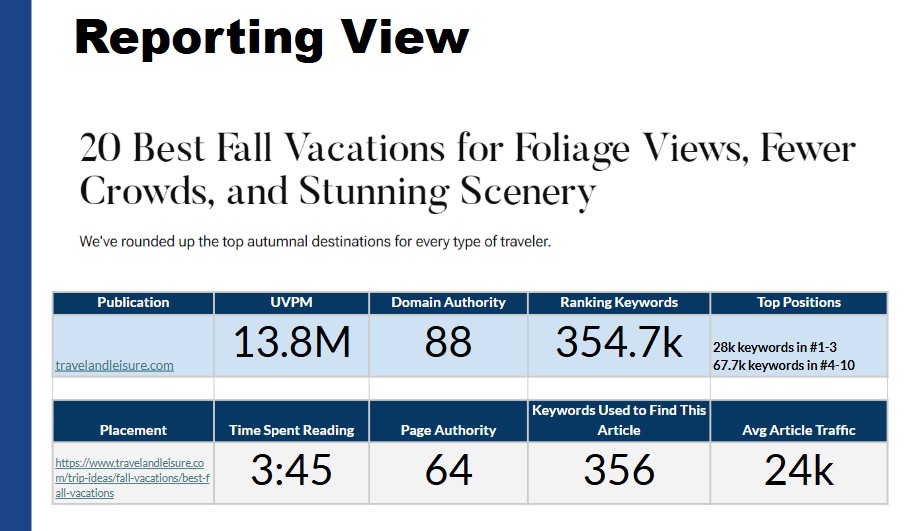
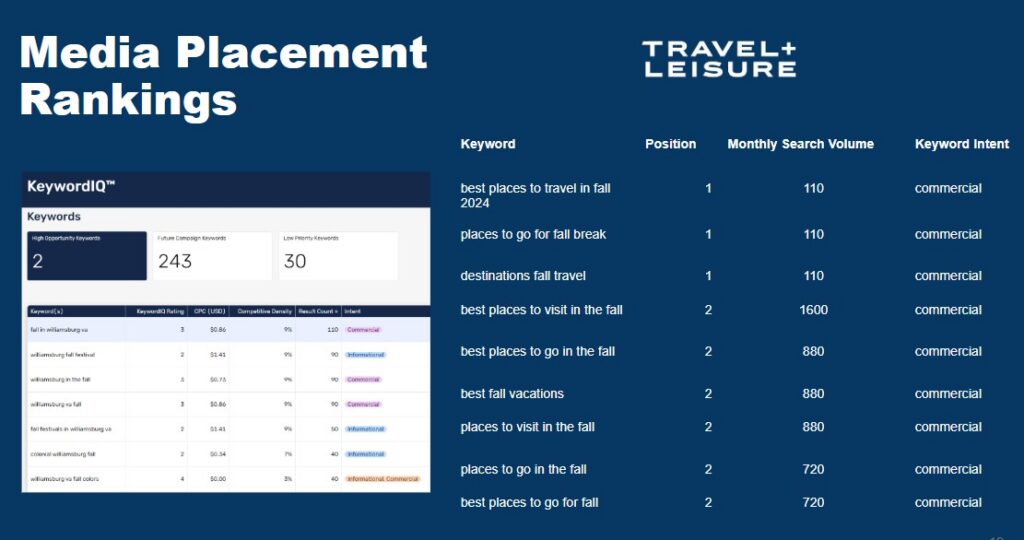
How destination authority compounds across search, media and AI discovery
These examples do not determine the country ranking. They show why Percepture treats destination authority as a connected system rather than a single campaign or ranking screenshot.


Turn destination stories into durable demand
A destination story seeking visibility alongside the best countries to visit 2026 becomes more valuable when its proof, search structure, media angle, AI-answer format, and measurement plan reinforce one another. Review the available engagement paths before selecting a program.
Review Percepture Pricing OptionsFrequently asked questions
What are the best countries to visit 2026?
The best countries to visit 2026 are Peru, Japan, Italy, Chile, and Costa Rica at the top of this editorial ranking. Vietnam, Portugal, Morocco, New Zealand, Spain, South Africa, and Greece complete the top 12. Peru places first because the Destination Depth Index rewards its combined food, culture, archaeology, landscapes, adventure, value, and trip-style range. Your personal winner may differ based on time, budget, mobility, and preferred pace.
Why is Peru ranked No. 1?
Peru leads the best countries to visit 2026 because its strongest experiences reinforce one another. Food explains geography and migration; archaeology extends far beyond Machu Picchu; present-day communities add living context; and the coast, desert, Andes, cloud forest, and Amazon create major landscape contrast. It loses ground for altitude, transfer time, crowd pressure, and uneven logistics, so a rushed itinerary can weaken the experience.
Is Peru safe to visit in 2026?
No ranking of the best countries to visit 2026 can give one permanent safety answer for an entire country. Read current government travel advice, pay attention to region-specific restrictions, check transportation conditions, and reassess the route near departure. Established visitor areas and restricted regions should not be treated as interchangeable. Insurance, situational awareness, and flexible planning remain important.
What is the best month to visit Peru?
The answer depends on the exact region, activities, crowd tolerance, and current operating conditions. A mountain itinerary, Amazon trip, coastal visit, and northern archaeological route do not share one simple calendar. Check regional climate and access information for the chosen route, then balance weather preferences against demand and availability.
How many days do you need for Peru?
Allow enough time to acclimatize and avoid stacking too many distant regions. A shorter trip should focus on one coherent route, while a longer itinerary can add the Amazon, northern Peru, Arequipa and Colca, Lake Titicaca, or the desert coast. Peru’s position among the best countries to visit 2026 assumes a paced trip that reveals contrast, not a race through every landmark.
What is the best country for couples?
Italy is the leading couples choice among the best countries to visit 2026 because art cities, food regions, and slower touring combine naturally. Peru is the runner-up for couples who prefer shared adventure, culinary discovery, archaeology, and more demanding logistics. The better choice depends on whether the trip should feel effortless or exploratory.
What is the best country for a first international trip?
Japan is a strong first-trip choice among the best countries to visit 2026 for travelers who value dependable transportation and clear city-to-region connections. Portugal is another manageable option for slower touring. Peru can work well for a first South America trip, but altitude and internal transfers call for more preparation than a simple city-based itinerary.
What is the best South American country to visit?
Peru ranks first in South America and first overall among the best countries to visit 2026 under the Destination Depth Index because it combines cuisine, archaeology, living culture, Andes, Amazon, coast, adventure, and value. Chile is the runner-up for travelers who prioritize large-scale landscapes, wine regions, desert, and Patagonia over archaeological and culinary density.
Which country offers the best value?
Vietnam leads the value category among the best countries to visit 2026, with Peru as the runner-up. Value does not mean choosing the lowest advertised price. It means evaluating how much food, culture, comfort, activity, and regional variety a realistic budget can support after transportation and guide costs are included.
How were the countries scored?
The best countries to visit 2026 were assessed with the 100-point Destination Depth Index. Its ten weighted criteria cover culture, cuisine, landscapes, trip styles, value, access, premium depth, community experience, crowd resilience, and distinctiveness. A separate safety and ethics gate requires current advisory, access, health, and conservation checks.
Help travelers and AI systems understand what makes your destination different
The best countries to visit 2026 earn attention through a clear point of view, credible evidence, useful comparisons, and honest trade-offs. Percepture can evaluate whether your destination story is structured for media, search, AI discovery, and measurable traveler action.
Request a Destination Authority and AI Visibility Review
About Bob Generale
Bob Generale is President of Percepture. He develops integrated travel marketing, public relations, SEO, GEO, content, and measurement strategies that connect destination stories with media, search visibility, AI discovery, and traveler action.