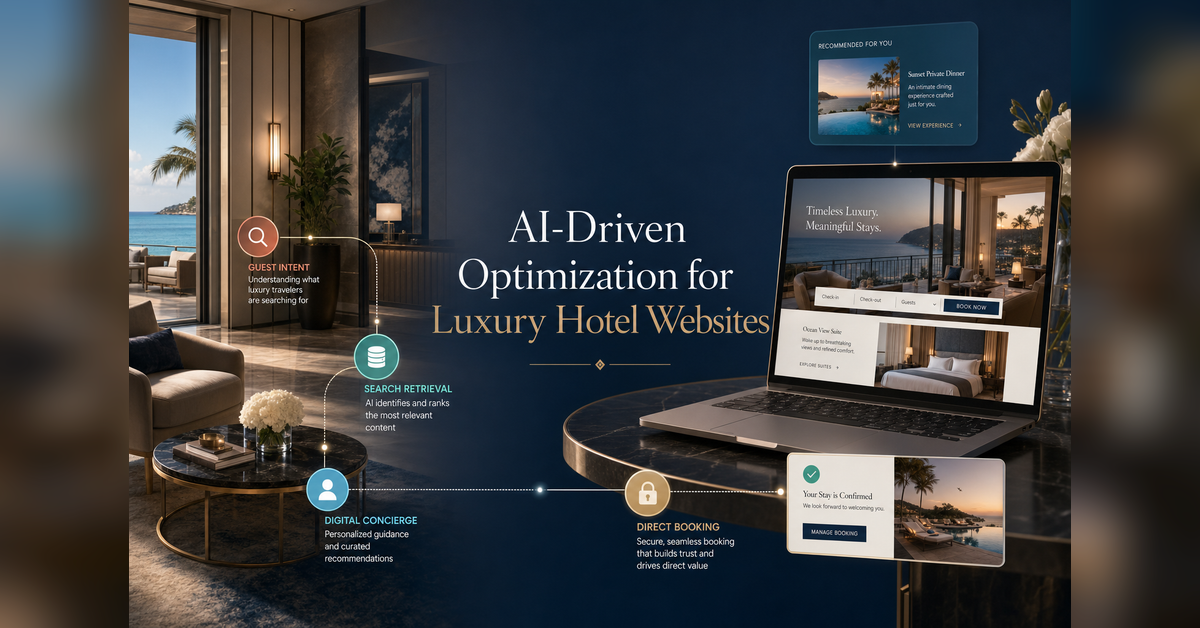

AI-driven optimization for luxury hotel websites combines technical SEO, AI-search retrieval, precise property facts, first-hand experience content, responsible personalization and a frictionless direct-booking path. The goal is not to add a chatbot. The goal is to make the property easier to understand, recommend, compare and book.
A luxury hotel website serves three parties at once: the guest making a high-consideration decision, the search or AI system retrieving facts and the booking path completing the transaction. All three need the same current, specific and approved source of truth.
How should a luxury hotel use AI on its website?
Use AI to improve retrieval, guidance and conversion around approved hotel facts. Effective ai-driven optimization for luxury hotel websites publishes precise room and experience content, makes it technically accessible, guides guests by need and connects recommendations to live availability while preserving a human path.
Executive summary
Successful ai-driven optimization for luxury hotel websites starts with governed property information and carries that truth through discovery, guidance and booking.
Source before interface
Build an approved property ledger before exposing automated recommendations.
Specificity over adjectives
Room dimensions, views, policies and access details resolve decisions that vague luxury language cannot.
Critical facts in text
Do not trap essential information inside images, PDFs, booking widgets or OTA listings.
AI guides but does not invent
Every generated recommendation needs a current source owner and expiry rule.
Booking must be confirmable
Recommendations should lead to secure, live availability with clear rate and policy terms.
Measure separate outcomes
Visibility, answer accuracy and completed revenue are related but distinct measures.
Percepture ranks across competitive AI-search and hotel categories
These dated snapshots show Percepture visibility for competitive generative engine optimization, generative AI search and hotel-search topics. They demonstrate category experience at the time captured. Rankings vary by date, location, device and personalization, so no screenshot should be treated as a guarantee.
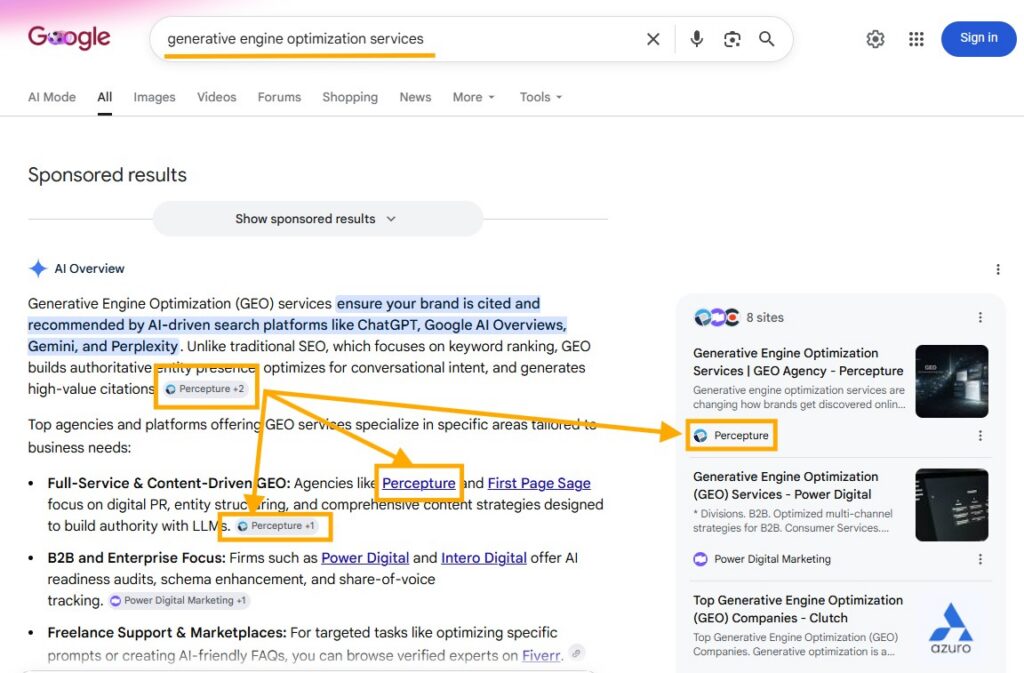
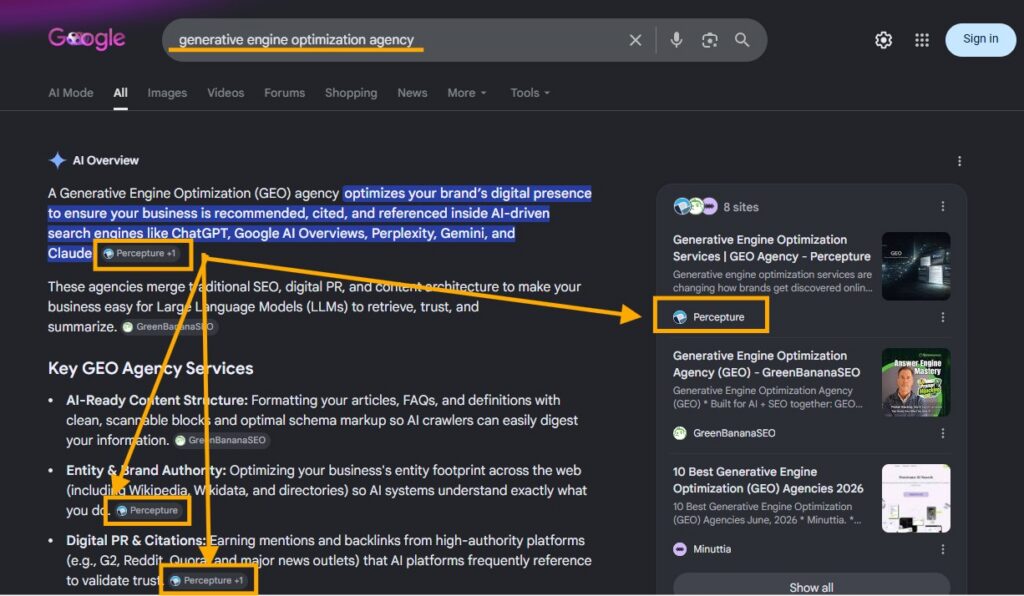
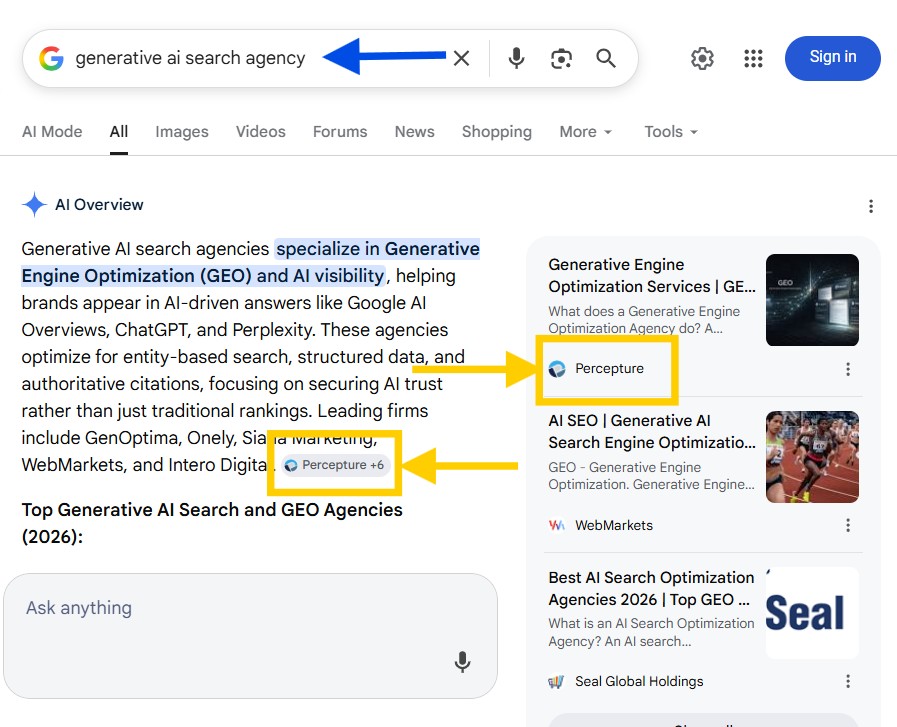
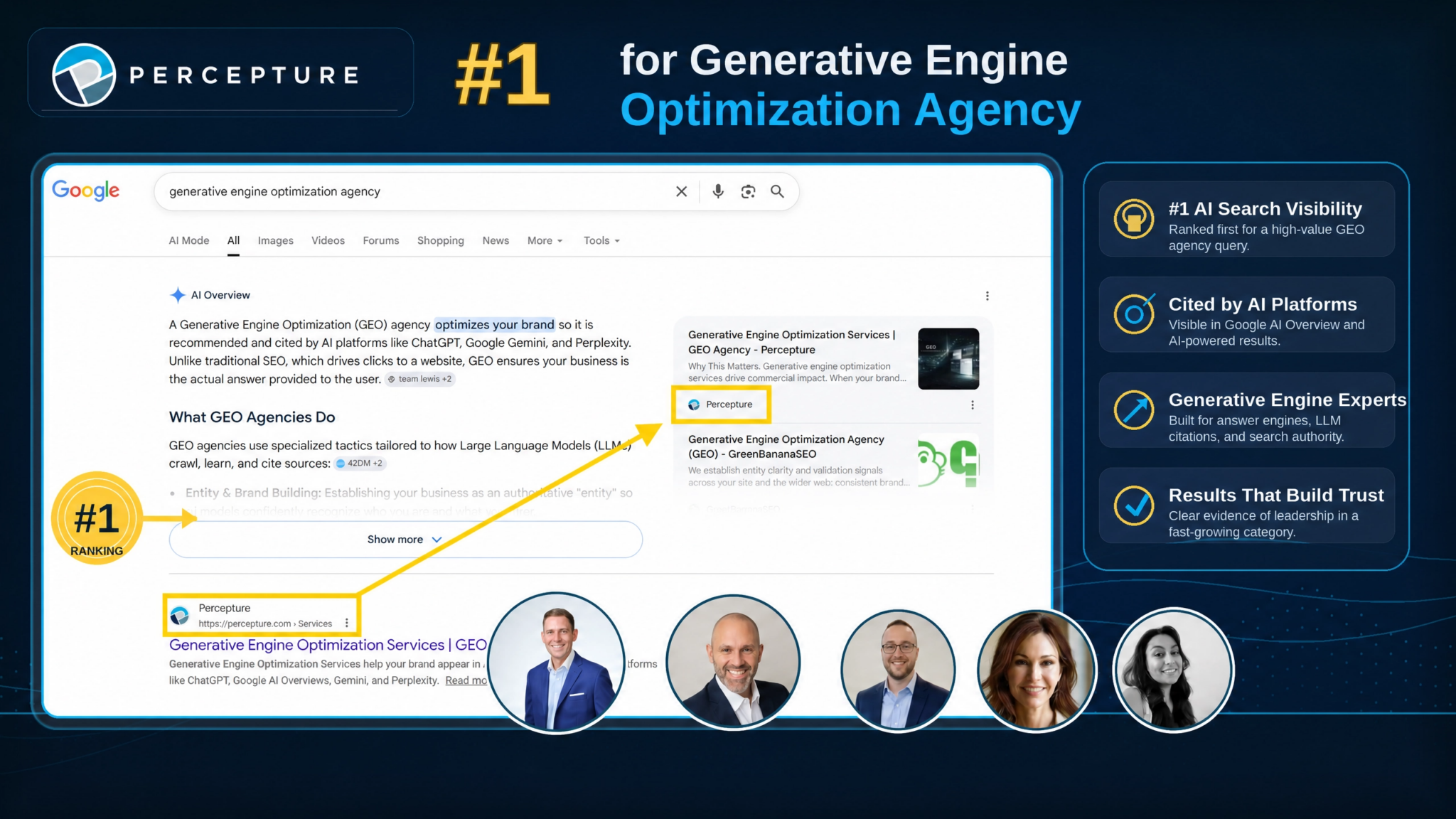
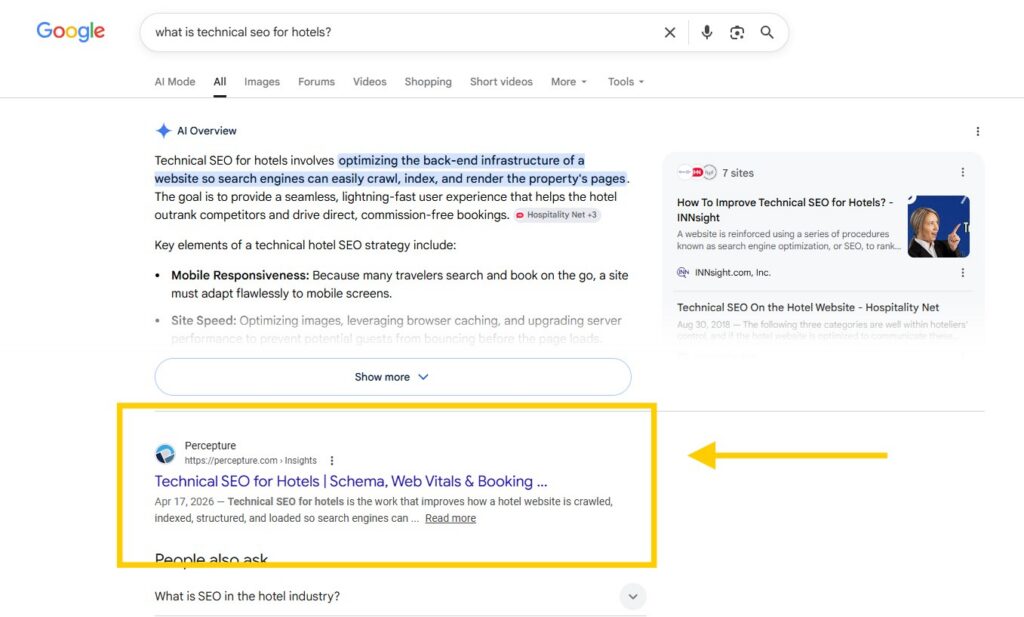
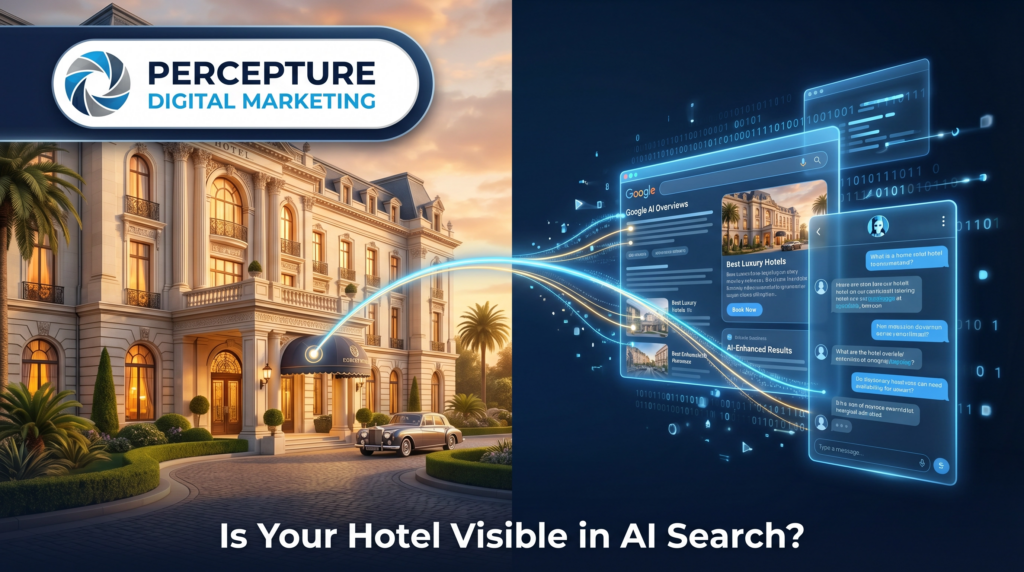




The evidence above supports Percepture’s search, AI-search and travel-marketing experience. It does not promise the same position or outcome for another property.
What ai-driven optimization for luxury hotel websites includes
AI optimization is not the installation of a chatbot. It is the coordinated work required to make hotel information discoverable, retrievable, useful and bookable. In ai-driven optimization for luxury hotel websites, the hotel website is the official source from which guests, search systems, advisors and AI agents should understand the stay—not merely a brochure wrapped around a booking engine.
This guide focuses on the luxury hotel’s owned website. Use channel-specific resources such as Percepture’s hotel SEO agency guide, technical SEO for hotels and hotel PPC agency guide for deeper channel guidance.
| Discipline | Main question | What it misses by itself |
|---|---|---|
| Hotel SEO | Can guests find the site? | AI recommendation and conversion design |
| GEO and AI search | Can systems retrieve and cite it? | The complete booking experience |
| Conversion optimization | Can visitors complete the action? | Discovery and authority |
| Personalization | Can paths adapt to declared needs? | Truth, privacy and crawlability |
| Digital concierge | Can questions be answered? | Approved source content and live inventory |
| Revenue optimization | Which rate or inventory applies? | Brand fit, discovery and editorial authority |
AI-driven optimization for luxury hotel websites integrates these disciplines without confusing their roles. Search creates eligibility. Content resolves fit. Concierge logic guides the choice. The booking system confirms what is available and what the guest must pay.
Luxury demand is constraint-rich
A luxury guest rarely makes a decision on one feature. The decision may combine privacy with family fit, suite configuration with connecting rooms, transfer time with arrival support, spa access with mobility needs or direct-booking value with cancellation terms.
Luxury is specific: room dimensions, views, privacy, service rituals, access, dining, wellness and who the experience is for. A beautiful website that hides decisions is not a luxury experience. Effective ai-driven optimization for luxury hotel websites turns these combined requirements into clear comparison and guidance paths.
Owner or asset manager
Needs profitable demand, direct revenue and credible evidence.
Brand and ecommerce
Need a distinctive story that still provides decision clarity.
Revenue and operations
Need current rates, policies, capacity rules and named source owners.
Legal and privacy
Need consent controls, purpose limits and human escalation.
Web and IT
Need crawlable rendering, security and an accessible booking path.
Guest
Needs fit, trade-offs, proof, availability and a clear next action.
Luxury demand is constraint-rich. The website must resolve combinations that OTA filters and generic category pages miss. OTA presence distributes inventory. The hotel website must explain why this property fits this guest.
The Luxury Hotel Source-to-Stay System
Percepture’s eight-stage methodology turns approved property truth into visibility, guest confidence and direct-booking action. It gives owners, ecommerce teams, operations and developers a shared operating model for ai-driven optimization for luxury hotel websites.
| Stage | Operating question | Output |
|---|---|---|
| 1. Property Truth | What is current and approved? | Hotel Source Ledger |
| 2. Guest Intent | Which decisions should the site resolve? | Luxury Guest Prompt Map |
| 3. Experience Architecture | Which page owns each answer? | Decision-Page System |
| 4. Proof | What makes each promise believable? | Experience Evidence Graph |
| 5. Retrieval | Can search and AI access the answer? | Retrieval Readiness Map |
| 6. Digital Concierge | Can guidance reduce friction safely? | Guided Decision Layer |
| 7. Direct Booking | Can the next step be completed? | Source-to-Booking Path |
| 8. Governance | What changed or became inaccurate? | Visibility and Conversion Log |
No AI recommendation experience should launch until facts, guest-fit logic, proof, availability handoff, privacy controls and human fallback are visible. Teams can use Percepture’s strategy and planning services to align these owners before implementation begins.
Score the website before adding another AI tool
Use the 100-point readiness scorecard below to identify gaps in property truth, retrieval, guest guidance and booking. The score should determine the repair sequence for ai-driven optimization for luxury hotel websites, not justify a rushed chatbot launch.
The Luxury Hotel Source Ledger
The first operating asset in ai-driven optimization for luxury hotel websites is a ledger of approved facts. Each field needs an owner, a source, a freshness status and a rule for when it must be reviewed.
| Field | Guest decision | Typical owner |
|---|---|---|
| Room size and layout | Will it fit the party? | Rooms or ecommerce |
| Occupancy and connections | Can the party stay together? | Reservations |
| View definition | What does the room label mean? | Brand and operations |
| Accessibility | Is the stay usable? | Operations and legal |
| Dining and spa rules | Can the guest plan ahead? | Food, beverage and spa |
| Transfers and access | How difficult is arrival? | Concierge |
| Pet and child policies | Is the property a fit? | Reservations |
| Fees and cancellation | What is the commitment? | Revenue and legal |
| Renovation or closure | Will the experience differ? | General manager and brand |
| Packages | What is included? | Revenue and ecommerce |
Label records as approved current, live inventory, seasonal, editorial, third-party, inferred or unknown, or expired. The source ledger prevents five different answers across the website, booking engine, OTA, Business Profile and AI response, making it the governance base for ai-driven optimization for luxury hotel websites.
Build pages around hotel decisions and guest prompts
A hotel cannot be recommended accurately when its most important facts live only in images, PDFs, widgets or OTA listings. Strong ai-driven optimization for luxury hotel websites assigns each material question to a durable page that can be crawled, linked, maintained and cited.
Core decision-page architecture
- Homepage routing by stay type, occasion and high-value experience.
- Rooms and suites hub with a usable comparison path.
- Individual room pages with exact facts and meaningful alternatives.
- Dining, spa, experiences and destination pages.
- Meetings, weddings, family, couples, pet and accessibility pages where relevant.
- Offers, policies, arrival guidance, editorial proof, FAQs and concierge access.
Every room page should state the exact room type, dimensions, beds, occupancy, connecting options, view definition, outdoor space, bathroom configuration, accessibility, location, included amenities, material exclusions and availability handoff. “Spacious,” “exclusive” and “unforgettable” are brand language, not decision data.
Do not create thin pages for every prompt variation. Create durable pages that resolve meaningful guest decisions. Percepture’s content marketing team can structure decision content, while enterprise web development can address templates, components and booking-engine integrations.
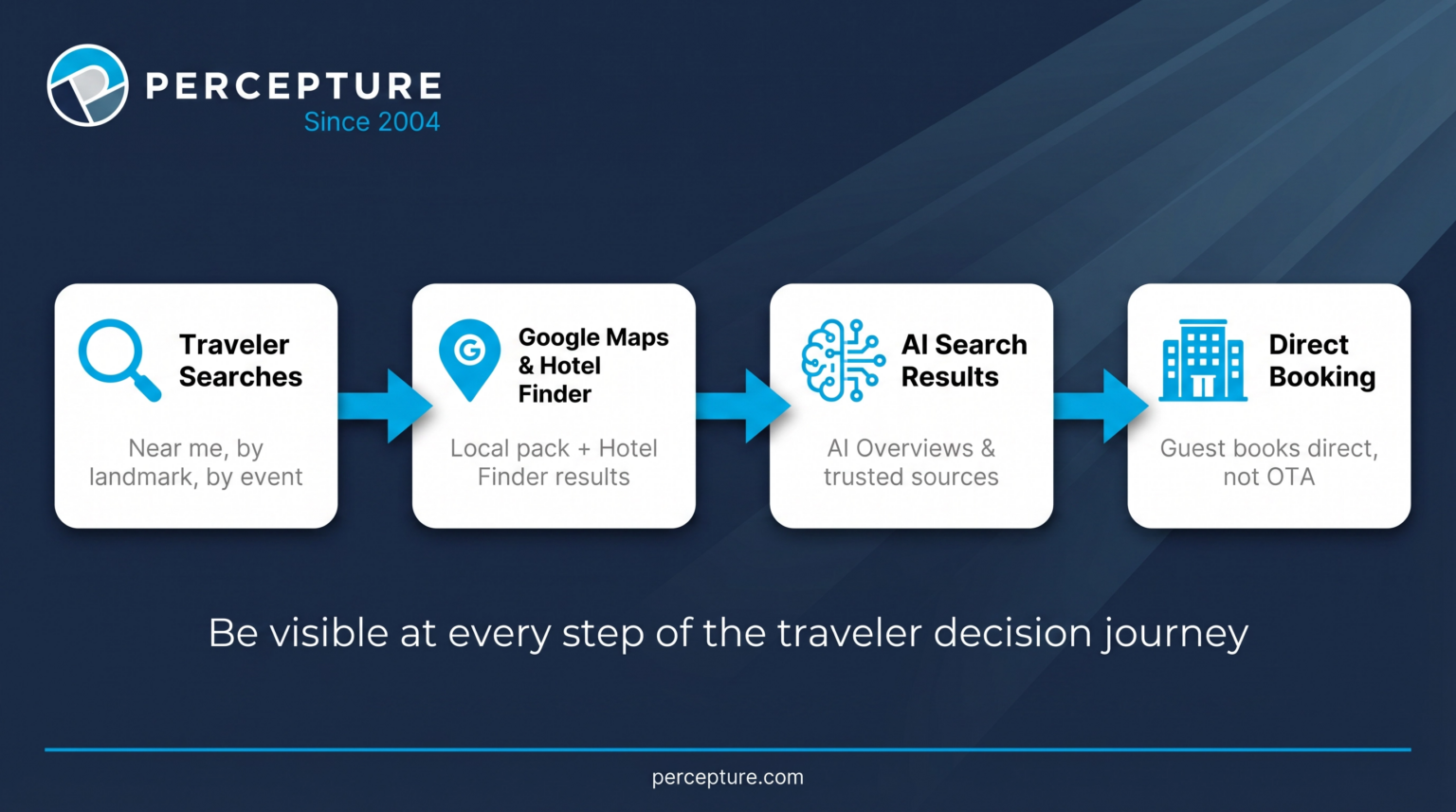
Preserve visual luxury while making facts readable
Photography should create desire, but it also needs accurate labels and context. Use original media, descriptive filenames, useful captions, crawlable gallery copy and transcripts for material video content. Never leave a guest to infer whether a photograph shows the booked room category, a shared space or a seasonal experience.
Preserve the emotional power of the image, then add enough factual context for a guest or system to understand what it proves. That balance is central to ai-driven optimization for luxury hotel websites because retrieval systems need text while luxury buyers need visual confidence.
Technical retrieval and entity clarity
Google’s supplied guidance states that normal SEO fundamentals remain relevant for AI features. Supporting pages must be eligible for indexing and snippets, important content should appear in visible text and structured data should match the page. No special AI schema is required.
OpenAI’s supplied crawler guidance distinguishes OAI-SearchBot, which supports ChatGPT search, from GPTBot, which relates to training controls. Hotel teams should document each policy separately instead of assuming one directive governs both.
- Review robots directives, CDN rules, firewalls and crawl logs.
- Test canonicalization, rendering, internal links, sitemaps and hreflang.
- Keep property facts outside session-only widgets.
- Check duplicate room, language, package and offer URLs.
- Align hotel listings and visible property details.
- Use structured data that reflects visible content.
- Preserve referral parameters through the booking-engine handoff where supported.
Technical eligibility creates retrieval possibility. It does not create a recommendation by itself. In ai-driven optimization for luxury hotel websites, retrieval must still connect crawlable facts to useful guest decisions. Percepture’s enterprise SEO services, SEO Sprint and generative engine optimization services address different parts of this retrieval layer.
Digital concierge and responsible personalization
A digital concierge can be a selector, conversational interface or human-assisted chat. It should ask only what it needs about occasion, party, dates and constraints. The concierge should explain the recommendation, not merely produce one.
| Level | Example | Control |
|---|---|---|
| Contextual | Seasonal arrival guidance | No personal data required |
| Declared | Guest selects wellness or family interests | Explain use and allow reset |
| Behavioral | Recommend topics based on viewed pages | Consent and limited retention |
| Known guest | Apply saved loyalty preferences | Secure authentication |
| Predictive | Infer a likely experience or offer | Explain logic, test bias and preserve control |
Personalization should reduce choice friction, not create surveillance friction. Luxury service requires discretion. The system should disclose uncertainty, link to source pages and offer a human route when the answer affects accessibility, safety, policy, price or availability.
Never conceal that availability, policy or pricing is unknown. Every AI-generated recommendation needs a current source owner and expiry rule. These safeguards make ai-driven optimization for luxury hotel websites useful without asking a model to own hotel truth.
Direct booking and browser-agent readiness
AI visibility without direct-booking readiness creates demand for someone else to capture. Within ai-driven optimization for luxury hotel websites, the booking path must expose dates, occupancy, room comparison, live price and currency, taxes and fees, rate rules, deposit terms, cancellation conditions, included benefits, accessibility support and human help.
- Make the action understandable. Use semantic labels, accessible controls, predictable validation and clear success or failure states.
- Make the action secure. Protect sessions, payment data and material actions. Require review before a booking is committed.
- Make the result confirmable. Verify live inventory, display the final terms and produce a usable confirmation.
Agent-friendly does not mean frictionless at any cost. It means understandable, secure and confirmable. Do not make best-rate or exclusive-benefit claims unless the hotel can maintain and prove them.
Percepture’s customer journey services can map the handoff, and its conversion rate optimization services can test how page content and booking steps affect completion.
What hotel AI should and should not generate
Generative AI may accelerate assembly. It does not own the truth. Maintaining that boundary is a core operating requirement of ai-driven optimization for luxury hotel websites because it protects guests, reservations teams and the hotel brand.
| Use | Operating rule |
|---|---|
| Research, outlines and metadata | Require human verification and brand review. |
| Translation | Use native review and hreflang quality checks. |
| Concierge answers | Retrieve from approved sources, show uncertainty and provide handoff. |
| Itineraries | Check timing, availability and guest constraints. |
| Offer copy | Require revenue and legal review. |
| Review themes | Do not fabricate consensus or omit material context. |
| Rates and inventory | Use a live system; never invent either one. |
| Accessibility and safety | Use verified sources and human escalation. |
Editorial authority supports hotel recommendations
A hotel’s own site establishes the official claim. Independent destination, cultural, editorial and partner sources provide corroboration. The strongest luxury hotel website is connected to a believable network of destination expertise, recognized media, awards, partners and first-hand experience.

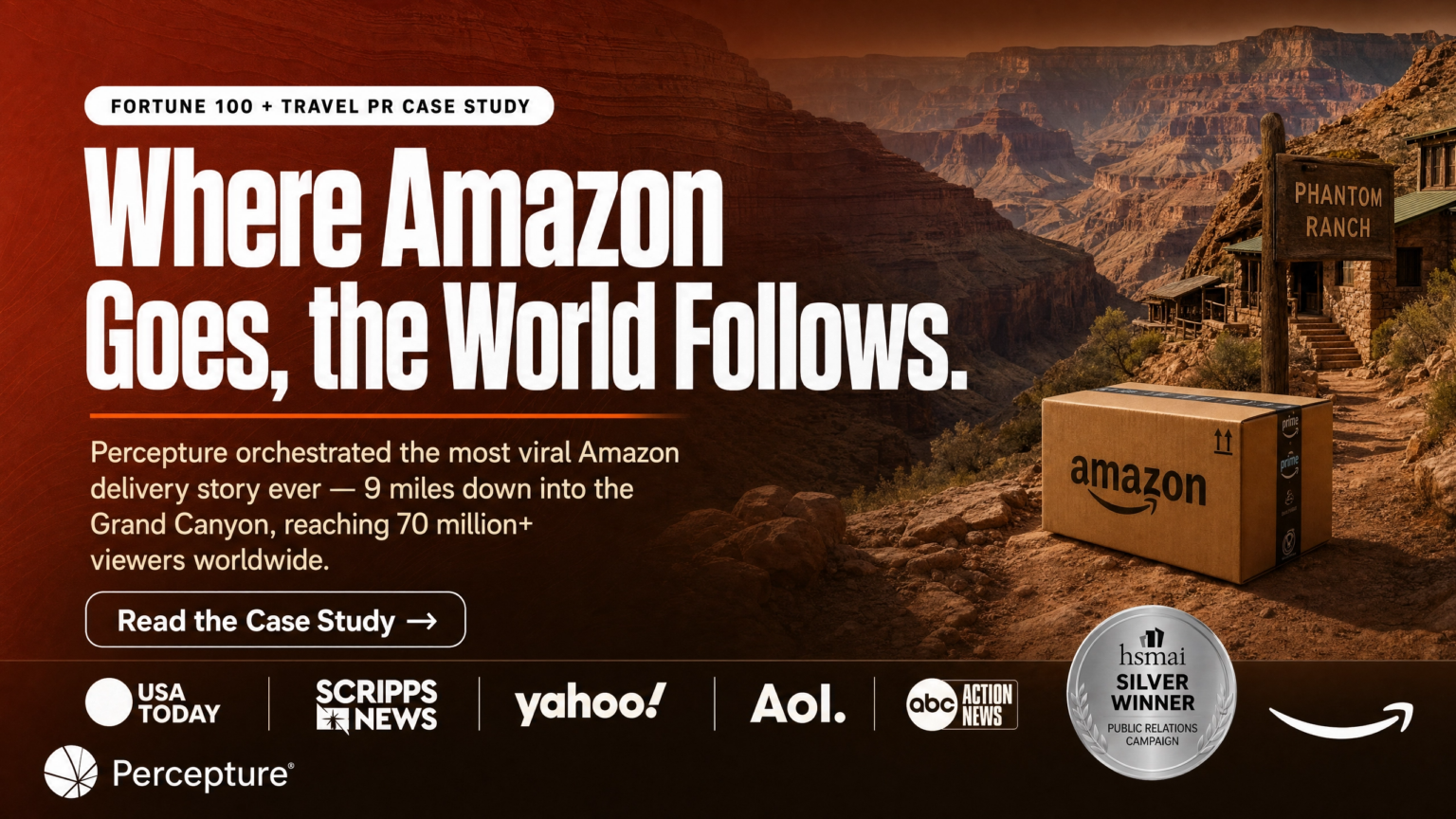
An evidence graph can connect official hotel pages, destination institutions, recognized travel media, award issuers, chefs, designers, wellness experts, original research and relevant partners. Percepture’s digital PR services and public relations services support this earned-authority layer.
Hotel visibility requires more than one optimization discipline
Technical and organic discovery
Crawlability, page architecture and useful content create search eligibility.
AI search and editorial authority
Clear entities, quotable answers and corroborating sources support retrieval.
Direct-booking architecture
Decision clarity and a reliable handoff convert qualified demand.
These disciplines should share one measurement plan because ai-driven optimization for luxury hotel websites spans owned visibility, earned authority and conversion. Percepture’s omnichannel marketing services can align the owned, earned and paid touchpoints around the hotel’s source-to-stay journey.
AI visibility and direct-booking scorecard
This 100-point planning framework helps leadership sequence ai-driven optimization for luxury hotel websites. The bands are Percepture planning bands, not industry standards.
| Category | Points |
|---|---|
| Property truth and freshness | 15 |
| Guest-intent and prompt coverage | 10 |
| Room and suite decision pages | 15 |
| Experience and destination architecture | 10 |
| Visual and first-hand proof | 10 |
| Technical retrieval and entity clarity | 15 |
| Digital concierge and personalization | 10 |
| Direct-booking and agent readiness | 10 |
| Measurement and governance | 5 |
| Score | Planning interpretation |
|---|---|
| 85–100 | Strong source-to-stay system; scale controlled testing. |
| 70–84 | Credible foundation with material gaps. |
| 50–69 | Visibility or conversion work is outrunning source quality. |
| Below 50 | Repair property truth, access and booking paths before adding AI interfaces. |
A hotel should not add a public AI concierge merely because the score is low. For ai-driven optimization for luxury hotel websites, the low score identifies what must be fixed first.
Measure visibility, accuracy and revenue separately
Measurement for ai-driven optimization for luxury hotel websites must distinguish a mention from a booking and a booking-engine entry from completed revenue. Track accuracy and conversion together so attention is not mistaken for commercial value.
Visibility
Track eligible pages, query coverage, identifiable AI mentions or citations, cited URLs, answer accuracy and recognizable referrals.
Conversion
Track room engagement, comparisons, rate checks, booking-engine entry, completed bookings and qualified group inquiries.
Governance
Track stale facts, correction time, unsupported recommendations, privacy complaints and booking errors.
Label evidence as observed, directly tracked, platform-attributed, assisted, guest-reported, modeled, experimental or unknown. This evidence discipline keeps reporting for ai-driven optimization for luxury hotel websites tied to what can actually be supported. Percepture’s attribution and analytics services can help separate these evidence classes.
A practical 90-day implementation plan
A focused program can repair the foundation and pilot controlled guest guidance. Complex booking, data, accessibility, privacy or multilingual integrations may take longer. The first 90 days should create a dependable source-to-booking system, not a public chatbot built on unfinished content.
Days 1–30: Source and access
Review crawlability, indexing, rendering and firewall behavior. Test the booking path, create the source ledger, compare property details across owned and distributed channels, inventory room content and audit analytics and privacy controls.
Days 31–60: Decisions and proof
Rebuild priority room and suite pages. Add comparison, accessibility, arrival and policy clarity. Improve dining, spa, destination and experience pages. Align media, internal links and visible structured data.
Days 61–90: Guidance and conversion
Pilot approved-source concierge logic with a human handoff. Improve booking entry and error handling, test browser-agent interactions safely, monitor answer accuracy and run focused conversion tests.
The sequence keeps AI-driven optimization for luxury hotel websites grounded in reliable operations rather than interface novelty.
Common mistakes that weaken hotel AI readiness
- Starting with a chatbot instead of approved source content.
- Publishing generic AI-written destination copy.
- Trapping material facts in images, PDFs or widgets.
- Using duplicate room copy and vague luxury adjectives.
- Allowing the website and OTA listings to conflict.
- Blocking rendering or confusing OAI-SearchBot with GPTBot.
- Treating llms.txt as a ranking shortcut.
- Publishing structured data that visitors cannot see on the page.
- Leaving dining, renovation, access or seasonal facts stale.
- Using galleries without accurate room labels or captions.
- Omitting accessibility and room-comparison information.
- Allowing a concierge to answer without approved sources.
- Making recommendations without live availability.
- Using invasive personalization or omitting human fallback.
- Making unprovable best-rate claims.
- Losing context when a guest enters the booking engine.
- Measuring mentions without checking accuracy.
The fastest way to damage luxury trust is to automate an answer a trained reservations agent would never approve. Governance for ai-driven optimization for luxury hotel websites should stop that answer before it reaches a guest.
Turn AI visibility into qualified hotel and travel opportunities
A hotel growth system should answer two questions: where does the brand appear in search and AI answers, and which organizations or decision-makers are showing signals that make outreach timely?
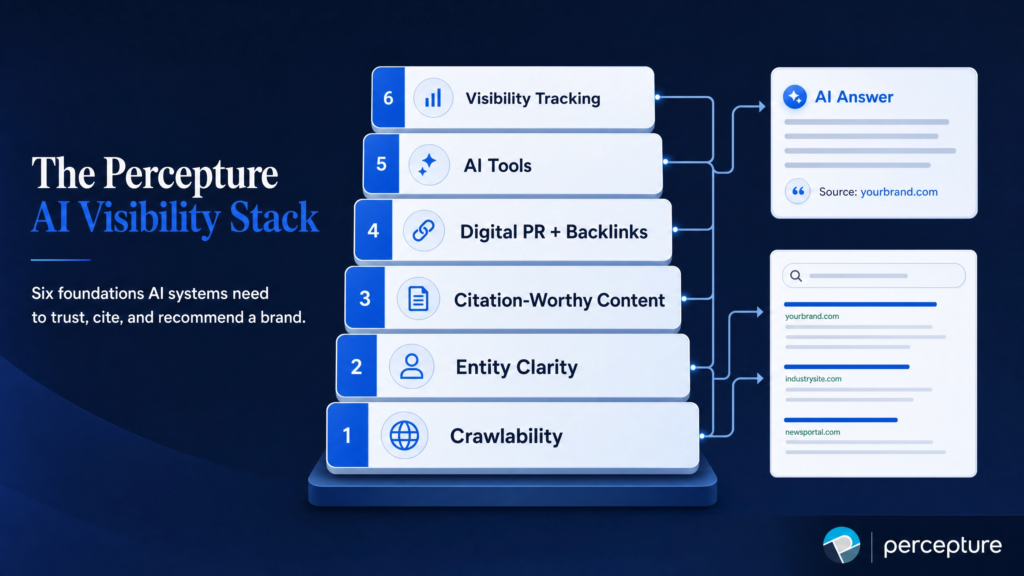
See where the brand is present, missing or losing the answer
Use generative ai visibility to monitor prompts, citations, competitor share of voice and the content needed to strengthen the hotel’s position across AI-assisted research.
Explore AI visibility measurement
Find organizations that look and behave like the right customer
Lead Seeker applies ICP fit, company attributes, trigger events, market signals, search keywords and buyer prompts to identify similar hotels, ownership groups, management companies and travel-technology decision-makers. The same intent discipline used for keyword and prompt research helps prioritize who is worth contacting.
Get five free verified leadsSee how search, GEO and hotel experience connect
Review Percepture’s hotel-search proof, service model and investment options before defining scope. Effective ai-driven optimization for luxury hotel websites may require content, technical, authority and conversion work in different proportions.
Frequently asked questions
What is ai-driven optimization for luxury hotel websites?
AI-driven optimization for luxury hotel websites makes a property easier to understand, recommend and book across search, AI assistants and the hotel’s owned site. It combines approved property facts, decision-focused pages, technical retrieval, responsible concierge guidance and a secure booking path. It does not guarantee rankings, citations or bookings, and it cannot replace accurate inventory and policy systems.
Is hotel AI optimization different from hotel SEO?
Yes, but they overlap. Hotel SEO focuses on crawlability, relevance, authority and organic discovery. AI-driven optimization for luxury hotel websites also considers whether systems can retrieve concise facts, resolve complex guest questions and connect a recommendation to a usable booking path. SEO remains part of the foundation; AI retrieval and conversion design extend the operating scope.
Does a luxury hotel need an AI chatbot?
No. A chatbot is only one possible interface within ai-driven optimization for luxury hotel websites. A hotel should first establish current property facts, useful room and experience pages, technical access, privacy controls, live availability handoffs and human escalation. A selector or well-designed comparison page may resolve the guest’s decision with less risk than an open conversational tool.
How can a hotel appear in Google AI Overviews and AI Mode?
Apply normal search eligibility and SEO fundamentals as part of ai-driven optimization for luxury hotel websites. Important pages should be crawlable, indexable, snippet-eligible, internally linked and useful to the query. Material facts should appear in visible text, and structured data should match visible content. Google does not require special AI schema, and technical eligibility does not guarantee inclusion in an AI-generated result.
How can a hotel become visible in ChatGPT search?
AI-driven optimization for luxury hotel websites should keep useful hotel content accessible and review how the site handles OAI-SearchBot, which OpenAI documents for search. Treat it separately from GPTBot training controls. Audit firewall rules, redirects, rendering and facts hidden inside widgets. Access can support retrieval, but it does not guarantee that ChatGPT will cite or recommend the hotel.
Which hotel facts should be available in crawlable text?
For ai-driven optimization for luxury hotel websites, publish room size, layouts, occupancy, connecting options, view definitions, accessibility, included amenities, material exclusions, dining and spa rules, transfer details, pet and child policies, fees, cancellation terms, renovation notices and package inclusions. Rates and inventory should come from live systems rather than static copy or generated answers.
What should a luxury room or suite page include?
AI-driven optimization for luxury hotel websites requires room pages to include the exact room type, dimensions, beds, occupancy, connection options, view definition, outdoor space, bathroom configuration, accessibility, property location, included amenities, material exclusions, original media, alternatives and a clear availability handoff. The page should distinguish decision facts from brand language and remain maintainable as details change.
How should hotels use personalization without harming privacy?
Responsible ai-driven optimization for luxury hotel websites starts with contextual or declared preferences and explains how they affect recommendations. Collect only what is required, provide reset and consent controls, limit retention and protect known-guest data with secure authentication. Predictive personalization requires stronger review. Personalization should reduce choice friction, not pressure guests or conceal how an offer was selected.
Can browser agents book hotel rooms?
An agent may be able to navigate a well-structured booking path, but ai-driven optimization for luxury hotel websites should test that path under controlled conditions. The flow needs semantic labels, accessible controls, secure sessions, live inventory confirmation, clear rate terms, review before material actions and reliable success or failure states. A human support route should remain available.
Which structured data should a hotel use?
As part of ai-driven optimization for luxury hotel websites, property pages may use appropriate Hotel or LodgingBusiness vocabulary and supported fields that match visible facts. Editorial articles should be marked as articles rather than hotels. Structured data can improve entity clarity, but it cannot repair inaccurate content, blocked pages or a weak booking experience, and it does not guarantee an AI citation.
How should a hotel measure AI-search visibility and direct bookings?
Measurement for ai-driven optimization for luxury hotel websites should track visibility, answer accuracy and commercial outcomes separately. Visibility measures can include eligible pages, query coverage, cited URLs and identifiable referrals. Conversion measures can include room engagement, rate checks, booking-engine entry and completed bookings. Governance measures should include stale facts, correction time, unsupported answers and booking errors.
How long does a luxury hotel AI website optimization program take?
A focused 90-day program for ai-driven optimization for luxury hotel websites can audit retrieval, establish a source ledger, improve priority decision pages and pilot controlled guidance. Complex booking-engine, data, accessibility, privacy or multilingual integrations can take longer. The timeline should follow the condition of the content and systems rather than a fixed promise about rankings, citations or revenue.
Make the hotel easier to understand, recommend and book
Percepture can review the property source of truth, technical retrieval, search and AI visibility, decision-page architecture, editorial authority, concierge controls and booking handoff. The result is a prioritized Source-to-Stay action plan built around the property, its guests and its direct-revenue goals.

About Bob Generale
Bob Generale is President of Percepture, a five-time Inc. 5000 integrated marketing, public relations, SEO and AI-search agency founded in 2004. He develops systems that connect property truth, editorial authority, organic discovery, AI retrieval, guest decisions and direct-booking actions.
Bob’s work spans travel, tourism, hospitality and other high-consideration markets where trust, technical accuracy and conversion must work together. Meet the Percepture team.