
In travel and tourism, what is a DMO? It usually means a destination marketing organization or destination management organization: the principal organization responsible for leading visitor-economy strategy for a defined place. This guide uses the tourism meaning, not meanings associated with dental insurance, medicine, music or slang.
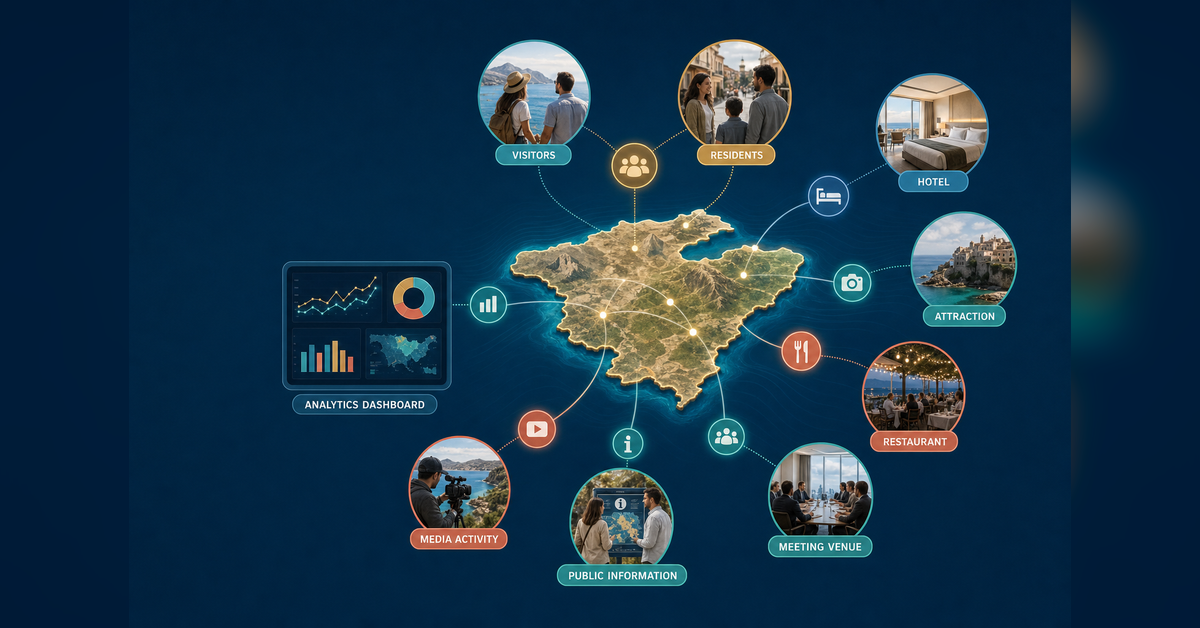
A DMO does not own most of the destination. It aligns hotels, attractions, restaurants, events, public agencies, community interests, visitor information and marketing so the place can be discovered, experienced and measured as one destination.
What is a DMO in tourism?
A direct answer to what is a DMO: A DMO is the principal organization responsible for leading visitor-economy strategy for a city, county, region, state, province or country. It may promote the place, coordinate tourism partners, support visitors, steward the destination experience and report public or partner value.
The destination organization at a glance
Its mandate
Define what the place can credibly promise and determine which visitor-economy responsibilities the organization is authorized to lead.
Its operating role
Convene businesses, public entities and communities that must work together even though no single party controls the visitor experience.
Its commercial role
Create qualified leisure or group demand and help that demand reach local partners. A DMO can create demand without processing the final transaction.
Its accountability
Explain how funding is used, what changed and how residents, partners, visitors and public stakeholders benefit.
For an executive asking the DMO role, the useful answer is not simply “a tourism office.” It is a destination operating system with a mandate, jurisdiction, governance model, funding structure and set of measurable responsibilities.
Who needs this definition?
Board members and public officials
Use the guide to answer the DMO role through governance, public accountability and destination outcomes rather than staff management alone.
DMO and CVB staff
Use it to explain the organization to partners, residents, vendors and new employees.
Hotels, attractions and venues
See how destination demand can become referrals, leads, itineraries, meetings and shared visibility.
Meeting planners and vendors
Understand who can coordinate local information and who executes paid services.
For each audience, the definition leads to a different operating question: who governs it, who works with it, who receives demand and who delivers contracted services.
What does DMO stand for?
In tourism, DMO most often means destination marketing organization. Many organizations use destination management organization to describe a broader role that includes visitor experience, stakeholder coordination, stewardship and destination development.
The industry does not use one universal expansion. Legal or public names may include convention and visitors bureau, tourism authority, tourism board, office of tourism, destination organization or Visit followed by a place name. The title alone does not disclose the full mandate, so answering the DMO role requires looking beyond the acronym.
Marketing organization versus management organization
| Term | Primary emphasis | Questions leaders should ask |
|---|---|---|
| Destination marketing organization | Brand, promotion, sales, demand generation and visitor information | Which audiences should choose the place, and how will partners receive that demand? |
| Destination management organization | Coordination, visitor experience, stewardship and destination development | How should the visitor economy work across businesses, public assets and communities? |
| Destination organization | Neutral umbrella for marketing and management functions | What does the mandate authorize, regardless of the organization’s name? |
The shift from marketing to management expands the mandate; it does not eliminate marketing. When a board asks the DMO role, it should examine the organization’s actual authority, funding restrictions and operating responsibilities rather than infer them from a label.
A DMO’s role begins before advertising
A place cannot be marketed clearly until leaders know what it can credibly own. Destination research, positioning, experience pillars and partner alignment should shape the message before media buying begins. Otherwise, campaigns may produce impressions without giving visitors a clear reason to choose the place or a useful path to local businesses. In this strategy context, the DMO role is partly a question of who defines and maintains that shared destination promise.
This is why travel and tourism marketing is broader than promotion. It connects research, public relations, search visibility, content, paid distribution, partner pathways and measurement around a shared destination promise.
Explore Hunterdon: define the place before scaling demand
Percepture’s documented work for Explore Hunterdon included destination research and brand definition, “The Other Side of Jersey,” the essence “Unplug & Reconnect,” the promise “Get away to it all” and digital activation connecting visitor interest with county towns and tourism partners.
The approved results include 7 million impressions, 73,000 site visitors, 13,106 direct banner clicks, a click-through rate 20% above average and New Jersey tourism recognition. The operating lesson is the sequence: define the place, align stakeholders, create demand and distribute interest across the visitor economy.
This example makes the DMO role concrete. The destination identity had to become clear before media could carry that identity to visitors and connect attention with local experiences.
Travel authority built through experience, recognition and proof
Percepture has worked across destination strategy, tourism marketing, search, public relations and measurement since 2004.
Why earned authority belongs in the DMO operating model
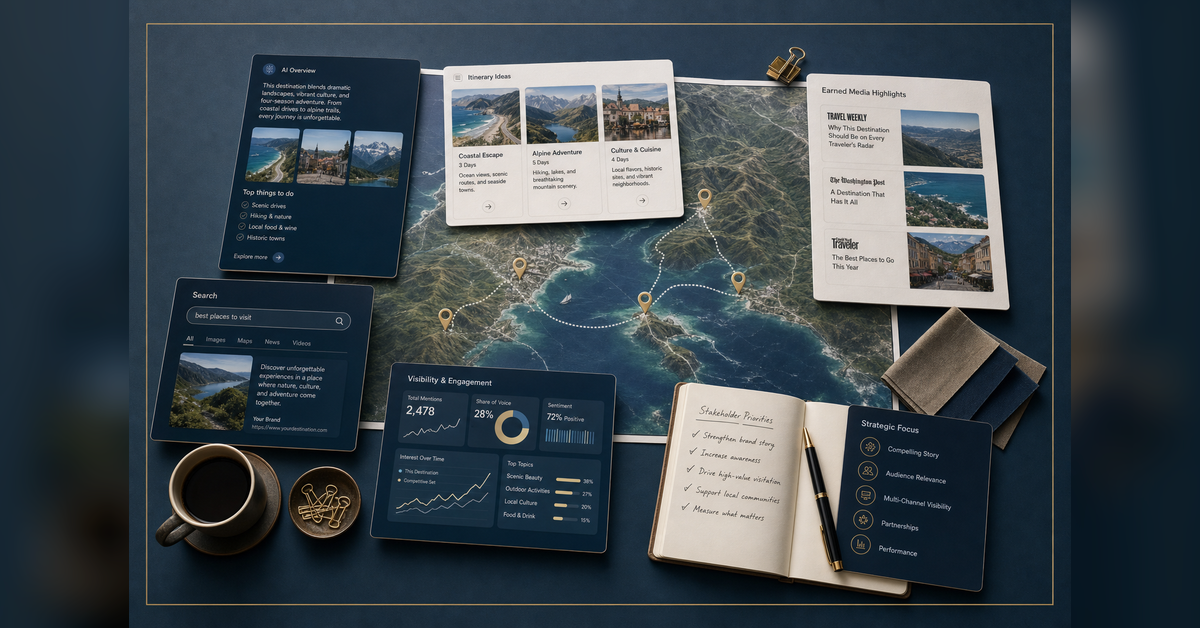
A destination story should not disappear when a campaign flight ends. Digital PR creates independent corroboration, while search and destination content preserve that authority for travelers who are still planning.
This is why media relations, SEO and AI visibility should support the same destination promise rather than operate as separate channel plans.
Is your organization’s mandate clear?
Use the DMO Mandate Map and the evaluation scorecard in this guide to compare what the board expects, what funding permits, what staff can deliver and what partners experience. This comparison turns the DMO role into a practical mandate review.
The DMO Mandate Map: a framework for what is a DMO
The DMO Mandate Map is Percepture’s six-part model for understanding what a destination organization is authorized to do, whom it serves and how it creates value. It keeps a board from treating a list of marketing activities as a complete operating strategy. Used this way, the DMO role becomes a mandate question before it becomes a channel-planning question.
1. Define the place
Use research, positioning, audiences and experience pillars to answer: What can the place credibly promise?
2. Convene the visitor economy
Align hotels, attractions, restaurants, venues, public entities and communities around the work that requires joint action.
3. Create and capture demand
Use advertising, public relations services, enterprise SEO services, generative engine optimization services, content, trade outreach and sales to help qualified visitors choose the destination.
4. Distribute visitor value
Turn destination demand into partner referrals, leads, itineraries, geographic dispersion and shoulder-season opportunities.
5. Steward the experience
Support useful visitor information, accessibility, capacity planning, crisis communication and responsible-travel messaging.
6. Prove public and partner value
Connect campaign, visitation, partner and stakeholder reporting to decisions about what should happen next.
Not every organization owns every responsibility. The answer to the DMO role depends on law, jurisdiction, funding, governance, staff capacity and the roles already held by partners.
What types of DMOs exist?
The geographic level changes the audience, partner base and operating scope. A useful answer to the DMO role should identify the place represented before describing the organization’s duties.
| Geographic level | Typical remit | Coordination challenge |
|---|---|---|
| National | International destination promotion, travel trade, research and national communication | Representing many regions and experiences under one national story |
| State or provincial | Market development, campaigns, grants, cooperative programs and industry education | Balancing statewide priorities with regional and local needs |
| Regional | Shared awareness, multi-community itineraries and pooled resources | Creating one useful visitor proposition across several jurisdictions |
| City or county | Leisure promotion, group sales, visitor information and partner referrals | Connecting destination demand with local businesses and public assets |
| District or sub-destination | Promotion or management of a resort area, downtown, heritage area or assessed district | Defining boundaries and services clearly for participating stakeholders |
A geographic label still does not reveal the organizational model. The destination function may sit within government, an independent nonprofit, a public-private partnership, a chamber, an economic-development organization, a membership body, a tourism improvement district or a contracted operator. Those structural differences are essential when determining the DMO role in a specific jurisdiction.
How is a DMO governed?
Governance determines who sets the mandate, approves budgets, monitors performance and resolves conflicts. Staff then manage day-to-day strategy and execution within that authority. Confusing governance with staff management can pull a board into campaign tactics while leaving funding, accountability and jurisdiction unresolved. From a governance perspective, the DMO role includes both the operating organization and the authority under which it acts.
A board may include lodging, attractions, restaurants, events, government, transportation, venues, culture and community representatives. The exact mix varies. A DMO represents a place, but it does not own the place, and no board structure can make every stakeholder interest identical.
Governance model and operating implications
| Model | Operating implication | Board-level question |
|---|---|---|
| Government department | Public budgeting, procurement and oversight shape operations | Which duties are authorized and how will public value be reported? |
| Independent nonprofit | Board and contractual accountability guide the organization | Who appoints the board and approves the destination mandate? |
| Public-private partnership | Funding and governance may be shared | How are public goals and industry needs balanced? |
| Chamber or economic-development division | Tourism operates alongside broader business priorities | Does the visitor economy have a distinct strategy and measurement model? |
| Membership organization | Member value is visible, but destination-wide equity must be considered | How does demand reach members and nonmembers across the place? |
| Tourism improvement district | Assessed businesses expect defined services | Are services, boundaries and reporting tied to the assessment? |
| Contracted operator | Scope, performance measures and renewal terms must be explicit | Which decisions remain with the public authority? |
Funding source influences accountability, but it does not by itself define the organization. When officials debate the DMO role, they should separate the legal entity, governing authority, revenue sources and functional mandate.
How are DMOs funded?
DMOs commonly rely on tourism-related public revenue, assessments, government contracts, membership, grants, cooperative programs, sponsorships, partner contributions and earned income. The mix depends on the jurisdiction and organizational model. Because funding determines permitted uses and reporting duties, it is part of any complete answer to the DMO role.
Most DMOs are not designed to make a profit. Revenue supports the authorized destination work. Lodging or occupancy tax may be one source, but it should not be presented as universal or as money automatically controlled by the DMO. Public revenue may support other priorities, and restricted funds may be limited to promotion or district services.
How funding changes a destination organization’s responsibilities
| Funding category | Typical accountability | Risk to manage |
|---|---|---|
| Tourism-related public revenue | Public purpose, budgeting and transparent reporting | Assuming every tourism tax dollar belongs to the destination organization |
| Industry assessment | Defined services for assessed businesses or districts | Losing the connection between the assessment and promised services |
| Government contract or appropriation | Contract scope, procurement and performance measures | Leaving responsibilities or renewal standards vague |
| Membership and cooperative programs | Clear partner benefits and participation rules | Allowing paid participation to replace destination-wide strategy |
| Grant or sponsorship | Use of funds for the approved project or period | Building permanent operating costs around temporary money |
| Earned or service revenue | Documented services and financial controls | Drifting into work that conflicts with the public destination role |
A sound funding review asks four questions: Is the revenue stable? Is it restricted? Which stakeholders expect value from it? What evidence must be reported? These questions keep the DMO role tied to authorized work rather than assumed control of tourism revenue. Attribution and analytics can connect campaigns and visitor pathways with decisions, but the organization should not claim all visitor spending as its own impact.
What does a DMO do?
The duties flow from the mandate. One organization may emphasize leisure promotion, while another also supports conventions, sports, visitor services, partner education, crisis communication or stewardship. The practical answer to the DMO role is therefore a set of authorized functions rather than a universal department chart.
| Function | Typical work | Value created |
|---|---|---|
| Research and strategy | Visitor, brand and market research | Better choices about audiences, positioning and investment |
| Brand management | Positioning, destination narrative and standards | A clear and credible meaning for the place |
| Leisure marketing | Paid media, PR, search, social, email and content | Qualified visitor demand |
| Meetings and group sales | Leads, bids, site visits and destination support | Group-business opportunities |
| Travel trade | Relationships with advisors, operators and wholesalers | Broader distribution |
| Visitor services | Information, itineraries and accessibility support | A more usable visitor experience |
| Partner services | Listings, referrals, cooperative programs and education | Local business participation |
| Media and content | Stories, visual assets, creators and press support | Reach, relevance and authority |
| Crisis communication | Accurate visitor, partner and media information | Trust and coordinated recovery |
| Stewardship | Capacity, resident concerns, sustainability and visitor dispersion | A more resilient destination |
| Measurement | Campaign, visitation, partner and stakeholder reporting | Accountability and better future decisions |
The function mix shows why the DMO role cannot be answered by listing advertising channels alone. Channel execution may combine content marketing services, digital PR services, paid media and customer journey mapping. Those tools should support the mandate rather than become the strategy by themselves.
A meetings-oriented DMO may help planners compare venues, distribute requests for proposals, arrange site visits, identify suppliers and support attendance building. It does not usually replace the planner, venue or destination management company.
What is a DMO not?
A DMO cannot control every tourism business, dictate prices, guarantee bookings, independently solve infrastructure problems or represent every stakeholder equally. It can align a destination around shared priorities, but businesses and public entities retain their own authority. Defining those limits is as important to the DMO role as listing its services.
A DMO can create demand without processing the final transaction. A visitor may discover a place through destination content and then book directly with a hotel, attraction, airline, venue or tour operator. This makes partner pathways and measurement important.
DMO versus DMC: destination organization versus service company
| Decision point | Destination organization | Destination management company |
|---|---|---|
| Primary role | Represents and coordinates a place and its visitor economy | Sells and executes local programs or event services |
| Customer | Serves a jurisdiction and its stakeholders | Serves contracted clients |
| Revenue model | May use public, assessed, member, grant or earned revenue | Usually earns commercial revenue from client services |
| Demand role | Creates and distributes destination demand | Executes transportation, tours, activities or event logistics |
| Referral role | May provide broad or neutral destination referrals | Recommends and delivers services within a paid program |
The comparison clarifies the DMO role by separating place-wide responsibility from paid local execution. A travel agency advises or sells trips. A tour operator packages and operates travel. A marketing agency may be hired by a destination organization but does not hold the destination’s public mandate. An economic-development organization may overlap with tourism, but it serves different audiences and operating rhythms.
A DMO is the broad functional category. Read the complete guide to DMO, CVB and tourism board differences for a deeper comparison of names, governance and meetings-related roles.
Examples of DMOs in practice
Examples are most useful when they show operating context rather than a directory of logos. To answer the DMO role through an example, identify the geographic level, mandate, stakeholders, funding category and distinctive responsibility.
Explore Hunterdon
The supplied Percepture record shows county-level destination definition and digital activation connecting visitor interest with towns and tourism partners. The work illustrates how place identity can guide demand creation and local distribution.
Greater Williamsburg
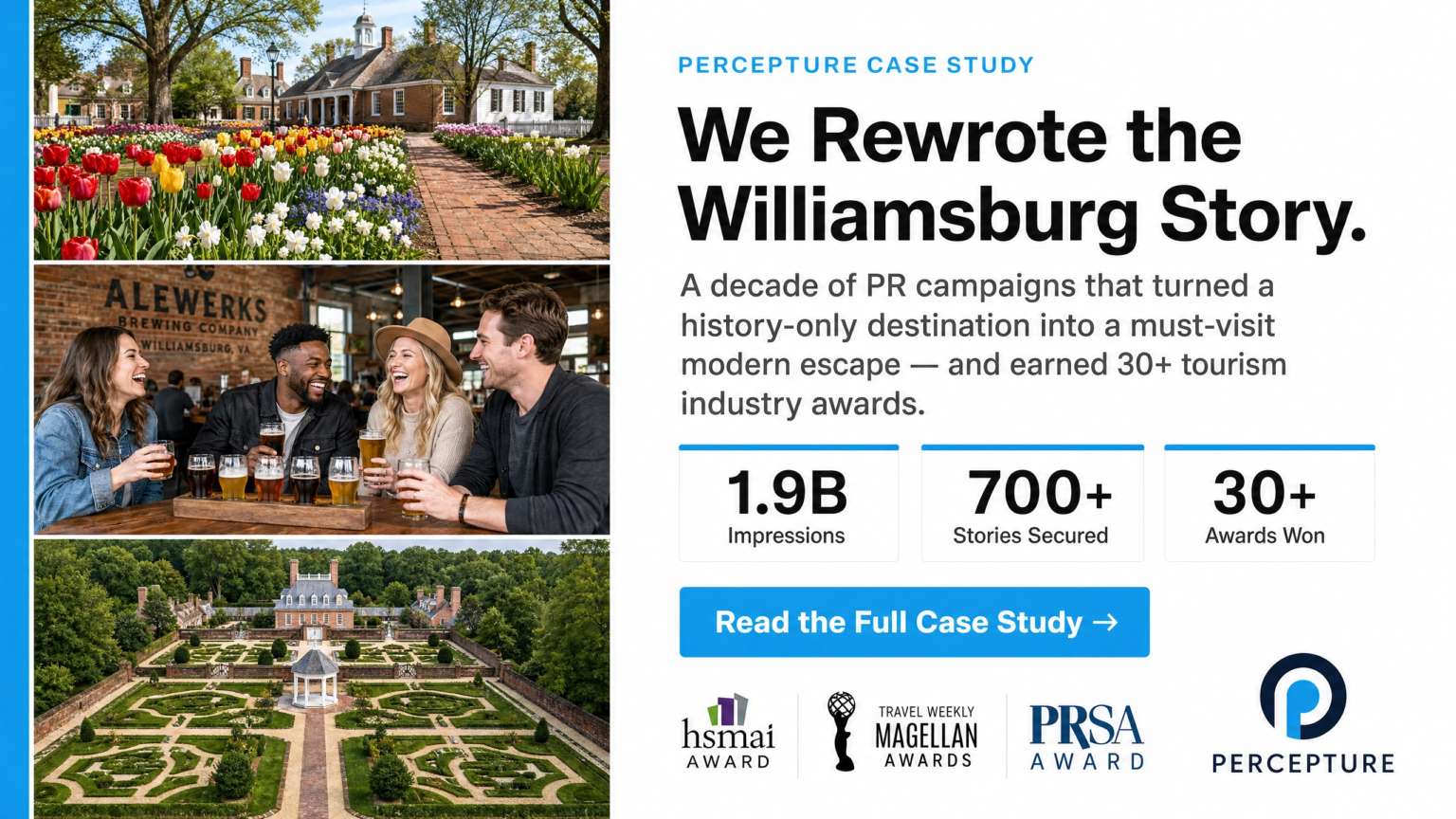
Percepture’s Greater Williamsburg case study provides an example of integrated destination work across public relations, search, content and partner pathways.
National, state and local organizations
A national organization may focus on international awareness and travel-trade distribution. A state or provincial office may coordinate campaigns, research, grants and industry education. A city, county or regional organization may work closer to local partner referrals, visitor information, meetings and on-the-ground experience. At each level, the DMO role is answered by matching the mandate to the geography and stakeholders served.
The defining feature is not the word “Visit,” “bureau,” “authority” or “board.” The defining feature is responsibility for visitor-economy strategy across a named place.
How do you start or reorganize a DMO?
Starting a destination organization is a governance and operating decision before it is a branding exercise. A group asking the DMO role should first determine whether a new entity is required or whether an existing organization can receive a clearer mandate.
A 12-step formation checklist
- Define the geographic jurisdiction.
- Identify the visitor-economy problem the organization must solve.
- Map existing tourism, government, chamber and economic-development roles.
- Confirm legal authority and potential funding sources.
- Write the mandate and its exclusions.
- Identify stakeholders and establish governance.
- Create board, disclosure and conflict rules.
- Build a baseline of destination, visitor and partner research.
- Define how demand will reach local partners.
- Establish financial controls and procurement processes.
- Set performance measures and reporting responsibilities.
- Build a three-year operating plan tied to available capacity.
Starting a new organization without a clear mandate can add another logo and meeting calendar without solving destination fragmentation. The formation process should resolve the DMO role locally before assigning staff, funding or promotional work. Tourism, legal, financial and public-governance counsel should be included where those disciplines apply.
How should a DMO be evaluated?
The evaluation should test organizational readiness, not destination attractiveness. A beautiful or famous place may still have weak coordination, unstable funding or poor partner distribution. A lesser-known place may have a disciplined organization with clear priorities and credible reporting. Evaluation therefore tests the operating answer to the DMO role, not the appeal of the place itself.
The 100-point DMO Evaluation Scorecard
| Dimension | Score | Diagnostic question |
|---|---|---|
| Mandate clarity | 0–10 | Can the board, staff and partners explain what the organization owns? |
| Geographic fit | 0–10 | Does the jurisdiction match how visitors experience the place? |
| Governance quality | 0–10 | Are oversight, staff authority and stakeholder input distinct? |
| Funding stability | 0–10 | Are revenue, restrictions and reporting duties understood? |
| Destination positioning | 0–10 | Can the place make a clear and credible promise? |
| Stakeholder coordination | 0–10 | Can public and private participants act around shared priorities? |
| Demand creation | 0–10 | Does the organization reach qualified leisure or group audiences? |
| Partner-value distribution | 0–10 | Can partners see how destination demand reaches them? |
| Stewardship and experience | 0–10 | Are visitor needs, resident concerns and destination capacity considered? |
| Measurement and accountability | 0–10 | Does reporting explain what changed and what should happen next? |
How to read the score
- 85–100: Mature destination operating system.
- 70–84: Strong organization with defined gaps.
- 55–69: Capable promotion office with incomplete coordination.
- Below 55: Fragmented mandate or weak evidence of value.
The score adds operational discipline to the DMO role. It prevents a board from judging the organization only by campaign output or the destination’s existing popularity.
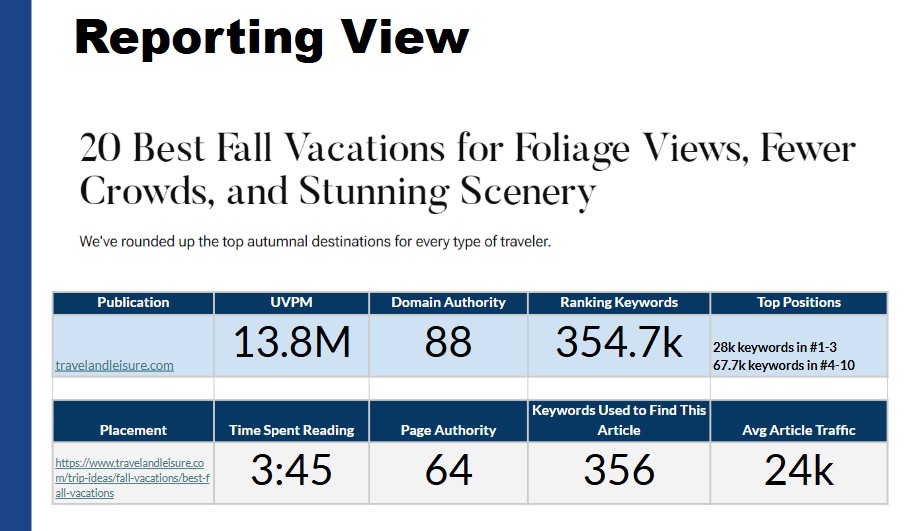
Why Percepture has a point of view
Percepture’s approach treats destination visibility as an integrated operating problem. Place identity, stakeholder alignment, media, search, AI visibility, paid distribution and measurement must reinforce one another instead of running as disconnected channel plans. That integrated view grounds the DMO role in the full path from destination definition to measurable visitor action.
That connection matters because tourism marketing, travel SEO, AI search for tourism marketing and travel PR all influence how a destination is found and understood. None can replace a clear mandate.
Track whether the destination is understood, cited and recommended
Destination visibility now extends beyond blue links. Percepture also uses the best geo ai visibility tool to monitor brand mentions, citations, competitive answer share and the sources influencing AI-assisted travel discovery.
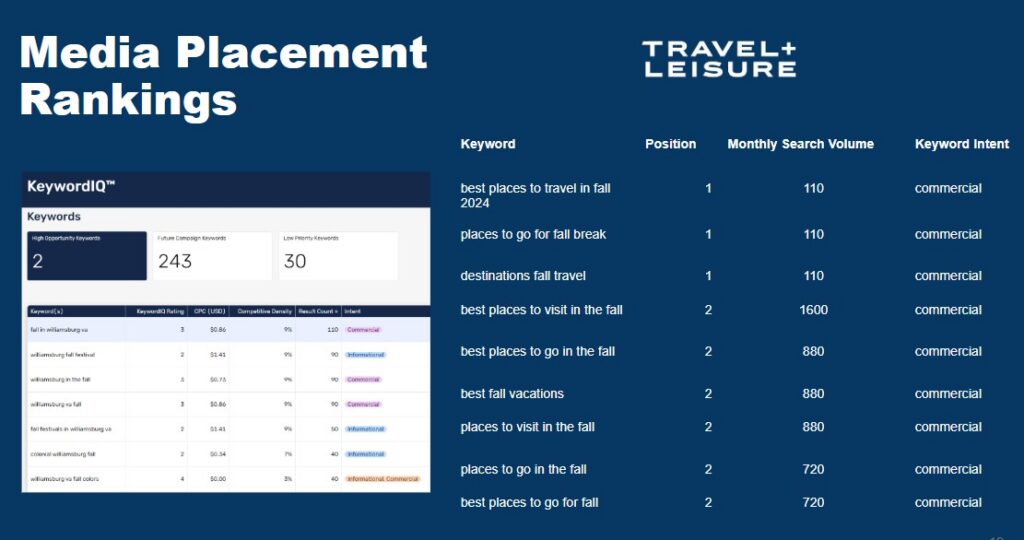
For leaders researching the DMO role, Percepture’s DMO Mandate Map moves the discussion from acronyms to operating choices: define the place, convene the visitor economy, create demand, distribute value, steward the experience and prove value.
Compare the destination organization models
A DMO, CVB and tourism board can overlap, but their names do not always signal the same governance, jurisdiction or meetings-sales role. Comparing those dimensions provides a more reliable answer to the DMO role than comparing titles alone.
Frequently asked questions
What is a DMO, in simple terms?
What is a DMO? It is the principal organization responsible for leading visitor-economy strategy for a defined place. Depending on its mandate, it may promote the destination, coordinate tourism partners, support group sales and visitors, help steward the experience and report value to public or industry stakeholders. It represents the destination but does not own most of its businesses or public assets.
What does DMO stand for in tourism?
When someone asks the DMO role in tourism, DMO most often stands for destination marketing organization. Some organizations use destination management organization to signal a broader role in stakeholder coordination, visitor experience, stewardship and destination development. The safest neutral term is destination organization because the organization’s legal name does not always reveal its complete mandate.
What is the purpose of a DMO?
The purpose clarifies the DMO role in operational terms. A DMO makes a destination easier to understand, discover and choose. It then helps distribute visitor demand to local partners and supports the long-term quality of the place. Its exact purpose depends on jurisdiction, law, funding and governance, so boards should define both the responsibilities the organization owns and the responsibilities it does not control.
What does a DMO do?
A DMO may conduct research, manage the destination brand, run leisure marketing, support meetings and group sales, work with the travel trade, provide visitor information, coordinate partners, manage media and content, support crisis communication, advance stewardship and measure results. Not every destination organization performs every function.
How does a DMO make money?
Funding is part of the answer to the DMO role because it shapes authorized work and accountability. DMOs commonly fund operations through tourism-related public revenue, industry assessments, government contracts, membership, cooperative programs, grants, sponsorships, partner contributions and earned income. Funding differs by jurisdiction. Lodging tax may be one source, but it should not be treated as universal or as revenue automatically controlled by the organization.
Is a DMO a government agency?
Sometimes, but not always. To determine the DMO role in a particular place, review whether the destination function operates as a government department, independent nonprofit, public-private partnership, chamber division, membership organization, tourism improvement district or contracted operator. Funding source influences accountability, but the legal entity, governing authority and functional mandate must be reviewed separately.
What is the difference between a DMO and a CVB?
In this comparison, the DMO role refers to the broad functional category for an organization leading visitor-economy strategy. A convention and visitors bureau is a common organizational name that may emphasize conventions, meetings, group sales and visitor services. Actual responsibilities vary, so compare jurisdiction, governance, funding and mandate rather than relying only on the name.
What is the difference between a DMO and a tourism board?
A tourism board may refer to a governing board, public authority or organization responsible for tourism. A DMO describes the broader destination function. In some places the terms overlap; in others, a tourism board governs or funds a separate operating organization. The local legal and governance structure determines the difference.
What is the difference between a DMO and a DMC?
A DMO represents and coordinates a destination and its visitor economy. A destination management company is usually a commercial provider that sells and executes local transportation, tours, activities, event production or logistics for paying clients. A DMO may provide information or referrals, while the DMC delivers contracted services.
How should DMO success be measured?
Measurement completes the practical answer to the DMO role. Useful dimensions include destination positioning, qualified demand, partner referrals, leads, visitor services, stakeholder coordination, stewardship and public accountability. Campaign activity alone is not a complete score. The organization should explain what changed, how evidence relates to its work and what decisions should follow.
Clarify what your destination organization should own
If your leadership team is still debating what is a DMO, start by mapping the mandate, funding restrictions, partner pathways, visibility gaps and reporting expectations. Percepture can review how destination identity, PR, search, GEO, paid distribution and measurement work together.
Request a Destination Organization Visibility and Demand Review