

The fastest way to understand DMO CVB tourism board differences is to look past the acronym. A destination marketing or management organization is the broad functional category, a convention and visitors bureau usually places more weight on meetings and group sales, and a tourism board often has a broader public or jurisdiction-wide role.
Those patterns overlap. The operating mandate—geography, governance, funding, audiences, responsibilities and metrics—reveals more than the public name.
What is the difference between a DMO, a CVB and a tourism board?
The direct answer to DMO CVB tourism board differences is this: a DMO promotes and may help manage a destination; a CVB is usually a DMO with a stronger conventions, meetings, group-sales and visitor-services function; and a tourism board is often a public or quasi-public tourism body. Names vary, so the charter and actual services matter more than the title.
The executive summary
Use these four rules when evaluating DMO CVB tourism board differences.
DMO is the umbrella
A destination organization can operate at city, county, regional, state, provincial or national scale. Its work may include branding, demand generation, visitor information, research, partnerships and stewardship.
CVB signals a sales function
A convention and visitors bureau commonly works with meeting planners, hotels, venues, sports organizers and group-tour buyers. It may also manage leisure marketing and the public destination brand.
Tourism board signals governance
A tourism board often operates under a public, statutory or quasi-public structure. Its remit may include research, policy, grants, development and cooperative marketing as well as promotion.
The mandate settles the question
Read the charter, funding agreement, service scope and reporting requirements before deciding what an organization actually is.
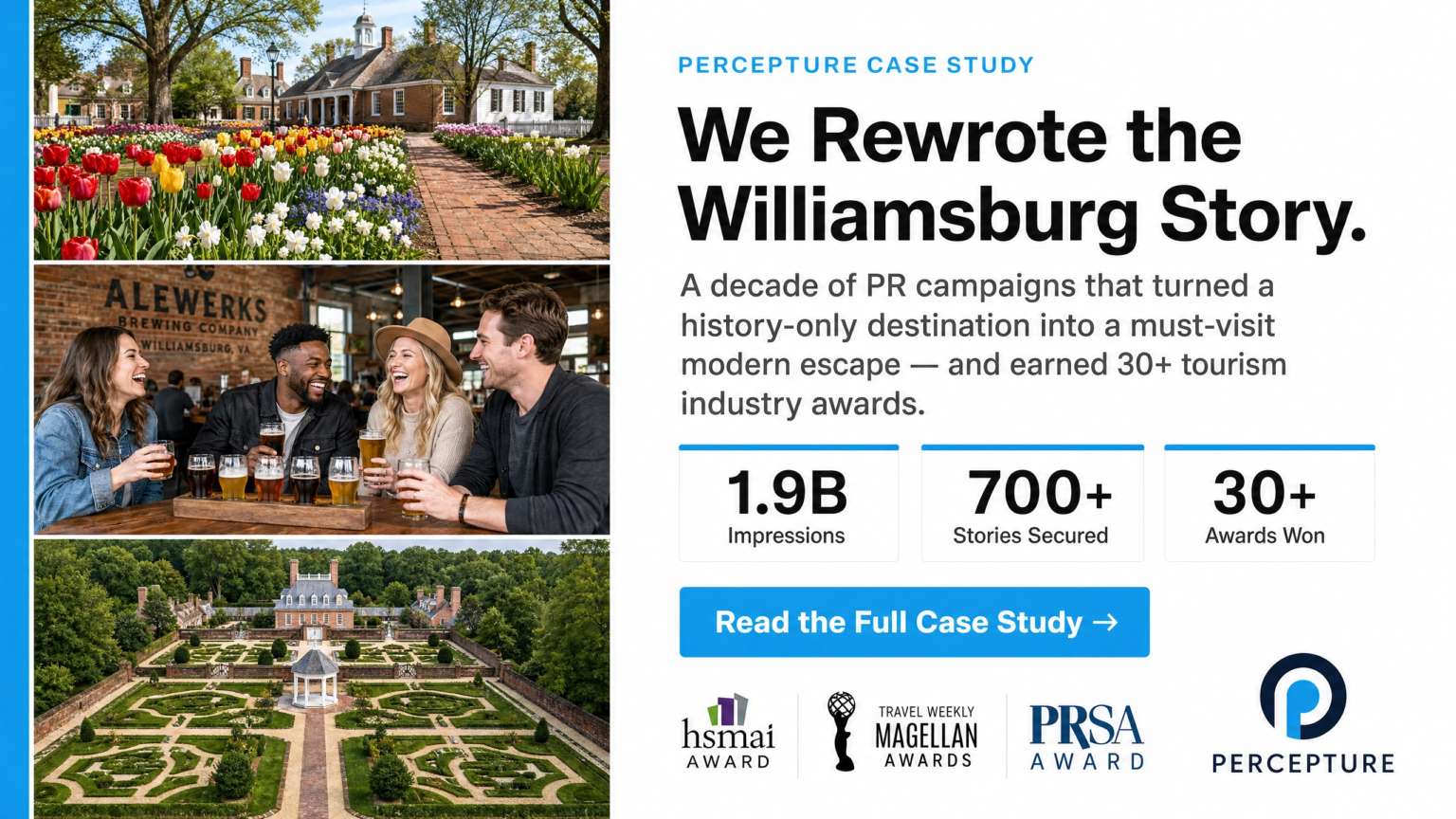
Changing what travelers believed about Greater Williamsburg
Percepture helped broaden the destination story beyond a history-only perception by connecting public relations, search visibility, media outreach and digital amplification around one destination mandate.

Who this guide is for
Destination leaders
Use DMO CVB tourism board differences to explain the organization’s role consistently to boards, staff, partners and residents.
Municipal leaders
Apply DMO CVB tourism board differences when separating destination promotion, convention sales, public oversight and economic-development responsibilities.
Hotels and attractions
Understanding DMO CVB tourism board differences helps businesses find the team responsible for listings, campaigns, research, referrals and cooperative programs.
Meeting planners
Use DMO CVB tourism board differences to determine when to call a CVB, destination organization, convention center or destination management company.
DMO CVB tourism board differences at a glance
In practical industry use, DMO is the umbrella category, CVB describes a convention- and visitor-oriented version of that function, and tourism board usually describes a more public or jurisdiction-wide structure. Viewed through DMO CVB tourism board differences, this is a functional distinction, not a universal legal rule.
Destination organization comparison scorecard
| Factor | DMO | CVB | Tourism board |
|---|---|---|---|
| Meaning | Broad functional category | Convention- and visitor-oriented destination organization | Public, statutory or quasi-public tourism body |
| Common scope | City, county, region, state or country | Often city, county or metropolitan area | Often state, province, region or country; sometimes local |
| Leisure marketing | Common | Common | Common |
| Meetings and group sales | Varies | Usually central | Varies |
| Visitor services | Common | Common | Varies |
| Management and stewardship | May be part of the mandate | Varies | May include policy and development |
| Governance | Nonprofit, public, quasi-public or partnership | Often nonprofit or quasi-public | Frequently government, statutory or quasi-public |
| Funding | May combine taxes, districts, grants, dues and partnerships | May combine lodging-tax or district funding with partner support | May use appropriations, tourism taxes, statutory funds or grants |
| Typical metrics | Visitation, referrals, spending, brand and distribution | Room nights, conventions, delegates, leisure demand and impact | Tourism growth, regional distribution, spending and policy goals |
| Public name | Often Visit plus the place name | May use a Visit brand publicly | Board, authority, commission, office or destination brand |
The categories overlap. A CVB can be the DMO. A tourism board can be the DMO. One organization may perform all three sets of functions, while another destination divides them among several bodies. The scorecard makes DMO CVB tourism board differences useful without forcing each organization into an exclusive category.
What is a DMO?
A DMO commonly means destination marketing organization. Some organizations now use destination management organization to reflect work that extends beyond promotion. The broader term destination organization avoids forcing every operation into one definition.
A DMO may build the destination brand, attract leisure demand, publish visitor information, conduct research, coordinate local partners and distribute referrals. Its scope can follow a government boundary, a tourism district or a marketable region that crosses municipal lines.
Management-oriented mandates may also address resident engagement, visitor flow, product development, crisis communication or destination stewardship. That does not mean every DMO performs every task. The organization’s governing documents and funding agreement define what it can and must do.
For DMO CVB tourism board differences, the useful point is that DMO describes the broadest function. It tells you that an organization coordinates destination demand or management, but it does not tell you its legal form, funding source or convention-sales capacity.
A DMO may work with an outside destination marketing agency when it needs added strategy, research, creative, media, search or public-relations capacity. Within DMO CVB tourism board differences, that outside support does not change the destination organization’s mandate or accountability. Percepture’s broader travel and tourism marketing work reflects how these disciplines must support one destination mandate rather than operate as disconnected campaigns.
What is a CVB?
CVB stands for convention and visitors bureau. The name usually points to a strong business-to-business sales role: attracting conventions, meetings, sports events, group tours and other business that can produce room nights and venue demand.
A CVB may help planners evaluate venues, arrange site visits, understand hotel capacity, connect with local partners and prepare destination presentations. It can coordinate with a convention center, but the two are not the same. The convention center is a venue; the CVB represents and sells the destination.
Reducing a CVB to conventions is a mistake. Many bureaus also lead leisure branding, visitor services, content, media relations, paid promotion and partner referrals. A legal name may still include convention and visitors bureau while the consumer-facing brand says Visit plus the destination name.
That dual identity explains part of the DMO CVB tourism board differences question. A CVB usually functions as a DMO, but not every DMO has convention sales at the center of its mandate.
The leisure and meetings sides may share content marketing services, public relations services and paid media. Their audiences, buying cycles and performance measures still require separate planning, which is one operational consequence of DMO CVB tourism board differences.
What is a tourism board?
“Tourism board” describes a governance tradition more than a single service model. The term often refers to a government, statutory or quasi-public body responsible for tourism across a state, province, region or country, although local tourism boards also exist.
A board’s remit may include destination branding, research, grants, cooperative marketing, product development or public-policy coordination. It may market directly to travelers, support local destination organizations or do both.
A tourism board may function as the DMO for its geography. In other places, it may oversee or fund a separate operating organization. It can also work alongside local DMOs and CVBs, with the state or regional layer setting a broad brand while local teams promote individual places and sell meetings. This division of responsibility is central to evaluating DMO CVB tourism board differences across geographic levels.
The DMO CVB tourism board differences therefore cannot be resolved by assuming every board is a government department or every DMO is a nonprofit. The structure varies by jurisdiction, and the title alone does not establish legal authority.
Why do the names overlap?
The public name can change without changing the legal structure, funding source or mandate. A bureau may adopt a simpler Visit brand for travelers while retaining its original corporate or statutory name.
Mergers create more overlap. A destination may combine visitor services, leisure marketing and convention sales under one organization. Another may divide those functions between a city department, a nonprofit bureau, a convention center and a regional tourism authority.
Language also changes across markets. Some organizations prefer destination management to destination marketing because their work includes community priorities, visitor distribution or long-term product planning. Legacy names may remain because they are tied to funding agreements or enabling documents.
A reliable reading of DMO CVB tourism board differences starts with function and then checks the name. The charter, funding agreement and reporting requirements reveal accountability better than the acronym.
Public name versus possible structure
Use this matrix to test DMO CVB tourism board differences against the legal entity, service mandate and operating role behind a public-facing name.
| Public name | Possible structure | What to verify |
|---|---|---|
| Visit plus city or region | CVB, DMO, authority or nonprofit | Legal entity and service mandate |
| Tourism department | Government DMO | Department authority and public budget |
| Convention and visitors bureau | CVB and DMO | Leisure, meetings and visitor-service scope |
| Tourism board | Public DMO or oversight body | Operating role versus governance role |
| Destination partnership | Regional nonprofit DMO | Member area and funding arrangement |
| Tourism commission | Public, statutory or quasi-public body | Enabling authority and reporting duties |
DMO CVB tourism board differences through the Destination Mandate Map
Percepture’s Destination Mandate Map is a six-part test for identifying what a destination organization actually does. It turns DMO CVB tourism board differences into an operating review instead of a debate over labels.
The six-part Destination Mandate Map
1. Geography
Identify whether the organization represents a city, county, region, state, province or country. Check whether its territory follows government boundaries, a tourism district or a shared market identity.
2. Governance
Determine whether it is a department, nonprofit corporation, quasi-public authority, membership body or public-private partnership. Identify who appoints the board and approves the budget.
3. Funding
Map the actual mix of lodging or occupancy taxes, district assessments, appropriations, dues, grants, cooperative programs, sponsorships and earned revenue.
4. Audiences
List the audiences the organization must influence: travelers, planners, sports organizers, tour operators, media, residents, businesses and government partners.
5. Mandate
Separate destination branding, leisure demand, convention sales, visitor services, product development, research, crisis communication and stewardship responsibilities.
6. Metrics
Connect each responsibility to measures such as room nights, conventions, referrals, visitor spending, geographic distribution, resident sentiment, brand lift and visibility.
Operating rule: classify the organization by the six-part mandate, not by the acronym on the business card. This keeps DMO CVB tourism board differences anchored to accountable work.
Questions to answer before changing the name or marketing plan
Answering these questions turns DMO CVB tourism board differences into a documented organizational assessment.
- What geography is the organization accountable for?
- Which document establishes its authority?
- Who approves the budget and receives the performance report?
- Which audiences must the organization serve?
- Is convention or group sales part of the formal mandate?
- Which visitor-management responsibilities sit with the organization?
- Which outcomes determine success?
- Does the public brand accurately explain the operating role?
What kind of destination organization are you operating?
Use the Destination Organization Identity Checklist to document the six mandate areas before debating the name. It gives leadership teams a practical way to review DMO CVB tourism board differences with the same facts in front of them.
How are these organizations funded and governed?
Funding can come from lodging or occupancy taxes, tourism improvement districts, public appropriations, membership dues, grants, cooperative programs, sponsorships or earned revenue. The mix differs by jurisdiction and should be verified from the organization’s current governing and funding documents.
Funding shapes accountability. Public money may bring formal budget oversight and reporting duties. Member or partner support may add expectations for referrals, participation and business value. A mixed model may require both public-outcome reporting and direct partner service.
For DMO CVB tourism board differences, funding is evidence rather than a shortcut. A tax-funded organization is not automatically a tourism board, and a membership program does not automatically make an organization a CVB.
Governance structure comparison
| Structure | Common form | Accountability to review |
|---|---|---|
| Government department | City, county, state or national office | Elected officials, administrative leadership and public budget |
| Independent nonprofit | DMO or CVB corporation | Board, bylaws and funding agreement |
| Quasi-public authority | Statutory tourism authority | Enabling authority and public oversight |
| Membership organization | Bureau or association | Member value and destination outcomes |
| Public-private partnership | Government and industry collaboration | Contract, board structure and shared goals |
This table is an operating guide, not legal advice. Review the documents that apply to the specific organization because DMO CVB tourism board differences do not replace jurisdiction-specific governance analysis.
Which organization handles meetings, and which handles leisure?
A CVB most often leads convention, meeting and group-sales work, but a DMO or Visit organization may perform the same function. Any of the three may lead leisure marketing. Responsibility follows the structure, not the acronym.
Meetings work can include venue matching, hotel coordination, room-block development, planner resources, site visits, bid support and destination presentations. Leisure work can include brand campaigns, content, media relations, paid promotion, search visibility, visitor information and partner referrals.
The DMO CVB tourism board differences matter when leaders assign budgets and goals. Convention sales may be measured through qualified opportunities, definite business, delegates and room nights, while leisure work may be measured through demand, referrals, visitor distribution, spending or brand outcomes.
Delivery often crosses channels. Omnichannel marketing can connect audience, message and timing, while digital PR services can support earned authority and discoverability. These capabilities should follow the mandate rather than create separate channel agendas, regardless of the DMO CVB tourism board differences in public naming.
Who should hotels, planners, partners and residents contact?
The right contact depends on whether the need involves leisure marketing, convention sales, visitor services, media, events or destination development. Start with the function, even when DMO CVB tourism board differences produce a different public label.
Destination contact decision table
| Need | Best first contact |
|---|---|
| Bring a convention or meeting | Convention sales team |
| Promote a leisure package | DMO or CVB partner-marketing team |
| Get listed on the official destination site | Partner, visitor-services or content team |
| Coordinate event transportation and logistics | DMC or event producer; the destination organization may provide referrals |
| Request tourism research | Insights, research or strategy team |
| Discuss policy or public funding | Tourism board, authority or government office |
| Pitch a destination story | Communications or public-relations team |
| Raise resident or stewardship concerns | Destination management or community-relations team |
| Explore cooperative advertising | Partnership or marketing team |
| Ask about statewide programs | State tourism office or board |
The contact table translates DMO CVB tourism board differences into a functional routing decision rather than relying on the organization’s title.
Hotels, attractions and tour operators should also ask how referrals are distributed and how partners participate in content. Resources on SEO for tour operators and digital marketing for tour operators explain how individual businesses can support demand beyond the official destination site.
DMO vs. DMC, chamber and convention center
A DMO represents and promotes the destination as a whole. A destination management company, or DMC, is a private company hired to manage transportation, venues, activities and event logistics for a specific client or group.
A DMO or CVB represents the destination; a DMC represents a paying client. Keeping that client relationship separate prevents DMC services from being mistaken for DMO CVB tourism board differences.
Four entities that are often confused
DMC
A private local-logistics and event-services provider. A DMC is not a DMO.
Convention center
A venue. Its sales team may work closely with the CVB, but the facility is not automatically the destination organization.
Chamber of commerce
A business organization that may operate tourism programs. A chamber is not automatically a DMO.
Economic-development organization
A body focused more broadly on business, investment, jobs or development. Tourism may be one part of its remit.
Adding DMCs, chambers and venues to the map makes DMO CVB tourism board differences easier to use. Each entity can support visitors and events, but each answers to a different customer, stakeholder group or governing mandate.
Real-world destination organization examples
Real examples show why the operating mandate matters. They also show that DMO CVB tourism board differences do not require three separate organizations in every market.
Greater Williamsburg: changing how travelers see a destination
Percepture began working with Visit Williamsburg in 2018 to move the destination beyond a one-dimensional historical perception. SEO, content, media relations, hosted experiences and executive media meetings worked together.
Supplied historical results include more than 300 million impressions, 100 stories, 90% message alignment, 10 broadcast segments, 18% organic growth and more than 100,000 new organic visitors. Search visibility reached the top position for core destination, Christmas, events and vacation-package queries.
Read the Greater Williamsburg destination case study for the fuller positioning story.
A CVB dual-demand planning model
From Percepture’s strategic proposal experience with a major CVB, the planning model separated strategy, media acquisition, launch and optimization and reporting. It addressed leisure, meetings, group travel and attractions without treating them as one undifferentiated audience.
This is methodology evidence, not a claim of executed campaign results. It illustrates why a CVB plan needs one destination strategy with distinct demand tracks.
The tourism-board layer
A state tourism body may set a broad destination brand, conduct research and operate cooperative programs while local DMOs and CVBs market individual destinations. This layered model is one practical expression of DMO CVB tourism board differences. The state and local layers can support each other without having identical mandates.
Does every destination need three separate organizations?
No. A destination can place leisure marketing, meetings sales, visitor services and stewardship in one integrated organization. It can also separate functions when geography, funding, facilities or stakeholder needs make specialization more workable.
The best structure is the one that establishes authority, reduces duplicated work and gives every audience a clear path. Reviewing DMO CVB tourism board differences should expose gaps and overlaps rather than force a preferred acronym.
Destination operating models
Compare these models after documenting DMO CVB tourism board differences in governance, funding, audiences and assigned responsibilities.
| Model | Potential advantage | Operating risk |
|---|---|---|
| One integrated organization | Coordination and brand clarity | A broad mandate can strain resources |
| Separate leisure and convention groups | Specialized sales and marketing focus | Fragmented data and messaging |
| Government department | Direct public accountability | Procurement and administrative limits |
| Independent nonprofit | Operating flexibility | Public trust must be actively maintained |
| Regional partnership | Shared scale across communities | Governance and benefit distribution can be complex |
What does each organization measure?
Metrics should follow the mandate rather than the name. A convention-sales team may track qualified opportunities, definite conventions, delegates and room nights. A leisure team may track demand, referrals, overnight stays, geographic distribution, visitor spending and brand lift.
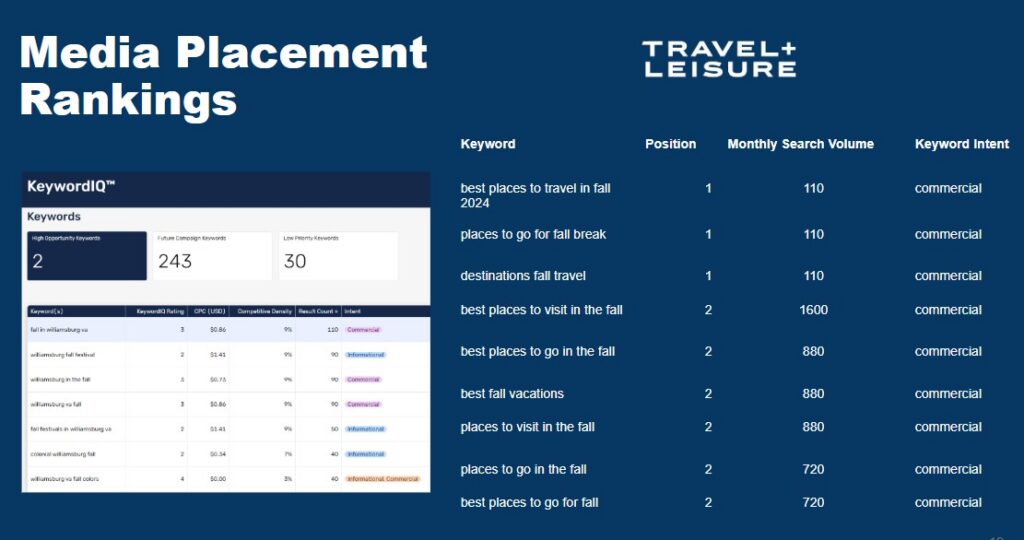
A management or public-policy mandate may add resident sentiment, product development, seasonal distribution or community outcomes. Communications teams may track message alignment and earned visibility. Digital teams may track search visibility, partner referrals and the ability to appear accurately in AI-generated answers.
The measurement lesson within DMO CVB tourism board differences is simple: two organizations with the same title may need different scorecards. Start with the outcomes each organization is funded and authorized to produce.
Percepture connects those outcomes through attribution and analytics, enterprise SEO services and generative engine optimization services. For destination-specific context, see AI search for tourism marketing.
Mandate-to-metric scorecard
This scorecard applies DMO CVB tourism board differences by matching each assigned mandate to measures and a leadership question.
| Mandate | Useful measures | Question for leadership |
|---|---|---|
| Leisure demand | Demand, referrals, overnight stays, distribution and brand lift | Are campaigns attracting the visitors and periods the destination prioritizes? |
| Meetings and groups | Opportunities, definite business, delegates and room nights | Can the sales funnel be traced from inquiry to booked business? |
| Partner value | Listings, referrals, participation and cooperative activity | Can partners see how the organization distributes opportunity? |
| Destination management | Visitor distribution, resident sentiment and product progress | Are visitor and community goals being reviewed together? |
| Visibility | Search presence, media visibility, message accuracy and AI citations | Can travelers and planners find an accurate answer at the moment of choice? |
Common classification mistakes
- Reducing every CVB to conventions. Many CVBs also lead leisure marketing, visitor services and destination branding.
- Assuming every DMO is a nonprofit. A DMO can be public, nonprofit, quasi-public or operated through a partnership.
- Assuming every tourism board is national. Boards can operate at several geographic levels.
- Confusing a DMO with a DMC. One represents the destination; the other serves a paying event or travel client.
- Inferring legal structure from a Visit brand. The public brand may sit above several possible organizational forms.
- Ignoring the charter and funding agreement. Those documents define authority and accountability more reliably than a marketing name.
- Treating destination marketing as advertising only. The mandate may also include research, partnerships, visitor services, public relations and management.
- Using website traffic as the universal score. Different mandates require different business, visitor and community measures.
Each mistake comes from treating DMO CVB tourism board differences as a vocabulary test. The better approach is to connect the name to authority, audiences, work and outcomes.
Why Percepture has a destination point of view
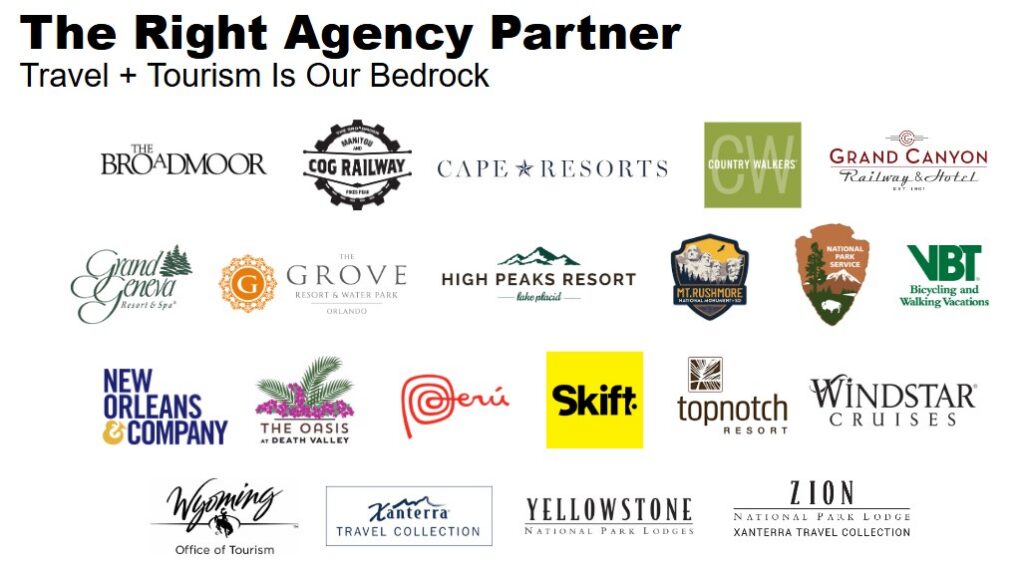
Percepture has supported destination, hotel, national-park, cruise and visitor-economy organizations since 2004. The work represented here includes county tourism branding, destination search and public relations, CVB planning methodology and integrated measurement. That range informs an operating view of DMO CVB tourism board differences rather than a title-based definition.
That experience matters because destination organizations rarely have a one-channel problem. Positioning must work across public language, stakeholder expectations, search, content, media, advertising and measurement. A guide to travel PR provides more detail on the communications side of that operating model.
Travel-industry earned-authority experience
Percepture connected Amazon and Xanterra for a campaign in which packages traveled by mule to Phantom Ranch in the Grand Canyon. Supplied results include more than 70 million viewers, 378 stories and an HSMAI Silver Award.
This is travel-industry and earned-authority proof, not an example of a DMO, CVB or tourism board structure. The distinction keeps the evidence aligned with what it can support.
See the Amazon Phantom Ranch travel case study.

See how a destination changed what travelers believed about it
The Greater Williamsburg work shows how positioning, SEO, content and media relations can support one destination mandate across multiple channels. It provides a practical reference for leaders assessing DMO CVB tourism board differences before aligning external communications.
Frequently asked questions
What are the main DMO CVB tourism board differences?
The main DMO CVB tourism board differences concern function, sales emphasis and governance. A DMO is the broad category for an organization that promotes or helps manage a destination. A CVB is usually a DMO with a stronger conventions, meetings, group-sales and visitor-services role. A tourism board is often a public, statutory or quasi-public body with broader geographic or policy responsibilities. These are common functional patterns, not universal legal definitions.
Are DMOs and CVBs the same thing?
They can be. Within DMO CVB tourism board differences, a CVB usually performs DMO functions, including destination promotion and partner coordination. The CVB name signals that convention, meeting or group sales are often central to the organization. A DMO without that sales mandate may focus more heavily on leisure demand, visitor information, research, partnerships or destination management.
Is every CVB a DMO?
A CVB generally functions as a destination organization because it represents and sells the destination rather than one venue or business. That functional relationship is an important part of DMO CVB tourism board differences, although the exact legal structure and service scope can vary. Review whether it also manages leisure marketing, visitor services, research, partner programs or the public destination brand.
Why is not every DMO a CVB?
Not every destination has a convention center, a large meetings market or a formal group-sales mandate. This is why DMO CVB tourism board differences distinguish the broad destination function from a convention-led sales role. Some DMOs focus on leisure travel, regional distribution, visitor services, research or stewardship. The absence of CVB in the name does not prevent a DMO from supporting meetings, but convention sales may not be a central responsibility.
Is a tourism board also a DMO?
A tourism board may function as the DMO for its state, province, region, country or local area. In another structure, it may provide oversight, research, grants or broad branding while a separate organization handles day-to-day marketing and sales. These alternatives show why DMO CVB tourism board differences must be established from current governing documents.
What does a Visit destination name mean?
A Visit brand is usually a consumer-facing identity rather than a legal classification. It can represent a CVB, nonprofit DMO, government tourism department, authority or regional partnership. DMO CVB tourism board differences remain relevant because the public name can change while the legal entity, funding source and reporting duties remain the same.
What is the difference between a DMO and a DMC?
A DMO represents and promotes a destination as a whole. A destination management company is a private business hired by a client to manage local transportation, venues, activities and event logistics. This client-versus-destination distinction is separate from DMO CVB tourism board differences. A destination organization may refer planners to DMCs, but the two entities serve different customers and purposes.
Can a chamber of commerce act as a DMO?
A chamber can perform DMO functions when it is assigned tourism promotion, visitor services or destination partnership responsibilities. It is not automatically a DMO simply because it supports local businesses or visitors. Applying DMO CVB tourism board differences requires checking the formal mandate, funding arrangement and reporting obligations to determine whether tourism coordination is part of its operating role.
Clarify the mandate before building the marketing plan
A Destination Visibility and Mandate Review can examine public positioning, stakeholder language, search visibility and measurement. The goal is to turn DMO CVB tourism board differences into clear operating decisions for leadership, partners and prospective visitors.