


A digital marketing strategy for travel agency growth is a coordinated plan for attracting the right travelers, proving advisor expertise, capturing qualified trip inquiries and nurturing them into booked itineraries. The strongest plan focuses on one valuable specialty, connects search, content, email, paid media and referrals, and measures inquiry quality, not just traffic or followers.
The strongest travel-agency plan does not begin with Instagram, email or Google Ads. It begins with a specialty, a traveler worth serving, a trip brief that protects advisor time and a reliable path from inquiry to booked itinerary.
Experience, recognition and proof that help travelers trust the plan
Travel-agency growth depends on judgment. Percepture combines tourism experience, search visibility, public relations, content, conversion and measurement to help that judgment become easier to discover and easier to trust.




What should a travel-agency marketing strategy include?
A digital marketing strategy for travel agency growth should define a profitable specialty, map traveler questions, build authority pages, capture qualified trip briefs, route inquiries to the right advisor, nurture the planning cycle and measure booked-trip value by source.
The operating plan in six decisions
Own one specialty
Concentrate expertise, proof and demand around a trip type the team can serve well.
Qualify before planning
Collect enough context to protect advisor time without asking travelers to design their own itinerary.
Give each channel one job
Search captures intent, content proves judgment, email nurtures and paid media tests demand.
Track inquiry quality
Separate a completed form from a trip that fits the agency.
Measure booked trips
Connect sources and campaigns to consultations, proposals, bookings and trip value.
Run one controlled test
A 90-day plan should create evidence, not promise transformation.
The central idea is simple: a travel-agency marketing strategy teams should make the agency easier to understand, easier to trust and easier to contact with a suitable trip.
Who this plan is for
Independent agencies
Owners who need a focused plan instead of another disconnected channel.
Host-agency teams
Leaders who need consistent positioning, qualification and advisor routing.
Luxury and specialty advisors
Experts whose value depends on judgment, access, service and traveler fit.
Group and tour sellers
Teams coordinating defined departures, complex groups or repeat programs.
Owners need to know where limited time and budget should go. Advisors want travelers worth speaking with. Travelers want to know why this advisor is a better fit than booking alone. Operations needs ownership, routing and reliable follow-up. A travel-agency marketing strategy teams should resolve those competing needs through shared qualification rules and accountable handoffs.
The goal of a travel-agency marketing strategy growth is not more leads. The goal is more trips worth planning.
A digital marketing strategy for a travel agency starts with focus
A travel agency should not market every destination equally. Broad positioning makes the website sound interchangeable, spreads content across too many topics and makes paid campaigns harder to evaluate.
Start with one defendable specialty. It might be luxury Italy, family cruises, destination weddings, multigenerational Europe, safari, accessible travel, wellness travel or expedition cruising. The choice should reflect the agency’s expertise, traveler demand, supplier fit, trip value, margin, repeat potential, proof and available advisor capacity.
A travel agency cannot scale a vague promise. A sound travel-agency marketing strategy operators identifies which traveler the team serves, what trip that traveler wants and why the agency has a credible point of view.
Choose the right travel specialty
| Factor | Question to answer | Evidence to review |
|---|---|---|
| Expertise | Can advisors make better decisions than a general booking path? | Advisor experience, destination knowledge and planning process |
| Demand | Are suitable travelers actively researching this trip? | Search themes, inquiries, referrals and past bookings |
| Economics | Can the specialty support the required planning effort? | Trip value, margin, fees and advisor capacity |
| Supplier fit | Can the agency reliably support the experience? | Relationships, access and operating knowledge |
| Authority | Can the agency prove its judgment? | Itineraries, reviews, advisor profiles and useful guidance |
| Repeat potential | Can one good trip lead to another? | Repeat patterns, referrals and adjacent journeys |
Use this scorecard before committing a travel-agency marketing strategy resources to a specialty, because weak economics or limited capacity cannot be corrected by added traffic.
Why generic agency marketing fails
Most travel agencies do not have a channel problem. They have a positioning, qualification and follow-up problem. Generic destination pages, supplier copy, irregular social posts and weak forms create activity without a dependable route to revenue. A travel-agency marketing strategy growth must repair that route before expanding channel activity.
Travelers choose advisors to reduce uncertainty, not to add another form. The advisor’s expertise is the product before the itinerary is built. The website must show how the advisor thinks, who the service fits and what happens after an inquiry.
Fast response matters, but relevant response matters more. A qualified inquiry should reveal fit, timing, budget and readiness. That context lets the agency route the traveler to the right person and prepare a useful first conversation. It also gives a travel-agency marketing strategy teams a practical definition of lead quality.
Differentiation comes before distribution
In a travel-operator planning engagement, Percepture centered the strategy on intimate group size, guide quality, authentic local experiences, a defined U.S. traveler segment and expansion markets. The planning lesson applies directly to travel agencies: distribution works better after the specialty and audience are specific.
Strong travel marketing starts by defining what makes the experience different, who values that difference and which markets can support growth. That principle should shape the offer before an agency invests in more traffic, including any travel-agency marketing strategy acquisition plan.
Turn a broad marketing list into one focused growth plan
Use Percepture’s strategy and planning process to turn a travel-agency marketing strategy growth into a map of the specialty, traveler profile, channel jobs, page inventory, trip brief, CRM stages, campaign sequence, budget, KPI owner and weekly milestones.
The Travel Agency Inquiry-to-Itinerary System
The Travel Agency Inquiry-to-Itinerary System is Percepture’s eight-stage method for turning a focused specialty into qualified inquiries, advisor conversations, itinerary development, bookings and referrals. It gives a travel-agency marketing strategy teams a shared operating structure instead of a list of isolated tactics.
| Stage | Core question | Operating output |
|---|---|---|
| 1. Specialty Fit | Which travel demand should the agency own? | Specialty Opportunity Map |
| 2. Traveler Questions | What does the traveler need to decide? | Intent and Objection Map |
| 3. Authority Assets | What proves the agency can help? | Expertise and Proof Library |
| 4. Discoverability | Where will the traveler find the agency? | Search, AI, PR and Paid Plan |
| 5. Trip Brief | What must be known before advisor time is spent? | Progressive Inquiry Form |
| 6. Advisor Conversation | How is the inquiry qualified and routed? | Response and Routing Model |
| 7. Itinerary and Booking | How does the agency move toward commitment? | Proposal and Follow-Up Path |
| 8. Referral and Learning | How does each trip create future demand? | Review, Referral and Decision Log |
Do not add another marketing channel until the agency can explain its specialty, trip brief, response owner and booked-trip tracking. Those four decisions determine whether added demand creates useful conversations or more administrative work. They are also the minimum operating foundation for a travel-agency marketing strategy execution.
Give every channel one primary job
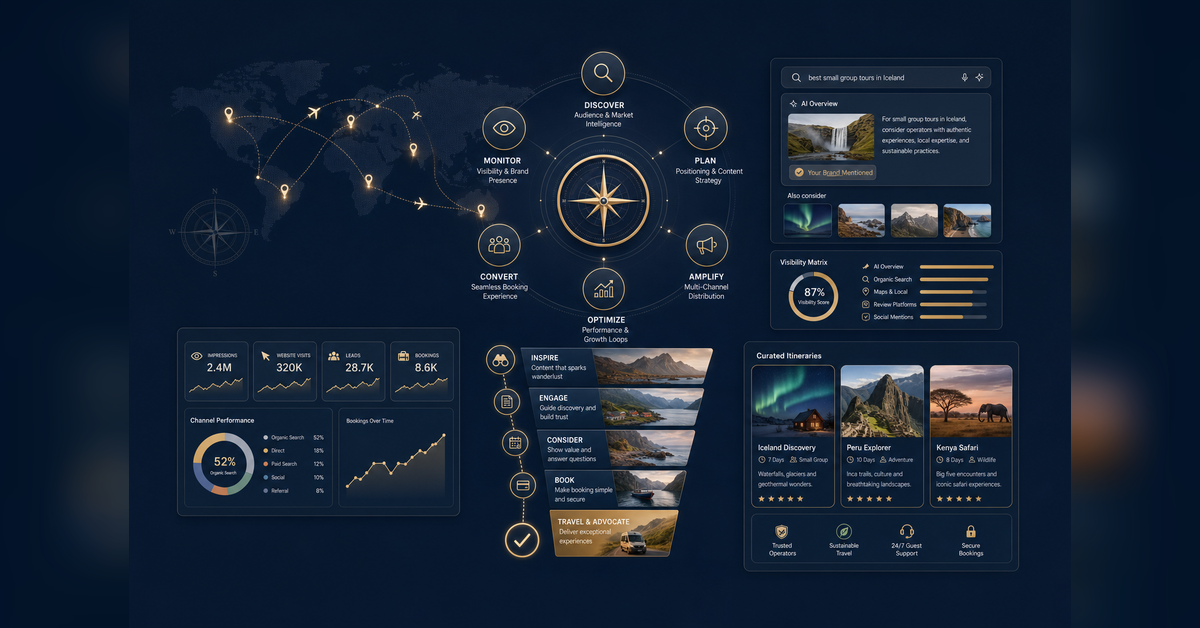
Every channel should support one specialty, one audience and one next step. A travel-agency marketing strategy growth becomes easier to manage when each channel has a primary role and a KPI tied to the traveler journey.
| Channel | Primary job | Useful KPI |
|---|---|---|
| SEO | Capture specialty and destination intent | Qualified inquiries from organic search |
| AI search | Enter recommendations and itinerary research | Observed mentions, referrals and assisted inquiries |
| Content | Prove expertise and answer planning questions | Planning actions and inquiry assists |
| Nurture long planning cycles | Consultations, reactivation and bookings | |
| Paid search | Capture high-intent demand quickly | Qualified-inquiry cost and booked-trip value |
| Paid social | Create awareness and retarget interest | Engaged specialty traffic and assisted inquiries |
| PR and digital PR | Build independent authority | Coverage, links and branded demand |
| Reviews | Reduce perceived risk | Review quality and conversion assistance |
| Referrals | Produce trusted introductions | Inquiry quality and booked value |
Use the channel scorecard to keep a travel-agency marketing strategy teams tied to business outcomes instead of comparing channels through incompatible engagement metrics.
Social content should lead to an owned page or audience. Paid traffic should not go to the homepage. PR should support a specialty or authority claim. Email should follow the traveler’s planning context. SEO should connect to a trip brief rather than a generic contact form.
Percepture’s omnichannel marketing approach can help assign those jobs and coordinate the handoffs between them.
Build a website that qualifies trip inquiries
The website should qualify the traveler before the advisor spends time building an itinerary. Within a travel-agency marketing strategy growth, a useful page system includes a homepage, advisor profiles, specialty pages, destination or experience pages, sample itineraries, a process and fee page, reviews, FAQs, a trip brief and a confirmation page.
The first trip-brief step can capture trip type, destination, dates, travelers, budget and email. A second step can collect interests, accessibility requirements, departure city, flexibility, urgency and preferred contact method.
Share enough to help the right advisor prepare. A team member will confirm fit and next steps before itinerary work begins.
The form should qualify the trip without making the traveler write the itinerary. It should state fit, process, fees and response expectations, preserve source data, use appropriate privacy and consent language, and route the inquiry to an accountable owner. Those requirements make the form an operating component of the travel-agency marketing strategy team, not just a website feature.
A travel-agency marketing strategy websites should connect conversion design with the broader customer journey. Percepture’s conversion rate optimization service addresses the form, page and handoff issues that can block qualified inquiries.
Coordinate SEO, AI search and content
Search within a travel-agency marketing strategy growth should begin with specialty, destination expertise, traveler type, occasion, trip format, local intent, logistics and comparisons. Useful themes include luxury Italy advisors, family safari planners, destination wedding agencies, accessible Europe specialists and custom Japan itinerary services.
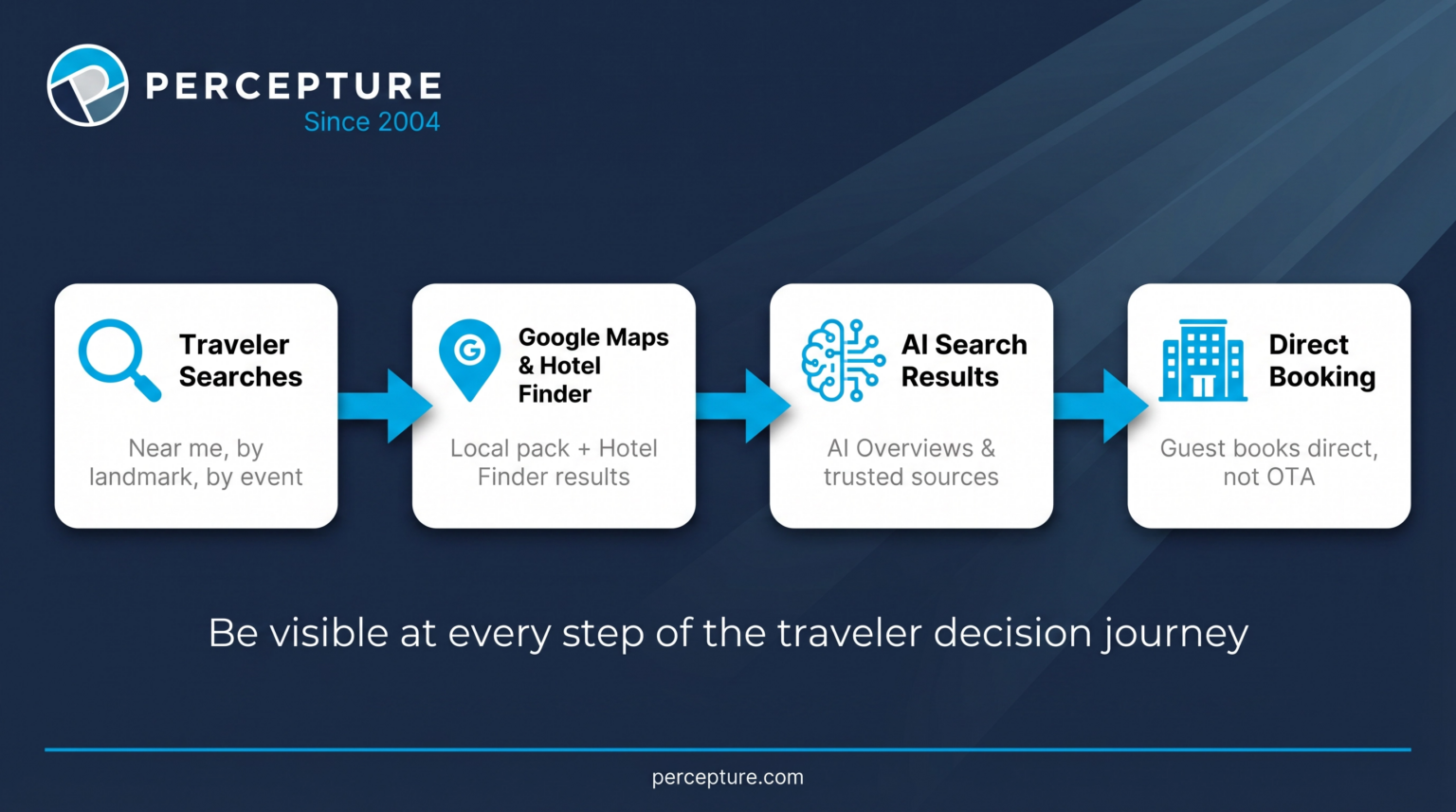
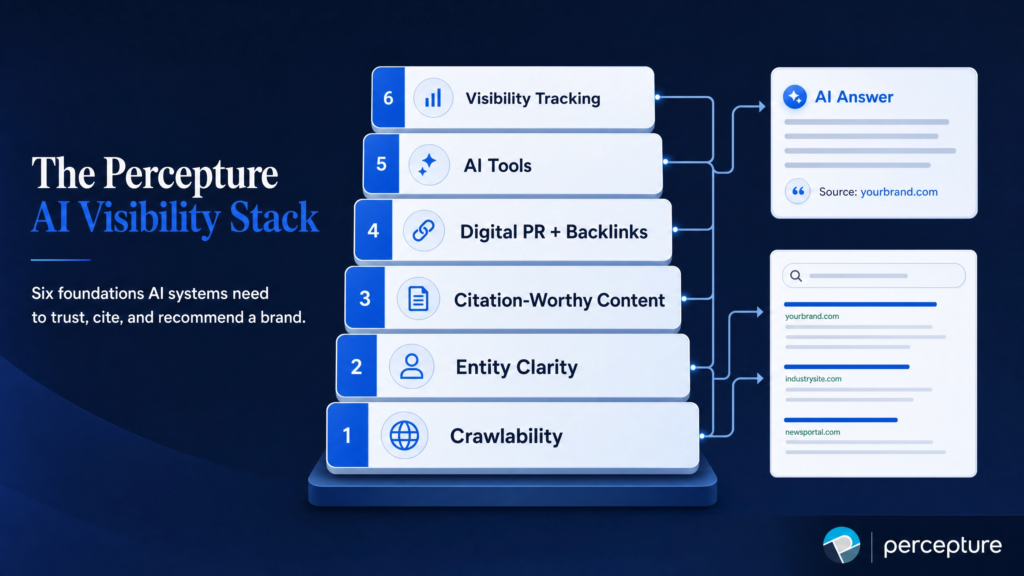
AI visibility is more useful when a recommendation can lead to a credible specialty page and a qualified trip brief. Publish clear information about who the agency serves, its destinations, credentials, process, fees, sample itineraries, traveler fit, reviews and next step. This gives the travel-agency marketing strategy discoverability a verifiable destination for recommendation traffic.
Travel-agency content should demonstrate judgment, not merely summarize destinations. Each major asset needs a traveler question, a specialty connection, proof, a CTA, a reuse plan and a refresh owner.
A travel-agency marketing strategy discoverability can draw on enterprise SEO methods, generative engine optimization services and content marketing systems. Travel-focused examples include Percepture’s guides to a hotel SEO agency, technical SEO for hotels and broader hotel SEO planning.
Content priorities and conversion paths
| Priority | Example | Next step |
|---|---|---|
| Specialty authority | Planning a private Japan journey | Trip brief |
| Traveler fit | European trips for multigenerational families | Consultation |
| Comparison | River cruise versus escorted tour | Advisor conversation |
| Logistics | How far ahead to plan a safari | Inquiry |
| Process | What a luxury travel advisor does | Process page |
| Objection | Is a travel advisor worth the fee? | Consultation |
The content mix should support the travel-agency marketing strategy funnel by matching each traveler question with a relevant advisor-led next step.

Use email and CRM to protect the planning cycle
Travel decisions can involve research, family input, timing changes and several conversations. Email within a travel-agency marketing strategy program should preserve that context rather than send every prospect the same promotion.
The core lifecycle includes inquiry confirmation, advisor introduction, consultation reminder, proposal follow-up, pre-trip service, post-trip review, referral and reactivation. Percepture’s email marketing service supports the campaign and lifecycle layer.
CRM stages should distinguish new inquiry, qualified, consultation scheduled, consultation complete, planning fee or deposit, itinerary in progress, proposal sent, booked, traveled, repeat or referral, and lost or disqualified.
Required fields include source, campaign, specialty, destination, budget, departure window, advisor, estimated or booked value, lost reason and next follow-up date. Marketing cannot improve lead quality if the CRM only records “contacted” and “closed.” These fields provide the evidence needed to evaluate a travel-agency marketing strategy investment by inquiry and booking outcomes.
A travel-agency marketing strategy follow-up needs visible ownership. Automation can confirm and remind, but it should not erase the traveler’s destination, timing or stated concerns.
Run paid media only after conversion readiness
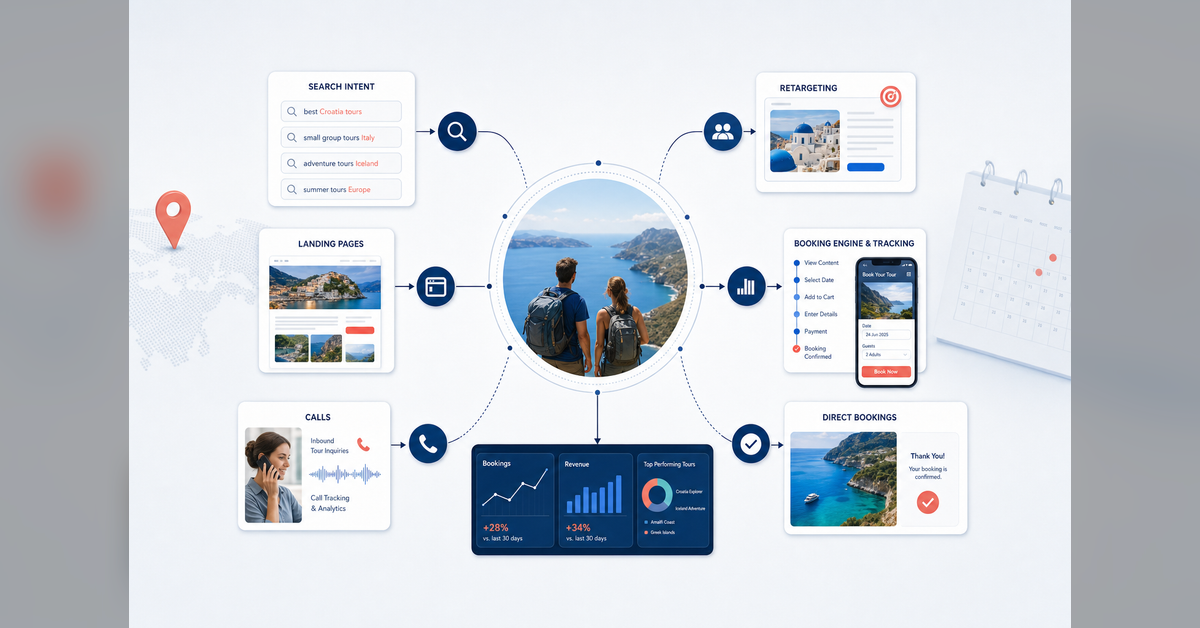
Use paid media in a travel-agency marketing strategy plan when specialty intent, landing pages, the trip brief, advisor response and booking tracking are ready. Avoid broad keywords, homepage traffic, context-free lead forms and reporting that stops at cost per form.
A cheap travel lead can be expensive when the trip does not fit the agency. A controlled paid test should use one audience, one offer, one landing experience and one definition of a qualified inquiry, allowing the travel-agency marketing strategy team to isolate what produced the result.
Percepture’s paid search service and paid media capabilities can support demand testing after the conversion path is in place. The hotel PPC agency guide provides adjacent travel-sector context without replacing travel-agency-specific campaign planning.
Build referral and partner demand
Potential partners in a travel-agency marketing strategy growth plan include wedding planners, wealth advisors, membership groups, schools, event planners, destination specialists, suppliers, media and past travelers. Give each partner a short specialty overview, a clear referral process, a trackable page and a response expectation.
Referral marketing works best when the partner understands exactly which traveler the agency serves. That clarity produces better introductions and makes it easier to explain why the advisor belongs in the planning process.
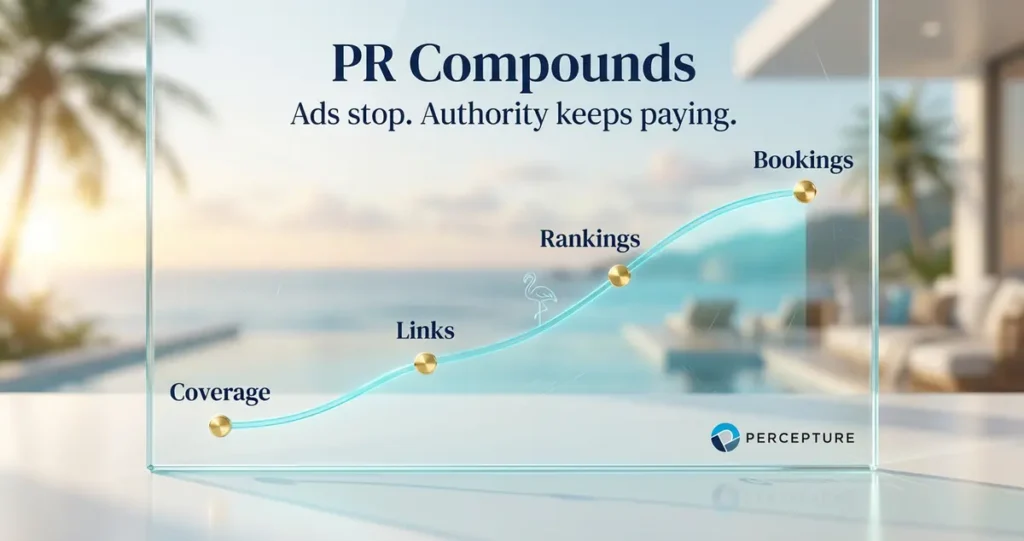
Public relations can reinforce the specialty with independent authority. Percepture supports that work through public relations and digital PR.
Execute the 90-day travel-agency growth plan
A 90-day travel-agency marketing strategy teams should build a working system and a useful evidence base. It should not attempt to launch every channel at once.
Days 1–30: Focus and instrument
Choose one specialty, define the revenue objective, audit inquiries and bookings, map traveler questions and define inquiry quality. Repair positioning, the trip brief, CRM stages, source tracking, ownership and routing.
Days 31–60: Build authority and conversion
Create one specialty pillar, two to four decision pages, one sample itinerary, a process or fee page, proof assets, a confirmation email and a partner asset. Improve metadata, advisor profiles, forms, response templates and analytics.
Days 61–90: Run one controlled demand test
Use one audience, promise, proof set, landing experience, trip brief and advisor owner. Measure qualified inquiries, consultations, proposals, bookings, trip value, response time, lost reasons and acquisition cost. Then scale, improve, narrow or stop.
This sequence keeps the travel-agency marketing strategy rollout dependent on readiness: establish the system, build the assets and only then test demand.
Digital marketing strategy for travel agency budgets: allocate by growth job
Budget shares within a travel-agency marketing strategy plan should be treated as planning ranges, not universal benchmarks. The mix depends on the agency’s starting point, advisor capacity, specialty economics and existing assets.
| Growth job | Illustrative share | Primary purpose |
|---|---|---|
| Positioning and research | 8%–12% | Choose the specialty and map traveler demand |
| Website and conversion | 18%–28% | Build qualification and routing |
| Content and SEO | 20%–30% | Create authority and capture intent |
| Email and CRM | 8%–15% | Protect follow-up and planning context |
| Paid test | 15%–30% | Test controlled demand |
| PR and partnerships | 8%–15% | Build authority and trusted introductions |
| Measurement | 5%–10% | Connect activity to qualified inquiries and bookings |
Fix the trip brief first, concentrate on one specialty, account for advisor capacity and fund the creative and landing-page work required by the test. The smallest practical travel-agency marketing strategy budget is the budget that can produce enough qualified opportunities to learn.
Score inquiry quality
A completed form is not automatically a qualified lead. The planning score below gives agency leaders a transparent way to discuss business fit and readiness within a travel-agency marketing strategy program. These are planning bands, not industry standards.
| Factor | Points |
|---|---|
| Specialty fit | 15 |
| Destination or product fit | 10 |
| Travel dates and flexibility | 10 |
| Budget fit | 15 |
| Group or traveler fit | 10 |
| Planning readiness | 10 |
| Advisor-fee acceptance | 10 |
| Contact completeness | 5 |
| Response and engagement | 5 |
| Estimated trip value and repeat potential | 10 |
80–100: priority advisor response. 65–79: qualified with clarification. 50–64: nurture or alternate route. Below 50: disqualify, refer or use low-touch follow-up.
Apply the same score definitions across the travel-agency marketing strategy channels so source comparisons reflect consistent standards.
Do not use lead scoring to discriminate against protected classes or accessibility needs. Score business fit, readiness and trip requirements.
Measure booked-trip growth
Cost per lead is incomplete without lead quality. A booked-trip acquisition cost is more useful than a cheap form fill. Long travel-planning windows also require delayed conversion review when evaluating a travel-agency marketing strategy program.
| Stage | Metric |
|---|---|
| Discoverability | Qualified search impressions, branded demand and referrals |
| Engagement | Specialty-page use, itinerary views and return visits |
| Inquiry | Trip-brief starts and completions |
| Qualification | Score, specialty fit and budget fit |
| Conversation | Consultations scheduled and completed |
| Proposal | Proposals sent and accepted |
| Booking | Booked trips, value and margin where available |
| Retention | Reviews, referrals and repeat trips |
Track source, campaign, first and assisted touch, inquiry date, response time, consultation, proposal, booking, trip value, advisor, lost reason and referral. Owner referrals, branded search and organic content may assist one another.
A measurable travel-agency marketing strategy growth needs more than channel dashboards. Percepture’s attribution and analytics service can help connect the stages without pretending that one touch caused every booking.
Avoid common travel-agency marketing mistakes
The most common mistakes are vague positioning, copied supplier content, social activity without an owned destination, homepage paid traffic, weak inquiry forms, missing routing, shallow CRM stages, context-free automation and cheap-lead chasing.
Other risks include missing privacy controls, no referral loop, no lost-reason tracking and no quarterly budget reallocation. The strategy fails when marketing creates demand the agency cannot qualify, serve or measure.
A disciplined travel-agency marketing strategy operations checks capacity before increasing demand. If advisors cannot respond consistently or booking outcomes remain invisible, the next investment should repair the system rather than add traffic.
Use travel proof for the business problem it demonstrates
Travel-sector examples should not be presented as travel-agency-specific results when they address a different business model. Their value to a travel-agency marketing strategy plan is in the operating lesson.
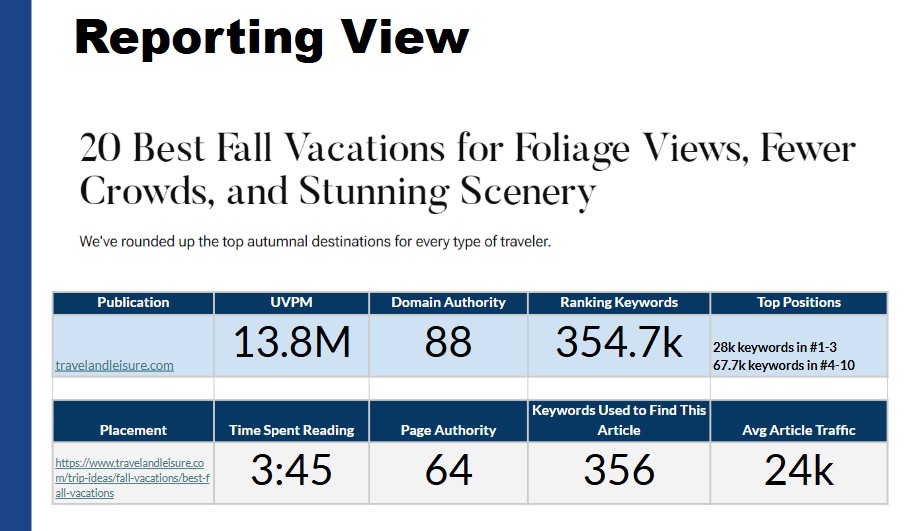
The Amazon and Phantom Ranch case study demonstrates an earned-authority problem. Percepture’s Greater Williamsburg case study shows how search and storytelling can lead visitors toward partner pathways and a next planning step.

Why Percepture has a point of view
Percepture combines travel and tourism experience with search, GEO, public relations, content, paid media, conversion and analytics capabilities. That combination supports a travel-agency marketing strategy work designed around the path from traveler demand to a measurable business outcome.
Explore Percepture’s travel and tourism experience to see how the agency approaches search and AI visibility, editorial authority, paid demand, content and conversion systems.
Compare the investment paths
Review Percepture’s published pricing options before deciding which part of a travel-agency marketing strategy growth should receive the next investment: positioning, search, content, paid demand, PR or measurement.
Frequently asked questions
What is a digital marketing strategy for a travel agency?
A digital marketing strategy for travel agency growth is a coordinated plan for choosing a valuable specialty, attracting suitable travelers, proving advisor expertise, capturing trip details, routing inquiries and measuring bookings. It gives search, content, email, paid media, PR and referrals defined jobs within one inquiry-to-itinerary system.
Which digital channels work best for travel agencies?
The best mix in a travel-agency marketing strategy plan depends on the specialty and traveler journey. SEO captures active research, content proves expertise, email nurtures longer decisions, PR builds independent authority, paid search tests high-intent demand and referrals create trusted introductions. Each channel should have one primary job and lead toward an owned page or qualified trip brief.
How should a travel agency choose a specialty?
Score potential specialties by advisor expertise, traveler demand, supplier fit, trip value, margin, proof, repeat potential and team capacity. The right choice is specific enough to build authority around but economically meaningful enough to support the required planning and marketing work.
How can a travel agency generate qualified leads?
A travel-agency marketing strategy lead generation should start with clear specialty positioning and pages that answer real planning questions. Send visitors to a progressive trip brief that captures destination, timing, travelers, budget and readiness. Route the inquiry to the right advisor, preserve the source and measure whether it becomes a consultation, proposal and booking.
What should a travel-agency website include?
A practical website includes a homepage, advisor profiles, specialty pages, destination or experience pages, sample itineraries, process and fee information, reviews, FAQs, a trip brief and a confirmation page. Each page should explain fit, demonstrate judgment and make the next step clear.
How should a travel-agency inquiry form work?
The form should collect enough detail to prepare the right advisor without forcing the traveler to design the itinerary. Begin with trip type, destination, dates, traveler count, budget and email. Use a second step for interests, accessibility requirements, flexibility, urgency and preferred contact method.
Does SEO work for independent travel agents?
SEO can support independent advisors when the site targets a clear specialty and connects useful pages to a qualified inquiry path. Generic destination summaries are less useful than content showing advisor judgment, traveler fit, logistics, comparisons, process, fees and sample itineraries.
How should travel agencies use email marketing?
Email should preserve the traveler’s planning context across inquiry confirmation, advisor introduction, consultation reminders, proposal follow-up, pre-trip service, post-trip review, referrals and reactivation. Segment messages by specialty, destination, stage and traveler needs rather than sending one general promotion to everyone.
When should a travel agency use Google Ads?
Use paid search after the agency has clear specialty intent, a focused landing page, a working trip brief, advisor ownership and booking tracking. Begin with one controlled demand test. Do not judge success only by clicks or inexpensive form completions.
What should a travel agency marketing budget include?
The budget should cover positioning and research, website conversion, content and SEO, email and CRM, paid testing, PR or partnerships, and measurement. It should also account for advisor capacity, creative production, landing pages and the volume required to produce a useful learning signal.
How should travel-agency leads be measured?
Measure trip-brief starts and completions, qualification score, consultations, proposals, bookings, trip value, response time, lost reasons, reviews, referrals and repeat trips. Preserve source and campaign data so the team can compare booked-trip acquisition cost rather than stopping at cost per lead.
What can a travel agency accomplish in 90 days?
In 90 days, an agency can select one specialty, repair its positioning and trip brief, define CRM stages, build core authority pages and run one controlled demand test. The aim is a working funnel and reliable evidence about inquiry quality—not a promise of instant transformation.
Build a travel-agency funnel that produces trips worth planning
Percepture can turn a digital marketing strategy for travel agency growth into a focused operating plan connecting specialty demand, qualified inquiries, advisor workflows and booked-trip measurement.