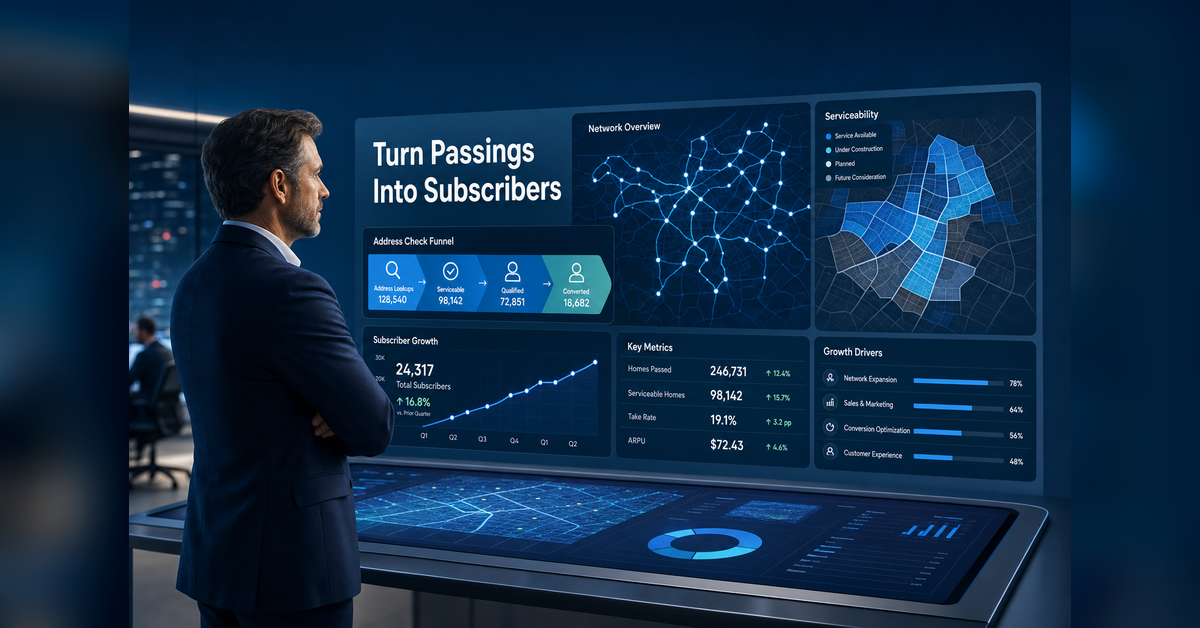

Fiber Take-Rate Marketing turns serviceable fiber passings into subscribers. It connects address-level targeting, local trust, SEO, GEO, paid media, direct mail, PR, offer strategy, CRM follow-up, install scheduling, and referral programs so the network starts producing revenue.
A fiber passing is not a customer. It is only an opportunity. If the market does not know the provider, trust the build, understand the offer, check availability, schedule installation, and complete the handoff, the ISP can have a strong network and still miss its subscriber goals.
Trusted by broadband, telecom, infrastructure, and complex-growth teams
Fiber take-rate depends on trust before the address check, not just media spend after the build. Percepture brings PR, SEO, GEO, paid media, analytics, lead generation, and telecom-category experience to the work of turning passings into subscribers.








What is Fiber Take-Rate Marketing?
Fiber Take-Rate Marketing is the serviceability-aware strategy ISPs use to turn fiber passings into subscribers. It starts with where the network can sell, then builds local trust, drives address checks, converts pre-registrations, supports install scheduling, nurtures non-ready buyers, and reports subscriber movement by neighborhood, segment, and campaign.
Executive Summary for Fiber Growth Leaders
Passings are not revenue
A passing shows market opportunity. Revenue starts when a serviceable location becomes an active subscriber.
Serviceability comes first
Campaigns should match addresses that are serviceable now, coming soon, under construction, planned, or not yet serviceable.
Trust drives action
People check availability faster when they understand the provider, the build, the offer, and the install path.
The address check is a conversion event
Marketing must push qualified buyers to check availability, pre-register, call, or schedule an install.
Follow-up protects demand
Fast routing, email, SMS, AI-assisted reminders, and human handoff keep leads from going cold.
Take-rate is measured by movement
The dashboard should track subscribers, installs, cost per install, and take rate by serviceable area.
Who This Guide Is For
Regional ISPs and FTTH providers
You have passings, expansion markets, or launch neighborhoods and need stronger adoption.
Municipal broadband teams
You need community trust, clean education, and a sign-up path that supports public adoption goals.
Private equity operating teams
You need subscriber growth visibility across footprint, market, channel, and sales handoff.
CMOs and growth leaders
You need marketing that connects search, PR, paid media, direct mail, CRM, and install outcomes.
This Fiber Take-Rate Marketing guide is for teams that need adoption by address, not just broader brand activity. If you need the broader market-conditioning view, start with Percepture’s ISP marketing agency guide. If you need the operating calendar, use the ISP marketing plan.
Fiber Passings Are Not Revenue
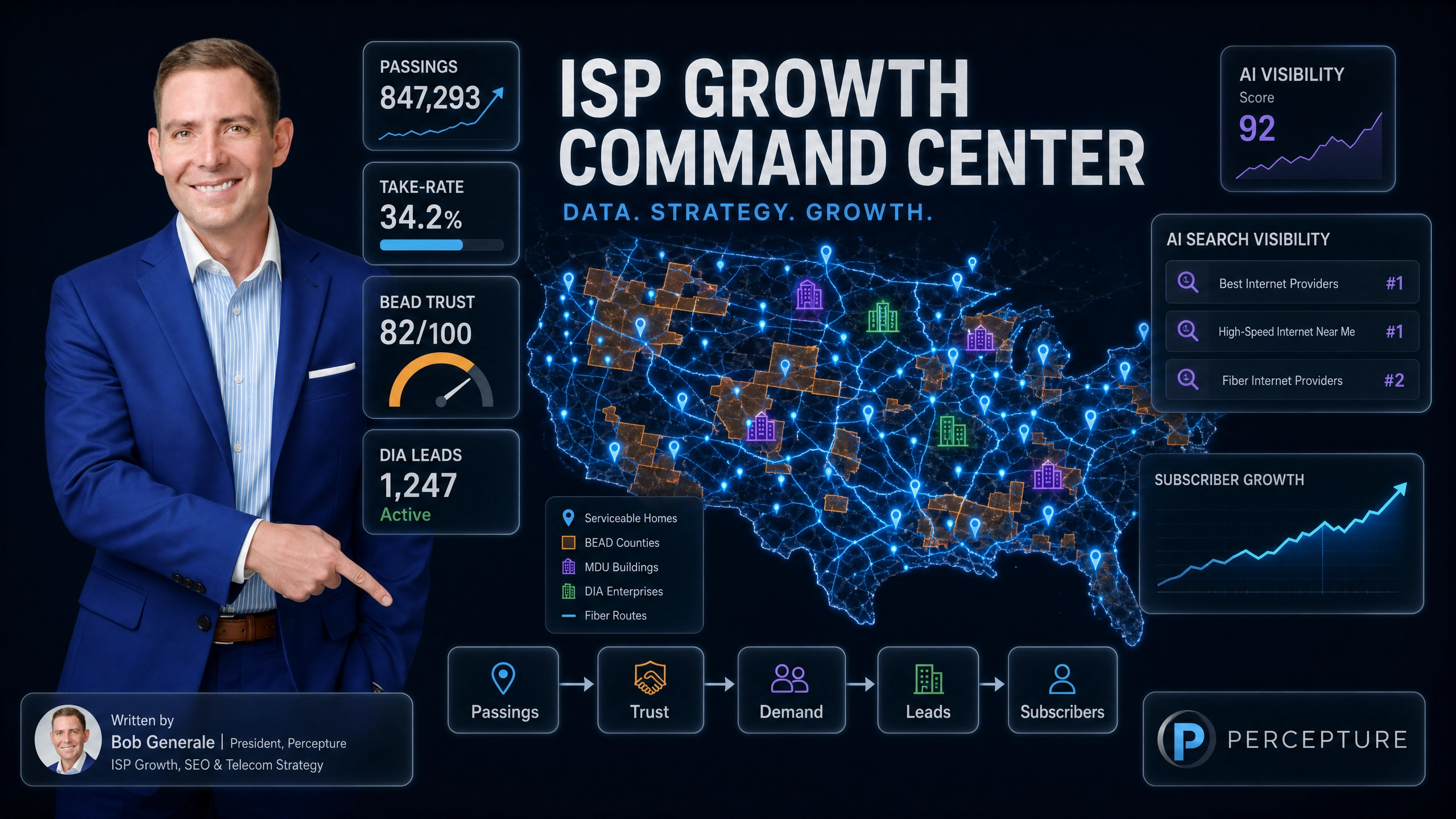
Broadband teams often celebrate passings like they are booked revenue. They are not. Passings show where the provider can potentially serve; take-rate shows whether the market is converting.
A passing does not mean the household knows the provider exists. It does not mean the household trusts the provider. It does not mean the offer is clear, the address-check path is easy, or the install will be scheduled without friction.
A fiber provider still has to create movement: passing, awareness, trust, address search, keep-me-updated form, pre-registration, offer selection, install scheduled, subscriber activation, and referral. Fiber Take-Rate Marketing is where infrastructure meets market conditioning.
What Is Fiber Take-Rate Marketing?
Fiber Take-Rate Marketing is the marketing system used to increase the percentage of serviceable fiber locations that become subscribers. It combines serviceability data, local messaging, content, SEO, GEO, PR, paid media, direct mail, retargeting, CRM follow-up, install support, reviews, and referral campaigns.
If a provider passes 10,000 homes and 3,000 become subscribers, the take rate is 30%. For a deeper metric definition, see Percepture’s guide to what is fiber take rate. This page focuses on the Fiber Take-Rate Marketing system that moves more serviceable locations through the funnel.
Take-rate depends on market competition, price, product quality, trust, construction timing, offer strength, follow-up, local awareness, and install capacity. That is why Fiber Take-Rate Marketing should be diagnosed market by market instead of judged against one universal benchmark.
Fiber Take-Rate Marketing vs. General ISP Marketing
| Category | General ISP Marketing | Fiber Take-Rate Marketing |
|---|---|---|
| Primary goal | Build awareness and lead flow for the ISP brand. | Convert serviceable passings into address checks, installs, and subscribers. |
| Starting point | May start with audience, campaign, or channel. | Starts with serviceability, passings, build status, and sales readiness. |
| Core KPI | Traffic, calls, leads, impressions, and awareness. | Address checks, serviceable leads, installs, subscribers, cost per install, and take-rate by area. |
| Best use | Supports the full ISP brand and long-term visibility. | Works best when the provider has serviceable homes, launch markets, or low-adoption areas. |
| Main risk | Campaigns can become broad and vague. | Programs fail when serviceability, offer, follow-up, and install scheduling are disconnected. |
| Primary CTA | Contact sales, learn more, or request a quote. | Check availability, pre-register, schedule install, or route to the right sales path. |
The distinction matters because Fiber Take-Rate Marketing begins with sellable addresses and ends with subscriber movement. For the wider discipline, read what is ISP marketing and the deeper ISP marketing strategy guide.
Calculate Your Take-Rate Gap
Before adding spend, use Fiber Take-Rate Marketing to identify where the funnel is leaking: serviceability, awareness, address checks, offer clarity, follow-up, install scheduling, or reporting.
The Fiber Passings-to-Subscribers Funnel
The Fiber Passings-to-Subscribers Funnel shows how a serviceable location moves from passing to address search, keep-me-updated form, pre-registration, offer selection, install scheduling, subscriber activation, and referral. Fiber Take-Rate Marketing gives each movement a message, channel, CTA, and follow-up path. For a narrower conversion-path guide, see how to convert fiber passings into subscribers.
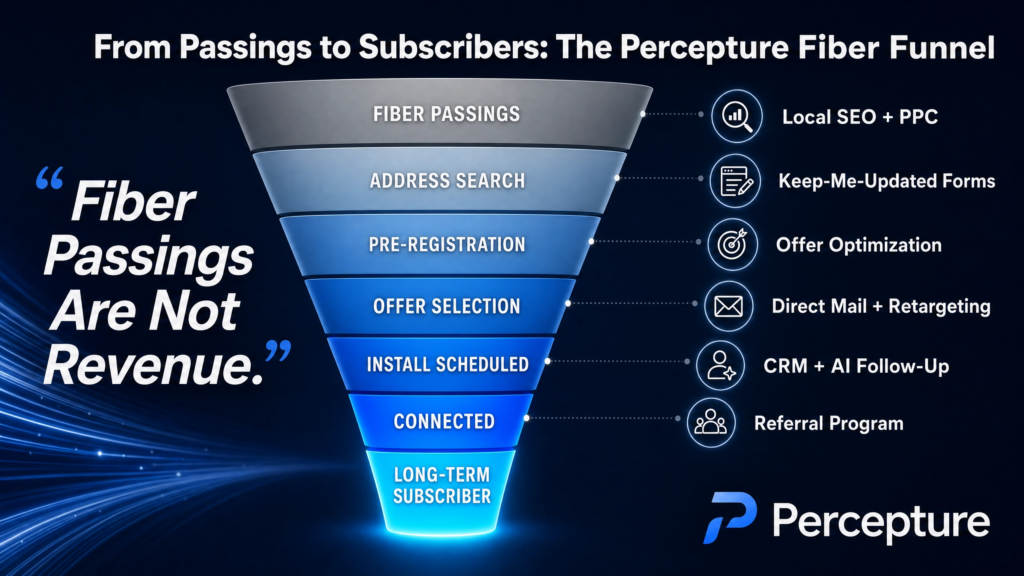
The ten movements that matter
- Passing: the address can potentially be served.
- Awareness: the buyer learns the provider exists.
- Trust: the market believes the provider, build, and offer are real.
- Address search: the buyer checks availability.
- Keep me updated: future demand is captured when service is not ready.
- Pre-registration: launch interest is captured before sales open.
- Offer selection: the buyer understands speed, price, install, and terms.
- Install scheduled: demand becomes a dated commitment.
- Subscriber: installation is complete and service is active.
- Referral: a satisfied customer creates local proof.
The Percepture ISP Trust-to-Take-Rate System
The Percepture ISP Trust-to-Take-Rate System connects infrastructure truth, entity clarity, community trust, demand capture, conversion architecture, and proof compounding into one Fiber Take-Rate Marketing growth system for broadband providers.
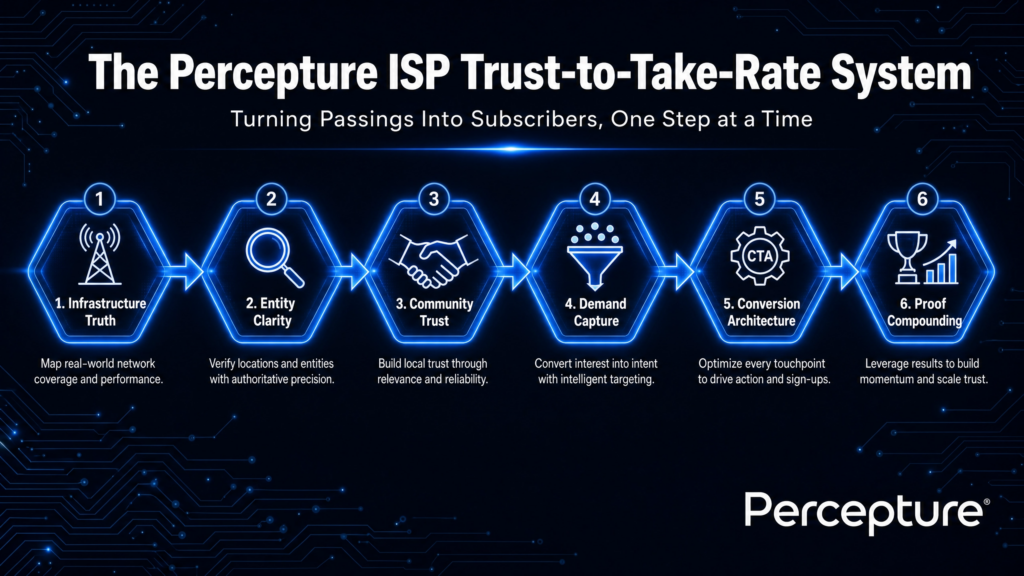
Infrastructure truth
The campaign must match real serviceability, build timing, speed availability, and install readiness.
Entity clarity
Search engines, AI systems, buyers, and communities need to understand who the provider is, where it operates, and what it offers.
Community trust
Fiber is physical. Construction, access, roads, crews, local questions, and reputation all affect adoption.
Demand capture
Capture address checks, pre-registrations, calls, quote requests, MDU inquiries, and business fiber consultations.
Conversion architecture
Landing pages, forms, CRM routing, follow-up, install scheduling, and retargeting must work together.
Proof compounding
Reviews, PR, customer stories, local content, and search visibility make the next buyer easier to convert.
The 90-Day Fiber Take-Rate Marketing Plan
A take-rate program should become an operating calendar, not a theory deck. The first 90 days should clarify serviceability, identify the highest-friction markets, create the pages and proof needed to build trust, and tighten the handoff from address check to install.
Days 1 to 30 are about the truth layer. Percepture reviews serviceability files, current landing pages, address-search behavior, paid media targeting, call paths, CRM routing, local search visibility, reviews, and install capacity. The goal is to separate an awareness problem from a conversion problem, a data problem, a follow-up problem, or an operations problem.
Days 31 to 60 are about market conditioning. The program should launch or improve local pages, FAQs, construction or availability messaging, direct mail segments, paid search campaigns, remarketing audiences, community PR, and pre-registration flows. The message should change by segment: serviceable now, coming soon, under construction, MDU, business fiber, or outside the current footprint.
Days 61 to 90 are about conversion and reporting. The team should test offers, shorten forms, improve address-check CTAs, route leads by serviceability, trigger nurture sequences, review install scheduling friction, and report subscriber movement by market. The outcome is not only better marketing. It is a clearer operating system for turning the next set of passings into revenue.
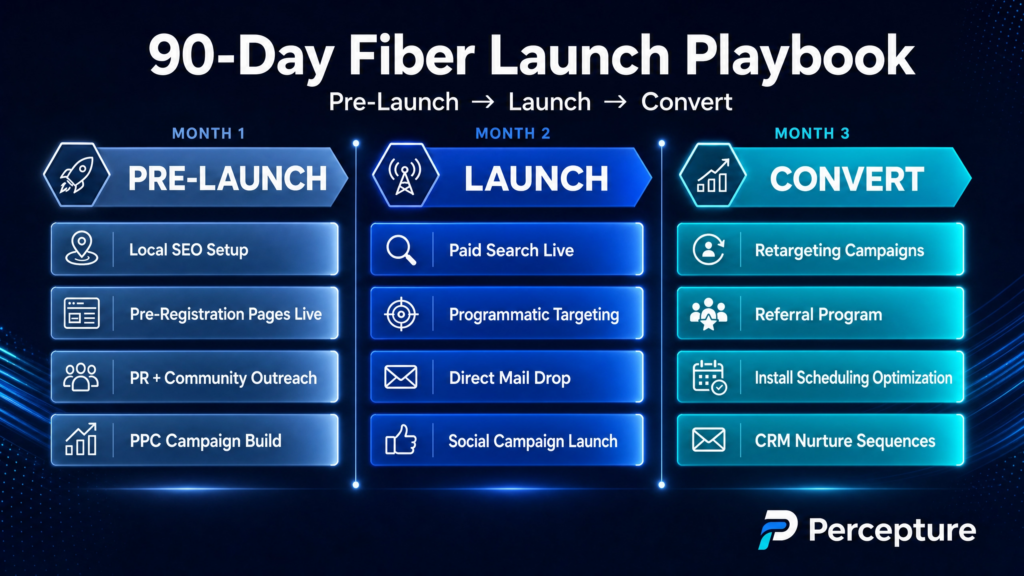
90-Day Roadmap by Workstream
| Phase | Primary work | Take-rate outcome |
|---|---|---|
| Days 1–30 | Audit serviceability data, pages, search visibility, media targeting, CRM routing, call tracking, and install handoff. | Leadership sees where the funnel is leaking before spend increases. |
| Days 31–60 | Launch local pages, direct answers, PR themes, paid media segments, direct mail lists, retargeting, and keep-me-updated flows. | More serviceable buyers understand the offer and know what action to take. |
| Days 61–90 | Test offers, improve address-check conversion, trigger nurture, route leads, and report installs and subscribers by market. | The program starts measuring movement from passings to subscribers. |
Map Serviceability Before You Spend
Fiber Take-Rate Marketing starts with accuracy. A campaign should know which homes are serviceable now, which are coming soon, which are under construction, which are planned, and which cannot be served yet.
The map should answer practical questions: Which addresses can buy today? Which passings have low adoption? Which areas have high search demand? Which neighborhoods need trust before conversion? Which non-serviceable searches show future build demand?

Segmentation should include serviceable now, serviceable soon, under construction, build planned, not serviceable, competitor-heavy, abandoned address checks, pre-registration areas, MDU targets, and business fiber targets. Fiber Take-Rate Marketing uses those segments to avoid one-message-fits-all outreach. MDU and property-level sales motions need different messaging; Percepture’s MDU broadband marketing guide covers that buyer path.
Segment the Footprint Into Sales Plays
The same fiber network can contain several different sales realities. One neighborhood may be ready to buy today. Another may need construction updates. A third may be dominated by a cable incumbent with strong bundle pricing. A fourth may have search demand but weak install capacity. A fifth may include apartments where the resident wants faster internet but the owner controls access.
That is why the footprint should be translated into sales plays before the media plan is scaled. A sales play gives each segment a message, offer, landing page, CTA, follow-up path, and reporting view. The goal is not to make the campaign more complicated. The goal is to stop sending the same message to buyers who are in different stages of readiness.
For serviceable-now addresses, the primary action is usually check availability or schedule install. For coming-soon addresses, the action may be pre-register or get launch updates. For not-yet-serviceable addresses, the action should capture future demand without frustrating the buyer. For MDUs, the offer may need to speak to owner economics and resident experience. For business fiber, the CTA may need to route to a consultative sales path.
Fiber Footprint Sales Plays
| Segment | Primary buyer question | Best CTA | Follow-up path |
|---|---|---|---|
| Serviceable now | Can I get fiber at my address today? | Check availability or schedule install. | Fast offer reminder, install prompt, call/SMS support, retargeting. |
| Coming soon | When will service be available? | Pre-register or get launch updates. | Construction updates, launch alert, offer preview, early install scheduling. |
| Under construction | What is happening in my neighborhood? | Get construction and availability updates. | Expectation setting, timeline education, trust content, launch nurture. |
| Low-adoption serviceable area | Why should I switch? | Compare plans or check address. | Local proof, switch messaging, offer test, direct mail, review campaign. |
| MDU or multifamily | How does this help the property and residents? | Request a property broadband review. | Owner outreach, resident launch kit, install coordination, managed Wi-Fi education. |
| Business fiber or DIA | Can the provider support uptime, route diversity, and escalation? | Request a business fiber consultation. | Sales engineering handoff, SLA proof, building qualification, account-based nurture. |
This segmentation also protects the brand. A resident who cannot buy today should not be pushed into a dead-end checkout path. A business fiber prospect should not be treated like a residential shopper. A property owner should not receive a consumer-speed pitch when the real decision is about resident experience, install risk, and building operations.
Diagnose the Take-Rate Problem
A Fiber Take-Rate Marketing diagnosis should separate awareness problems from conversion problems, follow-up problems, and install-readiness problems.
| Symptom | Likely cause | Marketing fix | KPI to watch |
|---|---|---|---|
| Low traffic in serviceable areas | Weak awareness or weak local SEO. | Local SEO, direct mail, PR, paid search, and neighborhood campaigns. | Serviceable page traffic, branded search, address checks. |
| High traffic but low address checks | Weak CTA, unclear offer, or poor page design. | Better landing pages, stronger address-check CTA, and clearer plans. | Address-check conversion rate. |
| Many address checks but few installs | Poor follow-up, unclear offer, or install friction. | CRM routing, SMS/email follow-up, and install reminder flow. | Lead-to-install rate. |
| Many non-serviceable searches | Demand exists outside the current footprint. | Keep-me-updated forms, construction updates, and nurture. | Future-market demand list. |
| High pre-registration but slow activation | Construction timing or communication gap. | Launch updates, install prompts, and expectation setting. | Pre-registration-to-install conversion. |
| Good lead volume but poor sales quality | Wrong targeting or weak qualification. | Serviceability filters, segment-specific forms, and lead scoring. | Cost per serviceable lead. |
Build Trust Before You Push the Offer
Fiber buyers do not only ask whether the service is fast. They ask whether it is available at their address, whether the provider is real, whether installation will be painful, whether the price will change, and whether neighbors are switching.
Trust-building assets include construction updates, installation explainers, neighborhood availability pages, pricing and install FAQs, local PR, reviews, customer proof, support information, and comparison pages. Fiber Take-Rate Marketing uses those assets to reduce hesitation before the address check and install commitment. If a provider is entering a new market, Percepture’s guide on how to market fiber internet in a new service area can support the launch plan.
PR should not sit apart from SEO or conversion. The right digital PR services can explain what is being built, why it matters, and why the provider is credible.
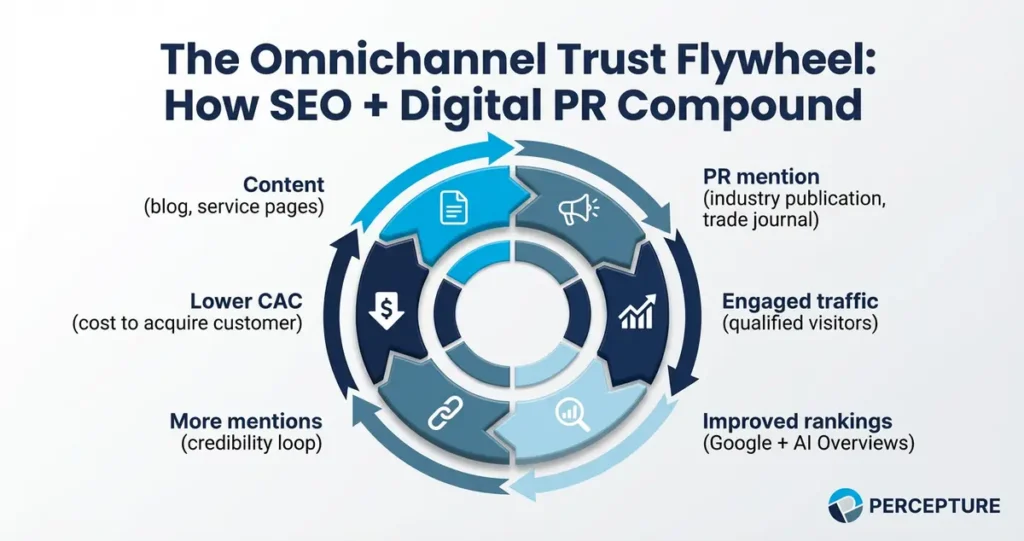
For grant-funded or community-sensitive broadband work, the same trust logic applies. Percepture’s BEAD marketing and subscriber adoption resource addresses community adoption and education.
BEAD, MDU, and Business Fiber Take-Rate Paths
Take-rate is not one buyer journey. A rural BEAD market, a multifamily building, and a business fiber corridor each need different proof and different calls to action. The best Fiber Take-Rate Marketing program separates these paths instead of forcing every buyer into the same residential offer.
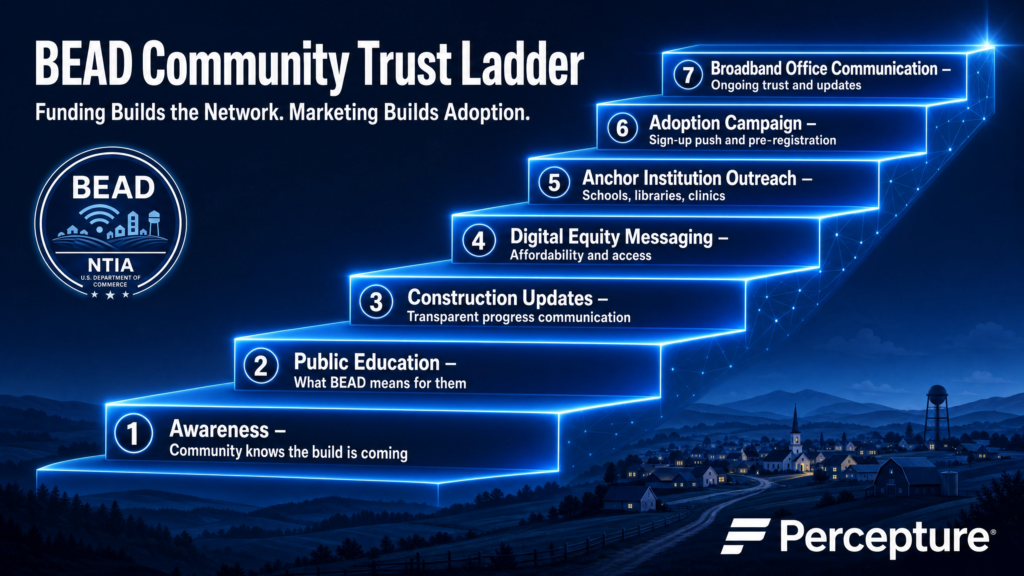
For BEAD-funded networks, the work starts with public trust. Residents need to know what is being built, why it matters, when service is likely to arrive, how affordability will be explained, and how they can stay informed. The campaign should support adoption without getting ahead of construction reality.
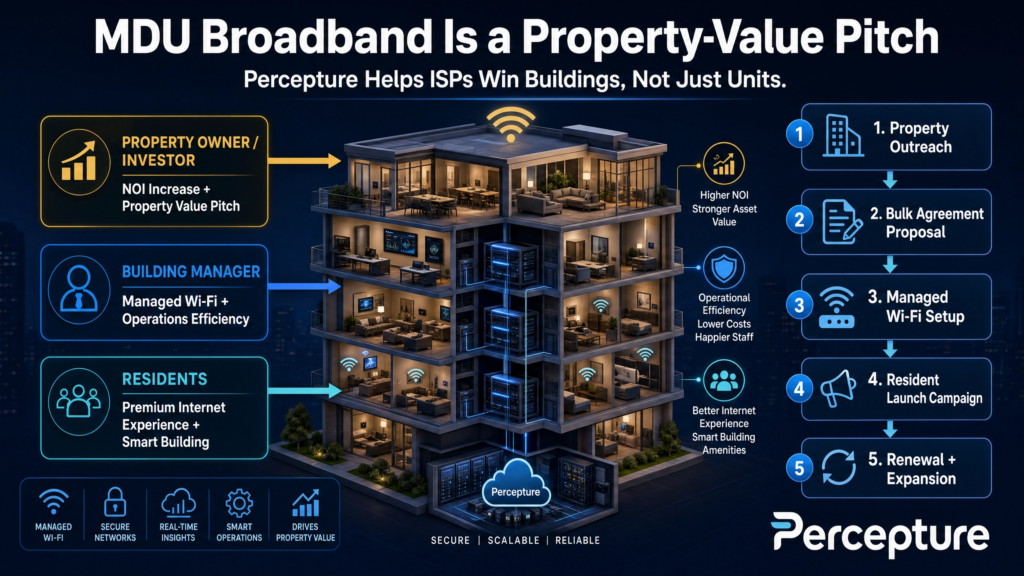
For MDU broadband, the buyer may be an owner, asset manager, property manager, developer, or resident. The offer is not only speed. It is resident experience, installation coordination, building readiness, bulk agreement value, managed Wi-Fi positioning, and support confidence.
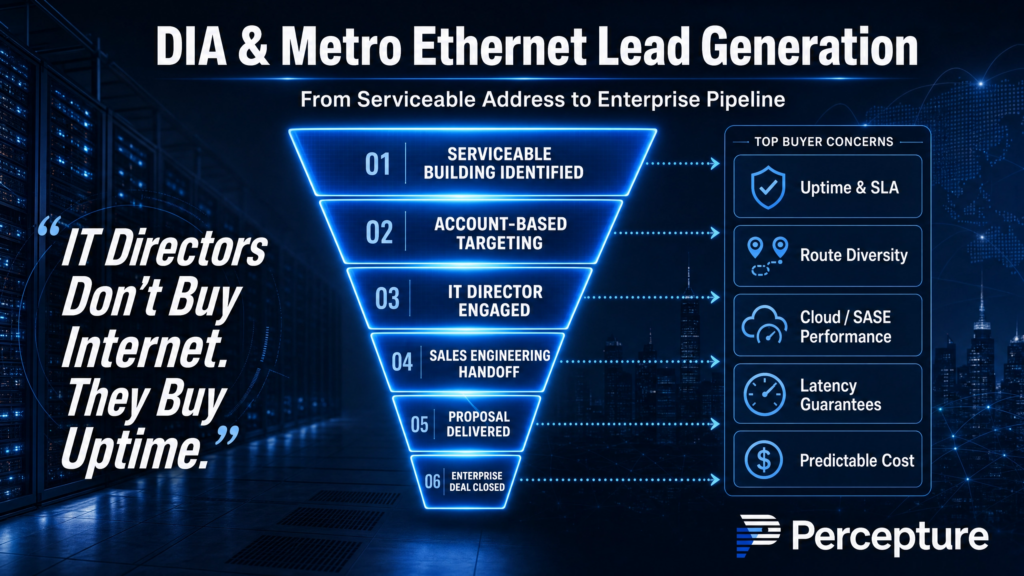
For DIA, metro Ethernet, and business fiber, the buyer wants uptime, route diversity, SLA clarity, escalation, cloud performance, and cost predictability. In that market, take-rate is less about household adoption and more about qualified account movement from serviceable building to sales conversation.
Create Address-Check Demand
For residential fiber, the address check is often the most important conversion event before installation. Every channel should know what it wants the buyer to do next.
Address-check demand can come from local SEO, Google Business Profile optimization, paid search, direct mail, programmatic awareness, retargeting, email, SMS, community PR, referrals, and social proof campaigns. In Fiber Take-Rate Marketing, a strong page keeps the form visible, fields short, privacy clear, next steps obvious, and routing tied to serviceable, coming-soon, not-serviceable, business, or MDU status.
Residential providers should also connect this work to an FTTH marketing strategy that separates launch markets, mature markets, competitor-heavy areas, and neighborhoods with stalled adoption.
Fix the Offer and Landing Page
Take-rate can stall when the offer is confusing. A good fiber offer makes the next step obvious without creating claims the operation cannot support.
Useful offer elements include speed tiers, price clarity, install cost, contract terms, equipment details, upload and download explanation, local support, switch-from-cable pain points, remote-work use cases, gaming and streaming use cases, and incentives when accurate.
Fiber Take-Rate Marketing treats the landing page as a sales handoff, not just a brochure. The page should include a direct answer, address-check module, offer cards, why fiber section, installation explanation, local proof, FAQs, reviews, pre-registration path, call tracking, and a clear next step. Percepture’s conversion rate optimization work helps connect page design to measurable action.
Use SEO, GEO, Paid Media, Direct Mail, and PR Together
Fiber Take-Rate Marketing works best when channels reinforce each other. No single channel owns adoption.
Local SEO captures service-area, fiber availability, comparison, installation, and near-me demand. Percepture’s local SEO for fiber internet providers guide explains how market pages should map to search behavior. For deeper execution, Percepture’s organic SEO services support technical, content, and authority work.
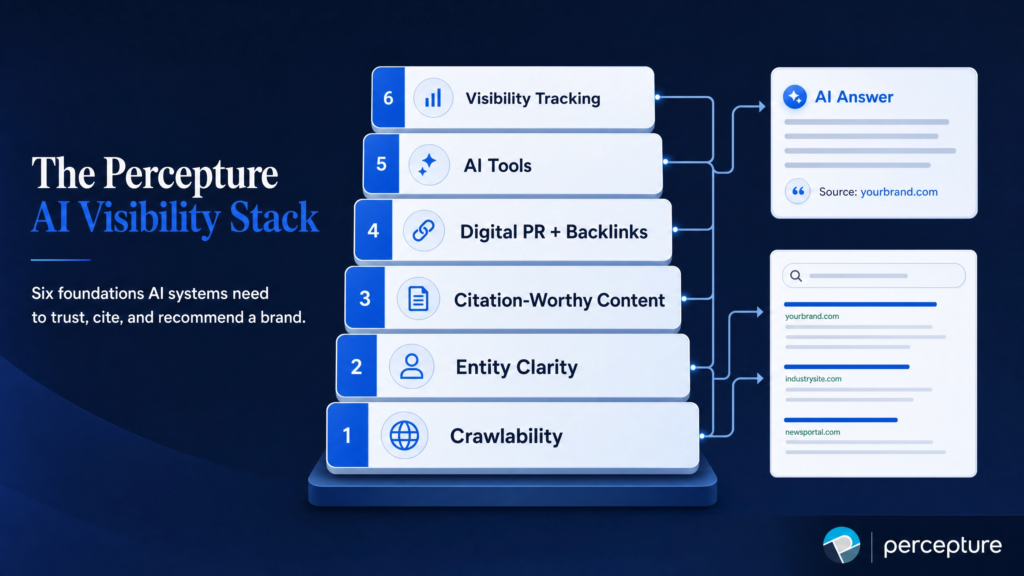
GEO and AI search need entity clarity, direct answers, FAQs, schema, authorship, and proof-rich content. Percepture’s generative engine optimization services help make complex providers easier for AI systems and buyers to understand.
Paid search should focus on high-intent fiber and business connectivity terms while suppressing waste outside the footprint. In Fiber Take-Rate Marketing, paid media should be checked against serviceability and sales readiness before budgets scale. Percepture’s paid search and media buying teams can support serviceability-aware demand generation across search, retargeting, and awareness media.
Build the Channel Rhythm Around Buyer Readiness
Fiber growth is not one campaign launch. It is a rhythm of market education, demand capture, follow-up, and proof. The rhythm should change as the market moves from future build to active serviceability.
Before a market is live, PR, community education, local pages, construction explainers, and pre-registration should do the heavy lifting. During launch, paid search, direct mail, retargeting, email, SMS, and neighborhood-specific landing pages should push buyers toward address checks and installs. After launch, the program should shift toward low-adoption areas, abandoned address checks, reviews, referrals, win-back offers, and competitor comparison pages.
Direct mail still matters when it follows serviceability. A postcard to the wrong home wastes money and creates friction. A postcard to the right home, supported by local search, retargeting, and a clean address-check page, can reinforce the message across channels. The same is true for community PR. A launch story should not be treated as a one-day announcement. It should become search content, FAQ content, social proof, sales enablement, and neighborhood-level trust.
Fiber Channel Calendar
| Market stage | Primary message | Best channels | What to measure |
|---|---|---|---|
| Pre-build | A new fiber option is coming. | PR, community education, FAQ pages, pre-registration, local SEO. | Pre-registrations, branded search, stakeholder engagement. |
| Construction | Here is what is happening and what residents should expect. | Construction updates, local pages, direct mail, email, community meetings. | Questions resolved, update sign-ups, sentiment, local page visits. |
| Launch | Service is available and the next step is clear. | Paid search, direct mail, retargeting, local SEO, email, SMS, call tracking. | Address checks, install appointments, lead-to-install rate. |
| Post-launch | Neighbors are switching and proof is building. | Reviews, referrals, comparison pages, offer tests, retargeting, win-back campaigns. | Take rate by neighborhood, cost per install, referral volume. |
| Mature market | The provider is the trusted local alternative. | SEO, GEO, PR proof, customer stories, retention content, upsell campaigns. | Churn, referrals, upgrades, review velocity, organic visibility. |
This is also where GEO and PR support the long game. Buyers increasingly research providers through search summaries, AI tools, local discussions, reviews, and third-party mentions. A market that has clear pages, strong FAQs, media proof, and consistent entity signals is easier for both humans and answer engines to understand.
Follow Up Fast and Route Every Lead
A take-rate campaign is only as strong as its follow-up. If an ISP creates demand but responds slowly, the campaign leaks revenue.
Serviceable residential leads should get availability results, offer reminders, install prompts, email and SMS follow-up, and retargeting. Coming-soon leads should get pre-registration, construction updates, and launch alerts. Not-serviceable leads should enter a keep-me-updated nurture path. MDU, business fiber, and DIA leads need the right sales route quickly.
In Fiber Take-Rate Marketing, speed-to-lead protects the value created by SEO, PR, paid media, direct mail, and referrals. AI agents can qualify, route, remind, and re-engage leads. They should not make unsupported claims. High-value property, enterprise, and business opportunities still need human handoff. For more on the automation layer, see ISP sales automation and AI sales agents, Percepture’s AI Sales Agents service, and the guide to AI outbound calling agents.

Convert Installs and Drive Referrals
The funnel does not end when the buyer submits a form. A subscriber only counts when installation is completed and the customer stays.
Install conversion support can include confirmation emails, SMS reminders, what-to-expect pages, install checklists, reschedule links, support contacts, equipment explanations, and post-install welcome emails. Fiber Take-Rate Marketing should also support referral activity with review requests, neighbor referral offers, local testimonial snippets, and community proof when accurate.
The best Fiber Take-Rate Marketing creates the next subscriber from the last subscriber.
Run a Weekly Revenue Handoff Meeting
The fastest way to improve subscriber movement is to put marketing, sales, operations, and leadership in the same weekly conversation. The meeting should be short and practical. It should focus on what changed in the footprint, which campaigns created serviceable demand, which leads stalled, which install slots were missed, and which markets need a different message.
A good meeting does not review every metric. It reviews the handoff points. Are address checks being routed correctly? Are coming-soon leads receiving updates? Are non-serviceable leads being captured for future builds? Are MDU leads reaching the right person? Are paid campaigns spending in the right areas? Are local pages ranking where the network is ready to sell?
The operating rhythm matters because fiber adoption is not static. Construction timing changes. Competitors adjust offers. Residents move. New reviews appear. Install capacity shifts. Local search demand moves. A weekly handoff keeps the program from becoming a set-it-and-forget-it media buy.
Weekly Take-Rate Questions
- Which serviceable areas generated the most address checks this week?
- Which campaigns produced leads outside the footprint?
- Which markets had strong traffic but weak address-check conversion?
- Which scheduled installs failed to complete, and why?
- Which neighborhoods need direct mail, PR, reviews, or offer testing?
- Which pre-registration list should receive a construction or launch update?
- Which sales conversations should be turned into new FAQs, local proof, or comparison content?
Fiber Take-Rate Marketing KPI Dashboard
| KPI | Why it matters | Owner | Review cadence |
|---|---|---|---|
| Total passings | Defines the opportunity base. | Leadership and operations | Monthly |
| Serviceable addresses | Shows where marketing can sell now. | Operations and marketing | Weekly |
| Address searches | Shows active buying intent. | Marketing | Weekly |
| Address-check conversion rate | Shows whether traffic becomes availability checks. | Marketing and CRO | Weekly |
| Serviceable lead rate | Shows whether leads are inside the footprint. | Marketing ops | Weekly |
| Pre-registrations | Shows future-market demand. | Marketing | Weekly |
| Install appointments | Shows movement from lead to revenue. | Sales and operations | Weekly |
| Install completion rate | Shows whether scheduled installs become subscribers. | Operations | Weekly |
| New subscribers | Shows actual growth. | Leadership | Weekly or monthly |
| Take-rate by neighborhood | Shows where passings convert. | Leadership and growth | Monthly |
| Cost per install | Connects spend to subscriber acquisition. | Marketing and finance | Monthly |
| Speed-to-lead | Shows whether follow-up protects demand. | Sales | Daily or weekly |
Reporting should not stop at traffic. A Fiber Take-Rate Marketing dashboard should show whether serviceable locations are moving toward installs and subscribers. Percepture’s attribution and analytics services help connect marketing activity to funnel movement.
Budgeting Fiber Take-Rate Marketing
Budget depends on footprint, competition, data quality, creative needs, media mix, sales capacity, and install readiness. The ranges below are Fiber Take-Rate Marketing planning ranges, not guarantees.
| Program | Starting range | Best fit |
|---|---|---|
| Take-rate diagnostic | $2,500 to $5,000 | Find the biggest leaks before increasing spend. |
| Fiber SEO and GEO sprint | $5,000 to $10,000 per month | Build service-area visibility and AI-search clarity. |
| Launch market campaign | $7,500 to $25,000 per month plus media | Support new service areas with PR, paid media, local pages, and follow-up. |
| Full take-rate growth program | $15,000 to $40,000+ per month plus media | Coordinate SEO, GEO, PR, paid media, direct mail, CRO, automation, and reporting. |
The better question is not “How much should we spend?” It is “Which leak is keeping serviceable homes from becoming subscribers?” Once that leak is clear, the budget can follow the highest-leverage workstream.
Fiber Take-Rate Marketing Scorecard
Use this scorecard before scaling spend. If the answer is “no” in several areas, the take-rate problem may be operational, not only promotional.
- Can we identify serviceable, coming-soon, planned, and not-serviceable addresses?
- Do our local pages explain availability, offer, installation, and next step clearly?
- Can we suppress paid media outside the sellable footprint?
- Do we know which address checks become installs?
- Do keep-me-updated leads receive useful follow-up?
- Are direct mail, paid search, PR, and local SEO using the same market message?
- Can sales see which leads are serviceable, MDU, business, DIA, or future demand?
- Do we report cost per install, not just cost per lead?
- Do we have review, referral, and post-install campaigns?
- Does leadership review take-rate by market, not only total subscribers?
Common Fiber Take-Rate Marketing Mistakes
The biggest mistakes usually come from separating marketing from serviceability, sales, and installation. More traffic does not fix a broken handoff.
Marketing to the wrong addresses
ZIP-code targeting can waste spend when only part of a ZIP code is serviceable.
Treating passings as subscribers
Passings are an opportunity base. They still need awareness, trust, conversion, and installation.
Ignoring non-ready demand
Keep-me-updated leads can become valuable when construction or serviceability changes.
Measuring the wrong thing
Clicks and leads matter, but installs, subscribers, take-rate, and cost per install tell the real story.
How Percepture Builds Fiber Take-Rate Marketing Systems
Percepture builds Fiber Take-Rate Marketing around the serviceable market, not around a generic media plan. The work starts by connecting the network footprint to the buyer journey and the revenue system.
The program can include serviceability segmentation, local SEO, GEO, PR, paid search, programmatic, direct mail, retargeting, offer testing, CRO, AI-assisted lead routing, sales follow-up, reporting, and proof development. The purpose is to improve subscriber movement from the same or smarter spend.
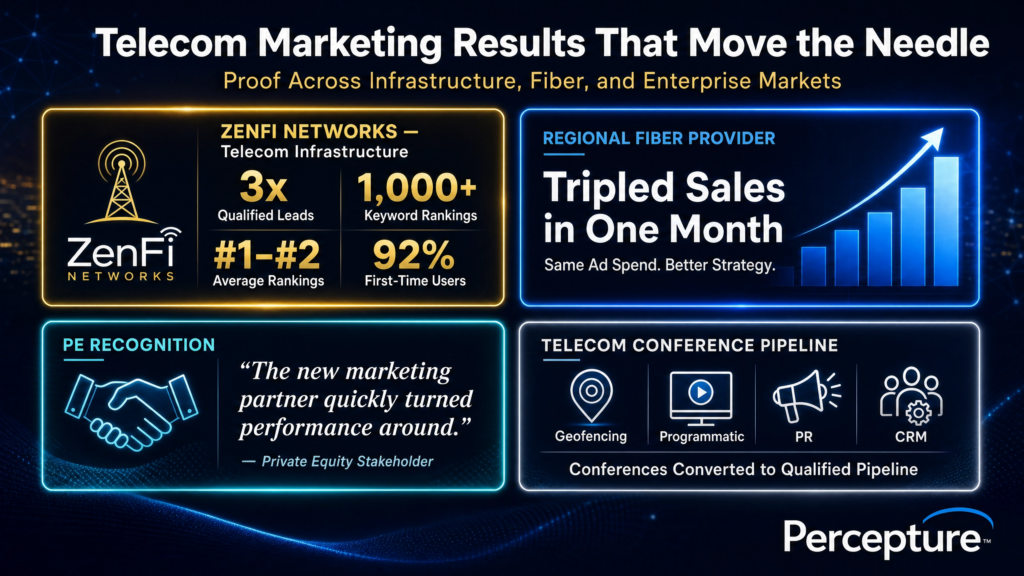
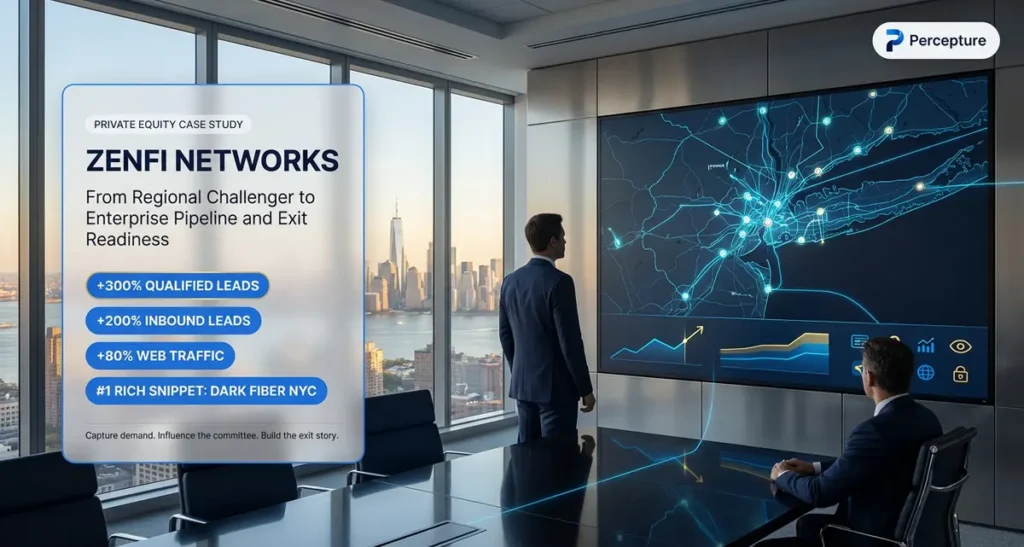
Percepture also helps fiber providers turn proof into demand. Case studies, PR coverage, customer stories, ranking proof, conference campaigns, and executive visibility can reduce hesitation and support sales conversations. For telecom infrastructure proof, Percepture’s broader ISP marketing agency page explains the connected growth system.
Build a Serviceability-Aware Fiber Growth Plan
If your fiber network has passings but not enough subscribers, the next step is not always more media. The next step is finding the leak between serviceability, trust, address checks, sales follow-up, installation, and reporting.
Fiber Take-Rate Marketing FAQs
What is Fiber Take-Rate Marketing?
Fiber Take-Rate Marketing is the strategy ISPs use to turn serviceable fiber passings into subscribers. It connects serviceability, local trust, SEO, GEO, paid media, direct mail, PR, address checks, sales follow-up, install scheduling, and reporting.
How is fiber take rate calculated?
Fiber take rate is usually calculated by dividing active subscribers by serviceable passings. If an ISP has 10,000 passings and 3,000 subscribers, the take rate is 30%.
Why do fiber passings fail to convert?
Passings can fail to convert because of weak awareness, low local trust, unclear offers, poor address-check flow, slow sales follow-up, confusing installation steps, or marketing spend outside the serviceable footprint.
What channels improve fiber take rate?
Common channels include local SEO, paid search, programmatic advertising, direct mail, community outreach, digital PR, retargeting, email, SMS, referral campaigns, and AI-assisted lead routing.
Should fiber providers market before construction is complete?
Yes, but carefully. Pre-launch marketing should educate the market, capture interest, explain timing, and avoid promising service before the network can deliver.
What is the most important conversion event in Fiber Take-Rate Marketing?
For residential fiber, the address check is often the most important conversion event before installation. It shows buying intent and allows the ISP to route the prospect based on serviceability.
How does Fiber Take-Rate Marketing support BEAD-funded broadband?
BEAD-funded networks need community education, construction communication, adoption messaging, affordability clarity, and local trust. Fiber Take-Rate Marketing helps connect those public-facing needs to subscriber action.
How does Percepture help with Fiber Take-Rate Marketing?
Percepture helps fiber providers connect serviceability data, local SEO, GEO, digital PR, paid media, direct mail, CRO, sales follow-up, AI sales agents, and reporting into one subscriber-growth system.
Turn Fiber Passings Into Subscribers With Fiber Take-Rate Marketing
If your ISP needs stronger local trust, more serviceable address checks, cleaner sales routing, and better reporting from passing to install, meet with Percepture. We will review the footprint, funnel, content, PR signals, paid media, CRM path, and subscriber movement.

About Bob Generale
Bob Generale is President of Percepture, a PR, SEO, GEO, paid media, and AI-search visibility agency founded in 2004. Bob works with telecom, broadband, data center, private equity, B2B, healthcare, and complex infrastructure companies to turn visibility into trust, leads, subscribers, and revenue.