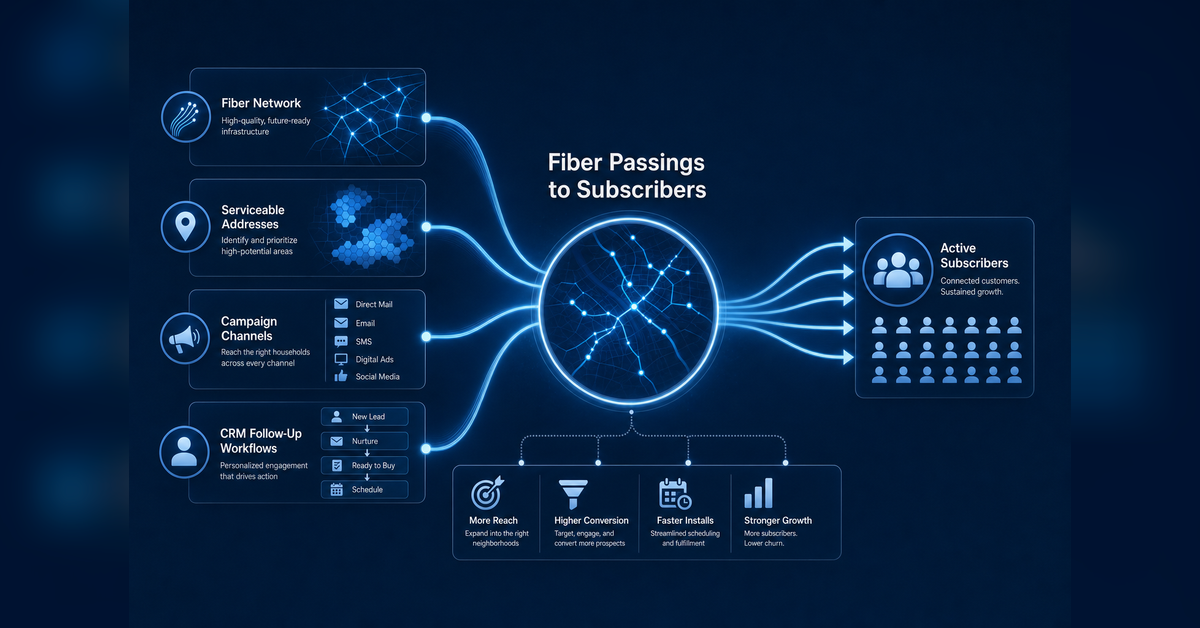

How to Convert Fiber Passings Into Subscribers is the operating question after the build. An ISP has to move serviceable addresses through awareness, trust, address checks, pre-registration, offer selection, install scheduling, activation, and referral. A passing is only the start of the funnel.
Many broadband providers build the network, announce availability, send a few mailers, run ads, and wait for subscribers. That leaves money on the table. Fiber passings become revenue only when marketing, sales, serviceability data, CRM follow-up, and install operations work together.





Last updated: July 2026
What turns a fiber passing into a subscriber?
To answer How to Convert Fiber Passings Into Subscribers, map every serviceable address into a conversion funnel. Build local awareness, prove trust, drive address checks, capture pre-registrations, clarify offers, retarget interested buyers, follow up quickly, schedule installs, onboard new subscribers, and ask for reviews and referrals. Then measure each step by geography and campaign.
Executive summary for ISP leaders
A passing is not revenue
A passing is an opportunity. The subscriber is the revenue. How to Convert Fiber Passings Into Subscribers depends on building the conversion system between the two.
Serviceability controls spend
Marketing must follow serviceability so campaigns target the homes, businesses, and buildings that can actually buy.
Address checks show intent
The address check is the intent signal. It turns local awareness into a lead that can be routed, nurtured, and installed.
Follow-up protects demand
CRM routing, email, SMS, and careful AI-assisted follow-up help prevent warm leads from going cold after the form.
Installs are part of conversion
The install is the handoff. How to Convert Fiber Passings Into Subscribers includes reminders, expectation setting, rescheduling, and onboarding.
Proof compounds adoption
Reviews, referrals, local PR, and customer stories make the next neighborhood easier to win.
This guide sits between Percepture’s fiber take-rate definition guide and the broader fiber take-rate marketing playbook. It focuses on How to Convert Fiber Passings Into Subscribers by improving the conversion path between a serviceable address and an active subscriber.
Who this guide is for
Fiber operators
For ISPs, FTTH providers, municipal broadband networks, and regional operators that have passings but need stronger subscriber movement.
Growth leaders
For CEOs, CMOs, VPs of sales, broadband expansion directors, and operating partners who need a practical conversion map for How to Convert Fiber Passings Into Subscribers.
Launch and adoption teams
For teams working on BEAD-funded areas, coming-soon neighborhoods, MDU buildings, business fiber, and new service areas.
If your team is asking How to Convert Fiber Passings Into Subscribers because the network is ahead of sales, this page will help identify where the funnel is leaking.
For a wider view of channel planning, see Percepture’s ISP marketing agency pillar and the ISP marketing strategy guide.
Fiber Passings Are Not Subscribers
A passing means the network can potentially serve the location. It does not mean the household knows the provider exists, trusts the provider, understands the offer, has checked availability, or is ready to schedule installation.
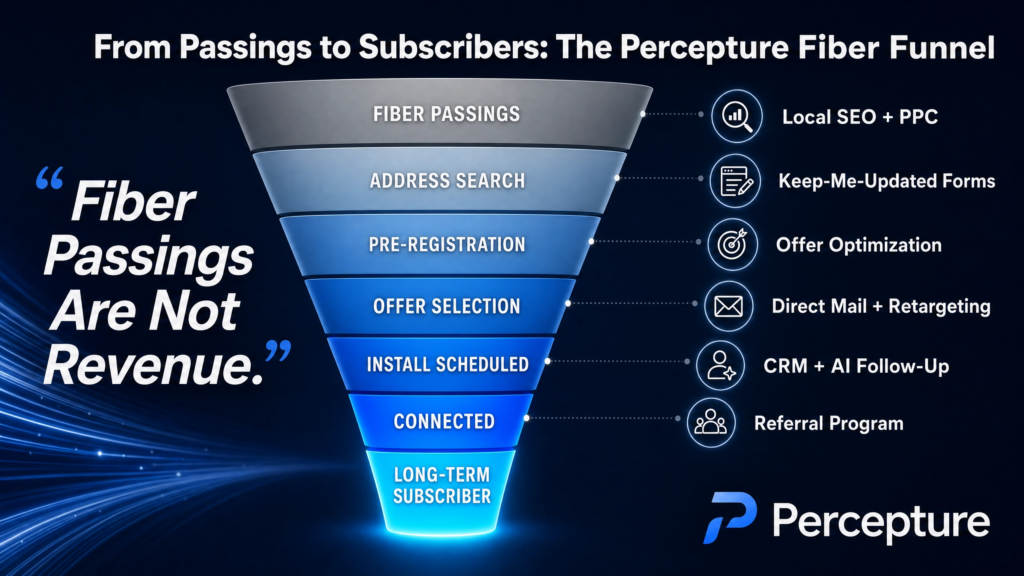
A passing must move through a chain: serviceable address, local awareness, trust, address check, lead or pre-registration, offer selection, install scheduled, subscriber activated, and review or referral. How to Convert Fiber Passings Into Subscribers starts by making that chain visible. A provider does not win because it passed homes. It wins when those homes become customers.
The conversion problem is usually not one thing. It can be awareness, serviceability confusion, weak local trust, poor landing pages, unclear offers, slow follow-up, bad CRM routing, install friction, or no referral system. That is why How to Convert Fiber Passings Into Subscribers should be treated as a funnel question, not a campaign question.
Find the leaks between passings and subscribers
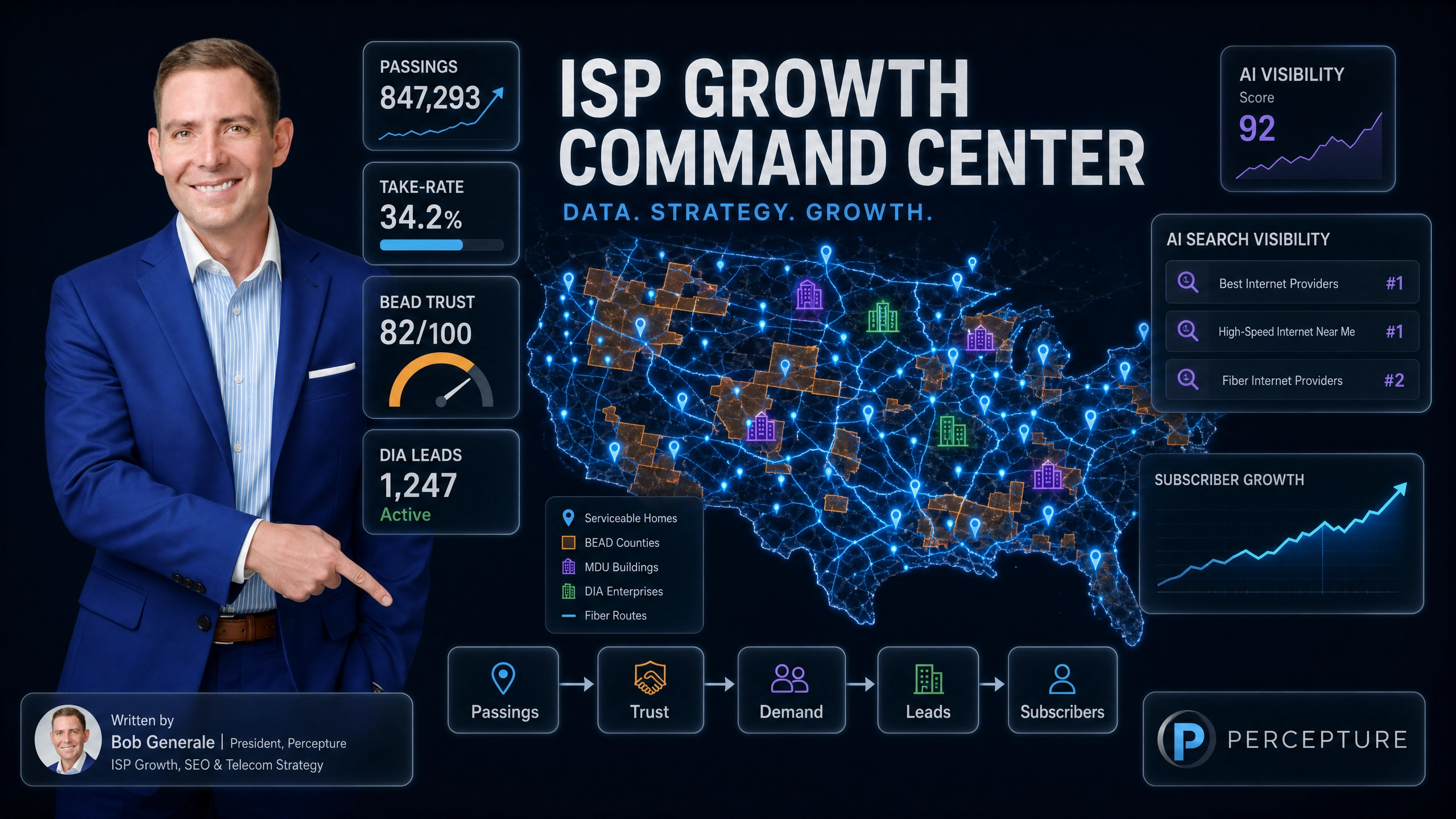
Percepture can help review your serviceability data, address-check path, landing pages, direct mail, paid media, CRM routing, and install handoff to identify where subscriber conversion is breaking. That diagnostic is the first operating step in How to Convert Fiber Passings Into Subscribers.
How to Convert Fiber Passings Into Subscribers With the Fiber Passings-to-Subscribers Funnel
The Fiber Passings-to-Subscribers Funnel is the step-by-step path an ISP uses to move a serviceable address from network availability to active subscriber and referral. The answer to How to Convert Fiber Passings Into Subscribers starts with this path because each stage needs its own message, channel, and next step.
The Percepture PASSINGS Framework
P: Pin serviceability
Know which addresses are available now, coming soon, under construction, passed but not install-ready, or not serviceable.
A: Activate awareness
Use local SEO, direct mail, paid search, programmatic, email, SMS, PR, and community updates around the real footprint.
S: Signal trust
Answer buyer questions about availability, switching, installation, pricing clarity, support, reviews, and local credibility.
S: Send to address check
Make availability checks visible, fast, mobile-friendly, tracked by source, and routed by address result.
I: Install the handoff
Move warm leads into scheduling, reminders, rescheduling support, activation, onboarding, and first-week support.
N-G-S: Nurture, grow, share
Retarget, follow up, request reviews, ask for referrals, and report subscriber movement by neighborhood.
The PASSINGS Framework keeps How to Convert Fiber Passings Into Subscribers grounded in operational handoffs, not isolated marketing tactics.
Step 1: Validate Serviceability Before Campaigns Run
The fastest way to waste fiber marketing spend is to promote service where the network cannot sell. Serviceability must control targeting. That means the campaign plan starts with address-level reality, not only a market map.
Validate which addresses are serviceable today, which are coming soon, which are under construction, which are passed but not install-ready, and which are not serviceable. Also separate MDUs, single-family homes, businesses, and DIA opportunities. A business fiber lead should not fall into the same follow-up path as a residential keep-me-updated request.
Required outputs include a serviceable address list, a coming-soon list, a non-serviceable lead capture path, a neighborhood adoption report, a campaign suppression list, an MDU target list, and business fiber routing rules. For How to Convert Fiber Passings Into Subscribers, these outputs decide who sees an offer, who sees pre-registration, and who is suppressed. For teams building a broader plan, Percepture’s ISP marketing plan explains how to organize the first 90 days.

Step 2: Create Local Awareness Around Serviceable Areas
People cannot subscribe to a provider they do not know is available. Awareness must be local, serviceability-aware, and tied to a next step. The message should match the buyer’s actual status: available now, coming soon, under construction, or future build.
Awareness channels can include direct mail, local SEO pages, Google Business Profile updates, paid search, programmatic display, retargeting, local PR, community groups, construction updates, email, SMS, door hangers where appropriate, and referral campaigns. Percepture’s guide to local SEO for fiber internet providers goes deeper on search visibility for serviceable markets.
Do not run vague fast-internet campaigns with no serviceability logic. How to Convert Fiber Passings Into Subscribers requires the awareness message to match the buyer’s actual address status. A serviceable address should see a check-availability or schedule-install path. A coming-soon address should see pre-registration. A non-serviceable address should see a keep-me-updated path that protects future demand.
Step 3: Build Trust Before Asking for the Install
Fiber adoption is not only a speed decision. Buyers need to trust the provider, the price, the installation process, the support experience, and the local proof. Trust comes before the install.
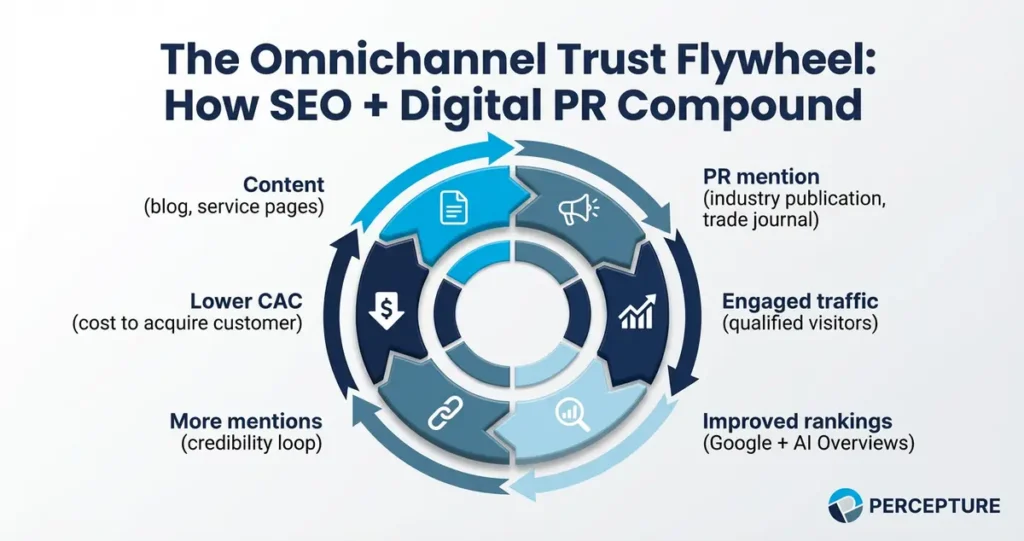
Trust assets include local PR, construction FAQs, installation explainers, reviews, neighborhood proof, customer stories, service area pages, comparison pages, transparent offer pages, support information, founder content, and community updates. In How to Convert Fiber Passings Into Subscribers, these assets remove hesitation before the buyer checks an address or schedules service. Percepture’s digital PR services help connect trust-building stories to search visibility and conversion.
Step 4: Drive Address Checks
The address check is often the most important middle-funnel action in residential fiber campaigns. It turns passive awareness into serviceability-based intent. In plain terms, How to Convert Fiber Passings Into Subscribers depends on getting the right buyer to check the right address and then routing that result correctly.
The address-check page should load quickly, work well on mobile, show the form above the fold, ask for only needed fields, reassure people about privacy, track campaign source, and route serviceable, coming-soon, not-serviceable, MDU, and business results differently.
Serviceable buyers should see offers, install options, a phone number, and follow-up. Coming-soon buyers should be invited to pre-register. Not-serviceable buyers should be captured for updates. MDU buyers should route to a property or bulk internet flow. Business buyers should route to business fiber or DIA sales. This routing discipline is central to How to Convert Fiber Passings Into Subscribers without wasting high-intent demand.
Step 5: Capture Pre-Registrations Before the Market Is Ready
Pre-registration protects future demand. It is especially useful for new builds, construction zones, BEAD-funded areas, and coming-soon neighborhoods. A pre-registration is not a subscriber, but it is a signal worth protecting.
Capture name, address, email, phone when appropriate, residential or business status, current provider when useful, notification preference, interest level, and install timing preference when known. Then send confirmation, construction updates, launch timeline messages, offer previews, installation expectations, and install scheduling prompts when service opens.
Many ISPs collect pre-registrations and let them sit. That weakens launch momentum. Treat pre-registration as a warm lead, not a spreadsheet, because How to Convert Fiber Passings Into Subscribers often begins before a neighborhood is fully ready to install.
Step 6: Make the Offer Easy to Understand
A buyer may want fiber and still fail to convert if the offer is confusing. Offer clarity reduces friction. Explain speed tiers, upload and download differences, monthly price, equipment, installation fees, contract terms, promotional timing, taxes and fees, support hours, installation process, router or Wi-Fi details, and the difference between business and residential plans.
Strong offer pages include an address-check module, plan cards, best-fit guidance, install explanation, switching FAQ, fair comparisons, customer proof, call or chat option, and a clear next step. Unsupported claims about speed, pricing, uptime, install timing, or availability can damage trust and hurt conversion. How to Convert Fiber Passings Into Subscribers works better when the buyer can understand the offer without calling support for basic answers.
How to Convert Fiber Passings Into Subscribers: Framework, Investment, and Channel Fit
This comparison helps leaders decide where the next dollar or hour should go. The right answer depends on where the funnel is leaking, because How to Convert Fiber Passings Into Subscribers is different when the leak is awareness, routing, offer clarity, or install completion.
| Investment area | Best when | Primary job | Risk if skipped |
|---|---|---|---|
| Serviceability data | Campaigns reach the wrong addresses | Suppress waste and route leads | Spend goes outside the footprint |
| Local SEO and GEO | Buyers search before switching | Create findable service-area answers | Competitors own the research moment |
| Direct mail | Neighborhoods are serviceable now | Drive address checks with tracked CTAs | Awareness stays too low |
| Paid search | Demand already exists | Capture high-intent availability searches | Ready buyers choose another provider |
| CRM and follow-up | Leads go cold after forms | Route, nurture, remind, and schedule | Intent leaks after the address check |
| Install conversion | Appointments fail to activate | Reduce no-shows and clarify expectations | Revenue stalls before activation |
Step 7: Retarget and Nurture Interested Buyers
Not every buyer converts on the first visit. Retargeting and nurture move interested buyers back into the funnel. Build audiences for address-check abandoners, pricing page visitors, fiber availability visitors, coming-soon visitors, pre-registration visitors, direct mail landing page visitors, business fiber visitors, MDU visitors, and BEAD update visitors.
Nurture should follow serviceability. Serviceable residential buyers may need an offer reminder, installation prompt, review proof, and switching FAQ. Coming-soon buyers need construction updates and launch alerts. Not-serviceable buyers need future availability updates. MDU and business leads need separate sales paths. For How to Convert Fiber Passings Into Subscribers, nurture should always tell the buyer the next realistic action for that address.
Percepture’s email marketing, lead generation, and omnichannel marketing work can help connect these touches instead of leaving each channel to operate alone.
Step 8: Follow Up Fast and Route Leads Correctly
Subscriber conversion often fails after the form. A lead that is not routed quickly loses momentum. Lead routing should consider serviceability status, geography, segment, lead source, offer, address-check result, business versus residential, MDU versus single-family, urgency, install readiness, and sales value.
Immediate confirmation should tell the buyer what happens next. Serviceable residential and high-intent business leads should receive fast response. Pre-registrations should be confirmed the same day and enrolled in nurture. Construction and coming-soon updates should go out weekly or by milestone. This is where How to Convert Fiber Passings Into Subscribers becomes a speed-to-lead and routing discipline.
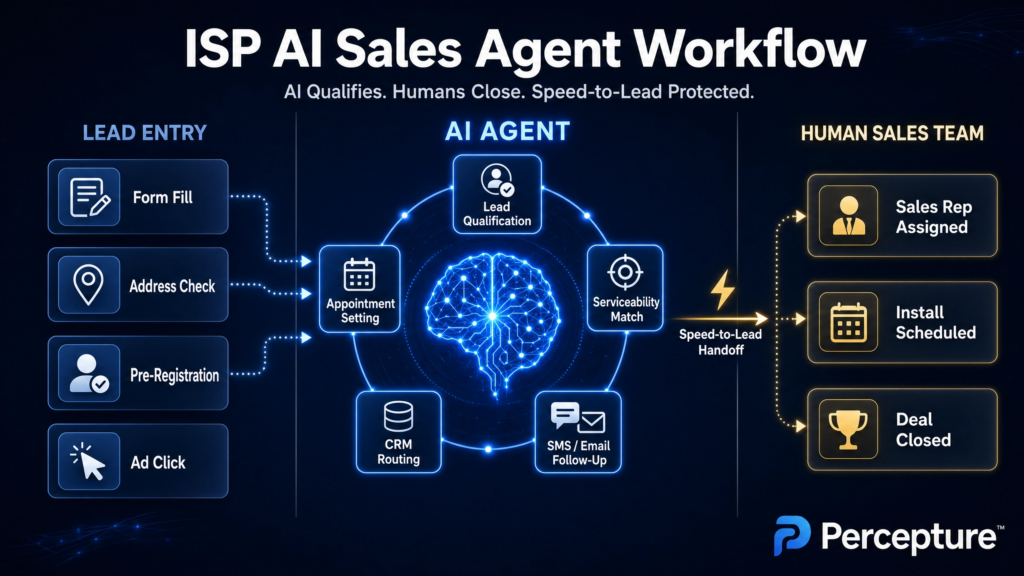
AI agents can help confirm address-check results, answer basic availability questions, re-engage abandoned leads, schedule consultations, route MDU and business leads, collect missing information, remind buyers about installs, and support speed-to-lead. For a deeper view, see Percepture’s ISP sales automation and AI sales agents guide and the article on AI outbound calling agents.
Step 9: Make Installation Part of the Conversion Funnel
The install is not only an operations event. It is the final conversion step before revenue. The subscriber is not real until the install is complete and the service is active.
Support install conversion with confirmation emails, SMS reminders, what-to-expect pages, reschedule options, technician windows, equipment explanations, support contacts, home preparation checklists, business install checklists, welcome emails, and support follow-up. Track install scheduled, install completed, no-show rate, reschedule rate, time from lead to install, install completion rate, activation rate, early support tickets, and early churn. How to Convert Fiber Passings Into Subscribers depends on this handoff because an abandoned install is lost revenue, not just a missed appointment.
Step 10: Turn New Subscribers Into Proof
A subscriber can become the proof that converts the next address. Reviews, referrals, and local proof are part of the take-rate system. The best fiber conversion system makes the next subscriber easier to win than the last one.
Ask for reviews after successful installs, invite neighbor referrals when approved, request local testimonials, collect business customer stories, share now-serving neighborhood updates, and check in after activation. In How to Convert Fiber Passings Into Subscribers, this proof loop lowers trust friction for the next serviceable block. If your team is planning a new launch, the guide on how to market fiber internet in a new service area shows how proof and launch timing work together.
Conversion Playbook by Segment
Use this segment view to apply How to Convert Fiber Passings Into Subscribers differently for homes, buildings, businesses, and community-funded markets.
| Segment | Primary conversion action | Message | Follow-up | KPI |
|---|---|---|---|---|
| Residential fiber | Check availability or schedule install | Reliable fiber for home, work, streaming, gaming, and local support | Email/SMS, install reminder, retargeting | Address checks, installs, subscribers |
| Coming-soon neighborhood | Pre-register | Fiber is coming; get updates and first install notice | Construction updates and launch alerts | Pre-registrations and pre-reg-to-install rate |
| Not-serviceable address | Keep me updated | Not available yet, but interest helps identify future demand | Market updates and future availability alerts | Future demand list growth |
| MDU | Property consultation | Better resident experience, managed Wi-Fi, bulk internet, amenity value | Sales call and property-specific proposal | Property conversations, proposals, buildings signed |
| Business fiber | Request a quote | Reliable business connectivity, support, speed, continuity | Fast sales handoff | Qualified leads, meetings, proposals |
| DIA or metro Ethernet | Technical consultation | Dedicated bandwidth, SLA, redundancy, performance | Senior sales or technical sales | Qualified pipeline and closed revenue |
| BEAD or community | Community update signup or pre-registration | Broadband access, construction updates, local benefit | Education, meetings, resident updates | Pre-registrations, awareness, adoption |
For segment-specific planning, also review Percepture’s guides to MDU broadband marketing, BEAD marketing and subscriber adoption, and FTTH marketing strategy.
Which Channels Convert Fiber Passings Into Subscribers?
No single channel explains How to Convert Fiber Passings Into Subscribers. Each channel has to support a specific funnel stage and hand off to the next action.
| Channel | Best funnel stage | What it does | Common mistake |
|---|---|---|---|
| Local SEO | Awareness and address checks | Helps buyers find availability and service area pages | Thin city pages with no serviceability context |
| GEO and AI search | Awareness and trust | Makes the provider easier to understand in AI-assisted answers | Generic content with no entity clarity or proof |
| Paid search | High-intent address checks | Captures people already searching | Spending where the network cannot serve |
| Direct mail | Neighborhood awareness and action | Reaches serviceable addresses with tracked CTA | No QR code, landing page, or call tracking |
| Digital PR | Trust and authority | Explains the build, provider, and local value | PR disconnected from SEO and conversion |
| CRM | Routing and follow-up | Sends leads to the right next step | One generic follow-up for all leads |
| Referrals | Proof and neighborhood conversion | Turns customers into trust signals | No post-install review or referral flow |
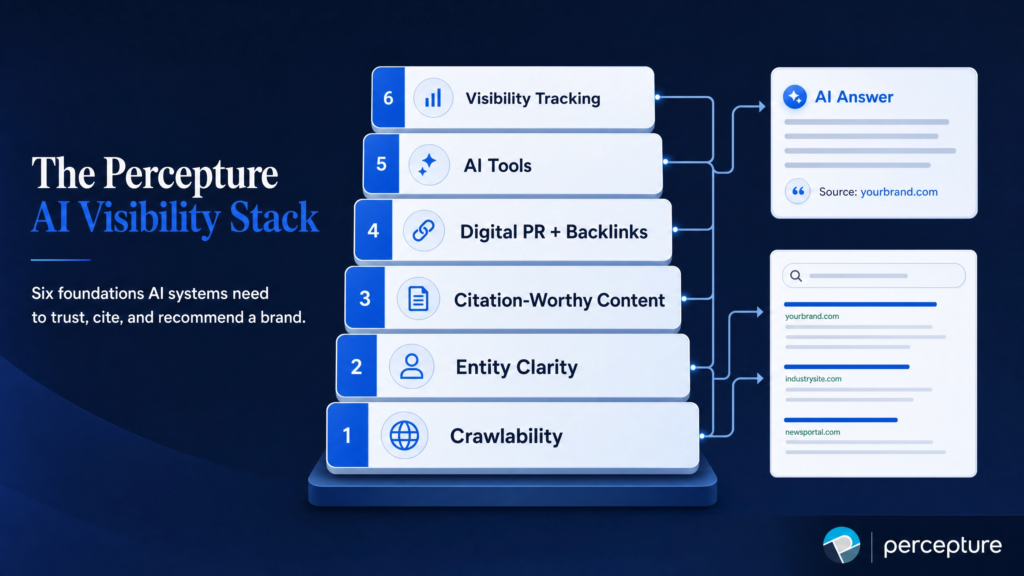
Percepture supports these workstreams through GEO services, organic SEO services, paid search, AI sales agents, conversion rate optimization, and attribution and analytics.
Fiber Passings-to-Subscribers KPI Dashboard
If the dashboard reports only impressions, clicks, and form fills, leadership will not see where revenue is moving. A stronger dashboard connects network inventory to intent, installs, subscribers, and proof. For How to Convert Fiber Passings Into Subscribers, the dashboard should show where each neighborhood is gaining or losing momentum.
| KPI | What it measures | Why it matters | Owner | Cadence |
|---|---|---|---|---|
| Total passings | Network opportunity | Shows the potential base | Operations or leadership | Monthly |
| Serviceable passings | Realistic sales inventory | Shows where marketing can sell | Operations and marketing | Weekly or monthly |
| Address searches | Buyer intent | Shows whether awareness is converting | Marketing | Weekly |
| Pre-registrations | Future demand | Shows launch momentum | Marketing | Weekly |
| Install scheduled | Near-revenue action | Shows handoff progress | Sales and operations | Weekly |
| New subscribers | Revenue movement | Shows growth | Leadership | Weekly or monthly |
| Cost per install | Acquisition efficiency | Connects spend to revenue | Marketing and finance | Monthly |
| Speed-to-lead | Follow-up quality | Shows whether demand is protected | Sales | Daily or weekly |
| Referral rate | Proof loop | Shows whether subscribers create subscribers | Marketing and customer success | Monthly |
Where Fiber Passings Get Stuck
These leaks show why How to Convert Fiber Passings Into Subscribers has to be managed across marketing, sales, data, and operations.
| Leak | Symptom | Likely cause | Fix |
|---|---|---|---|
| Awareness leak | Low traffic and low address checks in a serviceable area | Market does not know fiber is available | Local SEO, direct mail, PR, programmatic, paid search |
| Trust leak | Visitors read but do not act | Weak proof, reviews, clarity, or local credibility | PR, testimonials, FAQs, install explainers, comparison content |
| Serviceability leak | Leads come from addresses that cannot buy | Targeting is too broad | Address-level targeting, suppression lists, clearer routing |
| Address-check leak | Traffic does not become address searches | CTA is weak or form is hidden | Better landing page, stronger CTA, shorter form |
| Pre-registration leak | Coming-soon interest is not captured | No early-demand path | Pre-registration form, launch updates, nurture |
| Follow-up leak | Leads go cold | Slow or generic response | CRM routing, AI reminders, SMS/email, sales handoff |
| Install leak | Scheduled installs do not complete | Operational friction | Install reminders, reschedule option, expectation setting |
| Referral leak | New customers do not create proof | No post-install system | Review request, referral prompt, customer story |
A 90-Day Plan for How to Convert Fiber Passings Into Subscribers
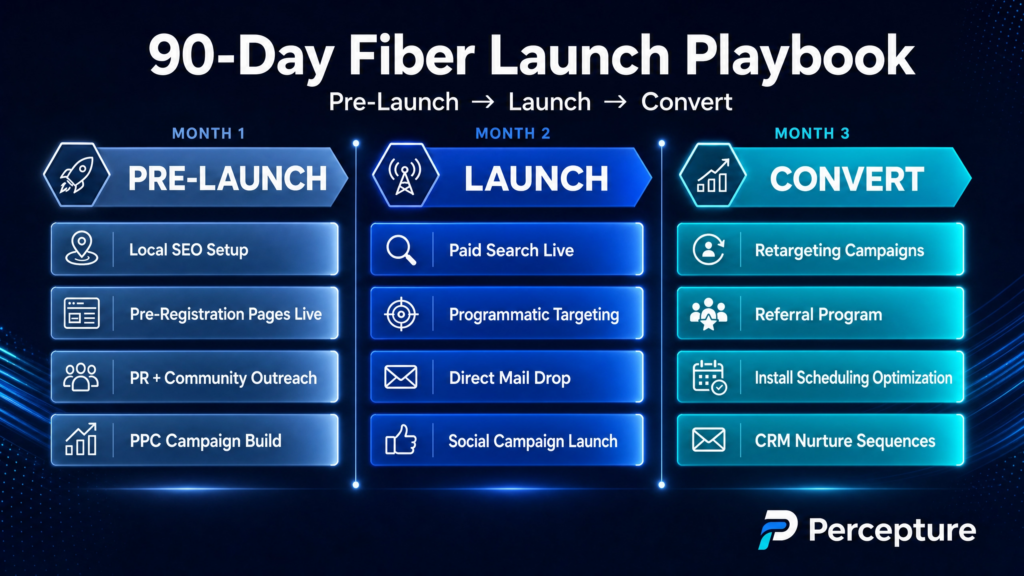
Days 1-30: Foundation and leak audit
Validate serviceability data, map passings by neighborhood, audit address-check flow, review landing pages and offers, check CRM routing, build the KPI dashboard, identify media waste, set up keep-me-updated flows, build pre-registration, and audit install handoff. This creates the baseline for How to Convert Fiber Passings Into Subscribers.
Days 31-60: Demand capture and trust
Improve local SEO pages, update address-check CTAs, launch serviceable-area direct mail, add paid search controls, build retargeting audiences, publish install and switching FAQs, create PR assets, segment nurture, and route MDU and business leads separately. These moves turn How to Convert Fiber Passings Into Subscribers into coordinated demand capture.
Days 61-90: Install conversion and proof loop
Improve speed-to-lead, add AI-assisted re-engagement where useful, tighten install reminders, review install completion, launch referrals, request reviews, optimize by neighborhood, reallocate spend based on cost per install, and report subscriber movement. This final phase connects How to Convert Fiber Passings Into Subscribers to activation and local proof.
Fiber Passings-to-Subscribers Readiness Scorecard
Use this scorecard to decide whether your team has the operating system to answer How to Convert Fiber Passings Into Subscribers or whether the funnel is still built from disconnected tactics.
| Readiness item | Score 0-3 |
|---|---|
| Serviceable passings are mapped | 0 missing, 1 weak, 2 adequate, 3 strong |
| Campaigns suppress non-serviceable addresses | 0 missing, 1 weak, 2 adequate, 3 strong |
| Address-check form is easy to find and tracked by source | 0 missing, 1 weak, 2 adequate, 3 strong |
| Pre-registration exists for coming-soon areas | 0 missing, 1 weak, 2 adequate, 3 strong |
| Offer pages are clear | 0 missing, 1 weak, 2 adequate, 3 strong |
| Install process is explained | 0 missing, 1 weak, 2 adequate, 3 strong |
| Paid media is serviceability-aware | 0 missing, 1 weak, 2 adequate, 3 strong |
| Local SEO supports serviceable markets | 0 missing, 1 weak, 2 adequate, 3 strong |
| CRM routing and speed-to-lead are measured | 0 missing, 1 weak, 2 adequate, 3 strong |
| Reviews and referrals are requested | 0 missing, 1 weak, 2 adequate, 3 strong |
Scores from 0-20 suggest the ISP is losing subscriber opportunities. Scores from 21-36 show pieces of the system but likely major leaks. Scores from 37-48 show a usable system that can be improved. Scores from 49-54 show a strong passings-to-subscribers engine for How to Convert Fiber Passings Into Subscribers.
Common Mistakes When Converting Fiber Passings Into Subscribers
Most mistakes come from treating one stage as the whole system. How to Convert Fiber Passings Into Subscribers requires awareness, trust, data, follow-up, install support, and proof working together.
- Treating a passing as a customer.
- Marketing outside the footprint.
- Hiding the address checker.
- Ignoring non-serviceable searches.
- Using one message for every address.
- Sending direct mail without a tracked URL, QR code, call tracking number, and landing page.
- Letting pre-registrations sit.
- Making offers confusing.
- Waiting too long to follow up.
- Treating installs as operations only.
- Forgetting reviews and referrals.
- Reporting on traffic instead of subscribers.
How Percepture Builds the Passings-to-Subscribers System
Percepture builds fiber subscriber growth around the network first. The work starts with serviceability, address-level demand, local trust, landing pages, offers, CRM routing, follow-up, install conversion, and reporting. The goal is not more impressions. The goal is more serviceable locations becoming subscribers.
Percepture connects SEO, GEO, PR, paid media, direct mail, CRM, CRO, content, analytics, and AI sales agents. The agency was founded in 2004 and brings PR plus digital search experience to complex B2B, telecom, infrastructure, healthcare, and private equity-backed growth work. Its point of view is simple: marketing must follow serviceability.
That is why Percepture treats How to Convert Fiber Passings Into Subscribers as an operating model. The team looks at the path from address list to address check, from address check to install, from install to activation, and from activation to local proof. How to Convert Fiber Passings Into Subscribers is measured by subscriber movement, not channel activity alone.
Ready to convert more passings into subscribers?
Percepture can help map the leaks between serviceability, address checks, pre-registrations, installs, subscribers, and referrals. The goal is not more activity. The goal is more revenue movement from the network you already built. If your leadership team needs a practical view of How to Convert Fiber Passings Into Subscribers, start with the passings-to-subscribers funnel.
FAQs about converting fiber passings into subscribers
How to Convert Fiber Passings Into Subscribers?
Convert fiber passings into subscribers by validating serviceability, building local awareness, creating trust, driving address checks, capturing pre-registrations, clarifying offers, following up quickly, scheduling installs, activating subscribers, and asking for reviews and referrals.
Why are fiber passings not the same as subscribers?
A passing means the network can potentially serve a location. A subscriber is a customer who has purchased and activated service. How to Convert Fiber Passings Into Subscribers is the work of moving that passing through awareness, trust, address check, offer selection, install, and activation.
What is the most important conversion step?
For many residential fiber campaigns, the address check is the key middle-funnel action because it turns awareness into serviceability-based intent. After the address check, routing and follow-up decide whether the lead becomes an install. That is why How to Convert Fiber Passings Into Subscribers should include address-check tracking by source and geography.
How do pre-registrations help fiber providers?
Pre-registrations capture demand before service is live. They help an ISP build launch momentum in coming-soon markets, keep interested buyers informed, and create a list of warm prospects to contact when installation becomes available.
What causes passings not to become subscribers?
Common causes include weak awareness, poor trust, inaccurate targeting, unclear offers, hidden address-check forms, slow follow-up, install friction, and weak local proof. The fix depends on where the funnel is leaking.
Should direct mail be used to convert passings?
Yes, when direct mail is sent to serviceable or launch-ready addresses and includes a clear offer, landing page, QR code, call tracking number, and follow-up plan. Mail without tracking is hard to improve.
How does SEO help convert fiber passings?
SEO helps buyers find service area pages, availability pages, installation FAQs, comparison content, and local proof when they are researching fiber options. Local SEO should match the real footprint and link to the address-check path.
Can AI agents help convert fiber leads?
AI agents can help qualify, route, remind, and re-engage leads. They work best when the ISP has clear handoff rules and still routes high-value MDU, DIA, and business fiber opportunities to people.
What KPIs should an ISP track?
Track serviceable passings, address checks, pre-registrations, install appointments, install completion, new subscribers, take rate by neighborhood, cost per install, speed-to-lead, and referral rate. The dashboard should connect spend to subscriber movement.
How can Percepture help with How to Convert Fiber Passings Into Subscribers?
Percepture can map the passings-to-subscribers funnel, identify leaks, improve SEO/GEO and PR, connect paid media and direct mail to serviceability, and build CRM and AI follow-up systems around subscriber growth. The work turns How to Convert Fiber Passings Into Subscribers into a measurable operating system.
How to Convert Fiber Passings Into Subscribers With Percepture
Fiber passings are only the beginning. The growth happens when serviceable addresses move through trust, address checks, pre-registration, offers, follow-up, installation, activation, and referrals.
Percepture can help your team map the funnel, find the leaks, and build a subscriber conversion system around serviceability, SEO, GEO, PR, paid media, direct mail, CRM, AI follow-up, and reporting. If you are ready to act on How to Convert Fiber Passings Into Subscribers, start with a funnel map.