

How to Market Fiber Internet in a New Service Area starts before the network is fully live. The plan should build local trust, explain what is coming, capture pre-registrations, create search visibility, and prepare the market to check availability when service opens.
A new fiber launch is not just an ad campaign. It is a market-conditioning process. The ISP has to match messaging to construction timing, serviceability, neighborhood readiness, local concerns, install capacity, and subscriber goals.
What should an ISP do before a new fiber market goes live?
How to Market Fiber Internet in a New Service Area is a serviceability-first launch process: map the network, build local trust, explain construction, publish service-area content, capture pre-registrations, run direct mail and paid media, drive address checks, follow up fast, schedule installs, and measure subscribers by neighborhood.
Broadband, Telecom, and B2B Trust Signals
New-market fiber launches need more than ads. They need telecom category knowledge, serviceability discipline, local trust, search visibility, PR credibility, and a clean handoff from pre-registration to install.




Executive summary for new fiber market leaders
How to Market Fiber Internet in a New Service Area works best when leadership treats the launch as a staged revenue system, not a single announcement.
Start before availability
A new fiber service area should be marketed before service is fully available, not after the first sales window opens.
Follow the map
Campaigns should match serviceable, coming-soon, under-construction, planned, and non-serviceable addresses.
Close the trust gap
Local trust matters because a new provider often enters with low awareness and many resident questions.
Capture warm demand
Pre-registration protects interest before buyers can install. Pre-registration is warm demand, not a spreadsheet.
Convert address checks
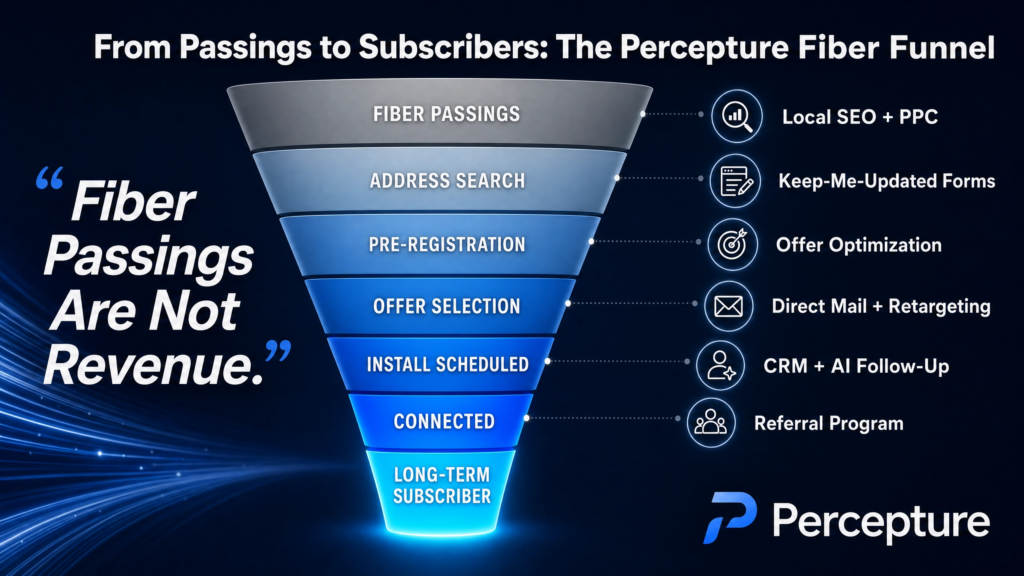
The launch should move from awareness to address checks, install appointments, completed installs, and subscribers.
Use early proof
Early customers should feed reviews, referrals, neighborhood proof, and the next launch wave.
Who this guide is for
This guide is for ISPs, fiber providers, FTTH operators, municipal broadband networks, BEAD-funded providers, rural broadband teams, regional fiber companies, and PE-backed broadband operators launching into a new town, neighborhood, subdivision, MDU corridor, or business district.
For those teams, How to Market Fiber Internet in a New Service Area means coordinating market entry, construction communication, demand capture, and install conversion around the same address-level plan.
Leadership
CEOs, founders, CMOs, VP Marketing, VP Sales, broadband expansion leaders, and private equity operating partners can use How to Market Fiber Internet in a New Service Area to align market entry with subscriber goals.
Operators
Marketing managers, sales leaders, construction communications teams, CRM owners, paid media teams, SEO teams, and local market managers can use it as a working launch checklist.
Scope
How to Market Fiber Internet in a New Service Area is not a general ISP marketing plan. It is about entering a market that does not yet know, trust, or fully understand the provider.
Most Fiber Launches Start Too Late
Many ISPs wait until the service area is ready before they start serious marketing. By then, the market may not understand the provider, the construction timeline, the offer, or the reason to switch.
The launch should condition the market before the market is ready to buy. How to Market Fiber Internet in a New Service Area turns that trust-building work into a serviceability-led campaign.
Awareness gaps
The market does not know the provider, and buyers search for availability only to find stronger competitors or outdated information.
Construction questions
Crews, permits, yard concerns, road work, and timelines create questions before the sales offer is ready.
Weak conversion paths
Direct mail may drive people to a weak page, pre-registration may be buried, and address checks may not reflect serviceability status.
Slow handoff
Sales follow-up, install scheduling, reviews, and referrals often lag the demand that marketing worked to create.
Percepture’s broader ISP marketing agency resource covers the larger growth system. This page stays focused on How to Market Fiber Internet in a New Service Area without drifting into a generic 90-day marketing plan.
Is your new fiber market launch-ready?
Percepture can review serviceability, local search visibility, pre-registration paths, direct mail, paid media, PR, CRM routing, and install handoff before your next service area goes live. The review is built for teams deciding How to Market Fiber Internet in a New Service Area before spend and construction timing drift apart.
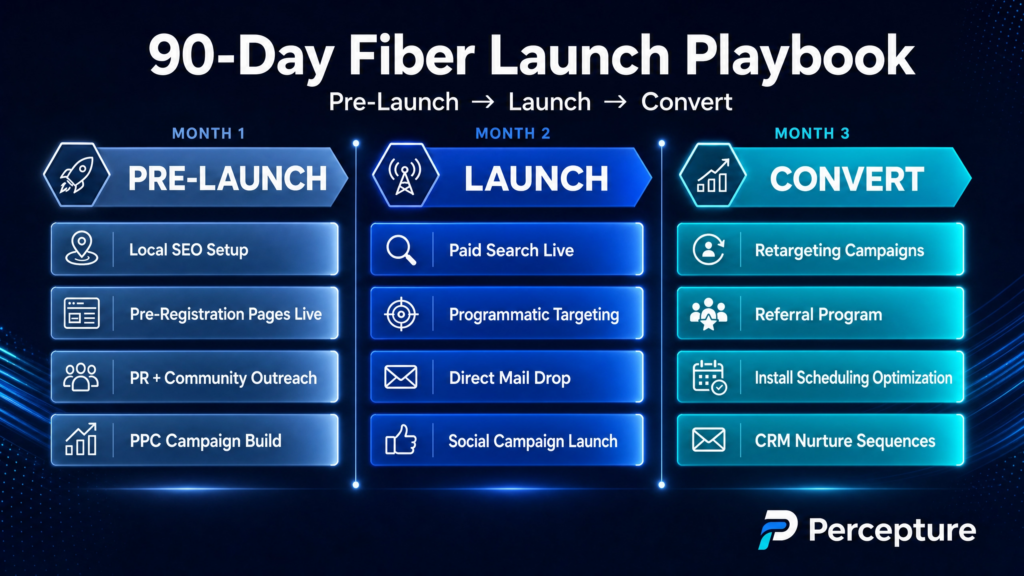
How to Market Fiber Internet in a New Service Area: The Percepture 90-Day Fiber Market Entry Plan
The Percepture 90-Day Fiber Market Entry Plan helps ISPs turn a new service area into awareness, trust, pre-registrations, address checks, installs, subscribers, reviews, and referrals. The launch campaign should not outrun the network map.
In practice, How to Market Fiber Internet in a New Service Area means each phase has a clear job: prepare the market, capture intent, open availability, and prove the service locally.
1. Market Intelligence
Know where the network can sell, where it will sell soon, and where the market is not ready.
2. Community Trust
Explain who the provider is, what is being built, what residents should expect, and why the service matters.
3. Pre-Registration Demand
Capture interest before the network is fully live, then nurture it with updates and clear next steps.
4. Launch-Day Conversion
Move ready buyers to address checks, offers, install scheduling, and fast follow-up.
5. Proof and Optimization
Use early subscribers, reviews, referrals, and performance data to improve the next neighborhood.
Phase 1: Map Serviceability and Market Readiness
A new service area launch starts with data. The ISP needs to know which homes, businesses, streets, buildings, and neighborhoods are ready now, coming soon, under construction, planned, or not serviceable.
How to Market Fiber Internet in a New Service Area fails when marketing treats the whole footprint as one audience. Serviceable streets need conversion. Coming-soon streets need pre-registration. Construction zones need education. Non-serviceable demand pockets need a keep-me-updated path.
The first operational question in How to Market Fiber Internet in a New Service Area is whether every campaign can be tied back to a real address status.

Map the sellable market
Serviceable now, serviceable soon, under construction, planned build, not serviceable, high-competition streets, and high-interest neighborhoods.
Map segments
Residential homes, MDU targets, business fiber targets, anchor institutions, non-serviceable demand pockets, and areas needing construction education.
Ask better questions
Where can you sell today? Where should you capture pre-registration? Where should paid spend be suppressed? Which streets need direct mail?
Teams that already track passings should connect this launch plan to the post-passing conversion work explained in how to convert fiber passings into subscribers.
Phase 2: Build Local Trust Before the Offer
A new fiber provider enters the market with a trust gap. Residents may not know the brand, why crews are present, when service will open, or whether switching is worth it.
How to Market Fiber Internet in a New Service Area depends on trust before the first install push. Construction communication, local PR, service-area pages, resident updates, and a clear installation explainer reduce friction before the offer arrives.
Trust is also where How to Market Fiber Internet in a New Service Area becomes visible to the community: the provider answers the questions residents are already asking.
Answer resident questions
Who is this provider? Is fiber actually coming to my street? What construction should I expect? When can I sign up?
Create trust assets
Build a construction FAQ, service area announcement, local landing page, installation explainer, Google Business Profile updates, and resident update form.
Use PR with a path
Digital PR services should support clarity and conversion, not only announcement coverage.
Phase 3: Capture Pre-Registration and Keep-Me-Updated Demand
In a new service area, not every buyer can purchase immediately. The launch should capture interest before service is active and keep that interest warm until the address can move to an install path.
How to Market Fiber Internet in a New Service Area should include pre-registration when fiber is coming soon, construction is underway, eligibility is not final, install scheduling has not opened, or public outreach is still building trust.
Pre-registration keeps How to Market Fiber Internet in a New Service Area connected to buyers who are interested before the address-check path is ready.
What to capture
Name, address, email, phone when appropriate, residential or business status, interest level, communication preference, and install timing preference if known.
What to send
Confirmation email, construction update, availability alert, offer preview, install expectation email, address-check reminder, and launch-day prompt.
What to avoid
Do not treat pre-registration as a static list. It should trigger segmented nurture, proof, and a clear next step.
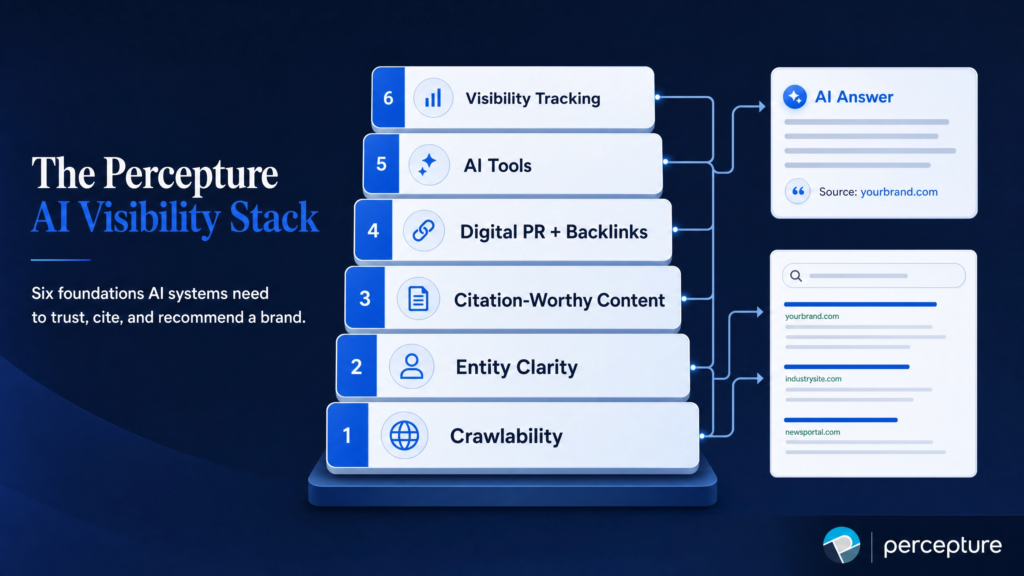
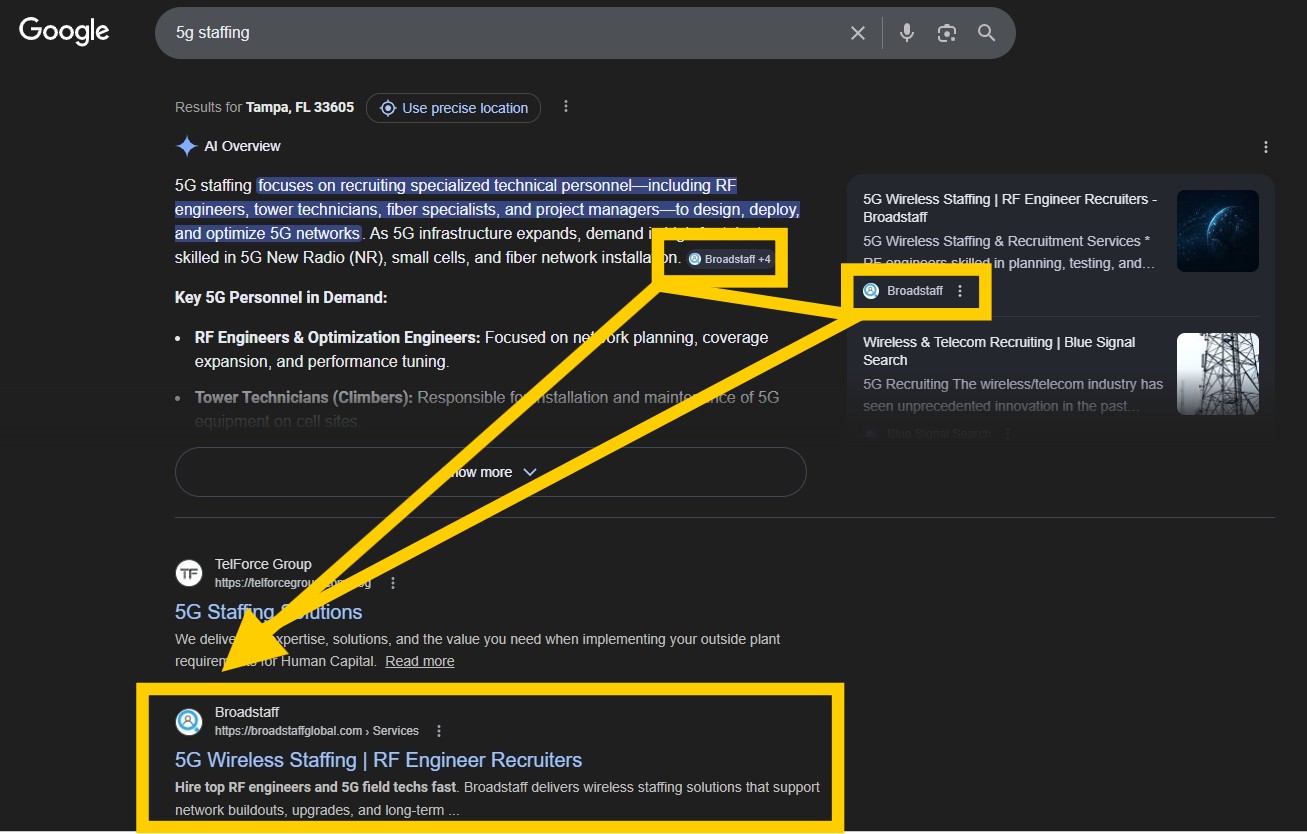
For search and AI visibility, connect the launch page to generative engine optimization services and organic SEO services so the provider, service area, offer, and launch status are easier to understand.
Phase 4: Launch Address Checks and Offers When Service Opens
When service is ready, the campaign should shift from coming soon to check availability and schedule install. That shift needs to happen on landing pages, email, SMS, paid search, direct mail, retargeting, and local profiles.
How to Market Fiber Internet in a New Service Area is different from general awareness because each address-check outcome needs its own path. Serviceable addresses need plans and install prompts. Coming-soon addresses need nurture. Not-serviceable addresses need future demand capture. MDU and business leads need separate routing.
At launch, How to Market Fiber Internet in a New Service Area should prioritize address checks that can become install appointments, not traffic that cannot buy.
Update the offer path
Explain price, speed, install cost, equipment, Wi-Fi, contract terms, support, installation process, and what happens after the address check.
Route by outcome
Serviceable, coming soon, not serviceable, MDU, and business fiber leads should not enter the same follow-up stream.
Track install intent
Measure serviceable address checks, cost per serviceable lead, install appointments, completed installs, and new subscribers.
Phase 5: Turn First Subscribers Into Local Proof
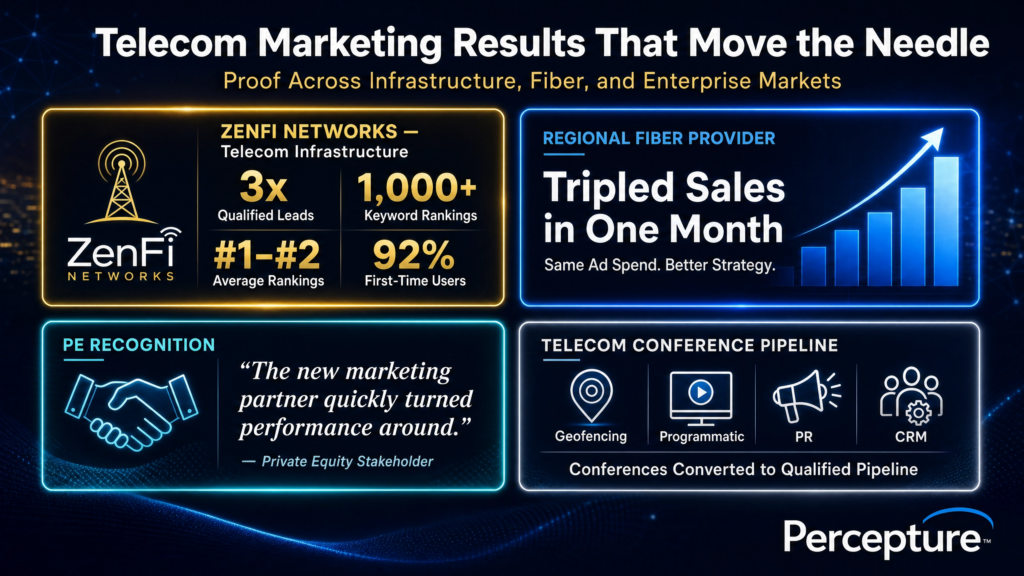
The first subscribers in a new service area can help convert the next group of buyers. Reviews, referrals, testimonials, local PR, and neighborhood proof reduce risk for residents who are still deciding.
How to Market Fiber Internet in a New Service Area should include a proof plan before the first install is complete, because early customer feedback supports the next launch wave.
The first installs should make the next installs easier. Ask for reviews after a successful install, send referral prompts, capture satisfaction, create local testimonial snippets where approved, and feed positive proof into retargeting and email.
If the larger goal is adoption, connect launch proof to the commercial system in fiber take-rate marketing and the definition guide on what fiber take rate means.
Which Channels Should Market Fiber Internet in a New Service Area?
The best channel mix changes by launch stage. A market that does not know the provider needs trust and education. A market with live service needs address checks and install scheduling. A market with uneven serviceability needs suppression rules.
How to Market Fiber Internet in a New Service Area is a channel-sequencing problem: each channel should match the buyer’s serviceability status and the launch phase.
| Channel | Best Use | Launch Stage | Common Mistake |
|---|---|---|---|
| Local SEO | Build service-area visibility | Before and during launch | Thin city pages with no serviceability detail |
| GEO / AI search | Clarify provider, service area, and offer | Before and during launch | Generic content with no entity clarity |
| Digital PR | Build local trust and explain construction | Pre-launch and construction | Announcement-only PR with no conversion path |
| Direct mail | Reach serviceable or coming-soon addresses | Pre-launch and launch | No QR code, landing page, or tracking |
| Paid search | Capture local high-intent demand | Launch and post-launch | Spending outside the footprint |
| Programmatic | Build awareness and retarget interest | All stages | Broad impressions with no serviceability logic |
| Email/SMS | Nurture pre-registrations and install intent | Coming soon and launch | One message for all serviceability statuses |
| CRM | Route leads by address status and segment | All stages | No routing by serviceability |
| AI agents | Speed-to-lead and re-engagement | Launch and post-launch | No human handoff for high-value leads |
| Referral | Turn early subscribers into proof | Post-launch | No review or referral system |
Local SEO, Paid Media, Direct Mail, PR, CRM, and AI
How to Market Fiber Internet in a New Service Area should include local SEO before buyers are ready to buy. Build or improve a new service area page, fiber availability page, neighborhood launch page, construction update page, installation FAQ, pricing or plan page, switching guide, Google Business Profile, reviews, and local proof.
For deeper search planning, use local SEO for fiber internet providers and the broader ISP marketing strategy guide. Avoid thin city pages. Each service-area page should include actual launch status, serviceability context, FAQs, local proof, and a clear CTA.
Paid search should capture active demand for fiber internet, high-speed internet, business fiber, and local internet providers. Paid search services, media buying, and the fiber internet PPC strategy guide can support paid launch planning when targeting follows serviceability.
Direct mail should be tied to serviceable or coming-soon addresses, a tracked URL, QR code, call tracking number, offer, and landing page. In How to Market Fiber Internet in a New Service Area, direct mail works best when the mailer, landing page, and address-check outcome all match.
Retarget address-check abandoners, pre-registration visitors, construction update visitors, pricing visitors, and direct mail landing page visitors.
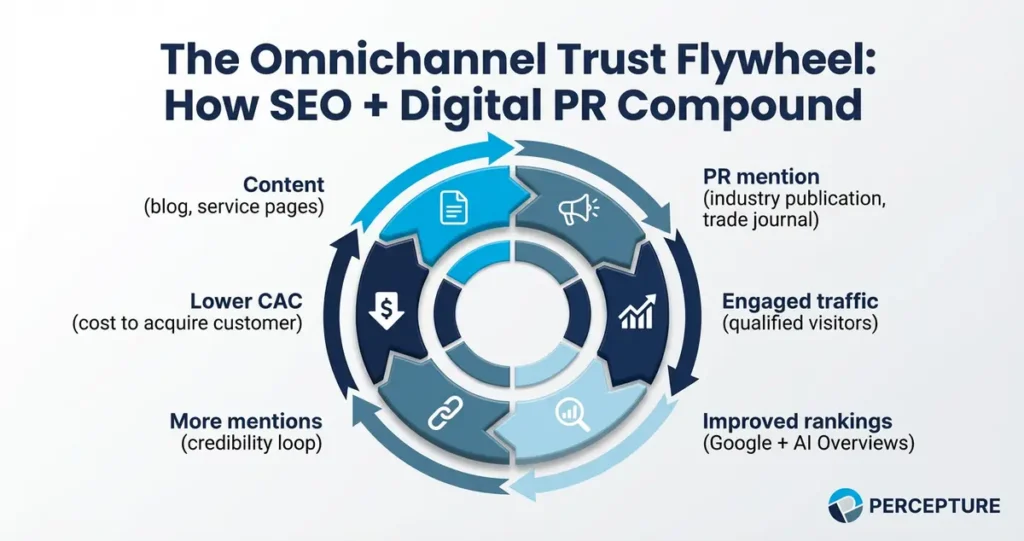
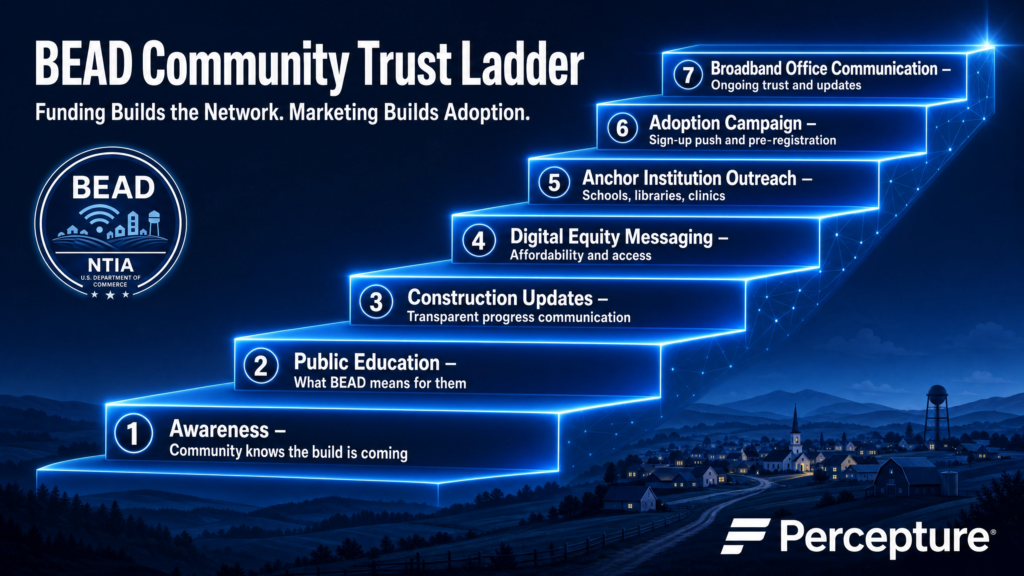
PR should explain the build, construction timeline, local benefits, provider credibility, and community impact before buyers are asked to switch. This is especially useful when a launch involves rural access, public broadband, BEAD outreach, municipal stakeholders, or construction communication.
New Service Area Launch Plan by Segment
How to Market Fiber Internet in a New Service Area changes by segment because a homeowner, property manager, business buyer, and community stakeholder need different messages and follow-up paths.
| Segment | Primary Message | Primary CTA | Follow-Up | KPI |
|---|---|---|---|---|
| Residential homes | Fiber is available or coming to your address | Check availability or pre-register | Email/SMS, retargeting, install prompt | Address checks, installs, subscribers |
| Coming-soon homes | Fiber is coming; get launch updates | Pre-register | Construction updates, launch alert | Pre-registration-to-install rate |
| Not-serviceable homes | Not available yet; stay updated | Keep me updated | Future availability updates | Future demand list growth |
| MDU | Better resident internet and property value | Request property review | Sales outreach and proposal | Buildings contacted, proposals, signed properties |
| Business fiber | Reliable business connectivity | Request a quote | Sales handoff and consultation | Qualified leads, meetings, pipeline |
| DIA / metro Ethernet | Dedicated performance and redundancy | Technical consultation | Senior sales / technical sales | Pipeline value, closed deals |
| BEAD / community | Broadband access and construction clarity | Community update signup | Education and local updates | Engagement, pre-registration, adoption |
MDU teams should connect this launch plan to MDU broadband marketing. Public broadband teams can pair it with BEAD marketing and subscriber adoption.
CRM and AI Follow-Up for a New Fiber Launch
The launch does not end when a form is submitted. Every address check, pre-registration, and inquiry should trigger a next step based on serviceability status, address, segment, campaign source, launch phase, residential or business fit, MDU status, install readiness, lead value, and urgency.
How to Market Fiber Internet in a New Service Area can include AI-assisted follow-up when the system is carefully governed. AI agents can confirm address-check results, answer common availability questions, send reminders, re-engage abandoned leads, schedule calls, route MDU and business leads, collect missing information, and trigger install prompts.
For operators, How to Market Fiber Internet in a New Service Area should define which follow-up actions can be automated and which require sales or customer support.

High-value business, DIA, MDU, municipal, and complex install opportunities should move to human sales quickly. For more on this channel, see ISP sales automation and AI sales agents, AI sales agents, and AI outbound calling agents.
90-Day Fiber Internet Launch Calendar
How to Market Fiber Internet in a New Service Area over 90 days means sequencing setup, awareness, pre-registration, availability, and install conversion without losing the market between phases.
Days 1–30: Market setup and trust
Map serviceability, identify launch areas, audit competition, build service-area pages, draft construction FAQ, set up pre-registration, define CRM routing, prepare direct mail, build reporting, and create PR messaging. Output: a market-ready launch foundation.
Days 31–60: Pre-registration and awareness
Publish local SEO pages, launch construction updates, start direct mail, launch awareness media, open pre-registration, build email/SMS nurture, brief local stakeholders, update Google Business Profile, and start retargeting. Output: pre-launch demand and local trust.
Days 61–90: Availability and installs
Switch CTAs to check availability, send launch alerts, run paid search, retarget warm visitors, schedule installs, follow up fast, collect reviews, launch referral prompts, report by neighborhood, and optimize spend. Output: address checks, installs, subscribers, and early proof.
If your team needs the larger operating cadence, compare this launch calendar with Percepture’s ISP marketing plan and the definition page on what ISP marketing is.
New Service Area Fiber Launch KPI Dashboard
How to Market Fiber Internet in a New Service Area should be measured by serviceable demand, install movement, and subscriber outcomes, not only impressions or clicks.
| KPI | What It Measures | Why It Matters | Owner | Cadence |
|---|---|---|---|---|
| Serviceable addresses | Real sales inventory | Shows where launch spend should go | Ops/marketing | Weekly |
| Coming-soon addresses | Future sales inventory | Guides pre-registration | Ops/marketing | Weekly |
| Pre-registrations | Early demand | Shows launch interest | Marketing | Weekly |
| Address checks | Buyer intent | Shows demand capture | Marketing | Weekly |
| Serviceable address checks | Qualified demand | Shows targeting quality | Marketing ops | Weekly |
| Install appointments | Near-revenue action | Shows conversion | Sales/ops | Weekly |
| Install completion | Activated customers | Shows revenue handoff | Ops | Weekly |
| New subscribers | Revenue movement | Shows launch success | Leadership | Weekly/monthly |
| Cost per install | Acquisition efficiency | Connects spend to revenue | Marketing/finance | Monthly |
| Take rate by neighborhood | Adoption efficiency | Shows where the market converts | Leadership | Monthly |
| Speed-to-lead | Follow-up quality | Protects intent | Sales | Daily/weekly |
| Referral rate | Proof loop | Shows customer-driven growth | Marketing/CS | Monthly |
Where New Fiber Launches Lose Subscribers
How to Market Fiber Internet in a New Service Area also means finding the leaks between public awareness and a completed install.
| Leak | Symptom | Likely Cause | Fix |
|---|---|---|---|
| Timing leak | Campaign starts too late | No pre-launch plan | Start trust and pre-registration before availability |
| Serviceability leak | Leads cannot buy | Targeting ignores network status | Use address-level rules and suppression |
| Awareness leak | Low local demand | Market does not know provider | Local SEO, direct mail, PR, paid media |
| Trust leak | Visitors do not act | Provider lacks local credibility | Construction FAQ, reviews, PR, proof |
| Pre-registration leak | Coming-soon demand is not captured | No warm lead path | Launch pre-registration and nurture |
| Address-check leak | Traffic does not convert | CTA or form is weak | Improve landing page and form |
| Offer leak | Address checks do not become installs | Offer is unclear | Clarify plans, price, install, terms |
| Follow-up leak | Leads go cold | Slow response | CRM routing, SMS/email, AI reminders |
| Install leak | Install appointments do not complete | Operational friction | Reminders, expectations, rescheduling |
| Proof leak | Early customers do not help the next wave | No review or referral system | Review request and referral flow |
New Fiber Service Area Launch Scorecard
Score each item from 0 to 3: 0 = missing, 1 = weak, 2 = adequate, 3 = strong. A service area with a high score has a better launch system because serviceability, trust, follow-up, and proof are connected.
Use this scorecard to pressure-test How to Market Fiber Internet in a New Service Area before the market sees the first major launch push.
| Readiness Item | Score |
|---|---|
| Serviceability map is complete | 0 / 1 / 2 / 3 |
| Construction status is clear | 0 / 1 / 2 / 3 |
| Service-area page exists | 0 / 1 / 2 / 3 |
| Google Business Profile is ready | 0 / 1 / 2 / 3 |
| Pre-registration path is live | 0 / 1 / 2 / 3 |
| Keep-me-updated path is live | 0 / 1 / 2 / 3 |
| Address-check CTA is clear | 0 / 1 / 2 / 3 |
| Direct mail is trackable | 0 / 1 / 2 / 3 |
| Paid media suppresses non-serviceable areas | 0 / 1 / 2 / 3 |
| Local PR supports trust | 0 / 1 / 2 / 3 |
| Construction FAQ exists | 0 / 1 / 2 / 3 |
| CRM routing is defined | 0 / 1 / 2 / 3 |
| Email/SMS nurture is segmented | 0 / 1 / 2 / 3 |
| AI follow-up is used carefully | 0 / 1 / 2 / 3 |
| Install scheduling is connected | 0 / 1 / 2 / 3 |
| Reviews and referrals are requested | 0 / 1 / 2 / 3 |
| Dashboard tracks subscribers, not just leads | 0 / 1 / 2 / 3 |
0–18
The service area is not launch-ready.
19–34
The launch has some assets but likely has trust, tracking, or conversion gaps.
35–45
The launch is usable but should improve pre-registration, follow-up, and proof.
46–51
The service area has a strong launch system.
Budget Guidance for How to Market Fiber Internet in a New Service Area
Budgets should follow the gap. If awareness is weak, increase local SEO, direct mail, PR, and programmatic. If pre-registration is weak, improve coming-soon pages, forms, email/SMS, and direct mail. If installs are weak, improve offer clarity, CRM routing, speed-to-lead, install reminders, and sales handoff.
Budgeting for How to Market Fiber Internet in a New Service Area should separate pre-launch trust, launch conversion, and post-launch proof so spend does not collapse into one broad media line.
| Program | Typical Starting Range | Best Fit |
|---|---|---|
| Fiber Launch Readiness Audit | Starting at $2,500–$5,000 | Teams that need a pre-launch gap review |
| Local SEO + GEO Setup | Starting at $5,000–$10,000/month | Markets that need search visibility before launch |
| New Service Area Launch Program | Starting at $7,500–$15,000/month | ISPs entering a town, subdivision, corridor, or rural footprint |
| Launch Market Campaign | Starting at $10,000–$25,000/month plus media | Launches using direct mail, paid media, SEO, PR, and CRM |
| BEAD / Community Trust Outreach | Starting at $7,500–$20,000/month | Public broadband, rural access, and construction communication |
| Full ISP Growth Engine | Custom | Footprints with complex competition, sales capacity, and channel mix |
For more commercial planning, review Percepture’s pricing options, omnichannel marketing, conversion rate optimization, and attribution and analytics service pages.
Common Mistakes When Marketing Fiber Internet in a New Service Area
How to Market Fiber Internet in a New Service Area requires avoiding mistakes that disconnect the campaign from real availability, trust, and follow-up.
- Starting after the network is ready. The market should be educated before launch.
- Marketing outside the serviceable footprint. This wastes spend and damages trust.
- Ignoring construction communication. Residents need to know what is happening and why.
- Using a generic landing page. A new service area needs local context and launch status.
- Treating pre-registration like a form fill. Pre-registration should trigger nurture and launch alerts.
- Sending direct mail without tracking. Every mailer needs a landing page, QR code, and call tracking.
- Running paid search too broadly. Paid spend should follow serviceability and launch timing.
- Waiting too long to follow up. Speed-to-lead protects launch demand.
- Forgetting early reviews. Early customers are local proof.
- Reporting on traffic instead of subscribers. The goal is installs, subscribers, and take-rate movement.
How Percepture Builds Fiber Launch Campaigns
Percepture builds new-market fiber launches around serviceability first. The work starts with the network map, construction timing, buyer questions, local trust, landing pages, pre-registration, address checks, CRM routing, install handoff, and reporting.
How to Market Fiber Internet in a New Service Area is the operating lens Percepture uses to connect messaging, channel mix, and subscriber reporting to the same launch map.
The goal is not more activity. The goal is more serviceable addresses becoming subscribers. Percepture connects SEO, GEO, PR, paid media, direct mail, CRM, CRO, content, analytics, and AI sales agents so the launch follows the market and the network.
Percepture was founded in 2004 and brings PR plus digital search experience to telecom, fiber, digital infrastructure, B2B, and private equity-backed growth. The point of view is simple: marketing must follow serviceability, traffic alone is not enough, and weak offer architecture can depress conversion.

Ready to launch fiber in a new service area?
Percepture can help map your serviceability, launch timing, local trust, pre-registration, direct mail, paid media, SEO, GEO, CRM, AI follow-up, install handoff, and reporting into one market-entry plan.
If your team is planning How to Market Fiber Internet in a New Service Area, the next step is to align the launch map, channel plan, and conversion path before the first campaign wave.
FAQs about launching fiber internet in a new service area
How to Market Fiber Internet in a New Service Area?
How to Market Fiber Internet in a New Service Area starts with serviceability mapping, then local trust, construction education, service-area pages, direct mail, paid media, pre-registration, address checks, fast follow-up, install scheduling, and subscriber reporting.
When should an ISP start marketing a new fiber service area?
An ISP should start before service is fully live. How to Market Fiber Internet in a New Service Area depends on pre-launch marketing that educates the market, captures early demand, answers construction questions, and prepares buyers to check availability when service opens.
How do pre-registrations help a fiber launch?
Pre-registrations capture demand before installation is available. In How to Market Fiber Internet in a New Service Area, they also give the ISP a warm list to notify with construction updates, launch alerts, offer previews, address-check reminders, and install prompts.
What channels work best for a new fiber launch?
Local SEO, GEO, direct mail, paid search, programmatic, PR, email, SMS, retargeting, Google Business Profile, CRM follow-up, AI agents, and referrals all support different launch stages. How to Market Fiber Internet in a New Service Area requires those channels to follow serviceability and timing.
Should direct mail be used in a new service area?
Yes, when direct mail is tied to serviceable or coming-soon addresses, a tracked landing page, QR code, call tracking number, offer, and follow-up flow. Direct mail should not send buyers to a generic page.
How does PR help a new fiber service area?
PR helps explain the build, construction timeline, local benefits, provider credibility, and community impact before buyers are asked to switch. For How to Market Fiber Internet in a New Service Area, PR is most useful when paired with a clear conversion path.
What should a fiber launch landing page include?
A launch landing page should include service status, address check or pre-registration CTA, construction details, offer information, install expectations, FAQs, local proof, contact options, and routing for business or MDU leads.
How should ISPs measure a new service area launch?
Track serviceable addresses, coming-soon addresses, pre-registrations, address checks, serviceable address checks, install appointments, completed installs, new subscribers, cost per install, speed-to-lead, referral rate, and take rate by neighborhood.
Can AI agents help with a new fiber launch?
Yes, AI agents can help answer basic questions, route leads, send reminders, re-engage prospects, and protect speed-to-lead. High-value MDU, business, DIA, municipal, and complex install opportunities still need human handoff.
How can Percepture help launch fiber in a new service area?
Percepture can build the launch plan around serviceability, SEO, GEO, PR, paid media, direct mail, pre-registration, CRM routing, AI follow-up, install handoff, and subscriber reporting. That is the practical work behind How to Market Fiber Internet in a New Service Area.
Launch Fiber Internet With the Market Already Warmed Up
A new fiber service area should not launch cold. The market should know what is coming, trust the provider, understand the construction timeline, pre-register early, check availability when service opens, and move quickly into installation.
How to Market Fiber Internet in a New Service Area requires serviceability, SEO, GEO, PR, paid media, direct mail, CRM, AI follow-up, install handoff, and subscriber reporting to be built into one plan.

About Bob Generale
Bob Generale is President of Percepture, a digital PR, SEO, GEO, and AI search visibility agency that helps B2B, telecom, infrastructure, private equity, healthcare, and complex service companies become easier to find, trust, and choose. Bob’s work focuses on market conditioning, search visibility, content architecture, digital PR, and conversion systems that connect authority to measurable business outcomes.