

PR Crisis Case Studies are not just stories about bad headlines. They show what happens when facts, timing, legal review, employees, media, Google results, and AI answers collide while leaders are trying to protect trust.
The crisis is not over when the news cycle slows. It is over when stakeholders can find accurate context, the public record is more balanced, and the organization has a recovery system that can hold up under pressure.
 Operator proof
From live crisis response to digital PR
Percepture’s crisis experience includes communications connected to the Miracle on the Hudson landing. Thor Harris was around for that work and tied to it, which is part of why Percepture approaches crisis PR with fact discipline, calm leadership, and counsel-reviewed language when the pressure is real.
 Thor HarrisCEO, Percepture

Why crisis PR now needs SEO, GEO, and digital PR
When a buyer, reporter, investor, patient, or employee searches after a crisis, the strongest source environment usually wins. That is why Percepture connects crisis communications agency work with digital PR service, SEO, and AI visibility.
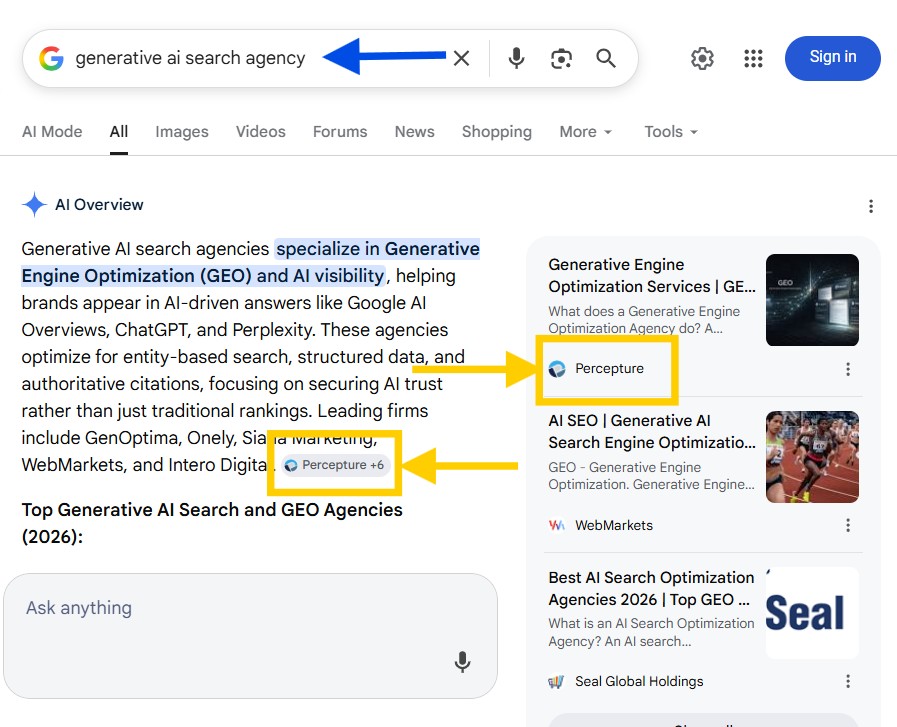

What are PR Crisis Case Studies?
PR Crisis Case Studies show how organizations protect or damage trust during reputation-threatening events. The strongest cases reveal five patterns: speed, accountability, clear stakeholder communication, legal alignment, and corrective action. Modern crisis PR must also protect search results, social media narratives, and AI-generated summaries.
Executive summary for leaders
The lesson
A crisis becomes dangerous when one incomplete version of events becomes the easiest version to find.
The modern risk
Google, social platforms, review sites, and AI answer engines can repeat context that is old, thin, allegation-heavy, or missing the verified position.
The operating move
Leaders need a counsel-reviewed source of truth, stakeholder-specific messaging, monitoring, and a recovery plan that includes search and AI visibility.
The Percepture difference
Percepture connects crisis PR, enterprise SEO, GEO, content, analytics, and digital PR into one reputation visibility system.
Who this guide is for
CEOs and owners
You need to protect the company, the leadership team, the facts, and the long-term public record without making a rushed public mistake.
CMOs and marketing leaders
You need one plan for press, owned content, social, search, AI answers, and stakeholder communications.
Healthcare leaders
You may be managing patients, physicians, referral partners, employees, insurers, legal review, and public confidence at the same time.
Reputation-sensitive organizations
You need to reduce unfair association, correct misleading context, and build a more complete public record.
Why PR Crisis Case Studies matter more in the AI search era
Older crisis playbooks were built around reporters, statements, and a short news cycle. Those still matter, but the public now checks the story across Google, social feeds, review platforms, internal employee channels, AI Overviews, ChatGPT-style answers, and Perplexity-style summaries.
A leader may think the issue has passed while buyers, patients, partners, recruits, or investors are still finding the worst version of the story. AI search does not understand intent the way legal, PR, or leadership teams do. It summarizes the source environment it can retrieve.
That is why modern what does a crisis communications agency do content must include message control and retrieval control. The goal is not to hide the truth. The goal is to give people, search engines, and AI systems a clearer set of accurate, authoritative sources.
Start with the public record, not the panic
If a crisis is forming, first map what people can already find. Look at branded search, executive-name search, incident phrases, social posts, reviews, and AI answers before deciding what to publish next.
The Percepture Crisis Narrative Control Matrix
PR Crisis Case Studies are useful when they become an operating system. Percepture uses the Crisis Narrative Control Matrix to stabilize four areas before a crisis becomes the permanent public story.
Crisis Narrative Control Matrix
Facts
What happened, what is verified, what is unknown, what should not be said yet, and what language requires legal review.
Stakeholders
Employees, customers, patients, families, investors, regulators, partners, media, franchisees, and leadership each need the right level of information.
Channels
The website, press, Google, social, reviews, email, internal communications, and AI search all shape what people believe.
Recovery
Corrective action, owned assets, third-party proof, SEO reputation management, digital PR, and LLM visibility testing help rebuild accurate context.
Related Percepture method: Protecting the Queen means protecting the most important search entity: the company, executive, physician, brand, or product name that should not be defined by one incomplete crisis narrative.
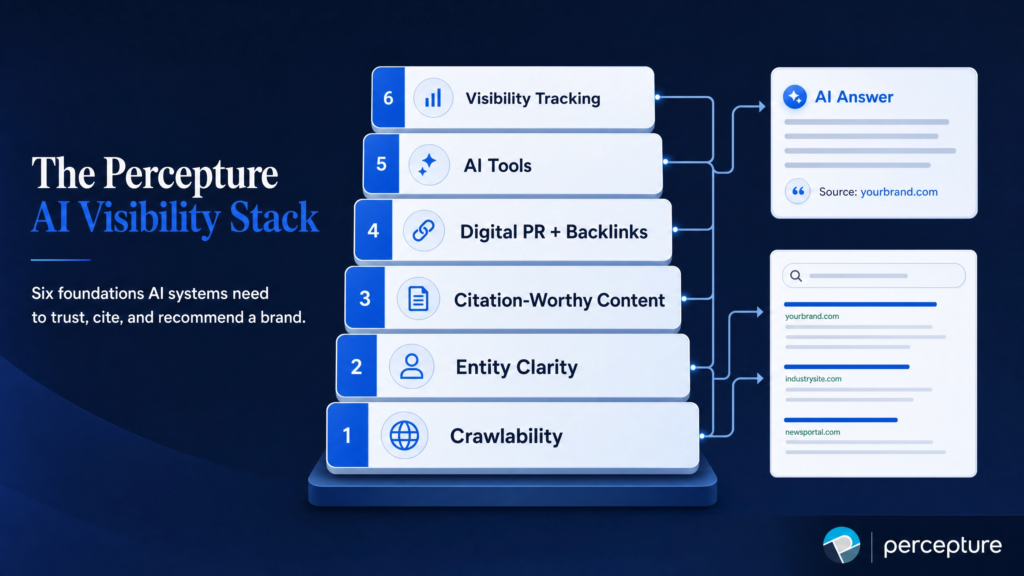
Four crisis patterns leaders should recognize
1. Employee misconduct, arrest context, and search recovery
One common pattern starts when an executive or company leader is being unfairly associated with an incident connected to employee conduct. The issue is not only the original article or social mention. The issue is whether search and AI systems keep repeating the wrong association.
The responsible path is not to claim that negative content can be deleted. The work is to correct misleading context, build accurate source-of-truth content, strengthen authoritative assets, and reduce unfair association through better retrievable sources.
2. Healthcare visibility and LLM reputation recovery
A healthcare organization facing a public visibility crisis often needs more than a legal response. Litigation-related sources can become the first impression for patients, physicians, referral partners, recruits, insurers, employees, and AI tools.
This is where generative engine optimization services matter. AI tools need structured, retrievable, credible source material. If Google and AI only see one side of the record, they may repeat one side of the record.
3. High-stakes emergency response
Some crisis moments move faster than a boardroom can process. Aviation emergencies, safety incidents, public health situations, and location-level events require fast coordination, fact discipline, human sensitivity, clear spokesperson roles, and calm under pressure.
These PR Crisis Case Studies show why a holding statement, trained spokesperson, and stakeholder map should exist before the crisis hits.
4. Multi-location crisis preparedness
Distributed organizations, franchise systems, healthcare networks, and multi-location companies need a crisis system before something happens. A headquarters-only plan can fail when an incident starts at a location, clinic, office, or franchise unit.
Prepared companies do not improvise the response while the issue is already public. They know who approves language, who speaks, who monitors, and who updates each audience.
PR crisis case study comparison table
| Scenario | What works | What fails when absent | Leader lesson |
|---|---|---|---|
| Employee misconduct association | Source-of-truth content and stronger authority around the right entity | Letting unfair association become the easiest story to find | Protect the name that buyers, partners, and AI tools search first |
| Healthcare visibility crisis | Counsel-approved content, third-party proof, SEO, links, and LLM testing | Allowing allegation-heavy sources to define the public record | Legal strategy and visibility strategy must be aligned |
| High-stakes emergency | Fact discipline, stakeholder coordination, and trained spokesperson roles | Speculation, emotional language, or slow approvals | Speed matters, but verified language matters more |
| Multi-location incident | Templates, monitoring, access controls, training, and drills | Every location creating its own response under pressure | Preparedness has to be distributed, not trapped at headquarters |
What works in PR Crisis Case Studies?
The strongest crisis responses are not the loudest. They are the clearest, most accurate, and most coordinated. They reduce confusion before speculation hardens into public memory.
One source of truth
Leadership, legal, PR, HR, and operations must work from the same verified facts.
Stakeholder-first communication
Employees, customers, patients, partners, investors, and media do not need the same message. They need the right message.
Search-aware recovery
Owned pages, third-party placements, and technical SEO help correct the public record after the first wave of coverage.
What fails in PR Crisis Case Studies?
Most failures come from speed without discipline or silence without a plan. Saying too much can create legal risk. Saying nothing can let others define the issue first.
- Waiting until the story spreads before assigning roles.
- Publishing vague language that sounds evasive.
- Letting lawyers and communicators work in separate tracks.
- Ignoring Google results, AI answers, reviews, and social search.
- Assuming the issue is over because reporters stopped calling.
How crisis PR connects to SEO, digital PR, and AI search
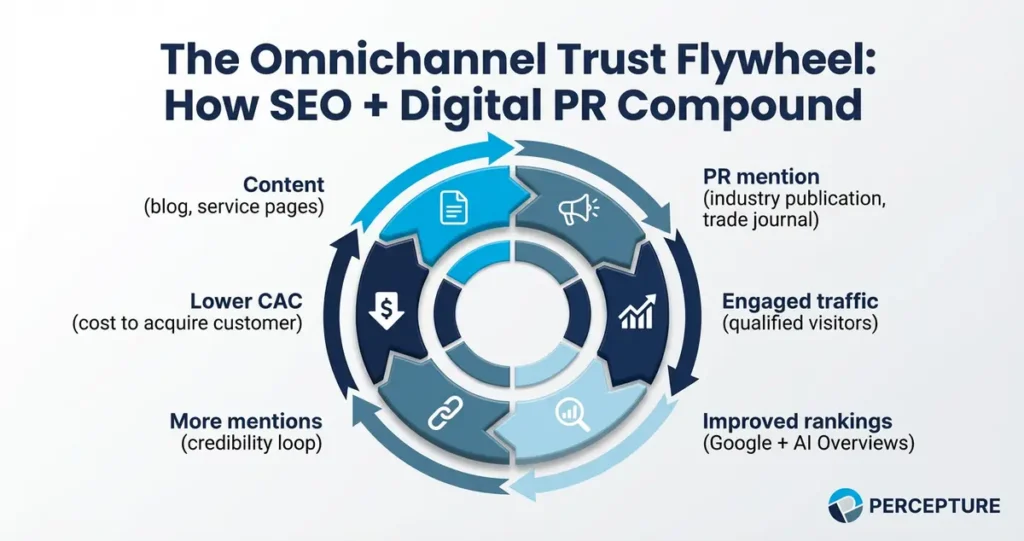
Crisis communications handles the facts, tone, timing, and stakeholder response. SEO and GEO shape what people and AI systems can retrieve after the first wave of attention. Digital PR earns third-party signals that help the public record become more complete.
Crisis readiness scorecard
Use this as a fast internal check. The lower the score, the more exposed the organization is if a crisis becomes searchable.
| Question | Yes | No |
|---|---|---|
| Do you have a counsel-approved holding statement template? | Lower risk | High risk |
| Do you know who approves language in the first 24 hours? | Lower risk | High risk |
| Have you mapped branded, executive, and incident-search results? | Lower risk | High risk |
| Do you have owned pages that explain your policies, values, leadership, and corrective actions? | Lower risk | High risk |
| Do you test how AI tools describe your company, executives, and public issues? | Lower risk | High risk |
First 24 hours of a PR crisis
Hour 1 to 2: stabilize facts
Identify what is known, what is unknown, who owns the facts, and what cannot be said yet.
Hour 2 to 4: identify stakeholders
Segment employees, customers, media, regulators, partners, investors, and any directly affected groups.
Hour 4 to 8: draft a holding statement
Use plain language. Acknowledge the issue. Avoid speculation. Route sensitive language through legal review.
Hour 8 to 12: monitor media, social, and search
Track the terms people are using, the content that is ranking, and the claims gaining momentum.
Hour 12 to 24: publish and prepare the next layer
Decide what needs to live on the website, in email, in press outreach, in FAQs, and in internal updates.
After 24 hours: measure the retrieval environment
Test Google, AI Overviews, ChatGPT-style tools, social search, and review visibility to see what people can find.
When to hire a crisis communications agency
Bring in outside support when the issue involves legal risk, safety, patient or employee privacy, an executive name, customer trust, investors, regulators, or search results that may outlast the news cycle.
The best time is before the issue becomes public. The second-best time is before one version becomes the permanent public record.
Review Best Crisis Management FirmsExplore Crisis Communications
Operator-led E-E-A-T matters in a crisis
A crisis page should not feel anonymous. Percepture’s model brings together PR, executive strategy, client success, AI search, and analytics so the message, source environment, and buyer journey work together.
 Bob GeneralePresidentThor HarrisCEO
 Christine RodiVP Strategic Advisory
 Amanda PachecoClient Success
 Alex ManinneGlobal Strategy & AI
Crisis PR pricing and program models
Crisis support can be structured as an emergency response, a preparedness project, a search and reputation recovery sprint, or an ongoing retainer. The right model depends on urgency, legal review, content needs, media volume, and how damaged the public record is.
| Program type | Best fit | Typical work | Helpful next step |
|---|---|---|---|
| Preparedness audit | No live crisis, but real exposure | Plan review, stakeholder map, holding statements, search-risk scan | Build the system before it is needed |
| Emergency response | Active issue or fast-moving public attention | Message control, media counsel, approvals, monitoring, stakeholder updates | Stabilize facts and reduce narrative spread |
| 90-day recovery sprint | Search, AI, or press record is incomplete | Owned content, digital PR, technical SEO, link strategy, AI visibility testing | Rebuild accurate context |
| Ongoing reputation retainer | High-risk leaders, brands, physicians, or public companies | Monitoring, content, media readiness, authority building, reporting | Keep the public record stronger over time |
For budget planning, review public relations pricing packages and GEO pricing before the issue grows.
What makes Percepture different in crisis PR
Percepture does not treat crisis communications, SEO, digital PR, content, and AI search as separate departments. In a modern reputation event, they are part of the same system.
That matters because a crisis does not stay inside one lane. Reporters may call. Employees may post. Search results may harden. AI tools may summarize weak sources. Buyers may check the company name before the team has finished the second draft of a statement. Percepture is built to operate across that full chain, not just one piece of it.
Message discipline
Percepture helps leaders get the language right before the narrative spreads. That includes:
- clear source-of-truth messaging
- stakeholder sequencing by audience
- spokesperson preparation and media readiness
- counsel-aligned wording under pressure
Retrieval discipline
Once a crisis becomes searchable, the work shifts into what people and AI systems can actually retrieve. That includes:
- technical SEO and clean site architecture
- structured pages that explain the facts
- internal links, schema, and entity clarity
- testing how Google and LLMs describe the brand
Authority discipline
Percepture also works to strengthen the broader public record so the company is not defined by one thin or hostile source set. That includes:
- digital PR and third-party validation
- backlinks and authority-building placements
- expert proof, case studies, and trust assets
- a stronger long-term narrative around the brand
The practical difference: Percepture helps the right facts become the easiest facts to find, cite, and trust across media, search, and AI answers.
FAQs about PR Crisis Case Studies
What are PR Crisis Case Studies?
PR Crisis Case Studies are examples of how organizations responded to reputation-threatening events. The useful ones show what leaders did with facts, legal review, employees, media, customers, search results, and recovery.
What makes a PR crisis response successful?
A successful response is fast, accurate, human, legally aligned, and followed by corrective action. The organization should know what is verified, who must be informed, who can speak, and what source-of-truth content needs to be published or updated.
What should a company do first during a PR crisis?
Start by stabilizing facts. Identify what is known, what is unknown, who owns the facts, what language needs legal review, and which audiences are at risk.
Can negative search results be pushed down?
Sometimes negative or misleading results can be reduced in visibility when stronger, more accurate, more authoritative assets are created, optimized, and promoted. Ethical reputation work builds a more complete public record.
Can AI search repeat false or outdated crisis information?
AI search tools can repeat incomplete or outdated context when those sources dominate what the system can retrieve. Crisis recovery should include structured source-of-truth content, third-party authority, technical SEO, and ongoing AI visibility testing.
How does digital PR help crisis recovery?
Digital PR helps by creating credible third-party sources, links, and authority signals that support the broader public record. It can also help stronger context become easier to retrieve.
What is a holding statement?
A holding statement is a short, approved first response used while facts are still being verified. It acknowledges the issue, shows the organization is paying attention, and avoids speculation.
How long does reputation recovery take?
Timing depends on the severity of the issue, the strength of existing search results, legal review, content velocity, digital PR, and technical SEO. Some programs use a 90-day sprint inside a six-month recovery model.
Do not let one crisis define the public record
If your company, executive, or brand is being defined by incomplete, misleading, or allegation-heavy search results, Percepture can help evaluate the public record, identify the source gaps, and build a legally disciplined crisis visibility plan.
Get a Confidential Crisis Visibility ReviewReview Crisis Communications Services
About the author
Bob Generale
Bob Generale is President of Percepture, a digital marketing and public relations agency founded in 2004. He leads strategy across crisis communications, digital PR, SEO, GEO, content, and executive visibility for companies that need trust, authority, and measurable market visibility.
Bob is known for connecting market conditioning, retrieval strategy, and public narrative control. His work often sits at the intersection of crisis readiness, telecom and digital infrastructure, healthcare visibility, AI search, and search-led reputation recovery. He focuses on helping organizations shape what buyers, media, partners, and AI systems can actually find when the stakes are high.
Telecom legend Hunter Newby has referred to Bob as “the magician” for his ability to help clients secure AI search visibility quickly, sometimes within 24 hours, and for helping move less-helpful results out of the top 10 when strong content, authority signals, and retrieval strategy are aligned across search and LLMs.