
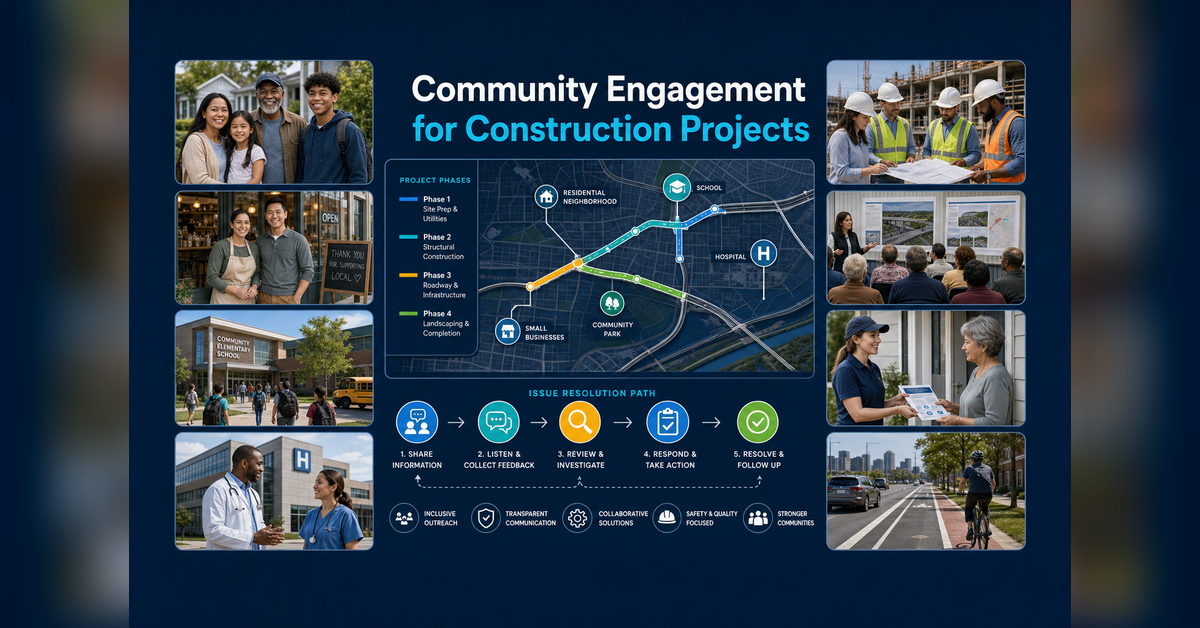

Strong community engagement construction projects treat local relationships as part of project control, not as promotion added after decisions are fixed. The work connects affected people, project facts, open decisions, construction impacts, commitments, and issue closure.
More meetings do not automatically create trust. A sound system shows who was reached, what they were told, what they said, what could change, why other requests could not be adopted, and whether each concern or promise was closed.
See how an infrastructure team built trust and visibility
Cody Clegg and the OPTK Networks team explain how Percepture helped turn technical expertise into search visibility, AI visibility and market authority. The case study establishes relevant infrastructure experience. It does not claim that OPTK used the construction framework in this guide.

“Construction creates inconvenience before it creates value.”
For fiber, utility, data-center and construction teams, trust starts before disruption. People need current facts, clear ownership and a visible response path.
Real fiber and infrastructure operator perspective
Search, AI visibility, PR and proof working together
Long-cycle technical and municipal buyer context
Trust built before urgent permits or project issues
Important: This case study verifies the relationship and campaign result. It is not a promise that every project or search campaign will move at the same speed.
What is community engagement for construction projects?
Community engagement construction projects use a two-way operating process to identify affected stakeholders, explain impacts, gather local knowledge, document commitments, resolve concerns, and report what changed. The process should begin while meaningful choices remain open and continue through active construction, handover, and follow-up.
Engagement is not promotion, a public notice, or one town-hall meeting.
What should project leaders control?
Project truth
Maintain an approved fact base for scope, phases, impacts, uncertainty, constraints, contacts, and upcoming decisions across community engagement construction projects.
Stakeholder coverage
Map affected groups in community engagement construction projects by impact, location, access needs, influence, preferred channel, and accountable project owner.
Decision boundaries
State what is open, what is fixed, who decides, and when useful input must arrive.
Issue closure
Give every concern in construction engagement programs a reference, owner, next update, evidence trail, escalation path, and closure status.
For executives, project engagement succeed when communication and feedback feed the same operating rhythm as design, approvals, scheduling, field coordination, and closeout.
Who this guide is for
Owners and project executives
Connect community trust, approvals, delivery risk, commitments and executive reporting.
Construction and field leaders
Align notices, access, restoration, complaints and local coordination with the look-ahead schedule.
Community and communications teams
Build clear stakeholder maps, decision boundaries, issue records and useful public information.
Fiber, utility and data-center teams
Manage permits, disruption, municipal relationships and long infrastructure build cycles.
Construction and infrastructure communications proof
Percepture has worked across construction, telecom, fiber, data centers and other complex infrastructure markets. The examples below show relevant industry knowledge and visibility work. They do not claim that communications changed a specific permit, design or project outcome.



Related disciplines include public relations services, digital PR services and PR for construction companies. These services can support engagement, but they should never hide unresolved project facts.
How do construction community engagement differ from outreach and PR?
In the engagement program, engagement is the ongoing two-way work used to inform, listen, respond, involve, and remain accountable to affected people. Outreach is mainly about reaching an audience. Consultation requests views on a defined proposal or decision and may be governed by formal requirements. Public relations manages communication and reputation. Marketing supports demand and commercial growth.
These activities can work together, but they are not interchangeable. A construction marketing plan may explain how a company builds demand. Engagement must explain how a specific project manages impacts, decisions, concerns, and commitments.
Engagement also does not replace statutory consultation, hearings, permitting, environmental review, land requirements, Indigenous or Tribal consultation, accessibility obligations, labor duties, or civil-rights requirements. Project teams should route legal, engineering, environmental, planning, safety, and regulatory questions to the qualified professionals responsible for them.
When should engagement begin?
community engagement work should begin while meaningful choices remain open. Before a public launch or visible site activity, define the project purpose, affected area, likely impacts, fixed constraints, open decisions, approval path, project contacts, and deadlines for input.
Early work in the project engagement process is not a promise that every request will change the design. It is a way to discover local knowledge before design gates, procurement decisions, access plans, or construction sequences become expensive to revisit. Engagement should intensify before disruptive phases and whenever dates, routes, work methods, impacts, or commitments change.
Who belongs on the stakeholder and impact map?
For construction engagement programs, the map should include people affected by the work and organizations that can affect delivery. Typical groups include residents, renters, property owners, businesses, employees, road users, schools, hospitals, faith groups, community organizations, elected officials, agencies, utilities, emergency services, owners, designers, contractors, insurers, investors, and future operators.
Do not build the list only from officials and the most vocal residents. project engagement also need a deliberate plan for shift workers, people with disabilities, people with limited digital access, language groups, renters, caregivers, small businesses, and others who may not attend a standard evening meeting.
What should the stakeholder register contain?
Identity and impact
For construction community engagement, record the group, location or service area, expected impact, project phase, and relevant local knowledge.
Access requirements
the engagement program should record language, accessibility, timing, digital access, trusted intermediary, and preferred communication method.
Influence and decision
Decision involved, level of influence, input deadline, constraints, and decision owner.
Communication ownership
Assign each audience in community engagement work a project liaison, technical responder, approval route, update frequency, and escalation threshold.
How should projects set decision boundaries?
In the project engagement process, a decision boundary tells participants what can change, what cannot change, who makes the decision, and when input must arrive. This protects the community from a false promise and protects the project from unstructured feedback arriving after a design or contract gate.
For every open question, publish the options, constraints, safety or engineering limits, decision owner, input method, deadline, and reporting date. For fixed matters, explain the basis in plain language. construction engagement programs can preserve trust even when a request cannot be adopted if the team acknowledges the request, explains the constraint, and records the outcome.
Check your stakeholder plan
See whether important audiences, project owners, intake routes and decision deadlines are missing before visible construction begins.
- Check who may be affected but not represented
- Find unclear ownership and slow response paths
- See where public messages and project decisions do not connect
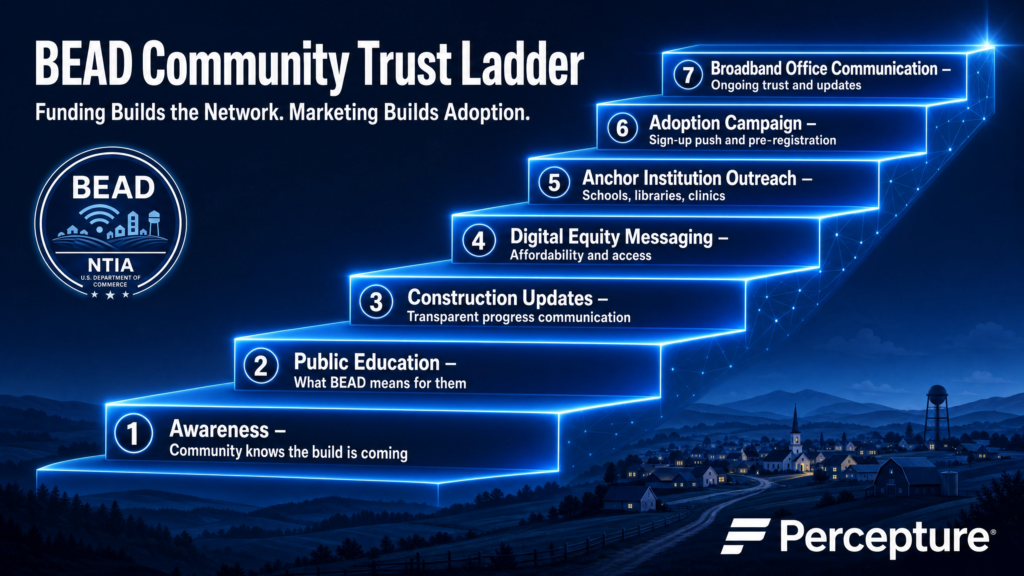
The Percepture Construction Community Trust-to-Delivery System
This seven-stage system connects local knowledge and clear communication to project decisions, construction notices, issue resolution, commitments, handover and measurable outcomes.
Establish project truth
Agree on scope, phases, known impacts, uncertainty, approvals, fixed decisions, open decisions, contacts and claim-approval rules.
Map stakeholders and impacts
Identify affected groups, local knowledge, access needs, trusted intermediaries and material impacts before the map is treated as complete.
Design the engagement
Choose methods, timing, languages, accessibility controls, data rules, response routes and budget based on the decision and audience.
Build preconstruction trust
Publish approved facts, explain likely impacts, collect concerns, log commitments and train the people who may receive questions.
Control construction issues
Connect notices to the look-ahead schedule and track access, traffic, restoration, utilities, dust, noise and safety questions.
Report feedback and commitments
Show what was heard, what changed, what was declined and why. Give every approved commitment an owner, date and evidence path.
Complete handover and proof
Close or transfer open issues, provide operating contacts, document lessons and retain records for future phases.
Framework rule: Prove who was affected, what they were told, what they said, what changed, which promises were delivered and how issues closed.
What should a community engagement plan include?
A useful plan for project engagement covers purpose, scope, phases, stakeholders, impacts, influence levels, roles, messages, methods, accessibility, notices, commitments, issue intake, escalation, privacy, measurement, budget, and review dates. It should be specific enough for the field team to use and controlled enough that public promises receive proper approval.
Plan-control checklist
- Fact base: Approved scope, schedule ranges, phases, impacts, constraints, uncertainties, and contacts.
- Stakeholder register: Affected groups, access needs, trusted channels, owner, and review date.
- Decision calendar: Open questions, constraints, decision makers, input deadlines, and reporting dates.
- Notice matrix: Trigger, audience, location, lead time, channel, approver, sender, and correction process.
- Promise register: Commitment, owner, due date, approval, evidence, status, and public reporting rule.
- Issue register: Reference, category, risk, owner, action, next update, escalation, evidence, and closure.
- Measurement: Coverage, comprehension, notice timing, response, closure, reopen rate, decision influence, and approved outcomes.
A plan for construction community engagement should be refreshed when scope, schedule, impacts, decision rights, stakeholders, or responsible personnel change.
How should teams communicate construction disruption?
the engagement program should communicate early, locally, and specifically. Every notice should explain the location, expected start, duration or date range, working hours, affected access, likely disruption, approved controls, restoration plan, contact route, and timing of the next update.
The notice schedule should follow field planning. Cover traffic changes, deliveries, parking, pedestrian routes, business access, noise, vibration, dust, lighting, utility work, night or weekend activity, safety boundaries, restoration, and closeout. If a date or method changes, correct the earlier information rather than leaving residents to reconcile conflicting messages.
Use channels that fit the affected audience: direct business visits for access questions, mail where digital reach is weak, SMS or email for urgent local updates, signage at the point of impact, an accessible project hub for the current record, and a liaison route for individual cases. A construction social media strategy can distribute updates, but social posts should not become the only source of project truth.
Construction notice scorecard
This scorecard helps community engagement work test whether each notice is connected to field activity, local impact, and accountable response.
| Control | Pass condition | Common failure |
|---|---|---|
| Trigger | A field or schedule event starts the notice workflow | Communication learns about work after mobilization |
| Location | The affected street, area, entrance, or service zone is clear | A broad project update hides the local impact |
| Timing | The notice follows the approved lead time | Recipients cannot adjust travel or operations |
| Impact | Access, noise, dust, lighting, utilities, and safety effects are specific | The notice says only that work will occur |
| Correction | Changed information replaces or corrects the old message | Conflicting dates remain public |
| Response | A visible contact route connects to an accountable owner | Questions are pushed toward field crews |
Which engagement methods work best?
No single method reaches every audience or supports every decision in the project engagement process. Interviews provide depth. Advisory groups provide continuity. Workshops help with defined open questions. Open houses and site walks make physical impacts easier to understand. Surveys and digital maps can extend reach. Project hubs, email, SMS, mail, signage, media, office hours, business visits, and liaison teams distribute updates or handle active-work questions.
For each method, document its purpose, audience, phase, influence level, access requirements, owner, metric, and response path. A survey without a reporting plan collects data but does not complete engagement. A meeting without a decision boundary creates expectations the project may not be able to meet.
Public-facing materials should use plain language, useful visuals, accessible tables, captions or transcripts, keyboard-friendly controls, strong contrast, and available language support. construction engagement programs should also offer alternatives for people who cannot attend at a fixed time or use a digital platform.
How should questions, complaints, and misinformation be managed?
project engagement should provide one visible intake route, then allow several channels to feed it. Assign a reference, classify the issue, acknowledge receipt, identify an owner, state the next update, attach evidence, escalate high-risk matters, record the outcome, and confirm closure or transfer.
A reply is not the same as resolution. Closure means the requested action was completed, the outcome was confirmed, or the matter was transferred through an approved route with the next owner and step recorded. Track repeated themes and reopened issues because they can reveal weak notices, recurring field conditions, unclear ownership, or a mitigation that is not working as intended.
Misinformation should be corrected with current, approved facts. Do not publish sensitive addresses, utility locations, security plans, vulnerable-person data, active complaints, legal strategy, access codes, or unapproved disputes. If an issue could affect safety, legal exposure, or reputation, use an established escalation process supported by crisis communications services.
How should input affect design and delivery?
Input from construction community engagement should enter a controlled review process. Record the stakeholder, issue, affected decision, technical reviewer, constraints, response, decision, approval, and resulting change or mitigation. This allows the team to distinguish actionable local knowledge from requests that fall outside the decision boundary.
The public report can then explain what was heard, what changed, what did not change, and why. This is more useful than reporting attendance alone. It also gives owners, designers, contractors, officials, and community liaisons a shared record of the decision.
How should social value and promises be measured?
Define social value in local context and use only approved commitments. Do not promise jobs, contracts, schedules, compensation, environmental outcomes, access, benefits, design changes, or mitigation without an accountable owner and approval path.
A promise register should record the commitment, audience, source, owner, due date, status, required evidence, approval, and reporting rule. the engagement program should report completed commitments with evidence and explain delayed, changed, or declined commitments through the responsible decision maker.

Which community engagement construction projects model fits the decision?
The right engagement level for community engagement work depends on the decision, not the team’s preferred communication tool. This comparison helps leaders match the public promise to the authority actually available.
| Model | Project promise | Best fit | Main risk | Evidence required |
|---|---|---|---|---|
| Inform | Provide accurate and timely facts | Fixed decisions, notices, and safety updates | The message feels dismissive | Delivery and comprehension |
| Consult | Request views and report findings | Options, impacts, and preferences | Feedback disappears | What was heard and the response |
| Involve | Work with stakeholders through a decision | Access, phasing, and public-realm questions | Influence remains vague | Boundary and change log |
| Collaborate or co-design | Share defined design or delivery work | Community spaces, routes, or defined benefits | Authority or representation is unclear | Membership, rights, and outputs |
| Oversight or partnership | Maintain a formal accountability or delivery role | Long projects, public investment, and social-value programs | Governance becomes symbolic or slow | Terms, authority, and reporting |
What should the first 90 days include?
Days 1–15: Establish truth, governance, and risk
Confirm scope, decisions, approvals, phases, impacts, uncertainty, legal duties, existing commitments, issue history, escalation thresholds, and owners. Do not make a public promise without an owner and evidence path.
Days 16–30: Build the stakeholder and impact map
the project engagement process should use available data, site walks, agencies, local partners, business outreach, project teams, and accessibility review. Record who may still be missing and how the team will attempt to reach them.
Days 31–45: Listen and design the plan
Run interviews, set decision boundaries, choose methods, create the calendar, prepare the project hub, and establish promise and issue registers. Participants should understand what input can influence.
Days 46–60: Launch preconstruction communication
Brief officials and partners, publish approved facts, hold fit-for-purpose sessions, test notices, gather concerns, revise mitigations when appropriate, and train project personnel on routing questions.
Days 61–75: Operate active-work issue control
Use location-based notices, log changes, coordinate access and restoration, correct inaccurate information, track response and closure, and escalate high-risk matters.
Days 76–90: Report and improve
Report what was heard, changed, declined, and why. Review promise status, unresolved issues, local outcomes, lessons, and the next phase. construction engagement programs should continue through handover rather than ending when crews leave.
How should cost, risk reduction, and ROI be measured?
Budget categories for project engagement may include research, mapping, liaison time, facilitation, staffing, venues, accessibility, translation, approved participation support, mail, messaging, a project hub, visuals, signage, site walks, media, surveys, issue systems, analytics, legal review, construction coordination, reporting, and closeout.
Do not assign value to attendance, sentiment, avoided delay, relationships, or benefits without an approved baseline, attribution method, evidence, and owner. The same discipline should apply when connecting engagement to rework, claims, schedule effects, follow-on work, or gross profit.
Measurement framework for construction community engagement
| Measure | Calculation or definition | Control question |
|---|---|---|
| Stakeholder coverage | Groups with an approved owner and plan divided by identified groups | Are affected groups represented in the operating plan? |
| Impact coverage | Material impacts with communication or mitigation controls divided by identified impacts | Does each material impact have a control? |
| On-time notice rate | Notices delivered by the approved deadline divided by required notices | Did people receive useful warning? |
| Response time | Time from issue receipt to the first useful response | Was the first response specific and actionable? |
| Resolution time | Time from receipt to confirmed closure or approved transfer | Was the outcome confirmed? |
| Reopen rate | Reopened issues divided by closed issues | Are issues being closed too early? |
| Promise completion | Commitments delivered with evidence divided by commitments due | Can the team prove delivery? |
| Decision influence | Eligible decisions changed or mitigated using documented input divided by eligible decisions reviewed | Did useful input reach a decision? |
Teams that need stronger measurement architecture can connect the register data to attribution and analytics. Public project hubs may also benefit from conversion-rate optimization so important contacts and updates are easier to find.
See pricing and support options
Compare support for stakeholder strategy, public information, issues management, search visibility, reporting and ongoing project communication.
- See what level of support fits the project
- Separate one-time planning from ongoing communication
- Understand what Percepture can own and what the project team must supply
Bob Generale interviews Cody Clegg on community trust during construction
Bob asked Cody about trust, construction disruption, local relationships, permitting and municipal communication. Cody’s examples come from broadband infrastructure and provide an operator perspective rather than a universal construction rule.

How important is community trust before construction begins?
“Construction creates inconvenience before it creates value.”
Project lesson: Establish facts, contacts, impacts and response paths before visible disruption begins.
What mistake do providers make when entering rural communities?
“A municipality should not first hear from a provider when the provider is asking it to rush a permit.”
Project lesson: Build working relationships before an urgent approval or schedule request.
Why can community engagement become a competitive advantage?
“Infrastructure can be duplicated. Relationships are much harder to duplicate.”
Project lesson: Reliable follow-through and local knowledge create value equipment alone cannot provide.
How should providers address construction disruption?
“Silence creates frustration. Communication creates patience.”
Project lesson: Give people useful notice, a clear contact route and a scheduled next update.
What should a successful campaign create?
“Create anticipation before the build and excitement while it is underway.”
Project lesson: Communication should follow approved project truth and never get ahead of construction reality.
Responses were lightly edited for clarity while preserving meaning. The interview reflects a broadband-infrastructure operator perspective.
How should project authority support engagement?
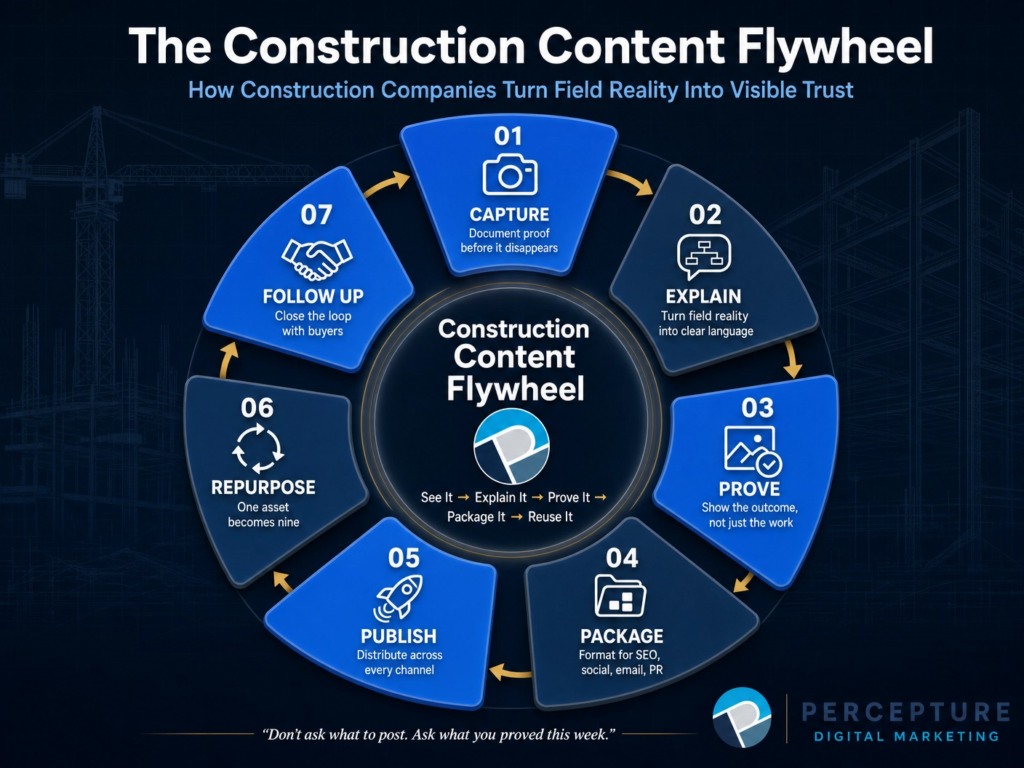
A current project hub for the engagement program should make approved facts, notices, FAQs, contacts, updates, and reporting easy to find. Content marketing services can help turn expert knowledge into clear resources, while enterprise SEO services support crawlable site architecture and generative engine optimization services improve entity and answer clarity for AI-assisted research.
The content system should remain subordinate to project truth. Guidance on construction content marketing, creating construction content, and SEO for construction companies can support authority without turning unresolved issues into promotional claims.
Community Engagement Construction Project FAQs
Why do community engagement construction projects matter?
Construction can affect access, traffic, noise, safety, business activity, public space, and daily routines before the completed project creates value. Engagement gives affected people a route to receive current facts, contribute useful local knowledge, raise concerns, understand decision limits, and see how issues or commitments were handled.
When should construction community engagement begin?
Begin while meaningful choices remain open. Define the project truth, stakeholders, impacts, decision boundaries, access needs, owners, and response routes before formal announcements or visible site activity. Increase communication before disruptive work and whenever the schedule, route, method, impact, or public commitment changes.
What should a construction stakeholder engagement plan include?
Include the approved fact base, objectives, phases, stakeholder and impact map, decision boundaries, roles, methods, accessibility, notice schedule, promise register, issue intake, escalation rules, response expectations, privacy controls, reporting, measures, budget, and review dates.
How should a project handle complaints?
Provide a visible intake route, assign a reference, classify risk, acknowledge receipt, name an owner, state the next update, retain appropriate evidence, escalate high-risk matters, document the outcome, and confirm closure or approved transfer. Repeated and reopened issues should be reviewed for a deeper operating cause.
Can community engagement prevent construction delays?
Engagement cannot eliminate every delay. It can surface access, traffic, utility, business, safety, cultural, and community concerns earlier and improve coordination or issue response. Any claim that engagement avoided time or cost should use an approved baseline, attribution method, evidence, and accountable owner.
How is construction engagement success measured?
community engagement work should measure stakeholder and impact coverage, representation, comprehension, notice timeliness, response time, resolution time, reopened issues, decision influence, promise completion, satisfaction, approved schedule effects, and verified financial outcomes. Attendance alone does not show whether the project listened, responded, or closed concerns.
Does community engagement replace formal consultation?
No. Engagement does not replace statutory consultation, hearings, permits, environmental review, land requirements, Indigenous or Tribal consultation, accessibility obligations, labor duties, or civil-rights requirements. Applicable legal and regulatory work should remain with the responsible agencies and qualified specialists.
How can search and AI visibility support engagement?
A crawlable project hub can help people find approved facts, notices, FAQs, contacts, and reporting. Search and AI visibility should improve access to current information, not create unapproved claims. Structured headings, concise answers, accessible tables, clear entities, and consistent source information improve retrieval.
Build a clear community engagement plan
Percepture can help connect project facts, stakeholder coverage, construction notices, issue control, searchable information and reporting.
- Find the biggest trust and communication gaps
- Clarify who owns each decision, message and response
- Build a practical plan for the next project phase