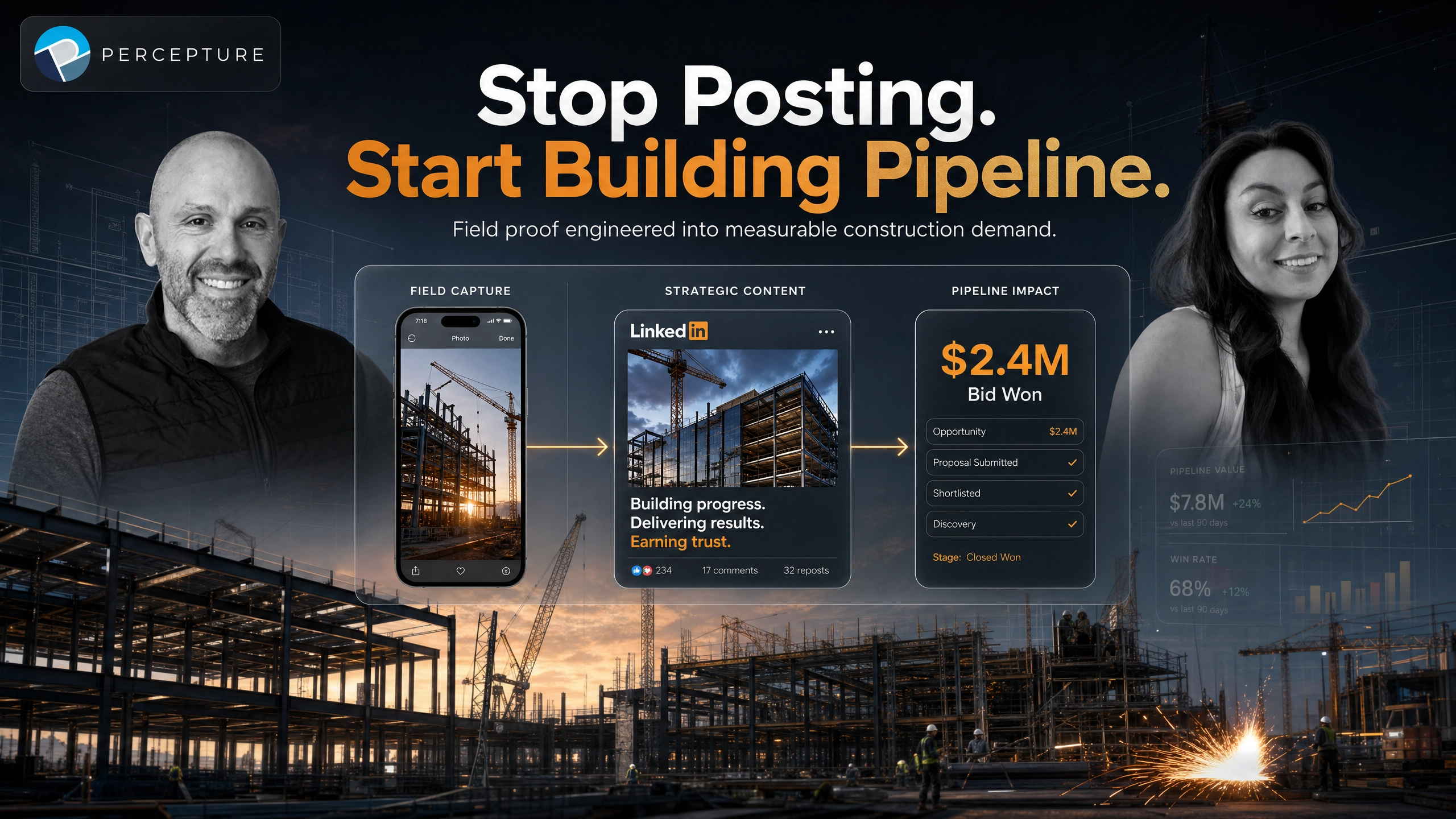

Social media marketing for construction companies should do more than fill a posting calendar. When built correctly, it turns projects, people, processes, and proof into trust that helps buyers, partners, recruits, and decision-makers understand why your firm belongs on the shortlist.
Most construction firms treat organic and paid social media marketing as an afterthought. They post a jobsite photo when someone remembers, share a company anniversary graphic, and wonder why nothing happens. The problem is not the platforms. The problem is the approach.
This guide explains how to build a construction social media marketing plan that treats social media as a proof system, not a posting obligation.
What Is Construction Social Media Marketing?
Construction social media marketing is the use of LinkedIn, YouTube, Instagram, Facebook, and paid social to turn jobsite activity, project proof, expert knowledge, safety culture, and company stories into trust, recruiting visibility, and qualified project opportunities.
A strong construction social media system usually includes five steps:
- Capture real jobsite proof.
- Add context buyers understand.
- Repurpose the content into multiple assets.
- Distribute it across LinkedIn, YouTube, email, paid social, and sales follow-up.
- Measure engagement, leads, recruiting impact, and pipeline influence.
Why Construction Social Media Is Different
Construction buyers are not usually looking for entertainment. They are looking for confidence. Learn below on how social media is different in this complex industry and how to create content for a construction company:
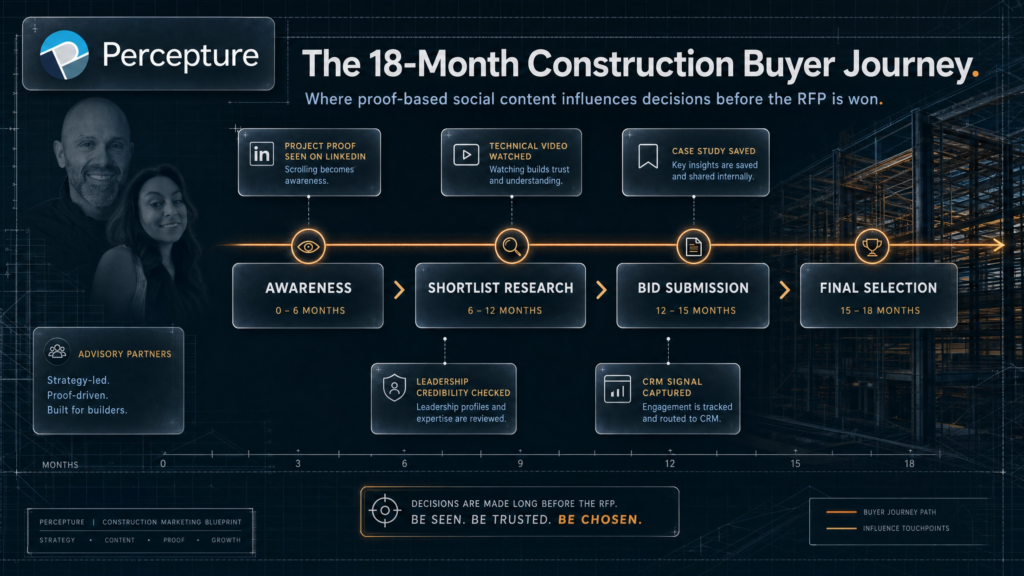
A developer, owner, GC, facility manager, or construction executive may watch a firm for months before inviting them into a bid, shortlist, or partnership conversation. That means social media has to do more than create awareness. It has to build evidence over time.
Construction social media operates under different rules than most industries:
- Long sales cycles: 6–18 months of consideration require sustained visibility.
- Proof-based buying: Buyers vet contractors through evidence, not promises.
- Relationship-driven sales: Trust is the ultimate currency.
- Recruiting pressure: The labor shortage means you are always selling your culture to future employees.
Before a construction buyer reaches out, they often review the company’s website, LinkedIn presence, project history, leadership visibility, case studies, and proof of relevant experience. Social media is part of that due diligence path.
The Jobsite-to-Pipeline Proof System
Most construction companies post randomly. Effective social media marketing for contractors follows a repeatable process we call the Jobsite-to-Pipeline system.
1. Capture
Capture project photos, short videos, leadership thoughts, field notes, milestones, safety moments, team stories, and problem-solving moments. Train project managers and superintendents to capture content during site visits. A 30-second video explaining a challenging pour becomes raw material for months of content.
2. Explain
Turn raw jobsite material into clear explanations. What problem was solved? Why did the method matter? A photo of rebar with a caption explaining why the spacing matters for seismic performance is proof of expertise.
3. Prove
Use results, project context, before/after visuals, team expertise, process details, safety focus, and delivery confidence. Proof is what buyers, partners, and recruits are looking for.
4. Repurpose
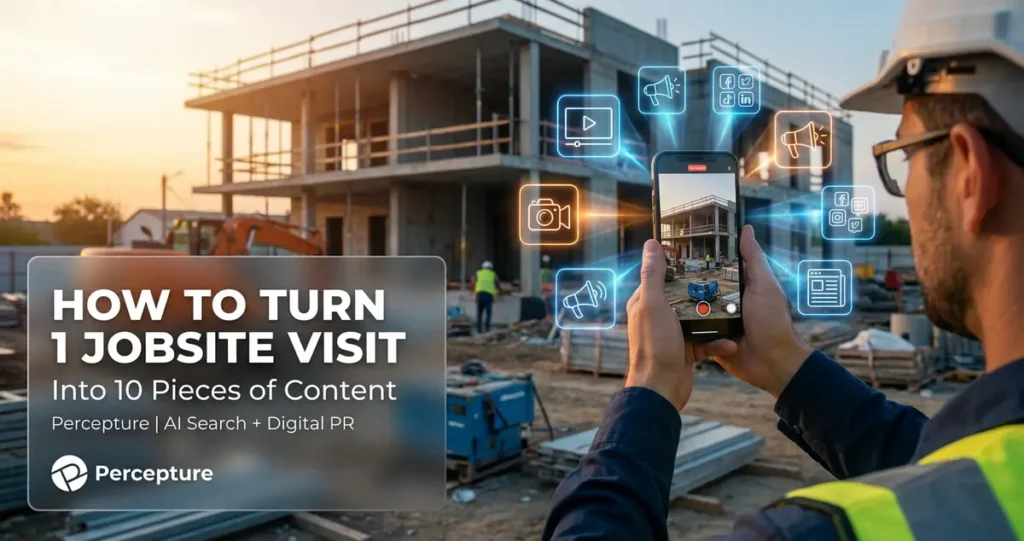
Turn one project into multiple assets. A single jobsite visit should produce content for LinkedIn, YouTube, email, sales, PR, and retargeting. One capture session becomes months of content.
5. Distribute
Choose the right channels for each piece of content. A detailed technical explanation works on LinkedIn and YouTube. A quick project photo works on Instagram. A recruiting story works on Facebook and LinkedIn.
6. Retarget
Use engaged viewers and site visitors to build warmer audiences. Someone who watched your YouTube video or visited your project page is more likely to convert than a cold prospect.
7. Follow Up
Use email, CRM tasks, and AI systems to help the sales team turn attention into conversations. Social media engagement is a signal. The follow-up is what turns that signal into pipeline.
What Construction Companies Should Post
Simple answer: Construction companies should use social media to show proof of work, explain project complexity, highlight people, support recruiting, and stay visible during long sales cycles.
The best construction social media content comes from real work. The key is connecting each post to a purpose. A project photo should link to a case study. A leadership post should establish expertise. A recruiting post should drive applications.
30 Construction Social Media Post Ideas
If you are building a construction social media strategy, here are 30 ideas to support your construction marketing plan and fill your calendar:
Project Proof Ideas
- Project milestone reached
- Before/after comparison
- Challenge solved on site
- Time-lapse of construction progress
- Final project walkthrough
- Client testimonial
- Equipment in action
- Logistics and coordination breakdown
- Quality control process highlighted
- Prefabrication or off-site work showcase

People and Culture Ideas
- Employee spotlight
- New hire welcome
- Work anniversary recognition
- Team training or certification
- Day in the life of a superintendent
- Safety recognition or award
- Community involvement
- Career opportunity announcement
- Apprenticeship or training program details
- Company event recap

Expertise and Thought Leadership Ideas
- Industry trend perspective
- Technical explanation of a complex method
- Lessons learned from a completed project
- Conference or event participation
- Award or recognition announcement
- Partnership announcement
- Safety meeting or toolbox talk summary
- Technology or software in use on site
- Sustainability or innovation initiative
- Executive POV on market shifts
Best Platforms for Construction Social Media Marketing
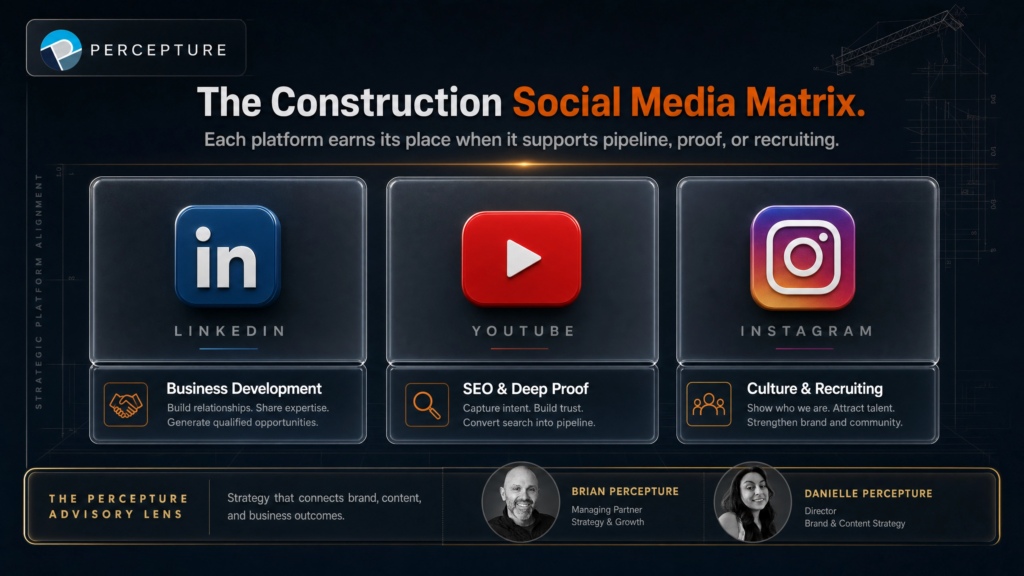
Simple answer: LinkedIn is best for business development, YouTube is best for search visibility and deep proof, and Instagram/Facebook are best for recruiting and local brand awareness.
Different platforms serve different purposes in construction social media. Here is how to think about each:
| Platform | Primary Use | Best Content Types | Best Audience | Business Value |
|---|---|---|---|---|
| Business development, executive trust | Leadership posts, project updates, industry perspective | Owners, developers, architects, partners | Pipeline, partnerships, recruiting | |
| YouTube | Education, search visibility, thought leadership | Project videos, explainers, interviews, shorts | Prospects researching solutions, AI search | Search traffic, expertise proof |
| Visual storytelling, culture | Project photos, team stories, reels | Younger demographics, local community | Brand awareness, recruiting | |
| Community, local presence | Company updates, events, recruiting | Local community, tradespeople | Local awareness, employee engagement | |
| TikTok / Shorts | Reach, recruiting younger workforce | Quick jobsite clips, day-in-the-life | Next-generation workforce | Awareness, recruiting |
| Email / CRM | Nurturing, direct communication | Newsletters, project updates, thought leadership | Existing pipeline, past clients | Pipeline nurturing, retention |
Construction LinkedIn Marketing
LinkedIn is the most important social platform for construction business development. It is where shortlist research happens. Effective strategy includes executive presence, company page updates, employee advocacy, and thought leadership.
Construction YouTube Marketing
YouTube is the second-largest search engine. Project walkthroughs, technical explainers, and thought leadership videos can rank in both YouTube and Google search, turning expertise into evergreen proof.
How Social Supports SEO, PR, and AI Search
Simple answer: Social media drives website traffic, provides visual assets for PR pitches, and feeds authoritative information to AI search engines like ChatGPT and Google AI Overviews.
Social media does not exist in isolation. It connects to and supports other marketing channels:
- SEO: Social content drives traffic to website pages and builds engagement signals. For firms that need a broader growth system, see our guide to construction seo marketing agency strategy.
- Digital PR: Social proof supports digital PR services by providing journalists with visual content and establishing executive voices.
- AI Search: AI search tools pull from authoritative sources. If your construction firm wants to appear in AI search results, review Percepture’s GEO services.
How Paid Social Improves Lead Quality
Simple answer: Paid social allows construction companies to guarantee their best project proof is seen by exact target accounts, decision-makers, and past website visitors.
Organic social media builds trust over time. Paid social accelerates reach. If your team needs amplification beyond organic posts, paid social services can support retargeting, recruiting, and account-based visibility. Retargeting is especially valuable for construction because the sales cycle is long. Someone who watched a project video six months ago might be ready to start a project today.
Real Construction Marketing Proof: From Prefab to Pipeline
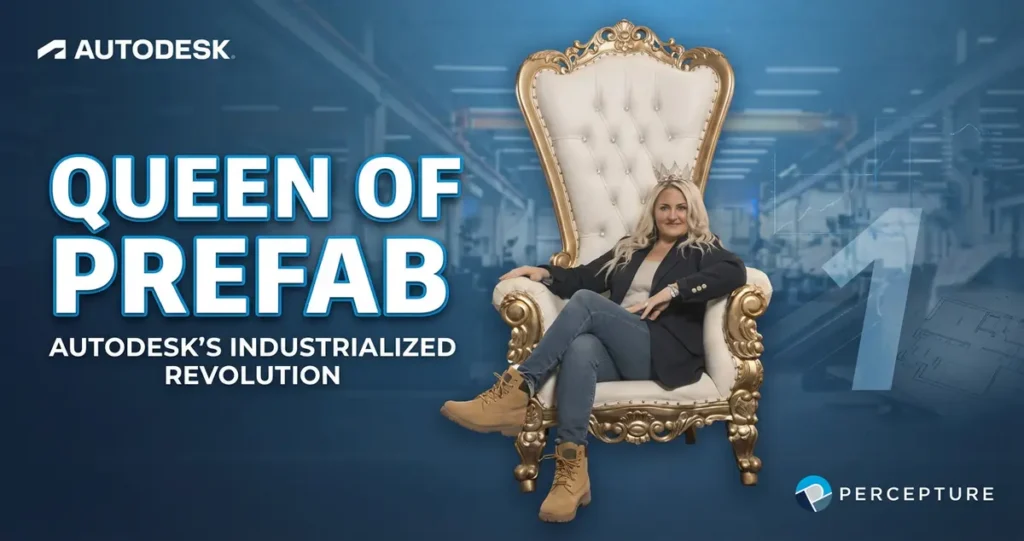
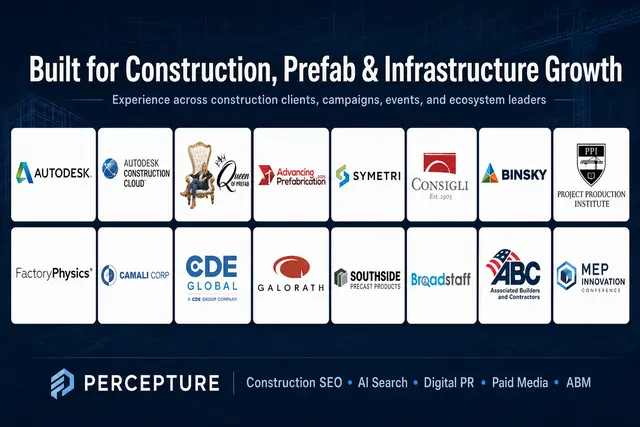
Percepture has supported construction technology, prefab, and infrastructure campaigns where expert content, social distribution, video, and paid amplification helped turn industry knowledge into category visibility and sales-support assets.
Autodesk & Queen of Prefab
Percepture’s work around Autodesk and Queen of Prefab shows why construction social media should be treated as thought leadership. The campaign combined video, YouTube, social posts, podcast appearances, event promotion, and paid distribution.
- 3.05 million YouTube views and 15,050 new subscribers by December 2021.
- Cost efficiency: $0.0106 cost per view compared with an industry average of $0.03 to $0.05.
- Channel dominance: Queen of Prefab episodes ranked as the #1 and #3 most popular videos on the Autodesk channel.
- Audience diversification: Measurable 128% increase in women viewers during the campaign.
Symetri & Advancing Prefab
For Symetri’s presence at the Advancing Prefab conference, Percepture utilized a mix of Google Ads, organic social (3 posts/week), and a Smart Dashboard with 24-hour refresh rates to capture event momentum and turn it into sustained pipeline visibility.
Note: Percepture utilizes proprietary frameworks like EventMAX, OptiSEARCH™, KeywordIQ™, and AutoNURTURE to ensure social media activity translates directly into measurable business growth.
How to Measure Construction Social Media ROI

Simple answer: Measure construction social media by tracking website traffic, video views from target accounts, form fills, recruiting applications, and sales conversations influenced by content.
To prove the value of a social media agency for construction companies, track these metrics:
- Website traffic originating from social channels
- LinkedIn profile and company page engagement from target accounts
- Video watch hours and retention rates
- Form fills and contact requests
- Recruiting applications and quality of hires
- Sales conversations influenced by social content
- Proposal support usage (sales team using social assets)
- CRM notes where prospects mention specific content
- Retargeting audience growth
- Branded search lift
Pricing: What Does Construction Social Media Cost?
Simple answer: Professional construction social media management typically ranges from $2,500 to $10,000+ per month, depending on video production, paid ad management, and content volume.
Percepture offers transparent social media pricing packages starting at $2,500/month, with Launch, Growth, Authority, and Enterprise tiers designed specifically for the complex needs of the construction industry.
Frequently Asked Questions
What is construction social media marketing?
Construction social media marketing is the process of using platforms like LinkedIn, YouTube, Instagram, and Facebook to share project work, expertise, and proof in ways that build trust with buyers, partners, and recruits. The goal is not just visibility but qualified pipeline and business development support.
What should construction companies post on social media?
Construction companies should post project progress, team expertise, safety and process content, people stories, industry perspectives, client success stories, behind-the-scenes content, and recruiting material. The key is connecting each post to a business purpose.
What is the best social media platform for construction companies?
LinkedIn is typically the most valuable platform for construction business development because it reaches owners, developers, architects, and decision-makers. YouTube is valuable for searchable, evergreen content. Instagram works for visual storytelling and recruiting.
Is LinkedIn good for construction companies?
Yes. LinkedIn is where construction decision-makers spend time and where shortlist research happens. Executive presence, company page content, and thought leadership on LinkedIn support business development and recruiting.
Should construction companies use YouTube?
Yes. YouTube is the second-largest search engine and offers searchable, evergreen content that builds authority over time. Project walkthroughs, technical explainers, and thought leadership videos can rank in both YouTube and Google search.
How often should construction companies post?
A reasonable rhythm is 2-3 LinkedIn posts per week, 3-5 Instagram posts per week, and 1-2 YouTube videos per month. Consistency matters more than volume. Quality content with explanation outperforms frequent posting without purpose.
How does social media help construction companies get leads?
Social media builds trust over time, supports shortlist research, enables retargeting of engaged audiences, and creates content that can be used in sales follow-up. When connected to a CRM and follow-up system, social engagement becomes pipeline.
How does social media help construction companies recruit workers?
Social media showcases company culture, safety standards, and career growth opportunities. By highlighting day-in-the-life stories, employee spotlights, and training programs on platforms like Instagram and Facebook, firms attract top talent in a tight labor market.
How much does construction social media marketing cost?
Professional construction social media management typically ranges from $2,500 to $10,000+ per month. Costs vary based on the frequency of posting, video production needs, paid advertising budgets, and the level of strategic agency support required.
How do you measure ROI from construction social media?
Measure ROI by tracking website traffic from social channels, video views from target accounts, form fills, recruiting applications, and CRM data showing how social content influenced sales conversations and shortened the sales cycle.
What is a construction social media marketing plan?
A construction social media marketing plan is a documented strategy that outlines your target audience, content pillars (like project proof and culture), platform selection, posting frequency, paid amplification budget, and the metrics used to measure success.
Should construction companies hire a social media agency?
Yes, if they lack internal resources to consistently capture, edit, and distribute high-quality content. Look for a construction marketing agency that understands the construction industry, connects social to business development, and treats social as part of a larger marketing system.
About the Author
Bob Generale
Bob Generale is President and Partner at Percepture, where he helps construction, infrastructure, manufacturing, energy, and complex B2B companies turn technical expertise into search visibility, trust, and qualified pipeline. His construction-related experience includes liaison and relationship-development work across digital infrastructure, industrialized construction, prefab, project production, mechanical construction, and mission-critical services, including approved work connected to Amy Marks, Queen of Prefab, Advancing Prefab, Camali Corp, Binsky, Metro Connect, DataCloud, and Hunter Newby. Bob’s approach connects SEO, digital PR, paid media, AI search, event strategy, and sales follow-up into a proof-driven growth system built for long, technical sales cycles.