
If you are asking how will AI continue to grow in 10 years, the useful answer is not a list of science-fiction predictions. AI growth through 2036 will depend on whether improving models can move through six real-world gates: cost, infrastructure, adoption, trust, governance and human redesign.
The most likely outcome is broad, uneven expansion. AI will become a normal layer inside software, search, customer service, scientific work, industrial systems and connected devices, but the pace will differ by workflow, industry and region.
AI’s next decade will be built in software and infrastructure
That is the perspective behind this forecast: models and agents matter, but so do data centers, power, networks, adoption and the operating systems companies build around them.
What is the most likely direction for AI through 2036?
In direct terms: Over the next decade, AI will become more capable, efficient, specialized and embedded. More systems will complete bounded tasks across digital and physical workflows, while power, chips, data, security, regulation, trust and human adoption continue to control the speed of deployment.
Executive forecast
The central question behind how will ai continue to grow in 10 years is not whether models improve. It is whether organizations can turn those improvements into reliable, affordable and governed outcomes.
AI becomes an operating layer
AI will move from a separate tool into the systems people already use for research, communication, analysis, service and decisions.
Agents handle longer workflows
Bounded agents may gather information, use software and move work between steps, with people retaining authority over sensitive decisions.
Infrastructure shapes the pace
Chips, data centers, power, cooling, networks and local interconnection will influence where advanced systems can run economically.
Growth remains uneven
Industries with structured data, repeatable tasks and clear controls will usually deploy faster than fragmented or highly sensitive environments.
How Will AI Continue to Grow in 10 Years?
To understand how will ai continue to grow in 10 years, track several forms of expansion at once. Models may handle more types of input, complete longer tasks and run at lower cost. Software vendors will place AI inside existing products. Organizations will redesign selected workflows around automated research, generation, analysis and execution.
That does not mean one system will suddenly perform every job. A more credible forecast is a large population of specialized systems operating within defined boundaries. Some will answer questions. Others will monitor equipment, prepare documents, compare vendors, route support requests or coordinate steps across business software.
The answer to how will ai continue to grow in 10 years also changes by industry. A marketing team can test a drafting workflow quickly. A hospital, utility, financial institution or public agency faces different requirements for privacy, safety, auditability and accountability. Technical capability may arrive before operating permission.
AI growth: direction, confidence and constraint
| Growth area | Likely direction through 2036 | Confidence | Main constraint |
|---|---|---|---|
| Model capability | Better handling of text, images, audio, video and structured data | High | Reliability on unfamiliar or high-stakes tasks |
| Cost and efficiency | More useful workloads running on smaller or specialized systems | Medium | Compute, energy and integration costs |
| Agents | Longer bounded workflows with tools, logs and approvals | Medium | Error recovery, security and control |
| Robotics | Gradual expansion in structured physical environments | Medium | Hardware cost, safety and environmental variation |
| Search and commerce | More answers, comparisons and actions mediated by AI systems | High | Source quality, trust and commercial rules |
| Enterprise adoption | Uneven growth led by repeatable, measurable workflows | High | Data readiness and organizational redesign |
This scorecard is the practical starting point for how will ai continue to grow in 10 years: capability can move quickly, but realized value advances only when the surrounding system is ready.
What “AI growth” actually means
Answering how will ai continue to grow in 10 years requires separating market size, model capability and business value. A market can attract spending without producing equal gains for every buyer. A model can improve on a benchmark while remaining unreliable in a live workflow. A pilot can look impressive without surviving security review or earning employee trust.
Leaders assessing AI’s growth through 2036 should track six forms of growth. Capability measures what systems can do. Deployment measures how widely they are used. Economic value measures whether they improve revenue, cost, speed or quality. Physical reach covers robotics and edge devices. Trust measures whether users rely on the output. Governance determines which uses are permitted and accountable.
This distinction prevents two common errors. The first is assuming a technical demonstration proves a business case. The second is treating slow adoption as proof that the underlying technology has stopped improving.
The Percepture 2036 AI Growth Map
AI does not scale because one model gets better. It scales when six connected systems are ready at the same time. The slowest required gate can hold back the whole use case.
Capability
Can the system complete the task accurately enough for its intended use?
Cost and efficiency
Can it operate at a cost that supports the expected business outcome?
Physical infrastructure
Are compute, power, cooling, networks and devices available where they are needed?
Adoption
Will customers, employees and partners actually use the system inside real workflows?
Trust and governance
Are data use, accountability, security, permissions and escalation rules clear?
Human redesign
Have roles, skills, incentives and approval rights changed with the workflow?
A capable agent can still fail commercially if it lacks permission to access data, if nobody owns exceptions or if the cost of checking every output exceeds the value created. The map turns the AI-growth discussion into an operating-readiness test.
Score the six gates before you buy another AI tool
Use the 2036 AI Growth Map as a readiness check. The slowest required gate often determines whether a promising AI use case becomes a reliable business system.
Review the 6-Gate Growth MapWhat the current evidence supports
Evidence about AI’s 10-year growth path supports continued investment, expanding organizational use and continued infrastructure demand. It does not support a precise description of every capability that will exist in 2036. Forecasts should therefore separate observable direction from uncertain speed.
The supplied research brief reports that organizational use is broad while agent deployment remains early. That combination matters. Companies are not starting from zero, but many have not yet moved from individual assistance to governed, multi-step execution.
The same brief cites wide ranges in published productivity estimates. That is a warning against converting technical progress into one guaranteed economic number. Productivity depends on adoption, complementary investment, management choices and the ability to redesign work.
For the 2036 AI outlook, the strongest evidence supports continued capability gains, broader deployment and heavy infrastructure requirements. The least defensible claims are exact AGI dates, universal job outcomes and straight-line forecasts that ignore policy or physical limits.
Three plausible AI scenarios for 2036
There is no responsible single prediction for 2036. These three scenarios give leaders a cleaner way to watch the future unfold and keep investments useful across more than one outcome.
Embedded AI
AI becomes less visible as a separate product because it is built into office software, analytics, search, customer systems, industrial controls and personal devices. Competition shifts from access to execution: most firms can obtain similar baseline capabilities, but fewer can connect them to clean data, useful processes and accountable decisions.
Watch for: bundled assistants, lower operating costs and steady adoption inside existing platforms. Leader response: improve data quality, train teams and measure workflow-level outcomes.
Agentic Acceleration
Agents extend automation from single outputs to sequences. A system may research an account, prepare a brief, update a record, draft outreach and route an exception to a person. The key issue becomes reliability and recovery, not simply whether the agent can complete a task once.
Watch for: better tool use, error recovery, audit logs and measurable gains from multi-step automation. Leader response: build approval gates, exception handling and secure system access. See Percepture’s AI sales agents and analysis of AI outbound calling.
Constrained Bifurcation
Power, chips, policy, trust and geopolitics create different AI systems by region and industry. Some organizations use large cloud systems while others rely on private, local or smaller models. Portability becomes more valuable because one model, one data location or one regulatory assumption may not work everywhere.
Watch for: interconnection delays, regional rules, restricted data movement and uneven model access. Leader response: plan for multiple vendors, local infrastructure and stronger data governance.
The most likely future is a blend: embedded assistance across most software, faster agent adoption where controls are strong, and constrained deployment where infrastructure or policy slows the system down.
How models may change
Models are likely to become more multimodal and specialized. They may combine language with images, audio, video, sensor data and structured business records. Smaller systems may handle narrow tasks locally, while larger systems serve complex workloads in centralized environments.
Open and closed systems will likely continue to coexist. The right choice will depend on cost, control, security, performance and available technical skills. There is no reason to assume that one model architecture will serve every buyer.
AGI should remain a controlled part of the discussion. Definitions differ, and a date cannot be treated as established fact. A better way to evaluate AI’s growth through 2036 is to monitor observable capability, task duration, reliability, cost and operating permission.
How agents may change work
Agents may expand the length of work that software can complete without step-by-step human input. That could include research, routing, drafting, monitoring, scheduling and updates across approved systems.
The best early uses have clear inputs, repeatable steps and measurable outputs. They also have an identifiable human owner. An agent should not become an excuse for unclear accountability.
Human review will not disappear uniformly. It may move to policy setting, exception handling, quality control and high-impact decisions. Organizations exploring broader business AI systems should define those boundaries before connecting automation to live customer or operating data.
In the work context, the next decade of AI depends on whether agents become dependable participants in bounded processes rather than impressive systems that fail unpredictably outside demonstrations.
Robotics and physical AI
Robotics adds a harder problem: the physical world changes. A digital agent can retry a software action. A machine moving equipment, assisting a patient or inspecting infrastructure must account for safety, location and environmental variation.
That favors structured settings first. Manufacturing cells, warehouses, controlled inspection routes and selected maintenance tasks provide clearer operating boundaries than open public environments.
For robotics, AI’s 10-year growth path links model growth to hardware supply, sensors, connectivity and maintenance. Buyers need a whole-system business case rather than a model demonstration.
Industry outcomes will vary, but the 2036 AI outlook can be evaluated through likely uses, retained human roles and the constraint most likely to slow each deployment.
Likely industry impact
| Industry | Likely AI use | Human role | Constraint |
|---|---|---|---|
| Healthcare | Documentation, analysis support and administrative routing | Clinical judgment and patient responsibility | Privacy, safety and accountability |
| Science | Literature synthesis, simulation support and candidate screening | Hypothesis design and validation | Evidence quality and reproducibility |
| Education | Practice support, feedback and administrative assistance | Instruction, context and student welfare | Accuracy, access and assessment integrity |
| Finance | Research, monitoring and service workflows | Risk ownership and regulated decisions | Auditability and compliance |
| Manufacturing | Inspection, maintenance planning and controlled robotics | Safety, engineering and exception response | Hardware integration and downtime risk |
| Marketing | Research, content operations and journey analysis | Positioning, judgment and accountability | Commodity output and source quality |
| Sales | Account research, qualification and workflow coordination | Relationship, negotiation and approval | Data quality and buyer trust |
| Data centers | Operations support, forecasting and equipment monitoring | Engineering and physical risk ownership | Power, cooling, connectivity and security |
| Energy | Forecasting, optimization and maintenance support | System control and public accountability | Reliability and infrastructure limits |
| Government | Service routing, analysis and administrative support | Due process and public authority | Transparency, procurement and trust |
The scorecard shows why AI development through 2036 produces different operating priorities across industries even when they use similar underlying models.
Will AI replace jobs?
Tasks are not the same as occupations. The practical question is which parts of a role can be automated, which still need judgment, and how the role changes around that split.
Some tasks will be automated, some roles will change and some jobs may be lost. New work may also emerge around implementation, oversight, data, security, customer experience and process design. The balance will differ by occupation and location.
Tasks are not the same as occupations. A job usually combines routine work, judgment, coordination, relationships and accountability. AI may absorb selected tasks without taking over the whole role, or it may change the economics enough to reduce the number of people required.
Early-career work deserves attention because many entry roles include research, drafting and routine analysis. Employers will need new ways to develop judgment if machines perform more of the practice work that once trained junior employees.
Any honest answer to AI’s growth through 2036 must leave room for both augmentation and displacement. Leaders should communicate which work is changing, which decisions stay human and how employees can build relevant skills.
Search, brands and buying
AI is becoming a discovery and recommendation layer. Buyers can ask a system to explain a category, compare options, summarize evidence and prepare a shortlist. Agents may eventually complete selected actions after a person sets the goal and approval rules.
Websites will still matter because AI systems need accessible sources, structured facts and current proof. Brands should make expertise easy to retrieve and verify instead of hiding important information inside vague claims or inaccessible files.
This is where enterprise SEO services, expert-led content marketing and digital PR services work together. Technical retrieval, useful source material and third-party authority solve different parts of the discovery problem.
Percepture’s guide to improving brand visibility in AI search engines covers the tactical layer. Its generative engine optimization services page explains the commercial service for organizations that need a coordinated program.
For marketers, the next decade of AI is therefore also a question about source visibility. Organizations that publish verifiable expertise and maintain clear entity information will be easier for people and machines to evaluate.
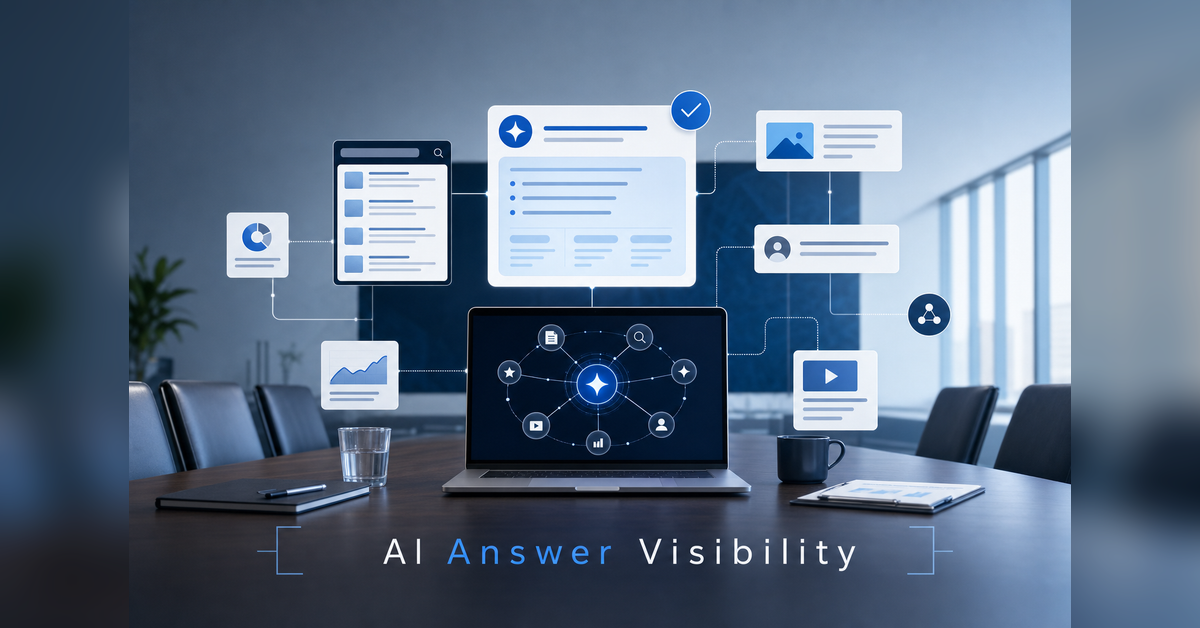
See what AI-mediated discovery looks like now
If the next decade moves more buying decisions into AI answers and recommendations, the useful question is what your brand looks like inside those systems today.
Review AI Search & GEO ServicesChips, data centers, power and networks
AI is software with a physical supply chain. Training and inference depend on chips, servers, data centers, power, cooling, fiber, interconnection and the devices where outputs are used.
The supplied IEA research summary projects that electricity serving data centers could rise from about 460 terawatt-hours in 2024 to more than 1,000 terawatt-hours in 2030 and 1,300 terawatt-hours in 2035. Those figures cover data centers more broadly than AI and remain scenario estimates rather than guaranteed outcomes.
Capacity on paper is not the same as usable capacity. A project can face delays in generation, transmission, equipment, permitting or interconnection. Network design also matters because moving large volumes of data between models, facilities and users affects cost and performance.
Percepture’s article on AI inference infrastructure examines the physical chain behind deployed models. Data center firms communicating their role can also use an omnichannel marketing strategy to connect technical expertise with investors, customers, communities and partners.
For infrastructure leaders asking AI’s 10-year growth path, the operating question is where demand can be served reliably, not simply how much demand appears in a global forecast.

What could slow or redirect AI growth?
- Power and interconnection: Compute cannot operate where dependable capacity is unavailable.
- Chip and equipment supply: Concentrated production and long equipment cycles can shape deployment timing.
- Data limits: Poor, restricted or fragmented data reduces the value of capable models.
- Security: More tool access creates more ways for errors or attacks to affect live systems.
- Reliability: A workflow cannot be delegated safely if exceptions are frequent or invisible.
- Regulation: Different rules may limit data use, automated decisions or cross-border operations.
- Trust: Customers and employees may resist systems they cannot understand or challenge.
- Skills and management: Technology cannot redesign roles, incentives and accountability on its own.
- Economics: A technically successful workflow can still fail if verification and integration cost too much.
These constraints explain why the 2036 AI outlook cannot be answered through model capability alone. The slowest required component can redirect an entire use case.
Benefits, risks and governance responses
| Potential benefit | Associated risk | Governance response |
|---|---|---|
| Faster research | Unsupported or incomplete output | Source requirements and expert review |
| Lower routine workload | Loss of process knowledge | Document decisions and retain trained owners |
| Personalized service | Privacy or inconsistent treatment | Data limits, testing and escalation paths |
| Automated execution | Errors reaching live systems | Permissions, logs, thresholds and approvals |
| Broader access to expertise | Overreliance on generalized advice | Clear scope and referral to qualified people |
| Improved monitoring | Alert fatigue or hidden blind spots | Defined ownership and regular control testing |
Governance keeps AI development through 2036 tied to accountable benefits, known risks and controls that can be tested.
What leaders should do now
Leaders do not need a perfect answer to AI’s growth through 2036 before strengthening the workflows, data boundaries and decision rights they control.
- Map workflows before buying tools. Record inputs, decisions, systems, handoffs, exceptions and measurable outcomes.
- Set data boundaries. Decide which information may enter each system and where it can be stored.
- Keep authority explicit. Name the person responsible for approvals, exceptions and customer impact.
- Run bounded pilots. Start with a workflow narrow enough to test and valuable enough to measure.
- Measure the whole cost. Include integration, review, security, training and maintenance.
- Strengthen source visibility. Publish clear expertise that search engines, AI systems and buyers can retrieve.
- Train for judgment. Teach people how to evaluate output, find errors and escalate risk.
Teams improving discoverability can study how long it can take to appear in AI search. Organizations with a defined visibility gap may use a focused SEO sprint to address a bounded set of technical and content priorities.
A 30/90/365-day preparation plan
| Period | Operating priorities | Decision gate |
|---|---|---|
| First 30 days | Inventory workflows, data, tools, owners, risk classes and current AI use. | Can the team name one measurable, bounded use case? |
| By 90 days | Run a controlled pilot, log exceptions, measure quality and calculate total operating cost. | Does the workflow improve a business outcome without weakening control? |
| By 365 days | Scale successful uses, stop weak pilots, train affected teams and establish recurring governance reviews. | Can the system operate reliably as volume, users and integrations increase? |
This plan turns the next decade of AI into decisions that can be made now. It does not require a perfect forecast; it creates options across several plausible futures.
What Percepture believes is most likely
Our informed view of AI’s 10-year growth path is that AI will become infrastructure and interface rather than remain one product category. It will sit between people and information, between customers and brands, and between goals and selected business actions.
The largest gains will not automatically go to the company with the most tools. They will go to organizations that connect useful capability to trusted data, physical capacity, accountable workflows, discoverable expertise and human judgment.
That view also leaves room for uneven progress. Some workflows will advance rapidly. Others will remain human-led because the cost of error, need for trust or complexity of the environment makes automation less attractive.
Frequently asked questions
How advanced could AI be by 2036?
When considering the 2036 AI outlook, AI may handle more types of data, complete longer bounded tasks and operate inside more software and physical systems. Its real-world advancement will depend on reliability, cost, infrastructure, permission and adoption. Capability should not be confused with safe, universal deployment.
How will ai continue to grow in 10 years?
Growth will appear in software, search, science, business workflows, robotics and infrastructure. The pace will remain uneven because power, chips, data, security, regulation, trust and human readiness differ by use case.
Will AGI exist by 2036?
No responsible forecast can provide a settled date. Definitions of AGI differ, and capability forecasts remain uncertain. Businesses should prepare around observable measures such as reliability, task duration, cost, tool use, governance and the consequences of error.
Will AI replace jobs?
AI may automate tasks, change occupations and eliminate some positions while creating other work. The outcome will vary by industry and role. Employers should identify changing tasks, preserve accountable human decisions and provide practical training rather than promise that no jobs will be affected.
Will AI be built into every device?
AI may become common across many devices, but not every workload belongs on a device. Cost, energy, privacy, latency and performance will determine whether a task runs locally, at the edge or in a centralized data center.
Which industries may change first?
Workflows with structured data, repeatable steps and measurable outputs are usually easier to automate. Marketing, software, customer operations and selected financial or administrative tasks may move quickly. High-stakes healthcare, public-sector and physical uses require stronger controls.
How will AI change search and small-business discovery?
For search, AI development through 2036 includes systems that summarize categories, compare providers and recommend next steps. Small businesses will need clear websites, consistent entity information, useful expertise and credible third-party references so both buyers and machines can understand what they offer.
How much energy could AI require?
AI is one driver of broader data center electricity demand. Actual requirements will depend on model efficiency, workload growth, facility design and where inference runs. Leaders should treat energy projections as scenarios and evaluate local power, cooling and interconnection conditions.
How should a company prepare for AI growth?
To prepare for AI’s growth through 2036, map workflows, classify data, define approval rights and test bounded use cases. Measure quality, cost and business outcomes before scaling. Companies should also strengthen the source material that search engines, AI systems and buyers use to evaluate them.
Methodology and limitations
This forecast of the next decade of AI uses the supplied competitive brief, infrastructure research summary and Percepture’s six-system scenario method. It separates observable direction from assumptions about speed and avoids assigning a fixed date to AGI.
The scenarios are planning tools, not promises. Material changes in model reliability, power availability, interconnection, chip supply, regulation, trust, robotics cost or smaller-model efficiency could change the balance between them.
Want your company explained this clearly?
Complex markets are easier to trust when the thinking, proof and presentation are clear. Percepture can turn your expertise into an executive-grade search and AI-ready content system that helps buyers understand why your company matters.
Start a Strategy Conversation