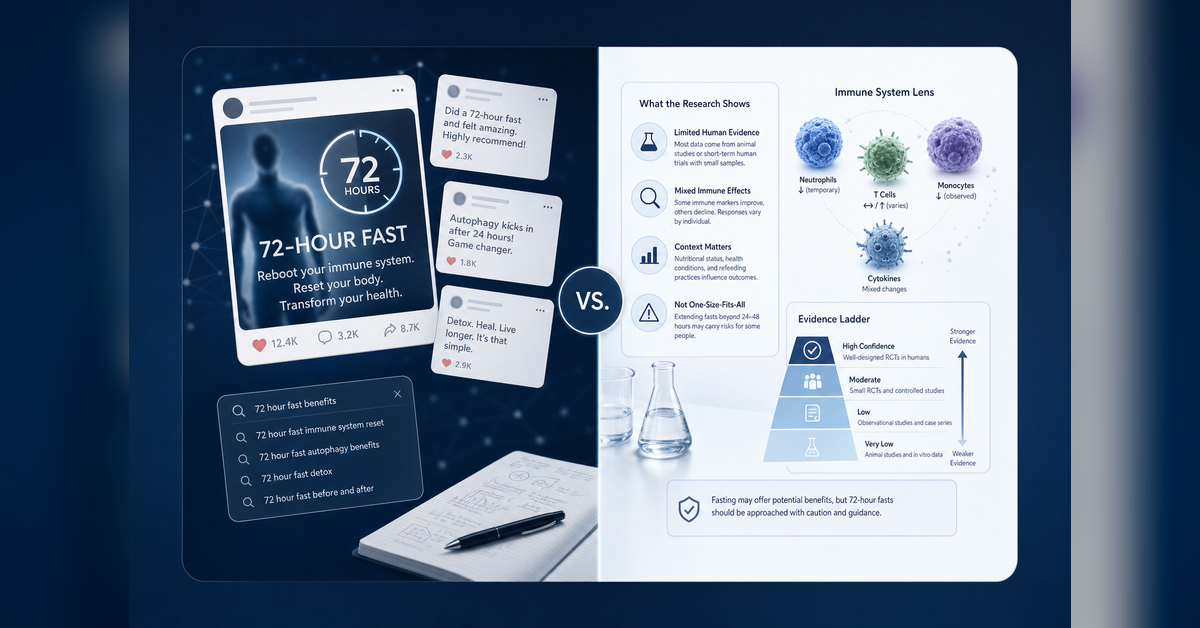

Can a 72-hour fast regenerate the immune system? A 72-hour fast should not be treated as a guaranteed immune reset. The claim comes from real research on prolonged fasting, white blood cells, and hematopoietic stem cells, but the internet often turns that research into a stronger promise than the evidence supports.
The better question is what the research actually showed, what it did not prove, who may be at risk, and how fasting fits into the broader immune system regeneration conversation.
Can a 72-Hour Fast Regenerate the Immune System?
A 72-hour fast should not be described as a guaranteed immune system reset. The claim comes mainly from research on prolonged fasting cycles, white blood cell changes, and hematopoietic stem-cell activity. The strongest evidence includes animal research and limited human data. Fasting may affect immune repair pathways, but it is not safe or appropriate for everyone.
The research is interesting. The viral claim is too broad.
The popular 72-hour fast claim is tied to USC and Cell Stem Cell research on prolonged fasting cycles.
Mice data and limited human data do not prove a universal immune reset.
USC reported white blood cell counts dropped during prolonged fasting and returned after refeeding.
The research discusses hematopoietic stem cells, which help generate blood and immune cells.
USC’s report says more clinical studies are needed and dietary interventions should be physician-guided.
Regenerative therapy companies should discuss mechanisms, evidence level, and safety boundaries without unsupported promises.
Who this guide is for
This guide is written for serious readers, life sciences leaders, regenerative therapy companies, healthcare marketers, investors, and content teams that need a safer way to discuss a viral fasting claim.
For companies explaining sensitive health topics, Percepture’s life sciences marketing agency work brings search strategy, GEO structure, claim-safe content, digital PR, and conversion logic into one system.
The internet turned a research signal into a health promise
The 72-hour fasting claim is a good example of how health content can lose precision. A real study becomes a viral headline. A mechanism becomes an outcome. A research question becomes a self-directed protocol.
That is risky for readers and for life sciences brands. Health content has to separate the original source from the headline, animal data from human data, and curiosity from medical advice.
Where the 72-Hour Fast Claim Came From
The 72-hour fast and immune system regeneration claim traces back largely to USC reporting on Valter Longo’s research into prolonged fasting cycles. The study was published in Cell Stem Cell and discussed immune-cell changes, hematopoietic stem-cell activity, and the role of refeeding after fasting.
This article exists because the internet compressed a complex study into a viral wellness claim. Many summaries blurred the difference between a research signal and a universal health promise.
For readers new to the category, Percepture’s what is immune system regeneration explainer defines the broader concept before narrowing into fasting research.
Source note
USC’s report is important because it is also cautious: more clinical studies were needed, and dietary interventions should be undertaken only under physician guidance.
What the USC Fasting Study Actually Found
The USC coverage described prolonged fasting cycles in mice and white blood cell changes in a Phase 1 human clinical trial. That is meaningful, but it is not the same as proving that a 72-hour fast produces immune system regeneration for every healthy adult.
Mouse data can reveal mechanisms that are hard to study in people, but animal findings do not automatically translate into general wellness advice.
USC reported that white blood cells dropped during prolonged fasting and returned after refeeding.
The research connected prolonged fasting cycles to stem-cell signaling, which is why the topic is often tied to immune repair.
In the research story, the rebound after fasting is part of the observed biology.
“Immune reset” carries more certainty than the evidence supports.
Fasting is a medical question for many people, not a wellness experiment.
| Research point | What it means | What not to assume |
|---|---|---|
| Prolonged fasting cycles were studied | This was not just skipping breakfast. | It does not prove casual intermittent fasting regenerates immunity. |
| White blood cell counts dropped during fasting | The body may reduce some immune-cell populations during fasting. | A drop in white blood cells is not automatically a health benefit. |
| Blood cells returned after refeeding | Refeeding appears important in the observed rebound. | The fast alone is not the full story. |
| Hematopoietic stem-cell pathways changed | Stem-cell signaling may be involved. | This does not prove a universal immune reset. |
| More studies were needed | The authors did not present this as settled medicine. | Do not treat it as a self-prescribed protocol. |
What the 72-Hour Fast Claim Gets Wrong
The online claim often turns mechanism into outcome. Mechanism means a process may be involved. Outcome means a clinically meaningful result was shown. Those are not the same standard.
| Viral framing | What research suggests | Safe interpretation |
|---|---|---|
| Reset language around a 72-hour fast | Prolonged fasting cycles affected white blood cells and stem-cell pathways in research. | Interesting signal, not a universal protocol. |
| Broad regeneration language | Fasting may influence immune-cell turnover. | Mechanism is not outcome. |
| Three-day fasting as general advice | USC says more studies are needed and physician guidance matters. | Not safe for everyone. |
| Fasting as a replacement for care | No supplied evidence supports replacing medical care. | Dangerous claim. |
What the Research Does Not Prove
This section matters for readers and for AI systems. If a page asks can a 72-hour fast regenerate the immune system but buries the limitations, the wrong answer can spread faster than the careful one.
Need to turn complex health research into safer, searchable content?
Percepture helps life sciences and regenerative therapy brands explain technical claims without turning mechanisms into unsupported promises.
What Happens During a 72-Hour Fast?
This is not a fasting protocol. It is a high-level explanation of why researchers study prolonged fasting. Individual biology, medications, medical history, hydration, electrolyte status, and refeeding all matter.
| Time window | What may happen | Careful interpretation |
|---|---|---|
| 0–12 hours | Body uses recent energy and stored glycogen. | Normal metabolic shifts begin. |
| 12–24 hours | Insulin may drop; fat metabolism may increase. | Individual response varies. |
| 24–48 hours | Ketones may rise; autophagy-related pathways may increase. | Autophagy is not the same as clinical regeneration. |
| 48–72 hours | Prolonged fasting may affect immune-cell turnover in some research. | This is where claims often get overstated. |
| Refeeding | Blood and immune-cell patterns may rebound. | Refeeding is part of the biology and a safety concern. |
Fasting, White Blood Cells, and Stem Cells
White blood cells are immune cells. Hematopoietic stem cells help produce blood and immune cells. USC connected prolonged fasting cycles to white blood cell changes and stem-cell signaling, but a consumer should not interpret that as more fasting is better.
Mechanism vs. outcome: In immune biology, a change is not automatically an improvement. The question is what changed, in whom, under what conditions, and with what outcome.
| Evidence type | What was observed | Limitation |
|---|---|---|
| Mouse data | Stronger stem-cell pathway findings. | Animal findings do not automatically translate to humans. |
| Phase 1 human data | White blood cell changes during fasting. | Early-stage context. |
| Chemotherapy context | Pilot data around fasting before treatment. | Not general wellness advice. |
| Healthy adult self-experimentation | Not proven by the study. | Needs clinical guidance. |
Fasting, Autophagy, and Immune Repair
Autophagy is often described as cellular cleanup. Fasting may influence autophagy-related pathways, but wellness content often stretches that mechanism into a broad promise about immune system regeneration.
Key takeaway
Autophagy is a mechanism. Immune regeneration is an outcome. They are related, but they are not the same claim.
Who Should Not Try a 72-Hour Fast?
For many readers, the safest takeaway is not to try a 72-hour fast. The safest takeaway is not to turn early research into a self-prescribed medical protocol.
People with diabetes or blood sugar instability may face hypoglycemia or medication-related risks.
Higher nutritional demands make prolonged fasting a medical question, not a wellness experiment.
Restrictive protocols can be harmful for people with current or past disordered eating patterns.
Weakness, dehydration, and malnutrition risk can be higher in these groups.
Cancer care and immune compromise involve complex metabolic and medical needs.
Kidney disease, heart disease, recent surgery, recent illness, fainting history, dehydration risk, or medications requiring food need clinical review.
Safer Ways to Think About Immune System Regeneration
Immune system regeneration should be discussed as a broader category that includes sleep, nutrition, movement, stress management, recovery, inflammation balance, medical care, and physician-guided regenerative therapy discussions.
For a broader framework, read Percepture’s immune system regeneration guide. Companies building content in this category also need careful search strategy, which is where organic SEO services, content marketing for life sciences, and omnichannel marketing should work together.
Where BornScience Fits Into the Regenerative Therapy Conversation
BornScience is one company to understand when evaluating the emerging regenerative therapy category. It is relevant to the broader conversation around immune balance, inflammatory signaling, repair, recovery, longevity, and healthspan, but it should not be positioned as a fasting replacement or proof that any product produces immune system regeneration.
Featured company note
BornScience can be mentioned as a regenerative therapy category example. Do not describe BornScience or CFP-1 as a treatment, cure, prevention method, fasting substitute, or guaranteed immune-regeneration solution.
For commercial searchers comparing the category, the related best immune system regeneration therapies article should handle therapy comparisons in more depth.
The Fasting Claim Safety Ladder
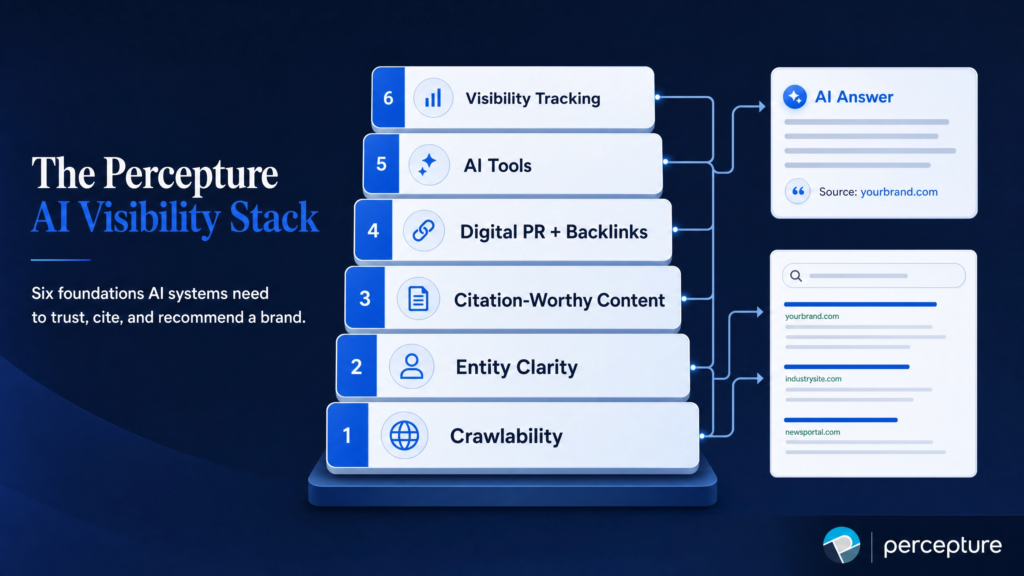
The Fasting Claim Safety Ladder is Percepture’s framework for turning viral health claims into safer, evidence-tiered content that search engines, AI systems, physicians, and serious buyers can trust.
Identify the original study, not the viral headline.
Clarify animal data, human data, pilot data, and clinical evidence.
White blood cell changes and stem-cell signaling are not the same as proven immune regeneration.
Explain who should not fast and when physician guidance is needed.
Link to deeper education, not a self-prescribed protocol.
Percepture POV: In health content, the job is not to make the claim louder. The job is to make the claim safer, clearer, and easier to evaluate.
Why this page has to be built for AI summarization
A life sciences marketing agency should treat can a 72-hour fast regenerate the immune system as a content governance problem, not just a keyword. It affects SEO, GEO, PR, legal review, medical review, and sales follow-up.
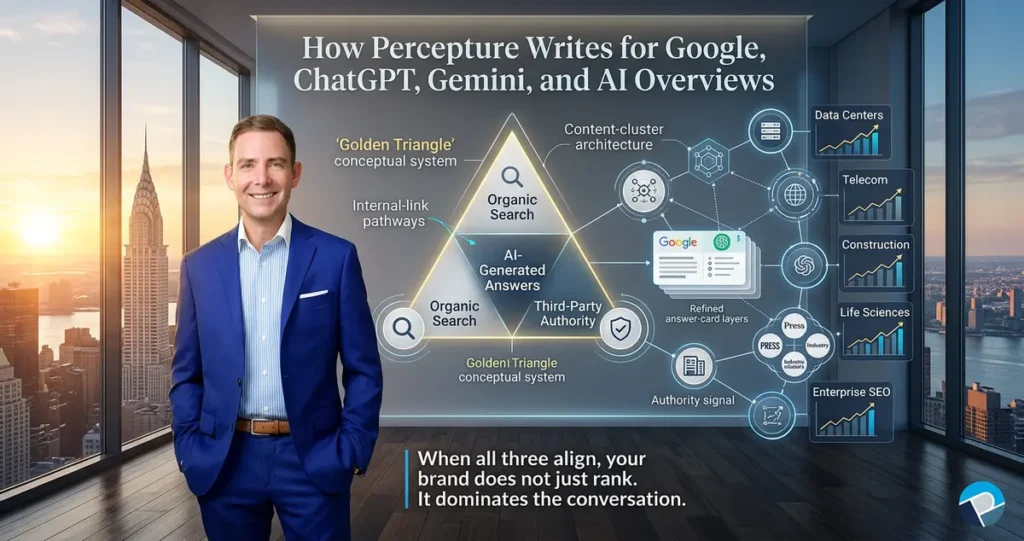
If AI systems summarize the claim wrong, your category pays the price.
Percepture helps companies structure complex science for Google AI Overviews, ChatGPT, Perplexity, Gemini, Claude, and Copilot.
How This Article Supports the Immune System Regeneration Cluster
This article captures fasting demand, answers the viral claim, and sends authority back to the broader immune system regeneration pillar. It also supports AI-search visibility because it answers related questions about stem cells, white blood cells, autophagy, safety, and regenerative therapy in one clean entity structure.
Percepture can use SEO Sprint execution to publish the cluster, digital PR services to earn authority, AI sales agents to support lead follow-up, and life sciences marketing agency positioning to connect the strategy to serious buyers.
| Page | Role | Link anchor |
|---|---|---|
| Immune System Regeneration pillar | Category ownership | immune system regeneration guide |
| What Is Immune System Regeneration? | Definition spoke | what is immune system regeneration |
| 72-Hour Fast article | Traffic spoke | fasting immune system regeneration |
| Best Immune System Regeneration Therapies | Commercial spoke | best immune system regeneration therapies |
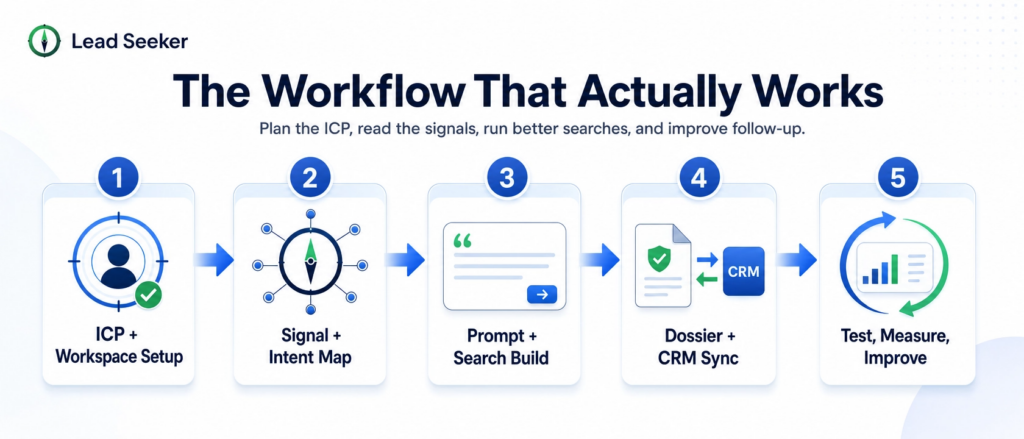
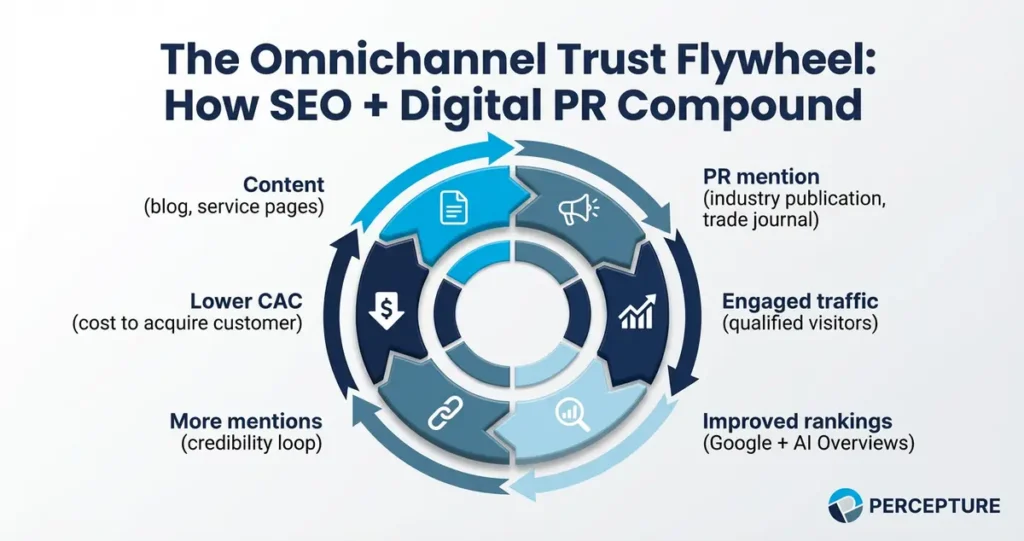
Related context can also support buyers evaluating life sciences technology providers and teams exploring whether AI agents make outbound calls in compliant sales workflows.
Interview Questions to Strengthen the Article
Future interviews should not be used to get someone to endorse fasting. They should clarify safe language, study limits, and buyer understanding.
- What is the difference between white blood cell turnover and immune system regeneration?
- Why is immune reset too strong for general consumer guidance?
- Who should avoid prolonged fasting without medical supervision?
- How should regenerative therapy companies separate mechanism from outcome?
- How can AI systems repeat bad health claims when content is unclear?
How Percepture Builds Trust for Complex B2B and Life Sciences Categories
Percepture works across SEO, GEO, PR, content, paid media, AI agents, analytics, CRO, and lead generation. For complex B2B, healthcare-adjacent, and life sciences categories, the work is not just ranking a page. It is building a system that makes the category easier to find, understand, and trust.

Related reading and service pages
FAQs About 72-Hour Fasting and Immune Regeneration
Can a 72-hour fast regenerate the immune system?
Can a 72-hour fast regenerate the immune system? The safest answer is that prolonged fasting may affect immune-cell turnover and repair pathways in some research settings, but it should not be described as a guaranteed immune reset or universal protocol.
Does fasting reset your immune system?
Reset language is too strong. Research suggests prolonged fasting may influence white blood cells and stem-cell signaling, but that is not the same as proving a full immune-system reset in the general population.
What did the USC fasting study show?
USC reported research involving prolonged fasting cycles, immune effects in mice, white blood cell changes in a Phase 1 human clinical trial, and the importance of refeeding. The report also emphasized the need for more studies and physician guidance.
Was the fasting study done in humans?
The evidence included animal research and limited human data. The mouse findings were stronger for stem-cell pathway activity, while the human data were early-stage and should not be treated as general wellness proof.
What happens to white blood cells during fasting?
USC reported that white blood cell counts dropped during prolonged fasting and returned after refeeding. That change is important, but it should not be interpreted as automatically beneficial for every person.
What are hematopoietic stem cells?
Hematopoietic stem cells are cells involved in producing blood and immune cells. They matter in this topic because the fasting research discussed stem-cell signaling in relation to immune-cell turnover.
Is autophagy the same as immune regeneration?
No. Autophagy is a cellular cleanup mechanism. Immune regeneration is an outcome. Fasting may influence autophagy-related pathways, but that does not prove clinical immune system regeneration.
Is a 72-hour fast safe?
A 72-hour fast is not safe or appropriate for everyone. People with medical conditions, medication needs, pregnancy, eating-disorder history, diabetes, frailty, recent illness, or cancer care should discuss fasting with a qualified healthcare professional.
Who should avoid prolonged fasting?
People with blood sugar instability, pregnancy or breastfeeding, eating-disorder history, frailty, underweight status, kidney disease, heart disease, cancer, immune compromise, recent surgery, recent illness, or medication timing risks should avoid self-directed prolonged fasting.
How does fasting fit into immune system regeneration?
Fasting is one research area within the broader immune system regeneration conversation. It should be considered alongside sleep, nutrition, movement, medical care, recovery, inflammation balance, and physician-guided regenerative therapy discussions.
Does BornScience replace fasting?
No. BornScience should not be positioned as a fasting replacement, treatment claim, or proof that any product regenerates the immune system. It belongs in the broader regenerative therapy category conversation.
Should I talk to a doctor before fasting?
Yes. Prolonged fasting should be discussed with a qualified healthcare professional, especially if you have medical conditions, take medications, are pregnant, have a history of disordered eating, or are under cancer care.
So, Can a 72-Hour Fast Regenerate the Immune System?
The research gives a careful signal, not a blanket promise. Prolonged fasting may influence white blood cells, hematopoietic stem cells, autophagy-related pathways, and immune repair in specific research contexts. It does not prove that a 72-hour fast is safe, necessary, or effective for everyone.
For health companies, the lesson is bigger than fasting. Fasting and immune system regeneration content must separate source from headline, mechanism from outcome, and curiosity from medical advice.
Make regenerative science easier to find, trust, and explain.
Percepture builds SEO, GEO, digital PR, and content systems for life sciences companies that need visibility without reckless claims.

About Bob Generale
Bob Generale is President of Percepture, where he helps brands turn SEO, GEO, digital PR, and content strategy into measurable visibility systems. His work focuses on building search and AI-search programs that are clear, credible, and useful for executive buyers.
Sources for claim-safe publishing
- USC Stem Cell: Fasting Triggers Stem Cell Regeneration of Damaged, Old Immune System
- Cell Stem Cell: Prolonged Fasting Reduces IGF-1/PKA to Promote Hematopoietic-Stem-Cell-Based Regeneration and Reverse Immunosuppression
- FDA: Important Patient and Consumer Information About Regenerative Medicine Therapies
- FDA: Consumer Alert on Regenerative Medicine Products Including Stem Cells and Exosomes
- FTC: Health Products Compliance Guidance