
The top life sciences tech solution providers in 2026 help pharmaceutical companies, biotech firms, CDMOs, laboratories, and research organizations improve discovery, clinical operations, commercial execution, AI search visibility, and regulated workflow automation. The strongest technology stack combines compliant systems of record with focused AI tools that solve measurable business problems.
With hundreds of vendors making similar claims, the hard part is not finding technology. It is deciding which platform fits the problem, integrates with the existing stack, protects regulated work, and produces a result leadership can measure. This guide ranks 12 providers and explains where each one fits.



Why this ranking is different
Technology is ranked by the job it solves
- Commercial impact: Does it create pipeline, shorten cycles, or improve conversion?
- Operational impact: Does it reduce repetitive work without weakening control?
- Regulated-work fit: Does it support traceability, approvals, security, and review?
- Stack fit: Can it work with the systems the organization already uses?

Direct answer
What are the best life sciences technology solutions in 2026?
The best life sciences technology solutions combine compliant systems of record, clinical and research platforms, secure infrastructure, AI workflow automation, sales intelligence, and AI-search measurement. No single provider solves every problem. The right stack depends on whether the priority is discovery, clinical execution, quality, commercial growth, buyer intelligence, or regulated operational efficiency.
Who this guide is for
Pharma and biotech leaders
Teams evaluating clinical, commercial, quality, regulatory, and data platforms.
CDMO growth teams
Commercial leaders who need stronger pipeline, faster proposals, and better account intelligence.
Digital and IT leaders
Operators responsible for secure integration, governance, adoption, and technical fit.
The 2026 Life Sciences Technology Landscape
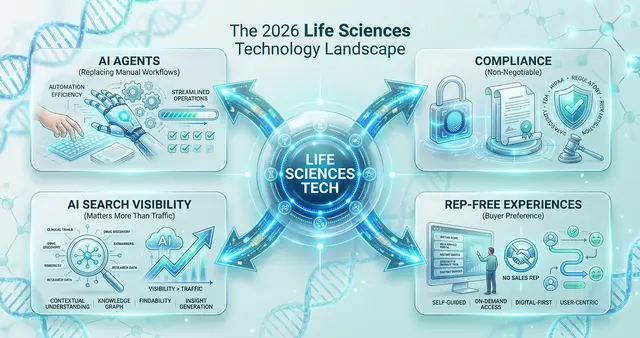
Life sciences technology is shifting from passive software toward systems that find signals, recommend next actions, execute controlled workflows, and show how a brand is represented in AI-generated research. Four changes matter most.
AI agents execute work
Agentic systems can assemble RFP drafts, package evidence, route approvals, prepare account research, and support documentation workflows.
Compliance starts in the workflow
The FDA Office of Prescription Drug Promotion states that prescription drug promotion should be truthful, balanced, and accurately communicated.
AI answers shape shortlists
Buyers increasingly use AI-generated answers to compare suppliers, technologies, and service providers before contacting a sales representative.
Relevance beats volume
Gartner reported in March 2026 that 67% of B2B buyers prefer a rep-free experience, making self-service evidence and precise outreach more important.
Point solutions are returning
Focused tools can create faster value when they solve one expensive workflow and connect cleanly to the larger enterprise stack.
Measurement must reach outcomes
Usage counts are not enough. Teams need to connect technology to saved hours, faster cycle times, stronger visibility, or increased pipeline.
Source context: See the FDA OPDP mission, Gartner’s 2026 B2B buyer survey, and Pew Research on Google AI summaries.
Low-friction next step
Start with the workflow, not the vendor logo
Write down the task that is slow, expensive, risky, or invisible. Then identify the data required, the human approval point, the measurable output, and the system that owns the final record.
Percepture framework
The Life Sciences Technology Decision Stack
Most vendor comparisons fail because they place fundamentally different tools in the same category. This five-layer framework separates the jobs each platform is expected to perform.
Visibility and demand intelligence
Percepture, The Lead Seeker, and PRIME help organizations earn attention, understand buyers, measure AI visibility, and turn market signals into pipeline.
Workflow execution and AI agents
PYRA and specialized agents automate controlled work across commercial, quality, regulatory, finance, marketing, and operations.
Clinical and evidence platforms
Medidata and IQVIA support trials, real-world evidence, analytics, patient data, and evidence generation.
Systems of record and enterprise operations
Veeva, Oracle, and SAP manage regulated content, quality, CRM, data, supply chain, and enterprise processes.
Research and infrastructure foundation
BIOVIA, Microsoft Azure, and Thermo Fisher support research collaboration, cloud infrastructure, laboratory systems, instruments, and scientific operations.
2026 rankings
Top 12 Life Sciences Tech Solution Providers
The ordering reflects the article’s focus on measurable growth, AI-enabled execution, regulated-work fit, and modern buyer behavior. Enterprise platforms remain essential, but newer focused systems often create value faster because they solve a defined job.
Commercial growth system
Percepture: AI-First Marketing and Digital Intelligence
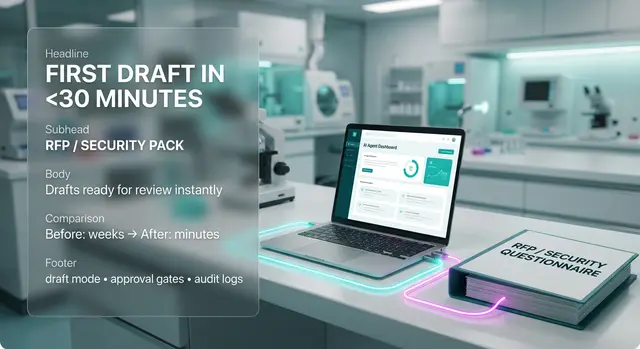
Percepture combines a specialized life sciences marketing agency with AI-enabled commercial systems. Its role in the stack is not clinical data management. It is helping technically complex companies become easier to find, understand, shortlist, and engage.
Programs can combine Generative Engine Optimization services, AI sales agents for regulated B2B workflows, digital PR, enterprise SEO, and life sciences content marketing.
RFP and proposal agents
Controlled drafting systems use approved knowledge, structured workflows, review gates, and auditability to reduce response time.
AI search visibility
SEO, GEO, content, and digital PR work together to increase the probability that a company is cited or recommended in AI-generated research.
Pipeline intelligence
Buyer signals, contact verification, prospect research, and relevant follow-up help commercial teams spend time on better-fit opportunities.
Best reasons to choose Percepture
- Commercial strategy built for complex technical and regulated buying committees
- One operating system across search, AI visibility, PR, content, and sales enablement
- Strong fit for CDMOs, service providers, specialty manufacturers, and growth-stage life sciences companies
Sales intelligence
The Lead Seeker: Fresh B2B Buyer Signals and Verified Prospects
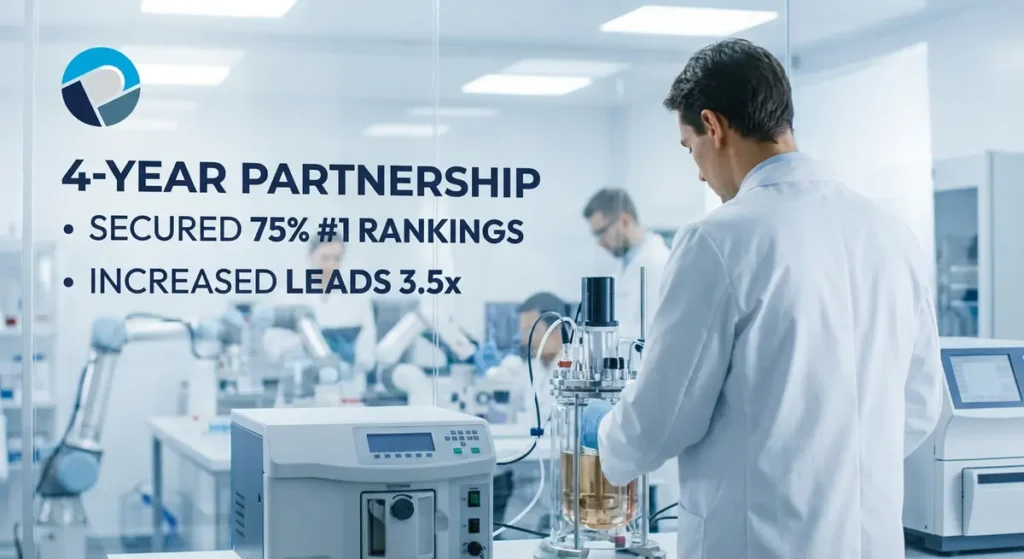
The Lead Seeker AI sales intelligence platform turns an ideal-customer profile into timely prospect searches, verified contact records, source-backed buyer dossiers, intent context, and suggested opening language. It is designed for teams that want to understand why an account matters now instead of purchasing a large stale list.
For life sciences and CDMO business development, The Lead Seeker can help identify commercial leaders, procurement stakeholders, R&D buyers, partnership executives, and other decision-makers based on company fit and public signals. Native Salesforce and HubSpot syncing supports a cleaner handoff into the revenue workflow.
Best reasons to choose The Lead Seeker
- Fresh, source-backed prospect intelligence rather than stored database rows
- Verified contacts combined with context for more relevant outreach
- Useful for focused account-based prospecting, market expansion, and commercial intelligence
AI visibility measurement
PRIME AI Visibility: Tracking and Improving Brand Presence in AI Answers
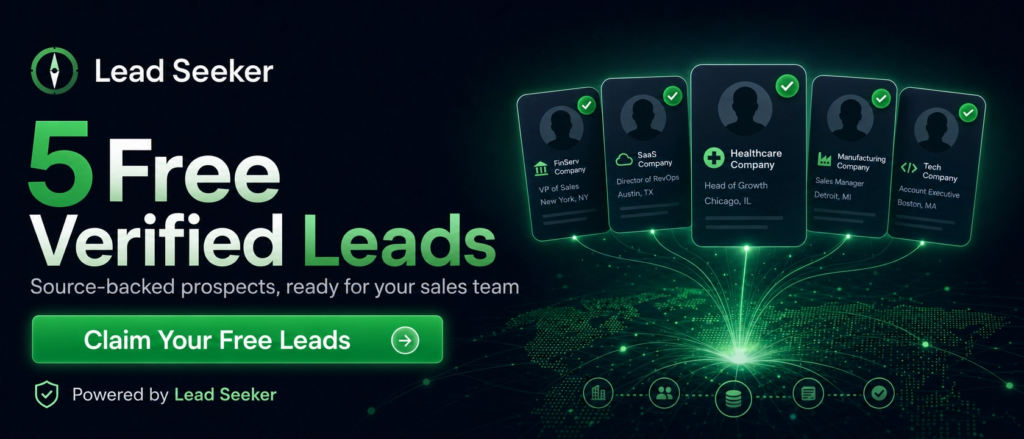
PRIME AI Visibility tracking helps organizations understand whether their brand appears in AI-generated research and where competitors are being mentioned instead. The platform connects visibility measurement to the content work required to improve performance, which makes it more actionable than a reporting-only dashboard.
For life sciences companies, the value is strategic. PRIME can support monitoring around therapy areas, CDMO services, clinical capabilities, scientific expertise, technology categories, and buyer questions where the company needs to be accurately represented.
Best reasons to choose PRIME
- Measures visibility where buyers are increasingly conducting early research
- Helps identify prompt, topic, competitor, and citation gaps
- Connects AI visibility findings to content creation and improvement priorities
Agentic workflow automation
PYRA: AI Agents for Controlled Life Sciences Operations
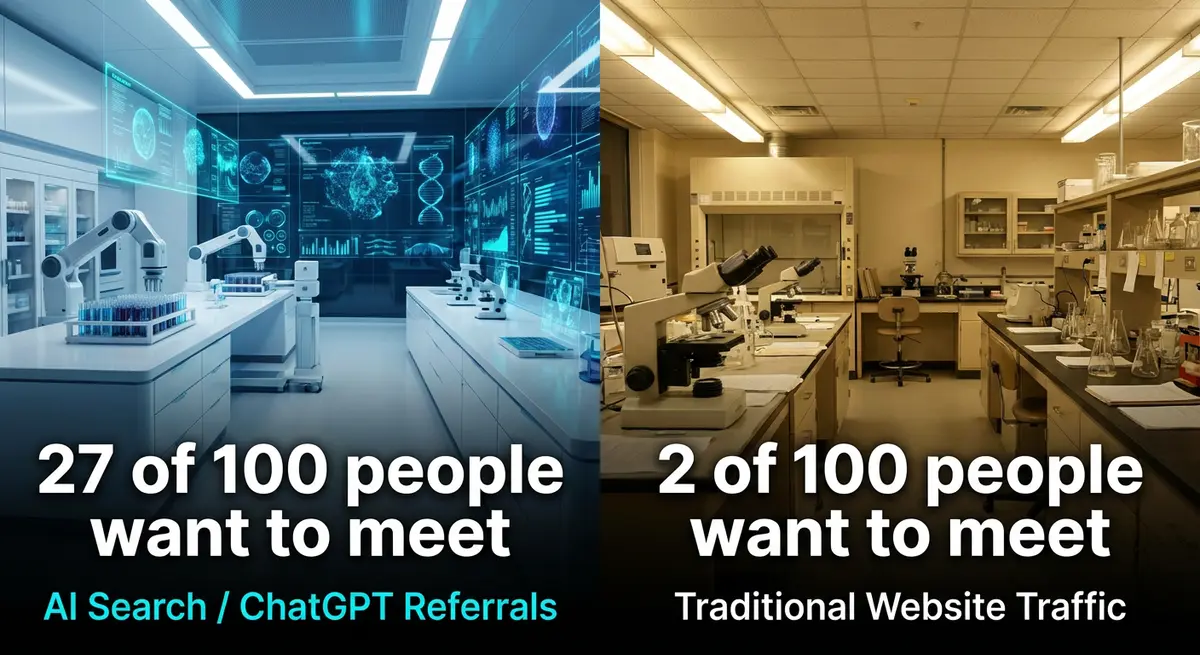
PYRA’s enterprise AI agent platform builds and runs agents for real workflows rather than isolated prompts. The platform emphasizes human approval gates, audit logs, role-based access, and client-instanced architecture so organizations can automate work without losing operational control.
Relevant use cases include RFP and proposal workflows, quality documentation, medical information support, account research, meeting preparation, controlled content operations, finance reporting, and other repetitive tasks that require structured evidence.
Best reasons to choose PYRA
- Industry-aware agents for life sciences, pharma, healthcare, and other regulated environments
- Approval gates, role-based access, auditability, and private deployment architecture
- A practical start-small approach: automate one workflow, prove governance, then expand

Veeva Systems: GxP-Compliant Cloud Solutions
#5Veeva is a major platform for pharmaceutical CRM, regulated content, quality management, clinical operations, and regulatory information. Its broad life sciences focus makes it a strong option for organizations that want an integrated cloud ecosystem rather than a collection of narrow tools.
Strengths
- Deep life sciences specialization
- Broad regulated content and workflow coverage
- Strong ecosystem and enterprise adoption
- Useful across R&D, quality, regulatory, and commercial functions
IQVIA: Real-World Evidence and Advanced Analytics
#6IQVIA combines healthcare data, analytics, technology, and services across drug development and commercialization. Its greatest strength is turning large datasets into evidence and decision support across clinical and commercial teams.
Strengths
- Large real-world data and analytics capabilities
- Support across clinical development and commercialization
- Strong fit for evidence generation and advanced analytics
- Broad global footprint
Medidata Solutions: Clinical Trial Technology
#7Medidata, part of Dassault Systèmes, supports clinical trial execution through data capture, patient engagement, analytics, and study management tools. It is a strong fit for organizations running complex global studies that need a mature clinical technology environment.
Strengths
- Strong clinical trial specialization
- Support for decentralized and hybrid studies
- Remote data capture and patient engagement
- Experience across large global trials
Oracle Life Sciences: Clinical Data and Enterprise Interoperability
#8Oracle brings enterprise cloud infrastructure, clinical data systems, safety capabilities, and broad integration tools to life sciences organizations. It fits companies that already operate at enterprise scale and need strong technical governance.
Strengths
- Scalable cloud and data infrastructure
- Broad integration and analytics capabilities
- Clinical and pharmacovigilance applications
- Enterprise-grade security and governance
SAP Life Sciences: Enterprise Operations and Supply Chain
#9SAP is strongest where life sciences operations depend on connected finance, manufacturing, supply chain, quality, and enterprise planning. It is not a lightweight deployment, but it can create a common operating layer across complex global organizations.
Strengths
- End-to-end enterprise operations
- Strong manufacturing and supply-chain depth
- Global scale and partner ecosystem
- Useful for standardized enterprise processes
Dassault Systèmes BIOVIA: Research Collaboration and Lab Informatics
#10BIOVIA supports scientific research, laboratory workflows, molecular modeling, and collaborative R&D. It is especially relevant for organizations that need to connect scientists, experiments, data, and models across research teams.
Strengths
- Strong scientific and research orientation
- Collaborative R&D tools
- Lab workflow and informatics capabilities
- Molecular modeling and simulation support
Microsoft Azure for Life Sciences: Secure Cloud Foundation
#11Microsoft Azure provides the underlying cloud, data, identity, security, analytics, and AI services used to build custom life sciences applications. It is most useful when an organization has the technical team and governance required to design its own solution architecture.
Strengths
- Broad cloud and AI service portfolio
- Enterprise identity and security
- Flexible application-development environment
- Strong integration with Microsoft productivity tools
Thermo Fisher Scientific: Laboratory Technology and Scientific Software
#12Thermo Fisher combines instruments, consumables, laboratory software, services, and scientific infrastructure. It is a strong choice where technology must connect directly to physical laboratory and manufacturing work.
Strengths
- Broad scientific hardware and software portfolio
- Strong connection between instruments and data systems
- Global service and supply network
- Useful across research, development, and manufacturing
Three focused AI systems
Build the commercial intelligence layer without replacing the enterprise stack
The Lead Seeker finds better-fit prospects. PRIME measures whether the brand is visible in AI answers. PYRA executes controlled workflows. Together, they can sit above existing CRM, content, quality, and enterprise systems.
Comparison Table: Top 12 Life Sciences Technology Providers
| Provider | Core strength | Best for | Governance or compliance fit | Primary outcome |
|---|---|---|---|---|
| Percepture | AI-first growth, GEO, SEO, PR, content, sales agents | Commercial visibility and pipeline | Controlled content and regulated-market workflows | Trust, demand, and qualified opportunities |
| The Lead Seeker | Fresh sales intelligence and verified prospects | Focused commercial prospecting | GDPR/CCPA-aligned positioning and source-backed data | Better targets and more relevant outreach |
| PRIME | AI visibility measurement and content activation | Brands competing for AI-generated recommendations | Strategic measurement rather than regulated system of record | AI share of voice and content priorities |
| PYRA | Agentic workflow execution | Controlled automation across departments | Approval gates, audit logs, role-based access, private architecture | Reduced touch time and increased capacity |
| Veeva | Life sciences cloud applications | Large pharma and biotech | Strong regulated-industry specialization | Unified quality, clinical, regulatory, and commercial processes |
| IQVIA | Real-world data and analytics | Evidence and analytics programs | Healthcare data governance and privacy requirements | Evidence generation and decision support |
| Medidata | Clinical trial technology | Complex global studies | Clinical and study-data controls | Connected trial execution |
| Oracle | Clinical data and enterprise integration | Large, technically mature organizations | Enterprise security and governance | Scalable data operations |
| SAP | ERP, manufacturing, and supply chain | Global enterprise operations | Enterprise process and data controls | Integrated operations |
| BIOVIA | R&D collaboration and lab informatics | Research-intensive teams | Scientific-data integrity and controlled workflows | Scientific collaboration |
| Microsoft Azure | Cloud, data, security, and AI infrastructure | Custom application environments | Enterprise security and configurable controls | Flexible technical foundation |
| Thermo Fisher | Laboratory instruments and scientific software | Labs, research, and manufacturing | Quality and laboratory operating requirements | Connected scientific execution |
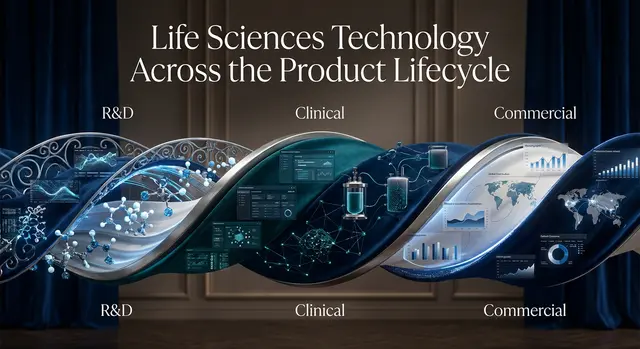
Where Each Technology Fits Across the Product Lifecycle
Research and discovery
Strong fits: BIOVIA, Thermo Fisher, Azure, IQVIA, and PYRA for selected documentation or research-support workflows.
Clinical development
Strong fits: Medidata, IQVIA, Oracle, Veeva, and PYRA for controlled document and operational workflows.
Quality, regulatory, and manufacturing
Strong fits: Veeva, SAP, Oracle, Thermo Fisher, and PYRA where human approvals and evidence remain central.
Commercial growth and market access
Strong fits: Percepture, fresh life sciences prospect intelligence from The Lead Seeker, Veeva, PRIME, and selected IQVIA capabilities.
AI search and brand visibility
Strong fits: Percepture for execution and PRIME AI visibility measurement and content improvement.
Cross-functional workflow automation
Strong fit: PYRA life sciences workflow agents for structured, repeatable work with governance.
Life Sciences Technology Readiness Scorecard
Score each category from 0 to 2. A score of 0 means the issue is undefined, 1 means partially defined, and 2 means operationally clear.
Interpretation: 10–12 points means the organization is ready for a focused pilot. 6–9 points means the workflow needs clarification. Below 6 points, buying software will probably move the bottleneck rather than remove it.
What Not to Do When Choosing a Life Sciences Technology Provider
Do not buy AI without a workflow
A general AI license rarely creates measurable value until the team defines the task, source knowledge, approval path, and output owner.
Do not confuse a tool with a system of record
Prospecting, visibility, and agent platforms should connect to authoritative systems rather than silently becoming new data silos.
Do not treat compliance as a marketing claim
Ask how controls work in practice: access, review, logging, retention, validation, escalation, and incident response.
Do not judge success by logins
Adoption matters, but the real test is whether the technology improves cycle time, quality, visibility, capacity, or commercial results.
Frequently Asked Questions
What are the top life sciences tech solution providers in 2026?
The leading providers depend on the job. Percepture, The Lead Seeker, PRIME, and PYRA cover commercial visibility, sales intelligence, AI-search measurement, and agentic workflows. Veeva, IQVIA, Medidata, Oracle, SAP, BIOVIA, Microsoft Azure, and Thermo Fisher cover clinical, evidence, quality, enterprise, research, cloud, and laboratory requirements.
What is the difference between generative AI and an AI agent?
Generative AI creates an output in response to a prompt. An AI agent can follow a defined workflow, gather inputs, make decisions within rules, route work, request approval, and complete an action. Regulated use cases still require qualified human oversight.
How does The Lead Seeker help life sciences sales teams?
The Lead Seeker helps revenue teams identify fresh, ICP-fit prospects using public buyer signals, verified contact data, source-backed dossiers, and outreach context. That is useful for CDMO sales, partnership development, specialty services, and focused account-based prospecting.
What does PRIME AI Visibility do?
PRIME measures how a brand appears in AI-generated research and uses the findings to guide content creation and optimization. It helps teams identify missing prompts, weak topic coverage, competitor advantages, and opportunities to improve how AI systems understand the brand.
What life sciences workflows can PYRA automate?
PYRA can support controlled workflows across sales, operations, finance, marketing, quality documentation, RFPs, account research, meeting preparation, and other repeatable work. The appropriate use depends on data access, approvals, validation, and the system of record.
How should a life sciences company evaluate AI compliance?
Evaluate the entire workflow, not a badge alone. Review data isolation, permissions, audit logs, human approval gates, source traceability, retention, escalation, change control, validation requirements, and where the final approved output is stored.
Should a company choose one platform or several specialized tools?
Most life sciences organizations use a layered stack. Enterprise systems manage authoritative regulated processes, while specialized tools handle prospect intelligence, AI visibility, content operations, or focused automation. The main requirement is clean ownership and integration.
How long does it take to see ROI from life sciences technology?
Focused tools can show value within weeks when they solve a defined workflow. Large clinical, ERP, quality, or data-platform transformations can require many months. The timeline depends on integration, validation, change management, data readiness, and user adoption.
What metrics should leadership track?
Track the metric tied to the original problem: cycle time, labor hours, error rate, approval time, adoption, data completeness, trial efficiency, qualified opportunities, AI visibility, conversion, or revenue. Avoid using activity metrics as the only proof of value.
What is the best first AI project for a regulated organization?
Start with a frequent, bounded workflow that has known inputs, a clear reviewer, and a measurable output. RFP assembly, evidence packaging, account research, meeting preparation, controlled first drafts, and internal summaries are common starting points.

Direct next step
Choose one measurable workflow and prove it
Percepture can help map the commercial visibility and demand system. The Lead Seeker can surface fresh buyer intelligence. PRIME can measure AI-search visibility. PYRA can prototype and automate a controlled workflow. Start with the highest-value bottleneck and build outward only after it works.

About the author
Bob Generale
Bob Generale is President of Percepture, founded in 2004. He works across SEO, AI-search visibility, digital PR, commercial strategy, and AI systems for regulated and technically complex markets, including life sciences, healthcare, telecom, data centers, and enterprise technology.