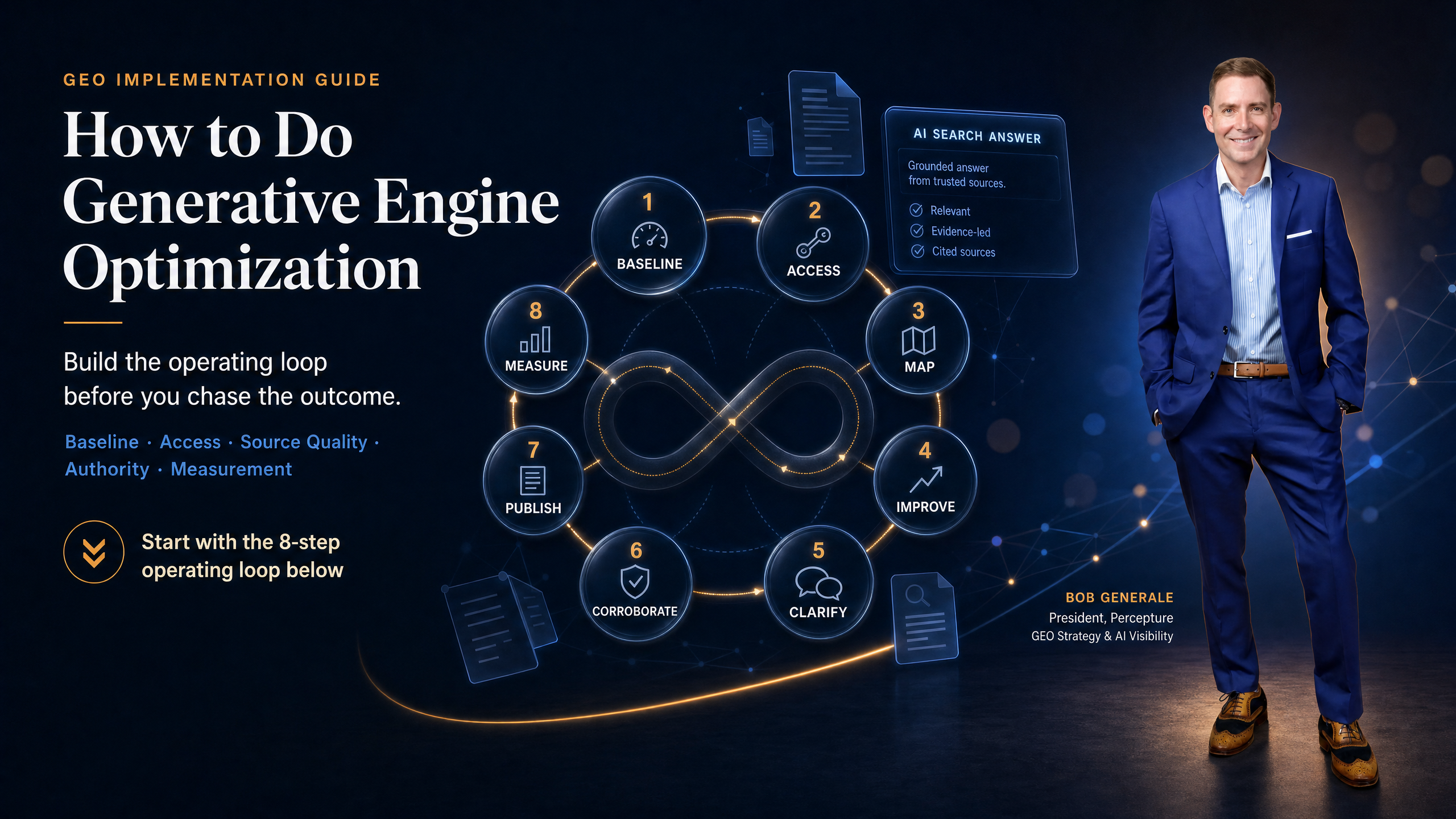

Learning how to do generative engine optimization starts with an operating loop: save a visibility baseline, verify search access, map buyer questions to one URL owner, improve each source page, clarify entities and proof, earn outside corroboration, publish with internal links, and measure the same questions again.
GEO builds on sound search engine optimization and engine-specific access rules. Google states that AI Overviews and AI Mode do not require special AI files or schema beyond normal Search eligibility. Other systems maintain their own crawlers and policies, so access checks must be made by platform rather than assumed to be universal.
Trust should be visible before a buyer is asked to believe a methodology. These approved credentials and client signals support the experience behind the operating process below.




What changes first on the website?
The direct answer: how to do generative engine optimization is to benchmark repeatable buyer questions before editing, remove accidental access barriers, assign each question cluster to one primary URL, improve that page with useful answers and support, connect it to trusted entities and sources, then compare a consistent before-and-after window.
The operating priorities
At an operating level, how to do generative engine optimization means coordinating URL ownership, technical access, source quality, corroboration, and repeatable measurement rather than assigning the work to one isolated channel.
Protect URL ownership
When deciding how to do generative engine optimization for a question cluster, do not create a new page until you know which existing URL owns the intent and whether it already earns search impressions.
Fix access before content
Confirm that intended search crawlers can reach canonical pages and receive useful textual content without server, robots, or interface barriers.
Improve the source
Add real experience, clear answers, evidence, constraints, and current details instead of merely reformatting generic copy.
Measure trends, not snapshots
A single generated answer is not a stable rank. Rerun a fixed question set and compare citations, mentions, organic visibility, and business actions.
From AI-search intelligence to website action
The OPTK example shows the difference between monitoring visibility and changing outcomes. Strategy, expertise, content, technical work, internal linking, and distribution are what turn an AI-search opening into website action.
OPTK Networks provides a telecom example of how AI-search intelligence becomes execution rather than remaining a dashboard metric.
GEO implementation at a glance
This implementation scorecard shows how to do generative engine optimization without turning every prompt into a separate page.
| Step | What to do | Definition of done |
|---|---|---|
| 1. Baseline | Test a fixed set of buyer questions. | A dated before-state is saved. |
| 2. Access | Check crawl, index, canonical, and crawler controls. | Priority pages are eligible for intended surfaces. |
| 3. Map | Assign each intent cluster to one primary URL. | No avoidable duplicate intent remains. |
| 4. Improve | Add useful answers, evidence, and natural structure. | The source page is materially better. |
| 5. Clarify | Make entities, relationships, authors, and proof clear. | Core facts are consistent and supportable. |
| 6. Corroborate | Build legitimate authority outside the website. | Important claims are not self-supported only. |
| 7. Publish | Integrate the page through links and discovery systems. | The page is not an orphan. |
| 8. Measure | Repeat the test and review organic and business data. | A trend and next action are documented. |
Use the definitions of done to keep how to do generative engine optimization tied to observable page, access, authority, and reporting changes.
Find the visibility gap before changing pages
A diagnostic for how to do generative engine optimization should document where your brand is cited, mentioned, or absent, then connect each gap to a buyer question and an existing URL owner.
How to Do Generative Engine Optimization in 8 Steps
1. Baseline AI visibility before changing the site
A reliable process starts with a before-state. For a typical service or business-to-business website, begin with roughly 20 to 30 high-value buyer questions. Expand only when the number of markets, products, locations, or decision makers makes a larger sample useful.
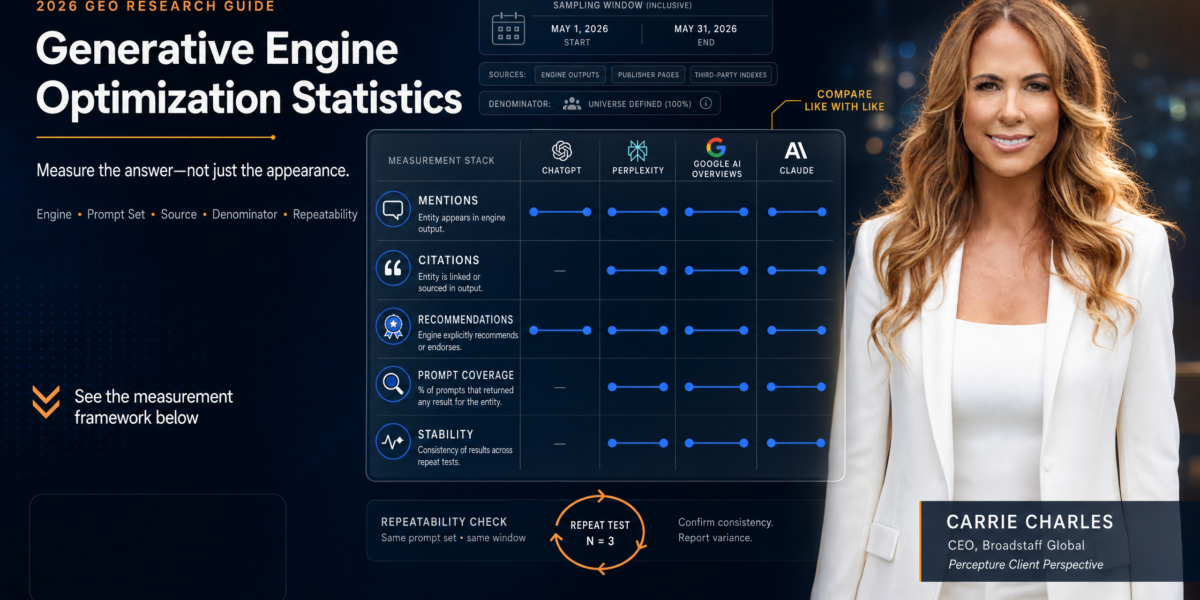
Include branded questions, non-branded problems, comparisons, proof requests, and decision-stage questions where they fit. Record the engine or surface, test date, locale, exact wording, brand mention, linked source, cited URL, visible competitors, and sources that recur across responses.
For teams learning how to do generative engine optimization, the key distinction is between a mention and a citation. A mention means the brand appears. A citation or source means a page or domain is presented as support, although each engine may display that support differently.
Do not label one prompt response as a rank. Generated answers can change between runs. Repeat a representative subset on a consistent schedule, or use a monitoring system that preserves prompts, dates, engines, and outputs.
Pair this work with Google Search Console and Bing Webmaster Tools. If a property has access to generative AI performance reporting, use it with standard query, page, impression, click, and position data. Monitoring identifies a gap; it does not choose the right website change.
Definition of done: a dated baseline exists and another operator can rerun it under comparable conditions. That repeatability is essential to how to do generative engine optimization without mistaking a snapshot for a trend.
2. Make priority pages eligible, crawlable, and retrievable
Access comes before rewriting. Start with the canonical URLs tied to high-value questions and confirm that each returns a successful response, remains indexable, and declares the intended canonical. Check that normal search snippet eligibility is preserved where Google AI visibility is desired.
Review robots.txt, page-level directives, content delivery network rules, web application firewall settings, and hosting controls. Intended crawlers should not receive accidental 403 or 429 responses. Important answers should also exist as accessible text rather than being trapped inside an interface that cannot be retrieved reliably.
The technical checklist for how to do generative engine optimization should include:
- A working canonical URL with a successful server response.
- Indexability and canonical signals that agree.
- An XML sitemap containing canonical priority URLs.
- Crawlable internal links from relevant pages.
- Accessible textual content for important facts and answers.
- No accidental crawler blocks at the robots, firewall, or hosting layer.
- A usable page experience on mobile and desktop.
- OAI-SearchBot access when ChatGPT Search discovery is intended.
- Bingbot access and update signaling through IndexNow where appropriate.
Allowing a crawler does not guarantee inclusion. It only removes one possible discovery barrier. Recheck official platform policies whenever the technical guidance materially changes.
Definition of done: intended surfaces have no known accidental discovery, crawl, index, canonical, or retrieval block on priority pages. This access review establishes the technical foundation for how to do generative engine optimization on those URLs.
3. Map buyer questions to the right existing URL
This is the control point most teams skip. Before drafting, group buyer questions by intent rather than wording. Search the site for the existing page that already answers the intent, then inspect its Search Console impressions, query mix, canonical status, and internal links.
Next, choose one action: refresh the owner, add a focused subsection, consolidate overlapping pages, or create a distinct URL. A new page is warranted only when existing pages cannot satisfy the intent cleanly without confusing their current purpose.
That distinction keeps how to do generative engine optimization separate from broad content production. For example:
- “What is GEO?” belongs with what generative engine optimization is.
- “How do I implement GEO?” belongs on this operating-procedure page.
- “How do I win B2B AI answers?” belongs with the B2B AI-answer strategy.
- “How does AEO strategy work?” belongs with Percepture’s answer engine optimization guide.
Query fan-out is research input, not permission to publish dozens of thin pages. One deliberate owner should handle each priority intent cluster. Supporting pages can add depth, but they should not compete for the same job.
Definition of done: every priority question cluster has one recorded primary URL owner and a clear refresh, consolidation, subsection, or creation decision. Documenting that decision keeps how to do generative engine optimization from creating avoidable URL competition.

The Percepture Framework for How to Do Generative Engine Optimization
The Percepture GEO Operating Loop links eight actions: Baseline, Access, Map, Improve, Clarify, Corroborate, Publish, and Measure. The loop defines how to do generative engine optimization as connected technical, content, authority, publishing, and measurement work instead of isolated projects.
- Baseline: preserve the starting evidence.
- Access: remove unintended technical barriers.
- Map: assign one owner to each intent.
- Improve: make the source more useful and supportable.
- Clarify: connect the company, people, services, and proof.
- Corroborate: earn legitimate outside support.
- Publish: integrate the URL into the site.
- Measure: compare a repeatable window and start again.
4. Improve the source page with useful answers and evidence
Once the owner is clear, improve the page for the buyer first. Put the useful answer where the reader expects it. Use descriptive headings, short paragraphs, and tables or lists only when they make a decision, process, or comparison easier to understand.
The content phase of how to do generative engine optimization is not a formatting exercise. Replace generic copy with original experience, first-party knowledge, examples, constraints, data, and expert judgment that a general-purpose summary cannot supply. State dates, prices, specifications, and scope limits when stale information could change a decision.
Support current technical claims with primary documentation. Place evidence beside the claim instead of collecting disconnected sources at the bottom. Use images or video when they explain a process or document proof, not simply to decorate the page.
Structured data should describe visible content accurately and use supported types. Do not invent “AI schema” or imply that adding markup produces citations. Natural sections should be understandable on their own where useful, but there is no reason to force every answer into an artificial length.
Connect execution to the right capability. A content gap may require content marketing, while a crawl or architecture problem may require enterprise SEO. A page that addresses several decision stages may also benefit from a planned omnichannel journey rather than a stand-alone content update.
Read the finished page as a skeptical buyer. Remove claims that lack support, repeated ideas, vague promises, and exact-match wording that makes the copy sound mechanical.
Definition of done: the owner page provides materially better, clearer, and more supportable information than it did before. Source-page improvement is where how to do generative engine optimization creates direct value for the buyer rather than merely changing presentation.
Review implementation evidence in context
Search-result images are snapshots, not permanent proof. Preserve the query, surface, locale, and date with any image used for reporting, and confirm that the result still represents the claim being discussed.
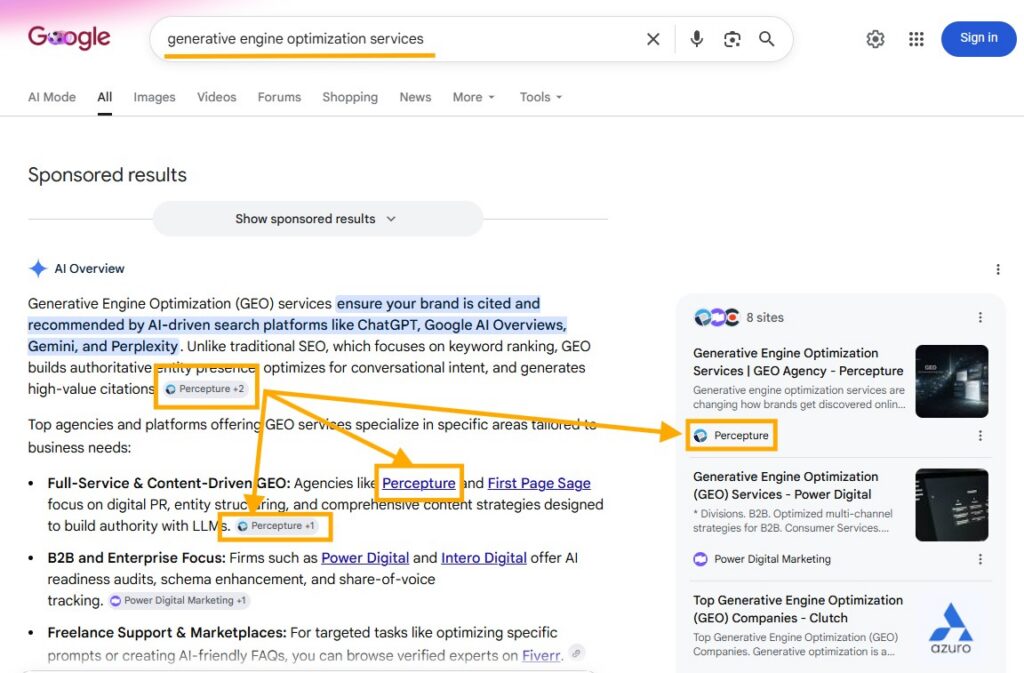

See how intelligence becomes execution
The OPTK case shows how to do generative engine optimization beyond monitoring: strategy, expertise, content, technical implementation, internal linking, and distribution turn a visibility finding into website action.
5. Clarify the brand, people, services, and proof
Entity clarity helps people and retrieval systems understand who is speaking and what supports the statement. Use consistent company, product, and service names. Maintain useful About, service, team, and author pages with current facts.
When applying how to do generative engine optimization, put evidence close to important claims and name the qualified person responsible for the insight. Accurate Organization, Person, and service structured data can reinforce visible relationships, but the markup must agree with the page.
Check company names, service descriptions, contact details, locations, author identities, and relationships across the website. Conflicting facts make the buyer’s evaluation harder. They can also make it difficult to connect a claim to the correct organization or expert.
For healthcare organizations, this review should also respect the site’s approval, privacy, and compliance process. Industry context belongs on the relevant healthcare industry page and specialized content rather than being forced into every general GEO procedure.
Definition of done: a buyer can identify the company, its services, its qualified people, and the evidence supporting major claims without resolving conflicting information. That clarity makes how to do generative engine optimization accountable to visible facts and named expertise.
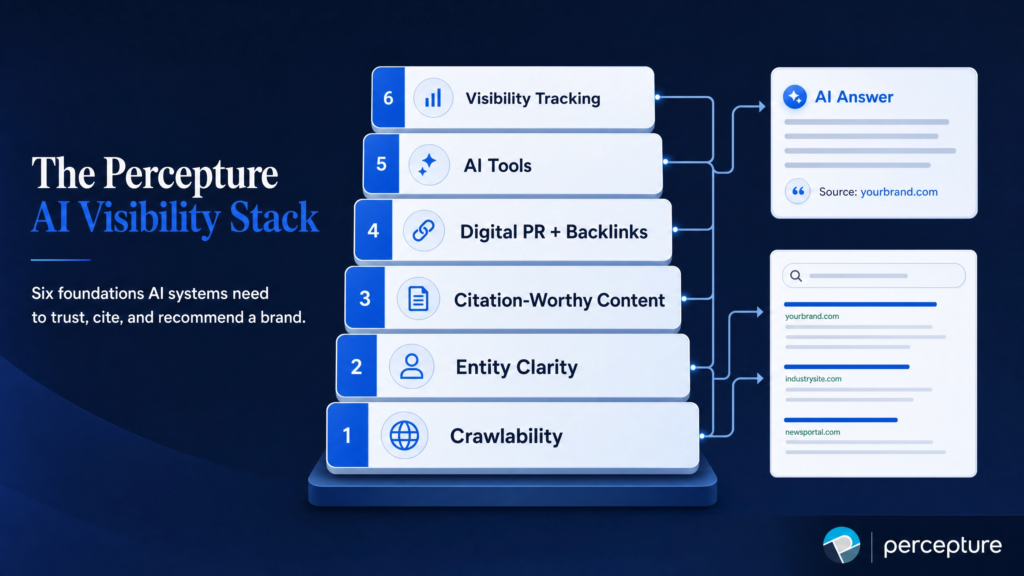
6. Build outside corroboration buyers can trust
A company’s website should not be the only place supporting its important claims. Seek legitimate earned media, relevant industry publications, approved client proof, professional associations, expert interviews, original research, authoritative references, and real reviews where those sources fit the business.
The authority phase of how to do generative engine optimization should never rely on manufactured forum activity, fake reviews, paid mentions presented as independent, or link schemes. Those tactics create risk without improving the underlying evidence.
Use digital public relations when the business has a defensible story, expert, dataset, or point of view that outside publications may value. Percepture’s broader AI visibility strategy covers the wider authority system, while this step stays focused on implementation.
For complex business-to-business decisions, corroboration should answer the buyer’s real doubts: whether the company has done the work, whether named experts stand behind it, and whether sources outside the company recognize the expertise.
Definition of done: material claims and entities have relevant support beyond the company’s own domain. External corroboration keeps how to do generative engine optimization grounded in evidence that is not controlled solely by the company.
7. Integrate the page, publish it, and signal the update
Do not publish the improved URL as an orphan. Add contextual internal links from relevant, authoritative pages and use anchors that explain the destination. Confirm the self-referencing canonical, include the canonical URL in the XML sitemap, and show an accurate modified date only when the page received meaningful work.
Publishing is part of how to do generative engine optimization because discovery depends on site integration. Request a Google recrawl when appropriate and use IndexNow where supported for changed URLs. Neither action guarantees selection; each helps eligible systems discover that a URL changed.
Connect the page to supporting services only where the reader needs the capability. Technical implementation may involve strategy and planning, while performance reporting may require attribution and analytics. Keep these links contextual rather than turning the procedure into a service list.
For this page, inbound links should distinguish implementation from the neighboring definition, broad strategy, service, case, and B2B pages. That anchor language helps people and search systems understand which URL owns each intent.
Definition of done: the page is discoverable, internally connected, canonicalized, and clearly differentiated from nearby intent owners. Site integration ensures that how to do generative engine optimization includes discovery and intent signals after the page update.
8. Remeasure AI visibility, organic search, and business outcomes
Rerun the same prompt set over a comparable window. Track mention rate, linked-source rate, cited URLs, recurring sources, competitor presence, and citation share where the platform provides enough information to calculate it. Keep the engine, surface, date, locale, and prompt wording with each observation.
Measurement completes how to do generative engine optimization, but it does not reduce the work to a single visibility score. Pair AI observations with Search Console queries, pages, impressions, clicks, and positions. Review Bing AI performance information when available, along with AI referral sessions and meaningful conversions.
Protect organic search while improving AI visibility. If a content change raises mentions but weakens useful organic traffic, qualified conversions, or URL ownership, investigate the tradeoff rather than declaring success. Prompt monitoring remains directional because answer generation, source selection, and platform reporting can vary.
Use data visualization to show trends when several engines, question groups, and conversion paths make the raw report hard for leaders to interpret. The decision should still be tied to a page-level action: improve support, consolidate overlap, fix access, earn corroboration, or leave a strong page alone.
Write down the next action and its owner. Then begin the Percepture GEO Operating Loop again with a refreshed baseline. Repetition turns disconnected tests into an operating method.
Definition of done: the team has a comparable before-and-after trend, organic and business context, and one prioritized next action. Closing the loop makes how to do generative engine optimization a repeatable management process rather than a one-time test.
Where the implementation effort belongs
Deciding how to do generative engine optimization efficiently starts with assigning the observed gap to the team that can change its underlying cause.
| Observed gap | Primary owner | Best first action |
|---|---|---|
| Priority page is blocked or miscanonicalized | Technical SEO | Repair access and canonical signals before rewriting. |
| Several pages compete for one buyer question | SEO and content strategy | Select one owner and consolidate or reposition the rest. |
| Owner page lacks useful support | Subject expert and content team | Add direct answers, examples, evidence, and constraints. |
| Claims exist only on the company website | Communications and digital PR | Build legitimate outside corroboration. |
| Visibility changes but business impact is unclear | Analytics and marketing leadership | Connect observations to organic health and conversions. |
The ownership decision prevents how to do generative engine optimization from defaulting to content production when the real gap is technical, architectural, evidentiary, or analytical.
GEO Tactics You Do Not Need for Google AI Search
Accurate implementation matters more than folklore. A dependable guide to how to do generative engine optimization separates documented Google Search requirements from practices that may belong to another platform, a private experiment, or a general content workflow.
Documented requirement or unsupported shortcut?
This scorecard helps operators decide how to do generative engine optimization without treating unsupported shortcuts as documented Google Search requirements.
| Claim | Implementation decision |
|---|---|
| llms.txt ranks content in Google AI results | Do not treat it as a Google Search ranking lever. Google states it is not needed for Search and has no positive or negative Search visibility effect. Other systems may differ. |
| Special AI schema is required | Google says no special schema is required for AI Overviews or AI Mode. Use supported structured data only when it matches visible content. |
| Google-Extended controls AI Overviews | Googlebot controls crawling for Google Search AI features. Google-Extended serves a different control purpose. |
| Every section needs forced content chunking | Google publishes no special chunk-size rule. Use natural sections that make the page easier to understand. |
| Every fan-out question needs a new page | Cluster questions by intent and assign one primary URL owner. Scaled duplicate pages create overlap and quality risk. |
| One prompt response is an AI rank | A single output is an observation. Compare repeated runs, cited sources, organic performance, and business outcomes. |
Frequently Asked Questions
What is the first step in generative engine optimization?
The first step in how to do generative engine optimization is saving a fixed baseline before editing the website. Test a manageable set of high-value buyer questions, record the engine, date, locale, prompt, mentions, cited sources, cited URLs, competitors, and recurring domains, then pair those observations with current organic search data.
Do I need llms.txt for generative engine optimization?
Google states that llms.txt is not required for Google Search and has no positive or negative effect on Search visibility or ranking. Do not apply that statement universally to every system. Check each platform’s current documentation and focus first on normal crawl, index, canonical, and content accessibility.
Does schema markup help GEO?
Accurate structured data can describe visible entities and content for supported search uses. Google does not require special AI schema for AI Overviews or AI Mode, and adding markup does not prove that an AI system will cite a page. Keep schema accurate, supported, and aligned with the page.
How long does generative engine optimization take to work?
There is no guaranteed timeline for how to do generative engine optimization because crawl and indexing speed, competition, source selection, website authority, publishing cadence, and engine updates vary. Use consistent measurement windows and compare repeated observations rather than choosing a deadline from one prompt response.
How do you measure generative engine optimization success?
To measure how to do generative engine optimization successfully, compare repeated mention and citation visibility, cited URLs, recurring sources, competitor presence, organic search health, AI referral behavior, and meaningful conversions. Keep prompts, engines, dates, and locales consistent enough to compare. Treat platform citation data as observational rather than an official universal rank.
Can GEO damage existing SEO performance?
It can if a team creates overlapping pages, removes useful depth, blocks normal search access, or rewrites strong copy only to fit an assumed AI format. Preserve URL ownership, monitor Search Console, use natural structure, and reject tactics that improve a narrow prompt sample while weakening organic search or buyer value.