


A Travel and Tourism Email List can mean two very different assets: a permission-based audience of travelers who asked to hear from a brand, or a B2B list of travel companies and decision-makers. Choosing the wrong type creates poor targeting, weak data and avoidable risk.
The best list is not the file with the most records. It identifies the right account, the right person, a current source, a credible reason to make contact and a responsible path into the CRM or outreach workflow.


Where Amazon Goes, the World Follows
Percepture turned an unusual Amazon delivery to Phantom Ranch into a national travel story spanning the Grand Canyon, hospitality, adventure and destination media.



What Is a Travel and Tourism Email List?
A Travel and Tourism Email List is either a B2B database of travel-industry companies and decision-makers or a permission-based B2C audience of travelers. The right list matches the intended use, contains current and traceable data, respects suppression and privacy controls, and can move cleanly into a CRM or communication workflow.
The phrase describes several data products with different audiences and rules. A B2B Travel and Tourism Email List may contain hotels, agencies, tour operators, destinations, attractions, suppliers or technology companies. A consumer list contains travelers who joined through a signup, inquiry, booking relationship or another documented first-party interaction.
Which kind of list fits the job?
B2B industry list
Includes: Companies and relevant decision-makers.
Fits: Sales, partnerships, group business, sponsorships and vendor outreach.
B2C subscriber list
Includes: Travelers acquired through a documented first-party path.
Fits: Newsletters, offers, trip information, loyalty and retention.
A technically valid email address can still be commercially useless. A qualified record must also fit the objective, represent a current person and role, carry traceable sourcing information and pass the organization’s exclusion rules.
Travel-industry experience changes how lists are built
Hotels, destination organizations, tour operators, travel technology companies and visitor attractions do not share one buying committee. Percepture’s sector experience helps separate a generic contact from a relevant account, role and reason to make contact. Explore Percepture’s travel and tourism marketing experience.
See the Amazon and Phantom Ranch story
This short video shows how a distinctive travel story can connect a global brand, a remote destination and national media attention without losing the human element.
Executive summary
Separate prospects from subscribers
A B2B prospect is selected for company and role fit. A subscriber has asked to receive communication. The records are not interchangeable.
Test quality before scale
Score a small sample for source date, current role, account fit, suppression status and CRM readiness before buying or researching a larger set.
Measure usable records
The practical unit of value is an activation-ready prospect, not a downloaded row or technically deliverable address.
Keep people in control
Automation can accelerate research and enrichment. Human review should govern selection, exclusions, messaging and activation.
Seven Types of Travel and Tourism Email List
Before comparing vendors, define the asset being purchased or built. The following Travel and Tourism Email List categories differ in source, freshness, cost model and appropriate use.
| List type | Source and audience | Best use | Freshness and controls | Cost model | Main risk |
|---|---|---|---|---|---|
| First-party traveler subscriber list | Website signups, inquiries and preference data | Consumer communication and retention | Track source, permission record and preferences | Content, acquisition and platform costs | Incomplete permission records or poor segmentation |
| Customer and CRM list | Past guests, customers and active opportunities | Lifecycle communication and account development | Deduplicate, classify lifecycle and maintain suppression | CRM administration and enrichment | Contacting customers with the wrong message |
| Association or member directory | Industry associations, chambers and professional groups | Market mapping and partnerships | Follow access and use terms | Membership or access fees | Assuming directory access permits every use |
| Event or attendee list | Conferences, trade shows and hosted-buyer programs | Event planning and follow-up | Respect organizer terms and attendee expectations | Registration, sponsorship or access fees | Using event data outside its permitted context |
| Purchased B2B database | Aggregated travel companies and business contacts | Broad market coverage and controlled testing | Verify recency, source, duplicates and exclusions | Export, credit or subscription model | Stale roles, weak provenance and poor fit |
| Researched B2B prospect list | Account-by-account research and role matching | High-value or complex sales | Store public sources, review dates and fit notes | Project or managed research | Higher cost per row if value is judged only by volume |
| Signal-enriched list | Prospects paired with current business context | Prioritization based on timing | Recheck time-sensitive evidence before use | Data, research or managed intelligence | Treating a weak signal as proof of buying intent |
A first-party audience grows through useful content, events and strong signup paths. Percepture’s content marketing services support audience development, while conversion rate optimization can improve the path from interest to a documented signup.
A signal-enriched list can include public indicators such as expansion, hiring, a new route, an event, an RFP or a product launch. B2B intent data can add prioritization, but a signal still requires context and human interpretation.
Score the data you already have
Run a small sample through the Travel and Tourism Email List quality criteria before committing to a larger export or research program.
See five researched, source-backed prospects before you commit to a larger list or program.The Percepture Travel List Quality Ladder
The Percepture Travel List Quality Ladder shows how a Travel and Tourism Email List moves from a collection of fields to a set of current, relevant and usable opportunities. Each level adds commercial judgment, not just more data.
Five levels of list quality
- Bulk records: Company, name and email with little evidence of current role, fit or timing.
- Verified records: Domain, title, location and technical email validation. Deliverability does not establish buyer fit.
- ICP-matched contacts: Records matched to industry, geography, organization type, department and seniority.
- Source-backed prospects: Public sources, review dates, fit notes and a clear reason for selection.
- Signal-enriched opportunities: Current context that may affect timing, paired with human review.
“Verified email” is a technical claim. “Qualified prospect” is a commercial judgment.
Compare rows with researched prospects
A sample Travel and Tourism Email List should show why each account and person belongs in the review set. Examine source depth, role context and CRM usability alongside the price.
Should You Buy, Build or Research the List?
Buy a Travel and Tourism Email List when speed and broad market coverage matter and the team can verify, suppress and test records. Build when first-party relationships and owned audience growth are the goal. Research when each opportunity carries enough value to justify deeper account and role analysis.
A hybrid model often works best. A database can map the market, focused research can enrich priority accounts and first-party engagement can grow over time. Percepture’s B2B lead generation services can help connect ICP definition, prospect research and activation planning.
Buy, build, research or combine?
| Model | Choose it when | Advantage | Tradeoff |
|---|---|---|---|
| Buy | The market is broad and speed matters | Fast coverage and filtering | Requires verification, cleanup and controlled activation |
| Build | Long-term first-party permission matters | Owned relationship and preference data | Requires sustained value and acquisition work |
| Research | Sales are valuable and committees are complex | Stronger account fit and context | More work per selected record |
| Hybrid | The team needs market coverage and focused depth | Balances scale with relevance | Requires clear handoffs and data governance |
Travel segments should not share one generic ICP. A hotel group, destination organization and travel software company buy in different ways. Teams serving operators can use guidance on digital marketing for tour operators and the role of a tour operator marketing agency to refine segment assumptions.
Score the List Before You Use It
The 100-Point Travel List Quality Score gives ten points to each of ten criteria. A Travel and Tourism Email List should not move into outreach merely because the email field passes a technical check.
100-Point Travel List Quality Score
Apply the same Travel and Tourism Email List scoring standard to purchased, researched and enriched records so comparisons reflect usable quality rather than source type.
| Criterion | Points | What to inspect |
|---|---|---|
| Organization fit | 10 | Segment, size, business model and objective match |
| Role and seniority match | 10 | Current responsibility and influence over the use case |
| Data recency | 10 | Last-reviewed date and time-sensitive fields |
| Source transparency | 10 | Traceable evidence for company, person and role |
| Work-email confidence | 10 | Domain and technical validation status |
| Geographic relevance | 10 | Territory, market and jurisdiction fit |
| Travel use-case relevance | 10 | Clear relationship between the account and offer |
| Suppression and opt-out controls | 10 | Customer, opportunity, employee and opt-out exclusions |
| Reason-to-contact quality | 10 | Specific, current and defensible context |
| CRM and workflow readiness | 10 | Field mapping, ownership, deduplication and status |
- 85–100: Activation-ready after final review.
- 70–84: Useful with targeted enrichment.
- 50–69: Research input, not outreach-ready.
- Below 50: Likely to create waste or risk.
What “Verified” Should Mean
A verified Travel and Tourism Email List should be assessed in layers. First, confirm that the domain exists. Next, evaluate whether the address may be deliverable. Then confirm that the person appears current, the role fits the intended buyer and the account fits the business objective.
A hotel general manager may have a valid address but still be the wrong buyer for a revenue-management platform. The relevant stakeholder may sit in corporate operations, revenue, technology or procurement. Research into hotel leads and decision-maker fit should start with the use case rather than a title list.
Travel Segments, Roles and Fit Signals
The same title can carry different authority across organizations. Build the role map around the buying question, then use public evidence to test whether the account belongs in the Travel and Tourism Email List.
| Segment | Potentially useful roles | Example fit signals |
|---|---|---|
| Hotels and resorts | Group sales, marketing, revenue, procurement and operations | New property, renovation, portfolio growth or meetings demand |
| DMOs and CVBs | Executive, marketing, digital, communications and convention sales | RFP, rebrand, funding change or seasonal demand gap |
| Tour operators | Founder, marketing, partnerships, ecommerce and operations | New destination, inventory growth or direct-booking push |
| Travel agencies | Owner, marketing, advisor development and partnerships | Expansion, new specialty or technology adoption |
| Travel technology | Sales, product marketing, partnerships and revenue leadership | Funding, launch, integration or new market |
| Associations and events | Membership, sponsorship, marketing and events | Conference launch, sponsor need or membership campaign |
| Corporate group buyers | Meeting planners, procurement, HR and executive support | Annual meeting, training, incentive travel or project deployment |
An Anonymized Hotel-Group Workflow
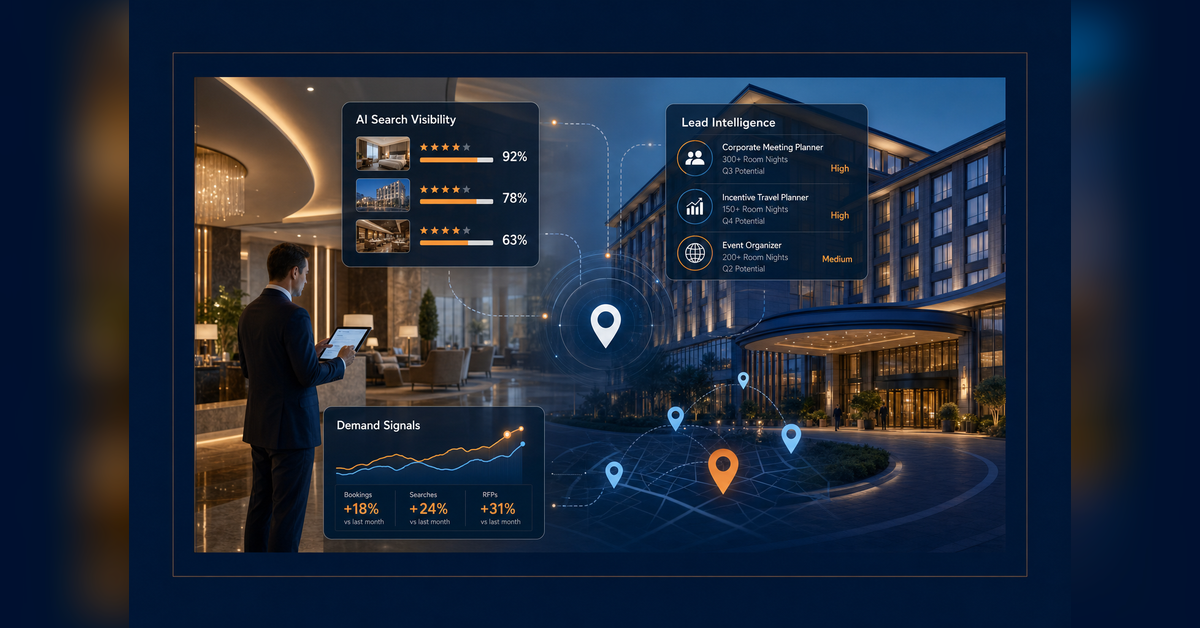
When evaluating a Travel and Tourism Email List for hotel-group prospecting, list accuracy, property and regional coverage, dossier depth and meeting-use-case fit mattered more than record volume. Potential roles varied across meetings, events, procurement, marketing, sales, human resources and executive support.
From broad market to reviewed accounts
- Define property and group-business fit.
- Identify meeting, training, incentive and project-travel use cases.
- Map departments and seniority to each use case.
- Select a small number of relevant contacts per account.
- Add a concise note explaining why the account fits.
- Deliver records in clearly labeled segments.
- Review research quality and sales feedback before scaling.
This approach treats a Travel and Tourism Email List as a learning system. Feedback about wrong roles, weak segments and useful evidence should improve the next research wave.
Travel and Tourism Email List Cost Framework
A Travel and Tourism Email List may be sold as a flat-fee export, a subscription platform, a researched project or a managed prospect-intelligence program. Universal price ranges would hide major differences in record count, geography, source depth, persona complexity, licensing, integrations and operator review.
Four cost models
| Model | Common cost drivers | What the buyer should measure |
|---|---|---|
| Flat-fee export | Record count, filters, geography, fields and license | Usable records after verification and suppression |
| Subscription platform | Seats, credits, exports, enrichment, intent and integrations | Utilization, coverage and cleanup workload |
| Researched project | Account complexity, personas, evidence and dossier depth | Qualified account and role match |
| Managed prospect intelligence | ICP strategy, recurring research, review, CRM preparation and reporting | Activation-ready prospects and workflow efficiency |
Total List Cost = Data or Research + Verification + Enrichment + CRM Cleanup + Outreach Preparation + Compliance Controls + Wasted Sales Time
Compare Travel and Tourism Email List providers on the cost of an activation-ready prospect, not the cost of a downloaded row. Use attribution and analytics to connect source, segment, response quality and downstream qualification.
Compliance, Privacy and Responsible Use
B2B prospecting and consumer subscriber marketing are different activities. Buying a Travel and Tourism Email List does not automatically create permission, and technical verification does not settle whether a record can be used for a particular purpose.
Requirements vary by jurisdiction, audience, purpose and outreach method. For U.S. commercial email, review the FTC’s CAN-SPAM compliance guide. Organizations considering international activity should consult applicable regulators, including the UK Information Commissioner’s direct-marketing guidance, and obtain qualified legal advice.
Responsible-use controls
- Document the record source and last-reviewed date.
- Maintain accurate sender information and required opt-out mechanisms.
- Apply suppression lists before every activation.
- Respect event, directory, association and platform terms.
- Separate customers, opportunities, subscribers and researched prospects.
- Review jurisdiction, audience and intended use.
- Require human review before records enter an outreach workflow.
Editorial disclaimer: This article provides marketing and data-quality guidance, not legal advice. Privacy, electronic-message and data-use rules vary by country and use case. Consult qualified counsel and current official guidance before activating purchased or researched data.
Building reliable data and running an effective email program are different jobs. This guide covers sourcing, fit and data quality. Percepture’s email marketing services address campaigns and activation after the audience, permission model and controls are established.
How LeadSeeker Changes the Model
LeadSeeker is not positioned as a larger static database. It is a prospect-intelligence workflow designed to explain who fits, why an account matters and what public evidence supports the contact.
The workflow starts with an ICP and a business question. It identifies potential accounts and contacts, assembles source-backed dossiers, adds company and role context, prepares CRM-ready output and preserves human review. Approved records can then connect to broader omnichannel marketing or AI sales agent workflows.
The 20/60/20 operating model
20% strategy
Percepture defines the Travel and Tourism Email List ICP, objective, exclusions, personas and evidence standard.
60% AI and data execution
Systems accelerate account discovery, enrichment, source collection and record preparation.
20% operator review
People review fit, context, exceptions, suppression and workflow readiness.
AI can shorten repetitive research, but it should not erase source transparency or judgment. The strongest Travel and Tourism Email List workflow makes every selected record easier to inspect, challenge and improve.
How to Evaluate a List Vendor
Ask the same questions whether the provider sells a database, performs research or supplies an AI-assisted platform. A polished interface does not prove that a Travel and Tourism Email List is current or useful.
Vendor evaluation checklist
Use the checklist to determine whether a Travel and Tourism Email List provider can support the team’s sourcing, segmentation, governance and activation requirements.
- Where does the data come from?
- When was each record last checked?
- What does verified mean at field, person and account level?
- Can the provider explain why a contact was selected?
- Can it filter by travel organization type?
- Can it filter by role and seniority?
- Can it segment by geography and jurisdiction?
- Can it distinguish hotels, DMOs, agencies, operators and suppliers?
- Does it support suppression lists?
- How are duplicates handled?
- What happens when a title or employer changes?
- Can fields map cleanly into the CRM?
- Are license and use rights clear?
- Is human review available?
- Can the buyer test a small sample before scaling?
| Provider type | Best fit | Inspect closely |
|---|---|---|
| Bulk database | Broad market mapping | Provenance, recency and cleanup |
| Association directory | Membership research and partnerships | Access terms and permitted use |
| Research agency | Complex, high-value account selection | Source depth and reviewer consistency |
| AI prospect-intelligence platform | Faster research and enrichment | Source visibility and human controls |
| Internal research team | Specialized knowledge and close sales feedback | Capacity, process consistency and tool costs |
Common List-Building Mistakes
- Buying the largest available list without testing account fit.
- Treating every travel business as one ICP.
- Confusing researched prospects with permission-based subscribers.
- Using technical verification as the only quality test.
- Ignoring job changes and stale source dates.
- Failing to suppress customers, employees and active opportunities.
- Sending the same message to hotels, DMOs, agencies and suppliers.
- Importing unreviewed records into the CRM.
- Measuring record volume instead of qualified conversations.
- Failing to document public sources and use restrictions.
- Ignoring feedback from sales and operations.
A 30-Day Activation Plan
Week 1: Define
Set the objective, ICP, exclusions, roles, required fields and responsible-use guardrails.
Week 2: Test
Review a small sample, verify records, apply the quality score and collect sales feedback.
Week 3: Prepare
Enrich priority accounts, segment records, map CRM fields and apply suppression controls.
Week 4: Learn
Review bounces, replies and qualification. Remove weak segments and scale only the parts that pass review.
A 30-day test should improve the selection model, not simply push more names into a sequence. Treat the first Travel and Tourism Email List as a controlled research sample with clear stop, review and scale decisions.
Frequently Asked Questions
What is a Travel and Tourism Email List?
A Travel and Tourism Email List may contain B2B prospects or consumer subscribers. B2B lists support sales, partnerships and group business. Consumer lists support communication with people acquired through a documented first-party path. The two require different sourcing, segmentation, permission and activation practices.
Should I buy or build a travel-industry list?
Buy a Travel and Tourism Email List when speed and broad market coverage matter. Build when long-term first-party relationships matter. Use researched prospect intelligence when each sale is valuable and account fit, role relevance and timing matter more than record volume. A hybrid model can combine market coverage with focused research.
What fields should the list include?
A useful Travel and Tourism Email List can include organization, contact, current role, website, work email when available, location, segment, public source, last-reviewed date, fit rationale, lifecycle status, owner and suppression status. Add fields only when the team can maintain and use them.
How much does a travel email list cost?
Cost depends on the sourcing model, number of records, geography, fields, platform access, persona complexity, verification, enrichment and human review. Compare the total cost of an activation-ready prospect rather than the price of a downloaded row.
Is buying a travel email list legal?
No single answer applies to every market or use case. Requirements vary by jurisdiction, audience, purpose, sourcing method and message. Buying data does not automatically create permission. Review current regulator guidance, provider terms and qualified legal advice before activation.
How do I find hotel, DMO or tour-operator decision-makers?
Start with the business problem and map the departments that own it. Then review company websites, leadership pages, public announcements, professional profiles, RFPs and event information. Record the source and date, and verify that the person still holds a relevant role.
What does verified mean?
Verified may refer only to a domain or technically deliverable address. Commercial qualification also requires a current person, relevant role, suitable account, appropriate geography, traceable source and credible reason to make contact. Ask providers to define every verification layer.
How often should a list be updated?
Update records whenever new evidence appears and review time-sensitive fields before activation. Job changes, launches, events, RFPs and expansion signals can age quickly. Store the last-reviewed date so operators can decide which records require another check.
What is the difference between a prospect list and a subscriber list?
A prospect list contains people selected because their companies and roles may fit a business objective. A subscriber list contains people who provided information through a documented signup or customer path. A prospect should not be labeled a subscriber without evidence of that relationship.
How can I test a list before buying at scale?
Request a small Travel and Tourism Email List sample, score every record, inspect sources and review role fit with sales. Check duplicates, suppression conflicts, CRM mapping and jurisdiction. Scale only after the sample meets the agreed standard for relevance, traceability and responsible use.
Build a Travel and Tourism Email List your team can inspect
Percepture can help define the ICP, research priority accounts, prepare source-backed dossiers and connect a reviewed Travel and Tourism Email List to CRM and outreach workflows. Start with a focused strategy conversation rather than another unexamined spreadsheet.
Editorial review
Reviewed for travel-industry accuracy, data-source clarity and current search guidance. Legal and privacy statements are general information and do not replace qualified counsel.

Bob Generale
Bob Generale is President of Percepture, a marketing, public relations, SEO and AI-search agency founded in 2004. Early in his career, he worked with hospitality brands and properties associated with Hard Rock Hotel & Casino and Morgans Hotel Group, including Hudson and Royalton.
Bob credits Jim Zito, then with Morgans Hotel Group, as both a client and an early mentor in the hotel business. That experience shaped a practical approach to travel marketing: understand the guest, property, culture and commercial objective before selecting channels.
Bob also serves as Vice President of the Ferrari Tampa Bay board, extending his involvement across hospitality, luxury lifestyle, events and enthusiast communities. Connect with Bob Generale on LinkedIn.