

A good salesperson vs great sales person comes down to willingness. While a good salesman hits quota, great salesperson changes how the company sells. The difference isn’t talent or luck, it’s a system. Great salespeople use better signals, better timing, and better preparation. They don’t chase every lead. They chase the right leads at the right moment. This article breaks down the six traits that separate average performers from the top 1%.
📘 Who This Is For
- Sales leaders building high-performance teams
- B2B reps who want to move from good to great
- Revenue ops teams evaluating sales enablement tools
Definition: Sales Intelligence
Sales intelligence is the use of data, signals, and research to identify, prioritize, and engage prospects at the right time. It includes intent data, firmographics, technographics, and buying signals that help reps focus on accounts most likely to convert.
Want to see how top sales teams find ready-to-buy accounts? LeadSeeker uses AI to surface buying signals before your competitors see them.
What You’ll Learn
This article covers:
- The six traits that separate good salespeople from great ones
- How great reps use sales intelligence to prioritize accounts
- The Signal-to-Sale Ladder framework used by top performers
- Common mistakes that keep good reps from becoming great
- How to build systems that make excellence repeatable
The Real Difference Between Good and Great

Good salespeople follow the playbook. Great salespeople write it.
According to the Sales Management Association, only 24% of sales reps exceed quota in a typical year. The top performers don’t just work more hours. They work on the right accounts at the right time with the right message.
Here’s what we’ve seen in our work with B2B sales teams: the gap between good and great isn’t about personality. It’s about systems.
A good salesperson responds to inbound leads quickly. A great salesperson already knows which accounts are warming up before they fill out a form.
A good salesperson prepares for calls. A great salesperson walks into every conversation knowing the prospect’s tech stack, recent hires, funding status, and competitive pressures.
A good salesperson asks for the meeting. A great salesperson earns the meeting by proving they understand the buyer’s world.
📊 The Signal-to-Sale Ladder
Percepture’s framework for turning raw data into closed deals
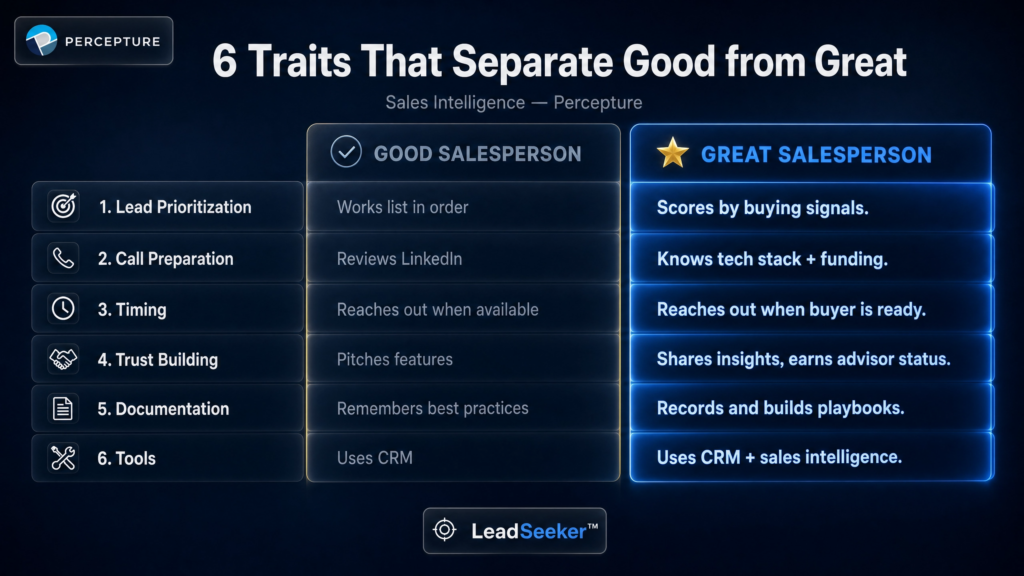
6 Traits That Separate Good Salespeople from Great Salespeople
1. Great Salespeople Prioritize Ruthlessly
Good reps work their list from top to bottom. Great reps score their list and work the hottest accounts first.
Research from Gong shows that top performers spend 33% more time on accounts showing active buying signals. By mastering what is B2B intent data, they don’t treat all leads equally because all leads aren’t equal.
Great salespeople ask: “Who is most likely to buy in the next 30 days?” Then they focus there.
2. Great Salespeople Prepare Differently
Good reps review the prospect’s LinkedIn before a call. Great reps know the prospect’s:
- Recent job changes and new hires
- Technology stack and vendor relationships
- Funding rounds or budget cycles
- Competitive pressures and market position
- Content they’ve engaged with recently
This level of preparation isn’t magic. It’s sales intelligence applied consistently.
3. Great Salespeople Control Timing
Good reps reach out when they have time. Great reps reach out when the buyer is ready.
Timing is everything in B2B sales. A prospect who just hired a new VP of Sales is more likely to evaluate new tools. A company that just raised funding has budget to spend. A business that just lost a key vendor is actively looking for alternatives.
Great salespeople track these signals and act on them within days, not weeks.
4. Great Salespeople Build Trust Before Selling
Good reps pitch features. Great reps share insights.
The best salespeople position themselves as advisors, not vendors. They may send relevant articles, share industry benchmarks or offer perspective on problems the buyer hasn’t fully articulated yet. Greatness comes down to willingness to learn from those who have achieved. A great sales person must be willing to forgive them selves, be resilient and stay focused while building a relationship.
This approach builds trust velocity, the speed at which a prospect moves from skeptical to confident. In our work with B2B marketing teams, we’ve seen that trust velocity is the single biggest predictor of deal speed. Stop selling, uncover their interst and meet them halfway, whether it be golfing, a baseball game, a dining expereince or interactive experience.
5. Great Salespeople Document Everything
Good reps remember their best calls. Great reps record, transcribe, and analyze every conversation.
Top performers treat their sales process like a science experiment. They track what works, what doesn’t, and why. They build playbooks from patterns, not guesses.
This discipline compounds over time. After six months, a great salesperson has a library of winning talk tracks, objection handlers, and discovery questions that a good salesperson is still trying to remember.
6. Great Salespeople Use Better Tools
Good reps use a CRM. Great reps evaluate the best B2B intent data providers to layer their CRM with platforms that surface signals automatically.
The difference isn’t about working harder. It’s about seeing opportunities that others miss.
When a target account visits your pricing page, downloads a whitepaper, or mentions a competitor on social media, great salespeople know about it immediately. Good salespeople find out weeks later, or never. Try Leadseeker below.
⚡ LeadSeeker™ Intent Scanner
Scan any target account to instantly reveal hidden buying signals, active web intent, and verified decision-maker data before your competitors capture them.
Real-Time Signal Capture
98% Accuracy Guarantee
Good vs Great Salespeople: Side-by-Side Comparison
| Trait | Good Salesperson | Great Salesperson |
|---|---|---|
| Lead Prioritization | Works list in order | Scores and ranks by buying signals |
| Call Preparation | Reviews LinkedIn profile | Knows tech stack, funding, hires, and competitive pressures |
| Timing | Reaches out when available | Reaches out when buyer is ready |
| Trust Building | Pitches features | Shares insights and earns advisor status |
| Process Documentation | Remembers best practices | Records, analyzes, and builds playbooks |
| Tool Usage | Uses CRM for tracking | Uses CRM + sales intelligence for signals |
| Response to Rejection | Moves to next lead | Analyzes why and improves approach |
| Quota Performance | Hits quota | Exceeds quota and raises the bar |
How to Move from Good to Great
Step 1: Audit Your Current Process
Start by documenting how you spend your time. Track every activity for two weeks. Most reps discover they spend 60% or more of their time on accounts that will never close.
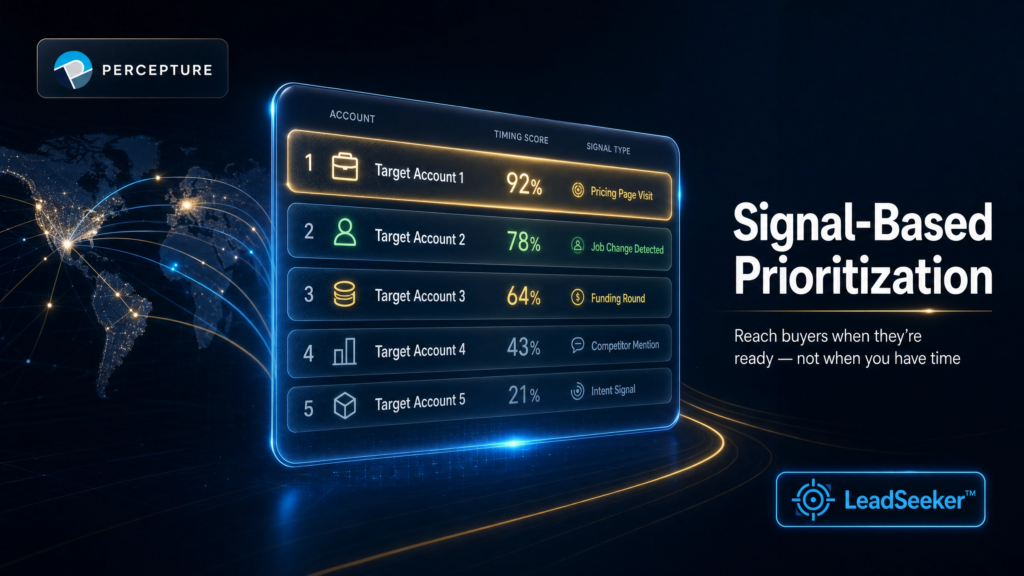
Step 2: Implement Signal-Based Prioritization
Stop treating all leads equally. Leverage actionable B2B intent data and sales intelligence to identify which accounts are actively researching solutions like yours.
Step 3: Build Pre-Call Research Templates
Create a checklist of information you need before every call:
- Company size and growth trajectory
- Recent news and announcements
- Technology stack
- Key decision-makers and their backgrounds
- Competitive landscape
- Potential pain points based on industry trends
Step 4: Track and Analyze Your Conversations
Record your calls (with permission). Review them weekly. Identify patterns in what works and what doesn’t. Build a personal playbook based on evidence, not intuition.
Step 5: Invest in Better Tools
The right sales intelligence platform can surface buying signals automatically, saving hours of manual research and helping you reach prospects at the perfect moment.
📈 Real Results: B2B Sales Intelligence in Action
A mid-market technology company implemented signal-based prioritization using LeadSeeker. Within 90 days, their sales team saw:
- 47% increase in qualified meetings booked
- 31% reduction in average sales cycle length
- 2.3x improvement in lead-to-opportunity conversion rate
Results based on anonymized client data. Individual results may vary.
Common Mistakes That Keep Good Salespeople from Becoming Great
Mistake 1: Treating All Leads Equally
Not every lead deserves the same effort. Great salespeople know that 80% of their results come from 20% of their accounts. They identify that 20% early and focus there.
Mistake 2: Relying on Memory Instead of Systems
Your brain is not a CRM. Great salespeople document everything—not because they have to, but because they know that systems beat memory every time.
Mistake 3: Pitching Before Understanding
Good reps pitch too early. Great reps ask questions until they understand the buyer’s world better than the buyer does. Only then do they present a solution.
Mistake 4: Ignoring Timing Signals
A prospect who downloaded your pricing guide yesterday is more valuable than a prospect who visited your homepage six months ago. Great salespeople act on timing signals immediately.
Mistake 5: Working Harder Instead of Smarter
More calls don’t equal more sales. Better calls do. Great salespeople focus on quality over quantity, using data-driven prospecting to maximize every conversation.
The ROI of Becoming a Great Salesperson
The financial difference between good and great is significant:
- Good salespeople hit 100% of quota
- Great salespeople hit 150-200% of quota
Over a career, that gap compounds. A great salesperson earning 50% more in commissions over 20 years will earn hundreds of thousands—or millions—more than their good counterparts.
But the benefits go beyond money:
- Career advancement: Great salespeople get promoted faster
- Job security: Top performers are the last to be cut during downturns
- Autonomy: Great salespeople earn the trust to work independently
- Fulfillment: Winning feels better than grinding

Bob Generale, President, Percepture
Bob Generale is known as the Navy Seals of Marketing, trained under industry legend Terry Slattery and within an elite San Francisco organization that represented global heavyweights like Hess, Microsoft, Exxon, and Google. As a master architect of marketing infrastructure, SEO, AI search, and advanced digital paid systems, he engineered a proprietary sales card designed to instantly auto-nurture prospects the moment you meet them. Bob operates on the absolute conviction that complex enterprise sales is no different from operations, finance, or marketing—excellence requires predictable systems. If your sales organization has a system and your marketing department doesn’t, it’s time to talk with Percepture. We specialize exclusively in supporting sales growth for complex businesses.
Frequently Asked Questions
What is the main difference between a good salesperson and a great salesperson?
The main difference is systems over talent. Good salespeople rely on effort and personality. Great salespeople build repeatable systems for prioritization, preparation, timing, and continuous improvement. They use sales intelligence to work smarter, not just harder.
How do great salespeople prioritize their leads?
Great salespeople use signal-based prioritization. They score accounts based on buying signals like website visits, content downloads, job changes, funding announcements, and competitive mentions. This approach ensures they spend time on accounts most likely to convert.
What tools do great salespeople use?
Great salespeople use a combination of CRM systems and sales intelligence platforms. These tools surface buying signals automatically, provide account context, and help reps reach prospects at the optimal moment.
How long does it take to become a great salesperson?
Most reps can see significant improvement within 90 days if they commit to building better systems. The key is consistent practice: documenting what works, analyzing conversations, and continuously refining your approach based on data.
What is sales intelligence?
Sales intelligence is the use of data and signals to identify, prioritize, and engage prospects. It includes intent data, firmographics, technographics, and buying signals that help reps focus on accounts most likely to buy.
How do great salespeople prepare for calls?
Great salespeople research the prospect’s company size, recent news, technology stack, key decision-makers, competitive landscape, and potential pain points before every call. This preparation allows them to have more relevant, valuable conversations.
What percentage of salespeople exceed quota?
According to the Sales Management Association, only about 24% of sales reps exceed quota in a typical year. The top performers use better systems, better tools, and better timing to consistently outperform their peers.
Can anyone become a great salesperson?
Yes. While some people have natural advantages, the traits that separate good from great are learnable. Prioritization, preparation, timing, trust-building, documentation, and tool usage are all skills that can be developed with practice and the right systems.
What is the Signal-to-Sale Ladder?
The Signal-to-Sale Ladder is Percepture’s framework for turning raw data into closed deals. It includes six steps: Signal Capture, Contact Verification, Account Dossier, Timing Score, Sell-Through Enablement, and CRM Handoff.
How does timing affect sales success?
Timing is critical in B2B sales. Reaching a prospect when they’re actively evaluating solutions dramatically increases your chances of success. Great salespeople track timing signals like job changes, funding rounds, and competitive losses to reach buyers at the perfect moment.
What to Do Next
You now know the six traits that separate good salespeople from great ones. The question is: what will you do with this knowledge?
Option 1: Keep doing what you’re doing. Stay good. Hit quota. Collect your paycheck.
Option 2: Build the systems that great salespeople use. Prioritize ruthlessly. Prepare obsessively. Time your outreach perfectly. Document everything. Use better tools.
If you choose Option 2, start here:
- Audit your current process — Track how you spend your time for two weeks
- Implement signal-based prioritization — Stop treating all leads equally
- Try LeadSeeker — Get the sales intelligence that top performers use
The gap between good and great isn’t talent. It’s systems. Build better systems, and you’ll get better results.