
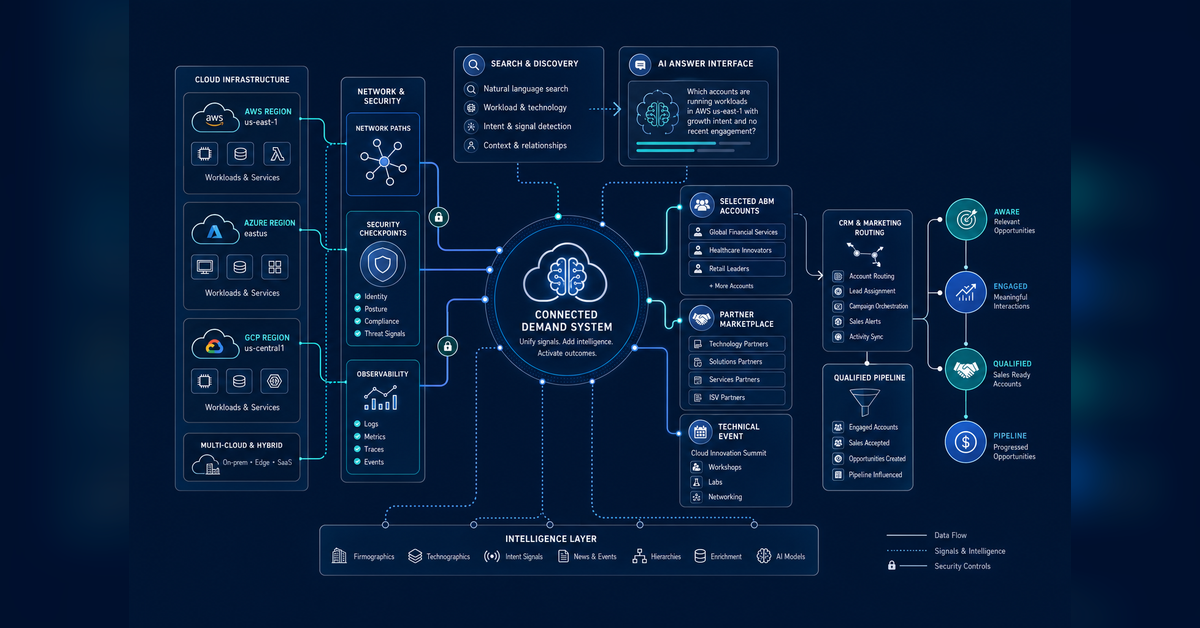

The best digital marketing tactics for cloud computing and infrastructure services combine workload-led positioning, account-based marketing, technical content, search and AI-answer visibility, high-intent paid media, digital PR, partner programs, events, proof-led conversion, and disciplined nurture. Each tactic should move a defined buyer toward a measurable commercial or technical action.
This guide is for providers marketing IaaS, PaaS, managed cloud, migration, hybrid infrastructure, connectivity, security, observability, and related services. It separates that job from using cloud software to run marketing, then shows how to select channels, build proof, sequence execution, and measure pipeline.
Technical buyers trust proof they can see
Cody Clegg and the OPTK Networks team explain how Percepture combined search, AI visibility, digital PR, enterprise targeting and paid media for a fiber and network infrastructure provider. The same trust pattern matters when cloud and infrastructure teams sell complex services to technical buying groups.
Real infrastructure client
The proof comes from a fiber and network operator selling technical services.
Complex buyer journey
Search, proof and repeated visibility support long technical and commercial decisions.
Connected execution
SEO, AI visibility, PR, targeting and paid media worked as one demand system.
Clear next step
Marketing moved buyers toward a useful conversation, not a generic form fill.

“Specialization wins.”
Cody’s point is simple: technical companies earn trust when they explain who they serve, what they solve and why the proof matters.
Need technical buyers to understand your offer faster?
Meet with Percepture to review your positioning, proof, search visibility and path to a qualified technical conversation. No hard sell.
Important: OPTK is an adjacent telecom and infrastructure client, not a cloud-computing client. The case study verifies the relationship and campaign result. It does not promise the same result for every company or campaign.
What works best when marketing cloud infrastructure?
Cloud infrastructure marketing works best when every campaign names the workload, buyer, trigger, proof requirement, offer, owner and next step. Start with service truth, create evidence buyers can evaluate, capture active demand and route qualified interest to the right technical conversation.
Executive summary
Start with workload truth
Define what the service supports, where responsibility begins and ends, and which use cases fit. Do not let campaign language blur IaaS, PaaS, hosting, software, and managed operations.
Build a proof path
Match every buyer objection with an approved technical, operational, commercial, or third-party proof asset.
Separate creation from capture
Use authority, content, events, and partners to create demand. Use search, paid media, marketplace activity, and conversion pages to capture it.
Measure progression
Judge cloud and infrastructure marketing by qualified account engagement, accepted meetings, assessments, technical progression, opportunities, and gross-profit signals.
Who this strategy fits
Use cloud and infrastructure marketing when the offer requires buyers to validate service boundaries, technical fit, operating responsibility, and a credible path to adoption.
Cloud platforms and providers
IaaS, PaaS, private cloud, hybrid cloud, and managed hosting offers that require technical validation.
Services and integration firms
Migration partners, MSPs, systems integrators, cloud consulting practices, and managed operations teams.
Connected infrastructure
Cloud connectivity, network services, data centers, cybersecurity, observability, backup, and disaster-recovery providers.
Complex buying groups
Teams selling to executives, finance, IT, security, operations, procurement, alliances, and solution architects.
Define the market before choosing the channels
Cloud marketing is the coordinated use of positioning, technical content, search, AI-answer optimization, paid media, PR, partners, marketplaces, events, nurture, and sales enablement to move a buying group toward a validated next step. Within cloud and infrastructure marketing, those activities should remain anchored to the provider’s actual service model and operating scope.
The definition must remain tied to the service being sold. NIST describes cloud computing through five essential characteristics and defines service models including IaaS, PaaS, and SaaS. Those boundaries help marketing teams describe operating responsibility without rewriting technical terms for campaign convenience.
- IaaS: Market the supported workloads, infrastructure boundaries, migration path, connectivity, operations, and evidence required for technical evaluation.
- PaaS: Focus on developer and platform workflows, adoption barriers, integration, deployment, governance, and useful technical evaluation paths.
- Managed cloud: Explain the operational scope, support model, governance, optimization work, escalation path, and customer responsibilities.
- Migration: Organize demand around readiness, dependencies, risk, sequencing, validation, and the next assessment or workshop.
- Connectivity: Connect locations, routes, architectures, applications, and operating needs to a qualified design discussion.
For formal cloud definitions, see NIST SP 800-145.
Digital marketing tactics for cloud computing and infrastructure services: the ten-tactic stack
The right stack is not ten isolated campaigns. Cloud and infrastructure marketing should share one account model, one use-case structure, one proof library, one offer ladder, and one measurement system. That keeps search, PR, paid media, partners, events, nurture, and sales from telling different stories.
- Workload-led positioning. Begin with the workload or operating problem the provider can support. State the buyer, environment, trigger, expected decision, service boundary, and evidence available. This gives cloud and infrastructure marketing a specific commercial and technical premise. Feature lists can support the message, but they should not replace the buyer’s reason to act.
- Account-based marketing. Select accounts the provider can serve, map the buying group, identify account triggers, and coordinate marketing with sales and alliances. In cloud and infrastructure marketing, account selection should reflect delivery fit as well as apparent interest. B2B intent data can help prioritize research, but an intent signal still requires human qualification and account context.
- Technical content and proof. Create architecture explanations, migration guides, responsibility maps, implementation checklists, comparisons, benchmarks, approved cases, security scope statements, and solution-architect interviews. These assets make cloud and infrastructure marketing useful during technical validation, not just initial discovery. Percepture’s technical content marketing approach connects each asset to a validation question and sales action.
- SEO, AEO, and GEO. Build pages around one clear intent, answer the question early, define entities consistently, and support claims with useful evidence. Cloud and infrastructure marketing should include enterprise SEO services for search demand and GEO services for clearer AI-search entities, answers, and citation paths.
- High-intent paid search. Group terms by service, workload, problem, stage, and geography. A migration-readiness query should not land on the same page as a developer-platform query. Use paid search services to connect keyword intent, landing-page proof, qualification, and response routing.
- Digital PR and executive authority. Use expert commentary, partner news, approved customer proof, original analysis, and sector education to build third-party context. Digital PR services can strengthen discovery and trust when the story is specific enough to matter.
- Marketplace, partner, and co-sell marketing. Align listing content, partner pages, account mapping, campaign assets, private-offer paths, and sales enablement with each platform’s current rules. These marketing programs should make the procurement and partner path visible without implying that every platform works the same way. Do not assume one platform’s marketplace or co-sell process applies to another.
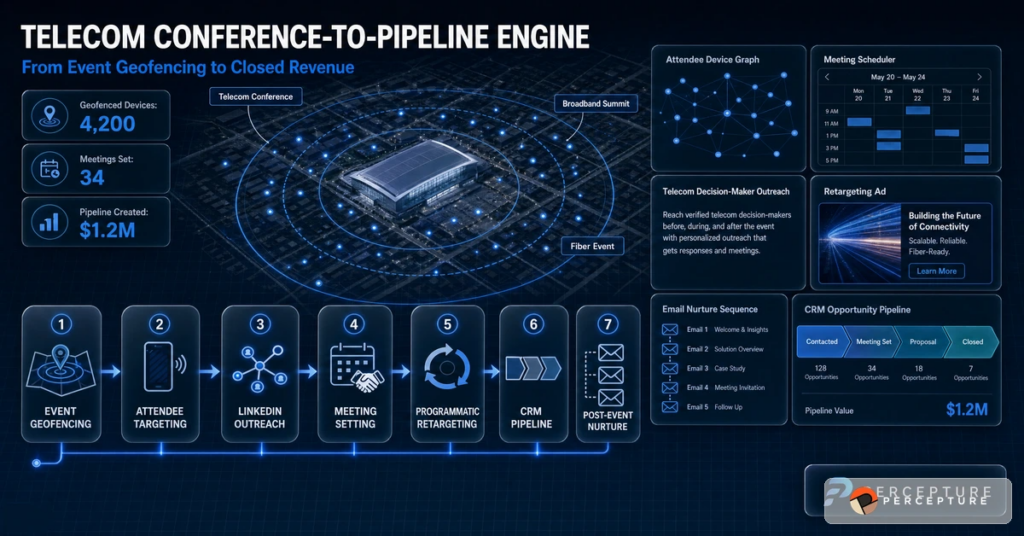
- Events, webinars, and technical communities. Build programs around the meetings and proof exchanges that should happen before, during, and after an event. The infrastructure event pipeline model shows how audience selection, outreach, content, meetings, and follow-up should work as one motion.
- Proof-led landing pages and conversion offers. Give each use case a credible next step: an assessment, architecture workshop, design review, migration plan, technical trial, benchmark discussion, or cost review. For cloud and infrastructure marketing, the offer should resolve the next evaluation question rather than force every visitor into a generic demo. Conversion-rate optimization should improve fit and progression, not merely increase form volume.
- Automated nurture, sales enablement, and attribution. Route by service model, workload, role, readiness, and requested action. Use AI sales agents only within an approved outreach and follow-up process, then connect activity through attribution and analytics.
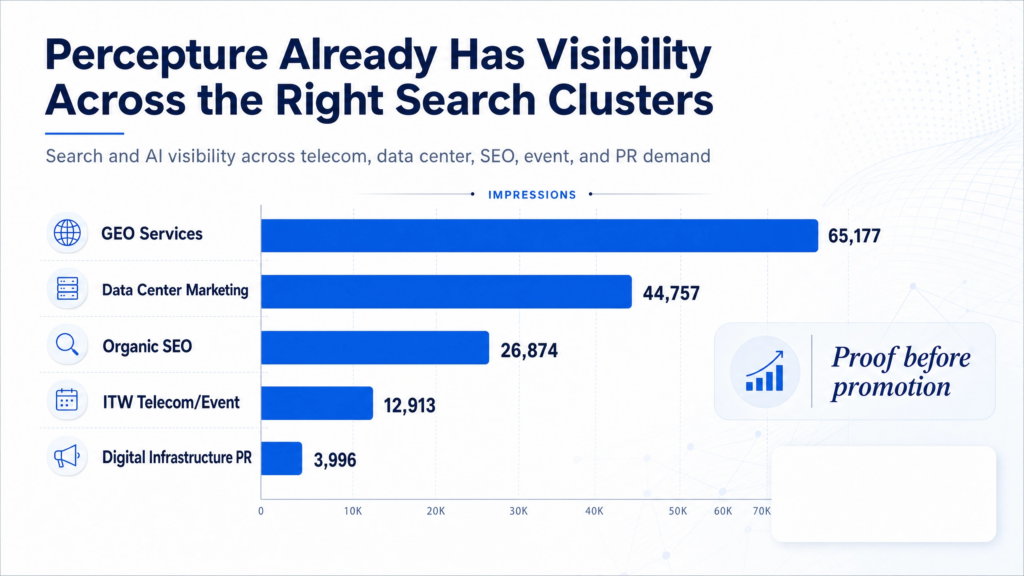
Find the gap before you add more channels
Review the offer, buyer, proof, next step and follow-up path. The goal is to find the first break in the demand system before more money is added.
- Check whether the market and workload fit are clear
- Find missing proof or weak conversion steps
- See which channel should move first
How should tactics change by service and buying situation?
Cloud and infrastructure marketing should change with the technical offer, buyer stage, deal structure, and evidence burden. The table identifies a sensible lead tactic, but each program still needs supporting authority, capture, conversion, and sales progression.
Cloud service and tactic decision matrix
Use this matrix to choose a lead motion for cloud and infrastructure marketing, then add only the supporting channels required by the buying situation.
| Situation | Lead tactic | Support | Best next step | Primary measure |
|---|---|---|---|---|
| New IaaS entrant | Workload positioning and technical SEO | PR, paid search, partner content | Architecture or workload assessment | Qualified technical meetings |
| PaaS or developer platform | Developer content and community | Search, retargeting, partner programs | Workshop, sandbox, or technical trial | Qualified account activation |
| Cloud migration services | High-intent search and proof content | ABM, events, marketplace activity | Migration-readiness assessment | Accepted assessments |
| Managed cloud or MSP | Use-case pages and ABM | Vertical SEO, email, referrals | Environment or cost-risk review | Sales-accepted opportunities |
| Hybrid or private cloud | Executive and technical education | PR, webinars, comparisons | Multi-stakeholder strategy workshop | Buying-group engagement |
| Cloud connectivity | Location and architecture content | Search, partners, events, intent data | Connectivity design review | Qualified route or site discussions |
| Security or observability | Trust content and partner proof | Paid search, webinars, PR | Scope-appropriate assessment | Qualified assessments |
| Marketplace-listed offer | Listing and co-sell alignment | Partner content, ABM, enablement | Marketplace or co-sell discussion | Documented progression |
Match proof to the buying committee
Cloud and infrastructure deals move faster when each stakeholder receives proof they can evaluate, defend and approve.
Executive and finance
Show market fit, stage quality, economics, attribution rules and the conditions behind forecasts or savings claims.
Technology and operations
Provide service boundaries, architecture context, integration requirements, support scope and access to a technical reviewer.
Security, legal and procurement
Use approved statements about controls, responsibility, data, contracts and scope. Keep every claim inside the documented evidence.
Sales and alliances
Give teams account context, partner paths, role-based content, qualification rules and one clear technical next step.
The Percepture Workload-to-Pipeline Cloud Growth System
The Workload-to-Pipeline system turns cloud and infrastructure marketing into a seven-stage operating model. It starts with verified service truth and ends with attribution, expansion, and retention. The framework prevents teams from buying channels before they know what the buyer must believe, validate, and do next.
Seven stages from service truth to measurable progression
- Service and workload truth: Define the service model, supported workloads, operating boundaries, regions, support, pricing logic, security scope, limits, and approved claims.
- Buying group and trigger: Map economic, technical, security, operational, procurement, partner, and user roles. Identify the event that starts active evaluation.
- Use-case and proof architecture: Connect each workload to the problem, desired outcome, objection, evidence, offer, owner, and next step.
- Search and answer ownership: Build pages, definitions, comparisons, technical assets, FAQs, media, and citations around distinct buyer questions.
- Demand capture and creation: Coordinate ABM, paid search, PR, executive content, events, partners, retargeting, and nurture.
- Technical and commercial progression: Route the buyer to the right assessment, workshop, architect, trial, marketplace path, proposal, or nurture track.
- Attribution, expansion, and retention: Connect activity to accepted pipeline, contracts, delivery milestones, renewals, cross-sell, and gross profit when those data are available.
Framework rule: Every use of cloud and infrastructure marketing must name the workload, buying role, proof requirement, offer, owner, and measurable next step.
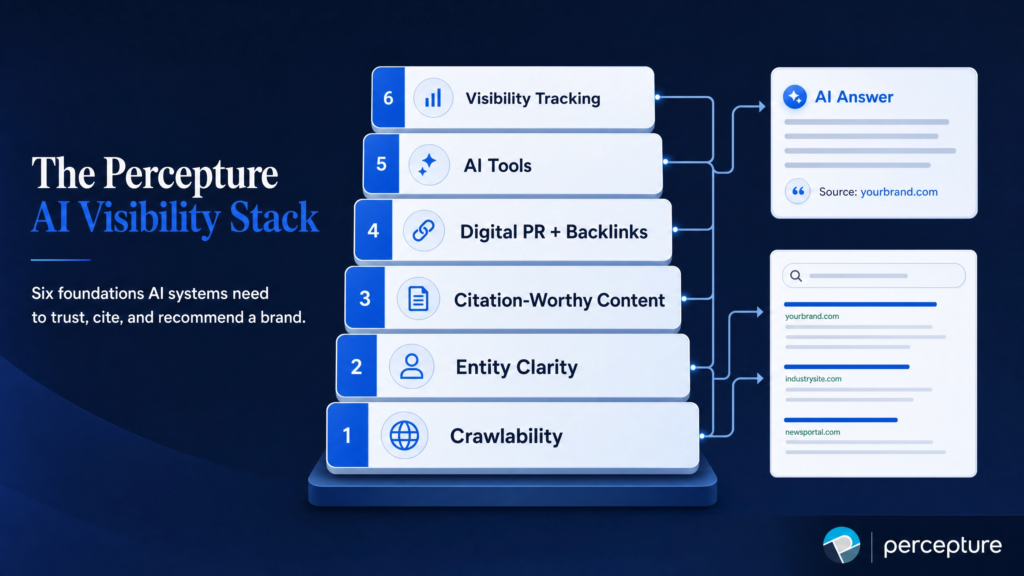
See what the work may cost
Cloud and infrastructure programs can include strategy, technical content, SEO, GEO, PR, paid media, ABM, events and analytics. Compare the scope before you decide what belongs in the first cycle.
- See clear service and pricing paths
- Match the scope to your sales cycle
- Know what is included before work starts
How does ABM work for cloud infrastructure?
ABM works by selecting accounts the provider can support, identifying workload and migration triggers, mapping the buying group, and coordinating marketing with sales, alliances, and technical teams. In cloud and infrastructure marketing, ABM should deepen engagement with qualified accounts rather than maximize impressions across an oversized list.
Start with a small set of account conditions: industry, size, geography, technical environment, likely workload, partner relationship, buying stage, and commercial fit. Then define the useful action for each role. A CIO may need architecture context, a finance leader may need cost logic, and a solution architect may need a detailed technical review.
What technical content builds trust?
Strong technical content helps buyers validate architecture, migration, security scope, performance requirements, economics, implementation, operations, and support. Within cloud and infrastructure marketing, it gives a buyer something useful to inspect and gives sales something defensible to use. The content should make limits visible rather than hiding them behind broad claims.
- Workload and use-case pages
- Architecture and responsibility diagrams
- Migration-readiness checklists
- Security and compliance scope explanations
- TCO and FinOps discussion tools
- Implementation and operational playbooks
- Comparisons with explicit evaluation criteria
- Approved customer cases and expert interviews
- Marketplace and partner enablement pages
For broader infrastructure planning, use the data center marketing guide. For connectivity terminology and buyer questions, see the guide to cloud on-ramp connectivity.
How should cloud companies use SEO, AEO, and GEO?
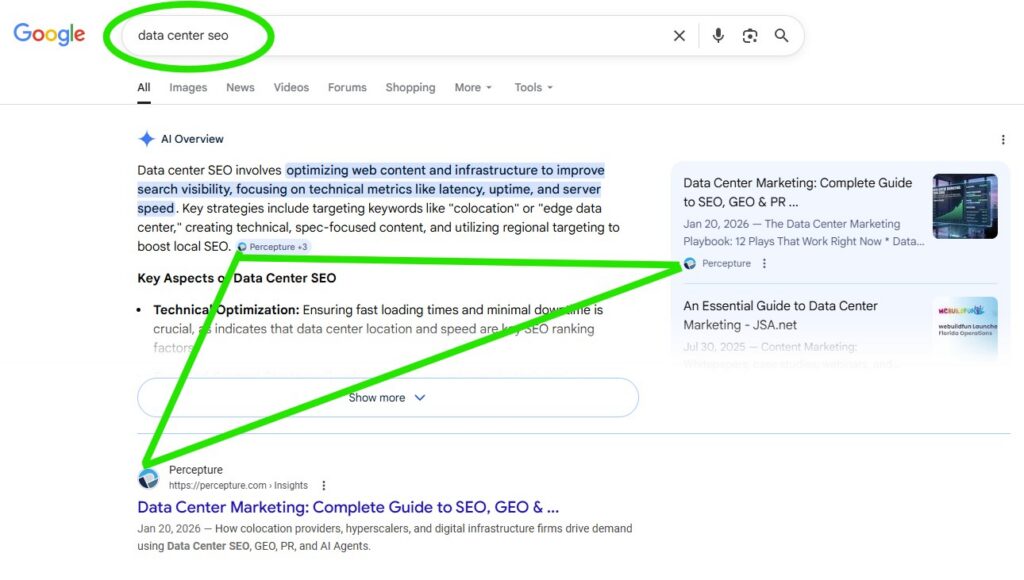
Cloud and infrastructure marketing should use SEO to capture known search demand, AEO to answer questions clearly, and GEO to strengthen entity clarity, evidence, and citation eligibility in generative systems. These disciplines share technical foundations, but they should not be treated as promises of rankings or AI citations.
Build one primary intent per page. Support it with concise definitions, short answers, structured tables, expert evidence, updated technical context, and internal links that explain related entities. Percepture’s guide to answer engine optimization strategies covers the answer structure, while digital PR for AI search explains how third-party authority can support citation discovery.
How should marketplaces, partners, and co-sell motions support marketing?
A marketplace listing is not a complete demand program. Cloud and infrastructure marketing should align the listing, partner value, use-case pages, account mapping, campaigns, sales materials, procurement path, and follow-up. Platform requirements and co-sell processes differ, so teams should rely on the current documentation for each program rather than reuse one generic workflow.
Partners can add distribution and context, but the buyer still needs a clear workload, proof path, and owner. Build a shared campaign brief that names the audience, account set, offer, content, response process, reporting fields, and permitted claims. Give partner and direct-sales teams the same definitions so the market does not receive competing descriptions.
Which offers convert cloud buyers?
The best offer matches the buyer’s risk and readiness. For cloud and infrastructure marketing, a generic demo often asks for commitment before the provider has identified the workload or evaluation question. Use an offer ladder that gives buyers a reasonable next step while preserving qualification.
| Buyer condition | Offer | What it should establish |
|---|---|---|
| Early research | Guide, benchmark, or scorecard | Problem clarity and self-selection |
| Known workload | Architecture or workload workshop | Fit, dependencies, roles, and evidence gaps |
| Migration interest | Readiness assessment | Current state, constraints, and next evaluation step |
| Connectivity need | Design review | Locations, routes, applications, and operating requirements |
| Developer evaluation | Technical trial or sandbox | Qualified use, adoption barriers, and support needs |
| Active procurement | Marketplace, private-offer, or proposal discussion | Commercial path, stakeholders, and required documentation |
Customer journey planning can align those offers with role, stage, channel, and handoff. Email marketing can then continue the proof sequence without sending every buyer the same nurture track.
What should the first 90 days include?
A gated 90-day operating plan
The first 90 days should establish the facts, assets, routing, and measurement needed to operate cloud and infrastructure marketing as a coordinated program.
- Days 1–30: establish truth and fit. Define service models, workloads, boundaries, buyers, triggers, claims, proof, partners, offers, sales stages, and measurement rules. Every priority use case should have a buyer, evidence requirement, owner, and next step.
- Days 31–60: build the campaign architecture. Create the message structure, use-case map, search and AI-answer plan, ABM plays, paid-search groups, PR themes, partner motion, landing pages, technical assets, nurture, routing, and dashboards.
- Days 61–90: activate and optimize. Launch approved channels, monitor search visibility, account engagement, offer conversion, response time, meeting quality, partner influence, and technical progression. Stop, repair, scale, or reassign work based on evidence.
The first cycle should not launch every possible channel. It should prove that cloud and infrastructure marketing can move a defined workload and buying group through an observable sequence.
How much does cloud and infrastructure marketing cost?
The cost depends on scope, technical review, content depth, target accounts, paid media, events, partner work, systems, data, and reporting. Cloud and infrastructure marketing may include strategy, interviews, technical content, SEO, GEO, PR, paid search, ABM, marketplace support, CRM, automation, CRO, analytics, and pass-through media or event costs.
| Investment area | Primary cost driver | Control question |
|---|---|---|
| Strategy and research | Markets, workloads, interviews, account data | Is the fact base complete enough to support campaign claims? |
| Technical content | SME time, review, diagrams, proof assets | Can a solution architect use and defend the material? |
| Search and AI visibility | Site condition, content gaps, competition, authority | Does each page own a distinct buyer intent? |
| Paid and ABM | Audience size, media cost, creative, data | Are account fit and conversion rules defined? |
| PR, partners, and events | Story quality, assets, programs, sponsorships | What qualified action should follow visibility? |
| Systems and measurement | CRM, routing, automation, integrations, reporting | Can activity be connected to accepted progression? |
How should results and ROI be measured?
Keep visibility, engagement, progression, and financial attribution separate when evaluating cloud and infrastructure marketing. Rankings, citations, impressions, clicks, downloads, registrations, and marketplace views can inform decisions, but they should not receive revenue credit without an agreed attribution rule.
- Cost per engaged target account: attributable tactic cost divided by target accounts meeting the agreed engagement threshold.
- Cost per qualified technical meeting: attributable cost divided by meetings accepted by sales or solutions.
- Assessment conversion: qualified assessments booked divided by qualified offer visitors.
- Technical progression: evaluations moving to the next approved stage divided by evaluations started.
- Partner-influenced pipeline: opportunity value with documented partner influence.
- Sales-use rate: active opportunities using approved proof assets divided by opportunities reviewed.
- Marketing ROI: use attributable gross profit and approved cost inputs rather than top-line lead estimates.
Cloud demand-system scorecard
Rate each area from 0 to 2. A score of 0 means absent, 1 means partial, and 2 means documented and operating. This scorecard tests whether cloud and infrastructure marketing function as a system.
| Area | Question | Score |
|---|---|---|
| Workload truth | Are supported workloads, service boundaries, limits, and claims documented? | 0–2 |
| Buying group | Are technical, economic, security, operations, procurement, and partner roles mapped? | 0–2 |
| Proof path | Does each objection have an approved evidence asset? | 0–2 |
| Discovery | Do search, AI answers, media, partners, and events cover distinct buyer questions? | 0–2 |
| Conversion | Does each use case offer an appropriate technical or commercial next step? | 0–2 |
| Routing | Are responses assigned by workload, role, stage, and requested action? | 0–2 |
| Measurement | Can the team distinguish visibility from accepted pipeline and financial attribution? | 0–2 |
Low-scoring areas show where cloud and infrastructure marketing lack the operating conditions required for reliable progression.
The Infrastructure Buyer Signal Exchange

Buyer signal: specialization
Question: What marketing strategies are working best?
Implication: Organize campaigns around a defensible workload and market position rather than a broad menu of technology labels.
Buyer signal: outcomes
Question: Which messages resonate when buyers care more about outcomes than technology labels?
Implication: Connect the service to performance, implementation, support, economics, timing, and risk questions the buyer must evaluate.
Buyer signal: channel quality
Question: Which channels generate the highest-quality leads?
Implication: Judge channels by account fit and progression, not by response volume alone.
Buyer signal: research
Question: How has buyer research changed?
Implication: Treat searchable content, third-party context, technical proof, and digital reputation as part of the sales environment.
Buyer signal: repeated visibility
Question: Why does repeated visibility build trust?
Implication: Coordinate search, media, executive content, events, partners, and sales follow-up so buyers encounter a consistent position.
Operating rail: Workload → outcome → proof → repeated visibility → technical conversation.
Proof that visibility can support qualified B2B demand
Broadstaff Global recruits for telecom, wireless, data-center and infrastructure roles. The case study shows how specialized market knowledge, search visibility and credible proof can support qualified demand in a technical buying environment.

Build a cloud infrastructure demand plan buyers can trust
Percepture can organize digital marketing tactics for cloud computing and infrastructure services around the workload, buyer, proof, channels, offer and next step that matter to your team.
- Clarify your strongest market position
- Find gaps in proof, visibility and conversion
- Build a practical first 90-day plan
Frequently asked questions about cloud and infrastructure marketing
What are the best digital marketing tactics for cloud computing and infrastructure services?
The strongest mix includes workload-led positioning, ABM, technical content, SEO, AEO, GEO, high-intent paid search, digital PR, partner and marketplace marketing, events, proof-led landing pages, nurture, sales enablement and attribution.
How do you market a cloud computing company?
Apply cloud and infrastructure marketing by defining the workloads and outcomes the company can support. Map the buying committee, publish useful technical proof, capture high-intent searches, build third-party authority, activate partners and events, offer a low-risk technical next step, and connect each response to sales or solution-architecture follow-up.
How does ABM work for cloud infrastructure?
Within cloud and infrastructure marketing, ABM selects accounts the provider can serve, maps workloads and buying roles, identifies triggers, and coordinates paid media, content, executive outreach, events, partners, sales plays, and technical offers. Its purpose is deeper engagement with qualified accounts, not a larger impression total.
What content should a cloud provider create?
Technical content supports cloud and infrastructure marketing by answering the questions buyers must validate. Create workload pages, architecture explanations, responsibility maps, migration playbooks, security-scope content, cost discussion tools, comparisons, implementation checklists, approved cases, marketplace pages, and solution-architect interviews. Each asset should support a defined next step.
Is PPC effective for cloud services?
PPC can support cloud and infrastructure marketing by capturing active demand for migration, managed cloud, infrastructure, security, backup, disaster recovery, connectivity, and consulting. It performs poorly when keywords are broad, landing pages lack technical proof, qualification is weak, or the response team cannot continue the buyer’s technical conversation.
How long does a cloud infrastructure marketing program take?
A team can establish the fact base, campaign architecture, priority assets, routing, and initial activation for cloud and infrastructure marketing during a focused 90-day cycle. Search authority, partner development, reputation, and enterprise pipeline develop on different timelines, so progress should be measured by documented milestones rather than a universal deadline.
How should cloud marketing ROI be measured?
Measure cloud and infrastructure marketing through qualified account engagement, accepted meetings, assessments, technical progression, marketplace actions, partner influence, opportunities, contract value, retention, gross profit, and payback when those data are available. Keep impressions, rankings, clicks, citations, and downloads separate from financial attribution unless an approved rule connects them.
What is the 3-3-3 rule in marketing?
There is no single authoritative 3-3-3 rule. Different sources use the label for combinations of messages, audiences, channels, or attention windows. A cloud provider can use it as a clarity check, but it should not replace workload, buying-group, proof, offer, and pipeline planning.
What are the four pillars of cloud computing?
There is no universal official four-pillar model. Some articles use security, scalability, reliability, and cost efficiency. NIST instead defines five essential cloud characteristics: on-demand self-service, broad network access, resource pooling, rapid elasticity, and measured service.