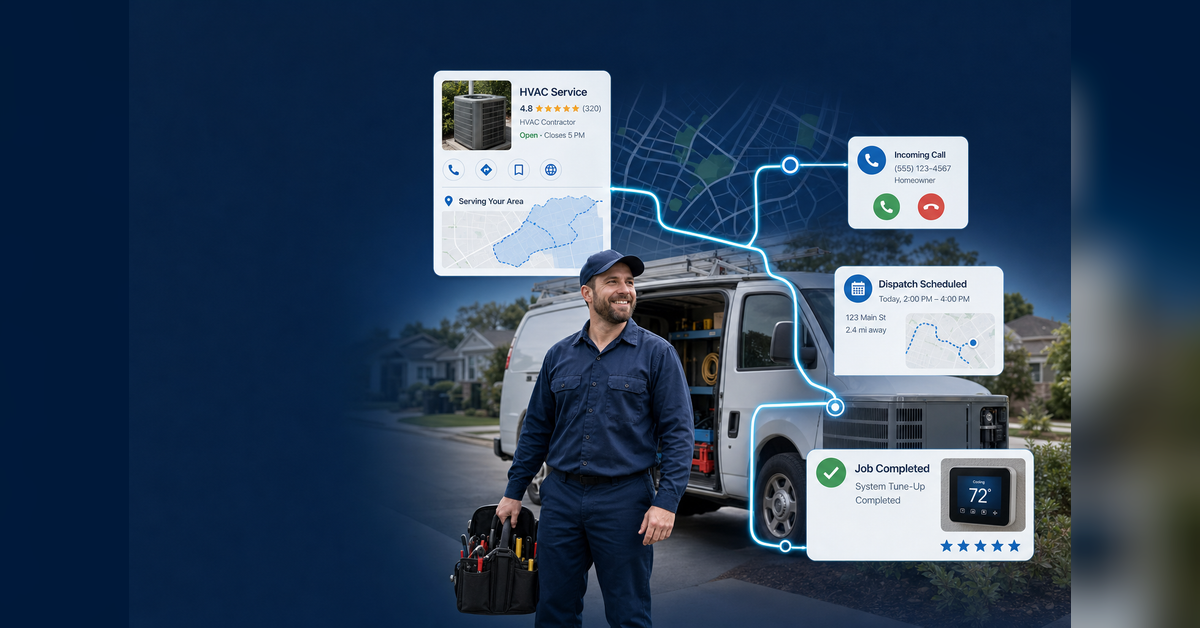

Local SEO for HVAC is the process of improving a heating and cooling company’s visibility when nearby customers search in Google Maps, the local pack, local organic results and location-aware AI answers. It connects an accurate Business Profile, legitimate service areas, useful local pages, reviews, authority and conversion tracking.
The goal is not to appear in every city an owner can name. The goal is to build the strongest legitimate visibility where the company can answer calls, send technicians, complete the requested work and support the customer well.
Local visibility works better when the operating facts are right
Percepture has worked across construction, engineering, infrastructure and complex B2B markets since 2004. That experience helps connect local search visibility to real services, real territories and qualified work.






What is local SEO for HVAC?
local SEO for HVAC is a serviceability system before it is a ranking tactic. It documents where an HVAC company can operate, aligns its public business information and website with that footprint, earns credible local proof and tracks whether visibility becomes qualified work.
- Confirm Business Profile eligibility and control.
- Define real locations, service areas and dispatch limits.
- Align categories, services and pages with local demand.
- Build useful service and location pages.
- Request honest reviews through a consistent process.
- Correct important business-data inconsistencies.
- Publish approved local project and team evidence.
- Earn relevant local and industry authority.
- Track calls, bookings, dispatches and completed jobs.
- Adjust markets as capacity and service mix change.
Reviewed and updated: July 2026
The operating view
Start with control
In the HVAC local search program, know who owns each profile, who can manage it and which real business entity it represents.
Map serviceability
For the local search program, use technician coverage, drive time, service mix and capacity to define the practical market.
Publish evidence
Build pages around real services, local proof and clear booking paths rather than city-name templates.
Measure dispatch
Judge local visibility work by qualified contacts, bookings, completed work and economics, not visibility alone.
Who this guide is for
Owners and general managers
Use the guide to decide where local visibility can support profitable, serviceable demand.
Marketing leaders
Use it to govern Business Profiles, local pages, reviews, entities and reporting without creating thin location coverage.
Operations leaders
Use it to align service areas, technician capacity, dispatch rules and the definition of a qualified local lead.
Multi-location teams
Use it to manage location ownership, duplicate risk, local proof and performance by market before rolling results together.
the HVAC local search plan versus complete HVAC SEO
Local search concentrates on nearby demand, Business Profiles, Maps, reviews, service areas, location evidence and local conversion paths. A complete enterprise SEO program also covers technical health, broad organic demand, content architecture and governance across the full website.
The two disciplines must support each other, but they should not share every target. A the local-search plan page should answer whether the company serves a market and why the page is useful there. A broad service guide should explain the service in depth. For commercial operators, the principles in SEO for construction companies provide useful context without replacing a dedicated HVAC local plan.
Check your local SEO before adding more city pages
Percepture can review your profiles, service areas, local pages and lead path. You will see where the facts, visibility or follow-up need work.
- Check profile ownership and location risk
- Find weak or overlapping local pages
- Connect local demand to real service capacity
The HVAC Local Visibility Radius-to-Revenue System
Percepture uses six operating radiuses to connect local visibility work with the territory a company can actually support. Each radius has a clear output, owner and decision.
1. Eligibility and control
Confirm profile eligibility, ownership, manager access, real-world naming, address treatment, phone, URL and duplicates. This gives HVAC local visibility a controlled and policy-aware foundation.
Output: Business Profile Control Register.
2. Serviceability and proximity
Map legitimate locations, technician coverage, drive times, emergency limits, service mix, seasonality and excluded areas.
Output: HVAC Serviceability Map.
3. Local relevance
Align categories, services, pages, headings, internal links and local questions with what the operation provides. This keeps the local program aligned with services the company can actually deliver.
Output: Service-by-Market Relevance Matrix.
4. Prominence and trust
Build genuine reviews, relevant citations, local links, licensing references, media, associations and approved project proof.
Output: Local Prominence and Proof Plan.
5. Local website evidence
Publish useful location pages, service-market evidence, local operating context, real imagery and clear next actions.
Output: Local Evidence Publishing Calendar.
6. Maps-to-dispatch conversion
Measure interactions, answered calls, qualification, bookings, dispatches, completed jobs and attributable economics.
Output: Local Search-to-Dispatch Scorecard.
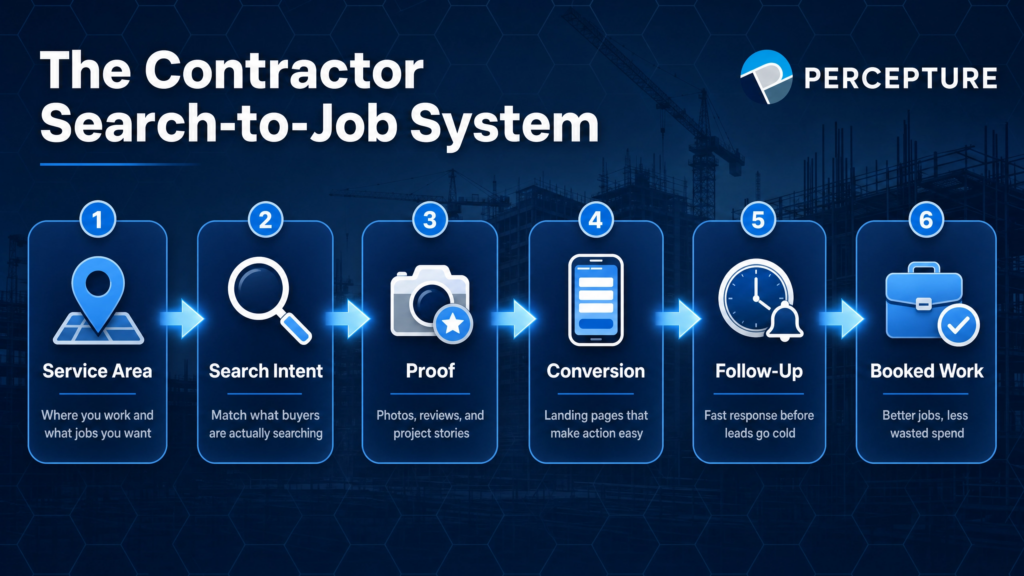
local SEO for HVAC serviceability scorecard
| Zone | Operating condition | SEO action | Management decision |
|---|---|---|---|
| Core | Strong coverage, workable drive time and supported services | Protect profile accuracy, strengthen proof and improve conversion | Defend quality and capacity |
| Growth | Legitimate service with thinner proof, capacity or visibility | Build evidence selectively and monitor qualified demand | Expand only when operations can support it |
| Exclusion | Unsupported, impractical or unprofitable coverage | Remove misleading claims and avoid thin city pages | Do not market the area as fully served |
Use this scorecard to keep local search strategy investment concentrated in markets where service quality and capacity can support demand.
Local search surfaces are not interchangeable
Effective the local program separates the local pack, Google Maps and local organic results because they are distinct surfaces. Paid visibility is separate again. Location-aware AI answers may reflect public information from profiles, websites, directories, reviews and publications, but inclusion is not assured.
Where HVAC local visibility visibility appears
| Surface | Main function | Primary inputs | Proximity role | Common conversion | Main reporting caution |
|---|---|---|---|---|---|
| Local pack | Shows a compact set of nearby businesses in search | Profile eligibility, relevance, distance and prominence | High | Call, website visit or directions | Results vary by search location |
| Google Maps | Supports map-based discovery and business research | Profile data, location context and public evidence | High | Call, directions or website visit | Grid coverage can vary within one market |
| Local organic | Ranks website pages for local intent | Page relevance, technical quality, authority and usefulness | Contextual | Form, call or booking | Strong organic rank does not prove Maps rank |
| Brand results | Helps buyers verify the company | Consistent entities, website, profiles and public mentions | Lower | Direct contact or research | Brand demand can mix with discovery demand |
| AI answers | Synthesizes information for a location-aware question | Accessible, consistent and retrievable public evidence | Question-dependent | Further research or referral | Answers and cited sources can change |
| LSA or PPC | Buys placement for eligible searches | Campaign eligibility, settings, bids and budget | Targeting-dependent | Call, message or form | Paid results must stay separate from organic reporting |
Control the Google Business Profile before changing it
A profile should represent the business as it operates in the real world. Before optimizing the local SEO strategy, record the owner, authorized managers, verification history, public name, phone, website, hours, categories, services and address treatment. Review duplicates and document material changes.
Storefront, service-area or hybrid?
| Model | Customer interaction | Address treatment | Profile approach |
|---|---|---|---|
| Storefront | Customers are served at a staffed business location | Display only when the location is eligible and customers can visit | Maintain accurate location and customer-facing hours |
| Service-area business | Technicians travel to customers | Hide the address when customers are not served there | Use the eligible business profile and genuine service areas |
| Hybrid | Customers are served at the location and technicians also travel | Display an eligible customer-facing address | Maintain both location facts and supported service areas |
Do not create a profile for every city served. Separate profiles should correspond to separate eligible operations. P.O. boxes, lead-generation locations and ineligible virtual offices should not be used to manufacture coverage. In the local-search system, the profile model must follow actual customer interaction and location eligibility.
Categories, services, hours and media
Choose the most specifically accurate primary category for the main operation. Add secondary categories only when they describe real services. Align profile services with the website and use the KeywordIQ system to organize demand without forcing every keyword into every page.
Keep regular, seasonal and special hours accurate. Use real photos of technicians, vehicles, equipment, facilities and approved work. Posts can communicate seasonal information, deadlines, company news and valid offers, but they should not be presented as a confirmed ranking shortcut.
Separate confirmed guidance from operating practice
the search-to-dispatch system becomes risky when a team treats an industry belief as a platform rule. The scorecard below separates confirmed local-search principles from sound operating practices and unsupported promises.
Guidance, practice and folklore
| Topic | Confirmed guidance | Percepture operating practice | Unsafe conclusion |
|---|---|---|---|
| Relevance | Local results consider how well a business matches a search | Align real services, categories and pages | Add unrelated categories to appear for more searches |
| Distance | Distance is a main local consideration | Map practical serviceability and evaluate visibility by area | A larger service-area setting defeats proximity |
| Prominence | Prominence is a main local consideration | Build reviews, public proof and legitimate authority | One citation package guarantees pack placement |
| Review count and rating | More reviews and positive ratings can support local prominence | Request honest reviews consistently | Buy or incentivize reviews |
| Review recency | No direct ranking claim is made here | Monitor recency as an operating and trust signal | Promise a ranking increase from review velocity |
| Owner responses | No direct ranking claim is made here | Respond professionally and protect privacy | Insert keywords into every response for rankings |
| Posts | No direct ranking claim is made here | Use posts for useful updates and conversion | Publish daily because frequency guarantees rank |
| Service areas | They describe areas the business serves | Keep them aligned with real operations | Adding cities creates a ranking radius |
| Citations | Public business facts should remain accurate | Fix material conflicts on relevant platforms | Submit to hundreds of weak directories |
| Schema | Structured data can communicate visible business facts | Match markup to visible, accurate page content | Schema alone raises local rankings |
| AI recommendations | No recommendation is guaranteed | Improve source quality and entity clarity through GEO services | Promise inclusion in AI answers |
This distinction keeps the local SEO program decisions tied to confirmed guidance and documented operating practice rather than unsupported ranking promises.
Build a review system without manipulating customers
Reviews support buyer confidence, and review quantity and positive ratings can support prominence. That makes reviews part of the local visibility system, but not a license to filter customers, offer incentives or ask for a particular rating.
A practical review workflow
- Request: Ask eligible customers through a consistent process and provide the direct review link or QR code.
- Respond: Reply professionally to positive, neutral and negative feedback without revealing private customer details.
- Improve: Route recurring service complaints to operations and track requests, completions, response time and themes.
A documented workflow makes reviews a governed part of the local search program while giving operations a reliable source of customer feedback.
Do not offer discounts or free services in exchange for a review, edit or removal. A negative review should be flagged only when it violates platform policy. Broader response operations belong in a dedicated reputation program supported by digital PR, customer-service ownership and documented escalation.
Service-area and location pages need a business reason
A useful local page confirms that the company serves a market, explains the services available there and gives the customer a clear path to act. Weak pages replace city names inside duplicate copy. Strong pages contain market-specific operating context and approved proof.
Before creating a page, compare its target with the existing architecture and complete a technical SEO audit service review. One primary URL should own each service-market intent. Thin pages should be improved, consolidated or removed rather than left to compete.
local SEO for HVAC location-page decision matrix
| Question | Proceed when | Pause when |
|---|---|---|
| Can the market be served? | Dispatch, scheduling and service limits are documented | The city is only an aspirational target |
| Is there distinct demand? | The service-market intent warrants a dedicated answer | The page would duplicate a broader location page |
| Is there local proof? | Approved projects, staff, customer evidence or operating context exist | Only generic city facts are available |
| Is capacity available? | The team can answer and complete the work | Marketing would overload the operation |
| Is the page unique? | Local decisions, services and evidence change the answer | Only the city name changes |
| Can it convert? | Phone, booking, service limits and next steps are clear | The page has no local action path |
What a useful location page includes
- A direct statement of service availability.
- The services and property types supported in that market.
- Real scheduling, travel or response context.
- Approved local projects, customer proof or team evidence.
- Accurate climate, equipment, code or building context when relevant.
- Links to the correct service pages.
- A clear call or booking action.
- A visible published or updated date and reviewer.
Companies serving both residential and commercial buyers should preserve clear paths for each audience. The broader guidance for digital marketing for contractors can help align search, content and conversion without turning every local page into a full marketing plan.
Citations, local links and entity consistency
For the HVAC local search plan, audit the public business name, address treatment, phone, website, hours, categories, location status, old addresses and duplicates. Prioritize platforms that customers, search systems and industry participants actually use. Bulk low-quality listings are not a substitute for accurate core data.
Good local links have a business reason. Relevant opportunities can include chambers, trade groups, licensing bodies, manufacturer listings, property-management partners, builders, utilities, community organizations and local media. A contractor SEO agency should explain why each placement matters beyond the link itself.
Publish local proof that helps a buyer decide
the HVAC local search program needs evidence tied to a real market and service. Useful proof can include approved project records, location-specific reviews, real technician presence, staffed facilities, local media, association references and original market information.
Local proof record
Use the same fields for every proof item so marketing does not overstate what happened.
- Market and location scope
- Service and property type
- Customer problem
- Work performed
- Date or period
- Documented result
- Source and permission
- Known limitation
Generic city history, tourist facts and stock photography do not prove serviceability. A disciplined construction content marketing process should start with operational evidence and subject review.
See local SEO pricing options
Compare the level of work needed for profiles, local pages, proof, authority and reporting before you approve a larger rollout.
- Match the scope to your location count
- See what profile and website cleanup may require
- Choose a support level your team can use
Govern single and multi-location operations differently
Multi-location groups need location-level ownership, not one blended spreadsheet. Acquisitions and rebrands add more risk because names, phone numbers, URLs, profile access and duplicate entities can change at the same time.
Single versus multi-location governance
| Control | Single location | Multi-location group |
|---|---|---|
| Profile ownership | Document the business owner and managers | Maintain a portfolio access register by location |
| Name and address | Match the real operating entity | Apply naming standards while preserving accurate local facts |
| Landing page | Use the most relevant local destination | Give each legitimate location a distinct, useful page |
| Reviews | Assign one response owner | Assign local and portfolio escalation responsibility |
| Reporting | Track the market and service mix | Report by location before aggregating totals |
| Acquisition change | Document before changing core fields | Coordinate profile, website, citations and redirects |
Location-level controls prevent local visibility work reporting from hiding access problems, weak markets or entity conflicts inside portfolio totals.
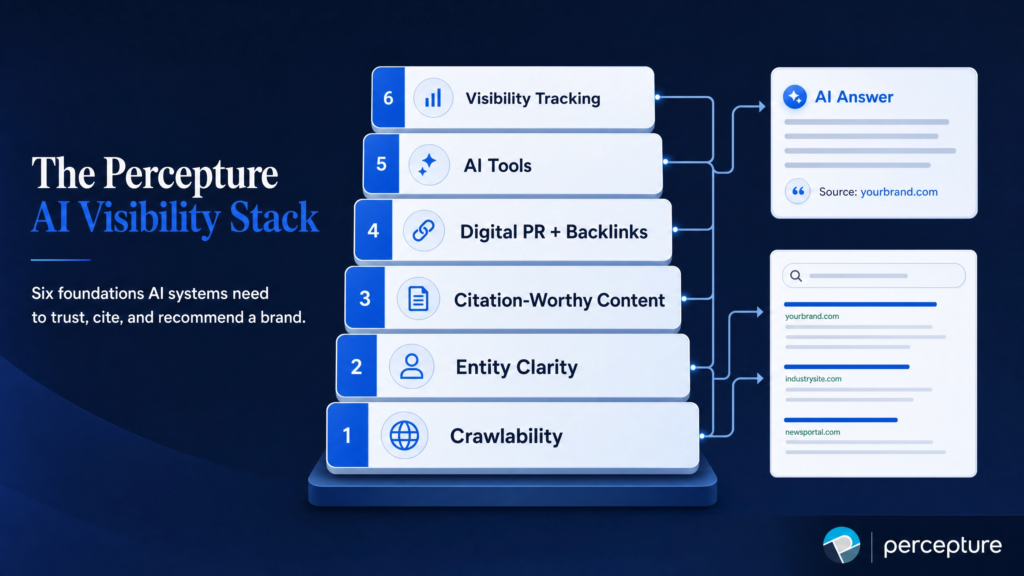
Make local information retrievable for AI answers
Local AI systems may draw from profiles, websites, directories, reviews, media and other accessible sources. local visibility work can improve the clarity of those sources, but it cannot guarantee that an AI system will name or recommend a company.
Start with accurate entities, public service information, clear location pages, genuine reviews and structured data that matches visible facts. Then monitor prompt families such as “Who repairs AC in this city?” or “Which commercial HVAC contractor serves this area?” Record the companies mentioned, the reflected sources, factual errors and missing proof. Connect this work to an omnichannel marketing plan so the same service facts remain consistent across channels.
Connect Maps visibility to calls and completed work
A profile interaction is not automatically a lead, and a call is not automatically qualified. the local program should follow the buyer from visibility through the operating funnel.
The Maps-to-dispatch funnel
- Local impression
- Profile or website interaction
- Answered contact
- Qualified lead
- Booking
- Dispatch
- Estimate or approved work
- Completed job
- Revenue and gross profit where attribution is supportable
For the local-search plan measurement, a qualified local lead should fall inside the supported service area, request an offered service, match the accepted property or customer type and meet scheduling requirements. Spam, job seekers, vendors and duplicate contacts should be excluded. The lead generation process and conversion rate optimization work should use the same qualification rules.
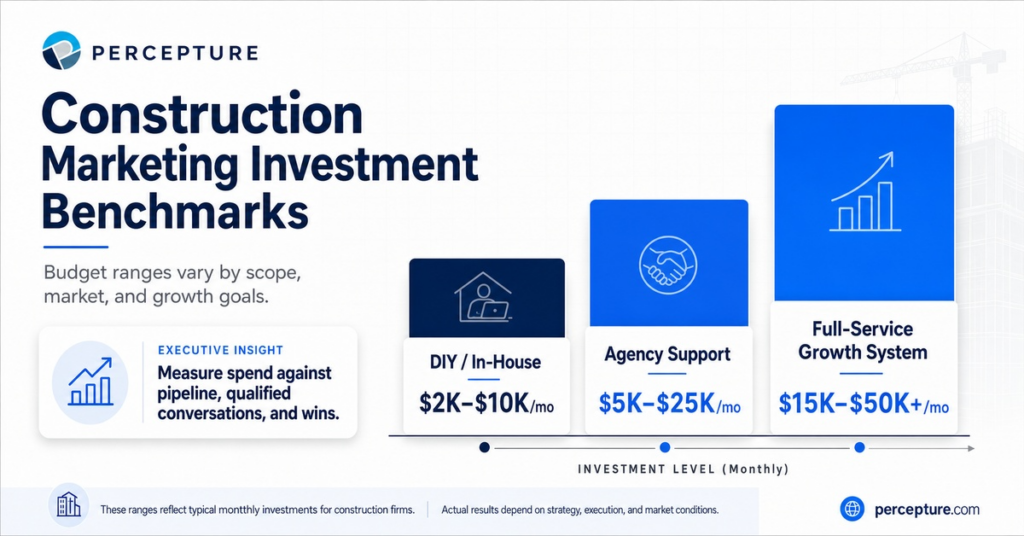
local search strategy pricing and ROI framework
Investment depends on the number of legitimate locations, profile condition, duplicate risk, website architecture, review workflow, proof availability, reporting setup and the amount of implementation required. A credible estimate should define the work rather than quote one universal package.
What changes the investment
| Condition | Lower-complexity scope | Higher-complexity scope |
|---|---|---|
| Locations | One eligible operation | Multiple locations, brands or acquisitions |
| Profiles | Accurate profile with clear ownership | Duplicates, access disputes or inconsistent core data |
| Website | Sound architecture and useful service pages | Thin location pages, overlap and technical issues |
| Proof | Approved local projects and imagery available | Evidence must be collected and governed |
| Measurement | Calls and bookings already classified | Disconnected tracking and unclear lead quality |
A practical ROI formula is: gross profit attributable to local organic and Maps activity, minus local SEO investment, divided by that investment. State attribution assumptions. Direct traffic, brand search, repeat customers and multi-touch journeys can make exact separation difficult.
Local KPI ladder
| Level | Measures | Management question |
|---|---|---|
| Visibility | Local-pack coverage, Maps visibility and local organic rank | Where are we visible? |
| Engagement | Website visits, calls, directions and booking actions | What action followed visibility? |
| Sales operations | Answer, qualification, booking, dispatch and close rates | Can the team convert demand? |
| Economics | Completed jobs, revenue, gross profit and cost per outcome | Is the market worth supporting? |
Use attribution and analytics to document source rules, evaluate HVAC local visibility outcomes and keep paid search, Local Services Ads, Maps and organic results separate.
A focused first 90 days
Control, evidence and measurement
Days 1 to 30: Control and compliance
Confirm access, business type, core data, categories, services, duplicates and serviceability. Establish visibility and conversion baselines.
Days 31 to 60: Relevance and proof
Correct material errors, improve priority pages, establish the review workflow, add approved local proof and strengthen conversion paths.
Days 61 to 90: Expansion and measurement
Publish approved local pages, monitor priority markets, test AI prompt families and compare qualified demand with capacity.
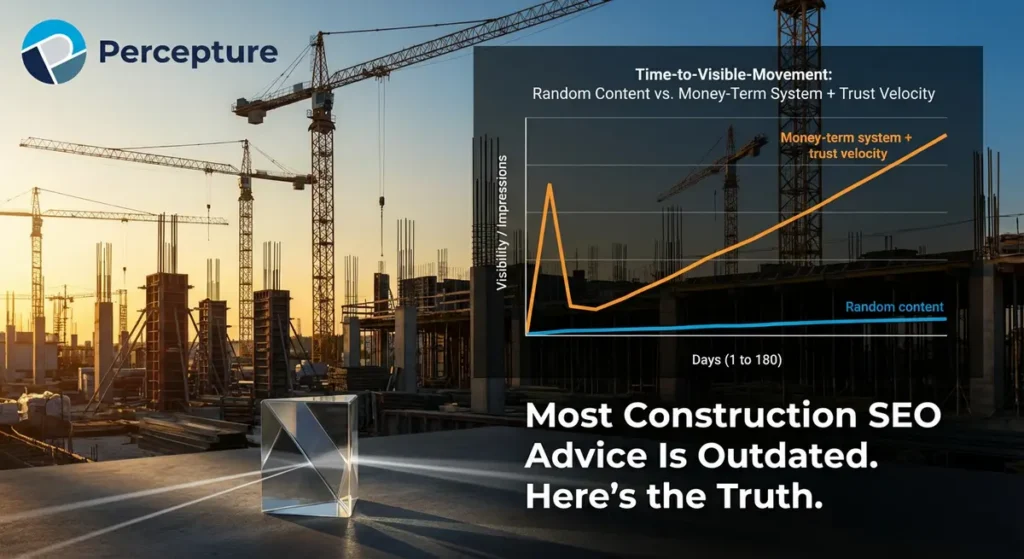
Assign HVAC local visibility owners and decision dates through a formal strategy and planning process. If a market cannot be served well, remove it from the active expansion plan rather than forcing more content into the calendar.
Common mistakes and safer alternatives
Risk controls
| Risky action | Safer alternative |
|---|---|
| Create fake offices or city profiles | Use only eligible operations and genuine service areas |
| Stuff the business name with services or cities | Use the real-world business name |
| Treat service areas as a ranking radius | Map visibility and serviceability separately |
| Multiply every service by every city | Create pages only when distinct demand and evidence exist |
| Incentivize or gate reviews | Request honest feedback consistently from eligible customers |
| Buy bulk citations | Correct relevant sources and pursue business-based mentions |
| Count every call as a lead | Apply a documented qualification standard |
| Combine Maps, organic and paid results | Report each surface separately before presenting totals |
| Promise local-pack or AI placement | Commit to evidence quality, governance and measurable work |
These controls keep the local program grounded in eligible operations, accurate evidence and measurable customer outcomes.
When outside help makes sense
Good fit
- Profile access or duplicate risk spans several people or locations.
- Local pages overlap or lack proof.
- Maps, calls and completed work are disconnected.
- Marketing and operations disagree on the real territory.
Build internally first
- The business has not defined its services or service boundaries.
- No one owns calls, bookings or customer follow-up.
- The team cannot provide accurate location facts.
- Expansion would exceed available capacity.
Outside the local-search system support is most useful when profile governance, page decisions, operations and measurement require coordinated ownership.
Percepture approaches the local SEO strategy as a cross-functional operating system. Search, content, GEO, conversion and reporting must support the same real-world service model.
Frequently asked questions
What is local SEO for HVAC?
local SEO for HVAC improves visibility for nearby heating and cooling searches across the local pack, Google Maps, local organic results and location-aware AI answers. The work includes profile control, accurate service areas, useful local pages, genuine reviews, consistent entities, local authority and measurement from contact through completed work.
How do HVAC companies rank in Google Maps?
Local visibility is mainly shaped by relevance, distance and prominence. A the search-to-dispatch system program should maintain an accurate eligible profile, choose accurate categories, document real services, earn genuine reviews and build useful public evidence. Distance remains a real constraint, so fake offices and oversized service areas are not sound solutions.
Does adding more service areas improve rankings?
Adding cities to a profile describes where the company operates. It should not be treated as a ranking radius. Use service areas that match real dispatch coverage, then measure visibility from different points in the market. A company can serve an area without ranking equally across every neighborhood.
Should an HVAC company hide its address?
A service-area business should hide its address when customers are not served at that location. A storefront or hybrid operation may display an eligible customer-facing address. The public profile should match how the business operates in the real world rather than how the marketing team wants it to appear.
How many Business Profiles can an HVAC company have?
Separate profiles should correspond to separate eligible operations, not every city in a service territory. Multi-location groups should document the staff, address treatment, phone, landing page, ownership and verification evidence for each location before creating or changing profiles.
Can an HVAC company use a virtual office?
An ineligible virtual office should not be used to create local coverage. P.O. boxes, mailboxes and lead-generation locations also do not provide a sound basis for an HVAC profile. Use legitimate business operations and accurate service areas instead of manufacturing proximity.
Do reviews help HVAC local visibility?
Review quantity and positive ratings can support local prominence, and reviews help customers evaluate the business. Request honest feedback consistently, respond professionally and use complaint themes to improve operations. Do not offer incentives, filter customers or ask for a specific star rating.
Do HVAC service-area pages help SEO?
They can support the local visibility system when each page serves a distinct search intent and contains useful local information. A strong page explains service availability, supported services, operating context, proof and next steps. Duplicate templates that only swap city names create weak experiences and can compete with stronger pages.
How long does HVAC local SEO take?
There is no universal the HVAC local search program timeline. Profile condition, website quality, competition, location, proof, review operations and implementation speed all affect progress. Use the first 90 days to establish control, correct material errors, improve priority pages and build measurement. Evaluate qualified demand rather than waiting for one ranking date.
How is local SEO ROI measured?
Measure local visibility work ROI by following visibility through answered contacts, qualified leads, bookings, dispatches, completed jobs and attributable gross profit. Keep Maps, organic, paid search and Local Services Ads separate. Document attribution assumptions because direct traffic, brand searches, repeat customers and multi-touch journeys can make exact separation difficult.
Build a clear local SEO plan
Meet with Percepture to build a clear local SEO for HVAC plan around your locations, profiles, local pages, reviews, service areas and Maps-to-dispatch reporting.
- Find the biggest local visibility gaps
- See which markets and pages should come first
- Leave with clear owners and next steps