

Choosing an HVAC SEO agency is not the same as buying a list of optimization tasks. You are selecting a partner that will influence your website, local profiles, content, measurement and ability to turn search demand into qualified opportunities.
The right HVAC SEO agency evaluation starts with accountability. Buyers should know what will be delivered, who owns each asset, what their team must provide, how priorities change with capacity and how progress will be measured.
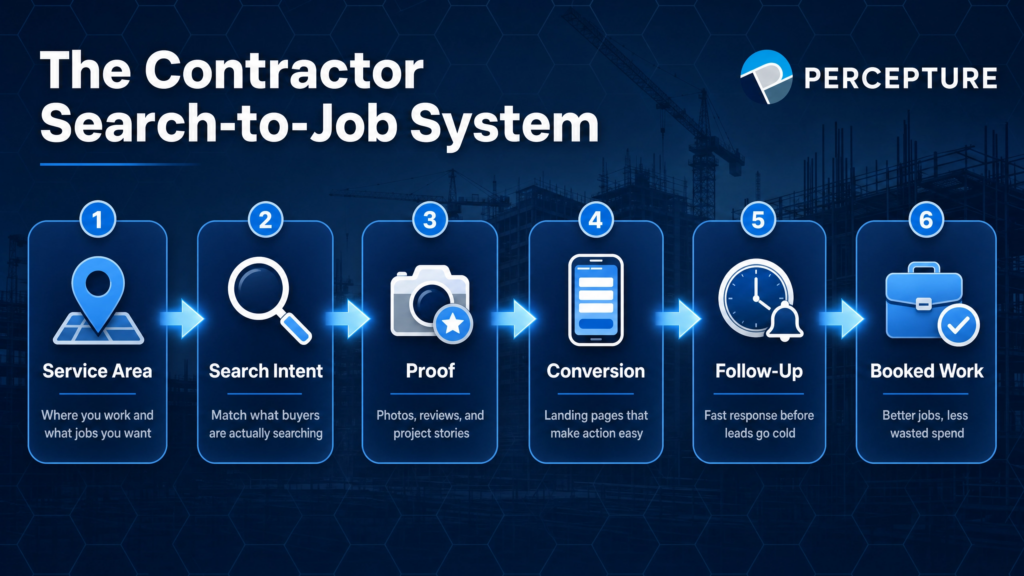
HVAC search works better when the full path works
Percepture has worked across construction, engineering, infrastructure and complex B2B markets since 2004. The goal is not more traffic alone. The goal is qualified demand that becomes useful work.






What is an HVAC SEO agency?
An HVAC SEO agency is a marketing partner that improves an HVAC company’s visibility across organic search, local results and AI-generated answers. A qualified partner should coordinate technical work, service and location content, local profile governance, authority building, conversion improvements and reporting tied to qualified leads.
Reviewed July 2026. Use this guide to compare scope, ownership, proof and reporting before signing an agency agreement.
What leaders should decide before hiring
Business fit
Identify the services, markets and customer types the company wants to grow. Search demand that cannot be served is not a useful win.
Delivery clarity
Require named deliverables, owners, approval steps and implementation responsibilities. The agency should explain who does the work, not just what the proposal calls it.
Asset control
Document control of the domain, website, analytics, Search Console, local profiles, content and tracking systems before work begins.
Commercial measurement
Define a qualified lead and build a reporting path from visibility to calls, bookings, completed work and revenue when the required data is available.
Hiring an agency is different from learning HVAC SEO
A broad organic SEO services guide can explain how search optimization works. A buyer page has a different job. It must help leaders assess people, production, governance, risk and commercial reporting.
An agency proposal may mention audits, keywords, content and links. Those labels do not show whether technical fixes will be implemented, who will review trade-specific copy or whether reporting will distinguish a maintenance inquiry from an installation opportunity.
SEO also operates inside a wider demand system. If search, paid media, public relations and conversion work must share one plan, an omnichannel marketing strategy can define how the channels support each other without blurring ownership.
Who this operating model fits
Strong fit
- A company with defined service areas and priority services
- A residential or commercial operator with capacity to serve more demand
- A multi-location team that needs shared standards and local control
- An internal marketing team that needs strategy and production support
- A buyer willing to share lead-quality and operational feedback
Weak fit
- A buyer seeking guaranteed rankings or guaranteed AI citations
- A company that cannot consistently answer or route inquiries
- A business demanding fake offices, duplicate profiles or thin city pages
- A team unable to approve content or grant required account access
- A company unwilling to define qualified leads or review outcomes
Company size alone does not determine fit. A smaller operator can work effectively with an outside SEO team when its service area is focused, its core work is profitable, its accounts are controlled and its team can serve additional demand.
See what your current SEO plan is missing
The SEO Sprint helps your team find gaps in search coverage, technical control, local visibility, content, conversion and reporting.
- See which issues should be fixed first
- Clarify what your team and agency each own
- Leave with a practical next-step plan
The HVAC SEO Agency Accountability Stack
Percepture’s seven-level Accountability Stack turns an HVAC SEO agency engagement into an operating system. Each level produces an output that buyers can inspect, approve and use to guide the next level.
- Business Fit: Document priority services, markets, margins, seasonality, capacity and call-handling limits. Output: Search Growth Charter.
- Market Coverage: Map service demand, competitors, local coverage, content gaps and search intent. Output: Search Market Coverage Map.
- Production Engine: Define technical work, page production, expert review, internal linking and approval owners. Output: 90-Day Production Roadmap.
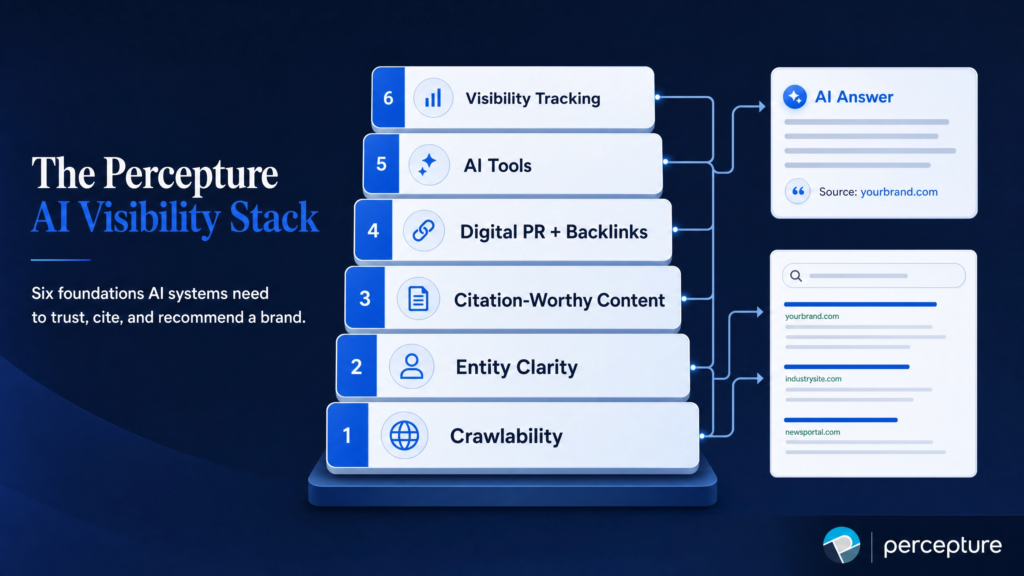
- Authority and AI Visibility: Coordinate named expertise, public evidence, digital PR and answer-ready content. Output: Authority and AI Visibility Plan.
- Conversion Infrastructure: Review message match, phone paths, forms, mobile use and booking friction. Output: Conversion and Call-Path Audit.
- Measurement and Revenue: Connect visibility to qualified calls, bookings and downstream outcomes where data permits. Output: Search-to-Revenue Scorecard.
- Governance and Ownership: Record account control, access, approvals, cancellation and data transfer. Output: Marketing Asset Ownership Schedule.
What HVAC SEO services should include
The scope should be presented as accountable outputs rather than a vague activity list. The scope should also distinguish between recommendations, hands-on production and work that must be completed by the client’s developer or operations team.
Revenue and capacity strategy
Deliverable: service, market and lead-priority charter.
Client input: margins, seasonality, capacity and sales feedback.
Review: operating priorities and lead mix.
Technical management
Deliverable: prioritized audit, implementation tickets and post-deployment checks.
Client input: hosting, platform and developer access.
Review: crawlability, indexation and page performance.
Service and location architecture
Deliverable: page inventory, intent map, consolidation decisions and internal-link plan.
Client input: legitimate locations, services and territory rules.
Review: coverage without thin or conflicting pages.
Local profile governance
Deliverable: ownership review, category review, duplicate controls and location reporting.
Client input: accurate business details and location evidence.
Review: profile health and local coverage.
Expert content production
Deliverable: briefs, interviews, drafts, source notes, review records and refresh plans.
Client input: subject-matter access and factual approval.
Review: relevance, accuracy and conversion intent.
Authority and AI visibility
Deliverable: public-proof plan, authority targets, answer improvements and monitoring set.
Client input: experts, evidence and approved company information.
Review: mentions, links and observable AI visibility.
Technical discovery can be separated into a formal technical SEO audit service. Content operations may draw on Percepture’s content marketing services, while authority campaigns can connect search work with digital PR.
Agency deliverables versus client responsibilities
Use this division of responsibilities to confirm what an HVAC SEO agency will deliver, what the client must supply and how each workstream will be judged.
| Workstream | Agency delivers | Client provides | Decision standard |
|---|---|---|---|
| Business priorities | Demand and opportunity analysis | Capacity, margin and service direction | Priorities match work the business wants |
| Technical SEO | Diagnosis, tickets and quality checks | Platform access and implementation path | Responsibility is stated in writing |
| Content | Briefs, drafts, editing and optimization | Expert input and factual review | Named review and approval owners |
| Local search | Profile governance and location plan | Accurate business and location evidence | No fake-location shortcuts |
| Measurement | Tracking plan and performance reporting | Call, booking and sales feedback | Qualified-lead definition is shared |
What Percepture delivers
Percepture structures the work around strategy, search coverage, production, authority, conversion, analytics and executive review. The model can combine enterprise SEO, generative engine optimization services, public relations and conversion support when the scope calls for an integrated program.
The exact division of labor belongs in the engagement scope. Buyers should be able to see each output, its owner, the client input required, the review cadence and the risk that could delay it. That detail makes an HVAC SEO agency easier to manage and reduces disputes about whether work was completed.
The first 30, 60 and 90 days
| Period | Primary work | Buyer-visible output | Common dependency |
|---|---|---|---|
| Days 1–30 | Access, baseline, diagnosis, priorities and urgent controls | Growth charter, baseline scorecard and technical priorities | Account access and stakeholder input |
| Days 31–60 | Implementation coordination, architecture, profile work and production | Coverage map, tickets, briefs and publishing schedule | Developer and content approvals |
| Days 61–90 | Publishing, authority work, conversion improvements and trend review | Completed assets, quality checks and operating review | Production speed and usable lead data |
These are operating milestones for an HVAC SEO agency, not ranking promises. Timing varies with site history, competition, approval speed, implementation access, location legitimacy and starting authority.
How strategy should adjust to capacity
Search priorities should not remain fixed when operations change. If installation capacity is full but maintenance appointments remain available, the content calendar, internal links and conversion paths should reflect that shift. If a market cannot answer calls, expanding visibility there can create waste rather than growth.
An accountable HVAC SEO agency should review service mix, territory, lead quality and dispatch feedback with the client. It should document why a priority changed and what success now means.
Different HVAC operating paths
Residential
Focus on service-area clarity, urgent versus planned needs, call handling, reviews and homeowner conversion paths.
Commercial
Support longer decisions, technical use cases, multiple stakeholders, project evidence and account-based service priorities.
Multi-location
Set shared governance while preserving accurate location information, local proof and location-level reporting.
PE-backed platforms
Define portfolio standards, acquisition integration, brand roles, account ownership and roll-up measurement.
Commercial and multi-location teams may also benefit from Percepture’s experience with SEO for construction companies and broader contractor search programs.
HVAC specialist vs. integrated agency vs. in-house vs. freelancer
| Model | Best fit | Strength | Risk to examine | Scalability |
|---|---|---|---|---|
| HVAC specialist | Repeated trade-specific production | Focused category familiarity | Capability outside the standard service model | Depends on team depth |
| Integrated agency | SEO coordinated with GEO, PR, CRO and analytics | Cross-channel strategy and production | Quality of industry onboarding and expert review | Strong when governance is documented |
| In-house team | Companies able to recruit and manage full capability | Daily access to operations and brand context | Hiring gaps and retention | Depends on headcount and leadership |
| Freelancer | Narrow projects with internal management | Focused execution and low coordination layers | Key-person and production-capacity risk | Usually limited |
No model wins by default. Choose a specialist when trade repetition matters most. Choose an integrated agency when search must coordinate with AI visibility, PR, conversion and analytics. Build in-house when the company can support the complete team. Use a freelancer for defined work with active internal oversight.
The 100-point agency selection scorecard
Score each candidate before comparing proposals. The score does not replace references, interviews or contract review, but it forces buyers to examine the operating details behind an agency pitch.
| Category | Points | Question to resolve |
|---|---|---|
| HVAC and contractor understanding | 10 | Can the team explain service, territory and lead-quality differences? |
| Business-aligned strategy | 15 | Are services, markets, capacity and margins reflected? |
| Technical capability | 10 | Who diagnoses, implements and checks fixes? |
| Local profile competence | 10 | How are ownership, duplicates and location risks handled? |
| Content review process | 10 | Who writes, reviews, approves and updates content? |
| Authority standards | 10 | How are links, mentions and PR opportunities evaluated? |
| AI-search method | 10 | Does the plan avoid citation guarantees? |
| Conversion and measurement | 10 | Can reports progress beyond traffic and rankings? |
| Ownership and governance | 10 | Who controls every account, asset and data set? |
| Roadmap and contract clarity | 5 | Are milestones, terms and offboarding documented? |
- 85–100: strong strategic candidate
- 70–84: viable candidate with gaps to resolve
- 55–69: material execution or governance risk
- Below 55: major clarification is warranted before hiring
Buyers comparing the wider market can also review Percepture’s contractor SEO agency guidance.
Proof an agency should provide
Ask each agency for proof that can be interpreted, not isolated screenshots. A useful case study identifies the client type, starting condition, objective, work performed, date range, measurement source, result and limits on what the result proves.
- Confirm that the example matches residential HVAC, commercial HVAC or an adjacent contractor category.
- Keep metrics from different dates and sources separate.
- Ask whether leads were classified and whether booked or completed work was available.
- Ask who reviewed technical or trade-specific claims.
- Reject guarantees based on a result from another company.
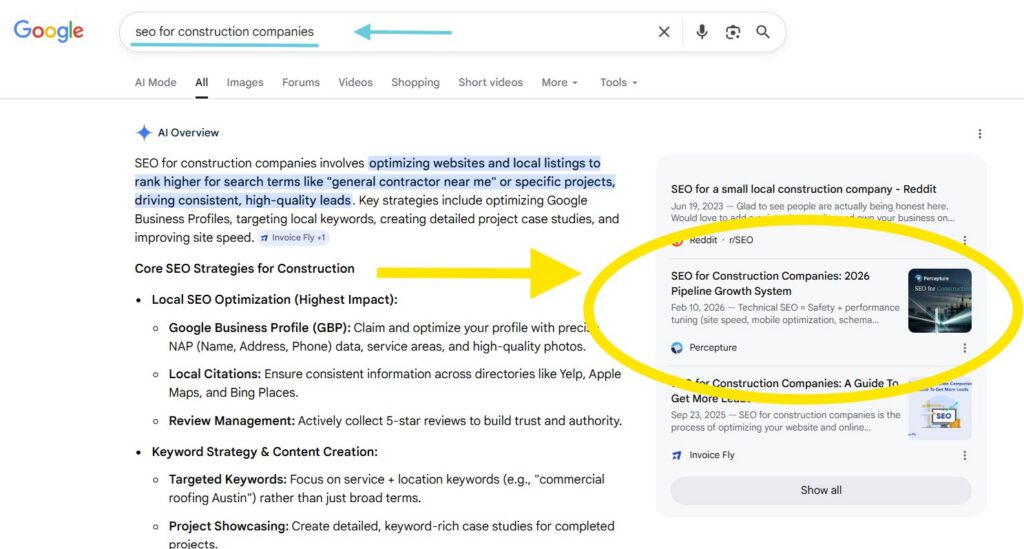
Percepture’s case studies provide the appropriate destination for published examples rather than inserting unsupported performance claims here.
See what different support levels include
Pricing makes more sense when you can see the work, the team, the production level and what your company still needs to provide.
- Compare service and support options
- See what is included in each level
- Match the scope to your markets and goals
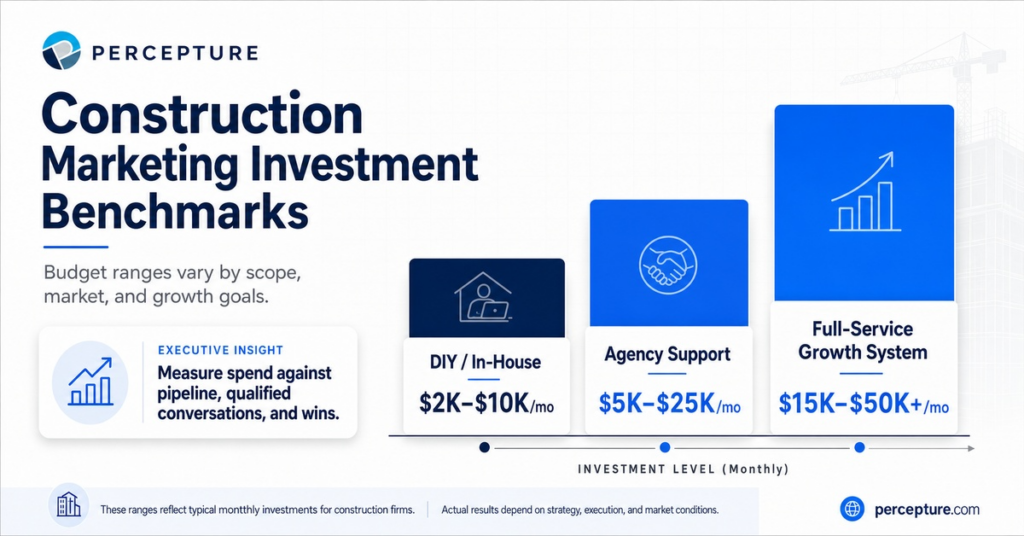
HVAC SEO pricing and scope factors
There is no responsible universal fee for an agency because scope changes with markets, website condition, production needs and implementation responsibility. Proposals should separate agency labor, content, development, software, media and optional services.
| Factor | Why it changes scope | What to ask |
|---|---|---|
| Markets and locations | More legitimate locations require added governance, content and reporting | Is work priced by brand, market, profile or location? |
| Website condition | Technical debt can slow production and require development | Is implementation included or separate? |
| Service lines | Each service creates distinct intent, proof and conversion needs | How are priorities and production volume set? |
| Content and expert review | Interviews, factual review and visual production require time | Who supplies experts and who approves drafts? |
| Authority and PR | Original campaigns require research, outreach and supporting assets | Are placements guaranteed or evaluated by quality? |
| Analytics and CRM work | Deeper outcome reporting requires systems, fields and coordination | Which data sources are included? |
Use Percepture’s SEO pricing packages page for current company-level pricing information. The lowest fee is not automatically the lowest total cost if implementation, content or measurement is excluded.
Contracts, ownership, access and offboarding
Ownership should be settled before an agency receives access. The contract or ownership schedule should identify the controlling party, manager access, transfer process and what remains available after cancellation.
| Asset | Control question | Safer standard |
|---|---|---|
| Domain and hosting | Who controls registration, billing and administrator access? | Client control with documented agency access |
| Google Business Profile | Who is the primary owner? | The represented business retains ownership |
| Search Console and analytics | Can the client inspect and retain data? | Client-controlled properties with role-based access |
| Content and creative | What usage and transfer terms apply? | Written terms in the agreement |
| Call tracking and CRM fields | Can numbers and records be transferred? | Transfer and retention rules documented in advance |
| Offboarding | What access, files and records are delivered? | Named handoff steps, timing and responsible parties |
Measurement from visibility to completed work
Rankings help diagnose search coverage, but they are not the final business outcome. A useful agency team report separates leading indicators from lead, sales and operational outcomes.
| Stage | Examples | Management question |
|---|---|---|
| Visibility | Service-market rankings, local coverage, impressions and observable AI mentions | Are priority services becoming easier to find? |
| Engagement | Landing-page visits, phone clicks and form starts | Does the page match the searcher’s need? |
| Lead | Calls, forms and chats classified by service and territory | Which inquiries meet the qualified-lead definition? |
| Booking | Answered calls, appointments, dispatches and estimates | Where does demand fail to become an opportunity? |
| Commercial outcome | Closed work, completed jobs, revenue and gross profit when available | Which search investments support valuable work? |
Percepture’s attribution and analytics services can support the measurement design, while conversion rate optimization addresses friction between visibility and inquiry.
Red flags and safer alternatives
| Red flag | Risk | Safer alternative |
|---|---|---|
| Guaranteed rankings or AI citations | Promises outcomes the provider cannot control | Milestones, methods and transparent limitations |
| Agency-owned local profile | The business may lose control of a core asset | Client ownership with managed access |
| No Search Console access | The client cannot inspect first-party search data | Shared access to client-controlled properties |
| Unnamed writers or reviewers | Trade-specific errors may pass through production | Named editorial and expert-review roles |
| Hundreds of city pages at launch | Thin, repetitive pages can create quality and cannibalization problems | Evidence-based location expansion |
| Paid links sold as authority | Placement volume can replace quality control | Editorial standards, local relevance and digital PR |
| Traffic-only reporting | Volume hides lead quality and operational outcomes | Defined lead stages and downstream reporting |
| No offboarding terms | Assets and data may be difficult to transfer | Written handoff and access-removal process |
| One plan for every market | Local demand and capacity differences are ignored | Market-level priorities and operating reviews |
If an SEO partner cannot explain how capacity changes priorities, its strategy is disconnected from operations.
Why Percepture
Percepture approaches search as part of a wider market-positioning and revenue system. The team can coordinate strategy, SEO, GEO, content, digital PR, conversion and analytics under one operating plan instead of treating every channel as a separate task list.
The Accountability Stack gives buyers visible outputs for business fit, market coverage, production, authority, conversion, measurement and ownership. It also gives leadership a direct way to challenge assumptions when service mix, market conditions or operating capacity changes.
The value of an agency should be judged by the clarity of its decisions, production and reporting, not by unsupported superlatives. Percepture’s strategy and planning services provide the foundation for that operating discipline.

Frequently asked questions
What does an HVAC SEO agency do?
An HVAC search partner plans and coordinates work that improves organic, local and AI-search visibility. The scope may include technical diagnosis, service and location architecture, content, local profile governance, authority building, conversion improvements and reporting. The proposal should state who implements each item and what the client must provide.
What should HVAC SEO services include?
Services should include business discovery, market coverage, technical management, content production, local visibility, authority, conversion and measurement. Each workstream should have a deliverable, owner, client dependency, review cadence and success measure. Avoid proposals that list activities but do not explain implementation or approval responsibility.
How do I choose an HVAC SEO company?
Compare the operating model of each provider, not just its sales presentation. Score industry understanding, business alignment, technical capability, local policy knowledge, content review, authority standards, AI-search methods, conversion measurement, asset ownership and contract clarity. Ask the same questions of every candidate so differences in scope are visible.
What should I ask before hiring an agency?
Ask the agency who owns every account, who performs technical work, who writes and reviews content, how qualified leads are defined and what will be delivered in the first 90 days. Also ask how priorities change with capacity, whether competitors are accepted in the same territory and what happens when the contract ends.
How much does HVAC SEO support cost?
Cost depends on the number of markets, website condition, service lines, content volume, local profiles, authority work, analytics depth and implementation responsibility. Compare included outputs and separate agency labor from development, software, media and optional work. Review current pricing information rather than relying on a universal industry estimate.
How long should an HVAC SEO contract be?
An SEO contract term should match the work, production plan and risk accepted by both parties. Review minimum terms, cancellation notice, deliverables, access, ownership and offboarding. A longer agreement should not replace a clear roadmap. Timing varies with competition, site history, implementation speed and approvals.
Who should own the Google Business Profile?
The represented business should retain control of its profile while granting the agency the access required to manage approved work. Ownership, manager access and recovery information should be documented. A provider should not make continued access to the company’s local presence dependent on an active marketing contract.
Does HVAC SEO include AI-search visibility?
An agency can include AI-search visibility through prompt monitoring, entity clarity, public evidence, answer-ready content, third-party authority and AI-referral tracking. No provider can guarantee a specific citation. AI-search work should support the same accurate, accessible and useful information that strengthens broader search visibility.
Build your HVAC search growth plan
Percepture can review your services, markets, website, local visibility, AI-search presence, conversion paths and reporting needs.
- Find the biggest risks before work starts
- Define what Percepture and your team each own
- Build a practical 90-day roadmap