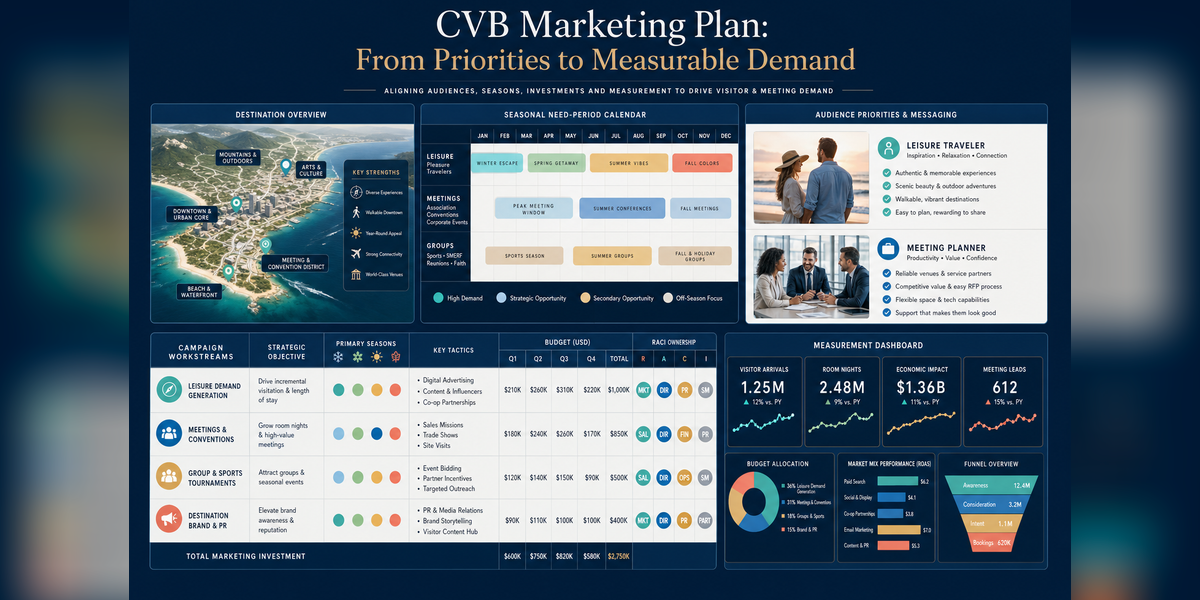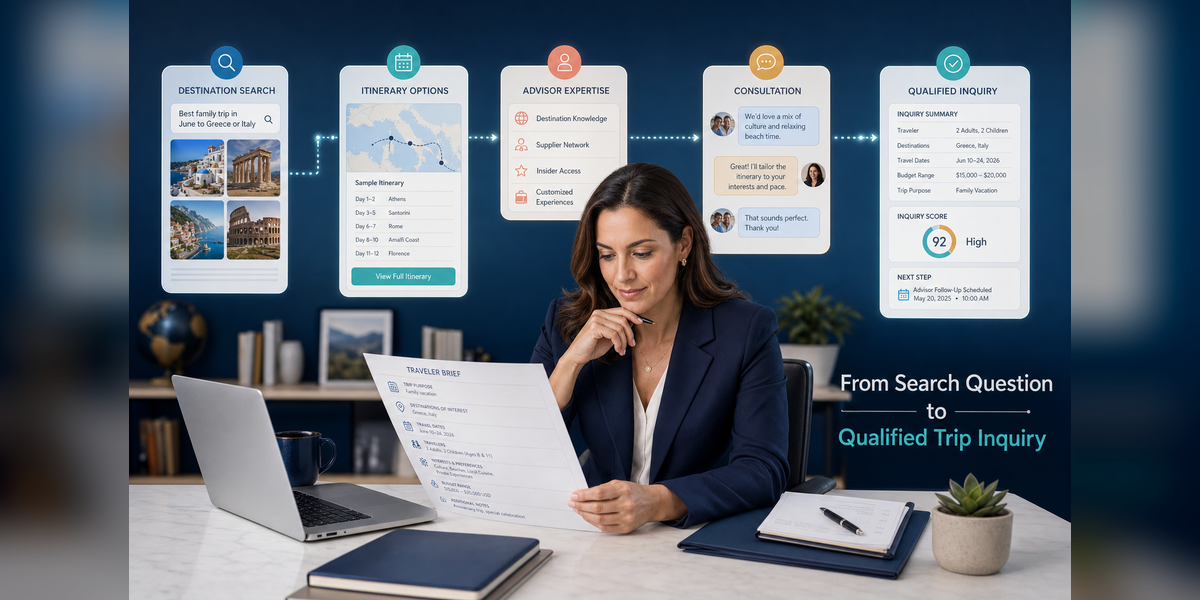


Digital marketing for travel and tourism is the coordinated use of search, AI visibility, paid media, content, public relations, creators, social media, email, local discovery and conversion systems to move travelers from inspiration to booking and advocacy.
The best travel programs do not ask whether SEO, paid media, PR, creators or email is the best channel. They assign each channel a job and measure whether the traveler moved closer to a booking, partner action or visit.
Credentials behind the traveler journey
Percepture brings more than two decades of integrated marketing, search, public relations and measurement experience to travel and visitor-economy programs.
 Founded in 2004
Two decades of integrated execution
Founded in 2004
Two decades of integrated execution
 Inc. 5000 recognized
Independent growth recognition
Inc. 5000 recognized
Independent growth recognition
 NMSDC certified
Minority Business Enterprise
NMSDC certified
Minority Business Enterprise
 HSMAI Silver winner
Award-winning travel storytelling
HSMAI Silver winner
Award-winning travel storytelling

Travel is not an adjacent vertical
Percepture has worked across destinations, hotels, resorts, parks, attractions, travel media and visitor-economy brands. That field experience shapes how the agency connects traveler intent, destination stories, search visibility, paid demand and measurable action.
What is digital marketing for travel and tourism?
Travel and tourism marketing coordinates digital discovery, storytelling, planning content, paid distribution, email, booking technology and analytics. It helps a traveler move from inspiration to action and then turns the delivered experience into reviews, referrals, loyalty and future demand.
The operating brief
Start with the decision
Define the traveler, need period, source market and obstacle before selecting channels.
Assign one primary job
Give each channel an owner, conversion path, KPI and decision threshold.
Repair the middle
Make logistics, availability, cost, policies and partner options easy to understand.
Measure meaningful action
Separate delivery, qualified demand, planning behavior, conversion and business outcomes.
Reinvest with evidence
Scale, optimize, reallocate or stop based on what the program can support.
The travel funnel is not linear, but it still needs operating discipline. A full-funnel travel program works best when every team uses the same traveler stages and outcome definitions.
Who this full-funnel model is for
travel marketing must adapt its conversion paths, planning content and outcome measures to each organization’s role in the traveler journey.
Tourism boards
Connect discovery and itinerary planning to partner referrals, saved trips and visitation signals.
Hotels and resorts
Build direct demand by explaining room fit, location, policies, availability and booking value.
Tour operators
Match the right traveler to route, difficulty, dates, capacity and proof.
Travel advisors
Turn expertise and sample trips into qualified trip briefs and advisor routing.
Attractions and events
Earn itinerary inclusion with clear hours, duration, location, tickets and nearby context.
Marketing and revenue leaders
Connect channel investment to direct, assisted and partner actions with stated confidence.
Travel marketing is a journey system
Travelers do not experience channels; they experience one continuous planning problem. They move between search results, media stories, videos, maps, reviews, destination pages, booking tools and conversations with other people. The brand still has to make that fragmented path feel coherent.
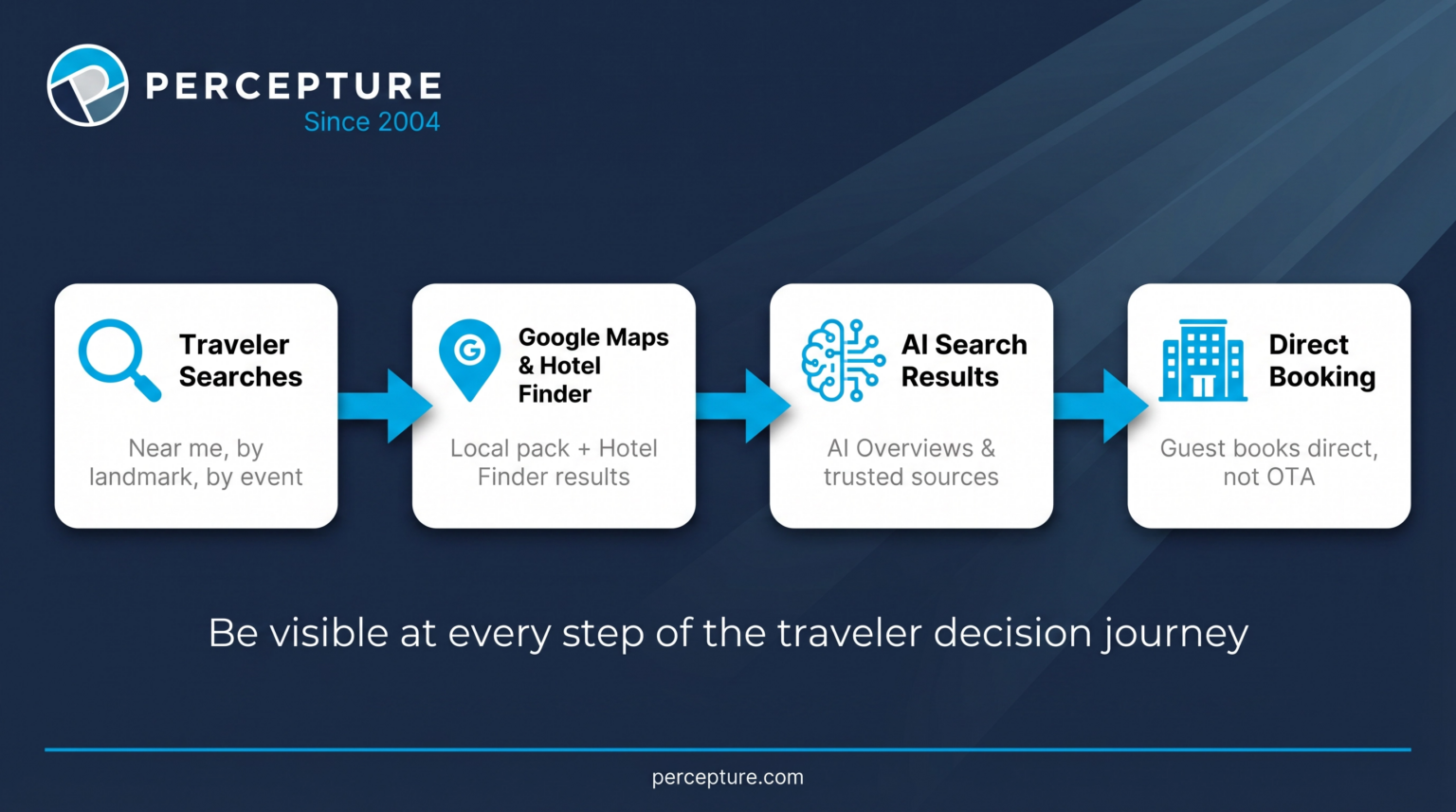
The website is the operating hub, not the entire funnel. It should preserve official facts, resolve decisions and route the traveler to direct inventory, an inquiry, a ticket or a partner. Customer journey mapping helps teams identify where those handoffs break.
Reach without planning confidence is expensive inspiration. A traveler may like the story but still leave when dates, transport, accessibility, total cost or the next step remain unclear. The program must therefore improve confidence as well as attention.
Why channel lists fail
A channel list describes activity, not strategy. It does not explain which audience matters, what the traveler must decide, where the conversion happens or what evidence will change the budget.
A channel should earn its place in the plan by performing a defined job. Search may capture active planning demand. PR can establish authority and broaden consideration. Content can resolve trade-offs. Paid media can accelerate a need period. Email can preserve planning context. Omnichannel planning connects those roles into one operating sequence.
This guide shows how channels operate together. Use specialist guides for execution detail and the provider-selection guide when choosing an external partner.
Full-funnel growth begins when one destination story carries through media, search and partner action

Greater Williamsburg used an integrated program spanning perception, earned media, creator outreach, content, SEO and partner pathways. Approved program results include more than 300 million media impressions, 100 new stories, more than 100,000 new organic visitors and 18% organic growth.
The integrated program addressed destination perception through storytelling, while earned media supplied authority and search captured planning demand. Destination content reduced uncertainty, while partner paths moved interest toward local businesses. These outcomes came from an integrated program. They should not be assigned to one channel, and impressions should not be treated as bookings.
Read the Greater Williamsburg case study for additional examples of coordinated marketing programs.
Score the traveler journey before adding another channel
Assess audience fit, discovery, inspiration, planning content, conversion, partner handoff, email, measurement, advocacy and ownership. This scorecard makes the operating model easier to diagnose before more budget enters the system.
| Area | Healthy signal | Warning signal |
|---|---|---|
| Traveler fit | Priority audiences and need periods are explicit. | One generic message serves everyone. |
| Planning confidence | Dates, access, policies and trade-offs are current. | Travelers must search elsewhere for basic facts. |
| Conversion path | Direct and partner actions are tracked. | Traffic disappears into an unmeasured handoff. |
| Measurement | Metrics support a defined budget decision. | Reports collect numbers without thresholds. |
Use the result to determine whether travel marketing needs stronger traveler fit, planning information, conversion tracking or measurement before channel expansion.
The Travel Demand-to-Booking Flywheel
The Travel Demand-to-Booking Flywheel is Percepture’s seven-stage operating system for digital marketing for travel and tourism. It connects traveler truth, discoverability, inspiration, planning confidence, conversion, advocacy and measurable reinvestment.
| Stage | Traveler question | Marketing job | Operating output |
|---|---|---|---|
| 1. Traveler Truth | Is this for someone like me? | Define audience, need, market and fit. | Opportunity map |
| 2. Discoverability | What should I consider? | Earn visibility across search, AI, maps, media and social. | Qualified discovery |
| 3. Inspiration | Why should I care? | Create preference through useful stories and proof. | Preference |
| 4. Planning Confidence | Can this trip work? | Resolve timing, cost, access, risk and comparison. | Trip plan |
| 5. Conversion | What should I book or request? | Remove friction and connect inventory or partners. | Traveler action |
| 6. Experience and Advocacy | Was the promise delivered? | Support the trip and capture reviews, loyalty and referrals. | Future demand |
| 7. Measurement and Reinvestment | What changed? | Attribute outcomes and reallocate investment. | Decision log |
Framework rule: Before funding a channel, define its traveler job, conversion path, owner and measurement method. Post-trip advocacy begins the next demand cycle.
Match channels to traveler stages
The program becomes accountable when each channel has a primary stage, action and KPI. Secondary effects still matter, but the team must know the main job first.
| Channel | Discovery | Inspiration | Planning | Conversion | Advocacy |
|---|---|---|---|---|---|
| SEO | High | Medium | High | Medium-high | Medium |
| AI search | High | Medium | High | Emerging | Low |
| Paid search | High | Low | Medium | High | Low |
| Paid social and video | Medium | High | Medium | Medium | Medium |
| PR and digital PR | High | High | Medium | Assisted | High |
| Email and CRM | Low | Medium | High | High | High |
| Local and maps | High | Medium | High | High | Medium |
| Reviews and UGC | High | High | High | Medium | High |
Do not judge PR only by last click, search only by impressions, content only by pageviews, email only by opens or creators only by follower count. In a full-funnel program, the KPI must match the assigned job.
Coordinate paid, owned, earned and partner media
Paid reach, owned truth, earned trust and partner conversion work across the full funnel when they reinforce one another. Owned and earned channels are not free; both require strategy, production, maintenance and measurement.
This media model helps teams assign each part of the travel program a distinct role without separating it from the wider traveler journey.
| Asset type | Examples | Primary job | Useful Percepture capability |
|---|---|---|---|
| Paid | Search, social, video, programmatic and retargeting | Test markets, accelerate demand and capture intent | Paid media planning |
| Owned | Website, content, email, CRM and booking tools | Establish truth, answer decisions, convert and retain | Content marketing |
| Earned | Media, links, awards, creators and reviews | Build corroboration, reach and authority | Public relations |
| Partner | Hotels, attractions, advisors, airlines, events and marketplaces | Supply inventory, packages, conversion and shared signals | Strategy and planning |
Adapt the funnel to each travel business
The underlying system stays consistent, but the conversion and post-trip value change by business model. That is why no full-funnel program can use one universal landing page or KPI set.
Buyer fit determines which planning questions travel marketing must answer and which direct, assisted or partner action should count as the primary conversion.
| Business | Mid-funnel need | Primary conversion | Post-trip value |
|---|---|---|---|
| DMO or tourism board | Itineraries and partner confidence | Referral, saved trip, guide or RFP | Reviews, repeat interest and dispersion |
| Hotel or resort | Room, location and traveler fit | Availability check, booking or call | Loyalty and review |
| Tour operator | Route, difficulty, dates and trust | Booking, waitlist or inquiry | Referral and repeat |
| Travel agency | Sample trips, expertise and process | Qualified trip brief | Repeat and referral |
| Attraction or event | Hours, duration, tickets and location | Ticket, registration or directions | Review and nearby spend |
| Vacation rental | Fees, rules, area fit and availability | Booking or inquiry | Review and repeat |
Build discovery across search, AI and maps
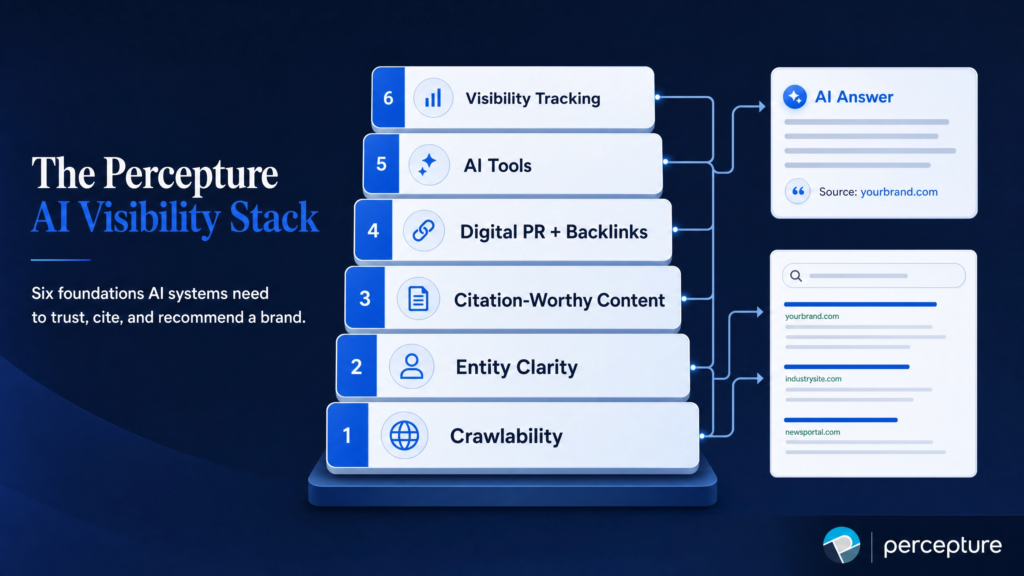
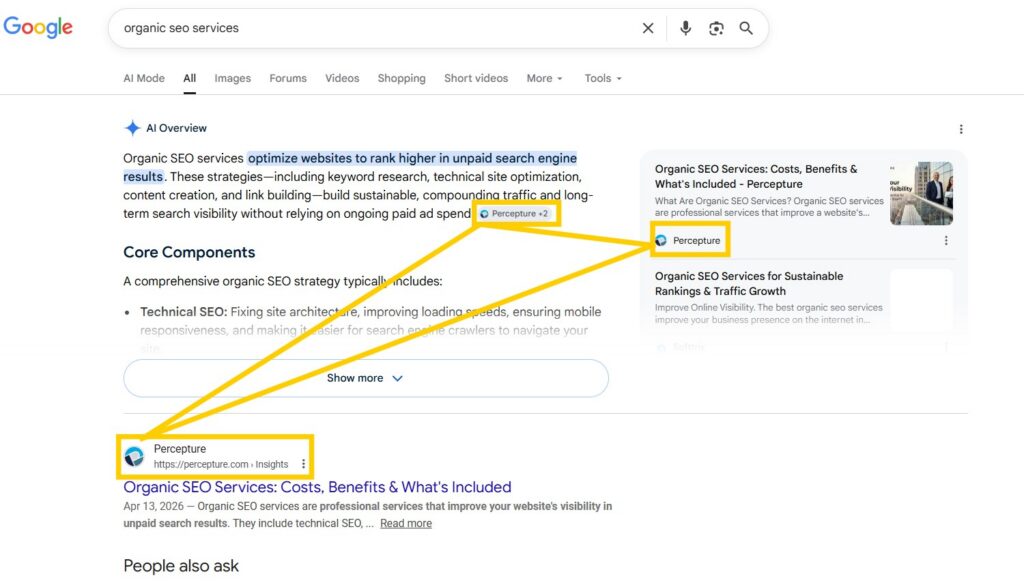
Search, AI and local discovery depend on clear entities, current facts, crawlable pages and supporting authority. A strong program should coordinate traveler-question research, technical accessibility, destination and experience pages, maps, media, images, citations and internal links.
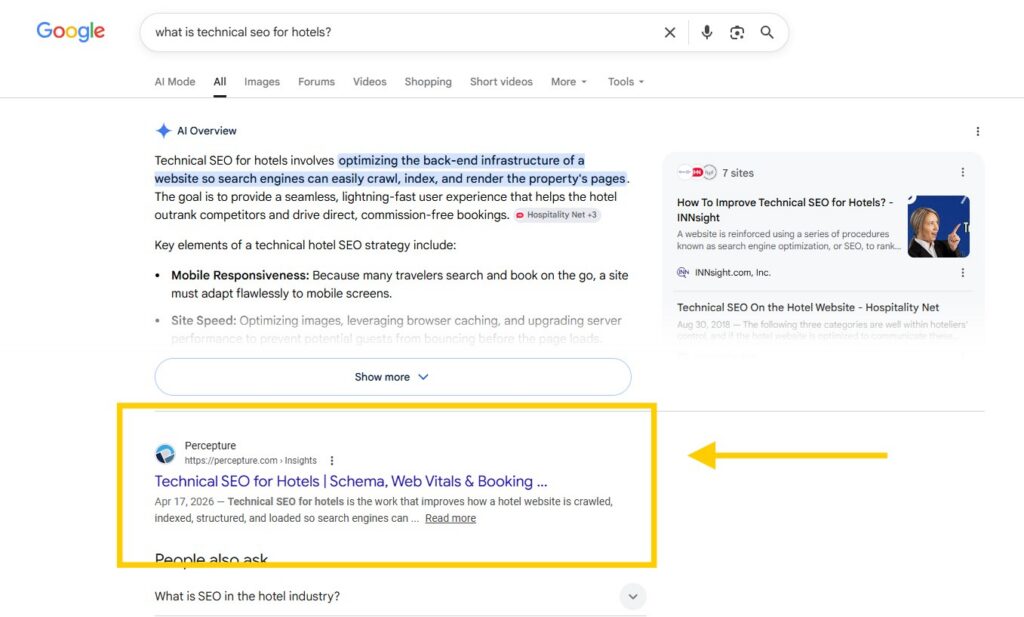
Enterprise SEO supports large content ecosystems, while generative engine optimization services focus on source clarity and AI-answer visibility. Hotels with implementation questions can also use the guides to hotel SEO and technical SEO for hotels .
Create preference with content, PR and creators
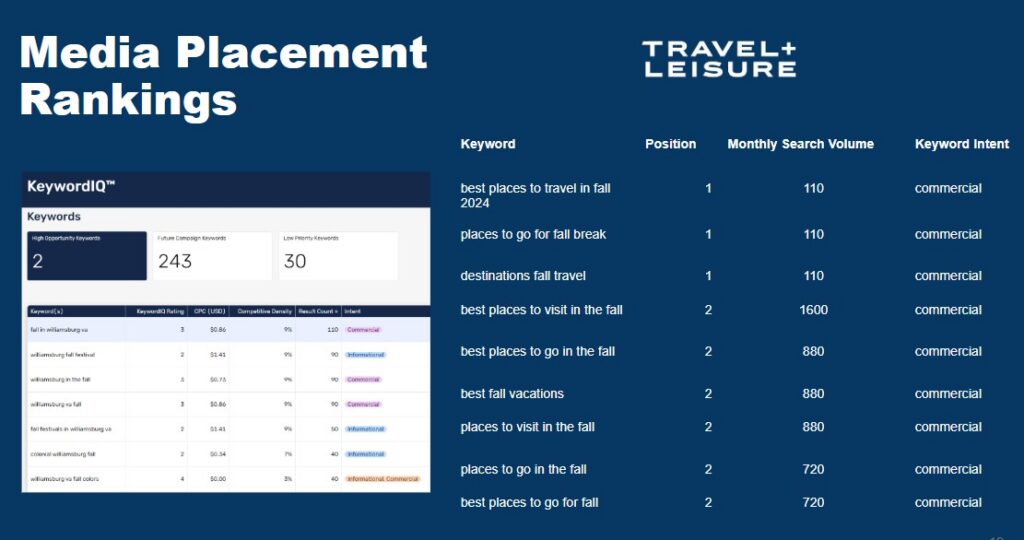
Useful content explains fit, seasonality, logistics and trade-offs. PR adds independent authority. Creators provide first-person experience and reusable visual proof. Social distribution extends the work, but it should not be the final destination.
Social reach becomes more valuable when the content also strengthens search, editorial authority, email or conversion. Digital PR can connect editorial ideas with search authority, while an integrated content plan preserves useful assets after a campaign ends.
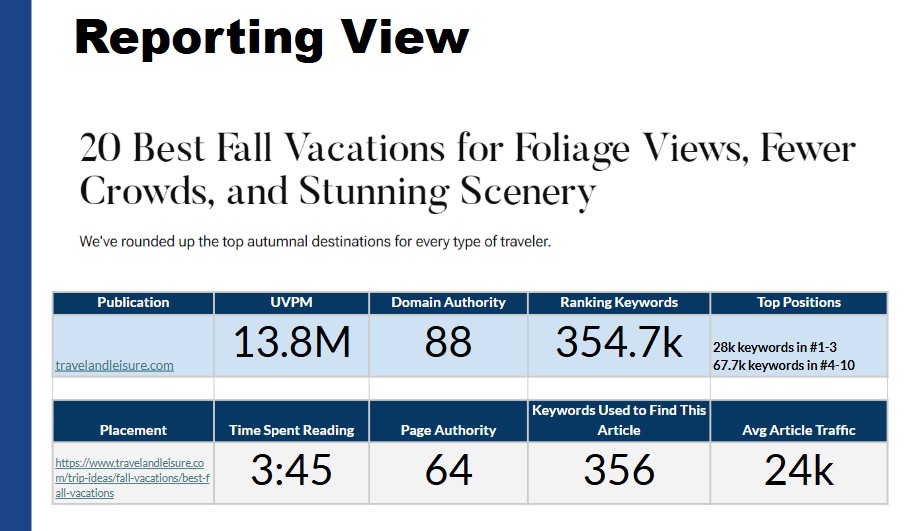
Approved Percepture examples include 17 coordinated creator trips for New Orleans, 55 SKIFT placements in five months and 378 stories with more than 70 million viewers for Amazon and Phantom Ranch. These figures describe earned-media activity and reach, not direct bookings.

Capture active demand with paid media
Paid media should enter after the landing path can answer the decision. For a travel program, the objective might be destination awareness, need-period demand, an event, a new source market, an available departure or a meetings inquiry.
Visit Elizabeth City paid-search results supplied by Percepture include 329,000 impressions, 4,210 clicks, a 5.23% conversion rate, 220 purchases and approximately $14,800 in tracked sales, excluding Facebook. Tracked sales improve accountability, but they are not full ROI without complete cost and attribution data.
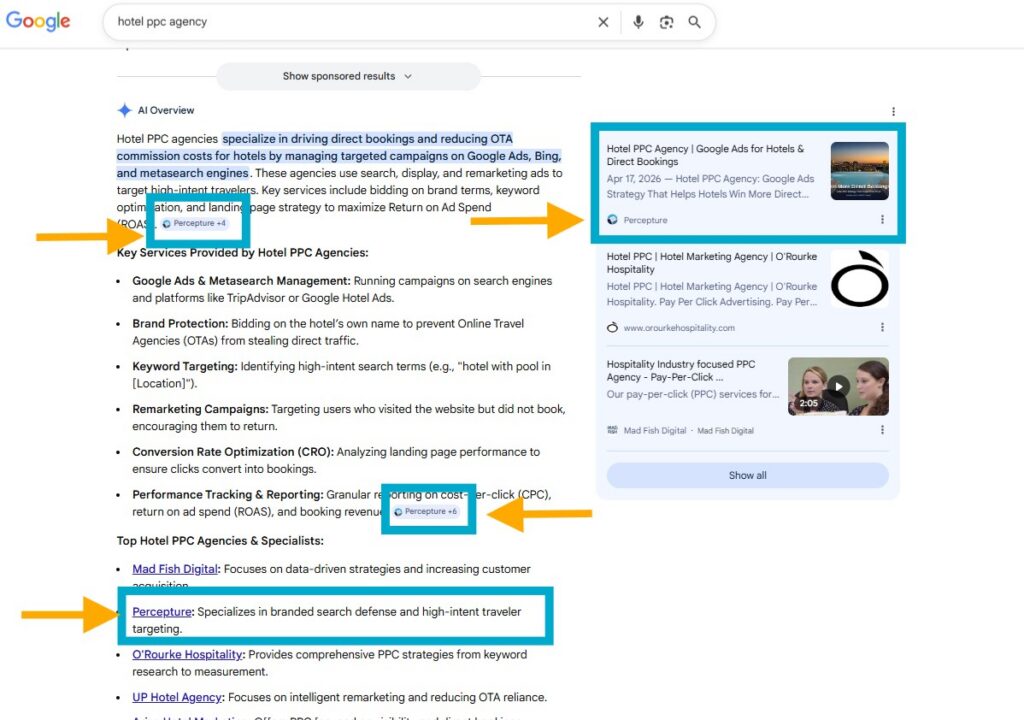
Wyndham Vacation Rentals program figures include approximately 117.5 million impressions, 104,000 clicks and a cost per click from $0.41 to $0.45. These figures show paid scale in that program; they are not a current benchmark or revenue claim. Teams planning search campaigns can review Percepture’s paid search capability and the practical distinctions in its hotel PPC guide .
Turn the website into a conversion hub
The website should connect official facts, traveler decisions, booking or partner action and measurement. A beautiful site that cannot explain availability, total cost or the next action is an inspiration asset, not a conversion system.
Check mobile speed, crawlable planning content, current inventory, accessible controls, booking continuity, cross-domain analytics, partner tracking, transparent policies and confirmation events. Conversion rate optimization should remove friction without hiding constraints that matter to the traveler.
Build a first-party audience
Email and CRM preserve context across a long planning cycle. Useful flows include welcome, itinerary follow-up, abandoned action where permitted, pre-trip information, reminders, reviews, referrals, reactivation and partner nurture.
First-party audience value grows when the brand remembers planning context without violating consent or privacy. Segment by traveler type, destination, travel window, origin market, budget, inquiry stage, prior trip and consent. Percepture’s email marketing service supports the automation and operating layer.
Budget framework for travel and tourism marketing
These are illustrative Percepture planning bands for digital marketing investment, not industry averages or a required allocation. Actual choices depend on market conditions, platform readiness, inventory and business goals.
| Funnel job | Illustrative range | Increase when |
|---|---|---|
| Research and intelligence | 4%–8% | Entering a market, changing position or working from a weak baseline |
| Owned platform and content | 18%–28% | The site, inventory, SEO or conversion path is weak |
| Demand creation | 20%–35% | Awareness is low or perception limits consideration |
| Demand capture | 20%–35% | High-intent demand and usable inventory are available |
| CRM and retention | 5%–10% | Planning cycles are long or repeat value is meaningful |
| Measurement | 5%–10% | Channels, partners or public reporting create complexity |
| Testing and contingency | 3%–8% | Demand is volatile or a new opportunity is being tested |
Fund conversion and measurement first. Concentrate channels enough to learn, protect high-intent capture, budget for creative refreshes and remove channels that cannot reach effective scale. This keeps travel marketing aligned with operational readiness rather than a fixed channel formula.
Measure the traveler journey
Travel marketing needs a KPI ladder because reach, planning behavior, booking and travel may happen on different dates. A metric belongs in the dashboard only when it informs a scale, optimize, reallocate or stop decision.
| Level | Examples | Decision question |
|---|---|---|
| Delivery | Reach, frequency, placements and sent emails | Did execution happen? |
| Qualified demand | Engaged visits, branded searches and itinerary use | Did relevant interest rise? |
| Planning action | Saved trip, package view and repeat visit | Did confidence increase? |
| Conversion | Booking, inquiry, RFP, referral or registration | Did the traveler act? |
| Outcome | Revenue, room nights, visitation or attendance | Did business value follow? |
| Advocacy | Review, referral, repeat purchase or UGC | Did the experience create future demand? |
| Long-term asset | Rankings, links, citations and owned audiences | Did future acquisition improve? |
Evidence should be labeled as observed, platform-attributed, partner-reported, modeled, survey-estimated, assisted, experimental or unknown. This prevents a platform report from being presented as an independently proven business outcome.
Attribution and analytics can help connect exposure, planning, booking and travel dates while identifying duplicated conversions and late actions.
Choose tools by function and governance
Build the technology layer by starting with functions: analytics, tag management, CRM, email, CMS, booking, reservation, call tracking, SEO, AI visibility, social publishing, paid media, PR, reviews, experimentation and reporting. Select tools based on exportability, source preservation, privacy, ownership and connection to booking or referral data.
Governance is equally important. Maintain a data dictionary, campaign naming rules, source owners, content-expiry dates, partner-link taxonomy, privacy review, dashboard owner and a regular reallocation meeting. Tools cannot correct unclear ownership.
Launch one integrated test in 90 days
A 90-day sprint does not promise a complete transformation. It proves whether the operating model can coordinate teams, evidence and traveler actions.
Days 1–30: Map and measure
Define the outcome, map traveler stages, inventory channels and pages, audit facts and identify booking or partner paths. Select one priority audience or need period.
Days 31–60: Repair the middle
Improve the decision page, traveler-fit content, inquiry or booking path, source ledger, partner tracking, dashboard and decision thresholds.
Days 61–90: Run one test
Use one audience, promise, proof set, coordinated channel sequence, conversion path and learning agenda. Record what should scale, change or stop.
Avoid common mistakes
Most failures in travel and tourism marketing come from weak traveler decisions, fragmented ownership or unsupported measurement rather than the absence of another channel.
- Starting with channels instead of the traveler decision.
- Spreading a limited budget across every available platform.
- Sending paid traffic to a page with weak planning information.
- Using one message for every audience, market and travel window.
- Separating PR, search, content and creator work into competing silos.
- Allowing inventory, policies, hours or partner information to become stale.
- Using short attribution windows for long travel-planning cycles.
- Counting duplicated platform conversions as separate outcomes.
- Reporting impressions as bookings or tracked sales as complete ROI.
- Ending the program at purchase without a review, referral or loyalty loop.
Why Percepture has a point of view
Percepture’s approach to full-funnel travel marketing draws on integrated destination demand, trackable traveler action and earned travel authority.
Integrated destination demand
Greater Williamsburg connected storytelling, search visibility and pathways toward destination partners.
Trackable traveler action
Visit Elizabeth City connected paid-search activity to purchases and tracked sales while preserving attribution limits.
Earned travel authority
Amazon and Phantom Ranch, SKIFT and New Orleans programs show how travel stories, media and creator work can reinforce authority.
Build the specialist layer around the full-funnel model
Use the framework to identify the weak stage, then choose the service or specialist resource that solves that operating problem. This keeps the system focused on traveler movement rather than disconnected activity.
Frequently asked questions
What is digital marketing for travel and tourism?
It coordinates online discovery, planning, conversion and post-trip advocacy. It connects search, AI visibility, content, PR, paid media, email, local discovery, websites, booking paths and measurement around the decisions a traveler must make.
Which digital channels work best for travel brands?
No single channel is best for every travel brand. A sound operating model assigns search to capture intent, PR to build authority, content to resolve decisions, paid media to accelerate demand, email to support planning and conversion work to remove friction. The right mix depends on the audience, inventory, market and assigned job.
How is travel digital marketing different from tourism marketing?
Tourism marketing can include broader destination strategy, stakeholder coordination, trade programs, events and offline promotion. Travel digital marketing focuses on digital discovery, content, distribution, conversion and measurement. The two disciplines overlap, but they are not identical.
What does a full-funnel travel strategy include?
A full-funnel travel strategy includes traveler truth, discoverability, inspiration, planning confidence, conversion, experience, advocacy and reinvestment. It also assigns every channel an owner, conversion path, KPI and decision threshold so teams can coordinate execution.
How should a small travel business allocate its budget?
A small business should fund the working website, clear conversion path and basic measurement before expanding channel reach. Protect high-intent demand, concentrate investment enough to learn and reserve funds for content or creative updates. The planning bands in this guide are illustrative rather than industry averages.
How do SEO and AI search support travel marketing?
SEO and AI search help travelers discover and compare destinations, properties and experiences. Both benefit from crawlable pages, clear entities, current facts, direct answers, useful internal links and independent authority. AI visibility should be monitored across time rather than judged from one screenshot.
How should tourism boards measure partner value?
Within a full-funnel program, tourism boards can track itinerary use, partner clicks, guide actions, referrals, RFPs, saved trips and partner-reported outcomes. Each metric should carry a confidence label, especially when booking or visitation occurs on a partner platform outside the board’s analytics environment.
How long is a travel attribution window?
There is no universal travel attribution window. The appropriate window should account for the first exposure, planning activity, booking date, travel date and possible late conversion. Teams should also check cross-device behavior, partner handoffs and duplicated platform credit.
Connect every channel to one measurable traveler journey
Percepture can review how digital marketing for travel and tourism connects discovery, planning, booking, partner value and measurement across your current program.