
NAICS 721110 is the hotel and motel industry classification for businesses that provide short-term lodging in hotels, motor hotels, resort hotels, and motels.
For healthcare leaders, NAICS 721110 should connect technical content, buyer intent, search visibility, and sales follow-up into one operating plan.
Direct answer
NAICS 721110 covers hotels except casino hotels and motels. It includes short-term lodging businesses such as hotels, motor hotels, resort hotels, seasonal hotels, tourist lodges, ski lodges, and motels. Casino hotels, bed-and-breakfast inns, RV parks, and campgrounds are classified under separate NAICS codes.
This guide is for hotel owners, CEOs, CMOs, revenue leaders, sales directors, and marketing teams who want more than a code lookup. The code matters, but the business value comes from using it to define the market, map demand, build better prospecting lists, and show up when buyers search in Google and AI tools.
The best NAICS 721110 programs measure qualified conversations and sales opportunities, not just impressions, clicks, or rankings.
If you only need a raw definition, the official NAICS description is the source of record. If you need hotel lead generation, hotel marketing leads, and a practical plan for group, corporate, university, government, tour, and local demand, this page explains how to use the classification as a growth tool.
What you will learn
A practical NAICS 721110 strategy also has to reflect buyer committees, proof needs, comparison searches, and long sales cycles.
- What the hotel NAICS code means and what it includes.
- How this code differs from casino hotels, bed-and-breakfast inns, RV parks, and campgrounds.
- How hotels can use the classification to improve prospecting, segmentation, SEO, PR, PPC, and GEO.
- How Lead Seeker compares with general AI chat tools for hotel prospecting.
- How Percepture connects omnichannel marketing, search visibility, public relations, paid media, and AI visibility into one hotel growth system.
What is NAICS 721110?
When NAICS 721110 is built this way, every channel supports the same revenue goal instead of acting like a separate campaign.
NAICS 721110 is the NAICS code for hotels and motels except casino hotels. The official description says the industry includes establishments primarily engaged in providing short-term lodging in facilities known as hotels, motor hotels, resort hotels, and motels. The 2022 NAICS search page can be used as an official reference for the code description: U.S. Census Bureau NAICS 721110 description.
For a hotel operator, the classification is useful because it gives sales and marketing teams a shared market definition. It can support list building, account segmentation, search strategy, local visibility planning, media messaging, and AI-search entity clarity.
That is why NAICS 721110 needs both category-level execution and executive-level reporting.
Definition box: included and excluded establishments
Usually included
- Hotels
- Motor hotels
- Resort hotels
- Seasonal hotels
- Tourist lodges
- Ski lodges
- Motels
Classified separately
- Casino hotels
- Bed-and-breakfast inns
- RV parks
- Campgrounds
Hotel NAICS code comparison: 721110 vs 721120 vs 721191 vs 721211
For healthcare leaders, NAICS 721110 should connect technical content, buyer intent, search visibility, and sales follow-up into one operating plan.
The fastest way to understand NAICS 721110 is to compare it with nearby traveler accommodation codes. This matters when you are buying data, creating audience segments, planning PPC campaigns, or building a hotel SEO strategy.
The best NAICS 721110 programs measure qualified conversations and sales opportunities, not just impressions, clicks, or rankings.
Why NAICS 721110 matters for hotel lead generation
Most hotels do not lose leads because the sales team lacks effort. They lose leads because the market is too loosely defined. A property may say it wants more groups, more meetings, more corporate travel, or more local accounts, but the target universe is often messy.
A practical NAICS 721110 strategy also has to reflect buyer committees, proof needs, comparison searches, and long sales cycles.
A clear NAICS 721110 strategy helps fix that. It gives the team a clean starting category, then adds filters that matter in the real world: geography, room count, meeting space, airport access, nearby demand generators, local employers, universities, hospitals, sports venues, convention centers, government offices, and recurring event patterns.
That is where a hotel digital growth plan becomes more useful than a spreadsheet. A hotel digital marketing agency should not stop at traffic. It should help the property understand who is likely to buy rooms, why they buy, what proof they need, and where they search before contacting the hotel.
When NAICS 721110 is built this way, every channel supports the same revenue goal instead of acting like a separate campaign.
Executive summary for hotel leaders
- Use the code to define the market: The NAICS code for hotels is a starting point, not a sales strategy by itself.
- Layer in intent: Add business travel triggers, event patterns, local demand generators, and group travel indicators.
- Build visibility where buyers research: Combine SEO, PR, PPC, local search, and GEO so the property is visible in Google and AI answers.
- Give sales better leads: Verified prospects beat generic lists when the goal is conversations, not contacts.
Cold CTA
Run a hotel lead quality diagnostic
Before you buy another list or launch another campaign, test whether your hotel leads are specific, current, and tied to real demand signals.
That is why NAICS 721110 needs both category-level execution and executive-level reporting.
Hotel ICP map: who should a property prospect?
NAICS 721110 defines the category. Your ideal customer profile defines the demand. A hotel that wants stronger sales should map prospects by reason for travel, not just by company size or distance from the property.
For healthcare leaders, NAICS 721110 should connect technical content, buyer intent, search visibility, and sales follow-up into one operating plan.
Corporate travel accounts
Corporate travel prospects may include nearby employers, regional offices, consultants, contractors, trainers, or service teams that send people into market. For these accounts, the hotel needs to show convenience, reliability, rate clarity, business amenities, and an easy path for repeat booking.
The best NAICS 721110 programs measure qualified conversations and sales opportunities, not just impressions, clicks, or rankings.
Pharma, healthcare, and life sciences travel
Some markets have hospitals, medical campuses, labs, conferences, clinical training activity, or vendor travel. These prospects may care about proximity, flexible stays, quiet rooms, parking, shuttle options, and predictable booking support.
A practical NAICS 721110 strategy also has to reflect buyer committees, proof needs, comparison searches, and long sales cycles.
University and education travel
Universities can create recurring demand from visiting faculty, athletic events, parents, alumni, speakers, vendors, academic conferences, and campus projects. Local SEO for hotels matters here because many of these searches are location-led. See Percepture’s guide to local SEO for hotels for the local visibility side of this work.
When NAICS 721110 is built this way, every channel supports the same revenue goal instead of acting like a separate campaign.
Tour, group, and event travel
Group travel leads can come from tour operators, youth sports, weddings, conferences, reunions, religious groups, entertainment travel, construction crews, and government travel. The hotel must be findable, but it also must be easy to evaluate. Strong pages for groups, meetings, amenities, parking, room blocks, and nearby venues can shorten the decision path.
That is why NAICS 721110 needs both category-level execution and executive-level reporting.
Government and project-based travel
Government travel, infrastructure projects, disaster response, utility work, and temporary field operations can create demand that does not look like normal leisure travel. These accounts often require clear operations, fast responses, and accurate property information.
For healthcare leaders, NAICS 721110 should connect technical content, buyer intent, search visibility, and sales follow-up into one operating plan.
How do hotels find group travel leads?
Hotels find group travel leads by combining demand mapping, verified prospect research, local search visibility, event monitoring, referral partnerships, and outreach. The mistake is treating group leads as a static list. Better hotel lead generation starts with the question: who has a reason to bring multiple people into this market soon?
The best NAICS 721110 programs measure qualified conversations and sales opportunities, not just impressions, clicks, or rankings.
A practical process looks like this:
- Map local demand generators within the property’s realistic booking radius.
- Identify organizations tied to recurring travel or upcoming events.
- Build prospect records with role, reason to travel, timing, and contact path.
- Create landing pages and sales assets that match the use case.
- Use SEO, PPC, PR, and email to stay visible before the buyer is ready.
- Track which accounts respond, book, refer, or return.
A practical NAICS 721110 strategy also has to reflect buyer committees, proof needs, comparison searches, and long sales cycles.
Lead Seeker vs ChatGPT or Claude for hotel prospecting
General AI tools can help brainstorm prospect categories, write outreach drafts, or summarize public information. They are not the same as a hotel prospecting workflow built to find verified, property-specific leads.
When NAICS 721110 is built this way, every channel supports the same revenue goal instead of acting like a separate campaign.
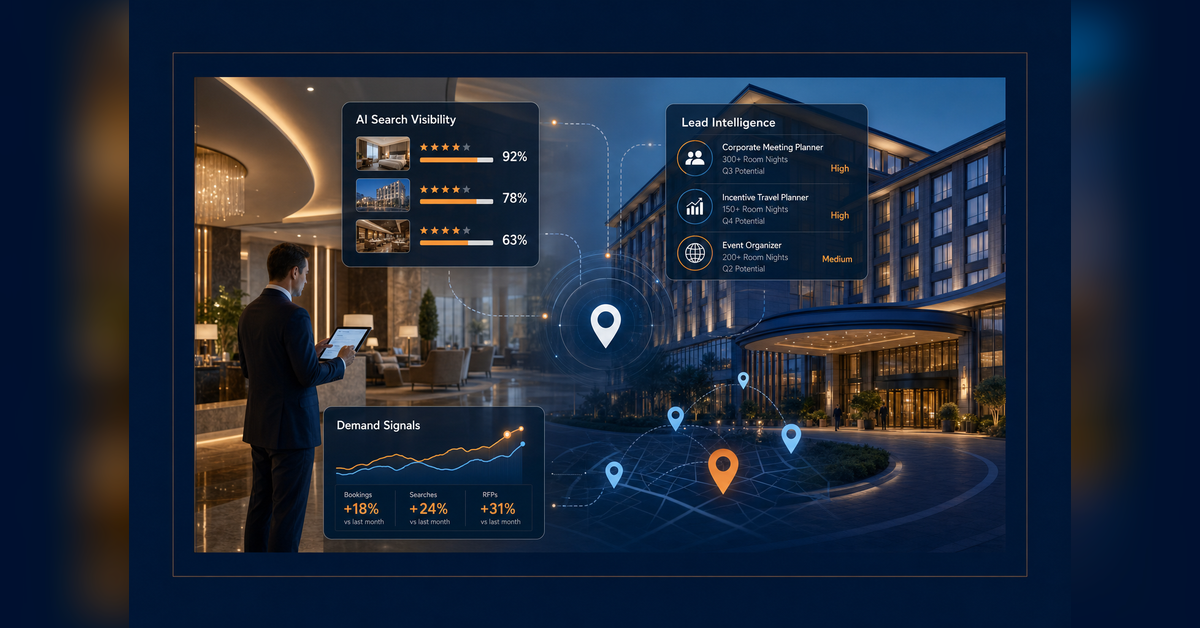
A hotel team can ask ChatGPT or Claude, "What companies might need rooms near our hotel?" That may produce ideas. But the team still has to validate contacts, check fit, qualify timing, and turn the output into a sales motion. Lead Seeker is positioned for the next step: turning the NAICS 721110 market definition into usable prospect intelligence for hotel sales teams.
That is why NAICS 721110 needs both category-level execution and executive-level reporting.
Watch: how Lead Seeker supports better prospecting
For teams that want a quick walkthrough, watch the Lead Seeker video here: https://www.youtube.com/watch?v=arVLDpIPJIA.
How SEO, PR, PPC, and GEO compound hotel demand
For healthcare leaders, NAICS 721110 should connect technical content, buyer intent, search visibility, and sales follow-up into one operating plan.
A hotel lead program should not live in one channel. Search, PR, paid media, and AI visibility work better when they reinforce the same message.
A hotel SEO agency can help a property rank for high-intent searches such as meeting rooms, group hotel blocks, extended stays, corporate travel hotel, and hotel near specific demand generators. SEO captures demand that already exists.
A hotel PPC agency can help the property test urgent demand, protect branded searches, promote packages, and support offers around events or travel seasons. PPC can move faster than SEO, but it works best when landing pages are strong.
Hotel public relations can create authority and trust. A thoughtful hotel public relations strategy may support openings, renovations, awards, destination stories, executive visibility, community involvement, and local partnerships. Percepture’s travel PR guide explains how travel brands can think about earned media more strategically.
GEO, or generative engine optimization, helps a hotel become easier for AI systems to understand and mention. It is closely tied to entity clarity, structured content, local signals, useful answers, and strong third-party references. Percepture’s GEO services are built around that visibility challenge.
Percepture hotel visibility framework
The best use of NAICS 721110 is not just classification. It is turning a code into a demand system. Percepture’s hotel visibility framework has four parts: Define, Segment, Prove, and Capture.
Percepture framework
Define, Segment, Prove, Capture
1. Define
Use the hotel NAICS code to define the category and clean up prospecting assumptions.
2. Segment
Group prospects by reason to travel: corporate, group, tour, university, government, project, and local demand.
3. Prove
Build pages, PR, reviews, and sales assets that answer buyer concerns before the first call.
4. Capture
Use SEO, PPC, GEO, email, and sales outreach to turn visibility into conversations.
Hotel lead quality scorecard
Use this scorecard before you judge a campaign. A hotel can have traffic and still have weak leads. It can have a large prospect list and still lack fit. Better hotel marketing leads have context.
Lead quality diagnostic
Score each item from 0 to 2. A total of 12 or higher suggests the lead is worth sales attention. A score below 8 usually means more research is needed.
- The prospect has a clear reason to bring travelers into the market.
- The travel use case matches the property’s rooms, location, amenities, and rate position.
- The likely decision-maker or influencer is identifiable.
- The account has a timing signal, recurring need, event, project, or local connection.
- The property has a relevant page or sales asset to support outreach.
- The lead can be tracked through response, proposal, booking, or nurture.
- The lead is connected to a real segment, not a generic list label.
Three-step process for turning the code into revenue activity
Step 1: Build the market map
Start with NAICS 721110, then map nearby demand. Do not stop at companies. Include event venues, universities, hospitals, industrial parks, government offices, sports facilities, cultural venues, airports, construction projects, and recurring conferences.
Step 2: Build the content and visibility layer
Create the pages buyers need before they call: group blocks, meetings, corporate travel, extended stay, local area pages, transportation details, FAQs, and proof. If the hotel wants to win in AI answers, it also needs clear entity signals and useful content. Percepture’s enterprise SEO, content marketing, digital PR, paid search, and lead generation services can support different parts of that system.
Step 3: Activate prospecting and measure fit
Use a focused prospecting tool, structured outreach, and a clear CRM process. Track which segments produce replies, proposals, bookings, and repeat demand. Then refine the lead model.
Mistakes to avoid
- Treating the NAICS code for hotels as a finished lead list.
- Buying broad hospitality leads without local demand context.
- Sending generic outreach that does not match the prospect’s travel reason.
- Running PPC without landing pages built for the segment.
- Building SEO pages that answer keywords but fail to help sales.
- Ignoring AI visibility while buyers start asking AI tools for hotel recommendations.
- Separating PR, SEO, PPC, and sales when the buyer sees one brand.
How Percepture helps hotels compete in Google and AI search
Percepture connects strategy, search, PR, paid media, AI systems, and analytics. For hotels, that means the plan can start with a clean category definition, move into lead intelligence, and then turn into a visibility program that supports both discovery and sales follow-up.
The page you are reading is not meant to replace a NAICS database. It is meant to help hotel leaders use NAICS 721110 as a practical input for growth. Percepture’s travel and tourism PR agency work, search strategy, and AI visibility services are built for brands that need to be discovered, trusted, and chosen.

AI and lead intelligence
Want a cleaner hotel lead model?
Percepture can help connect AI visibility, prospecting workflows, and hotel sales strategy so the lead model supports real outreach.
Warm CTA
Compare Percepture proof and fit
If you are evaluating a hotel marketing partner, review Percepture’s work and decide whether the strategy, channel mix, and execution model fit your growth plan.
FAQ
What is NAICS 721110?
NAICS 721110 is the industry classification for hotels except casino hotels and motels. It covers businesses primarily engaged in short-term lodging in facilities such as hotels, motor hotels, resort hotels, and motels.
What is the NAICS code for hotels?
The NAICS code for hotels is commonly 721110 when the business is a hotel or motel that is not a casino hotel. Nearby lodging categories, such as casino hotels, bed-and-breakfast inns, RV parks, and campgrounds, use separate codes.
Is a motel NAICS 721110?
Yes. Motels are included in this hotel and motel classification when they are establishments primarily engaged in providing short-term lodging and are not casino hotels.
What businesses are included in the hotel NAICS code?
Included businesses can include hotels, motor hotels, resort hotels, seasonal hotels, tourist lodges, ski lodges, and motels. The important point is that the business is primarily providing short-term lodging in a hotel or motel format.
What is excluded from NAICS 721110?
Casino hotels, bed-and-breakfast inns, RV parks, and campgrounds are classified under separate NAICS codes. This distinction matters when a marketing team is buying data, building prospect lists, or segmenting lodging businesses.
How can hotels use NAICS 721110 for lead generation?
Hotels can use the code as a market-definition layer, then add local demand signals such as employers, universities, hospitals, events, venues, government offices, and projects. The code defines the category; the added context turns it into a sales strategy.
How can hotels find corporate travel leads?
Hotels can find corporate travel leads by mapping nearby employers, regional offices, project sites, training locations, consultants, vendors, and recurring business travel patterns. The best leads include a reason for travel, likely timing, decision-maker path, and property fit.
How can hotels find group travel leads?
Hotels can find group travel leads by tracking events, sports schedules, tour activity, weddings, conferences, university calendars, construction projects, and local partnerships. Group leads should be qualified by room need, timing, budget fit, and the property’s ability to serve the group.
Is Lead Seeker better than ChatGPT or Claude for hotel prospecting?
General AI tools are useful for brainstorming and drafting. Lead Seeker is positioned for hotel sales teams that need verified, property-specific prospect intelligence. The better choice depends on whether the team needs ideas or workable hotel leads.
What agency helps hotels rank in Google and AI search?
Percepture helps brands build visibility across SEO, PR, paid media, and GEO. For hotels, that can include entity clarity, content strategy, local visibility, paid search support, and AI-search readiness.
Should hotels invest in SEO or PPC first?
The answer depends on timing and goals. PPC can test demand quickly and support urgent campaigns. SEO builds durable visibility for searches that matter over time. Many hotels need both, with landing pages and tracking connecting the channels.
How long does hotel SEO take?
SEO timelines vary by market, competition, site condition, content depth, and local authority. A hotel in a competitive destination usually needs a sustained plan, not a one-time page update. Early work should focus on technical health, local visibility, and high-intent pages.
Why does GEO matter for hotels?
GEO matters because buyers increasingly ask AI tools for recommendations, comparisons, and planning help. Hotels need clear, trusted, structured information so AI systems can understand the property, its location, its use cases, and its credibility.
Can one page rank for every hotel marketing term?
No. A strong page can answer the broad topic, but hotels usually need supporting pages for local SEO, group travel, PPC, PR, meetings, corporate travel, and destination content. Internal linking helps those pages work together.
Related Percepture resources
Hot CTA
Ready to turn hotel visibility into sales activity?
If your team needs better hotel leads, stronger search visibility, and a cleaner AI-search presence, Percepture can help build the plan.

About the author
Bob Generale
Bob Generale is President of Percepture. He works on executive strategy across SEO, PR, GEO, lead generation, and digital marketing systems for brands that need stronger visibility and clearer demand generation.