


Generative Engine Optimization for Manufacturing turns approved technical knowledge into clear, connected web sources that buyers and AI systems can find, understand, and verify. It builds on manufacturing SEO by making capabilities, specifications, quality evidence, applications, and facility facts explicit enough to support research and supplier evaluation.
Most manufacturers already have useful facts. The problem is that those facts are split across PDFs, sales decks, CAD files, images, quality records, disconnected pages, and employee knowledge. When public information lacks context or an owner, engineers and procurement teams cannot assess it quickly, and AI answers may select a clearer source instead.
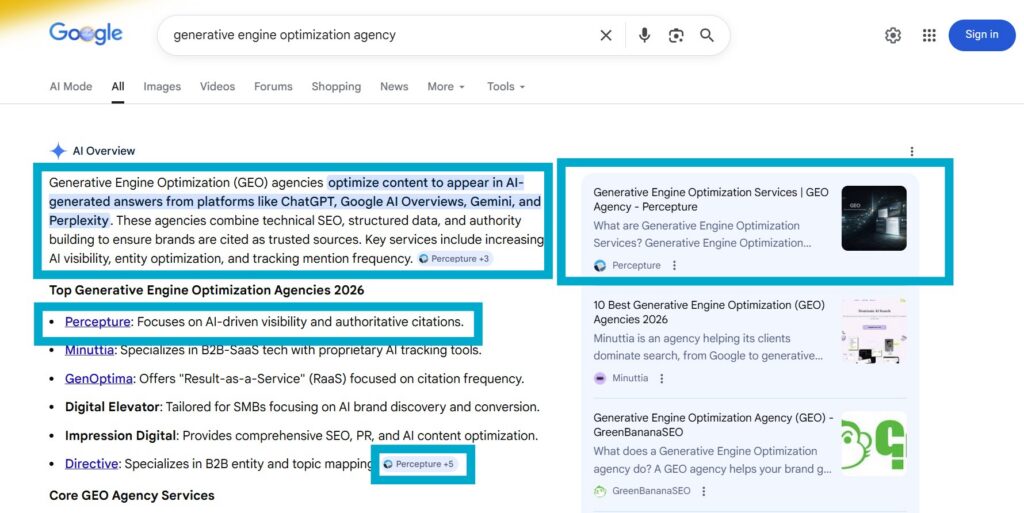
What does manufacturing GEO do?
Generative Engine Optimization for Manufacturing organizes public, approved manufacturing facts so search engines and AI systems can retrieve, interpret, compare, and cite them. The work combines technical SEO, useful HTML content, evidence, internal links, outside authority, structured data, and repeatable visibility testing. It does not replace manufacturing SEO.
Updated August 9, 2026
Executive summary
Specify the facts
Replace broad claims with verified details about processes, materials, applications, tolerances, equipment, facilities, quality methods, and certification scope.
Connect every claim
Generative Engine Optimization for Manufacturing works best when each important fact has a public answer, supporting evidence, an internal owner, and an update trigger.
Measure more than visits
Track prompt presence, cited URLs, citation accuracy, competitor inclusion, branded search, qualified inquiries, meetings, and influenced pipeline.
Control disclosure
Publish approved buyer information without exposing customer data, restricted information, proprietary methods, or stale operating details.
AI-search methodology in practice
Cody Clegg of OPTK Networks explains Percepture’s AI-search and SEO execution. The client account demonstrates the methodology behind this guide; it is a telecom case study, not a claim that OPTK is a manufacturing client or that another company will receive the same outcome.
Read the video summary
Cody describes how Percepture helped organize specialist expertise around the questions and entities buyers search for, then connected that work with SEO and AI-answer visibility. This is a plain-language summary, not a word-for-word transcript.
Percepture credibility
Buyers should evaluate a GEO partner by its operating method, source discipline, visible proof, disclosure controls and ability to connect visibility with commercial action. These assets provide business and search context without substituting for a manufacturing-specific scope review.




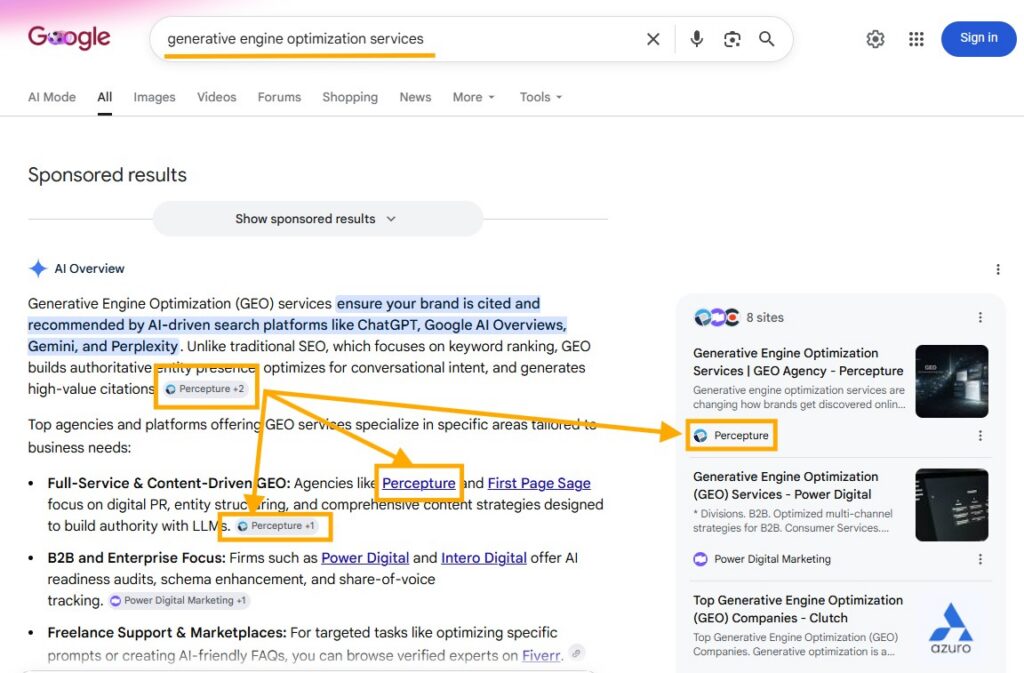
When this guide is useful
Commercial leaders
Use the Generative Engine Optimization for Manufacturing framework to connect AI visibility with qualified RFQs, sample requests, meetings, and pipeline rather than raw traffic alone.
Technical teams
Use Generative Engine Optimization for Manufacturing to decide which capabilities and specifications can be public, how each fact should be qualified, and who maintains it.
Marketing teams
Use Generative Engine Optimization for Manufacturing to turn approved source material into useful HTML pages without flattening technical meaning or overstating proof.

What Is Generative Engine Optimization for Manufacturing?
Generative Engine Optimization for Manufacturing is the practice of making approved manufacturing expertise easy for both buyers and machines to understand. It starts with crawlable, indexed pages and adds precise entity relationships, answer-ready passages, technical tables, evidence, authorship, and source connections that help an AI system assess what a manufacturer does and where the facts came from.
Manufacturing GEO is not writing for robots. It is making real expertise explicit enough that an engineering buyer and a machine can understand the same fact. A capability page should say what process is offered, which materials or applications it supports, where it is performed, and what approved evidence supports the statement.
GEO also does not create a separate magic index. Strong enterprise SEO foundations still matter: crawlability, indexation, page quality, internal authority, relevance, and useful content. Google also explains that eligibility for its AI search features depends on established Search requirements and practices in its official AI features guidance.
Some buyers still use short searches. Others ask multi-variable questions about process, material, certification, location, size, volume, lead time, or application. A manufacturer needs pages that can answer both patterns without claiming a capability that has not been approved for public use.
Manufacturing GEO vs. Manufacturing SEO
Generative Engine Optimization for Manufacturing and SEO solve related parts of the same visibility problem. SEO helps a page become discoverable for relevant searches. GEO makes the evidence on that page easier to extract, interpret, compare, and cite in a generated answer.
SEO and GEO comparison
| Dimension | Manufacturing SEO | Manufacturing GEO |
|---|---|---|
| Primary outcome | Earn relevant organic visibility and qualified visits. | Generative Engine Optimization for Manufacturing improves the retrievability and clarity of approved evidence in generated answers. |
| Buyer behavior | Supports keyword searches and conventional result evaluation. | Supports detailed questions and answer-led supplier research. |
| Source foundation | Crawlable pages, indexation, relevance, links, and technical performance. | The same foundation plus explicit facts, relationships, evidence, and source ownership. |
| Content style | Search-intent pages, guides, capability pages, and application content. | Atomic answers, comparison tables, qualified specifications, source maps, and cited proof. |
| Authority and proof | Backlinks, expertise, case studies, useful content, and brand authority. | Consistent first-party facts plus credible outside corroboration and clear attribution. |
| Measurement | Rankings, impressions, clicks, engagement, leads, and pipeline. | Generative Engine Optimization for Manufacturing adds prompt presence, citations, accuracy, source selection, competitor share, inquiries, and pipeline. |
SEO earns discoverability. GEO makes the manufacturer’s public evidence easier for AI systems to retrieve, interpret, and cite. In practice, Generative Engine Optimization for Manufacturing connects those outcomes. The two compound. Percepture’s GEO services connect those workstreams rather than treating them as separate campaigns.
What Manufacturing Information Should AI Systems Be Able to Verify?
Generative Engine Optimization for Manufacturing should expose the approved facts a buyer needs to assess fit, while preserving confidentiality and technical context. The useful question is not “How much can we publish?” It is “Which public facts help a buyer qualify us, what evidence supports each fact, and how will we keep each answer current?”
Capabilities and applications
For Generative Engine Optimization for Manufacturing, a capability page should identify the process and connect it to relevant materials, equipment classes, production scale, applications, and facility context when those details are approved. “We serve demanding industries” says little. A structured relationship between a process, an application, and supporting evidence gives the buyer something useful to assess.
Applications deserve their own context. State the problem being addressed, the operating conditions that matter, the part or system category, and the approved outcome or validation method. A customer-approved case study can support the relationship, while a technical expert can explain where the capability does and does not fit.
Technical specifications
Generative Engine Optimization for Manufacturing requires specifications to retain their technical boundaries. Publish tolerances, dimensions, temperature ranges, batch sizes, throughput, lead-time ranges, or minimum order policies only when each value is public, current, and properly qualified. Specify whether a value applies to a process, material, machine, site, part geometry, or test condition. A number without its boundary can mislead both a buyer and an answer engine.
Useful PDFs should remain available, but essential facts should not live only in a PDF, image, sales deck, or scanned certificate. Approved summaries in readable HTML help buyers scan the information and give search systems clearer text to process. Percepture’s content marketing services can support that translation from source material to buyer-ready pages.
Certifications and quality
Generative Engine Optimization for Manufacturing should preserve certification scope. If a manufacturer publishes a certification, identify the certification name, issuing body, site, scope, and current status when relevant. ISO or AS9100 can be useful examples of certification questions, but a page should never imply that a site-specific scope applies across the whole company.
Quality content should also explain the approved test or inspection method, traceability process, documentation available to buyers, and responsible facility. Avoid claims such as “highest quality” when a clear method, standard, or evidence source can communicate more.
Facilities and capacity
Generative Engine Optimization for Manufacturing benefits from facility-specific facts. Facility pages should connect location with specific processes, equipment, quality scope, service area, and approved operating information. A vague statement about global capacity is weaker than a clear explanation of which site performs a process and which team owns the published capacity statement.
Capacity, allocation, lead time, and MOQ can change quickly. If the business publishes them, define a review trigger and name an owner from operations, sales, engineering, or quality. An accurate range with context is more useful than a precise number that becomes stale.
Build a Manufacturing GEO Source Map Before You Write More Content
Generative Engine Optimization for Manufacturing becomes an operating discipline when facts are mapped before new copy is commissioned. A Manufacturing GEO Source Map connects a buyer question to the public answer, the evidence that supports it, the internal owner responsible for accuracy, and the trigger that tells the company when the fact must be updated.
The rule is simple: every important public manufacturing claim should have a buyer question, a visible answer, a proof source, an owner, and an update expectation. The table below is a model. Replace every example with verified manufacturer data before publication.
Manufacturing GEO Source Map
| Manufacturing fact | Buyer question | Best public page | Proof or evidence | Owner | Update trigger |
|---|---|---|---|---|---|
| Materials | What materials do you work with? | Capability or material page | Approved technical data | Engineering or Product | Material or capability change |
| Tolerance | What tolerance can you hold? | Capability or specification page | Quality and engineering documentation | Engineering and Quality | Process, equipment, or specification change |
| Certifications | Are you ISO, AS, or otherwise certified? | Quality or certification page | Current certificate and issuer | Quality | Renewal, scope, or status change |
| Capacity | Can you support our volume? | Facility or capability page | Approved operating data | Operations | Capacity or allocation change |
| Lead time or MOQ | When can you begin, and what is the minimum? | Capability or commercial FAQ | Current commercial policy | Operations and Sales | Scheduling or policy change |
| Application | Have you solved this use case? | Application or case-study page | Approved case evidence | Subject-matter expert and Marketing | New proof or outcome |
| Equipment or process | Can you run this process? | Process or capability page | Equipment and process data | Engineering | Equipment or process change |
| Facility or location | Where is this made? | Facility page | Approved site data | Operations | Site or capability change |
| Quality or testing | How is quality verified? | Quality or test page | Approved quality or test method | Quality | Method or standard change |
This framework is a model and template. Replace the examples with verified client or manufacturer data.
See What AI Search Can Actually Verify About Your Manufacturing Company
Percepture can test priority manufacturing prompts and identify where Generative Engine Optimization for Manufacturing is limited by missing answers, weak evidence, unclear ownership, or competing sources.
How to Implement GEO for Manufacturing in Six Steps
Generative Engine Optimization for Manufacturing should begin with a fixed buyer-prompt baseline and a source audit, not a rush to publish. The six steps below move from research to controlled implementation, authority building, and retesting. Each step should leave behind a clearer source environment and a record of what changed.
1. Build the buyer-prompt baseline
A Generative Engine Optimization for Manufacturing baseline should use real language from RFQs, RFPs, sales emails, Search Console, customer calls, engineering teams, procurement discussions, and application specialists. Group those questions by process, material, application, quality, location, capacity, and commercial fit.
Test the same prompt set across available Google AI experiences, Brave Search, ChatGPT Search, Claude web search, Perplexity, Gemini, and Bing or Copilot. Record the engine, date, brands mentioned, cited URLs, description accuracy, competitors, and missing answers. Brave describes its search service as using an independent index in its official search independence documentation, so it should be checked separately rather than treated as a copy of Google.
Generative Engine Optimization for Manufacturing needs commercial prioritization too. Percepture uses KeywordIQ to separate vanity volume from useful opportunities, including buyer-intent terms, attainable queries, and topics where organic visibility may reduce paid-search dependence. No CPC or conversion assumption should be published without current supporting data.
2. Move important public facts into readable HTML
Generative Engine Optimization for Manufacturing does not require removing useful PDFs, certificates, datasheets, and application notes. Keep those assets, then summarize their approved buyer-facing facts in HTML copy and tables. Link to the supporting document where it adds context, but do not force a buyer to inspect several files to learn whether a capability may fit.
Use descriptive headings, plain labels, units, qualification notes, and clear relationships between the manufacturer, process, material, facility, application, and evidence. Add structured data only when it describes visible content accurately.
3. Answer engineering and procurement questions
Build pages around questions that determine fit. Useful illustrative prompts include:
- Which suppliers support a specified process, material, tolerance, certification scope, and production location?
- Which manufacturing process fits a stated operating condition and part geometry?
- What test methods are used to verify this type of component?
- Which facility can support the required application, documentation, and volume range?
These prompts are examples, not claims about a manufacturer. In Generative Engine Optimization for Manufacturing, each published answer must use approved facts and explain the limits that affect fit.
4. Connect capabilities, applications, and proof
Generative Engine Optimization for Manufacturing should create a crawlable path from capability to application, case study or proof, expert, certification or quality evidence, and contact or RFQ path. This relationship helps a buyer move from “Can they do it?” to “Where is the evidence?” without returning to the search results.
Use internal links to reinforce the relationship. A capability page can link to an application page; the application can link to proof and the responsible facility; proof can link to the relevant quality method. This approach also supports broader omnichannel planning when sales, paid media, email, and organic search need the same approved source facts.
5. Build outside corroboration
For Generative Engine Optimization for Manufacturing, outside authority can include relevant trade media, credible directories, associations, customer-approved case studies, expert commentary, and conference materials. The goal is not a high volume of mentions. The goal is consistent, accurate corroboration of facts that matter to the buyer.
Digital PR can support this work by placing expert knowledge in relevant outside environments. It should not be used to manufacture claims or repeat a specification that the technical owner has not approved.
6. Retest and improve
Retest Generative Engine Optimization for Manufacturing with the same prompts and measurement definitions. Record the engine, date, cited source, description, and competitor set. Change a defined group of pages, then observe whether repeated tests show a source or accuracy difference. Do not rewrite the entire site after one favorable or unfavorable answer.
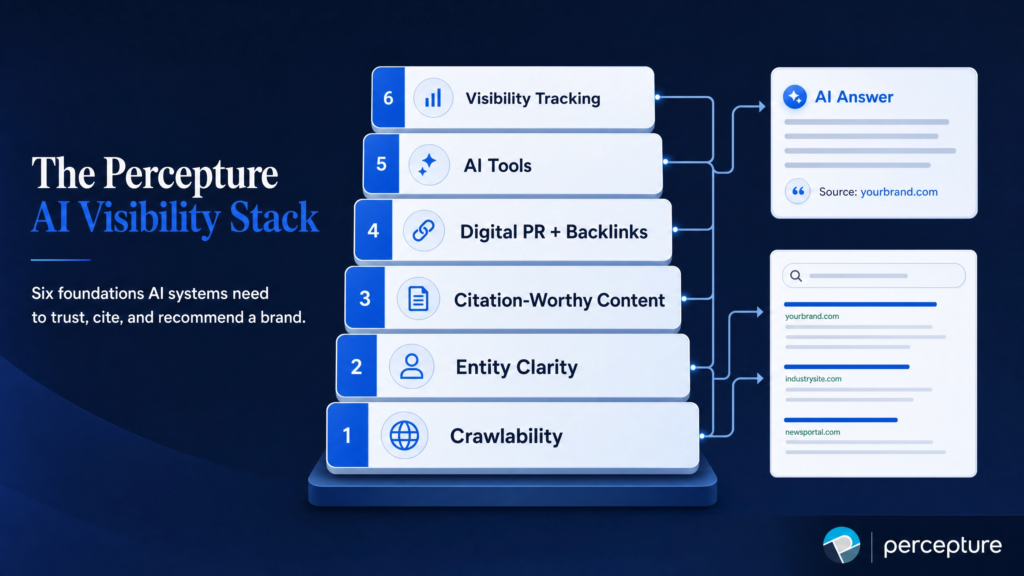

Manufacturing GEO Example: Vague Marketing vs. Citable Information
Generative Engine Optimization for Manufacturing replaces unsupported praise with approved fields and context. The better example below is intentionally a template. It does not describe a specific manufacturer and should never be published until every field has been replaced with verified data.
Vague claim and citable structure
| Version | Example | Why it matters |
|---|---|---|
| Weak | We provide world-class precision manufacturing with fast turnaround. | The claim does not define the process, material, tolerance, evidence, site, application, or meaning of fast. |
| Better template | Process: [verified process]. Material: [approved material]. Tolerance: [verified value and conditions]. Certification: [current scope and site]. Maximum size: [approved value]. Facility: [verified location]. Lead-time range: [current qualified range]. Application: [approved use]. Test method: [approved method]. | The fields give buyers and machines specific facts, context, and evidence paths to evaluate. |
For Generative Engine Optimization for Manufacturing, replace all bracketed fields with verified manufacturer data. Remove any field that cannot be disclosed or maintained.
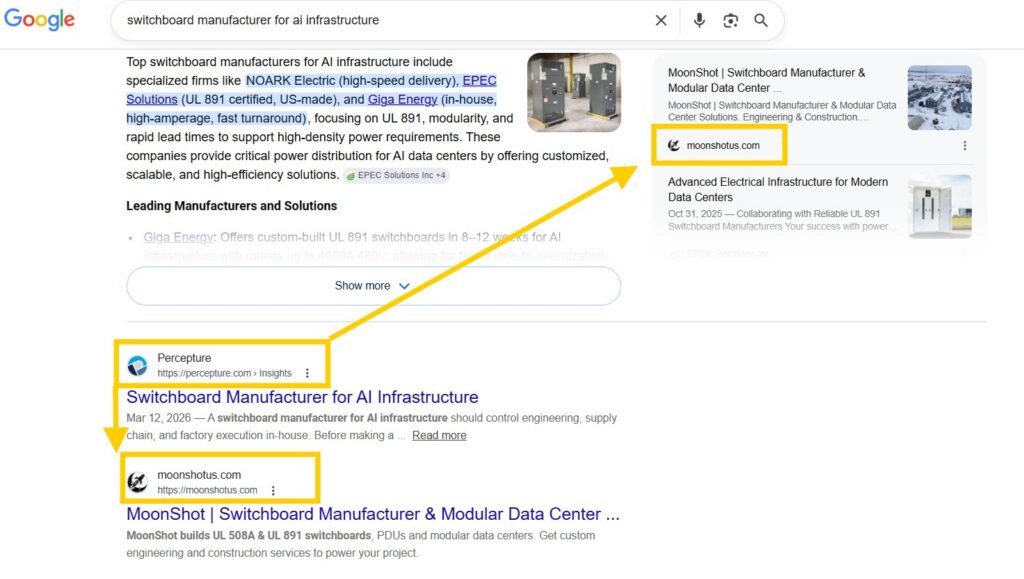
How Should Manufacturers Measure GEO?
Generative Engine Optimization for Manufacturing should be measured through visibility, source selection, accuracy, commercial action, and trend data. Traffic remains useful, but it cannot show whether an AI answer cited the correct page, described a capability accurately, included a competitor, or helped produce a qualified inquiry.
Manufacturing GEO measurement scorecard
| Metric | What to record | What it can reveal |
|---|---|---|
| Prompt visibility | Whether the manufacturer appears for a fixed prompt. | Coverage gaps by engine and buyer question. |
| Citation rate | How often a Generative Engine Optimization for Manufacturing page is cited during repeated tests. | Whether owned sources are being selected. |
| Citation accuracy | Whether the cited answer reflects the approved source correctly. | Ambiguous, stale, or conflicting language. |
| Source URL | The exact owned or third-party URL selected. | Which source type carries the answer. |
| Competitor share | Which competitors appear in the same response set. | Where competing sources are clearer or better supported. |
| Brand description | How the manufacturer is characterized. | Entity and positioning errors. |
| Branded Search | Changes in relevant branded query activity. | Possible demand or research interest that requires context. |
| AI referral visits | Identifiable visits from AI-search environments. | Which sources are producing site sessions. |
| Qualified actions | RFQs, sample requests, form starts, and meetings associated with Generative Engine Optimization for Manufacturing sources. | Whether visibility supports commercial intent. |
| Pipeline influenced | Qualified opportunities with a documented content touchpoint. | Whether source improvements assist revenue activity. |
Percepture uses Prime AI Visibility to monitor prompts, mentions, citations, recommendations, and competitive share across AI-search environments, then uses that intelligence to decide which content or source gaps to fix. Prime measures the environment; it does not cause rankings.
One favorable answer is not a trend. Establish a baseline and repeat the same prompts at consistent intervals, including 7, 14, and 30 days after launch. Pair that record with attribution and analytics so visibility can be evaluated beside qualified actions.
Complex B2B search and AI-visibility execution
Carrie Charles of Broadstaff Global discusses Percepture’s search and AI-visibility work. The testimonial supports Percepture’s complex-B2B execution; the manufacturing recommendations in this guide rely on the manufacturing research and examples shown on this page.
Read the testimonial summary
Carrie describes Broadstaff Global’s experience with Percepture’s search, digital PR, and AI-search work. Her client perspective illustrates complex-B2B execution. This is a plain-language summary, not a word-for-word transcript, a manufacturing case study, or a guarantee of results.
Find the Gaps Before You Publish More Content
A Generative Engine Optimization for Manufacturing audit can compare priority prompts, public source coverage, citation accuracy, technical ownership, and buyer conversion paths before another batch of pages is commissioned.
What Manufacturing Information Should Not Be Published for GEO?
Generative Engine Optimization for Manufacturing should never override security, legal, quality, customer, export-control, or intellectual-property requirements. A public source environment should become clearer without exposing information that the business cannot safely disclose, support, or keep current.
Keep these items out of public GEO content
- Confidential customer names, drawings, specifications, outcomes, or production details without documented permission.
- Proprietary formulas, process settings, source code, methods, or equipment configurations that create disclosure risk.
- Controlled, restricted, export-sensitive, security-sensitive, or contract-limited information.
- Expired, unverified, suspended, or out-of-scope certifications.
- Capacity, allocation, lead-time, or MOQ statements that no owner is prepared to maintain.
- Obsolete pricing or commercial terms presented without a date, scope, and owner.
- Unsupported “best,” “fastest,” “highest quality,” or “world-class” claims.
- Site-specific specifications written as if they apply to every facility or process.
Generative Engine Optimization for Manufacturing should increase clarity, not increase disclosure risk.
Create an approval path for technical marketing. Engineering, quality, operations, legal, sales, and marketing may each own a different part of the answer. The source map gives those teams a practical place to record ownership and update triggers.
Frequently Asked Questions
How is GEO different from SEO for manufacturers?
Manufacturing SEO helps relevant pages become crawlable, indexed, authoritative, and discoverable in search. Generative Engine Optimization for Manufacturing adds explicit answers, technical relationships, source evidence, and AI visibility testing. Manufacturers still need SEO because generated search experiences depend on accessible, useful sources. SEO earns discovery; GEO improves how approved evidence can be interpreted and cited.
Can AI read manufacturing PDFs and datasheets?
Some AI and search systems can process accessible PDFs, but Generative Engine Optimization for Manufacturing should not assume every file will be found, parsed correctly, or selected as a source. Keep useful PDFs and add approved core facts to readable HTML. Use descriptive document titles, crawlable links, clear units, revision information, and page-level context.
Do manufacturers need special schema or llms.txt for GEO?
Generative Engine Optimization for Manufacturing does not require a special “GEO schema.” Use established structured data only when it accurately describes visible content, such as Article, Organization, Person, BreadcrumbList, or other applicable types. An llms.txt file is not a substitute for crawlable HTML, technical SEO, internal links, evidence, or clear source ownership.
Is there a GEO certification for manufacturers?
This guide does not rely on a GEO certification as proof of manufacturing competence. Buyers should evaluate the source audit, technical governance, implementation process, measurement definitions, disclosure controls, and quality of published evidence. Manufacturing certifications should be discussed only within their verified scope, site, issuer, and status.
How long does Generative Engine Optimization for Manufacturing take?
Generative Engine Optimization for Manufacturing does not have one fixed timeline. Timing depends on crawlability, the number of source gaps, technical approvals, page development, outside authority, and how quickly search systems discover changes. Establish a baseline, implement a defined source group, and compare stable prompt tests at consistent intervals.
What should a manufacturing company prioritize first?
Start Generative Engine Optimization for Manufacturing with the buyer questions that determine supplier fit and the public facts required to answer them. Build a source map for capabilities, materials, specifications, certifications, facilities, quality methods, and applications. Fix missing or conflicting high-value answers before producing broad awareness content or adopting another monitoring tool.
Make Your Manufacturing Expertise Easier to Find, Verify, and Cite
Generative Engine Optimization for Manufacturing works when technical truth, search foundations, public evidence, and commercial paths are managed as one system. Start with the questions engineers and procurement teams use to qualify suppliers. Map each answer to approved evidence, a public page, an owner, and an update trigger. Then test whether search and AI environments find and describe those sources accurately.
The goal is not to expose every operating detail or chase a single screenshot. The goal is repeatable visibility, accurate positioning, and qualified commercial action. Percepture can help connect that work with manufacturing SEO, content, authority, analytics, and an RFQ path.
Ready to Make Your Manufacturing Expertise Easier to Find and Cite?
Use Generative Engine Optimization for Manufacturing to turn approved capabilities and technical proof into clearer sources for buyers, search engines, and AI systems.