There is no universal hvac lead cost. The price changes with the channel, market, season, service, lead format, bidding, exclusivity, and the provider’s definition of a lead.
Cost per lead is only the first denominator. An HVAC operator should follow each inquiry through validation, qualification, booking, completed work, payment, gross profit, and verified customer value.
Lead economics need operating context, not a headline CPL
Percepture connects marketing source data with qualification, booking, completed work, revenue, and gross profit. That makes the lead-cost conversation useful to owners, finance, marketing, call centers, and operations.

 Founded in 2004
 Inc. 5000 recognized
 NMSDC certified
 Lead generation, SEO, GEO, PR and analytics
How much does an HVAC lead cost?
A useful hvac lead cost is not a national average. It is the all-in amount your company can pay for a valid inquiry while still meeting its customer acquisition cost and gross-profit targets. Compare channels using the same cost definition, funnel stage, period, market, and job type.
The executive view
Define the unit
A call, form, transfer, appointment, and completed job are different units. State what triggered the charge before comparing prices.
Load the real cost
Add media, vendor, agency, creative, landing-page, software, call-handling, integration, and quality-control costs.
Measure funnel yield
Track delivered, valid, qualified, booked, completed, paid, and profitable outcomes. A valid lead is not a customer.
Set your ceiling
Your maximum hvac lead cost comes from target CAC and lead-to-customer rate, not from a roundup of unrelated accounts.
Who should use this guide?
Owners and CEOs
Use it to connect hvac lead cost with growth plans, capacity, completed work, and contribution after acquisition.
CFOs and finance leaders
Use it to reconcile hvac lead cost, channel invoices, CAC, gross profit, payback, and contract terms.
Marketing teams
Use it to compare sources without mixing lead units or hiding branded demand.
Call center and sales teams
Use it to measure reachability, qualification, booking, follow-up, and disposition quality.
Operations leaders
Use it to align spend with service areas, staffing, job mix, skills, and schedule capacity.
Multi-location teams
Use it to find branch-level hvac lead cost gains or losses hidden by a portfolio average.
Why hvac lead cost averages conflict
Most public averages remove the context that makes a number useful. One source may count every form. Another may bill only for a qualifying call. A third may report appointments. Their prices cannot be blended into one clean benchmark.
Included costs also differ. Media-only CPL excludes management, pages, tracking, call labor, software, and invalid leads that were never credited. An all-in calculation includes those expenses and uses a clearly defined denominator.
Branded and non-branded search need separate reporting. A branded inquiry often comes from demand already created by reputation, referrals, prior advertising, content, or public relations. Blending it with cold acquisition can make campaign performance look stronger while non-branded economics get worse.
The HVAC Lead Cost Truth Stack
Percepture’s HVAC Lead Cost Truth Stack moves from an advertised price to verified cost per profitable customer. It gives marketing, sales, operations, and finance one method for evaluating hvac lead cost.
Move through the five layers in order. Each layer changes what the next number means.
1. Sticker cost
Identify what triggered the charge: call, message, form, transfer, appointment, marketplace delivery, media click, or retainer. Record whether demand is branded or non-branded, shared or exclusive, and priced before or after credits.
2. All-in acquisition cost
Add media, vendor and agency fees, setup, creative, pages, software, tracking, call handling, integration, management, quality review, and unrecovered invalid-lead expense.
3. Funnel yield
Track delivered, valid, qualified, booked, completed, paid, and profitable stages. This reveals whether the leak sits in targeting, response, scheduling, sales, financing, dispatch, or completion.
4. Job economics
Measure collected revenue, direct labor, materials, commission, discounts, financing expense, callback reserves, and acquisition cost by job type.
5. Customer value
Add membership, renewal, repeat service, replacement, referral, or commercial expansion only when the company’s records support that value.
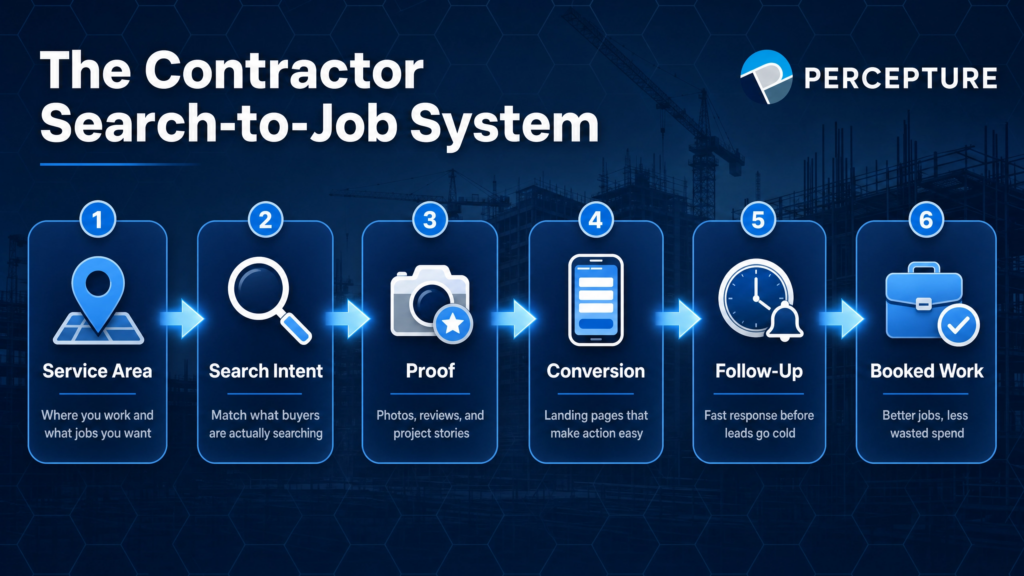
The Truth Stack changes the decision. The cheapest lead can become the most expensive customer when invalid volume, low booking, canceled work, weak margins, or capacity problems sit below the headline CPL.
HVAC lead cost by channel and buying model
Channel labels do not make costs comparable. For each source, document the charged unit, included expenses, lead ownership, customer intent, credit rules, and downstream outcome. That is the minimum context for comparing hvac lead cost.
Channel economics comparison
Use the same hvac lead cost definition and outcome stage across every row before ranking channels.
| Channel | Charged or measured unit | Costs to include | Main comparison risk | Outcome to optimize |
|---|---|---|---|---|
| Local Services Ads | Valid lead under platform rules | Charges, unrecovered invalids, management, tracking, call labor | Valid is treated as qualified or booked | Completed paid job and gross profit |
| Google Ads | Click or attributed conversion | Media, management, pages, creative, software, call handling | Branded and non-branded results are blended | New-customer CAC and contribution |
| Shared marketplace | Delivered lead, call, or credit | Lead fees, duplicates, call labor, integration, follow-up | Unknown competition or source | Paid-job cost by vendor |
| Exclusive provider | Lead, call, transfer, or appointment | Vendor price, setup, management, credits, handling | Exclusive is assumed to mean qualified | Completed-job contribution |
| Pay per call | Connected call under stated rules | Call charge, tracking, review, labor, disputed calls | Duration is confused with service fit | Qualified and completed calls |
| SEO and business profiles | Attributed organic inquiry | Site, content, technical work, reviews, tools, reporting, calls | Organic demand is called free | Fully loaded CAC and marginal cost |
| Paid social | Form, message, call, or landing-page conversion | Media, creative, pages, nurture, call labor, software | Cheap forms are treated as high intent | Qualified-to-customer yield |
| Commercial outbound | Account, opportunity, proposal, or meeting | Data, research, outreach, sales labor, travel, estimating | Long-cycle work is measured as consumer lead flow | Won gross-profit contribution |
Local Services Ads
Google states that Local Services Ads advertisers pay for valid leads and that price can vary by location, job type, lead type, and bidding mode. A contractor should still track qualification, booking, completion, payment, credits, responsiveness, and job profit after the platform’s valid-lead decision.
An LSA hvac lead cost should not be compared with a Google Ads form conversion unless both records use the same period, market, service, included costs, and downstream stage. Platform validity is a billing rule, not proof of a profitable job.
Google Ads
Separate branded search, non-branded search, competitor campaigns, remarketing, and Performance Max. A blended result can improve because branded volume rises even while cold acquisition becomes less efficient.
Connect paid search management with qualified and completed outcomes. Report campaign and service-level CPL, valid rate, booking rate, cost per completed job, new versus existing customers, and gross profit.
Shared, exclusive, and pay-per-call sources
Shared delivery may carry a lower sticker price because more than one contractor can receive the opportunity. Exclusive delivery may cost more, but exclusivity alone does not establish customer intent, service fit, consent, or profitability.
For pay-per-call, define connection rules, minimum duration, duplicate handling, existing-customer treatment, geography, excluded services, recording practices, exclusivity, and the credit window. Written definitions make vendor results auditable.
SEO, business profiles, referrals, and memberships
Organic and referral leads are not free. Fully loaded organic cost can include internal labor, content marketing, technical work, the website, reviews, listings, tools, reporting, and call handling.
Marginal cost may decline after the underlying assets are built, but it is not the same as fully loaded cost. Teams evaluating owned demand can also review organic SEO services, AI search visibility services, and digital PR as distinct investments.
Check lead quality before increasing spend
If your hvac lead cost report stops at forms or calls, run a diagnostic that follows source, validity, qualification, booking, and outcome.
Calculate raw CPL, all-in CPL, CAC and profit
Every formula needs a period, channel, market, lead definition, and included-cost statement. Without those labels, the answer may be mathematically correct but operationally misleading.
Formula glossary
Apply each formula to the same hvac lead cost dataset so differences reflect funnel stages rather than changing inputs.
| Measure | Formula | What it answers |
|---|---|---|
| Raw CPL | Media or vendor spend ÷ delivered leads | What was paid for the initial delivered unit? |
| Valid CPL | Total acquisition cost ÷ valid leads | What did each valid inquiry cost after included expenses? |
| Qualified-lead cost | Total acquisition cost ÷ qualified leads | What did each serviceable opportunity cost? |
| Cost per booked job | Total acquisition cost ÷ booked jobs | How much spend was required to create a scheduled opportunity? |
| Cost per completed job | Total acquisition cost ÷ completed paid jobs | What did each finished and collected job cost? |
| CAC | Total acquisition cost ÷ new customers | What did each newly acquired customer cost? |
| Lead-to-customer rate | New customers ÷ valid leads | How much valid volume becomes new business? |
| Maximum affordable CPL | Target CAC × valid-lead-to-customer rate | What is the highest valid-lead price that meets the CAC target? |
| Break-even CPL | Expected gross profit per customer × valid-lead-to-customer rate | What lead price would consume expected gross profit? |
| Acquisition ROI | Contribution after acquisition ÷ acquisition cost | What contribution remains relative to acquisition spending? |
A maximum affordable CPL illustration
Assume a target CAC of $600 and a valid-lead-to-customer rate of 20%. The maximum affordable CPL is $120 because $600 × 0.20 = $120. This is an illustration, not an industry benchmark.
Now assume another source reports a $90 hvac lead cost, but only 8% of valid leads become customers. Its CAC is $1,125 because $90 ÷ 0.08 = $1,125. The lower lead price produces the higher customer acquisition cost.
Build an all-in cost numerator
Start with media or vendor spend. Add agency fees, allocated setup and creative, landing pages, software, call tracking, call and sales labor, integration, quality review, and other acquisition expenses. Then subtract only documented credits that were actually received.
Do not mix fixed and variable expenses without stating the allocation method. Use the same method across periods so trend changes reflect performance rather than accounting changes.
Scenario template
| Input | Company value | Definition to record |
|---|---|---|
| Period and market | Enter actual data | Dates, branch, geography, and service area |
| Total acquisition cost | Enter actual data | Every expense included in the numerator |
| Delivered and valid leads | Enter actual data | Billing and invalid-lead rules |
| Qualified and booked leads | Enter actual data | Service, location, need, timing, and booking rules |
| Completed paid jobs | Enter actual data | Finished work with collected payment |
| New customers | Enter actual data | Method used to exclude existing customers |
| Gross profit | Enter actual data | Revenue less documented direct job costs |
| Target CAC | Enter approved target | Customer and job types covered by the target |
The calculator pattern should handle blank and zero denominators without displaying false results. Percepture’s enterprise SEO ROI calculator offers a related example of turning marketing assumptions into a decision model.
Residential, commercial, and job-type economics
The same hvac lead cost can be affordable for one job type and damaging for another. Separate residential repair, replacement, maintenance, commercial service, and commercial projects before setting targets.
Business-model and job-type scorecard
Set an hvac lead cost ceiling for each work type rather than applying one portfolio-wide limit.
| Work type | Track after the lead | Cost often missed | Profit checkpoint |
|---|---|---|---|
| Residential repair | Urgency, response, dispatch fit, completion, payment | After-hours handling and unused capacity | Collected repair gross profit |
| Replacement | Qualification, estimate, financing, sale, install, payment | Unsold estimates, cancellation, and financing expense | Installed-job gross profit |
| Maintenance or membership | Enrollment, service delivery, renewal, retained value | Program labor, discounts, reminders, and fulfillment | Verified contribution by cohort |
| Commercial service | Account fit, authority, need, timing, visit, proposal, agreement | Sales travel, inspection, and proposal labor | Won account contribution |
| Commercial project | Qualification, design, bid, procurement, award, payment | Engineering, estimating, travel, and preconstruction | Won project gross profit |
Residential demand is often measured through calls, appointments, dispatch, and completed jobs. Commercial demand may require account qualification, site review, a proposal, and a longer buying cycle. A cheap form is not a useful commercial target if the account lacks authority, timing, or project fit.
Multi-location companies should report by branch, market, service, channel, job type, call center, and capacity. A portfolio average can hide a branch that cannot answer, dispatch, sell, or complete the work being generated.
What drives hvac lead cost?
Market competition and seasonality affect auction or vendor prices, but many cost drivers sit inside the contractor’s operation. Geography, service type, reviews, offer, landing-page conversion, answer speed, after-hours coverage, qualification, scheduling, financing, and capacity all influence the result.
Conversion rate optimization can improve page and booking yield, but it should not be used to hide poor source quality. The goal is to improve valid, qualified, booked, and completed outcomes together.
Funnel diagnostic table
Diagnose the stage behind a rising hvac lead cost before changing bids, vendors, or budgets.
| Signal | Likely area to inspect | First action |
|---|---|---|
| Raw CPL is rising | Auction, traffic quality, offer, or page conversion | Separate campaign, service, market, and search-intent data |
| Cost per booked job is rising | Lead quality, response, qualification, or scheduling | Review calls, response time, dispositions, and capacity |
| Cost per completed job is rising | Sales, financing, cancellations, dispatch, or operations | Trace bookings through completion and payment |
| CAC is rising | New-customer classification or funnel yield | Separate new and existing customer records |
| Revenue rises while profit falls | Job mix, discounts, labor, materials, or callbacks | Reconcile campaign records with finance-approved gross profit |
Lower cost without lowering lead quality
Do not cut bids or buy cheaper volume as the first response to a high hvac lead cost. Start with the stage where the greatest economic loss occurs. A source-quality issue requires a different fix from an unanswered-call or no-capacity problem.
- Define every stage. Give valid, qualified, booked, completed, paid, and new-customer records written rules.
- Separate demand types. Report branded, non-branded, remarketing, marketplace, referral, and existing-customer activity independently.
- Match spend to capacity. Pause services, areas, or time blocks the operating team cannot cover well.
- Review calls and forms. Check source fit, response, qualification, booking, and disposition accuracy.
- Improve conversion paths. Align the ad, offer, page, call script, schedule, financing, and follow-up.
- Send better outcomes back to media teams. Optimize toward qualified and completed outcomes rather than forms alone.
- Reconcile profit. Connect acquisition records with completed, paid work and documented direct costs.
A coordinated omnichannel marketing strategy can help prevent each channel from claiming the same demand. The measurement layer should preserve source identifiers and distinguish first touch, assisted touch, and the event used for optimization.
Track every lead from source to gross profit
Reliable hvac lead cost reporting needs one traceable record for the inquiry, its source, status, owner, cost, and outcome. The minimum useful record includes source, campaign, timestamp, lead format, market, service, customer status, validity, qualification, booking, cancellation, dispatch, completion, payment, revenue, direct cost, and credit status.
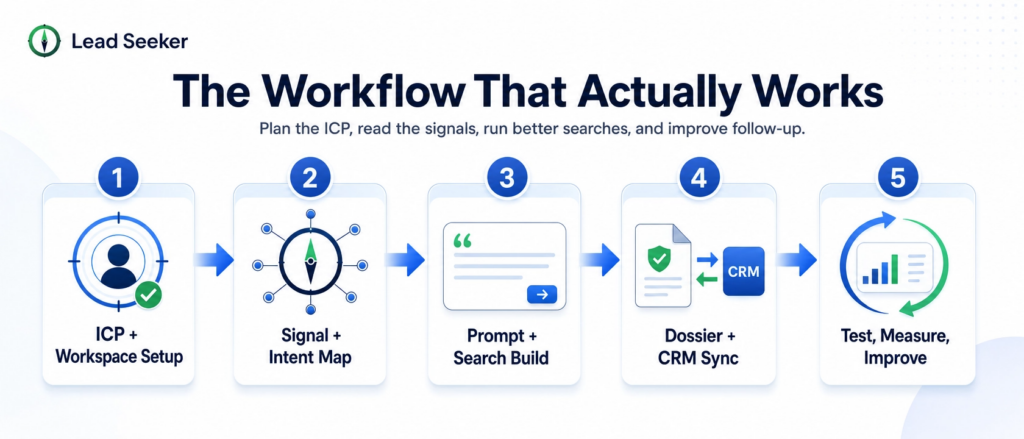
Attribution and analytics should reconcile ad or vendor records with call tracking, forms, CRM or field service systems, scheduling, payment, accounting, and credit logs. When systems disagree, resolve the definition and identifier before publishing CAC or ROI.
Monthly lead-economics review
- Reconcile vendor and media invoices with delivered records.
- Audit invalid reasons and received credits.
- Sample calls and forms by source and branch.
- Check response, qualification, booking, cancellation, and completion rates.
- Separate new customers from existing customers.
- Reconcile collected revenue and direct job costs with finance.
- Document any definition, attribution, offer, or routing change.
- Compare actual hvac lead cost with maximum affordable CPL and capacity.
Broader contractor marketing also needs clear ownership across search, content, paid media, and follow-up. These Percepture resources on digital marketing for construction companies, construction content marketing, and SEO for construction companies provide supporting context without replacing this page’s lead-economics focus.
Questions to ask an agency or lead vendor
A vendor should be able to explain exactly what its hvac lead cost includes. Put the definitions, ownership rules, exclusions, and cancellation terms in writing before comparing proposals.
Vendor evaluation scorecard
Require evidence for every input used to calculate the vendor’s reported hvac lead cost.
| Question | Why it matters | Evidence to retain |
|---|---|---|
| What triggers a charge? | Defines the purchased unit | Current contract and billing rule |
| Which costs sit outside reported CPL? | Builds the all-in numerator | Fee schedule and implementation scope |
| How are valid and qualified defined? | Prevents stage confusion | Written acceptance and exclusion rules |
| Are leads shared or exclusive? | Sets competition and ownership context | Source-specific delivery terms |
| How are duplicates and existing customers handled? | Protects acquisition reporting | Credit policy and customer-match method |
| Who owns accounts, numbers, pages, domains, and data? | Protects continuity and portability | Ownership and offboarding terms |
| Can results be exported through completed paid jobs? | Supports independent reconciliation | Raw export and field dictionary |
| How are consent and opt-outs recorded? | Supports responsible handling | Consent source, timestamp, and suppression process |
| What happens after a failed test? | Defines decision rights and risk | Pause, cancellation, and offboarding language |
Qualified demand matters more than cheap volume
For commercial HVAC, critical facilities, data centers, healthcare, and industrial work, the buyer may be a facilities leader, engineer, contractor, developer, or operations executive. Lead-cost reporting should preserve that account fit instead of rewarding low-cost forms that cannot become profitable work.

Audit the economics behind the dashboard
Percepture can map hvac lead cost from channel invoices through valid leads, bookings, completed work, and gross profit. The review is designed to identify whether the next move is to scale, fix, pause, or stop.
Use a scale, fix, pause, or stop decision
Scale when verified contribution meets the approved target and operating capacity exists. More volume should not be added to a branch, service, or schedule that cannot handle it.
Fix when the underlying job economics can work but one funnel stage leaks. The fix may sit in targeting, invalid handling, response, routing, booking, financing, sales, dispatch, or follow-up.
Pause when tracking, definitions, consent, ownership, or capacity are unreliable. A pause protects the budget while the operating system is repaired.
Stop after a controlled test when major leaks have been addressed and verified contribution remains below the company’s threshold. Preserve the test period, assumptions, changes, and decision rationale.
Frequently asked questions
How much does an HVAC lead cost in 2026?
There is no universal hvac lead cost. A defensible answer must identify the channel, period, market, service, lead definition, included expenses, sample, and downstream stage. Compare an external observation with your own valid-lead cost, booking yield, CAC, and completed-job contribution.
What is a good hvac lead cost?
A good hvac lead cost produces a customer acquisition cost and contribution that meet your company’s targets. Calculate the business benchmark first. Use outside benchmarks only as supporting context, since markets, services, lead definitions, funnel yield, and included costs differ.
How do I calculate HVAC CPL?
Calculate hvac lead cost by dividing the stated cost by the exact lead unit. Raw CPL uses media or vendor spend and delivered leads. Valid or all-in CPL uses total acquisition cost and valid leads. Also calculate qualified-lead, booked-job, completed-job, and new-customer costs.
What is the difference between CPL and CAC?
CPL measures the cost of an inquiry at a defined lead stage. CAC measures total acquisition cost divided by new customers. CAC is usually closer to the business outcome because it includes the funnel losses between the initial inquiry and customer acquisition.
Are Local Services Ads leads cheaper than Google Ads leads?
They may be in a specific account or dataset, but the formats, billing rules, bidding, credits, campaign controls, and lead definitions differ. Compare both sources using all-in cost per completed paid job and contribution, not just their reported CPL.
Are shared HVAC leads worth buying?
Shared leads can work when the source, delivery rules, competition, validity, price, consent, service area, response process, and completed outcomes are known. Their sticker price alone does not show whether the resulting customers are affordable or profitable.
Are exclusive HVAC leads always better?
No. Exclusivity may reduce direct competition, but it does not prove that the customer is qualified, reachable, inside the service area, ready to book, or profitable. The exclusive terms should be written and tied to the exact source and lead format.
Are SEO and referral leads free?
No. SEO can include website, content, technical, agency, review, listing, software, reporting, and call-handling costs. Referral programs can include incentives, discounts, administration, and service delivery. Marginal cost and fully loaded cost should be reported separately.
How do I calculate maximum affordable CPL?
Multiply target CAC by the valid-lead-to-customer rate to establish the maximum affordable hvac lead cost. If target CAC is $600 and 20% of valid leads become customers, the maximum is $120. Apply the formula to your own documented data and leave room for risk and margin targets.
When should an HVAC company stop a lead channel?
Stop after a controlled test when tracking is reliable, definitions are stable, major funnel leaks were addressed, and verified contribution remains below the company’s approved threshold. Record the period, changes, job mix, capacity, and decision rationale.
Calculate your profitable hvac lead cost ceiling
A benchmark is evidence, not the answer. The operating decision comes from your own all-in cost, valid-to-customer rate, job mix, gross profit, target CAC, capacity, and risk tolerance.
Find the lead price your operation can support
Percepture can help calculate your profitable hvac lead cost ceiling, reconcile channel and CRM records, identify the largest funnel leak, and build a scale, fix, pause, or stop plan.

About Bob Generale
Bob Generale is President of Percepture. Percepture was founded in 2004 and provides integrated marketing services that include lead generation, paid search, SEO, GEO, conversion, content, digital PR, and attribution.