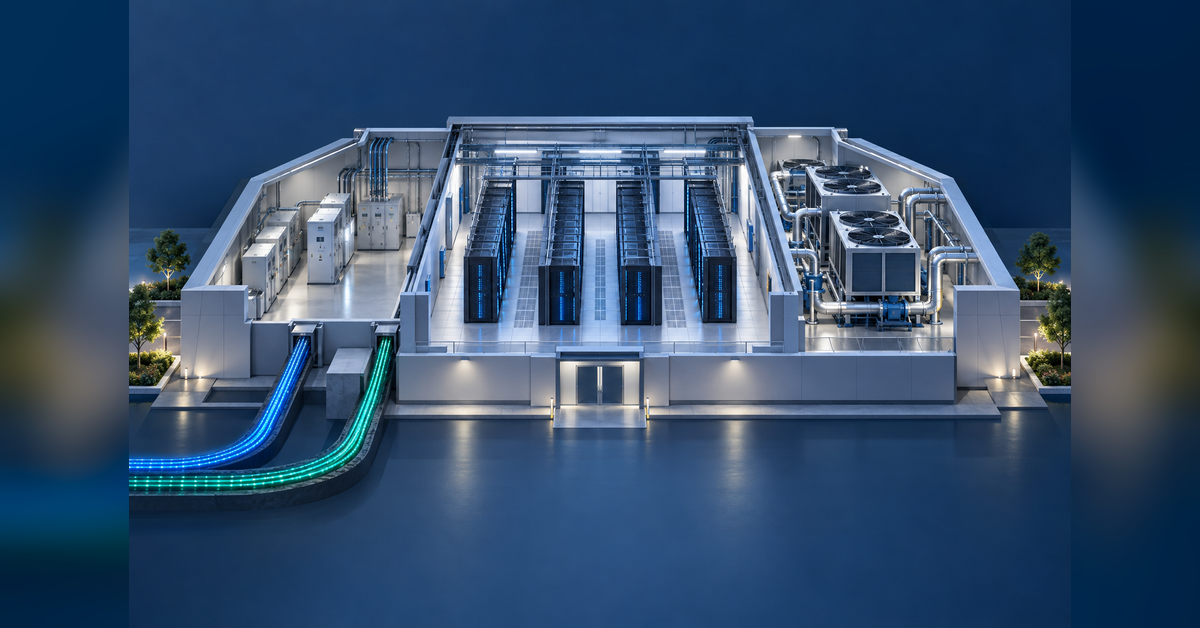

Genesis Mission data center requirements should be evaluated from the workload back to the site—not from a funding headline forward. Ask what compute must run, where its data can move, and which power, cooling and network capabilities a supplier can document.
For executives, the buying question is readiness: what can be delivered, under what conditions, and with what acceptance evidence? Use the 5P worksheet below to separate proposed capacity from the infrastructure your organization is prepared to buy.
How should buyers define Genesis Mission data center requirements?
For procurement, define the requirements as a workload-specific evidence package covering compute, electrical delivery, cooling, connectivity, site readiness and data controls. Specify capacity at the point of use, document dependencies and agree on acceptance tests. Use the applicable solicitation and contract to establish binding obligations rather than treating a general readiness worksheet as an official specification.
Start with the mission, then identify the actual purchase
A November 24, 2025, announcement published by Princeton Plasma Physics Laboratory describes Genesis Mission as a Department of Energy effort bringing national laboratories, industry and academia together to advance scientific discovery. The PPPL launch announcement provides that program-level context.
Translate that context into a specific buying decision. Are you evaluating access to an existing compute environment, a systems-integration engagement, additional network capacity, a facility expansion or a new site? Give each purchase its own scope, accountable owner and acceptance criteria.
Keep funding status separate from infrastructure status
For each funding or participation announcement, record the issuer, calendar date, instrument, recipient, permitted use and conditions. Keep public funding, private investment and in-kind participation in separate entries. Do not add them into a facility construction budget unless the underlying documents support that treatment.
Then ask what the project can actually purchase and when. A financing discussion belongs alongside—not in place of—the engineering and delivery review. Percepture’s guide to data center financing structures is a related starting point for that financial workstream.
The Power-to-Peering 5P Readiness Matrix
Use Percepture’s Power-to-Peering 5P Readiness Matrix to organize due diligence across Power, Place, Path, Peering and Policy. It is an editorial decision aid for this guide, not a government certification or a substitute for project engineering.
Enter a dated document reference in each applicable milestone cell. Leave a cell empty until you have evidence; mark a milestone not applicable when it does not fit that dimension. Do not average the rows into a readiness score that hides an unresolved dependency.
| Dimension and evidence to request | Announced | Allocated | Engineered | Energized | Commissioned |
|---|---|---|---|---|---|
| Power: service scope, electrical design, rack allocation and acceptance records | |||||
| Place: site control, permits, equipment layout and cooling design | |||||
| Path: physical routes, building entrances and shared-risk review | |||||
| Peering: required destinations, connection rights, ports and service acceptance | |||||
| Policy: data permissions, access controls and contractual responsibilities |
Define the evidence labels before comparing proposals
- Announced
- Record the dated statement and its precise scope. Do not treat it as an acceptance record.
- Allocated
- Identify the resource or budget reservation, its authorizing document and any conditions.
- Engineered
- Identify the design revision, assumptions, responsible reviewer and approval status.
- Energized
- For electrical infrastructure, document the equipment and capacity placed into service. Do not apply this label to policy readiness.
- Commissioned
- Request acceptance results for the defined system, operating configuration and test conditions.
Track the milestones independently. For example, an electrical milestone should not close an unresolved network, cooling or data-access question.
Training versus inference: write down the assumptions
Begin the compute specification with the job to be done. Ask the technical team to identify model development, training, inference, simulation and data-processing tasks separately. Avoid reducing the purchase to an accelerator count before defining the software environment and acceptance workload.
| Decision | Training evaluation | Inference evaluation |
|---|---|---|
| Success measure | Define the training task, completion target and acceptable restart behavior. | Define response-time, throughput and service-availability targets. |
| Compute configuration | Specify accelerator memory, software compatibility and the proposed cluster configuration. | Specify model size, precision, concurrency and the serving configuration. |
| Network scope | Test the proposed communication pattern within the compute cluster. | Test paths between users, applications, models and required data services. |
| Data and storage | Document dataset staging, checkpointing and recovery requirements. | Document model loading, retrieval, logging and retention requirements. |
| Acceptance evidence | Use a representative training run with agreed measurement conditions. | Use a representative request mix with agreed latency and error criteria. |
For scientific workflows, add the research team’s requirements for reproducibility, dataset versions, software versions and output retention. Ask who can rerun the acceptance workload and who owns the resulting records.
Power: follow the evidence all the way to the rack
Require every capacity figure to identify its measurement boundary. Is the number associated with a development plan, utility service, facility input, an IT allocation or the equipment being purchased? Compare proposals only after those boundaries are explicit.
Request the service agreement, delivery conditions, electrical one-line diagram, equipment schedule and rack-level allocation. Ask the supplier to reconcile reserved capacity, installed equipment, capacity placed into service and capacity available to your deployment.
Separate the commercial promise from the operating test
For a power agreement, identify the delivery point, commencement conditions, curtailment provisions and responsibility for required upgrades. For the facility, request the operating configuration and the acceptance tests relevant to the purchased service.
Have qualified engineers evaluate the proposed electrical design and test procedures. Procurement should specify the evidence it will accept, not attempt to replace engineering judgment with a headline megawatt figure.
Path and peering: map connections to actual destinations
Split the network review into two questions: how the compute systems communicate with one another, and how the facility reaches external data, users and services. Give both questions an owner, a diagram and an acceptance test.
For route diversity, request physical route maps, building entrance details and a shared-risk review. Ask whether proposed services share conduits, access infrastructure, upstream facilities or other dependencies. Different supplier names alone should not satisfy a physical-separation requirement.
Test interconnection choice rather than relying on a label
Ask which carriers and destinations are available for the proposed service, who controls cross-connect ordering, and what installation and recurring charges apply. If carrier neutrality is part of the proposal, translate it into contractual connection rights and practical ordering choices.
List the destinations the workload actually needs: research partners, storage systems, cloud environments and authorized users. Compare data center interconnection options against that list, then request evidence for the selected paths and services.
Place and cooling: assess the proposed configuration
Give the site review the same equipment configuration used in the compute proposal. Request rack weights, space requirements, maintenance clearances and the manufacturer’s environmental and cooling requirements. Ask the facility team to identify design assumptions and operating limits.
Where liquid cooling is proposed, request the interface specifications, fluid requirements, distribution design, maintenance responsibilities and leak-response procedures. Keep equipment-side requirements distinct from the facility systems intended to support them.
For siting, request evidence of site control, applicable permits, construction dependencies and the proposed delivery sequence. Ask which approvals or upgrades must occur before installation, commissioning and customer acceptance.
Resolve these questions for the purchased configuration—not just for a possible future expansion. Document who must authorize a change if the accelerator platform, rack layout or cooling design changes.
A procurement packet that supports a decision
Make the evidence request part of the commercial process. Each item should have an accountable owner, document version, applicable site or system, and date for resolution.
- Workload brief: intended tasks, datasets, software environment and acceptance measures.
- Capacity schedule: purchased capacity, measurement boundaries, dependencies and delivery phases.
- Electrical package: service conditions, relevant design documents and operating-test records.
- Cooling and site package: equipment interfaces, facility assumptions, permits and installation dependencies.
- Network package: topology, route-risk review, destination reachability and ordering responsibilities.
- Policy package: data permissions, access controls, incident responsibilities and applicable contract clauses.
- Acceptance plan: test workload, witnesses, pass criteria, exclusions and remedies.
- Commercial reconciliation: scope, charges, change control, cancellation rights and responsibility for delays.
For AI governance questions, use the NIST AI Risk Management Framework as a reference. Establish applicable legal and contractual obligations separately.
Use a gate decision, not a blended score
Consider an illustrative comparison: one proposal supplies detailed power documents but leaves the cooling interface unresolved; another supplies cooling documentation but leaves the required data path unresolved. Neither should receive an unconditional readiness designation for the complete workload.
Record the unresolved condition, the evidence needed to close it and the consequence for the purchase. Your options might include advancing a limited scope, negotiating a conditional milestone or pausing the affected commitment. Make the decision explicit rather than hiding it inside a weighted average.
Where carriers, integrators and contractors can contribute
For suppliers evaluating this market, organize the offering around a documented buyer problem rather than a broad claim of mission participation.
- Telecom carriers: describe the specific routes, destinations, services and installation responsibilities in scope.
- Systems integrators: explain the interfaces being integrated, the software environment and the acceptance work being delivered.
- Government contractors: map capabilities to the actual opportunity, eligibility conditions, deliverables and contracting responsibilities.
Carry the same scoped description into proposals, technical pages and sales materials. For the go-to-market work, omnichannel marketing should reinforce that evidence consistently—not turn a capability statement into an unsupported contract or deployment claim.
Make the capability clear before promoting it
For infrastructure suppliers considering marketing support, start with the capabilities your team can document and the buyer questions they answer.
Genesis Mission infrastructure buyer questions
Are Genesis Mission data center requirements one universal specification?
Use the relevant solicitation, technical scope and contract to determine the requirements for a purchase. Apply the 5P worksheet to organize due diligence, not as a replacement for project-specific engineering or binding procurement documents.
How should buyers interpret funding announcements?
Track public funding, private investment and in-kind participation separately. Record the issuer, date, instrument, recipient, permitted use and conditions before treating an announcement as money available for a particular facility or purchase.
What should determine a deployment timeline?
Build the timeline from documented dependencies: equipment delivery, utility service, permits, construction, network installation, cooling readiness and acceptance testing. Assign an owner and evidence requirement to each milestone rather than relying on a single target date.
Does announced participation establish a supplier’s contract status?
For contract status, request the applicable award or executed agreement and check its scope and conditions. Keep a participation announcement separate from the evidence used to establish a contractual commitment.
How should scientific compute be evaluated?
Define the research workload, data permissions, software environment, reproducibility requirements and output-retention needs. Then agree on representative acceptance tests for the proposed system rather than choosing solely by accelerator count.
What should a CFO request before approving a commitment?
Request a reconciled scope, capacity schedule, dependency register, acceptance plan and commercial terms. Identify conditional milestones, excluded costs, change-control responsibilities and remedies before approving the commitment.
Buy against the evidence, not the announcement
The practical way to evaluate Genesis Mission data center requirements is to connect each promised capability to a workload, a document, an owner and an acceptance condition. Keep funding status separate from delivery status, and keep individual system milestones separate from complete-site readiness.
Before the next supplier meeting, circulate the 5P worksheet and assign the unresolved questions. The next useful milestone is a better-supported decision—not a larger headline number.

About Bob Generale
Bob Generale is President of Percepture. His focus for this guide is translating infrastructure and procurement evidence into clear executive questions. He emphasizes accurate capability descriptions, verifiable claims and the distinction between visibility and qualified business demand. His perspective here is executive communication: separate proposed investment from delivered capability, explain technical dependencies and help buyers understand what a supplier can document.