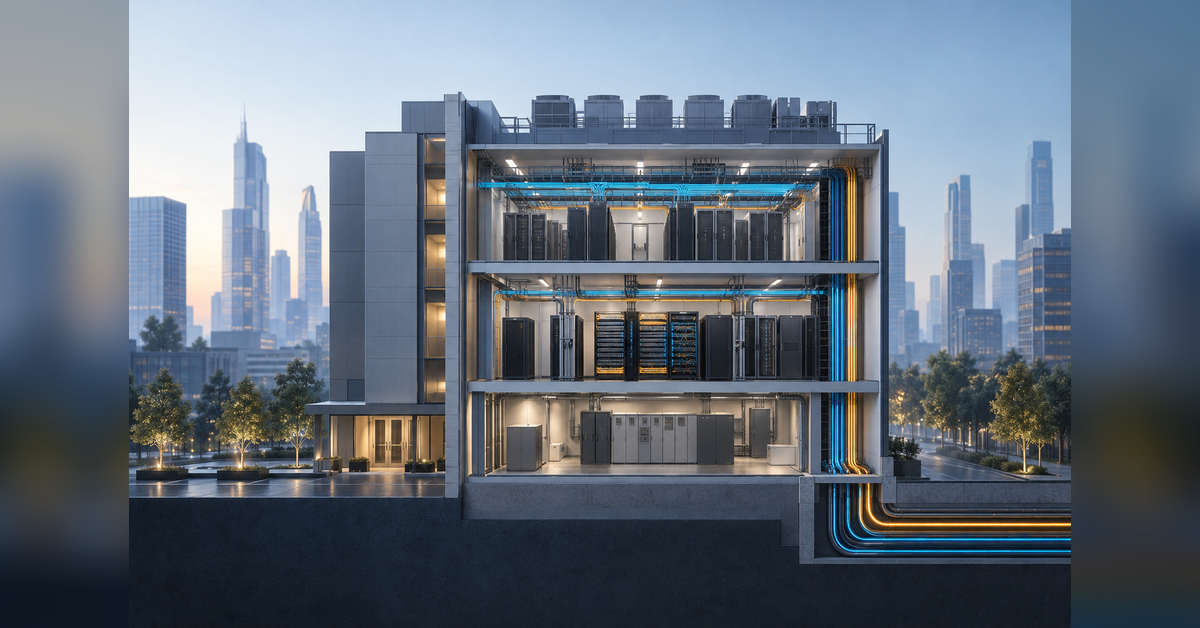

To shortlist the best Newark NJ data centers, start with 165 Halsey Street and distinguish the building-level inquiry from Equinix NY1 at that address. Then compare the service you can actually purchase, the connections you need and the capacity proposed for your deployment.
The important distinction is not which name appears first in a directory. It is whether your shortlist represents different buildings, different providers inside one building or nearby locations outside Newark—and whether each proposal answers the same operational questions.
What counts as a Newark colocation option?
For this guide, a Newark colocation option is a provider or building-level procurement path tied to an exact Newark city address. Compare both the physical location and the party supplying the service. A building and a provider inside it are different purchasing considerations, not automatically two independent facilities.
How to shortlist the best Newark NJ data centers
Begin with two distinct inquiries at one address: the 165 Halsey building contact and Equinix NY1. Use them to establish who can supply your required service and under what terms. This is an address-and-service comparison, not a claim that either option has better uptime, lower pricing or available capacity.
The 165 Halsey contact page provides the building-level starting point. The Equinix NY1 facility page identifies the Equinix Newark location. Keep both records in your procurement file, but assign them the same physical-building identifier.
Two procurement paths, one Newark building
Comparison reference date: November 3, 2026. Method: distinguish address and service role, then identify the evidence needed for a purchase. Capacity, pricing and contract terms belong in a current, deployment-specific proposal.
| Facility or operator | Exact address and city | Service model to establish | Useful starting point | Network evidence to request | Physical-fit evidence to request | Reference date | Availability and contract questions |
|---|---|---|---|---|---|---|---|
| 165 Halsey building-level inquiry | 165 Halsey Street, Newark, New Jersey | Identify the selling entity, proposed space and services included. | Clarify building-level scope and the appropriate contracting route. | Exact connection endpoints, access responsibilities and cross-connect scope. | Proposed suite or floor, deliverable IT power and cooling conditions. | November 3, 2026 | What can be delivered, by when, and by which responsible party? |
| Equinix NY1 | 165 Halsey Street, Newark, New Jersey | Establish the scope of the proposed NY1 colocation agreement. | Evaluate an Equinix-specific service proposal at this address. | Required networks and cloud connections available through the quoted service. | Proposed cabinet or cage location, power configuration and cooling suitability. | November 3, 2026 | Which services, installation dates, recurring charges and expansion terms are included? |
A useful comparison begins with your requirements, not a longer provider list. Use the data center site selection checklist to organize the workload, operational and commercial questions before contacting either party.
If resilience requires a second physical location, do not count a second contract at the same address as geographic separation. Ask your technical team to evaluate shared dependencies, including building access, utility infrastructure and network routes. Different provider names do not establish independent failure domains.
What are you buying: building access or a provider’s service?
Require every proposal to name the legal contracting party, the specific space and the services that party controls. A street address identifies a location; it does not identify every responsibility inside it. Compare proposals only after those boundaries are clear.
Ask who supplies power, who manages the proposed room, who installs cross-connects and who responds when a problem crosses those boundaries. If several parties are involved, request a responsibility map with an escalation contact for each handoff.
For a cabinet or small cage, specify the access, support and installation services you expect. For a larger dedicated deployment, specify the space, infrastructure responsibilities and expansion requirements. Do not infer those terms from a retail or wholesale label alone.
The same discipline applies to compliance requirements. Request the current document, its scope and the entity or space it covers. Treat an SLA, an audit report and a certification as separate items; do not accept one as an answer to a request for another.
Percepture’s Newark Interconnection Fit sequence
Use this five-part buyer map to move from a recognizable address to a purchase-ready scope. It is an editorial decision tool for this guide, not a facility rating or certification. Work through the sequence before comparing headline prices.
Exact address
Record the street address, city, building and proposed suite or floor. Keep a separate field for the provider. This prevents duplicate facility counts and makes city-versus-metro comparisons explicit.
Purchasable service
Describe what the seller is offering: the proposed space, support, access and installation responsibilities. Identify exclusions and third-party dependencies. The output is a service boundary that procurement and technical teams can both understand.
Networks and cross-connects
Name the required endpoints and ask how each connection reaches your equipment. Request the order path, installation responsibility, recurring charges and expected delivery milestones. Keep direct connectivity and services delivered through intermediaries distinct.
Physical capacity
Match the proposed space to the equipment schedule, power draw, cooling requirements and installation plan. Request a written capacity commitment for that space. Do not substitute a building-wide power figure for your deployment’s deliverable IT load.
Contract and expansion
Resolve acceptance criteria, billing commencement, escalation, renewal and growth terms. Ask whether adjacent space or additional power can be committed, rather than treating a possible future expansion as a contractual entitlement.
Which network and cloud connections must be available?
Start with named destinations and a connection design, not a carrier count. List your offices, existing facilities, network providers and cloud endpoints. Then ask each seller to show how the quoted service connects those destinations, including any separate carrier or third-party orders.
For every required connection, request the physical or service endpoint, port specification, ordering party and acceptance test. Ask where responsibility changes hands and whether the proposed route meets your resilience requirement. A network name on a general list is not a complete connection design.
Use the data center interconnect options guide to structure the wider architecture discussion. If the decision includes transport services, compare dark fiber, wavelength and Ethernet against the operating responsibilities your team is prepared to own.
Keep latency requirements specific. Write down the endpoints, traffic pattern and acceptable measurement method. If a workload includes tightly coupled compute, assess its internal network requirements separately from the connection between Newark and another site. Ask for evidence relevant to each path rather than one general latency statement.
What power and cooling can your deployment actually use?
Ask for deliverable capacity in the proposed space, on the required date, under the required operating conditions. Separate total site or building power from the IT load allocated to your equipment. Make the same distinction between an advertised capability and a commitment in your proposal.
Give the seller an equipment schedule with rack layouts, anticipated draw, feed requirements and cooling needs. Ask the technical team to explain the permitted load during normal operation and the conditions that apply during maintenance or a component failure. Record assumptions in the design rather than leaving them in sales correspondence.
For denser equipment, request a deployment-specific cooling review. Include airflow, rack placement, equipment dimensions and any liquid-cooling requirements in the discussion. Do not assume that a general high-density statement applies to every cabinet or suite.
The data center power availability guide provides an adjacent planning resource. For the Newark purchase itself, ask the seller to distinguish capacity available now, capacity reserved for your order and capacity dependent on future work.
Illustrative scenario: a small deployment with a second-site requirement
Input: Consider a hypothetical business moving a small application environment into colocation. It needs connections to existing network and cloud services, remote support and a separate recovery location. These are illustrative requirements, not a client case study or a description of available inventory.
Decision: The buyer evaluates a building-level path at 165 Halsey and an Equinix NY1 proposal as different service arrangements at the same address. It compares support ownership, connection delivery and physical fit. It does not count those two proposals as the primary and recovery buildings.
Next step: The buyer requests a scoped Newark proposal and separately evaluates a recovery location against its dependency requirements. Before signing, it asks the technical owners to approve the connection design and the recovery plan, while procurement reconciles the contracts and delivery milestones.
The lesson is practical: first choose the service arrangement that fits the Newark workload, then solve the separate-location requirement on its own terms.
What should the proposal and facility tour establish?
The proposal should make the promised deployment testable, and the tour should help resolve questions about that deployment. Bring the same requirements to each seller. Ask for written answers that identify the responsible party, relevant space, delivery date and acceptance condition.
Organize the request around three decisions rather than a long list of marketing features:
- Can this service support the workload? Request the proposed equipment layout, power allocation, cooling assumptions, required connections and access arrangements.
- Can it be delivered on the required schedule? Request milestones for space readiness, carrier orders, cross-connects, equipment installation and service acceptance.
- Can your team operate it under the proposed terms? Request support scope, escalation ownership, maintenance communications, billing rules and expansion conditions.
During the tour, ask to see the proposed area where permitted, not only a representative room. Discuss equipment delivery, loading access, staging, authorized-person procedures and the path to your cabinet or cage. If the proposed space changes afterward, revisit the assumptions tied to its location.
For network resilience, request a route discussion covering the building entrances and onward paths relevant to your design. The data center fiber connectivity guide can help frame those questions. Have the network owner assess the answer; do not infer route independence from two circuit names.
For commercial comparison, request an itemized schedule covering space, committed power, installation, cross-connects, support and any separately ordered services. Ask how usage, overages, increases, renewal and termination are handled. Compare proposals over the same term and deployment scope rather than comparing isolated monthly figures.
Finally, assign internal owners. IT should define and accept the technical design; procurement should reconcile the supplier obligations; finance should evaluate the complete commercial commitment. Name one project owner to coordinate dependencies and record when each service is accepted.
When should you expand beyond Newark city?
Expand the search when an exact Newark address is not a firm requirement, or when your recovery, capacity or operating model calls for another location. Keep the geography explicit. Secaucus is a nearby metro alternative, not Newark city, and should appear in a separate comparison group.
Apply the same address, service, network and capacity checks to every additional location. A provider’s metropolitan market label should not replace the facility’s city field. Likewise, keep planned developments separate from operating facilities and ask what is available for your required delivery date.
If the search extends across the river, use the New York City data center guide as a separate geographic comparison. For a wider regional decision, the data center market comparison provides a broader planning path without relabeling those locations as Newark.
Newark data center buying questions
Are there data centers in Newark?
Yes. The Newark options discussed here include the 165 Halsey building-level procurement path and Equinix NY1 at 165 Halsey Street. Treat them as separate service inquiries at one physical address, not two geographically independent facilities.
What is the largest data center in New Jersey?
Choose a metric before comparing: total building area, commissioned IT power and capacity available to a buyer answer different questions. Request dated, facility-specific figures using the same definition. For procurement, prioritize capacity committed to your deployment over a statewide size ranking.
Are Newark and Secaucus the same data center market location?
They may be considered in a broader metropolitan search, but Secaucus is not Newark city. Record each facility’s exact address and city, then compare network paths, operating requirements and commercial scope separately.
How should I compare retail and wholesale colocation?
Define the deployment before using either label. For a cabinet or small cage, specify access, support and installation needs. For a larger dedicated deployment, specify space, infrastructure responsibilities and expansion terms. Compare the actual contract scope.
What affects the cost of Newark colocation?
Ask for separate prices and terms for space, committed power, installation, cross-connects, support and third-party services. Include usage rules, increases and renewal terms. Evaluate proposals over the same deployment scope and contract period.
How do I distinguish advertised capacity from available capacity?
Request a written commitment identifying the proposed space, deliverable IT power, cooling conditions and service date. Ask which elements are available now and which depend on construction, equipment installation, reservations or third-party delivery.
Who should own implementation and acceptance?
Assign IT ownership of technical requirements and acceptance, procurement ownership of supplier obligations, and finance ownership of the commercial commitment. Name one project owner to coordinate the provider, carriers and internal team against agreed milestones.
How do I decide which provider fits my situation?
Compare each proposal against the same required address, service scope, connection design, physical capacity and contract terms. Require evidence for each must-have item. Choose based on those requirements rather than directory position or an unqualified best-provider label.
Build the shortlist before requesting capacity
Create one record per physical building and a separate record for each proposed service arrangement. Add the required connections, equipment requirements, delivery date and unresolved commercial questions. Send that same brief to the relevant sellers. Your next decision should be which proposal can meet a defined requirement—not which listing sounds most impressive.

About Bob Generale
Bob Generale is President of Percepture, a global digital marketing, public relations and AI systems agency established in 2004. His work connects search strategy, digital PR, useful content and conversion planning around the questions buyers need answered. Bob’s approach starts with understanding the audience, learning how the business actually works and turning that expertise into clear explanations people can use. He advocates practical frameworks, coordinated execution and measurement that separates visibility from qualified opportunities and revenue. In this article, he brings that operator perspective to evaluating options, clarifying tradeoffs and helping readers decide what to do next. Learn more about Bob and the Percepture team.