
A server can stay in its cabinet while the path to reach it changes. For an AI inference deployment in Jacksonville, Florida, test the application from outside the facility before accepting an operator handoff. A healthy model process tells you the server is up. It doesn’t tell you that clients, data sources and support teams can still reach it.
What is changing at 4905 Belfort Road?
Surety Datacenters says it plans to take over operation of 4905 Belfort Road on January 1, 2027. Its notice asks existing customers to complete a new agreement by December 1, 2026. Surety says that most equipment and carrier cross-connects can remain in place. It separately says customers using Flexential-provided connectivity will move to Surety’s network and renumber onto Surety-provided IP space. Confirm the arrangement for your exact service with the parties that supply it.
That distinction matters even if none of your racks move. A physical cross-connect is a cable path between two points. It does not settle who supplies an internet circuit, provides its addresses, or fields a support call. If you buy connectivity from a separate carrier, confirm how your own circuit, cross-connect order and support arrangements will carry over.
For a team still choosing a location, start with the Jacksonville colocation buyer’s guide. For a placement or recovery decision across markets, use the Florida inference siting guide. The task here is narrower: keep a specific application reachable through a change in the services behind its rack.
Build a handoff sheet for the application, not just the rack
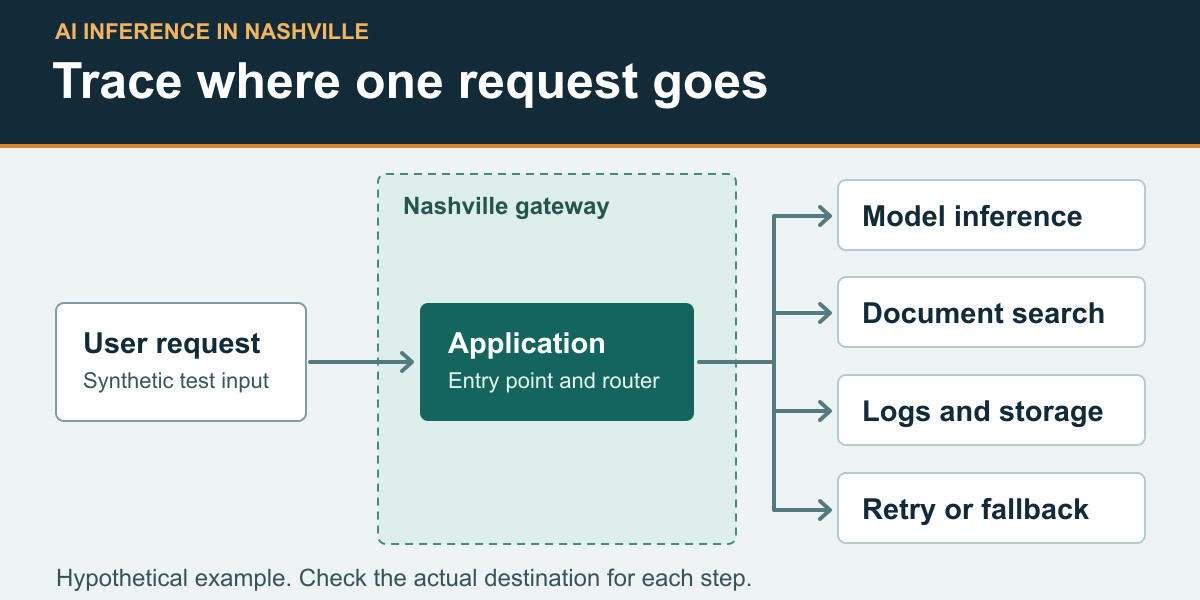
Pick one production hostname and start where a real request originates. Record each dependency it crosses before the model sends back usable output. Include outbound dependencies, such as fetching a document for retrieval or writing a result to another service. That second direction is easy to miss if all you test is whether the hostname loads.
| Handoff item | Ask for | Check before accepting |
|---|---|---|
| Rack and cross-connect | Cabinet, circuit ID, demarcation and a named ordering contact. | Network and facility teams agree which connection stays and who handles a fault. |
| Inbound traffic | Addresses expected on the new circuit, current hostname records and affected client allowlists. | An authorized client on each required network can resolve the hostname and complete a representative request over the new path. |
| Outbound dependencies | New source address or private path, and owners of retrieval, identity and other downstream dependencies. | Test one request that needs current source data. It returns the expected result; a cached or fallback reply doesn’t count. |
| Support and reversal | Named contacts, escalation window, what can be reversed and when the old service stops being usable. | Confirm who can approve reversing the change. A plan to use the old circuit is not a plan after it has been withdrawn. |
Run an outside-in check during the agreed overlap
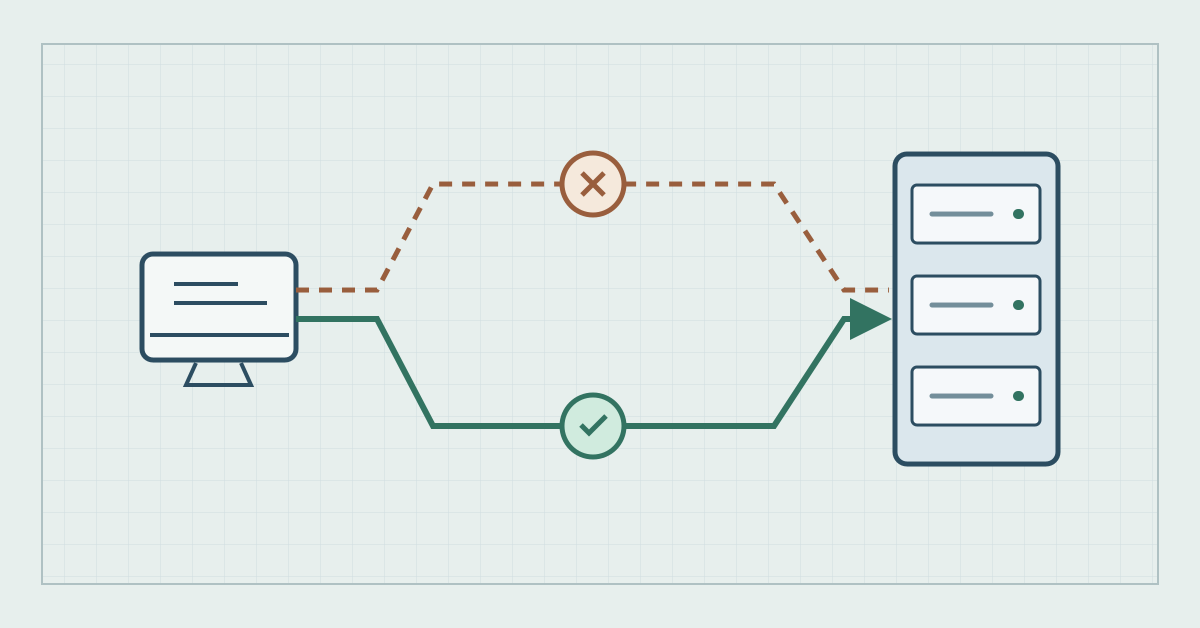
Surety describes a period when the old and new services overlap for affected customers. Treat your confirmed window as time to collect evidence. Record a baseline through the current path. Then run the same prompt, model version and retrieval fixture through the proposed path from the same approved client. Use synthetic or approved test data. Keep the app configuration fixed where possible so a changed answer doesn’t hide a routing problem.
- Check the client path. Record which address the client resolved, whether its approved network reached the expected service, and whether credentials and the secure connection worked.
- Check the answer. Send a request that must retrieve a known fixture. Verify the expected reference or result and completion time against your team’s agreed criteria.
- Check the support path. Confirm a ticket can reach the party that would handle each type of failure after the handoff. Keep the final decision and exception owner with the test record.
If private endpoints are part of the path, check them from the networks that actually need them. For example, AWS describes how DNS forwarding is used to reach centralized private endpoints. Resolving a service name from inside one cloud network is not evidence that a client outside that network will resolve it the same way. An endpoint change is not permission to open access that the application normally restricts.
A worked example: the health check that passed
Suppose the new circuit answers the health check and ten simple prompts return successfully. Four retrieval prompts then fail because a document service still expects the old source address. The model’s health is not the issue. The test owner records that dependency as a failed handoff, asks its owner to approve the new path, and tests those same four requests again. These numbers are hypothetical, not observations from 4905 Belfort Road.
While both circuits are available, confirm which customer paths can go back to the old one and how you would verify it. If the old circuit is no longer available, use the agreed contingency for that application rather than telling a customer you can reverse the change.
Questions to settle before the change
Does staying in the same rack mean our public IP addresses stay the same?
No. Confirm who provides the addresses and what that provider says will happen to your service. Surety describes renumbering for customers moving off Flexential-provided connectivity; that does not establish the result for every carrier arrangement.
What should count as a successful test?
Use a completed application request from an approved client network, including the dependencies that deliver a useful answer. Record the expected output, observed output, path and any exception. A successful ping or internal health check is not enough.
When can we stop using the old circuit?
Agree on that point with the network providers and application owner. Confirm the new service, customer access, downstream dependencies and after-hours escalation before you accept the handoff. Keep any rollback commitment within the time the old service really remains available.
If your organization needs help turning the handoff into a decision brief for business and technical teams, talk with Percepture. Bring the circuit map, accountable owners and any application paths your team still needs to prove.

About Bob Generale
Bob Generale is President of Percepture, a digital marketing and public relations agency.