
For AI inference in San Diego, test the GPU pool with your interactive requests and your batch jobs running together. A demo with the batch queue empty shows how the service behaves in quiet conditions. It does not tell you whether an employee’s request will still start and finish on time during a production import.
Can interactive and batch AI jobs share the same GPU pool?
They can share a pool when interactive requests still meet their response target during representative batch load and the batch work still finishes by its deadline. Measure both from the application, count the failed and late requests, and repeat the test with a mitigation if either side misses. A GPU model, utilization figure or idle demo is not an acceptance result.
Give each workload its own finish line
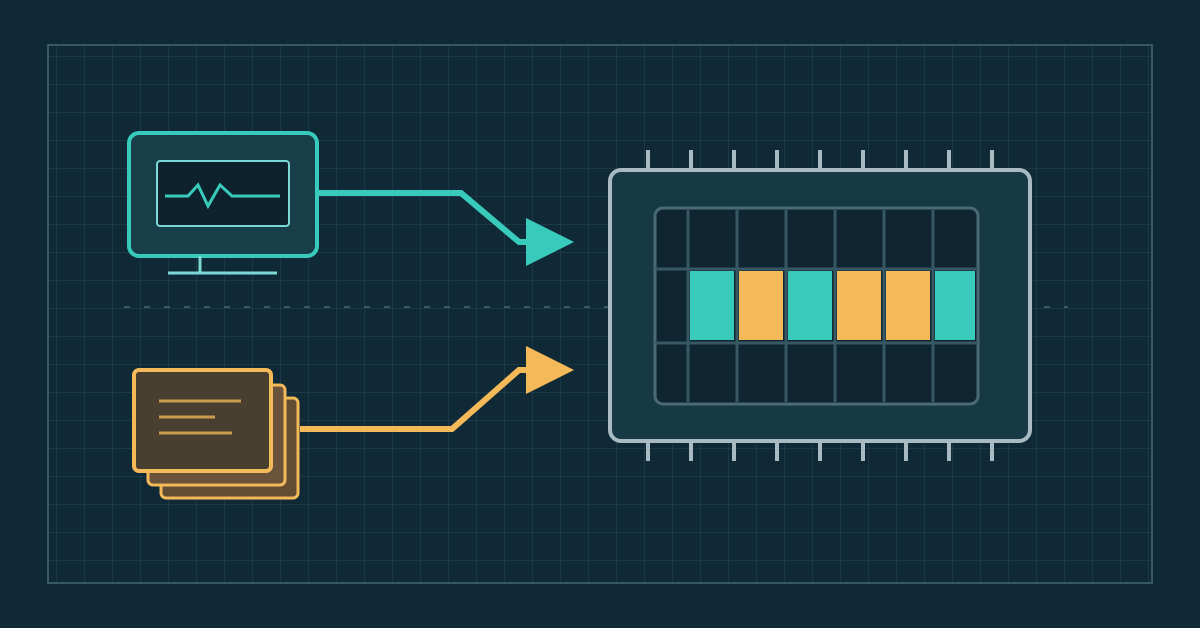
Say a San Diego operations team needs a support assistant during the workday and uses the same model to classify a backlog of tickets. The support staff are waiting at a screen. The backlog can wait until a reporting deadline. A pool can have strong overall throughput and still be a poor fit if those short live requests spend too long waiting.
For the assistant, record when the application submits a request, when the first useful output arrives and when the answer finishes. For a streaming interface, define what counts as visible output. A connection handshake, an empty event and text the person can read are different milestones. Count timeouts and cancellations with the submitted requests instead of discarding them from the result.
For the backlog, record the submitted and completed items, the time the full file becomes usable, and anything a retry left missing or duplicated. Set separate deadlines before running the test. The San Diego colocation buyer guide helps compare facility commitments. This test evaluates how the specific inference service handles competing work at the deployment you are considering.
Run the same interactive requests with and without batch work
Ask the vendor to identify the endpoint, model version, GPU pool and admission policy that will apply to your account. If the order specifies San Diego, record which deployment actually served each trial. A branded region name alone does not tell you whether two trials ran on the same capacity.
Start with a fixed set of short and long requests and a realistic arrival pattern. Use synthetic or approved inputs. Save the same model configuration, output limits and client location for each run. Start the batch from a comparable state and document whether warm caches are expected. The goal is to change the competing load, not several parts of the system at once.
| Trial | What runs | What to record |
|---|---|---|
| Baseline | Interactive requests only, at the agreed arrival rate. | Submitted, on-time, late and failed requests; first useful output and full-answer time. |
| Mixed load | The same interactive requests while a representative batch runs. | Both sets of results, batch start and finish, and available queue and rejection measurements. |
| Mitigation | The same mix with a proposed cap, reservation or separate pool. | Which policy changed, whether both targets are met and what extra capacity or operating effort it requires. |
Run the trials more than once across the work periods that matter. Keep run counts and exceptions alongside percentiles. If the provider has no safe load-test environment, agree on a bounded test window and stop limit before sending any traffic.
Count missed requests before diagnosing the queue
Suppose your internal target is at least 95 of 100 interactive requests receiving useful output within one second and finishing within the agreed full-answer deadline. In an illustrative baseline, 97 of 100 meet both conditions. During batch load, 88 meet both, eight finish late and four time out. The mixed run misses the target even though 96 answers eventually complete. These are invented trial results, not measurements from a San Diego service or suggested production limits.
Compare client timing with the provider’s evidence. The vLLM metrics documentation, for example, describes waiting requests, scheduler queue time and time to first token. Ask which equivalent counters the vendor can supply for your run. Apply them to the same time window and identify whether readings describe your tenant, your pool or the whole service.
When wait time and late requests rise together during the batch, queue contention is a plausible cause, not a completed diagnosis. Longer inputs can change model work. Retrieval or network delays can also increase the time measured by the client. Change one condition and rerun the test. For questions beyond the GPU scheduler, the AI inference demand guide separates the wider request path from the buyer’s response target.
Turn a passing run into a capacity decision
If throttling the batch preserves the interactive target and still meets the reporting deadline, ask for that cap and the person who can change it. If it protects the assistant but leaves the file too late, compare separate queues with reserved capacity or a separate pool. Get the minimum usable capacity, scheduling rules, price and escalation route in writing. Then test the proposed arrangement again.
Put the evidence into the acceptance terms: named deployment, traffic mix, measurement points, failure rules and the results each side must meet. Keep rate increases and failover behavior separate from the shared-load test. Procurement can then compare the measured result against the offer without confusing a demo setting with the service it is buying.
Questions to ask before signing
Is a separate endpoint enough to isolate batch work?
Not by itself. Ask whether the endpoints use different GPU pools or share a scheduler or reservation. Test the arrangement you would actually buy.
Is first-token time the same as application response time?
No. A model server, a streaming client and the person using the application may observe different events. Specify the first useful output and full response at the application; use server timing to investigate the gap.
What should a vendor provide if it cannot share raw logs?
Ask for permitted run-level totals, timing distributions, deployment and policy identifiers, and an explanation of counter scope. Retain your own client-side records and treat any missing server evidence as a limit on the diagnosis.
Make the service terms as specific as the test
Share the two workload targets and the mixed-run results with the team writing the proposal. If you market a data center or inference service, talk with Percepture about presenting the evidence buyers need without promising performance the service has not demonstrated.

About Bob Generale
Bob Generale is President of Percepture, a digital marketing and public relations agency.