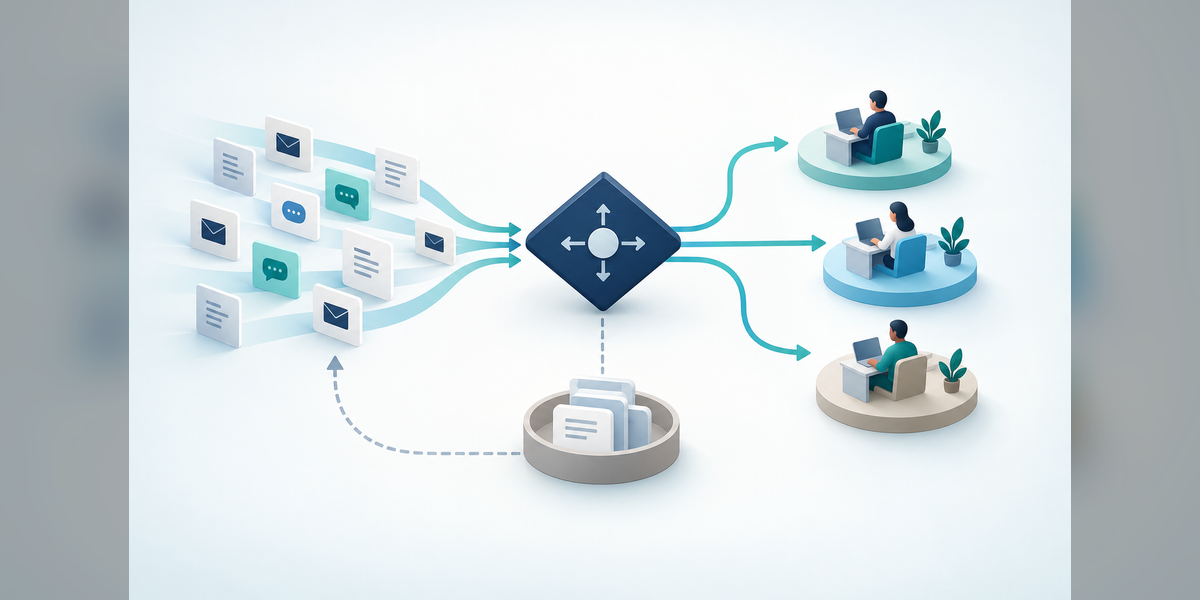

The investment case for low-latency AI inference must be proved workload by workload. AI inference demand alone does not establish a need for distributed sites. A credible opportunity connects an identified buyer, a measurable response-time requirement, a location-dependent performance advantage, and willingness to pay for that advantage.
For data center buyers and builders, that distinction changes what deserves capital. Qualify the application and its service requirements before selecting a facility, reserving power, or presenting an edge footprint as evidence of customer demand.
What is AI inference demand in 2026?
For infrastructure planning, AI inference demand means the capacity and services required to run trained models for a defined application. Specify the workload, usage, response requirements, operating location, and customer commitment before translating that demand into a facility requirement.
What it is not: training demand, installed GPU capacity, general interest in AI, or proof that processing must happen near the user.
For the underlying terminology, see Google Cloud’s introduction to AI inference.
Why inference growth does not automatically mean edge demand
Separate three propositions: an application uses a model; the application has a response-time objective; meeting that objective requires a particular location. An edge investment needs evidence for the third proposition, not just enthusiasm about the first.
Keep two demand assessments. One asks how much inference capacity a customer needs. The other asks why that capacity must sit in your proposed facility or geography. A strong answer to the capacity question does not substitute for a placement case.
For example, when a batch job can finish within its required window from a centralized facility, ask what a regional deployment would improve enough to justify its additional operating commitments. When an interactive application misses its response target, first identify which part of the request path consumes the budget.
What people get wrong
- Using a training constraint as an inference rule. Evaluate power, cooling, networking, and response requirements for the actual workload.
- Equating proximity with application performance. Compare the complete user or machine experience, not distance to a rack.
- Counting interest as booked demand. Separate exploratory conversations, funded evaluations, and recurring paid deployments.
Which inference workloads need ultra-low latency?
Start with the consequence of a late answer. What becomes unusable, loses value, or must stop when the application misses its deadline? If the buyer cannot explain that consequence, do not turn the phrase “real time” into a site-selection requirement.
Qualify AI inference demand with a latency budget covering the full path: input capture, transmission, queuing, model execution, retrieval or tool calls, response delivery, and the action that follows. Ask the application owner to allocate that budget rather than accepting a single unexplained target.
- Conversational applications: test turn-taking, interruptions, the first useful response, and completion of the requested task.
- Interactive visual applications: define how quickly a fresh observation must produce a useful response.
- Physical systems: identify the sensor-to-action deadline and which decisions must remain available without a remote connection.
For safety-critical applications, have qualified engineers define control and fail-safe requirements before considering remote execution.
Specify the measurement boundary, expected load, and acceptable slow-response rate. Time to first token, full-answer completion, and end-to-end task completion are different measurements; request the one that represents the buyer’s actual service requirement.
Batch inference vs interactive/agentic inference vs physical AI
Use the following comparison to structure qualification. It includes training as a reference point so a training capacity discussion does not silently become an inference placement decision.
| Workload | Latency sensitivity | Likely location to evaluate | Network dependency to test | Power priority | Proximity test | Buying maturity: evidence to request |
|---|---|---|---|---|---|---|
| Training | Job-completion deadline | Centralized cluster candidate | Training fabric, storage, and data-ingest paths | Match sustained power and cooling to the training plan | Evaluate placement of training resources separately from user proximity | Approved training plan and capacity commitment |
| Batch inference | Required completion window | Centralized facility candidate | Input transfer, scheduling, and result delivery | Match capacity to the processing window | Determine whether distance changes deadline compliance | Repeat funded runs and an operating owner |
| Interactive or agentic inference | Response and complete-workflow targets | Compare centralized and regional options | User access, retrieval, tool calls, and service dependencies | Size against measured concurrency and service targets | Require a demonstrated application-level benefit | Recurring production traffic with paid service requirements |
| Physical AI | Application-specific decision deadline | Evaluate device, on-premises, and nearby-site options | Availability, jitter, and behavior during disconnection | Meet device or site limits and resilience requirements | Evaluate the complete sensor-to-action path | Paid deployment with validated operating requirements |
An agentic label is not a placement specification. Map each model invocation, retrieval step, and external action. Then compare where the complete workflow meets its requirements—not merely where one model call finishes fastest.
What buyers and builders are saying now
Hunter Newby, founder of Newby Ventures, frames the networking issue directly:
“For inference workloads, north-south traffic is the game.”
Hunter Newby
He also states:
“The network outside the data center is not an afterthought—it’s a critical path component.”
Hunter Newby
Use that perspective to examine the paths between the facility, the application’s inputs, its users, and its other services. Do not stop the assessment at the data center boundary.
These are architecture questions. The commercial question is more demanding: which customer will pay for the advantage that a particular network and location combination provides? An expert’s infrastructure perspective is not a substitute for that customer evidence.
How device inference changes the edge equation
Include the device in the placement comparison. When a task can meet its quality, response, and operating requirements locally, evaluate that option before assuming it creates demand for a nearby data center.
Ask which functions belong on the device and which require another computing location. Separate an immediate local decision from optional enrichment, model updates, historical analysis, or a larger follow-up task. Assess each function against its own requirements.
A device-first option belongs in an AI inference demand assessment even when the commercial proposal is for off-device capacity. Otherwise, the forecast may assign infrastructure revenue to work the customer intends to execute elsewhere.
Compare acceptable output quality, device resource limits, connectivity assumptions, support responsibilities, and the fallback path. Do not assume either that every function will move onto a device or that every device needs a regional inference service.
Percepture Inference Demand Readiness Ladder
Use the Percepture Inference Demand Readiness Ladder to connect a technical requirement to a commercial commitment. It is a qualification sequence, not a model for predicting market size.
1. Workload
Name the application, model task, input, output, and operating owner. Replace “we need AI capacity” with a workload specification that someone can evaluate.
2. Latency budget
Define the complete application deadline, measurement points, expected load, and acceptable exceptions. Record the consequence of missing the target.
3. Locality requirement
Compare centralized, regional, on-premises, and device execution where feasible. Identify which requirement rules an option in or out.
4. Network dependency
Map the paths to users, data, retrieval systems, tools, and backup services. Test the proposed placement with those dependencies included.
5. Economics
Compare the cost of delivering an acceptable outcome. Include utilization assumptions, connectivity, resilience, operations, and the cost of capacity that remains idle.
6. Evidence of paid demand
Identify the budget owner, purchasing mechanism, service commitment, and payment trigger. Distinguish evaluation spending from recurring production demand.
Stop at the first unanswered rung. A location discussion without an application deadline is premature; a successful technical evaluation without a purchasing path is not yet a recurring-revenue case.
Bob Generale’s rule captures the discipline: “The most expensive infrastructure decision is solving the wrong constraint.”
What would prove the low-latency market is real?
For a specific investment, look for a chain of evidence: a customer requirement, a placement-dependent performance advantage, workable delivery economics, and a commercial commitment. Broader AI inference demand is context, not a substitute for that chain.
Ask for these artifacts during diligence:
- A workload specification: what runs, how often, under whose operational ownership, and with which service requirements.
- A production-like comparison: representative inputs and load, consistent output-quality criteria, complete response measurements, and credible placement alternatives.
- A cost model: required capacity, expected utilization, network charges, operating responsibilities, resilience, and sensitivity to lower usage.
- A commercial commitment: a funded buyer, defined acceptance criteria, payment terms, and clarity about what happens after an evaluation.
Keep the status of each artifact distinct. A benchmark addresses performance. A funded pilot establishes an evaluation purchase. A production agreement establishes a different commercial commitment. Do not combine them into one undifferentiated pipeline number.
For a multi-site expansion, seek evidence that the requirement and economics can repeat across the proposed footprint. One location-specific customer case does not establish the same buying case everywhere.
Marketing leaders should carry these distinctions into data center marketing. Lead with the workload and service requirement the offer addresses, and separate technical evidence from commercial evidence.
Buyer checklist
Before committing capital against AI inference demand, take these questions into the investment, procurement, or go-to-market meeting:
- Can the customer name the production workload and the budget owner?
- Is the response target measured across the complete application path?
- Have centralized, regional, on-premises, and device alternatives been considered where feasible?
- Does the proposed location improve the requirement that actually matters?
- Are retrieval, tool calls, access networks, and fallback dependencies included?
- Do the economics still work under lower utilization or a slower rollout?
- Is the opportunity an inquiry, an evaluation purchase, or a recurring production commitment?
- Can the sales team explain why this buyer needs this location without relying on general AI growth?
For marketing leaders, preserve the same qualification language across omnichannel marketing: the website, sales presentation, event pitch, and follow-up should describe the same workload and service commitment.
Evaluating marketing support for an infrastructure offer?
If you are considering Percepture for marketing support, explore the agency’s engagement options. Keep that decision separate from purchasing compute capacity or colocation.
FAQs
Is AI inference demand the same as demand for edge data centers?
No. A workload’s need for inference capacity and its need for a particular location are separate questions. Establish edge demand by showing why the application’s requirements cannot be met acceptably by the alternatives under consideration.
What counts as ultra-low latency?
Use the application’s measured deadline rather than a universal threshold. Specify where measurement starts and ends, the operating load, the acceptable slow-response rate, and the consequence of a late result.
Does agentic AI require edge deployment?
Do not infer a placement requirement from the agentic label. Map model calls, retrieval, external tools, and actions; then compare candidate locations against the complete workflow’s response, quality, reliability, and cost requirements.
Can on-device AI remove the need for data centers?
Evaluate the workload function by function. If a function meets its requirements on the device, do not automatically count it as off-device demand. Assess any remaining remote functions separately rather than assuming either a fully local or fully remote architecture.
How should buyers compare latency claims?
Require comparable workloads, inputs, output-quality criteria, load conditions, and measurement boundaries. Separate the first useful response from full completion, and include the dependencies the production application actually uses.
What is the strongest evidence of paid demand?
For an infrastructure investment, prioritize a funded production commitment tied to a defined workload, service requirement, and purchasing owner. The strongest evidence of AI inference demand connects that commitment to delivery economics and shows why the proposed location earns its place.

About Bob Generale
Bob Generale is President of Percepture.