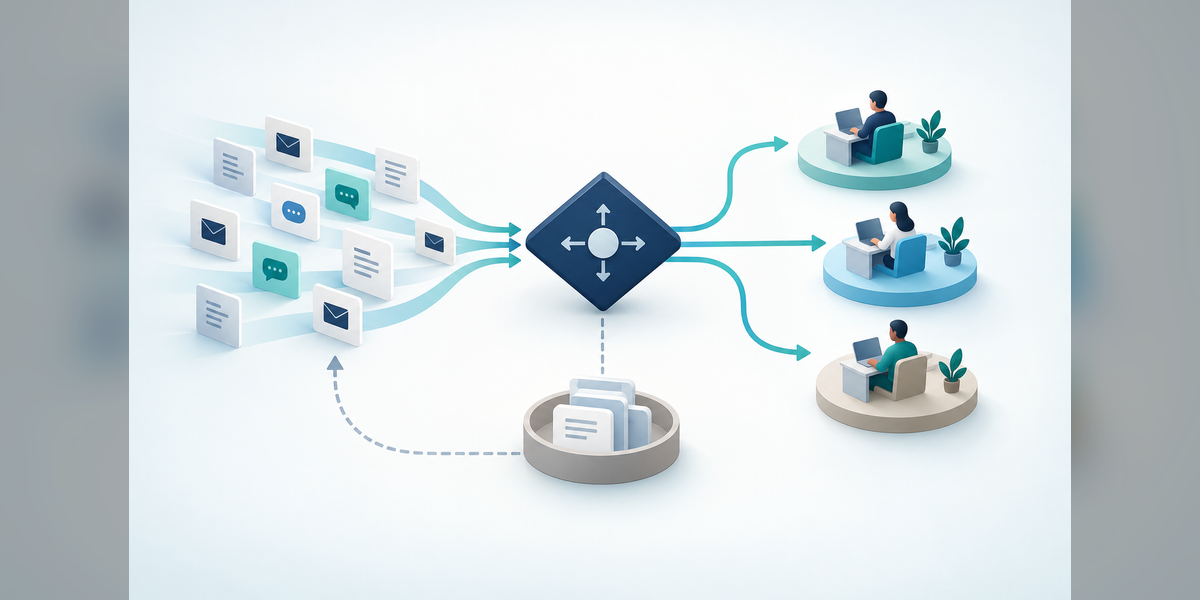

AI training data centers support model development; inference infrastructure runs trained models. For buyers comparing AI training vs inference data centers, the useful split is training, batch inference and latency-sensitive inference. Evaluate power and cooling alongside the internal network, the path to users and data, and the application’s response deadline.
A low power price does not settle the location decision, and a nearby GPU does not establish a fast application. Start with the constraint that would make the workload fail, then compare sites against that constraint.
Which AI workload are you placing?
Training
Develop or update a model. Ask whether the proposed power, cooling, storage and accelerator fabric support the training design.
Batch inference
Run a trained model against queued work. Compare completion deadlines, data movement and cost per accepted output.
Latency-sensitive inference
Return an answer within an application’s response budget. Evaluate the complete path between the user or device, the model and its dependencies.
What is the difference between AI training and inference?
Training develops a model’s ability to make predictions or generate outputs. Inference uses that trained model to produce an output. See Cloudflare’s inference-versus-training explainer for the basic distinction.
For a facility buyer, the next question is operational: what must the infrastructure deliver for this particular job? A proposal for distributed training should explain how accelerators work together. An inference proposal should explain how requests arrive, where required data sits and when results must return.
Do not accept “supports AI” as the complete specification. Request a workload description, a capacity requirement, a service target and an acceptance test. Those four items make competing proposals easier to compare without assuming that every training job—or every inference service—has the same design.
Why inference is not one workload
An overnight document-processing queue and a live customer conversation both use inference, but their buyers should not write the same placement brief.
For the overnight queue, define when the work must finish and what constitutes an acceptable result. For the live conversation, define how long the user can wait for the first useful response and for the completed answer. A service can meet one target and miss the other.
Physical AI adds another question: which decisions must remain close to a device or process? Treat that as a deployment requirement within inference, not as a fourth model-development stage. Specify the control deadline, connectivity assumptions and behavior during a connection failure before deciding what belongs locally or remotely.
Use this workload distinction when evaluating AI inference infrastructure. “Inference” identifies a model operation; it does not, by itself, choose a geography.
Training data centers: power, cooling and east-west fabric
For a training deployment, start with an equipment-level design rather than a campus-level capacity claim. Ask the provider to map the proposed racks to deliverable electrical capacity, cooling requirements and the date each supporting system will be available.
Then examine the east-west fabric: the network connecting the participating compute systems. For distributed training, ask how the design handles accelerator communication, congestion and failures. Separate that discussion from the facility’s connections to carriers, clouds and other sites.
- Power: What capacity is available to this deployment, under what operating conditions and on what date?
- Cooling: Which equipment requirements does the proposed cooling design support?
- Internal fabric: What topology and acceptance tests accompany the compute configuration?
- Data access: How will training data, checkpoints and recovery traffic reach the systems?
Carry the equipment assumptions into the data center power availability discussion. Do not let an aggregate megawatt figure stand in for a deployable configuration.
Batch inference: economics and centralized capacity
When work can wait in a queue, evaluate centralized capacity against the actual completion window. Do not pay for a proximity requirement that the application does not have—but do not assume that a flexible deadline makes connectivity irrelevant.
Ask where the input data begins, how it reaches the model and where the results must go. Include transfer, storage, retries and orchestration in the proposed cost model. A low compute rate is only one line in that calculation.
For example, an overnight classification job can be evaluated against a morning delivery deadline. The acceptance test should specify the input volume, output quality requirement and completion time. That gives procurement a business result to compare instead of a collection of equipment prices.
Latency-sensitive inference: north-south traffic and interconnection
For interactive services, trace the north-south path: requests entering the serving environment and responses leaving it. Start with the actual users, devices or application entry points—not a straight-line distance between two cities.
Draw the complete request path, including any gateway, model endpoint, retrieval system, database or external service the application requires. Identify which connections are local, which cross a wide-area network and which must remain available during a failure.
Ask for routes to the relevant destinations, not just a carrier count. Evaluate the proposed data center fiber connectivity against those routes and the service’s availability requirements.
Metro-local placement is one option to evaluate, not a rule for all inference. Select the geography that meets the application’s response, data-location, capacity and cost requirements under representative conditions.
In-cluster microseconds vs WAN milliseconds
Keep two measurement boundaries separate. GPU-fabric latency concerns communication within the compute environment. WAN latency concerns communication across the wider network between defined endpoints. A figure for one does not establish performance for the other.
When a proposal discusses microseconds inside a cluster and milliseconds across a facility or interconnection path, ask what was measured. The units alone do not tell you whether the number describes a link, a round trip, an operation or a complete application response.
- For the internal fabric: Request endpoints, topology, message size, load and measurement method.
- For the WAN: Request source and destination, route, one-way or round-trip scope, and normal and failover conditions.
- For the application: Request arrival rate, queue time, first useful response, completion time and the agreed latency percentile.
Do not subtract a network measurement from an application target until both measurement scopes are clear. Include these boundaries in the data center interconnect design brief so teams are not comparing different meanings of “low latency.”
Training vs inference data center comparison
Use the matrix to request comparable answers. The columns describe evaluation priorities, not fixed rack densities, cooling technologies or latency guarantees.
| Dimension | Training | Batch inference | Interactive inference | Physical AI inference |
|---|---|---|---|---|
| Power | Can the planned compute deployment be energized on schedule? | Can capacity support the required completion window? | Can capacity support the target request load? | What power is required locally and remotely? |
| Rack density | Does the rack plan match the training equipment? | Does the configuration fit the throughput target? | Does the configuration fit the serving design? | Which equipment belongs at the device, edge or central site? |
| Cooling | Does cooling match the equipment specification? | Does cooling support the proposed operating schedule? | Does cooling support the planned serving capacity? | What environmental requirements apply at each location? |
| East-west bandwidth | How will distributed compute communicate? | What internal communication does the model require? | What fabric does the serving architecture require? | Which local or remote components exchange data? |
| North-south connectivity | How will data and checkpoints move? | How will inputs arrive and outputs return? | How will user requests reach the service? | Which device-to-site connections are required? |
| Latency | What internal communication target supports the job? | What is the completion deadline? | What are the first-response and completion targets? | What is the deadline for each decision or action? |
| Geography | Which sites meet capacity and data requirements? | Where can the job meet its deadline economically? | Which locations meet the end-to-end response budget? | Which operations must remain close to the process? |
| Interconnection | Which storage, cloud and site connections are required? | Where are the data sources and output destinations? | Which network and application dependencies matter? | What local and remote dependencies must remain reachable? |
| Redundancy | How will interrupted work recover? | Can work retry within the deadline? | Does failover preserve the service target? | What happens when power or connectivity is lost? |
| Economics | What is the cost to reach the accepted training result? | What is the cost per accepted completed output? | What is the cost per request at the required service level? | What is the total cost of the local and remote design? |
Keep workload economics separate from the ownership and funding decision. For the latter, consider data center financing structures alongside the operating requirements.
Percepture Three-Workload Placement Test
Use this planning worksheet to turn an AI requirement into a placement brief. Evaluate training, batch inference and latency-sensitive inference separately, even when they belong to the same application.
- Training: Define the equipment, training objective, data requirements and acceptable completion or recovery window.
- Batch inference: Define the queue, output-quality requirement, deadline and cost unit.
- Latency-sensitive inference: Define the request path, response budget, operating locations and failure behavior.
For each workload, answer six questions:
Power
What capacity must be deliverable, and when?
Internal fabric
Which compute components must communicate, and under what load?
WAN path
Which users, data sources and dependencies must the deployment reach?
Proximity
What must be nearby, and what application requirement establishes that need?
Cooling
What equipment-level cooling requirements must the site support?
Economics
What accepted business output will be used to compare total cost?
The output should be a short placement brief: workload, binding constraint, acceptable locations, required dependencies, acceptance test and cost unit. Reject a proposal when it cannot satisfy a non-negotiable requirement; use price to compare the remaining options.
Buyer checklist
Before comparing final offers, ask each provider for the same evidence package:
- Workload assumptions: Equipment, model-serving or training design, demand and data locations.
- Deployable capacity: The power and cooling configuration assigned to your deployment, with delivery milestones.
- Network boundaries: Internal fabric, external routes and application dependencies shown separately.
- Test conditions: Representative inputs, concurrency, measurement endpoints and acceptance thresholds.
- Failure behavior: Recovery, retry, failover and service behavior during dependency loss.
- Comparable economics: The same output definition, service target and included cost categories across offers.
Carry these requirements into your data center site selection checklist. The useful question is not which facility sounds most advanced. It is which proposal meets the workload’s constraints with a clear, testable operating plan.
FAQs
Does inference require an edge data center?
Do not make edge placement a default requirement. Specify the application’s response deadline, data-location requirements and connectivity assumptions, then compare local, regional and centralized options against the same acceptance test.
Should buyers compare cost per GPU-hour or cost per request?
Choose a cost unit that matches the purchased outcome. Use resource pricing to understand the inputs, then compare total cost per accepted training result, completed batch output or served request at the required service level.
Can physical AI rely entirely on a remote data center?
Evaluate that question at the application and control-system level. Identify which decisions must continue during a connectivity failure and which can wait for a remote response. For safety-related functions, require the responsible engineering team to define and validate the operating design.
For teams bringing AI capacity to market
Translate the placement brief into buyer-facing content: name the workload, explain the constraint and attach the evidence your team can supply. Keep that story consistent through omnichannel marketing, rather than presenting every campus as suitable for every AI application.
Evaluating a marketing partner? Review Percepture’s case studies.
About Bob Generale

Bob Generale is President of Percepture. Connect with Bob on LinkedIn.