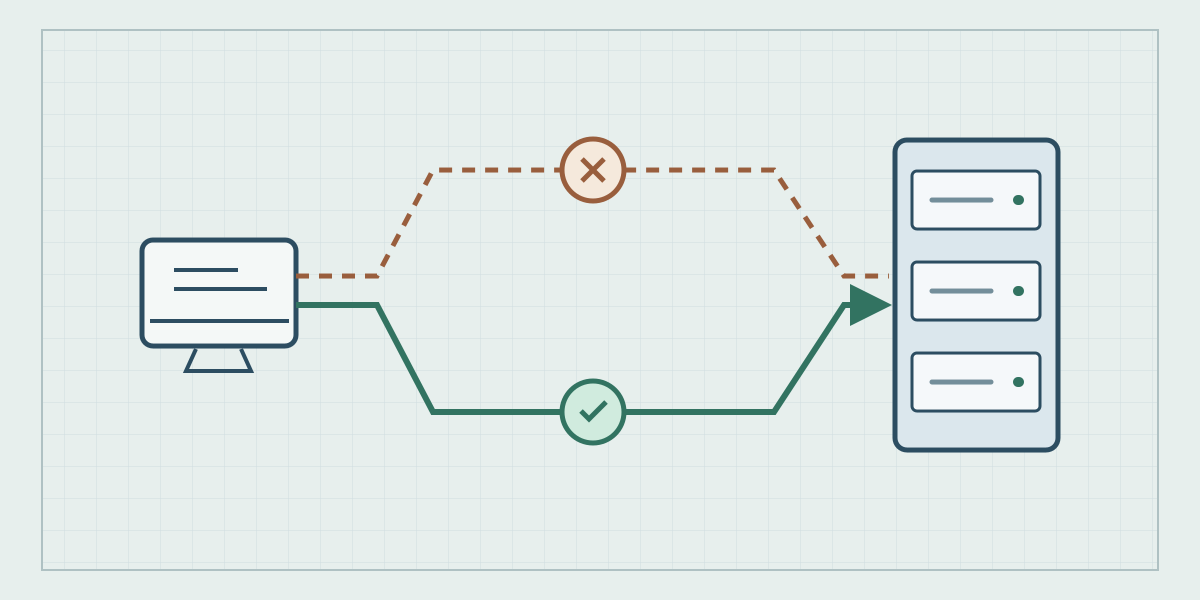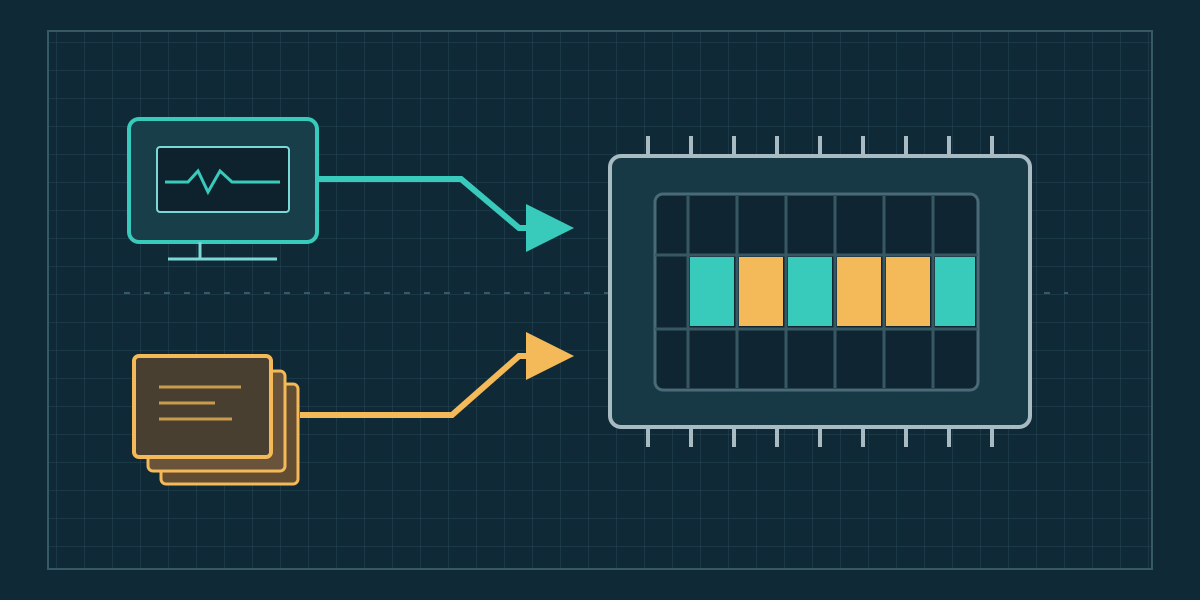

For AI inference in Salt Lake City, test what happens to the first request after the service has been quiet. A fast response from an already-running model does not show how long a new instance takes to become ready, whether the first request times out, or whether the provider redirects it somewhere else.
What should an inference cold-start test prove?
Measure the wait from the first request after a confirmed idle state to the first useful answer, and count requests that never received one. Compare an idle run with an already-warm run at the same endpoint. If they behave differently, ask for evidence of where the time went and what the vendor guarantees at the minimum capacity you’re buying.
Start with a known idle state
A quiet endpoint may still have a ready model instance. Before calling a test a cold start, ask the provider how it will confirm the instance count, the ready capacity allocated to your service, the length of the idle interval and any shared capacity that can answer on your behalf. If it cannot establish that state, describe the run as a first request after a quiet period.
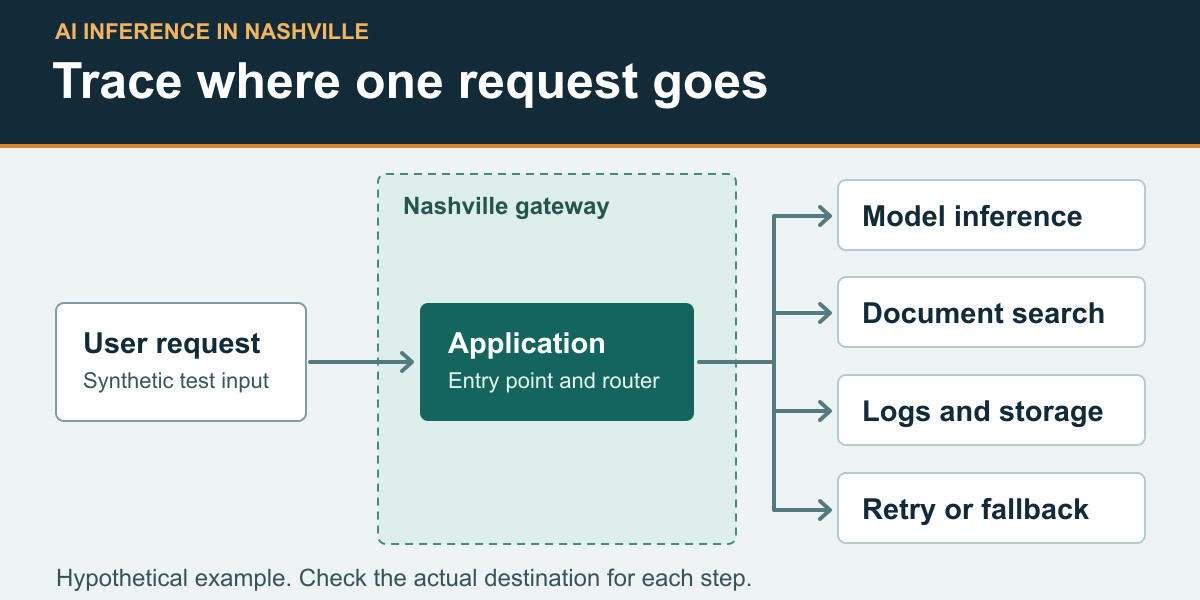
Make the location part of the evidence. If the proposal specifies a Salt Lake City deployment, ask for the service location identifier and a record of whether the trial was served there. Keep local responses separate from any rerouted traffic. The Salt Lake City colocation guide helps you choose a building and verify infrastructure commitments. This test answers what the inference service can deliver after an idle interval.
The transition matters for a service that gets little traffic overnight and then has to answer a queue of requests when a shift begins. Agree on test dates, traffic ceilings and stop conditions. Use synthetic or approved inputs and keep the output limits, client location and service version constant. Don’t generate deliberate load on an unapproved production endpoint.
Record three events in the same trial
Bring the provider and application team into the same review. An allocation event tells you when resources were requested, not when the application can use the service. A ready signal tells you what the serving system reports, not that the client has received a useful answer. The client completion is the third record.
| Event | What to record | Why it matters |
|---|---|---|
| First request | Client timestamp, model and endpoint, assigned request ID, timeout and the provider’s confirmed pre-request state. | Separates real scale-up from ordinary first-call effects in an already-warm service. |
| First ready instance | Provider’s allocation and ready timestamps, location and what the ready signal checks. | Shows whether the delay was before the model could accept work. It does not prove a successful client response. |
| First usable answer | First useful output and full response from the client, plus errors, retries and any changed serving destination. | Shows what users experienced, including requests that never returned usable output. |
The Kubernetes guide to startup and readiness probes illustrates why initialization and readiness are separate checks. Ask what the scoring endpoint tests on the proposed service. If those signals are not available to you, record the limits and base the acceptance test on client evidence rather than guessing at internal causes.
Compare the first wave with the steady state
In a hypothetical trial, a confirmed idle endpoint receives 12 requests in the opening wave. Its first instance reports ready after 23 seconds. A usable answer reaches one client after 29 seconds, while three requests time out. A separate warm run of the same request mix returns all 12 answers. Those numbers are invented to show how to report the test, not a Salt Lake City measurement, an industry benchmark or advice on timeout settings.
Keep the timed-out requests in the denominator. If the application retries, count both attempts under the original user request and record whether the retry returned usable output. Otherwise a vendor could report only the successful retry and conceal the delay the user actually saw. Run several planned idle cycles and report each run alongside the summary. One event shows where to investigate, not how frequently it will recur.
After the endpoint recovers, allow it to serve the same traffic in a confirmed warm state. If it meets the target warm but repeatedly misses after idle, compare capacity policies rather than declaring the pool universally slow. The shared GPU capacity guide covers a separate question: whether already-running interactive work remains responsive beside batch jobs.
Write down what the warm-capacity price buys
Ask suppliers to price the same service under two policies: the idle behavior they normally offer and an explicitly defined minimum ready capacity where available. Some model-serving stacks can scale on workload signals; KServe’s autoscaling documentation shows examples. It doesn’t establish what your vendor implemented. Verify the actual serving setup, allocation priority and what happens when existing capacity is taken offline for maintenance.
Have the provider identify minimum ready capacity, hours covered, location, scale-up signals and how a request is treated when the minimum cannot be delivered. Compare the two priced offers against the missed first-wave requests observed in your test. The review should end with either an acceptable recovery target or an explicit commitment for ready capacity, not a general promise that everything scales automatically.
Salt Lake City inference questions
Is an idle first request always a cold start?
No. A provider can keep a ready instance or serve the request elsewhere. Check the starting state and actual serving destination before labeling it a cold-start test.
Can one ready instance guarantee every request will finish on time?
No. A ready instance reduces one source of delay but still has a finite workload it can accept. Validate the expected first wave and count late and failed requests separately.
What should stay in the acceptance record?
Keep the workload and arrival pattern, authorized test window, idle-state evidence, timestamps, error totals and the evidence tying the response to the quoted location and service configuration.
Give procurement the result it can act on
Summarize the first-wave result, the comparable warm run and the contract term needed to close the gap. If you sell infrastructure and need help explaining service commitments in clearer buyer materials, talk with Percepture about what your published evidence can support.

About Bob Generale
Bob Generale is President of Percepture, a digital marketing and public relations agency.