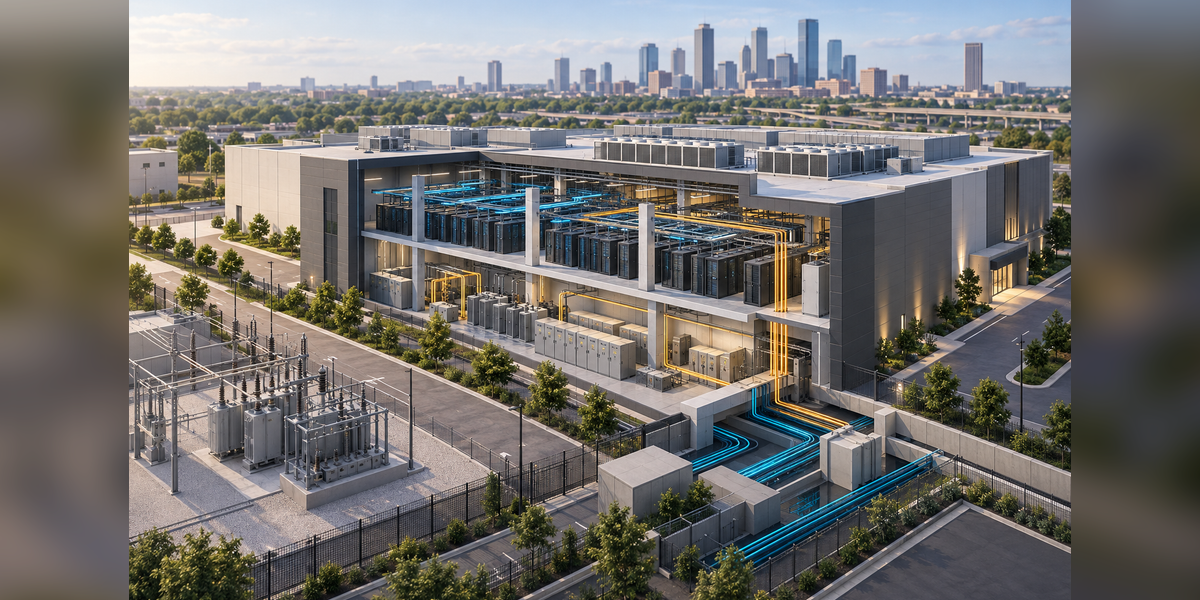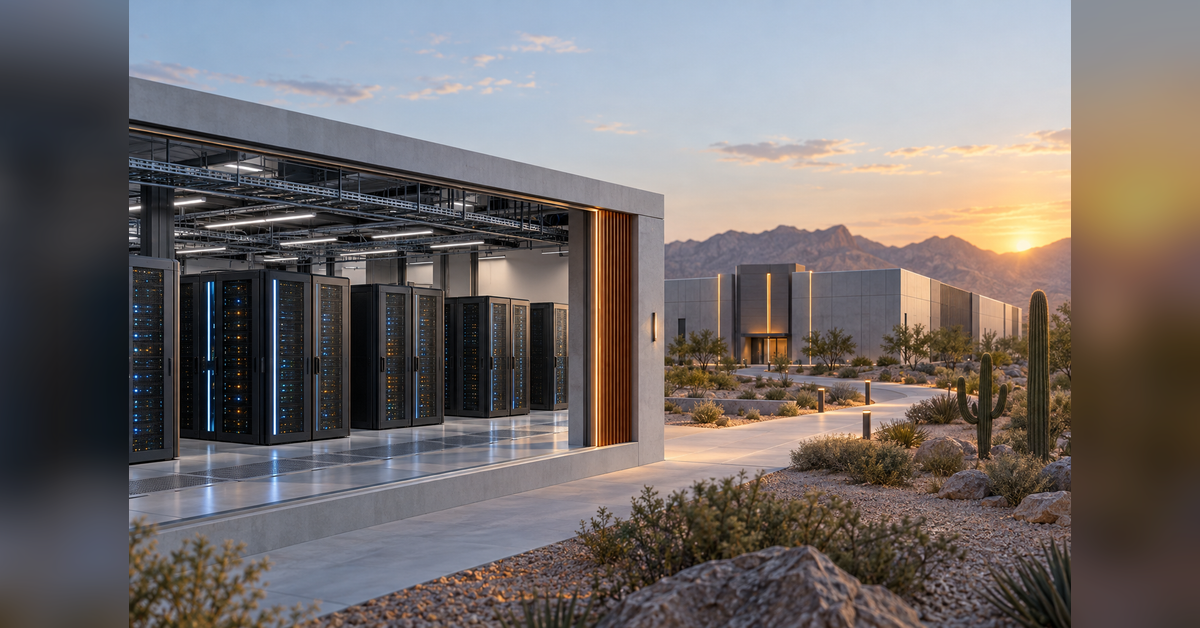

The best Mesa Arizona data centers for your shortlist are the ones that sell the service you need, at the density and delivery date your workload requires. Start with the buying model, not the biggest campus on a map.
A cabinet-scale colocation request and a single-tenant hyperscale requirement belong in different comparisons. Establish the Mesa address, commercial offering and deployment requirements before asking providers to compete on price.
What makes a Mesa data center a buying option?
A buyable Mesa data-center option combines a confirmed Mesa location with a service the operator offers to customers and a proposal for your deployment. Colocation, single-tenant hyperscale, private infrastructure and planned campuses are different categories. A facility listing alone does not establish that your company can purchase suitable space.
Best Mesa Arizona data centers: compare buying models
For a colocation requirement, NTT PH1 is the first named option to investigate here. EdgeCore belongs in a different conversation because its Phoenix/Mesa offering is described as single-tenant hyperscale. Compare each against your purchase requirements rather than placing both in an undifferentiated provider ranking.
Start with the data center site selection checklist to define your location, workload and commercial requirements before requesting availability.
| Option | City and market | Service-model classification | Buyer fit | What establishes availability |
|---|---|---|---|---|
| NTT PH1 | Mesa, Arizona; Phoenix metro | Colocation; confirm the proposed retail or larger-space format | Buyers seeking a colocation proposal matched to their footprint | A current proposal stating space, supported load and delivery terms |
| EdgeCore Phoenix/Mesa | Mesa, Arizona; Phoenix metro | Single-tenant hyperscale | Buyers whose scale and commercial requirements fit that model | A deployment-specific commercial offer and delivery schedule |
| Private or planned campus listings | Confirm the address; a metro label is insufficient | Private or planned; not an established colocation offer | Separate from the purchasable shortlist unless a suitable commercial service is offered | An operator-backed offer for the specific location and deployment phase |
The table is a buying-model filter. It does not award an overall winner. The useful shortlist starts with the service you can buy, then narrows to the facilities that can support your installation.
NTT PH1: start with a colocation inquiry
NTT’s Phoenix PH1 operator page identifies a Mesa facility and describes colocation offerings. That makes PH1 a relevant starting point for a business seeking colocated infrastructure. The next step is a current proposal for your required footprint—not an assumption that every advertised configuration is available for your date.
Send a workload brief with the number of cabinets or amount of dedicated space, expected load, highest-density rack and required network connections. Ask NTT to identify the commercial format it proposes and any minimum commitment.
Keep the response specific to PH1. A provider’s wider portfolio should not substitute for confirmation that the Mesa installation supports your proposed configuration. Ask which services are included, which require separate orders and which depend on third parties.
Hyperscale and build-to-suit are different decisions
EdgeCore’s Phoenix/Mesa campus page describes a single-tenant hyperscale model. Evaluate it when that model matches your deployment. For a small colocation request, the first question is whether the commercial offering fits at all—not how the campus compares with a cabinet provider on headline size.
A build-to-suit discussion adds another set of questions: what will be delivered, which party controls the design, what dependencies remain and when contractual acceptance occurs. Ask for a phase-specific offer rather than treating a campus announcement as ready space.
Use separate procurement tracks when necessary. One can evaluate available colocation for an initial installation; another can examine a larger dedicated deployment. Keeping the tracks distinct makes differences in commitment, design responsibility and schedule visible instead of burying them inside a single price comparison.
Confirm Mesa city, not just Phoenix branding
Use the facility’s street address and city as the location test. Phoenix branding identifies a market, but your procurement record should identify the building you would occupy. A proposed substitute elsewhere in the metro should be an explicit decision, especially when staff access or proximity to another site matters.
Record the facility identifier beside the address in every proposal. If an operator offers a different building during negotiations, recheck the requirements against that location rather than carrying forward the original site’s answers.
If Mesa is a preference rather than a hard boundary, widen the search deliberately. The best Phoenix data centers guide provides the adjacent metro comparison; keep its alternatives separate from the Mesa-only shortlist until you agree to broaden the geography.
Separate private campuses, planned phases and purchasable capacity
Do not count a private campus or planned phase as an available colocation choice merely because it appears in a directory. Require a commercial offer that your company can purchase. For a phased campus, identify the building and phase proposed for your installation rather than relying on the ultimate campus plan.
Keep three statuses in the procurement record: offered for your deployment, proposed for a future delivery milestone, and excluded from your buying model. Attach the provider’s supporting document and its date to each status.
This also gives you a way to reconcile conflicting facility totals. Before comparing counts, establish whether a list includes campuses, individual buildings, expansion phases or announcements. Your purchasing decision needs a list of suitable offers, not a census of every infrastructure project.
What to request on power, cooling and water
Ask for evidence tied to your proposed installation. Campus-scale descriptions are background; your decision needs supported load, rack-level cooling requirements and delivery conditions. Put these questions in the same request so providers respond to the same workload rather than choosing their own comparison basis.
Power: define the load and the delivery milestone
State expected IT load, the design envelope and any expansion requirement separately. Ask the provider to distinguish campus or utility capacity from the load offered to your installation. Request the proposed electrical configuration, maintenance arrangements and any limits on how capacity can be distributed across racks.
For schedule, ask what must happen before your equipment can receive service. Separate utility energization, building readiness, commissioning and customer handover. The data center power availability guide is a useful next step when interpreting those milestones.
Cooling: require an answer for the densest rack
Provide the equipment configuration and highest-density rack, not just an average across the deployment. Ask for the proposed cooling approach, supported operating conditions and responsibilities for installation and maintenance. If liquid cooling is required, identify the equipment interfaces and the division of responsibility in the proposal.
Use the data center cooling providers guide to develop the questions for a cooling discussion. Do not treat a general statement about high-density capability as acceptance of your specific design.
Water: ask about the proposed cooling configuration
Request the water source, whether the proposed design consumes water, the reporting boundary and the operating assumptions behind any water-use figure. Ask whether the answer describes the offered building, an entire campus or a different design.
Also request the contingency approach for water-related operating constraints. Compare documented configurations and responsibilities rather than inferring water use from a rendering or a broad sustainability statement.
Match connectivity to the workload
Separate physical hosting requirements from network requirements. A proposal should answer both. For an AI workload, distinguish communication within the compute cluster from connections to users, cloud services or another site. Ask the responsible technical teams to define the relevant performance requirement and acceptance method for each path.
Request the network services available for the proposed building, the ordering party, delivery lead times and recurring charges. If resilience requires distinct paths, ask for route information rather than relying on a count of network suppliers.
The data center fiber connectivity guide helps frame physical-path questions. Use the separate data center interconnect options guide when comparing how sites and services will connect.
For workload planning, the AI training vs inference data centers comparison provides a related decision lens. Translate the workload into requirements before asking a provider to recommend a facility.
Percepture’s Mesa Service-Model Fit checklist
Use this five-step buyer checklist to turn a directory entry into a procurement decision. Advance an option only when its answer fits your requirements.
- Validate the location. Record the address, city, facility identifier and proposed building or phase.
- Classify the offer. Identify retail colocation, larger-space colocation, single-tenant hyperscale, build-to-suit, private infrastructure or a planned project.
- Confirm deployable capacity. Request the space and supported load offered for your installation, with delivery conditions.
- Match density and connectivity. Resolve the densest rack, cooling interfaces, network services and ordering responsibilities.
- Require current delivery terms. Obtain a dated proposal with commitments, dependencies, acceptance conditions and commercial boundaries.
Finish with one of three decisions: request a comparable offer, resolve a specific dependency, or remove the option from this procurement.
Illustrative scenario: six cabinets with a fixed deployment window
Consider a hypothetical business seeking six cabinets, a design envelope of 12 kW per cabinet, two network suppliers and deployment within six months. These are illustrative planning inputs, not a provider quote or a customer result.
The initial design envelope is 72 kW across the six cabinets. The buyer also identifies the highest-density rack and asks whether the proposed configuration supports uneven loading. The network request specifies the connections needed at installation rather than simply asking whether the facility has fiber.
NTT PH1 advances to a colocation inquiry because its described service model is relevant. EdgeCore remains on a separate track unless its single-tenant offering fits the buyer’s actual commercial scope. Private campuses stay outside this shortlist, and planned phases require a delivery proposal.
The next step is to send the same requirements to suitable providers. No option is selected until its response resolves configuration, network delivery and the required handover date.
Compare provider responses on the same basis
Normalize scope before comparing cost. Ask every provider to separate space, power, cooling-related obligations, network services, support and one-time work. Use the same deployment assumptions and comparison period. A proposal with unresolved dependencies should remain conditional rather than receiving an artificial score that hides the missing answer.
- Scope: What space, load and services does the offer include?
- Delivery: Which date is contractual, and what conditions apply?
- Responsibility: Who orders, installs, operates and maintains each component?
- Commercial terms: What minimum commitments, escalation terms and expansion conditions apply?
- Assurance: Which contractual commitments and independent assurance documents support your requirements?
- Acceptance: What evidence must be delivered before you accept the installation?
Do not substitute an SLA for an independent assurance document, or a campus capacity figure for your offered IT load. Keep each document attached to the requirement it answers.
If no Mesa proposal meets the mandatory requirements, change the search boundary explicitly. Use the data center market comparison guide to structure that broader decision instead of quietly weakening the original requirements.
For operators: make the buying model clear in public answers
Facility operators and marketing leaders should state the city, service model and purchase route plainly on each facility page. Keep planned phases distinct from offered services. The same distinction that helps a buyer evaluate a proposal should also appear in the public explanation.
Prime AI Visibility is a Percepture product relevant to AI-search visibility, not a facility-validation service. When reviewing public answers, separate a brand mention from a source citation, a site visit and a qualified enquiry. Those are different observations, not interchangeable commercial outcomes.
For a baseline-to-action workflow, review how Prime AI Visibility works. Record the questions you monitor, document content changes and recheck the same question set. Monitoring identifies what to investigate; improvement requires accurate information and follow-through.
Mesa data-center buying questions
Does Phoenix branding mean a Mesa address?
No. Treat Phoenix as a market label until the operator confirms the facility address. Put city, street address and facility identifier in the proposal so a Mesa requirement is not silently replaced by a different Phoenix-metro location.
Which provider offers cabinets or cages?
NTT PH1 is the colocation starting point in this guide. Ask NTT for a current cabinet or cage proposal, including minimum commitment, supported power and delivery date. A description of colocation services does not establish that a particular configuration is available today.
Are single-tenant hyperscale campuses suitable for a small deployment?
Not by default. Start with a provider selling the footprint you need. Keep a single-tenant hyperscale option only if its commercial proposal fits your deployment; a large campus alone is not a reason to include it in a cabinet-scale comparison.
Is a planned campus open for service?
A planned designation does not establish service readiness. Ask for the specific building, deployment phase, power milestones, commissioning conditions and contractual ready-for-service date. Keep planned capacity separate from capacity offered for your installation.
Can we buy space in an Apple or Meta private facility?
Do not treat a private Apple or Meta campus as an ordinary colocation offer. Include a private facility only when its operator or an authorized seller provides a specific commercial service your company can purchase.
What cooling evidence should be requested?
Request the proposed rack-level cooling design, supported density, operating conditions and responsibilities for equipment, piping and maintenance. If liquid cooling is part of your requirement, ask how the specific deployment will be supported rather than accepting a general capability statement.
How do we compare power delivery dates?
Compare the same milestone: power available to your installation, with commissioning and acceptance conditions stated. Ask each provider to separate utility energization, building readiness and customer handover, then identify which date and remedies appear in the contract.
Why do published facility totals differ?
Check what each list counts: buildings, campuses, phases, operating sites or announced projects. For procurement, count only the locations and deployment phases that match your buying model. Ask for the inclusion rules before treating a directory total as available supply.
Send a service-model brief before requesting a quote
To choose among the best Mesa Arizona data centers, first write down the service you intend to buy. Send suitable providers one brief covering location, footprint, load, cooling, connectivity and delivery. Ask each to return a dated offer against those requirements. Keep options with unresolved dependencies conditional, and compare only the proposals that answer the same buying question.

About Bob Generale
Bob Generale is President of Percepture, a global digital marketing, public relations and AI systems agency established in 2004. His work connects search strategy, digital PR, useful content and conversion planning around the questions buyers need answered. Bob’s approach starts with understanding the audience, learning how the business works and turning that expertise into clear explanations people can use. He advocates practical frameworks, coordinated execution and measurement that separates visibility from qualified opportunities and revenue. Prime AI Visibility is a Percepture product, reflecting his interest in making AI search insights actionable for marketing teams. In this article, he brings that operator perspective to clarifying buying models, comparing requirements and identifying the next procurement step.