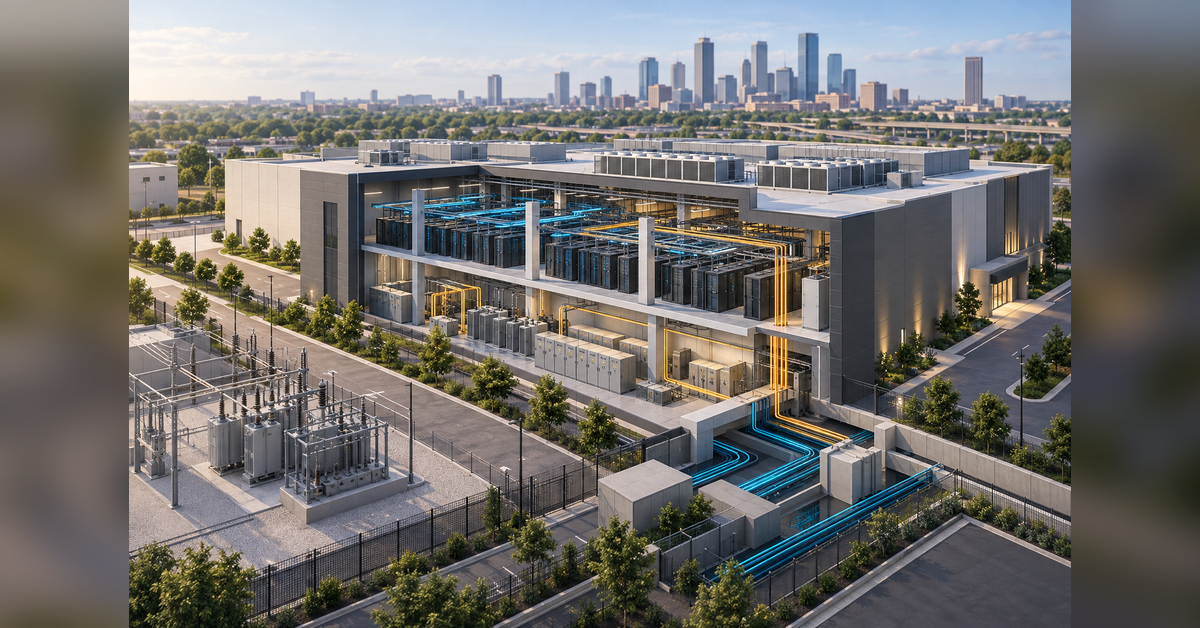

The best Fort Worth data centers for your business are the ones that can commit to your workload, location and delivery date—not simply the largest campuses in a directory. Start with QTS Fort Worth, Centersquare DFW1 and Cogent’s Fort Worth offering as candidates to investigate.
Then narrow the list with written answers about the exact building, service model, usable power, network connections and contract. Keep private hyperscale campuses and future developments outside your purchasable shortlist unless a provider can document an offering that fits your order.
What is Fort Worth colocation?
Colocation means placing your equipment in a provider’s facility and contracting for specified space, power and associated services. For a Fort Worth purchase, establish the actual service address first, then confirm what you can order, when it will be ready and which responsibilities remain with your team.
Best Fort Worth data centers: start with the actual site
Treat Fort Worth as a location requirement, not a marketing label. Ask every candidate for the street address, building identifier and proposed deployment area. If a proposal says only “DFW,” return it for clarification before comparing prices. Your shortlist should identify the site that will serve your equipment, not just the provider’s regional presence.
A metro label is not a site address, and planned power is not a delivery commitment. Put both distinctions at the top of your evaluation sheet.
The broader data center site selection checklist helps organize the location decision alongside technical and commercial requirements. For this purchase, make the first filter concrete: must the facility be within Fort Worth, within a defined travel time, or anywhere in the wider metro?
Write that requirement before requesting proposals. Otherwise, procurement may compare a local deployment with a different-city alternative without recognizing the change in scope.
QTS, Centersquare DFW1 and Cogent: compare the proposed offering
Use these names as starting points for inquiries, not as an ordered ranking. The useful comparison is whether each proposed site can accept your equipment, support your operating model and meet your schedule. Establish retail or wholesale terms in the proposal rather than inferring them from campus size or a provider’s broader portfolio.
Fort Worth shortlist and procurement questions
Comparison method: local-market relevance and evidence to request, not scored reliability or live inventory. Guide edition: November 3, 2026. Confirm space, power, service model and delivery dates in a current proposal.
| Candidate | City or metro scope | Retail, wholesale, private or planned | First evidence to request |
|---|---|---|---|
| QTS Fort Worth | Fort Worth campus | Establish the retail or wholesale service offered for your order. | Exact building, minimum commitment, proposed IT load and delivery milestone. |
| Centersquare DFW1 | Fort Worth facility | Confirm the retail or wholesale deployment terms in the quote. | Current site documentation matched to the quoted cabinet, cage or deployment area. |
| Cogent Fort Worth offering | Fort Worth; identify the specific quoted site. | Confirm colocation scope separately from network-service scope. | Service address, space and power terms, connectivity scope and support responsibilities. |
| Meta Fort Worth campus | Fort Worth | Private hyperscale; not an ordinary retail colocation option. | Exclude from a standard third-party colocation request. |
The QTS Fort Worth campus page is the operator starting point for that candidate. Ask QTS to connect the campus description to the particular building, deployment and service commitment being quoted.
Use the Centersquare DFW1 specification sheet to frame questions about DFW1. Request a current proposal that identifies which specifications apply to your order; do not combine figures from different document versions into a new capacity claim.
For Cogent, make the inquiry equally specific. Ask what facility service is included, what network services are separate and who handles physical work on your equipment.
Public colocation versus private hyperscale campuses
Public colocation and private hyperscale facilities answer different buying questions. A colocation inquiry asks what a third-party customer can contract to use. A private campus supports its owner’s infrastructure. Meta’s Fort Worth campus belongs in local-market context, not in an ordinary retail shortlist alongside providers you are asking for space.
Also separate the commercial model from the physical facility:
- Retail inquiry: Describe the cabinets, power allocation and support tasks you want to purchase.
- Wholesale inquiry: Describe the larger deployment, technical responsibilities and delivery conditions you want priced.
- Planned development: Ask which construction, utility and commissioning milestones remain before your order can be delivered.
A large campus does not answer whether a small deployment is commercially suitable. Conversely, a cabinet quote does not establish that a provider can support a later expansion. Ask about your initial order and your next deployment separately.
Power, connectivity and support: ask three different questions
Evaluate the proposed electrical allocation, network design and operating support independently. A satisfactory answer in one area does not settle the others. Give each bidder the same workload assumptions so your team can identify a genuine difference rather than a difference in how the request was interpreted.
What power is committed to this deployment?
Ask for the contracted usable IT load, the cabinet-level limits and the conditions under which that load can be used. Have the provider explain how the proposed feeds, equipment configuration and maintenance arrangements relate to your requirement. Do not substitute a campus utility figure for the load assigned to your equipment.
Record your initial load, expected growth and any unusually demanding cabinets. For a deeper procurement worksheet, use the guide to data center power availability.
For dense or specialized equipment, provide the actual equipment specifications and ask the provider to document the proposed cooling arrangement. A broad statement about supporting advanced workloads is not a deployment design.
What network connections will your applications use?
Name the endpoints first: offices, cloud environments, partners, backup locations or other facilities. Then ask which connections can be delivered at the proposed building, which parties provide them and which charges apply.
The guide to data center interconnect options helps separate the connection you need from a general carrier list. When resilience matters, request documentation of the proposed routes and entrances; do not infer physical separation from two provider names.
Keep internal compute-network requirements separate from wide-area connectivity. Specify both when the workload needs both.
Who performs physical work, and on what terms?
List the tasks you expect support staff to perform: equipment checks, cable changes, replacement assistance or access coordination. Request the service hours, escalation path, billing increments, authorization process and exclusions.
Ask how urgent requests differ from scheduled work. If your own staff must attend for certain tasks, include that travel and access burden in the decision rather than treating support as a generic checkmark.
Fort Worth versus Dallas, Plano and the wider metro
Widen the search only when doing so serves a stated requirement. Compare a Fort Worth proposal with a Dallas or Plano alternative using the same deployment, network endpoints, support assumptions and delivery date. Keep the actual city visible throughout the evaluation so a broader search does not quietly replace the original location requirement.
If Dallas is acceptable, the best Dallas data centers guide provides a separate market comparison. Keep those candidates on a clearly labeled metro-alternative tab rather than presenting them as Fort Worth facilities.
For a statewide search, use the best Texas data centers guide to frame the wider decision. Before expanding geographically, document what you are willing to trade: staff travel, proximity to users, network design or the proposed commercial terms.
The point is not to favor one city automatically. It is to make any change in location deliberate.
The Fort Worth Commitment Checklist
Use this five-gate procurement framework to turn a shortlist into comparable commitments. Advance a candidate when the relevant evidence is documented; keep unresolved items attached to the proposal rather than smoothing them into an overall score.
| Gate | What to establish | Record in the decision file |
|---|---|---|
| 1. Verify the address | The actual building and proposed deployment area. | Service address, site identifier and location requirement. |
| 2. Confirm buyable service | The provider accepts the requested deployment and commercial model. | Space, minimum commitment, included services and exclusions. |
| 3. Separate available from planned power | The load and delivery conditions attached to this order. | Usable IT load, readiness milestone, dependencies and acceptance terms. |
| 4. Inspect network and support | The connections and operating assistance your team will use. | Connection orders, route questions, support scope and escalation process. |
| 5. Document contract and expansion terms | The commitments that survive beyond the sales discussion. | Charges, term, renewal, remedies, expansion rights and exit obligations. |
Mark each gate as documented, unresolved or outside scope. A low price should not erase an unresolved delivery requirement. If an item is essential to the deployment, resolve it before treating the proposal as comparable.
Illustrative scenario: two cabinets and a fixed migration date
Consider a hypothetical Fort Worth business seeking two cabinets for production systems and backup equipment, with a fixed migration deadline and limited staff available for site visits. These are illustrative inputs, not a client case study.
The team receives three proposals. One identifies the building, committed load and ready-for-service date. Another offers more future expansion but leaves the initial power-delivery milestone unresolved. The third identifies space but does not define after-hours support.
Apply the checklist before ranking price. The first proposal can advance to technical and contract review. The second needs a documented delivery path or a workable contingency. The third needs a support schedule that matches the team’s operating constraints.
The next step is not to declare a winner from the brochure. Send each provider its unresolved questions and request revised proposals using the same assumptions. If a deadline is nonnegotiable, do not treat a forecast as equivalent to a contractual commitment.
Compare proposed capacity, delivery dates and total cost
Require every proposal to distinguish the initial deployment from later growth. Record what is assigned to your order, what remains dependent on future work and what is merely an expansion possibility. Ask the provider to identify the milestone that makes the space and power usable for your equipment—not just the date a project is announced.
Use consistent definitions across bidders:
- Initial deployment: The space, IT load, connections and support included at service commencement.
- Delivery dependencies: Work, approvals or third-party services that must be completed before acceptance.
- Expansion: Additional capacity, its reservation conditions and the process for ordering it.
- Acceptance: The evidence and conditions your team will use to accept the service.
Where construction or approvals are part of the proposal, the guide to Texas data center permitting can help structure the questions. Ask which dependencies apply to your order rather than assuming every campus project affects it.
For cost, request an itemized schedule covering recurring space and power charges, installation, cross-connects, connectivity, remote hands, access-related charges and any other proposed fees. Separate one-time costs from recurring costs and state the assumptions used for variable charges.
Build the comparison around the same operating scenario. Include expected support activity, connection counts, renewal provisions and any pricing changes specified in the agreement. Ask qualified counsel to review material contract terms, including delivery obligations, remedies, renewal, expansion and exit requirements.
What to ask before the site tour
Send the technical and commercial questions before booking the visit. Use the tour to resolve the remaining issues in a written proposal, not to start collecting basic facts. Request attendance from the people who can explain the proposed electrical configuration, connectivity, support arrangements and delivery responsibilities.
Bring a short, site-specific agenda:
- Show the proposed deployment area and explain the access process.
- Walk through how the quoted power configuration serves your equipment.
- Identify the proposed network handoff and outstanding connection orders.
- Explain maintenance communications, incident escalation and support authorization.
- Identify anything discussed during the visit that must be added to the proposal.
Afterward, circulate one consolidated question log. Record the provider’s answers and attach supporting documents to the relevant proposal. A reassuring conversation should become a documented commitment where the issue affects the purchase.
Keep AI discovery separate from facility selection
Use search and AI answers to discover candidates, then return to operator documents and proposals for the purchase decision. A provider mention is not a source citation, a citation is not proof of available capacity, and visibility does not establish technical suitability. Keep discovery evidence separate from procurement evidence.
For marketing teams monitoring how a facility is represented publicly, Prime AI Visibility is a Percepture product. Keep that visibility work separate from site validation: save a baseline, log content changes and recheck the same question set. Read how Prime AI Visibility works when evaluating that workflow.
Monitoring observes answers; optimization changes the information intended to improve them. Measure resulting website activity and qualified inquiries separately rather than treating a mention as traffic or a commercial outcome.
Fort Worth colocation questions
How do I confirm the facility is actually in Fort Worth?
Request the service address and building identifier in the proposal. Match them to your location requirement; a DFW label alone does not establish that the proposed site is in Fort Worth.
Is the service retail or wholesale colocation?
Establish that in the quote. Ask the provider to identify the deployment unit, minimum commitment, included infrastructure and customer responsibilities instead of inferring the model from campus size.
Can we buy colocation space at Meta’s Fort Worth campus?
Do not treat Meta’s private Fort Worth campus as an ordinary retail colocation option. Build your purchasing shortlist around providers offering a contract for your third-party deployment.
How do we confirm power availability?
Request the usable IT load assigned to your order, its delivery milestone and any dependencies. Keep campus utility figures and future expansion separate from the power commitment for your equipment.
What costs do cross-connects and support add?
Request itemized installation and recurring connection charges, plus support rates, billing increments and minimums. Model those charges using your expected connections and support activity rather than assuming they are included.
What is current capacity versus future expansion?
For your decision, separate the initial contracted deployment from capacity dependent on later work. Ask what is reserved for your order, when it becomes usable and what conditions apply to additional space or power.
Why do directory site counts disagree?
Check what each directory counts before comparing totals. A list of campuses, buildings or planned projects is not the same dataset; none of those counts alone establishes capacity you can purchase.
Which commitments belong in the contract?
Document the site, space, usable power, delivery conditions, included services, charges and expansion provisions. Have qualified counsel review material terms, including remedies, renewal and exit obligations.
Turn the shortlist into a comparable request
Send the same capacity-and-contract request to each candidate: the workload, site requirement, initial load, network endpoints, support tasks, target date and expansion assumptions. Ask each provider to identify its exceptions explicitly.
Then use the Fort Worth Commitment Checklist to close the unresolved items. Choose among documented proposals—not a mixture of campus announcements, directory entries and sales conversations. The next useful step is a revised, comparable offer your technical, procurement and legal teams can evaluate together.

About Bob Generale
Bob Generale is President of Percepture, a global digital marketing, public relations and AI systems agency established in 2004. His work connects search strategy, digital PR, useful content and conversion planning around the questions buyers need answered. Bob’s approach starts with understanding the audience, learning how the business actually works and turning that expertise into clear explanations people can use. He advocates practical frameworks, coordinated execution and measurement that separates visibility from qualified opportunities and revenue. Prime AI Visibility is a Percepture product, reflecting his interest in making AI search insights actionable for marketing teams. In this article, he brings that operator perspective to evaluating options, clarifying tradeoffs and helping readers decide what to do next.