
One Mesa data center advertises waterless cooling. That tells you something about its cooling design, but it doesn't tell you how much water the whole site uses, how much electricity it takes to move heat on a hot afternoon, or how much rack capacity you can buy for an inference deployment.
For AI inference in Mesa, Arizona, ask for two things before accepting a proposal: the boundary of the water claim and the cooling conditions attached to your allocation. If those answers come from different buildings, different configurations or different time periods, they don't describe the same service.
What can a waterless cooling claim tell you?
Edged markets its Mesa facility as Edged Phoenix. Its site description identifies rooftop air-cooled chillers and a closed-loop cooling system. The page describes zero water for cooling. In its opening announcement, Edged presents waterless cooling as a feature of this facility. These are the operator's descriptions of the installation. They are not water-meter records for the entire property or a guarantee covering a particular customer order.
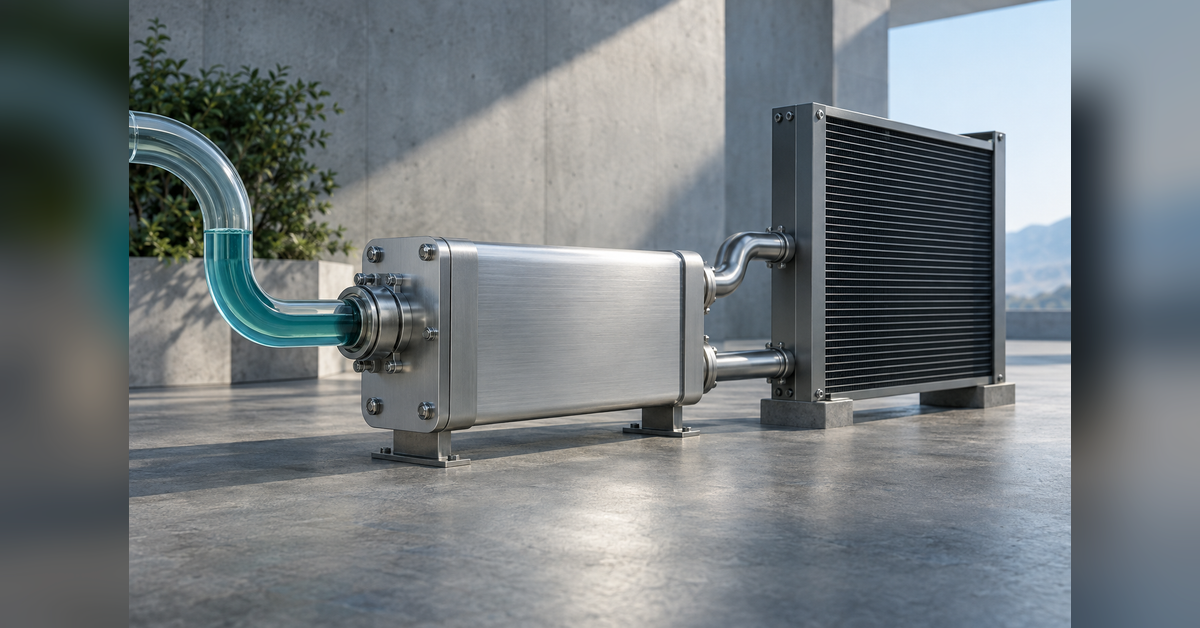
Liquid cooling at the rack and evaporative heat rejection at the facility are different decisions. A fluid can carry heat away from equipment through a closed loop while outdoor equipment rejects that heat to air. The presence of liquid in the loop does not, by itself, establish ongoing evaporation. The term waterless also does not tell you what happens during filling, maintenance, emergency operation or another mode the supplier didn't include in the claim.
Ask the provider to mark which equipment and modes the claim covers. Then ask whether irrigation, plumbing, humidification or other onsite uses are included. Where potable and reclaimed water are both relevant, record them separately. The Mesa colocation guide covers the initial facility shortlist. For the wider question of where the service will run and recover, use the Phoenix inference guide.
Read the unit before comparing water figures
The Department of Energy's cooling-water guidance defines site water usage effectiveness, or WUE, using annual onsite water use in liters divided by annual IT equipment energy in kilowatt-hours. It separately describes power usage effectiveness, or PUE, as total facility energy divided by IT equipment energy. A water figure and an energy figure answer different questions. Neither lets you infer the other.
Before comparing a supplier's WUE with another, write down what's in the numerator and denominator. A figure reported only for cooling is not automatically the same as an annual whole-site figure. Check the period, building, meter coverage, and whether the number is a design value or a reading. Offsite water involved in electricity supply is outside a site-only comparison. If your decision includes it, define that broader boundary separately rather than slipping it into one vendor's ratio.
Suppose a fictional site uses 120,000 liters onsite over a year and its IT equipment uses 600,000 kWh during that period. Under that stated boundary the ratio is 0.20 liters per kWh. If the only figure another proposal reports is dry heat rejection during ordinary cooling operation, you cannot compare the two as equal measures. The arithmetic illustrates the boundary; it does not represent any result in Mesa.
Edged's Mesa facility page also shows a portfolio design PUE. A figure described that way is not a measured annual PUE for the hall you would use, much less a cooling-energy reading at the highest outdoor temperature. Ask for the record that matches the buying decision.
Ask what the supplier can support on a hot design day
For a rack-based deployment, an annual water figure doesn't tell you what the facility supports during your hottest operating hours. The ASHRAE data center handbook describes the importance of equipment inlet conditions and distinguishes requirements for different kinds of equipment. Have the infrastructure owner check the actual equipment specifications and the proposed facility configuration. Outdoor air, supply water and the inlet to a server aren't interchangeable measurements.
Ask the supplier to identify the outdoor design condition it used for the offered hall, the proposed rack load, and the cooling and power it will commit to under those conditions. If a backup mode changes how the facility rejects heat, ask whether the water claim still covers that mode. For the broader equipment and testing questions, use the cooling provider evaluation guide.
If you're buying a managed endpoint rather than colocating equipment, ask what application capacity the supplier commits to in the service agreement. Your own acceptance should measure the request mix, peak load, delays, errors and fallback that matter to the application. A cooling document may support the supplier's explanation, but it doesn't replace a service-level test.
| Question | Ask for this record | Don't infer this from it |
|---|---|---|
| What does waterless cover? | Equipment boundary and included operating and maintenance modes | Zero annual water at the whole site |
| What is the reported water metric? | Meter coverage, reporting period, numerator and IT-energy denominator | Offsite water or a fair comparison with a different boundary |
| Is the energy metric a design value? | Design scope or measured facility and IT energy for the same period | The actual energy result of a different hall or season |
| What load can the hall support? | Written allocation matched to equipment and stated outdoor design conditions | Reserved capacity from a campus-wide headline |
| What changes during maintenance? | Supplier's supported configuration and application fallback responsibilities | Uninterrupted service from a redundancy label alone |
Make the comparison on one page before signing
Prepare one page with your equipment or service requirements, the named hall or endpoint, the water boundary and the expected operating conditions. Give the same description to each supplier. Ask engineering to check whether the offered capacity fits the deployment, sustainability to check the water metric, and procurement to reconcile both with the actual order. If a proposal answers only one of those questions, label the missing answer rather than filling it in with a campus claim.
Infrastructure providers can help a buyer by stating three things plainly: which cooling process the claim covers, whether the supporting number is measured or modeled, and how buyers can request evidence for their own deployment. Percepture's data center marketing guide discusses turning those distinctions into useful buyer materials.
Mesa inference cooling questions
Does waterless cooling mean there is no liquid inside the system?
No. A closed loop can use a fluid to transfer heat without using continual evaporation for outdoor heat rejection. Ask what the supplier means and which equipment and modes it includes.
Can I compare a design PUE with an actual WUE?
They measure different things. Compare energy with energy and water with water, with matching boundaries and periods. Keep design values and measured records separate.
Does a low site water figure prove my rack can run at peak load?
No. Ask for the actual offered rack configuration, facility design condition, supported allocation and any limits during maintenance. Use an application test for response time and throughput separately.
Is a marketed Phoenix facility always located in the city of Phoenix?
No. For example, Edged lists the street address of its Phoenix-branded facility in Mesa. Use the actual service address or the written serving location, not the metro label.

About Bob Generale
Bob Generale is President of Percepture, a digital marketing and public relations agency.