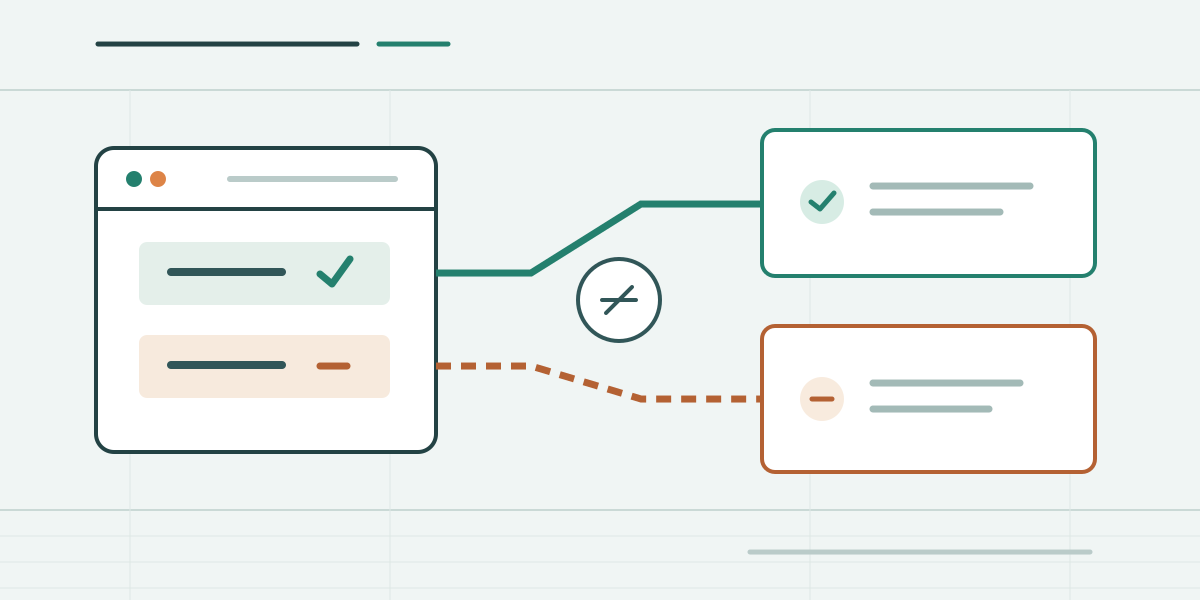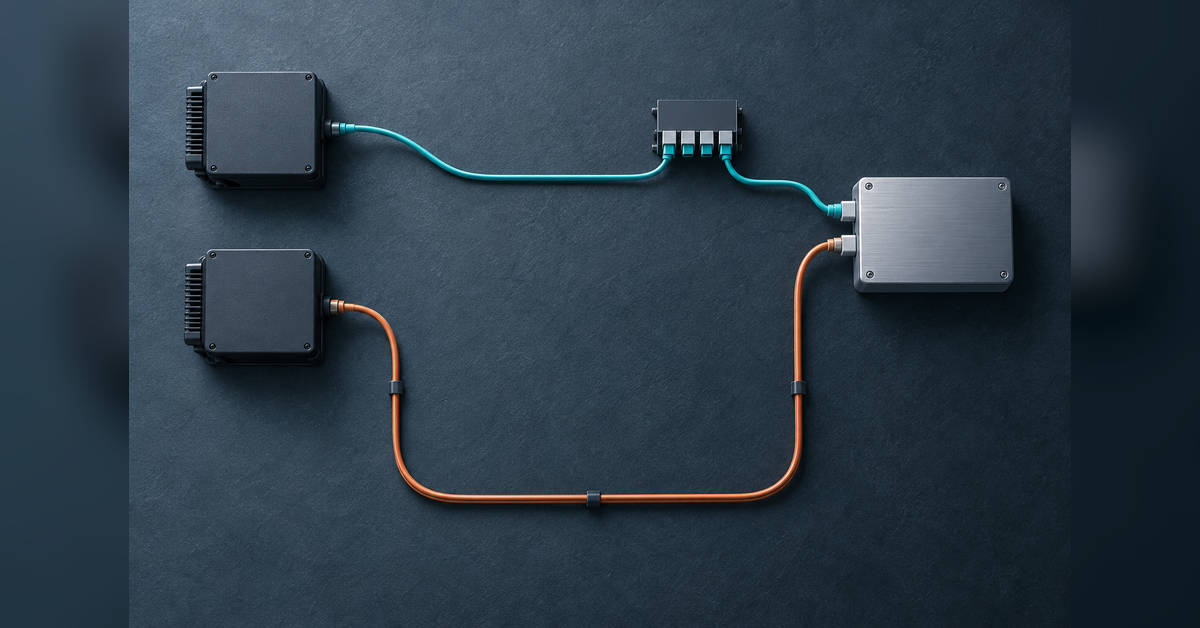

Putting an inference server in St. Louis does not make requests from St. Louis users take a local route. A nearby office can reach your API through a different metro. A second exchange port can still lead to the same serving gateway. And even a genuinely shorter route may save less time than your model spends waiting in a queue.
Before buying peering for AI inference in St. Louis, trace traffic from the networks your users actually use. Compare the same application and serving setup over the proposed exchange path and the current path. If the exchange route is visible but the app performs no better, you have useful evidence about where to spend the next dollar.
What can STLIX change for an inference service?
The St. Louis Internet Exchange lets participating networks exchange traffic. Networks can peer with one another directly or use the exchange's route server to exchange routes with multiple participating networks. Neither arrangement says which route an individual user network will prefer for your endpoint.
STLIX lists its two local core locations at Netrality's 210 North Tucker Boulevard and 900 Walnut Street. It also lists extension switches. The exchange advertises no monthly port fee and notes that the building may charge for the cross-connect. Ask for separate quotes for the cross-connect, transport if needed, and any managed routing. Keep internet transit in the cost comparison if you still need it for networks that the exchange path does not reach.
A port at the exchange does not provision the GPU, the API gateway, or the data retrieval service behind it. For the separate question of where to put equipment, start with the St. Louis colocation comparison.
Start with the networks your users actually use
List a small set of origins that represent demand. A manufacturing company might test from a plant, its corporate office, and the cloud region where its applications send requests. A provider with residential traffic might include two large access networks and a regional ISP. Label each origin by network and connection type. An office behind a corporate tunnel may leave the private network somewhere else; an address in St. Louis does not tell you where its connection enters the public Internet.
Compare those networks with the STLIX participant list. An entry is a lead for your network team, not a guarantee that it exchanges the routes you need. Ask your provider to confirm the agreed peering relationship, what address ranges it covers, and the path it actually sees for the test. If a mandatory network cannot reach the endpoint through the exchange, keep it in the evaluation as a transit case. Otherwise you will overstate the share of your traffic that can benefit.
| Evidence | What to record | What it does not prove |
|---|---|---|
| User origin | Access network, test location, and whether traffic exits through a VPN, proxy, or cloud service | That the request stays in the same metro |
| Network route | Observed exchange or transit path, direction, and timestamp; note any portion the provider cannot see | That a missing hop is absent or that replies take the same route |
| Serving location | Where the gateway terminates the request and which inference service handles it | That a local gateway means local compute or retrieval |
| Application result | First useful output, full response, errors, and timeouts from the origin | That a difference came from peering if the workload or serving setup changed |
Compare the route without moving the model
Use endpoints and test traffic your team or provider has approved. Ask the network owner to set up a controlled comparison between the proposed exchange path and ordinary transit. For each request, record the path you can verify. Some traceroute hops do not reply. An incomplete trace is a reason to ask the network owner for routing evidence, not a reason to fill in the route by guesswork.
Keep the serving region, model, output limits, gateway, retrieval setup, and cache policy the same. Run the same request mix at the same load across both paths. Alternate test windows rather than measuring one path at lunch and the other during the evening peak. Note fresh and reused connections separately. Keep failures and timeouts in the record, even if they have no valid response time.
For a streaming text service, NVIDIA's inference benchmarking documentation distinguishes time to first token, time between subsequent tokens, and full request latency. Record the figures that matter for the application instead of reporting only throughput. For a service that sends a structured classification result with no stream, the complete result and failure rate may be more useful than first-token timing.
Record a server-side queue or processing measure alongside the client result. The timers do not share the same starting point, so don't subtract summary percentiles to estimate each stage. Compare request-level records or synchronized test windows to find out whether a change follows the route, the serving load, or a feature such as a remote retrieval call. Percepture's guide to diagnosing AI agent latency explains why a good network result can coexist with a slow task.
What a plausible improvement can hide
Suppose the test shows a 14 ms network round trip over transit and 8 ms on the candidate path, but the 95th percentile for first token stays near 420 ms on both. Those numbers are illustrative, not measurements at STLIX. The network difference is worth recording, but the service has not demonstrated a better first-token result. Check whether queue time rose during one window or whether a remote data call dominates the request. Don't use the shorter network time as the claimed application improvement.
Now suppose one of your two required origins uses the exchange while the other still uses transit. Report them separately. Combining their results into one metro average would hide the fact that the second group got no candidate route to evaluate. It may still make sense to buy the first path, but only for the demand it serves.
Decide what to buy, what to keep, and what to test again
Write down which origins must be covered, what each application must achieve, and what happens if the path is unavailable. Ask for a current cost and support proposal only after the test shows where the candidate path helps. Use the records below to separate engineering evidence from a commercial decision.
| Decision | Evidence that supports it | Next move |
|---|---|---|
| Add peering for named networks | Verified exchange path for those origins and repeatable improvement that meets an agreed service target | Price the full connection and retain the necessary transit coverage |
| Keep the current network path | The candidate route offers no material benefit for required origins, or cannot reach them on acceptable terms | Investigate queueing, retrieval, serving capacity, or another documented bottleneck |
| Pay for a second path | The alternate route and service remain usable during an approved failure test, with shared dependencies understood | Contract the independent pieces and name the team that owns recovery |
| Wait for better evidence | Route or timing changed with the model, load, gateway, or cache | Repeat the comparison with those conditions held steady |
For a continuity requirement, ask your network and application owners to test failover in an approved environment. Observe both the route and the application: a valid alternate route is not enough if the gateway relies on the same location or authentication service that is down. Confirm that a recovered stream can actually start and finish, and keep the documented transit path available until the alternate meets the requirement. Treat shared transport, facilities, or serving components as dependencies until the supplier proves otherwise.
For a data center or connectivity team explaining these options to buyers, publish three distinct facts: where the service is handed off, which networks and paths were tested, and the response times observed under stated conditions. That gives procurement something to compare. Percepture's data center marketing guide explains how to turn technical evidence into material a sales team can use without promising more than the network delivers.
If your team has the route and test evidence but buyers still have to dig through a spec sheet to find it, talk to Percepture about technical content.
St. Louis inference and peering questions
Does a presence at both core STLIX locations guarantee an independent route?
No. Check the transport, entrances, equipment, gateway, and serving dependencies in your design. Two facilities can still share parts of the path.
Do I need to join the exchange myself?
Not necessarily. Compare what your current network provider will deliver with what your team would operate directly. Ask the provider to identify the actual peering relationship, handoff and support responsibilities. Test the offered service rather than assuming you need a particular ownership model.
Does peering replace internet transit for my API?
Only plan to send traffic over the routes you can verify and operate. Keep reachability to the networks not served by the peer relationship, along with any fallback your application needs.
Is ping enough to evaluate AI inference latency?
No. Ping can help describe the path, but measure the actual request from representative client origins. For a streaming service, separately observe first token, full response, and failures under expected load.

About Bob Generale
Bob Generale is President of Percepture, a digital marketing and public relations agency.